
If you own a 2022 Toyota 4Runner, you already know it's a beast. The 4.0-liter V6 has a reputation for running forever, but it only does that if you treat it right. And that starts with one simple thing: putting in the exact right amount of oil.
The 2022 Toyota 4Runner oil capacity is 6.6 quarts with a filter change, using SAE 0W-20 full synthetic oil. That number comes straight from Toyota's own service documentation. Get it wrong by even half a quart, and you're asking for trouble, foaming, aeration, or worse, rod bearing failure.
Here's what you need to know to get it perfect every time.
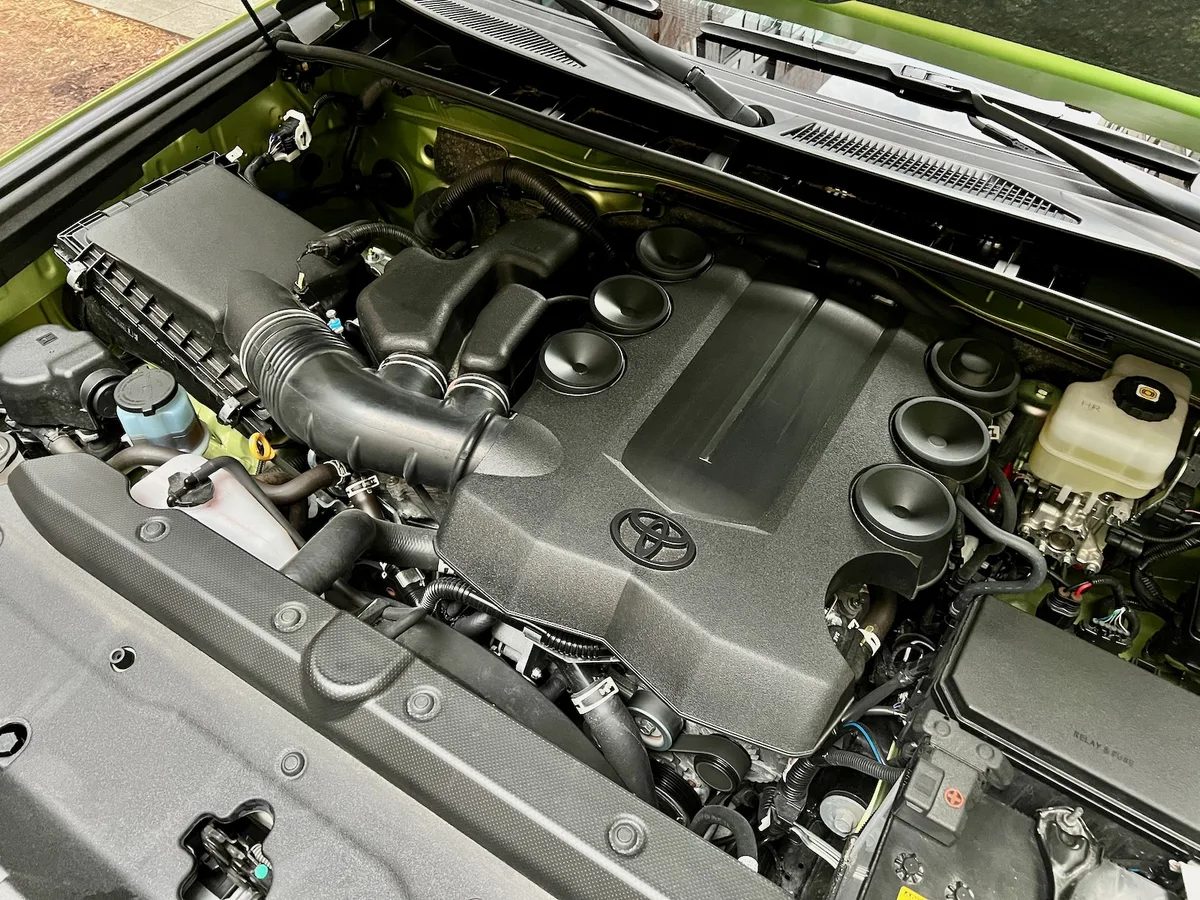
Image source: Web (Bing) / outmotorsports.com (Web image (fair-use with source credit))
Quick Answer
The 2022 Toyota 4Runner takes 6.6 quarts of 0W-20 full synthetic oil with a filter change. Without a new filter, it takes roughly 6.3 quarts. Always check the dipstick after filling.
Never rely on the entire jug pouring in at once.
Why Getting the Exact Oil Capacity Matters for Your 2022 4Runner
The 1GR-FE engine in your 4Runner is a workhorse. It's been around since 2002 and regularly clocks 250,000 miles with basic maintenance. But here's the catch: it's sensitive to oil volume in a way some newer engines aren't.
Overfill it, and the crankshaft whips the oil into foam. Foam doesn't lubricate. Your bearings starve, temperatures climb, and you're looking at a rebuild.
Underfill it, and the oil pickup tube sucks air during hard cornering or steep off-road angles. That's instantaneous bearing damage.
As of 2026, plenty of used 2022 4Runners are hitting the market with unknown maintenance histories. If you just bought one or you're doing your first change on your own, this is the spec you cannot fudge. Manufacturer specifications indicate that 6.6 quarts is the magic number, and it hasn't changed across the entire 5th generation run.
The Core Spec — Engine, Oil Type, and Capacity Breakdown
Let's break down what you're actually putting into this engine and why each spec matters.
The 1GR-FE Engine and Why It's Picky About Oil Volume
The 1GR-FE is a 4.0-liter, dual-overhead-cam, 24-valve V6. It uses a timing chain, not a belt, which is good. But it also uses a relatively narrow oil pan with a specific baffle design.
That means the margin between "full" and "too full" is smaller than you'd think.
Toyota designed this engine with a 6.6-quart wet capacity. "Wet" means the engine already has oil in the galleys and filter from the previous fill. If you're rebuilding the engine or installing a dry block, you need about 7.0 quarts.
That's the dry fill number, and it's different.
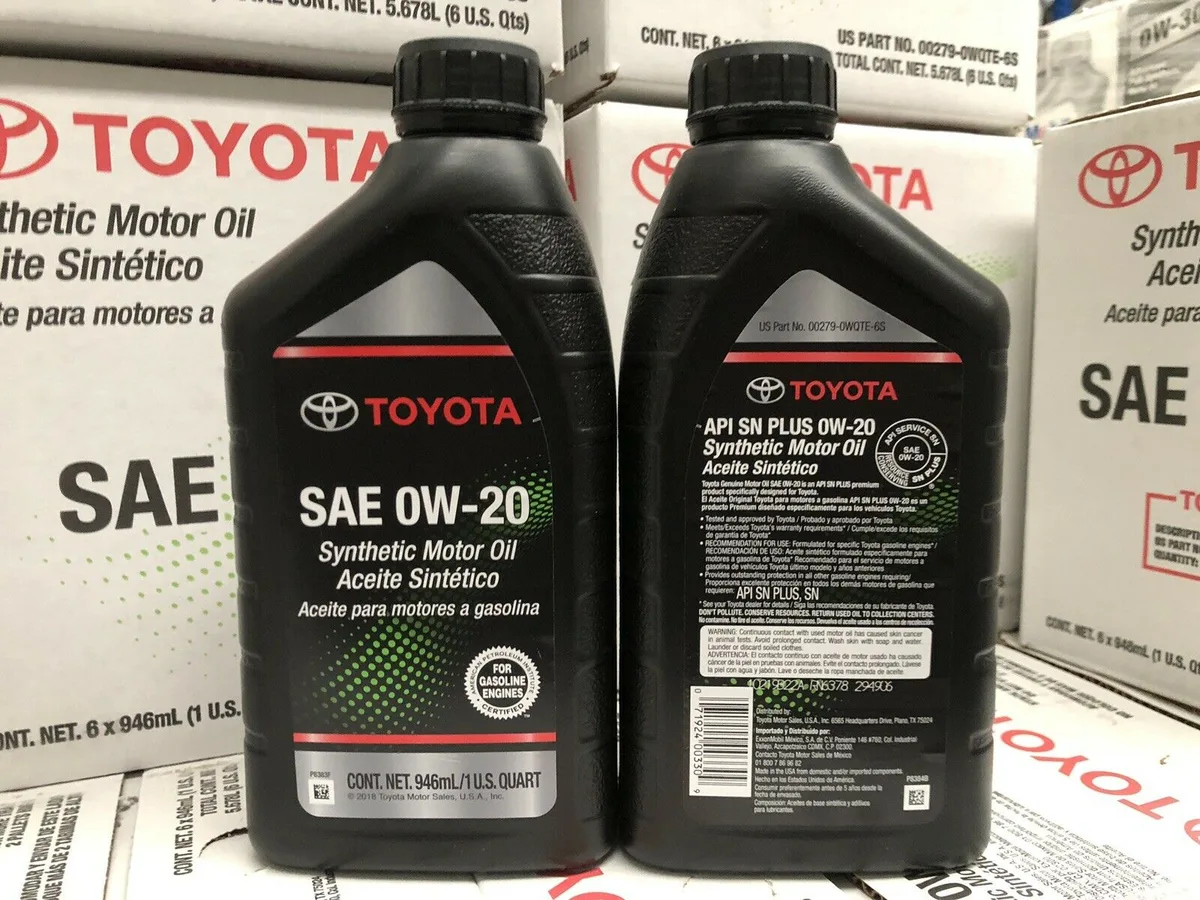
Image source: Web (Bing) / alibaba.com (Web image (fair-use with source credit))
0W-20 vs. Other Viscosities — What Toyota Says and What Owners Do
Toyota calls for SAE 0W-20 full synthetic oil that meets API SN or SP and ILSAC GF-5 or GF-6 standards. You'll find it on the oil fill cap and in the owner's manual. That's the only viscosity Toyota officially sanctions for the 1GR-FE.
Some owners in hot climates like Arizona or Texas run 5W-30 during summer. Aggregate reviews from online owner communities suggest it works without immediate damage, but Toyota doesn't endorse it. Cold starts below freezing with 5W-30 cause measurable wear.
Our advice: stick with 0W-12 months a year. It flows better at startup and protects just as well at operating temperature.
You can also check how this compares to other Toyota models. The Toyota RAV4 uses a different viscosity entirely, so don't assume all Toyota engines take the same oil.
Dry Fill vs. Wet Fill — Why Those Numbers Aren't Always the Same
This is where most people get confused. You'll see 6.6 quarts everywhere online. That's the number with a filter change.
But if you drain the oil and reuse the same filter, the old filter still holds about 0.3 quarts of oil. So you only need about 6.3 quarts to bring it back to the full mark.
If the engine is completely dry, after a rebuild, a fresh install, or a flush, fill it with 7.0 quarts, run it for a minute, then check and adjust. The oil filter and galleys need to saturate before you get an accurate reading.
| Fill Condition | Approximate Capacity |
|---|---|
| With filter change | 6.6 quarts |
| Without filter change | 6.3 quarts |
| Dry engine (rebuild) | 7.0 quarts |
Step-by-Step: How to Measure and Fill Correctly
This is the practical part. You've got the 0W-20 synthetic, you've got your tools, and you're ready. Here's exactly how to do it right.
Tools You'll Need
Before you crawl under the truck, gather everything. Nothing worse than realizing you're missing a socket halfway through.
- 14mm socket or wrench for the drain plug
- Oil filter cup (64mm, 14-flute) or a strap wrench
- Torque wrench (inch-pounds and foot-pounds are both useful)
- New crush washer (Toyota part 90430-12031 or equivalent)
- New oil filter (OEM 04152-38020, WIX 57712, or Mobil 1 M1-102)
- 6.6 quarts of 0W-20 full synthetic
- Funnel
- Drain pan
- Gloves and rags
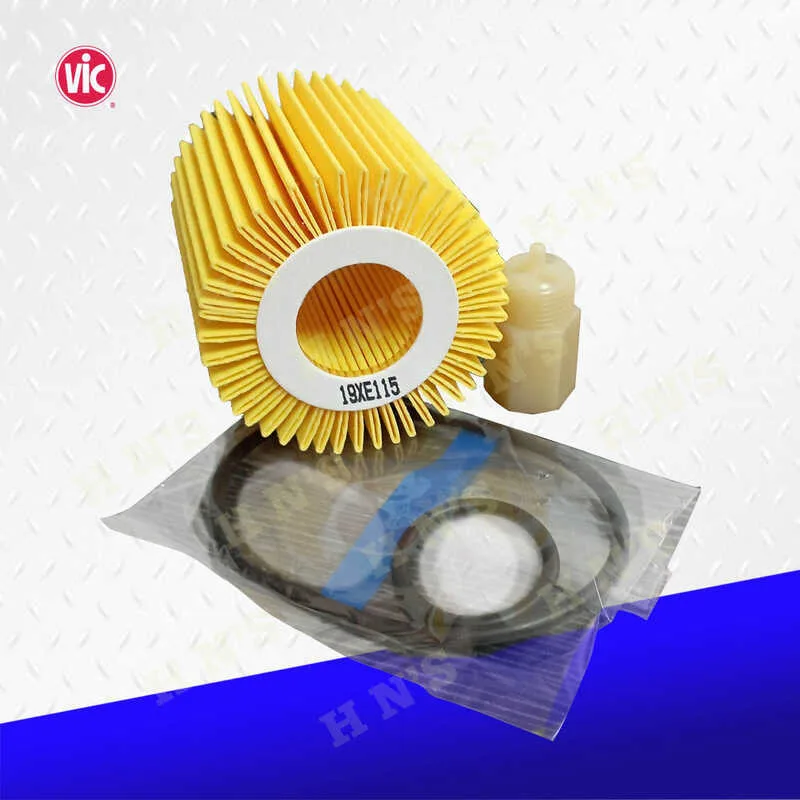
Image source: Web (Bing) / shopee.ph (Web image (fair-use with source credit))
The Right Way to Check Your Dipstick
The dipstick on the 1GR-FE is located on the passenger side of the engine, near the front. It has a yellow loop handle. You can't miss it.
Here's the procedure Toyota specifies:
- Warm the engine to operating temperature. Drive it for five minutes or let it idle until the temp gauge hits the middle.
- Turn the engine off. Wait exactly five minutes. This lets the oil drain back into the pan but keeps it warm enough to read accurately.
- Pull the dipstick, wipe it clean with a lint-free rag, insert it fully, then pull it again.
- Read the level. The oil should be between the two dimples or between the "L" and "F" marks. Ideally, it sits right at the top dimple.
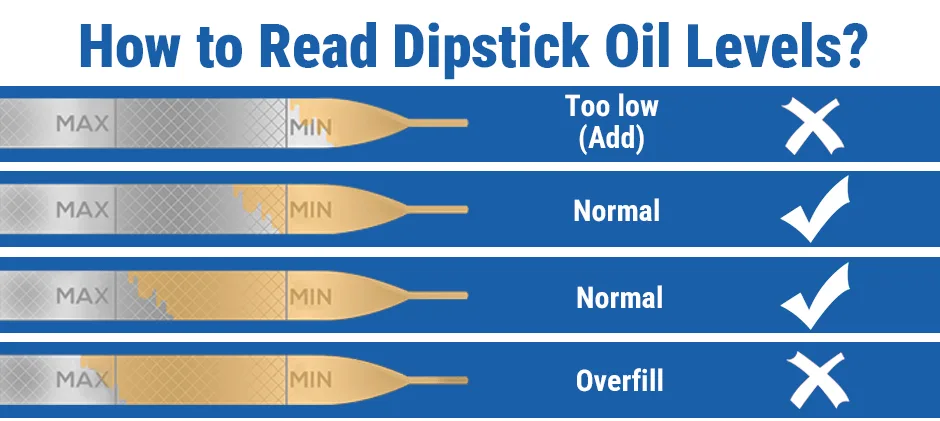
Image source: Web (Bing) / fridayparts.com (Web image (fair-use with source credit))
Cold readings are unreliable. If you check it first thing in the morning, the oil has pooled in the pan and will read artificially high. That's how people accidentally overfill.
How to Pre-Fill the Oil Filter (Don't Skip This)
This step alone can add years to your engine's life. Before you screw on the new oil filter, fill it about two-thirds full with fresh 0W-20. Swirl it a little to coat the internal media, then install it.
Why? Because when you start the engine, the oil pump needs to push oil through the filter before it reaches the bearings. Without pre-filling, there's a moment of dry start where metal rubs on metal.
Over 100,000 miles, those moments add up to measurable wear.
The same principle applies to other Toyota engines. Our guide on the best oil for Toyota RAV4 covers the same pre-fill technique. It's a universal best practice.
After pre-filling, lubricate the filter gasket with a thin film of oil. Screw it on hand-tight, then give it another three-quarters of a turn. Torque to 18 foot-pounds if you're using a tool.
The Three Biggest Mistakes People Make with This Engine
Even experienced DIY mechanics mess these up. Here's what to watch for.
Overfilling — It's Easier to Do Than You Think
You pour in a full 6-quart jug. Then you add the last 0.6 quarts from a separate bottle. You check the dipstick.
It looks a little low, so you add another half quart. Now you're at 7.1 quarts. That's half a quart overfilled.
The crankshaft whips through the excess oil. Air bubbles form. The oil pump picks up aerated fluid.
Your bearings might not feel it today, but after 10,000 miles, you've accelerated wear significantly.
Underfilling After a Filter Change
The flip side. You swap the filter, drain the old oil, and pour in exactly 6.6 quarts. But the new filter is dry.
It absorbs about 0.2 quarts before the system saturates. Now your pan is actually at 6.4 quarts. That's below the safe operating zone if you're towing or off-roading.
Start the engine, let it idle for a minute, shut it off, wait five minutes, and recheck. Then top off as needed.
Misreading the Dipstick on a Cold Engine
This is the most common mistake. You check it cold, and the level reads high because the oil hasn't drained back into the pan. So you leave it.
Then you drive it, the oil warms up and expands, and the actual running level is perfect. But if you had checked it cold and it looked fine, you never would have realized you were underfilled.
Always warm the engine first. Always wait five minutes. That's the only reliable method.
What Happens When You Get the Amount Wrong
This isn't scare tactics. It's mechanical reality. The 1GR-FE engine has a narrow tolerance for oil volume, and getting it wrong has real consequences.
Oil Starvation and Rod Bearing Failure
Rod bearings are the first thing to go. They sit between the connecting rod and the crankshaft journal. They rely on a thin film of pressurized oil to keep metal from touching metal.
When oil level drops too low, the pickup tube can suck air during acceleration or cornering. That pressure loss hits the rod bearings instantly. Within seconds, the bearing material wears away.
Soon after, you hear a knocking sound from the bottom of the engine.
A rod bearing replacement on a 4Runner typically costs between $2,500 and $4,000. That's assuming you catch it before the rod punches through the block. A full engine replacement runs $6,000 to $9,000 installed.
All from being half a quart low.
Foaming, Aeration, and Seal Damage
Overfilling is just as dangerous. When the crankshaft spins through excess oil, it whips air into the fluid. The oil pump picks up this foamy mixture instead of pure lubricant.
Aerated oil doesn't compress well. It also doesn't transfer heat efficiently. Your engine runs hotter.
Your seals see less lubrication and more heat cycling. Valve cover gaskets and the front main seal start leaking earlier than they should.
The repair bill for seal replacement is usually $800 to $1,500 depending on which seals fail. That's not catastrophic, but it's completely avoidable.
Real-World Repair Costs vs. Cost of a Quart of Oil
Let's put this in perspective. A quart of quality 0W-20 synthetic costs about $8 to $12. The extra 30 seconds it takes to check your dipstick properly costs nothing.
| Problem | Typical Repair Cost | Avoidable With |
|---|---|---|
| Rod bearing failure | $2,500 – $4,000 | Correct oil level |
| Full engine replacement | $6,000 – $9,000 | Correct oil level |
| Seal leaks from overfill | $800 – $1,500 | Correct oil level |
| Oil starvation from underfill | $3,000 – $7,000 | Correct oil level |
The math is simple. Spend two minutes checking your level correctly, or spend thousands fixing the damage.
Torque Specs You Should Know — Drain Plug and Filter
Torque matters more than most people think. Too loose and you get leaks. Too tight and you strip threads or crush the filter gasket.
The drain plug on the 2022 4Runner uses a 14mm head. Toyota specifies 27 foot-pounds of torque for that plug. That's not "crank it until it stops." That's snug plus a firm turn.
If you don't have a torque wrench, snug it with a short ratchet and stop. Do not give it the full arm twist.
The oil filter should be torqued to 18 foot-pounds. That's about hand-tight plus three-quarters of a turn after the gasket contacts the mounting surface. If you use an oil filter cup wrench, you can easily overtighten it.
Overtightening warps the gasket and causes leaks.
Always replace the crush washer on the drain plug. Toyota part 90430-12031 fits perfectly. A reused crush washer will eventually drip.
A new one costs about a dollar.
The same torque specs apply to many Toyota V6 engines. Our guide on the Toyota Tundra V6 oil type confirms similar values for the newer powertrains.
When to Seek Professional Help
Not every oil change needs to be a DIY job. There are situations where paying a shop is the smarter move.
If you don't have a level surface to work on, don't do it yourself. Jacking up a 4Runner on uneven ground is dangerous. The truck weighs nearly 5,000 pounds.
A jack failure can crush you before you can react.
If you lack the tools, factor in the cost. A torque wrench, oil filter cup, socket set, and drain pan add up to around $100 to $150. If you only change oil once a year, a shop charging $80 for labor plus oil and filter might be cheaper than buying tools.
If you're unsure about the oil type or capacity, ask a professional. A Toyota dealership or an independent shop that specializes in Japanese vehicles can confirm the spec. It costs nothing to ask.
If you see metal in your drained oil, stop. Pull the oil pan and inspect the bearings. That's not a DIY oil change problem anymore.
That's a mechanical diagnosis that needs a trained eye.
The same logic applies to other Toyota vehicles in your driveway. The 2025 Toyota Corolla oil guide covers similar capacity considerations for a completely different engine family.
How Often Should You Change It? Intervals by Driving Style
Toyota's official recommendation for the 2022 4Runner is 10,000 miles between oil changes under normal driving conditions. But "normal" is a specific definition.
Severe Service vs. Normal Service
Toyota defines severe service in the owner's manual. It includes:
- Repeated short trips under 5 miles in cold weather
- Extensive idling or stop-and-go traffic
- Driving on dusty, muddy, or salted roads
- Towing a trailer or carrying heavy loads
- Off-road driving or steep grade operation
If any of those apply to your driving, you're on severe service. Toyota recommends 5,000-mile intervals for severe service.
Most 4Runner owners fall into severe service whether they realize it or not. The 4Runner is often used for towing, off-roading, or daily commuting in traffic. All of those count.
What Real Owners Report
Aggregate reviews from owner forums and verified buyer feedback suggest a sweet spot around 5,000 to 7,500 miles. Owners who change oil at 5,000 miles consistently report cleaner oil analysis results at 100,000 miles than those who stretch to 10,000 miles.
If you use a high-quality full synthetic like Mobil 1 or Castrol Edge, 7,500 miles is a reasonable middle ground. If you use Toyota's genuine synthetic or a budget brand, stick to 5,000 miles.
The same interval logic applies across Toyota's lineup. Our guide on the Toyota RAV4 oil type covers similar recommendations for owners who split time between city and highway driving.
Seasonal Considerations
If you live in a cold climate, change your oil before winter. Old oil thickens as it accumulates contaminants. Fresh 0W-20 flows better at 0 degrees Fahrenheit.
If you live in a hot climate, consider changing before summer. High ambient temperatures accelerate oil breakdown. Fresh oil resists thermal degradation longer.
One change per season is overkill for most owners. But one change every six months is reasonable if you drive fewer than 5,000 miles per year.
The Quick Reference Specs Card (Save This)
Here's everything you need in one place. Bookmark this section. Screenshot it.
Stick it in your glove box.
| Spec | Value |
|---|---|
| Engine | 1GR-FE 4.0L V6 |
| Oil capacity (with filter) | 6.6 quarts |
| Oil capacity (without filter) | 6.3 quarts |
| Dry fill (rebuild) | 7.0 quarts |
| Oil type | SAE 0W-20 full synthetic |
| API rating | SN, SN Plus, or SP |
| ILSAC rating | GF-5 or GF-6 |
| Oil filter part (OEM) | 04152-38020 |
| Oil filter part (WIX) | 57712 |
| Oil filter part (Mobil 1) | M1-102 |
| Drain plug size | 14mm |
| Drain plug torque | 27 ft-lbs |
| Oil filter torque | 18 ft-lbs |
| Crush washer part | 90430-12031 |
| Normal service interval | 10,000 miles |
| Severe service interval | 5,000 miles |
Keep this card handy when you shop for oil or filters. It saves you from guessing at the store.
The same approach works for other Toyota models in your fleet. Our Toyota Highlander oil type guide follows the same format for quick reference.
Frequently Asked Questions
Can I use 5W-30 instead of 0W-20 in my 2022 4Runner?
Toyota does not officially recommend 5W-30 for the 1GR-FE engine. Some owners in hot climates use it without immediate issues. But cold starts below freezing can cause measurable wear.
Stick with 0W-20 year-round for the best protection.
How do I know if I've overfilled my 4Runner's oil?
Check the dipstick after the engine has been warm and off for five minutes. If the oil level is above the top dimple or crosshatch mark, you've overfilled. Drain some out through the drain plug or use a fluid extractor through the dipstick tube.
What happens if I put 5 quarts instead of 6.6 quarts?
You will be roughly 1.6 quarts low. That's enough to cause oil starvation during hard acceleration or steep inclines. The oil pickup tube may suck air.
Stop driving immediately and top off to the correct level.
Do I really need to change the crush washer every time?
Yes. The crush washer deforms when you torque the drain plug. Reusing it creates a poor seal.
A leak at the drain plug can drain your oil overnight. New crush washers cost about a dollar. Replace it every change.
Can I switch from synthetic to conventional oil?
You can, but you shouldn't. The 1GR-FE was designed for synthetic oil's thermal stability and flow characteristics. Conventional oil breaks down faster at high temperatures.
You would need to cut your change interval to 3,000 miles. It's not worth the savings.
How do I reset the oil maintenance light on a 2022 4Runner?
Turn the ignition to ON without starting the engine. Press the trip reset button until the odometer displays. Turn the ignition OFF.
Then hold the trip reset button while turning the ignition back to ON. Continue holding until the maintenance light blinks and turns off.
These steps apply to most late-model Toyotas. Our 2025 Toyota Tacoma oil type guide includes similar maintenance light reset instructions for that platform.
Do I need to use Toyota brand oil or can I use any brand?
Any brand that meets API SN or SP and ILSAC GF-5 or GF-6 standards is fine. Toyota genuine oil is excellent but costs more. Mobil 1, Castrol Edge, Pennzoil Platinum, and Valvoline Advanced Synthetic all meet the spec.
Just verify the bottle says 0W-20 and full synthetic.
Should I warm up the engine before changing the oil?
Yes. Warm oil drains faster and carries more suspended contaminants out of the engine. Run it for two to three minutes, then shut it off.
Let it sit for five minutes so the oil settles. Then drain. Never change oil on a cold engine or a fully hot one.
Warm is the sweet spot.