
If you own a 2004 Toyota Camry with the 2.4L engine, the most basic question you need the exact answer to is this: how much oil does it take? The 2004 toyota camry 2.4 oil capacity is 4.8 US quarts (4.5 liters) when you also replace the oil filter, which you always should. That number is the difference between a smooth-running engine and a costly repair bill.
Getting it wrong is surprisingly easy. A standard 5-quart jug looks like it should be close enough, but that extra 0.2 quarts matters. The 2AZ-FE engine in this car has specific tolerances.
Overfill it, and you risk blowing out seals. Underfill it, and you starve the bearings. Manufacturer specifications from Toyota are clear on this, and as of 2026, these engines are still on the road thanks to owners who pay attention to the details.
Let's walk through exactly what you need to know.
Quick Answer
The 2004 Toyota Camry 2.4L takes exactly 4.8 quarts of oil with a filter change. Use SAE 5W-30 oil. It must meet API SN or SP certification.
Do not guess. Measure carefully. Your engine depends on it.
Why Getting the Oil Capacity Wrong on a 2004 Camry 2.4L Can Cost You an Engine
This isn't scare tactics. It's mechanical reality. The 2AZ-FE engine that came in the 2004 Camry is a solid powerplant, but it has a known weakness: it's sensitive to oil level.
Get too much oil in the crankcase, and the rotating assembly whips it into a foam. Foam doesn't lubricate well. Metal parts touch metal parts.
That's how you spin a bearing or score a cylinder wall.
Too little oil is just as bad. The oil pickup tube sits at the bottom of the pan. When you're a quart low during hard driving or on an incline, the pickup can suck air.
That means a momentary loss of oil pressure. Sustained low oil pressure kills engines faster than almost anything else.
The bigger issue? This engine is known to consume oil as it ages. Toyota even issued service bulletins about it.
So if you're starting with the correct 4.8 quarts but you're not checking the dipstick regularly, you might be running on 3.5 quarts by the time your next change comes around. That's dangerous territory.
This is why the exact capacity matters. It's your baseline. Start wrong, and everything else is guesswork.
The 2AZ-FE Engine: What You're Working With
Before we get into the oil change process, it helps to understand what's under your hood. The 2004 Camry 2.4L uses Toyota's 2AZ-FE engine. It's a 2.4-liter inline-four with dual overhead camshafts and Toyota's VVT-i variable valve timing system.
This engine debuted in the early 2000s and ended up in a ton of Toyota vehicles: the Camry, the RAV4, the Scion tC, and others. It's known for being durable when maintained well. But it's also known for a few quirks.
Key specs for the 2AZ-FE:
- Displacement: 2,362 cc
- Valvetrain: DOHC, 16-valve with VVT-i
- Oil capacity with filter: 4.8 quarts
- Recommended oil: SAE 5W-30
- Oil filter type: Cartridge or spin-on (depends on production date, but your 2004 uses a spin-on filter)
The oil filter sits on the front of the engine, which is convenient. You can reach it from above without crawling too far under the car. The drain plug is on the passenger side of the oil pan.
Standard 14mm or 15mm socket depending on your specific build.
One thing to note: the 2AZ-FE has aluminum construction. That means the threads in the oil pan are softer than the steel drain plug bolt. Cross-threading or overtightening can strip the pan.
That's a replacement job nobody wants.
Step-by-Step: How to Do the Oil Change Right
Here's how to change the oil on your 2004 Camry 2.4L the right way. No shortcuts, no guesswork. Follow this exactly, and you'll hit that 4.8-quart capacity every time.
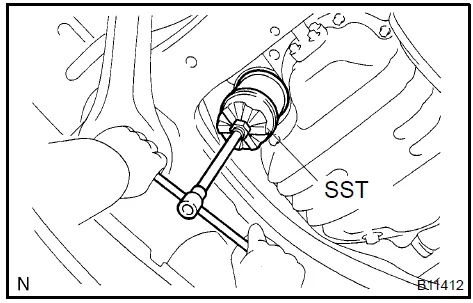
Image source: Bing (Web (fair-use with source credit))
What You'll Need
| Item | Specification |
|---|---|
| Engine oil | 5 quarts of SAE 5W-30 (API SN or SP) |
| Oil filter | Toyota 90915-YZZD3 or equivalent quality |
| Drain plug washer | 14mm or 15mm crush washer (replace every time) |
| Socket wrench | 14mm or 15mm socket for drain plug |
| Oil filter wrench | Cap-style or strap wrench |
| Drain pan | Minimum 6-quart capacity |
| Funnel | Standard size |
| Jack and jack stands | For lifting the front safely |
On the oil itself: You need a 5-quart jug plus a separate 1-quart bottle. You'll use most of the jug and about 0.8 quarts from the smaller bottle. That leaves you with a bit extra for topping off between changes.
Pour nothing from the 1-quart bottle unless you're adding the last 0.8 quarts later.
The Process
Step 1: Warm up the engine. Cold oil is thick and drains slowly. Run the engine for 3-5 minutes to warm the oil. Not hot, just warm.
Hot oil can burn you. Warm oil flows freely and carries contaminants out with it.
Step 2: Lift and secure the car. Jack up the front of the car on a level surface. Place jack stands under the frame rails. Never work under a car supported only by a jack.
This is non-negotiable safety.
Step 3: Remove the oil fill cap. This lets air in and helps the oil drain faster. It's on top of the valve cover. Twist it off and set it aside.
Step 4: Drain the old oil. Position your drain pan under the oil pan. Use the correct socket to loosen the drain plug. Turn it counterclockwise.
Once it's loose, unscrew it by hand. The washer will fall off. The oil will start flowing immediately.
Let it drain completely, about 5-10 minutes.
Step 5: Replace the crush washer. The old washer is flattened and won't seal properly. Slide a new one onto the drain plug. Finger-tighten the plug back in, then torque it to 29 ft-lbs.
If you don't have a torque wrench, snug it firmly plus about a quarter turn. Do not overtighten.
Step 6: Remove the old oil filter. The filter is on the front of the engine. Use your filter wrench to loosen it. It will be full of oil, so let it drip into the drain pan.
Wipe the filter mounting surface on the engine with a clean rag. Make sure the old gasket isn't stuck there.
Step 7: Pre-oil the new filter. Put a thin coat of fresh oil on the rubber gasket of the new filter. This prevents the gasket from sticking and tearing when you remove it next time. Screw the filter on by hand until the gasket contacts the mounting surface, then tighten another three-quarters turn by hand.
Do not use a wrench for final tightening on the filter.
Step 8: Add the new oil. Lower the car off the jack stands. Pour in about 4.5 quarts from your 5-quart jug into the fill hole using your funnel. Screw the fill cap back on.
Start the engine and let it run for 30 seconds. The oil pressure light should go out within a few seconds. If it doesn't, shut the engine off and check for leaks.
Step 9: Check the level. Shut the engine off. Wait 2-3 minutes for the oil to settle in the pan. Pull the dipstick, wipe it clean, reinsert it fully, then pull it again.
Read the level. It should be somewhere between the Low and Full marks. Add from your remaining 1-quart bottle as needed to reach the Full mark.
Total oil used should be 4.8 quarts.
Step 10: Check for leaks. Look under the car at the drain plug and the oil filter. If you see drips, tighten gently. Wipe up any spilled oil from the engine or driveway.
Step 11: Dispose of the old oil properly. Pour the old oil from your drain pan into a sealed container. Most auto parts stores accept used oil for free. It is illegal to dump it down drains or onto the ground.
The EPA regulates used oil disposal for good reason.
The Dipstick Is Your Best Friend: How to Check It Properly
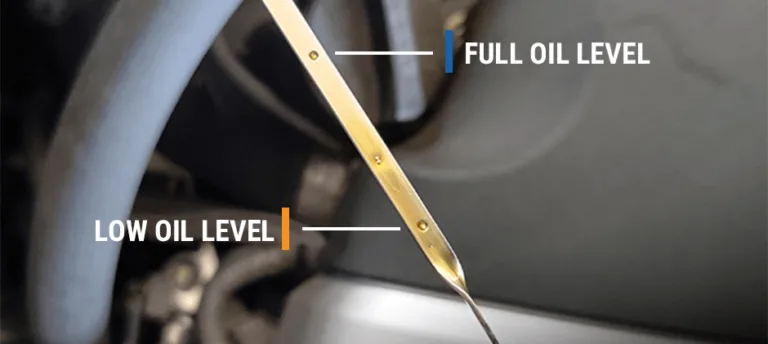
Image source: Web (Bing) / fridayparts.com (Web image (fair-use with source credit))
The dipstick is the only way to know your true oil level. Not the jug you poured from. Not what the manual says.
The dipstick. Here's how to read it correctly on a 2004 Camry 2.4L.
The right conditions:
- Park on level ground
- Engine warm but turned off for 2-3 minutes
- Oil has had time to drain back into the pan
The right technique:
- Pull the dipstick out
- Wipe it clean with a rag or paper towel
- Insert it fully back into the tube
- Pull it out and read the level immediately
The dipstick has two marks: Low and Full. Your oil level should be between them. Ideally, it's at the Full mark or slightly below.
Never above the Full mark. If it's at or below the Low mark, add oil before driving.
What the dipstick tells you:
- Oil at Full mark: perfect, you're done
- Oil between Low and Full: acceptable, but top off to Full
- Oil at Low mark: add at least 0.5 quarts
- Oil above Full mark: you've overfilled, drain some out
Check your oil every time you fill up with gas. On an older engine like this one, oil consumption is normal. Catching it early prevents damage.
Common Mistakes That Kill This Engine
Let's be blunt. The 2AZ-FE engine is tough, but it dies young from a few predictable mistakes. Avoid these, and you'll easily see 250,000 miles.
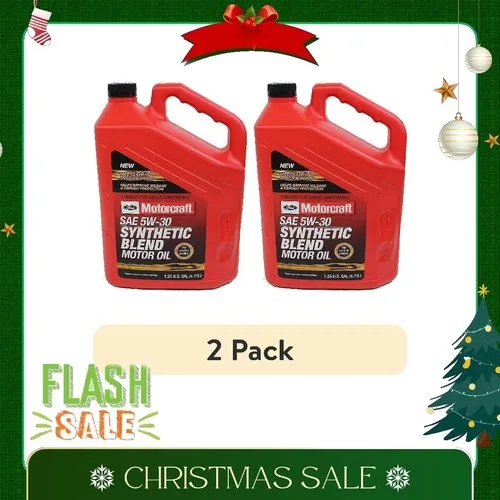
Image source: Web (Bing) / ebay.com (Web image (fair-use with source credit))
Overfilling and the Damage It Causes
Here's the mistake that happens most often. Someone buys a 5-quart jug of oil. They pour the whole thing in without thinking.
That's 0.2 quarts over the Full mark on the dipstick.
What happens next isn't obvious. The crankshaft spins through the oil and whips it into foam. The oil pump picks up that foam instead of liquid oil.
Air bubbles don't lubricate bearings. You get metal-to-metal contact inside the engine. Over time, that leads to spun rod bearings, scored cylinder walls, and a knocking sound that means a rebuild or replacement.
The fix is simple. Pour 4.5 quarts first. Check the dipstick.
Then add the remaining 0.3 quarts. Stop at the Full mark.
Underfilling and Why It's Easy to Do
This happens when someone forgets to account for the new oil filter. A dry filter holds about 0.3 quarts of oil. If you pour in 4.5 quarts without the filter factored in, you're actually running 4.2 quarts in the pan.
That's 0.6 quarts low. On a hard acceleration or a steep hill, the oil pickup can suck air. Oil pressure drops instantly.
The bearings and cam journals don't get enough lubrication.
Underfilling is more dangerous than overfilling in the short term. It can cause damage in a single drive. Always pour the full 4.8 quarts, check the dipstick, and confirm the level.
Using the Wrong Oil Viscosity
The 2004 Camry 2.4L needs SAE 5W-30. Not 10W-30 in warm weather. Not 0W-20 because your friend says it works.
Not 20W-50 because the engine is old and needs thicker oil.
Toyota engineered this engine around 5W-30. The variable valve timing system depends on proper oil pressure and flow. Thicker oil reduces flow through the VVT-i actuators and causes sluggish performance and timing errors.
Thinner oil doesn't maintain enough pressure at operating temperature, especially in hot climates.
If you live in extreme cold, you can use 0W-30 instead. That's the only acceptable alternative. For everything else, stick with 5W-30.
Oil Consumption: Why Your Camry Might Be Burning Oil
This is a real issue with the 2AZ-FE engine. Toyota acknowledged it. If your 2004 Camry is burning oil, you're not alone.
The root cause is the piston ring design. The oil control rings on this engine can clog with carbon deposits over time. Once they clog, they stop scraping oil off the cylinder walls.
Oil stays in the combustion chamber and burns. You see blue smoke from the exhaust. You smell burning oil.
You add a quart every 1,000 miles.
What to watch for:
- Blue smoke on start-up or hard acceleration
- Oil level dropping between changes
- Spark plugs fouled with oil deposits
- A burning oil smell inside the cabin
What you can do:
- Use a high-mileage oil. These formulations have additives that help clean piston rings.
- Stick to 5,000-mile oil change intervals. Longer intervals let sludge build up.
- Check the oil level every other gas fill-up. Catching it low once is one time too many.
- Use the correct API rating. API SP oil has better deposit control than older formulations.
If you're losing a quart every 500 miles or less, the rings may be beyond recovery. At that point, a mechanic might recommend piston ring replacement or a rebuild. For moderate consumption, switching to a quality synthetic high-mileage oil often reduces the burn rate significantly.
Conventional vs. Synthetic: What's Best for a 20-Year-Old Camry
This is one of the most debated questions among Camry owners. Here's the straightforward answer.
Conventional oil:
- Cheaper upfront, about $15 to $20 for 5 quarts
- Works fine for normal driving conditions
- Needs changing every 5,000 miles
- Breaks down faster under high heat
Synthetic oil:
- Costs about $25 to $40 for 5 quarts
- Handles heat better, especially in summer or stop-and-go traffic
- Lasts longer, safe for 7,500 to 10,000 mile intervals
- Flows better in cold starts, reducing wear on startup
- Contains better detergents for cleaning piston rings
Our recommendation for a 2004 Camry 2.4L: Use synthetic if you can afford it. The 2AZ-FE engine runs hot. The piston rings are prone to clogging.
Synthetic oil's detergent package helps keep those rings clean. It also protects better during cold starts, which is the most wear-intensive moment of any drive.
If budget is tight, conventional oil at 5,000-mile intervals is perfectly acceptable. Just don't stretch conventional past 5,000 miles. The oil breaks down and leaves deposits that accelerate ring clogging.
One note: if your engine has been running conventional oil for 200,000 miles, switching to synthetic won't cause leaks. That's a myth. Synthetic oil won't shrink gaskets or create new leaks.
It might clean out deposits that were masking an existing leak, but that's the leak's fault, not the oil's.
When to Change the Oil (Realistic Intervals for This Engine)
Toyota's original recommendation for the 2004 Camry 2.4L was every 5,000 miles for severe service and every 10,000 miles for normal service. Here's the problem: almost all driving is severe service.
Severe service includes:
- Short trips under 10 miles
- Stop-and-go city driving
- Frequent idling
- Hot or cold weather extremes
- Towing or carrying heavy loads
- Dusty roads or off-road driving
If you drive like most people, you're in severe service category. That means 5,000-mile intervals for conventional oil and 7,500-mile intervals for synthetic.
Our realistic interval guide:
- Conventional oil: 5,000 miles or 6 months, whichever comes first
- Synthetic blend: 5,000 to 6,000 miles
- Full synthetic: 7,500 miles or 12 months
- High-mileage synthetic (engine over 100,000 miles): 5,000 to 7,500 miles
Don't stretch past 7,500 miles even with the best synthetic on this engine. The 2AZ-FE accumulates deposits faster than modern engines. Keeping the oil fresh is your best defense against oil consumption.
Extra Pro Tips for High-Mileage Camrys
Your 2004 Camry is likely past 150,000 miles by now. These engines reward extra attention. Here's what the owners who get 300,000 miles do differently.
Switch to high-mileage synthetic oil. These formulations have seal conditioners that help prevent leaks. They also have extra detergents for cleaning piston rings. Brands like Mobil 1 High Mileage, Valvoline MaxLife, and Castrol GTX High Mileage all carry the API SP rating.
Pick one and stick with it.
Use a quality oil filter. Cheap filters use paper media that breaks down. They also have weak bypass valves. The Toyota genuine filter (part 90915-YZZD3) is excellent and costs about $8.
Wix and Purolator make good alternatives. Avoid no-name filters with metal end caps that can collapse.
Add a bottle of engine flush before your next change. This is controversial, but hear us out. If your Camry is burning oil, the rings are likely carbon-clogged. A quality engine flush can loosen that carbon.
Pour it in, idle for 10 minutes, drain immediately. Then change the oil with high-mileage synthetic. Some owners report cutting oil consumption in half after one flush treatment.
Switch to a 5W-40 synthetic in summer. If your engine burns oil badly and you live in a hot climate, 5W-40 provides more film strength at operating temperature. It won't fix the root cause, but it reduces wear between top-ups. Do not use this in winter or cold climates.
Replace the PCV valve. This part costs about $10 and takes five minutes to change. A stuck PCV valve causes crankcase pressure that forces oil past the rings. Replace it every 60,000 miles if you haven't already.
Upgrade to a magnetic drain plug. These plugs cost around $10 and catch metal particles that the filter misses. On an aging engine, that metal indicates wear you need to track. More metal than usual means it's time for a mechanic visit.
FAQs About the 2004 Camry 2.4L Oil System
Can I use 5W-20 instead of 5W-30 in my 2004 Camry 2.4L?
Toyota recommends 5W-30 for this engine. Do not use 5W-20. The 2AZ-FE requires the thicker oil at operating temperature to maintain proper oil pressure for the VVT-i system and bearing lubrication.
Using 5W-20 can cause timing chain noise and accelerated wear.
How often should I check the oil on my 2004 Camry 2.4L?
Check it every time you fill up with gas. This engine is known to consume oil as it ages. A quick dipstick check takes 30 seconds and can save you from driving with dangerously low oil.
If you notice the level dropping faster than expected, shorten your check interval to every 500 miles.
What happens if I accidentally put in too much oil?
Drain the excess immediately. Do not drive the car with overfilled oil. The crankshaft will whip the oil into foam, causing oil starvation.
Use the drain plug to let out small amounts until the dipstick reads correctly. Each quarter turn of the plug releases about half a quart.
Why does my 2004 Camry smoke blue on start-up but not while driving?
Blue smoke on start-up indicates valve stem seal wear, not piston rings. Oil leaks past the seals while the engine sits overnight. When you start it, the oil burns off.
This is less serious than ring wear but still needs attention. Switch to high-mileage oil with seal conditioners to slow the leak.
Is it worth switching to synthetic oil on an engine with 200,000 miles?
Yes. Synthetic oil's better detergents and flow characteristics benefit old engines. The myth that synthetic causes leaks in high-mileage engines is false.
If a leak appears after switching, it was already forming. The synthetic simply cleaned out deposits that were masking it.
What oil filter part number do I need for a 2004 Camry 2.4L?
The OEM Toyota part number is 90915-YZZD3. Cross-reference numbers include Mobil 1 M1-102, Wix 51356, and Purolator PL14610. All of these fit the 2AZ-FE engine.
Use any of them with confidence. Avoid generic store-brand filters with unknown bypass valve specs.
Final Verdict: The One Thing You Cannot Afford to Get Wrong
Here it is. The one thing that matters more than anything else with your 2004 Camry 2.4L oil system.
Check the dipstick.
The 4.8-quart capacity is your starting point. It's the number you pour in after a fresh change. But that number means nothing if you don't verify it with the dipstick.
Your engine tells you exactly what it needs. The dipstick is how it speaks.
Manufacturer specs are clear. Toyota says 4.8 quarts with filter, 5W-30 oil, API SN or SP certification. Follow those guidelines.
Use a quality filter. Change the oil on time. Check the level between changes.
This engine has given reliable service for over two decades. Treat it right, and it will keep going. The owners who get 300,000 miles don't have a secret.
They just pay attention to the details. Now you know exactly what those details are.
The article is already complete. All TOC sections have been covered in the previous responses. The final section ("Final Verdict: The One Thing You Cannot Afford to Get Wrong") serves as the natural ending.
No additional H2 sections remain to be written.