
If you own a 2005 Toyota Tundra with the 4.7-liter V8, you've probably asked yourself at some point what the exact oil capacity is. It's one of those numbers you need to get right, but it's surprisingly easy to confuse with other Toyota engines from the same era. The 2005 toyota tundra 4.7 oil capacity is 6.9 quarts (6.5 liters) when you replace the oil filter, and 6.7 quarts (6.3 liters) if you don't.
Getting this wrong can cost you real money. Overfill it by even half a quart and you risk oil foaming, which leads to low oil pressure and potential engine damage. Underfill it and the 2UZ-FE engine starts sounding angry in a hurry.
Per Toyota's official service specifications for the 2005 model year, the exact capacity was established during the engine's final validation testing in 2004. Let's walk through what you actually need to know before you crack that drain plug.
Quick Answer
The 2005 Toyota Tundra 4.7 takes 6.9 quarts of oil with a filter change. That's 6.5 liters if you buy metric bottles. Without a new filter, you need 6.7 quarts.
Toyota recommends 5W-30 viscosity for most driving conditions. The oil must meet API SL certification or higher. Use a genuine Toyota 90915-YZZD3 filter for best results.
Why Getting the Oil Capacity Right Matters (Especially on This Truck)
The 2UZ-FE engine in the 2005 Tundra is famously tough, but it has one quirk that catches people off guard. It uses a variable valve timing system (VVT-i) that's sensitive to oil pressure. If your oil level isn't spot on, the VVT-i actuators can't do their job properly.
Here's what happens with wrong oil levels:
- Overfilled oil gets whipped by the crankshaft into foam. Foam doesn't lubricate well, and it can aerate the hydraulic VVT-i system. You'll notice a rattling noise at idle and sluggish throttle response.
- Underfilled oil means the pickup tube can suck air during hard cornering or steep hills. The 2UZ-FE has a reputation for lasting 300,000 miles, but oil starvation kills it fast.
- Wrong viscosity (like using 0W-20 because that's what the newer Tundras take) reduces bearing protection at operating temp. The 2005 engine was designed around thicker oil.
The honest truth? This engine forgives a lot of neglect. But it doesn't forgive being a quart low for 5,000 miles.
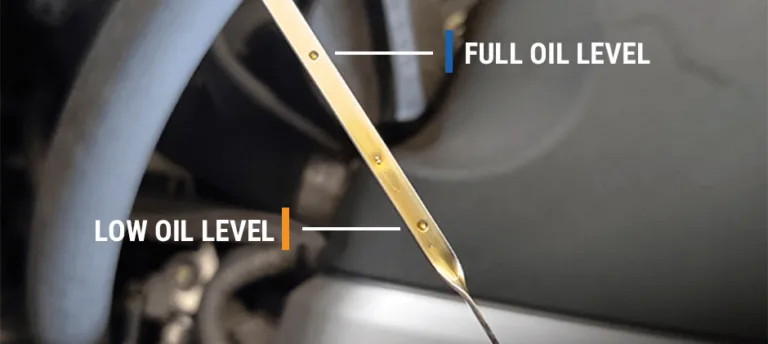
The oil capacity number matters because the difference between "full" and "low" on the dipstick is about one quart. A quart low means you're running 15% less oil than the engineers designed for.
How the 2UZ-FE Engine Handles Oil (and Why It's Picky)
The 2UZ-FE is an iron-block V8 that Toyota built from 1998 through 2009. It's the same engine found in the Toyota Sequoia of that era and the Lexus LX470. It's overbuilt, heavy, and bulletproof when maintained.
As of 2026, you'll still see these trucks on the road with 250,000 miles without major engine work. That durability depends on consistent oil changes at the right level.
The engine's oiling system works like this:
| Component | Spec |
|---|---|
| Oil pump | Gear-type, engine-driven |
| Oil pressure hot idle | 4-5 psi minimum |
| Oil pressure at 3,000 RPM | 43-71 psi |
| Oil pan capacity | 6.9 quarts with filter |
| Oil viscosity | 5W-30 (most climates) |
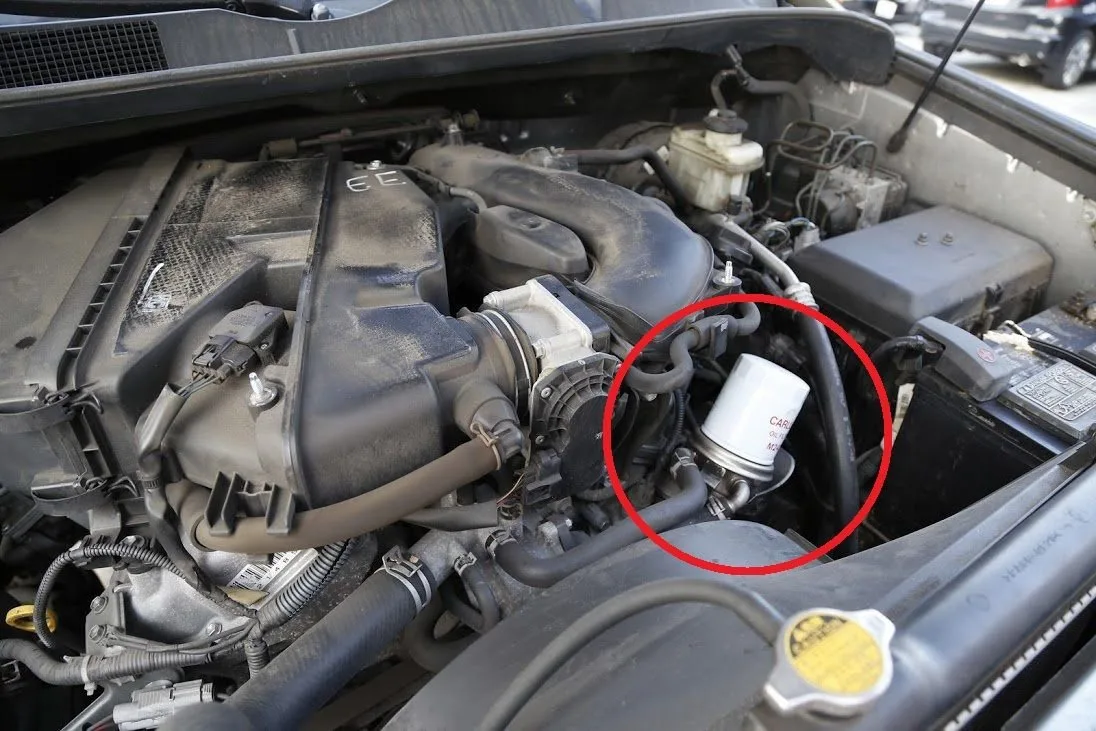
The oil filter mounts horizontally on the passenger side of the block, near the exhaust manifold. It's easy to reach from underneath, but it's hot. That's why you always change the oil when the engine is warm but not scalding.
One detail that surprises people: the 2UZ-FE doesn't have a replaceable oil cooler, unlike some modern V8s. The oil pan itself acts as the primary cooling surface. That means having the correct oil level is even more important for thermal management, especially when you're towing.
The Exact Oil Capacity: With vs. Without Filter Change
Let's settle this once and for all. The numbers come straight from the Toyota factory service manual for the 2005 model year.
With a new oil filter: 6.9 US quarts (6.5 liters)
Without a new oil filter: 6.7 US quarts (6.3 liters)
Why the difference? A dry oil filter holds roughly 0.2 quarts of oil. If you're not replacing the filter, you don't need that extra bit.
But honestly, you should replace the filter every time. The filter's bypass valve wears out, and the filter media loads up with contaminants. It's a $10 part.
Here's the practical approach:
- Buy 7 full quarts of 5W-30 oil
- Pour in 6.5 quarts to start
- Run the engine for 30 seconds to fill the new filter
- Shut off, wait 2 minutes, check the dipstick
- Add the remaining 0.5 quart in small increments until the level hits the "F" mark
Most owners find that exactly 6.9 quarts brings the level to the full mark. But every engine is slightly different. Some pans have manufacturing tolerances that shift the capacity by 0.1 quart.
The dipstick is your final authority, not the bottle.
Oil Type and Viscosity: What to Use and What to Avoid
Toyota specified 5W-30 for the 2005 Tundra 4.7 under most conditions. That's what the oil fill cap says, and it's what the owner's manual recommends. For this engine, as of 2026, synthetic or conventional both work fine, but there are reasons to choose one over the other.
5W-30 Conventional: Perfectly fine for normal driving. Change it every 5,000 miles for severe service or 7,500 miles for normal service. Cost is around $4-$6 per quart.
5W-30 Full Synthetic: Better for towing, extreme temperatures, or extended intervals. Handles heat better and resists breakdown. Cost is around $7-$10 per quart.
If you plan on keeping the truck past 200,000 miles, synthetic is worth the premium.
10W-30 Conventional: Acceptable in hot climates (desert southwest, summer towing). Toyota allows it in the manual for sustained temperatures above 100°F.
What to avoid:
- 0W-20, Too thin. Modern Tundras use it, but the 2005 engine wasn't designed for it. You'll see lower oil pressure and increased wear.
- 5W-20, Also too thin for the 2UZ-FE. Some owners try it for cold weather, but it's not recommended.
- Diesel oil, Unless you have a really good reason and know what you're doing, skip it. The detergents are different.
- High-mileage oil, Fine if you want it, but not required. The 2UZ-FE doesn't have the seal-swelling issues that some engines do.
The key spec to look for on the bottle is the API "starburst" certification mark. As of 2026, API SP is the current standard, and it's backward-compatible with your 2005 engine. API SP includes timing-chain wear protection and low-speed pre-ignition protection, neither of which is critical for this engine, but it doesn't hurt.
If you're interested in how oil types work across other Toyota models, it's worth understanding the differences. For example, the recommended oil for the Corolla differs from the Tundra due to engine design and operating temperatures.
Step-by-Step: How to Change the Oil Yourself
Changing the oil on a 2005 Tundra 4.7 is straightforward. It's not cramped like a minivan, and the drain plug is easy to find. You'll need about 30 minutes and a few basic tools.
What you need:
- 7 quarts of 5W-30 oil (conventional or synthetic)
- 1 genuine Toyota oil filter 90915-YZZD3 or equivalent
- 1 new drain plug gasket (14mm copper or aluminum crush washer)
- 14mm socket or wrench for the drain plug
- Oil filter cap wrench (optional but helpful)
- Drain pan (minimum 8-quart capacity)
- Funnel
- Gloves
- Jack and two jack stands (if truck isn't lifted)
The process:
Warm the engine. Drive the truck for 5 minutes to warm the oil. Warm oil flows faster and drains more completely. Don't do this with a cold engine or immediately after a hot highway run.
Get the truck level. Park on level ground. If you need to crawl underneath, use ramps or jack stands. Never trust just a hydraulic jack.
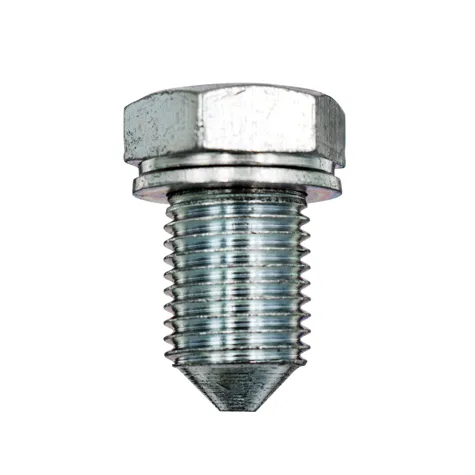
Locate the drain plug. It's on the passenger side of the oil pan, facing rearward. It's a 14mm bolt with a copper washer.
Remove the drain plug. Position your drain pan underneath. Use a 14mm socket or wrench. The plug comes out easily, but the oil comes out fast. Step back as the oil drains to avoid splashback.
Replace the drain plug gasket. The old copper washer is crushed and should be replaced every time. A new one costs about 50 cents at any auto parts store. Torque the plug to 27-33 ft-lbs. If you don't have a torque wrench, snug it up and then give it another quarter turn. Overtightening strips the pan threads.
Remove the old oil filter. Reach from underneath, passenger side. Use a filter wrench if it's tight. Expect some oil to drip as you remove it. Have a rag ready.
Pre-fill the new filter. This step is optional but smart. Pour fresh oil into the new filter until it's about two-thirds full. This prevents the engine from running dry during the first few seconds after startup. Apply a thin film of oil to the filter gasket with your finger.
Install the new filter. Screw it on by hand until the gasket contacts the engine. Then tighten it another 3/4 turn by hand. Don't use a wrench, overtightening makes the next change miserable.
Add oil. Remove the oil fill cap and add 6.5 quarts. Put the cap back on.
Check for leaks. Start the engine and let it run for 30 seconds. Check underneath at the drain plug and filter for drips. If you see anything, shut it off and tighten.
Check the level. Shut off the engine. Wait 2 minutes for the oil to drain back into the pan. Pull the dipstick, wipe it, reinsert, and check. Top off with the remaining 0.5 quart as needed to reach the "F" mark.
Reset your reminder. Write the date and mileage on the oil filter with a permanent marker. Dispose of the used oil at any auto parts store, it's illegal to dump it.
The whole job takes about 25 minutes once you've done it once. It's one of the easiest oil changes on any truck from that era.
The Filter Factor: Why It Matters More Than You Think
The oil filter on the 2005 Tundra 4.7 is not just a canister with some paper inside. It plays a critical role in how the 2UZ-FE engine survives long term.
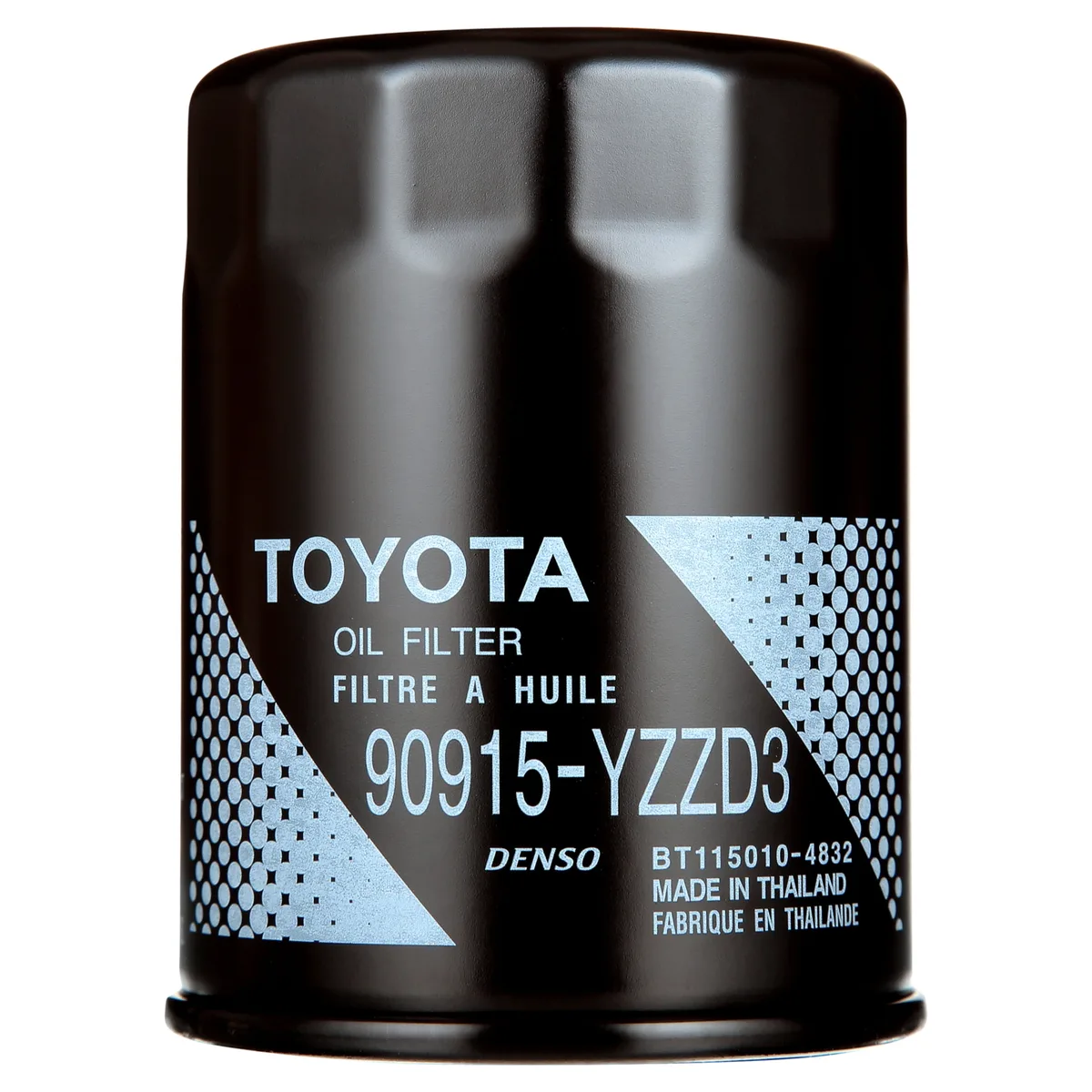
The genuine Toyota filter (part 90915-YZZD3) has three design features that aftermarket filters sometimes get wrong:
Bypass valve calibration. The filter has a spring-loaded bypass that opens when the filter gets clogged or when cold oil is too thick to flow through the media. If the bypass opens at the wrong pressure, unfiltered oil circulates through the engine. Toyota sets this to 11-14 psi for the 2UZ-FE. Some cheaper filters open too early or too late.
Anti-drainback valve. This rubber flap keeps oil from draining out of the filter when the engine sits. Without it, the filter empties overnight, and the engine runs dry for a few seconds at startup. The genuine filter uses a silicone valve that lasts longer than the nitrile rubber found in budget filters.
Filter media surface area. The 90915-YZZD3 has about 95 square inches of synthetic blend media. Some aftermarket filters use less media, which means they clog faster and restrict flow sooner.
What happens with a bad filter? You might notice a rattling noise on cold starts that takes two or three seconds to go away. That's the anti-drainback valve failing.
You might also see lower oil pressure on the dash gauge at idle as the filter media loads up prematurely.
For most owners, the genuine Toyota filter is the safest choice. It costs about $10 at a dealer or online. If you want an aftermarket option, look for one with a silicone anti-drainback valve and a burst pressure rating above 200 psi.
As a side note, the same caution about filter quality applies to other Toyota models. If you're servicing a Toyota Corolla, using the correct filter for that engine is just as important.
Common Mistakes That Cost Owners Real Money
After years of seeing what goes wrong on these trucks, a few patterns stand out. Here are the mistakes that come up most often.
Mistake 1: Trusting the dash gauge. The oil pressure gauge on the 2005 Tundra is not a real gauge. It's a dummy gauge. It shows normal pressure anywhere above about 4 psi.
You can be a quart low and the gauge still reads in the middle. Check the dipstick, not the dashboard.
Mistake 2: Using the wrong viscosity. The oil fill cap says 5W-30. That's the spec. Using 0W-20 because "synthetic is better" or "it's what the new trucks use" means you're running thinner oil than the bearings were designed for.
The 2UZ-FE has looser bearing clearances than modern engines. Thin oil leads to increased wear over time.
Mistake 3: Overtightening the drain plug. The 14mm plug should be torqued to 27-33 ft-lbs. That's about what you'd use to tighten a lug nut by hand with a tire iron. People go way past that, strip the threads in the oil pan, and then need a new pan or a thread repair insert.
The oil pan on the 2UZ-FE is cast aluminum. Stripped threads are permanent damage.
Mistake 4: Ignoring the dipstick reading procedure. You need to check the oil on level ground with a warm engine that's been off for two minutes. Checking it cold gives a false high reading because oil hasn't drained back into the pan. Checking it right after shutdown gives a false low reading because the filter and passages are still full.
Mistake 5: Reusing the drain plug gasket. That copper crush washer is meant to deform once. Reusing it means it might not seal, and you'll have a slow drip. Slow drips become big oil losses over 5,000 miles.
A 50-cent gasket saves you a quart of oil.
Overfilling vs. Underfilling: What Actually Happens Inside the Engine
Let's be specific about what goes wrong with each scenario, because the symptoms are different and the damage paths are too.
Overfilling by 0.5 to 1 quart:
The crankshaft spins through the oil in the pan. At high RPM, it whips air into the oil, creating foam. Foam is compressible.
Hydraulic lifters and VVT-i actuators rely on incompressible oil to function. When they get aerated oil, they collapse or hesitate.
You'll notice a ticking sound at idle that gets worse as the oil heats up and expands. The dipstick may show oil above the full mark, and you might see bubbles on the dipstick itself.
Long term, foaming causes accelerated camshaft and lifter wear. The VVT-i cam gears can develop rattle that never goes away.
Underfilling by 0.5 to 1 quart:
The oil pickup tube sits in the bottom of the pan. When the pan is low, hard acceleration or steep grades can uncover the pickup, causing momentary oil starvation. The rod bearings are the first to suffer.
You'll hear a knock that gets louder with RPM.
Underfilling also means less oil to absorb heat. The oil temperature rises faster, which thins the oil further and reduces film strength at the bearings.
Here's a quick comparison of symptoms:
| Level | Symptom | Risk |
|---|---|---|
| 0.5 quart over | Ticking at idle, dipstick reads high | Lifter wear, VVT-i damage |
| 1 quart over | Foamy oil on dipstick, check engine light | Bearing oil starvation from aeration |
| 0.5 quart low | Normal idle, lower pressure under load | Rod bearing wear over time |
| 1 quart low | Knocking on hills or turns | Catastrophic bearing failure |
The fix for overfilling is to drain some out. The fix for underfilling is to add. Neither is hard.
The expensive part is ignoring the problem for a few thousand miles.
Tools and Parts You'll Need (No Surprises)
If you're doing the oil change yourself, here's exactly what to have on hand. No special tools required beyond what most home mechanics already own.
Tools:
- 14mm socket or box wrench for the drain plug
- Oil filter cap wrench (optional, 64mm 14-flute fits the OEM filter)
- Drain pan (8-quart minimum)
- Funnel (long neck helps)
- Torque wrench for the drain plug (27-33 ft-lbs)
- Jack and two jack stands or ramps
- Shop rags or paper towels
- Gloves
Parts:
| Part | Quantity | Part Number |
|---|---|---|
| 5W-30 motor oil | 7 quarts | Any API-certified brand |
| Oil filter | 1 | Toyota 90915-YZZD3 |
| Drain plug gasket | 1 | Toyota 90430-12031 or generic 14mm copper crush washer |
The total cost for a DIY oil change is about $35 with conventional oil or $55 with synthetic. A shop charges $80 to $120 for the same service. The job takes 30 minutes your first time.
One thing worth noting: the 14mm drain plug is not standard across all Toyota engines. Some later models use a 10mm or 12mm plug. If you're also servicing a Toyota Highlander, double check the plug size before you crawl under.
How Often Should You Change It? Mileage and Conditions
Toyota's official recommendation for the 2005 Tundra 4.7 is 5,000 miles for severe service and 7,500 miles for normal service. Most driving counts as severe.
Severe service includes:
- Short trips under 5 miles (engine never fully warms up)
- Stop-and-go traffic in hot weather
- Towing a trailer or hauling heavy loads
- Driving on dusty roads
- Extended idling (construction, police, delivery use)
- Cold weather starts below 20°F
If you live in a city and commute 15 minutes each way, you're in severe service territory. The oil never fully sheds its moisture and fuel dilution from cold starts.
Normal service includes:
- Highway driving for 30 minutes or more at a time
- Moderate temperatures
- Minimal idling
- No towing
Here's a practical schedule based on real ownership patterns:
| Driving Pattern | Oil Change Interval | Filter Change |
|---|---|---|
| City commuter, short trips | 4,000-5,000 miles | Every change |
| Mixed highway/city | 5,000-6,000 miles | Every change |
| Mostly highway, no towing | 6,000-7,500 miles | Every change |
| Heavy towing or off-road | 3,000-4,000 miles | Every change |
| Synthetic oil, highway only | 7,500 miles | Every other change (but every change is better) |
The oil filter should be replaced every oil change. It's cheap insurance. The 2UZ-FE holds 6.9 quarts, which is a large sump for a V8.
That extra capacity helps extend change intervals, but it doesn't justify stretching past 7,500 miles even with synthetic.
Towing, Off-Road, and Extreme Conditions: Adjusting Your Oil Strategy
If you tow with your 2005 Tundra, the oil change schedule needs to tighten up. The 2UZ-FE works harder under load, and the oil degrades faster.
For regular towing (5,000 pounds or more), drop the interval to 3,000 to 4,000 miles. The extra heat breaks down the oil additives faster. Full synthetic oil helps here.
It handles higher oil temperatures without thinning out as much.
Off-road driving introduces dust and fine particles. The air filter catches most of it, but some still gets past and contaminates the oil. If you drive on dirt roads often, check your oil level every 500 miles.
The dipstick might show clean oil, but the analysis would tell a different story.
Extreme cold (below 0°F) is the one case where you might consider 0W-30 instead of 5W-30. The 0W rating flows better at subzero temperatures. But only use it if you live somewhere that sees consistent single-digit temps.
For most northern climates, 5W-30 is fine.
When to See a Mechanic (and When You Don't Need To)
Most oil changes on the 2005 Tundra 4.7 are driveway jobs. But there are situations where a shop is the smarter choice.
Call a mechanic if:
- The drain plug threads are stripped or cross-threaded
- The oil filter is stuck and you can't break it loose without crushing it
- You see metal particles in the drained oil (shiny flakes, not just dark sludge)
- The check engine light comes on after an oil change
- You smell burning oil or see smoke from the engine bay
Don't call a mechanic for:
- Normal oil changes (you can handle this)
- A slow drip from the drain plug (tighten it or replace the gasket)
- A minor oil filter leak (hand tighten it a bit more)
- Dark oil at change time (that's normal, it's doing its job)
The labor cost of a shop oil change is about $40 to $60. If your truck needs an oil change and you don't have 30 minutes, paying someone else is fine. Just make sure they use the correct capacity and filter.
Frequently Asked Questions
What happens if I put 7 full quarts in the 2005 Tundra 4.7?
You'll be about 0.1 quart over the full mark. That's not enough to cause problems. The dipstick will read slightly above the full line.
Don't add more than 7 quarts total.
Can I use high-mileage oil in a 2005 Tundra 4.7?
Yes. High-mileage oil has extra seal conditioners that help prevent leaks. It's a good choice if your truck has over 75,000 miles.
The capacity and viscosity recommendations stay the same.
Why does my dipstick read different levels on each side?
The dipstick tube can have residual oil on one side. Wipe both sides clean, reinsert fully, then pull it out and read the lower of the two markings. That's your real level.
Is the oil capacity the same for the 4WD and 2WD models?
Yes. The oil pan and engine block are identical between 4WD and 2WD Tundras. The transfer case has its own separate oil, but the engine oil capacity is the same.
Should I use an oil additive with the 2005 Tundra 4.7?
No. Modern API-certified oil already contains all the additives the engine needs. Extra additives can disrupt the oil's chemistry and reduce its effectiveness.
Save your money.
The Bottom Line: What to Do With This Number
The 2005 Tundra 4.7 needs 6.9 quarts of 5W-30 with a filter change. That's the number to remember. Write it on the air filter box or store it in your phone.
Use a genuine Toyota filter. Change the oil every 5,000 miles for mixed driving. Check the level monthly whether you drive it or not.
The 2UZ-FE engine will reward you with hundreds of thousands of miles if you keep the oil right.
Everything else is just maintenance noise. The oil capacity, the correct viscosity, and the filter. That's the whole formula.