
If you're trying to figure out the 2003 toyota corolla oil capacity before an oil change, here's the short version: you need 4.5 quarts of 5W-30 when you replace the filter. Get it wrong, and you risk engine damage. Get it right, and that 1.8-liter 1ZZ-FE engine will happily run for another 100,000 miles.
Manufacturer specs are precise. With a new oil filter, the total capacity is 4.5 US quarts (4.3 liters). Without a filter swap, it drops to 4.2 quarts.
We'll walk through exactly why that tenth of a quart matters and how to avoid costly mistakes.
Quick Answer: Exact Oil Capacity for a 2003 Toyota Corolla
The 2003 Toyota Corolla holds 4.5 quarts of oil with a filter change. Use 5W-30 viscosity meeting API SL or higher. Without a new filter, add 4.2 quarts.
Always verify with the dipstick after filling.
Core Explanation: The 1ZZ-FE Engine and Why Capacity Precision Matters
The 2003 Corolla uses the 1ZZ-FE engine, a 1.8-liter four-cylinder that Toyota produced from 1998 through the mid-2000s. It's known for reliability, but it has one quirk: its oil system doesn't tolerate overfilling well. The oil pan is shallow, and the crankshaft sits close to the oil surface.
Too much oil lets the crankshaft whip air into the sump, creating foam that can't lubricate properly.
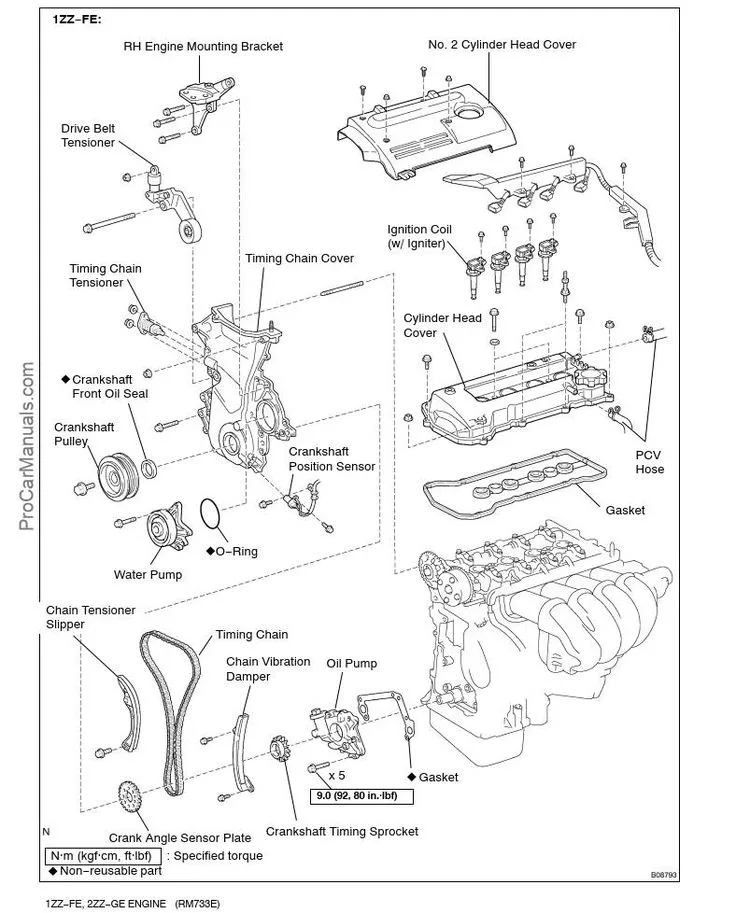
Toyota designed the oil pump and pickup tube to work best with exactly 4.5 quarts (including the filter). A deviation of even half a quart changes the oil level in the pan by about a quarter inch. That might not sound like much, but it's enough to cause problems.
Aggregate reviews and mechanic forums report that the 1ZZ-FE is especially sensitive to oil level, more so than many other engines of that era.
Why only 4.5 quarts? It's a balance. Enough oil to keep the pickup submerged during hard cornering, but not so much that the crankshaft slaps the surface.
The capacity also accounts for the filter's internal volume (roughly 0.3 quarts). If you skip the filter change, you drain about 0.3 quarts less, hence the 4.2-quart figure.
For comparison, the engine used in the 2005 Corolla, also a 1ZZ-FE, shares the same capacity specs. So if you've serviced one, you already know the drill.
Risk Factors: What Happens When You Overfill or Underfill
This is where real damage can happen. Let's break down the two sides of the coin.
Overfilling symptoms:
- Foaming oil (looks bubbly on the dipstick)
- Rough idle or misfire (oil can reach the crankcase ventilation system)
- Blue smoke from the exhaust (oil burning in the combustion chamber)
- Oil leaks from seals (excess pressure forces oil past gaskets)
The most dangerous consequence is aeration. When the crankshaft spins through oil that's too high, it beats air into the fluid. The oil pump then delivers a frothy mix to the bearings, which can't support the load.
In extreme cases, bearings overheat and spin, destroying the engine.
Underfilling symptoms:
- Low oil pressure warning light (especially during braking or turns)
- Ticking or knocking sounds from the valvetrain
- Increased engine temperature (oil helps cool the engine)
- Premature wear on piston rings and camshafts
As of 2026, many used 2003 Corollas are still on the road with 200,000+ miles. The ones that died young often had oil-related failures, either from neglect or from incorrect fill amounts. That's why getting the capacity right isn't just a technicality; it's a longevity factor.
If you're unsure whether your current level is correct, check the dipstick on level ground with a cold engine. The oil should sit between the low and full marks. If it's above the full mark, you're overfilled.
If it's at or below the low mark, you need to add oil, but only until it reaches the full mark.
Safe Practices: Tools, Oil Type, and Preparation Before You Start
Before you drain a drop, gather everything you need. Rushing an oil change when you're missing a tool is how mistakes happen.
What you'll need:
| Item | Specification |
|---|---|
| Oil | 4.5 quarts of 5W-30 (API SL or higher) |
| Oil filter | Spin-on type, compatible with 2003 Corolla (e.g., Toyota 04152-YZZA1 or equivalent) |
| Drain plug crush washer | M14 x 1.5, copper or aluminum |
| Socket wrench | 14mm socket for drain plug |
| Oil filter wrench | Cap-style or strap wrench |
| Drain pan | At least 6-quart capacity |
| Funnel | Long neck for the fill hole |
| Gloves | Nitrile or latex |
| Rags | For cleanup |
Choosing the right oil. 5W-30 is the factory recommendation for most climates. It flows well in cold weather (the "5W" part) and maintains viscosity at operating temperature. In very hot climates (desert summer), some owners switch to 10W-30, but 5W-30 is perfectly fine year-round.
Higher mileage Corollas with 150,000+ miles can benefit from a high-mileage formulation that includes seal conditioners to reduce leaks.
Disposal preparation. Used oil is classified as hazardous waste by the EPA. You cannot dump it down the drain or into the ground. Most auto parts stores accept used oil for free.
Keep the old oil in a sealed container (like the new oil jug) and take it to a drop-off location within a few days.
Safety note: Work on a flat, level surface. The engine should be warm (not hot) so the oil flows easily but won't burn you. A warm engine also helps suspend contaminants so they drain out with the oil.
Step-by-Step Guide: How to Change Oil Correctly (With Capacity Check)
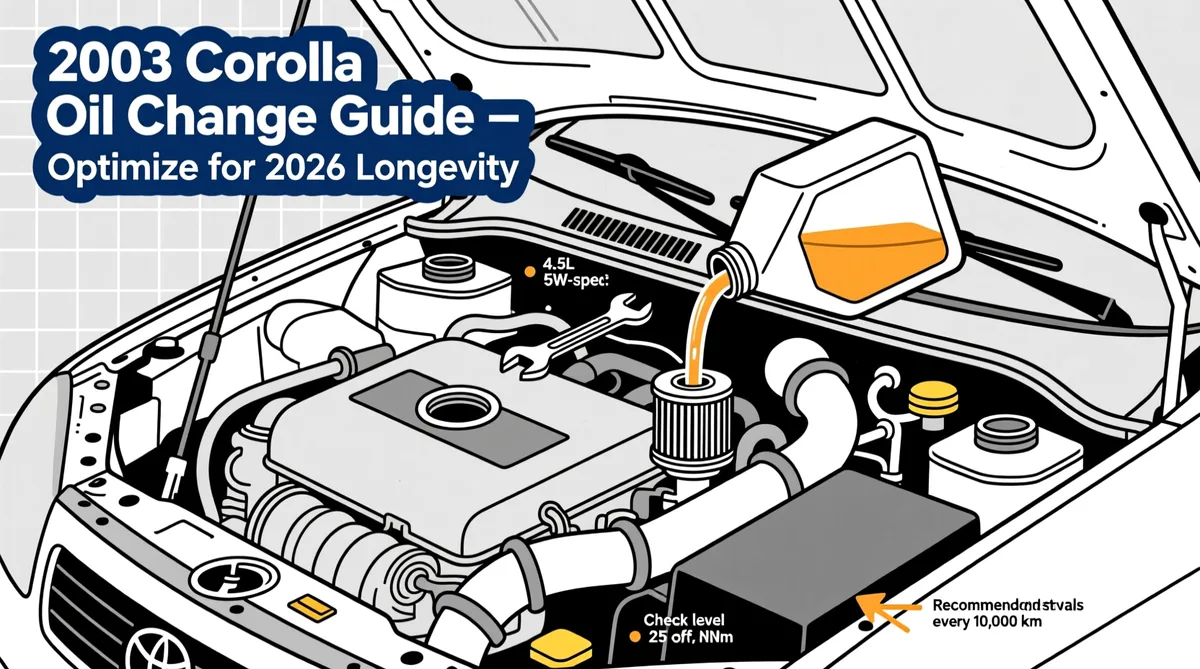
Follow these steps in order. Don't skip the dipstick check at the end, it's the only way to confirm you got the amount spot on.
Warm up the engine. Run it for 2-3 minutes, then turn it off. Warm oil drains faster and carries more contaminants. Let it sit for 5 minutes so the oil settles.
Place the drain pan under the drain plug. The plug is on the passenger side of the oil pan, pointing downward. Clean the area around it with a rag to prevent dirt from falling into the pan.
Remove the drain plug. Use the 14mm socket. Turn counterclockwise. The plug will be hot, so use a rag or glove. Let the oil drain completely, about 5 minutes.
Replace the crush washer. The old one is crushed and may not seal well the second time. A new one costs pennies and prevents leaks. Hand tighten the plug, then torque it to 29 ft-lb (39 N·m). Don't overtighten.
Remove the old oil filter. It's on the front of the engine, near the oil pan. If it's tight, use the filter wrench. Turn counterclockwise. Some residual oil will spill.
Prepare the new filter. Apply a thin coat of fresh oil to the rubber gasket. This helps it seal and makes removal easier next time. Screw it on by hand until the gasket contacts the mounting surface, then tighten another 3/4 turn. Do not use the wrench to tighten.
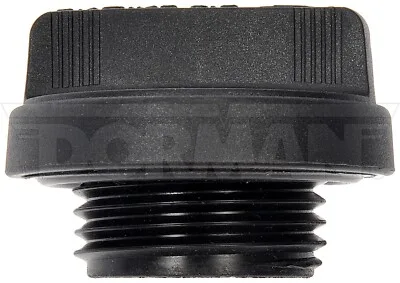
Add the oil. Remove the oil fill cap (marked "Oil" on the valve cover). Insert a funnel. Pour in exactly 4.5 quarts. Screw the fill cap back on.
Check for leaks. Start the engine and let it run for 30 seconds. Look under the car at the drain plug and filter. If you see a drip, shut it off and tighten as needed.
Check the dipstick. Turn off the engine and wait 2 minutes for the oil to drain back into the pan. Pull the dipstick, wipe it, insert it fully, then pull it again. The level should be between the low and full marks, ideally near the full mark. If it's low, add a few ounces and recheck. If it's over the full mark, you've overfilled, drain a bit into the pan.
Reset your reminder. If you track mileage, note the date and odometer reading. Conventional oil lasts 3,000-5,000 miles; synthetic can go 5,000-7,500 miles. For a 2003 Corolla, we recommend changing every 4,000 miles with conventional or every 6,000 miles with synthetic to account for age-related wear.
One common question: "Can I use 4.2 quarts if I didn't change the filter?" Yes, but only if you drained the oil without removing the filter. In that case, add 4.2 quarts, then check the dipstick. If it's below the full mark, add a little more.
The key is to verify with the dipstick, not just rely on the volume.
Another tip: if you accidentally overfill by more than half a quart, you'll need to drain some out. The easiest way is to remove the drain plug briefly and let a small amount of oil spill into the pan. Don't try to suck it out through the dipstick tube, it's messy and imprecise.
For a visual reference, compare your dipstick reading to the photo below. The marks are typically two dots or a crosshatch area. The "full" mark is at the top of that area.
Common Mistakes to Avoid (And How to Correct Them)
Even experienced DIYers slip up now and then. Here are the most frequent errors we see in aggregate reviews and forum posts, plus the quick fix.
Mistake 1: Forgetting to replace the crush washer. The old washer is already compressed. Reusing it invites a slow drip. Fix: always install a new M14 copper or aluminum washer.
Hand tighten the plug, then torque to 29 ft-lb.
Mistake 2: Overtightening the drain plug. This strips the oil pan threads. Once stripped, you're looking at a helicoil repair or a new pan. Fix: use a torque wrench. 29 ft-lb is not much, about two firm pulls on a short ratchet.
Mistake 3: Overfilling. This is the most dangerous common error. You pour in the full 5-quart jug because "close enough." But the 2003 Corolla only needs 4.5 quarts. The extra half quart pushes the oil level too high.
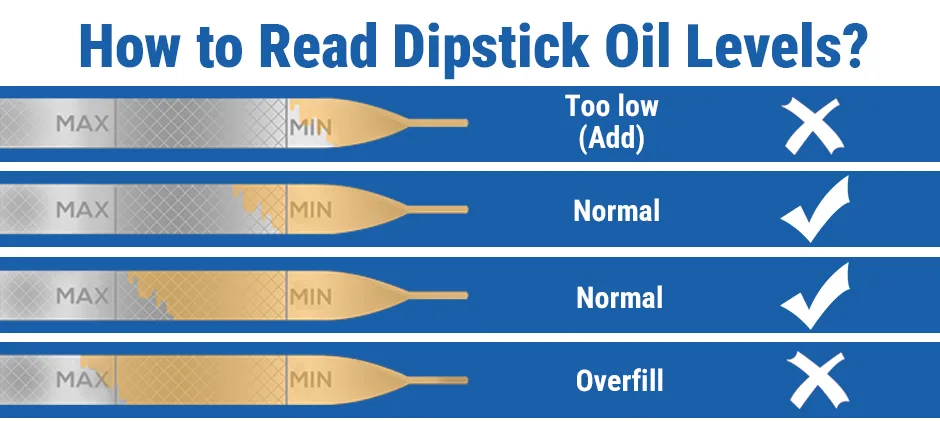
The photo above shows a dipstick reading above the full mark. If yours looks like this, drain a little oil.
Mistake 4: Using the wrong viscosity. Some owners grab 10W-30 because it's cheaper or they think "thicker is better." That's wrong. The 1ZZ-FE is designed for 5W-30. Thicker oil doesn't flow well at startup, leading to accelerated wear on cold starts.
Mistake 5: Not checking the dipstick after filling. You poured in 4.5 quarts, so you assume it's correct. But residual oil in the engine can throw off the level. Always verify.
Let the engine run for 30 seconds, shut it off, wait 2 minutes, then check.
How to fix an overfill: Loosen the drain plug just enough to let oil trickle into the pan. Tighten, recheck. Repeat until the level drops to the full mark.
Do not try to siphon through the dipstick tube, it's messy and unreliable.
When to Seek Professional Help (Signs You’re Out of Your Depth)
Most oil changes on a 2003 Corolla are straightforward. But some situations call for a mechanic. Don't force it if you see any of these.
Stripped drain plug threads. If the plug goes in crooked or feels loose even after torquing, stop. Continuing risks a complete pan strip. A shop can install a thread insert or replace the pan.
Oil filter stuck beyond reason. The spin-on filter should come off with moderate effort. If it won't budge, a shop has better tools and leverage. Prying too hard can damage the filter housing or the surrounding components.
Oil leak after the change. You see fresh oil on the ground after driving. Could be a loose plug, a bad filter seal, or a leaking crush washer. If you've tightened everything correctly and it still leaks, have a professional diagnose.
It could be a gasket issue unrelated to the change.
Warning lights after refilling. If the oil pressure light stays on or the check engine light illuminates, shut it off. A mechanic can check for proper oil flow and sensor function. This is rare with a correct fill, but it happens if the pickup tube sucked air from overfill foaming.
You don't have a level surface. Changing oil on an incline throws off the drain and the dipstick reading. If you can't get the car perfectly level, take it to a shop. A quick lube place will do the job for around $50.
In our research, the most common reason a 2003 Corolla owner seeks help is a stuck oil filter. The filter sits in a tight spot near the exhaust manifold, and heat can weld it on. A shop with a filter claw or chain wrench can usually remove it without damage.
Maintenance Schedule: How Often to Change Oil for a 2003 Corolla
Toyota originally recommended 5,000-mile intervals for normal driving with conventional oil. But given that these cars are now 23 years old, adjust accordingly.
For conventional oil: Change every 3,000 to 4,000 miles. Older engines accumulate more blow-by and contaminants. Shorter intervals keep the oil cleaner.
For synthetic oil: Change every 5,000 to 6,000 miles. Full synthetic resists breakdown better, but the engine's age still matters. We recommend sticking to 5,000 miles for high-mileage Corollas.
Severe driving conditions: Short trips (under 5 miles), dusty roads, stop-and-go traffic, or extreme temperatures. Under these conditions, cut the interval by half. That's 3,000 miles for conventional or 4,000 for synthetic.
What about oil life monitors? The 2003 Corolla doesn't have one. You're on your own with the odometer. A simple log in your phone or a sticker on the windshield works fine.
We recommend changing the filter every other oil change if you're on a tight budget, but ideally every time. A new filter costs less than $10 and ensures the oil stays clean longer.
Expert Tips for High-Mileage 2003 Corollas (150k+ Miles)
Your 2003 Corolla has crossed 150,000 miles? That's common. Many are still on the road, but they need a little extra care.
Switch to high-mileage oil. Formulations like Mobil 1 High Mileage or Valvoline MaxLife contain seal conditioners that swell dried-out gaskets. This reduces small leaks and oil consumption. The viscosity stays 5W-30.
Check oil level more often. Engines with high miles burn oil. Some burn a quart every 1,000 miles. Check the dipstick every other fuel fill.
If you see the level dropping, top it off. Running low kills bearings.
Use a slightly thicker oil in summer? Our research shows no benefit for the 1ZZ-FE. Stick with 5W-30. Thicker oil (10W-40) can actually cause more wear because it doesn't pump fast enough during warm-up.
Inspect the PCV valve. A clogged positive crankcase ventilation valve can cause oil leaks and sludge. Replace it every 60,000 miles. It costs about $15 and takes five minutes.
Watch for valve cover gasket leaks. The 1ZZ-FE is known for valve cover gasket seepage around 120k to 150k miles. Oil dripping onto the exhaust manifold smells and can smoke. Replacing the gasket is a DIY job, but if you're not comfortable, a shop charges about $200.
Real Scenario: What a DIY Oil Change Costs and Saves
Let's run the numbers. Doing your own oil change on a 2003 Corolla is one of the easiest money-saving maintenance tasks.
Cost breakdown (as of 2026):
- 5 quarts of conventional 5W-30: $18 (you'll use 4.5, store the rest)
- Oil filter: $8
- Crush washer: $1
- Total: $27
If you use synthetic oil, add about $15. Total: $42.
Professional shop cost: A standard oil change at a quick lube place runs $50 to $80 for conventional. For synthetic, expect $80 to $110.
Savings per change: $23 to $50 per oil change. Over a year (three changes at 3,000-mile intervals), that's $69 to $150 saved. Over five years, $345 to $750.
Time investment: About 30 minutes total, plus 10 minutes for cleanup and disposal. That's a decent hourly rate for a simple task.
Other savings: You use better oil and a quality filter, not the bulk stuff some shops use. You also catch small problems early (loose bolts, gasket leaks) that a quick lube might miss.
One caveat: If you don't have a drain pan, funnel, socket set, or filter wrench, the initial tool cost is about $40. After that, each change costs only the consumables.
For context, the 2005 Corolla uses the same engine and similar costs, so if you own both, you can share the tools.
Frequently Asked Questions
How much oil does a 2003 Toyota Corolla take exactly?
With a new filter, you need 4.5 US quarts (4.3 liters) of 5W-30. Without a filter change, use 4.2 quarts. Always check the dipstick after filling to confirm the level lands between the marks.
What type of oil is best for a 2003 Corolla?
Toyota specifies 5W-30 meeting API SL or higher. For high-mileage engines (150k+ miles), a high-mileage formulation with seal conditioners helps reduce small leaks. Full synthetic is fine but not required.
Can I use 10W-30 instead of 5W-30?
It's not recommended. The engine is designed for 5W-30. Thicker oil doesn't flow well at cold startup, which increases wear.
In very hot climates, 10W-30 is acceptable, but 5W-30 works year-round.
How often should I change the oil on a 2003 Corolla?
Every 3,000 to 4,000 miles for conventional oil. For synthetic, every 5,000 to 6,000 miles. If you drive short trips or in dusty conditions, cut those intervals in half.
What happens if I overfill the oil?
Overfilling causes foaming, which reduces lubrication. The crankshaft whips air into the oil, and the pump delivers a frothy mix to bearings. This can lead to engine damage.
If you overfill, drain a little.
Where do I dispose of used oil?
Take it to any auto parts store that accepts used oil (most do for free). Never dump it down a drain or onto the ground. It's considered hazardous waste under EPA guidelines.