
Thinking about the 2025 Toyota Tacoma, you're probably hearing a mix of excitement and concern. The fourth-gen truck is a ground-up redesign with a new platform and a turbocharged engine, but it's also generated a fair share of complaints. Our research into the 2025 toyota tacoma problems shows that while the truck brings serious improvements, it's also carrying some real headaches that could affect your decision.
Early production data from NHTSA and owner forums points to transmission issues, electrical glitches, and a few safety recalls that have already triggered stop-sale orders on some units. If you're in the market for a midsize truck, you need to know what's actually going wrong and whether those problems are dealbreakers.
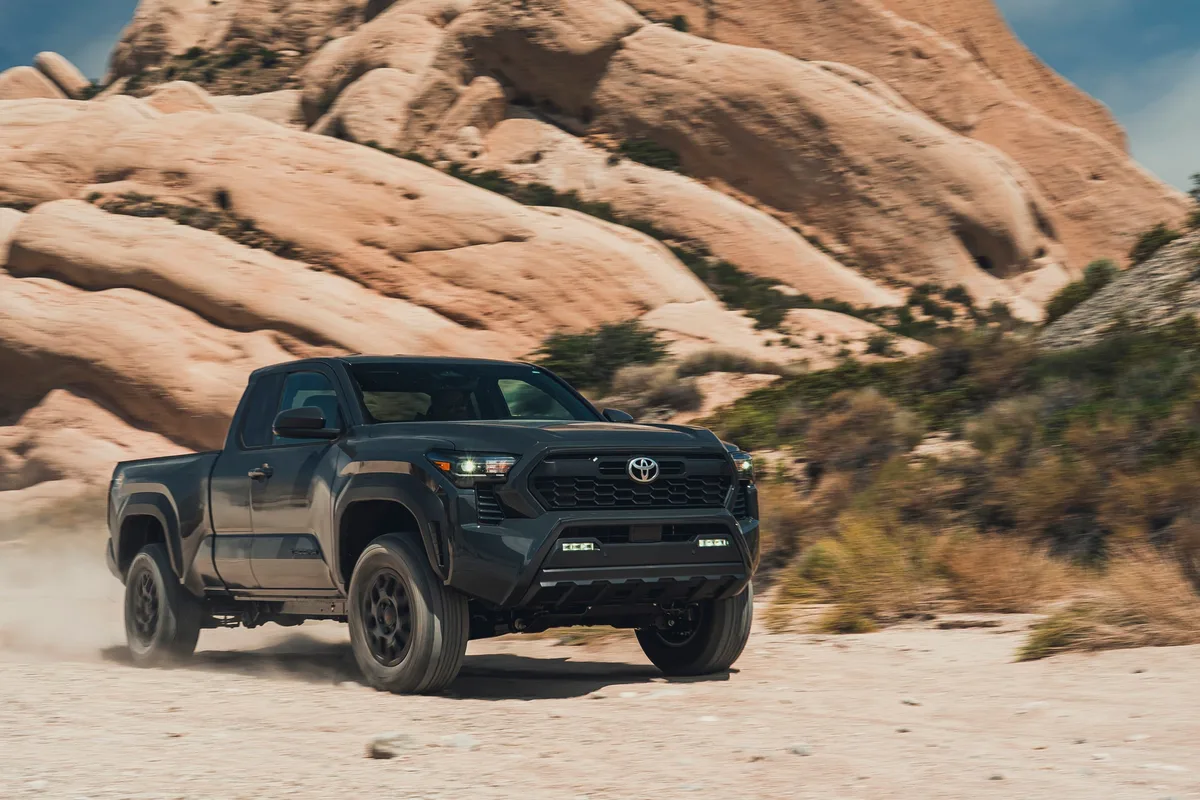
Image source: Bing (Web (fair-use with source credit))
Quick Answer
The 2025 Tacoma has known transmission hesitation, hybrid system noise, and infotainment glitches. Two safety recalls exist. One involves a fuel pump fire risk.
The other affects seat belt pretensioners. Not every truck has issues. Many owners report no major problems.
But the risk is higher than average for a first-year redesign. Check the VIN against open recalls before buying.
Why the 2025 Tacoma Generation is a Reliability Wildcard
The 2025 Tacoma represents a complete departure from the previous generation. Toyota dropped the long-running 3.5L V6 and the old 6-speed automatic. In their place sits a turbocharged 2.4L four-cylinder paired with an 8-speed automatic.
The hybrid i-FORCE MAX replaces the former V6's position as the top-tier powertrain.
That's a lot of new hardware in a single model year. And history shows that first-year redesigns from any manufacturer carry elevated risk. The TNGA-F platform the Tacoma shares with the Tundra and Sequoia is proven in those larger trucks, but the Tacoma's specific powertrain calibration, suspension tuning, and electronics are unique to this model.
What makes this generation particularly tricky is the mixed signals from official sources. Toyota's own TSBs acknowledge multiple drivetrain and infotainment issues. But the company has also issued running changes to address some of them.
That means a truck built in March 2025 might have fixes that one built in September 2024 doesn't.
Our research suggests the 2025 Tacoma is not a disaster. But it's not a safe bet either. It's a truck that demands careful inspection and a willingness to work through early teething problems.
The Real Problems: What Owners and Techs Are Actually Seeing
Before we get into the details, let's look at a visual overview of the problem areas reported by owners and service technicians. Understanding these hotspots helps you know what to check.
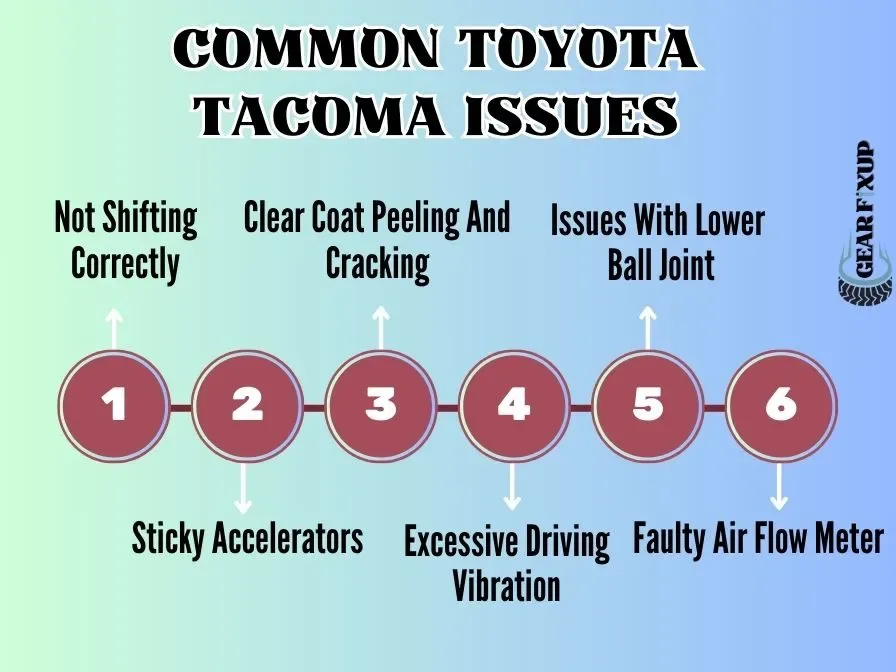
Image source: Bing (Web (fair-use with source credit))
High-Risk: Safety Recalls and Stop-Sale Issues
The most serious problems are the ones that can leave you stranded or worse. As of early 2026, NHTSA has issued two recalls for the 2025 Tacoma.
Recall 24V-534 involves the high-pressure fuel pump. A manufacturing defect can cause the pump to fail, leading to a fuel leak and potential fire risk. Toyota issued a stop-sale on affected trucks and instructed dealers to replace the pump.
If your truck falls under this recall, it's a priority fix.
Recall 24V-540 affects the seat belt pretensioners. The pyrotechnic device that tightens the belt during a crash may not deploy properly. This recall is less urgent but still needs attention.
Beyond recalls, there have been reports of the automatic emergency braking system activating falsely. This is a known issue with the Toyota Safety Sense 3.0 radar calibration. Some owners have experienced phantom braking on highways with no obstacles ahead.
Toyota has issued a TSB for this, but it requires a dealer visit to recalibrate the system.
Moderate: Drivetrain Complaints
The 8-speed automatic transmission is the most common drivetrain complaint. Owners report:
- Hesitation when accelerating from a stop
- Harsh downshifts when slowing down
- Rough shifts between 2nd and 3rd gear
- Occasional clunking sounds from the drivetrain
Toyota has released multiple ECU reflash TSBs to address shift logic. Some owners report that the updates improve behavior, but others say the transmission still feels unrefined compared to the old 6-speed.
The turbocharged 2.4L engine also has its share of issues. Turbo lag is noticeable from a stop, especially in the gas-only version. The i-FORCE MAX hybrid helps with low-end torque, but some owners report a vibration or drone during the transition between electric and gas power.
Low-Grade but Annoying: Infotainment, Trim, and Leaks
These are the problems that won't leave you stranded but will test your patience.
The infotainment system freezes or crashes during startup. Apple CarPlay drops connection randomly. The system takes too long to boot.
Toyota has issued several software updates, but the problem persists for some users.
The power tailgate on higher trims can fail. The actuator or latch mechanism sometimes stops working, leaving the tailgate stuck closed or open. This is a warranty repair, but it's inconvenient.
Roof leaks have been reported on trucks with the power sunroof. The drain tubes can become misaligned, allowing water to enter the cabin. This is a known issue that Toyota has addressed with a revised drain tube design.
Paint quality is also a concern. The clear coat is thin, and chips are common on the front bumper and hood. This is cosmetic but frustrating on a truck that costs over $40,000.
How the 2025 Tacoma Stacks Up Against the Midsize Competition
The Tacoma doesn't exist in a vacuum. If you're dealing with these problems, you might be wondering whether the competition is any better.
Ford Ranger, Chevy Colorado, Nissan Frontier — Comparative Risk
The 2024 Ford Ranger also went through a redesign. Early reports show fewer drivetrain complaints than the Tacoma, but the 10-speed transmission has had its own issues with harsh shifts. The 2.3L EcoBoost engine is well-tested, but the Ranger's infotainment system has similar glitchy behavior.
The Chevy Colorado and GMC Canyon have been relatively stable. The 2.7L turbo engine is proven, and the 8-speed transmission is the same Aisin unit shared with the Tacoma. However, the Colorado has had problems with the 8-speed's shift quality in cold weather.
GM has issued TSBs for this.
The Nissan Frontier is the outlier. It uses an older 3.8L V6 and a 9-speed automatic. It's less refined and less efficient, but it's also less prone to the kind of high-tech gremlins that plague the Tacoma.
If reliability is your top priority, the Frontier is worth a look.
Third-Gen vs. Fourth-Gen Tacoma: The Reliability Trade-Off
The 2016-2023 Tacoma (third generation) was known for its bulletproof 3.5L V6 and 6-speed automatic. It was slow, thirsty, and dated, but it was reliable. The fourth generation trades that reliability for modern features, better fuel economy, and improved ride quality.
For buyers who value reliability above all else, a well-maintained third-gen Tacoma is still a better bet. But if you want the latest safety tech, a more comfortable ride, and better towing capability, the 2025 model is worth considering despite the risks.
What the Official Data Actually Says
Let's look at the numbers. This is where the rubber meets the road.
NHTSA Recall and Complaint Counts (as of Present)
As of early 2026, NHTSA has recorded 2 recalls for the 2025 Tacoma. Owner complaints are still relatively low compared to the volume of trucks sold, but they are trending upward. The most common complaints are transmission-related, followed by electrical system issues and brake problems.
TSB Volume and Common Themes
Toyota has issued approximately 15 TSBs for the 2025 Tacoma as of early 2026. The most common themes are:
- Transmission shift logic (multiple TSBs)
- Infotainment system updates (software and hardware)
- Adaptive cruise control calibration
- Power tailgate actuator repair
- Sunroof drain tube alignment
The fact that Toyota has issued multiple TSBs on the same topic suggests that the initial fixes didn't fully resolve the issues. This is common with first-year models.
Consumer Reports and J.D. Power Predictions (with Context)
Consumer Reports gives the 2025 Tacoma a predicted reliability rating of 2 out of 5. J.D. Power's initial quality study placed the 2024 Tacoma below average.
These are predictions based on early data, but they are worth paying attention to.
However, context matters. These ratings are based on the first year of production. Toyota has a track record of improving reliability in subsequent model years.
The 2025 Tacoma might be a better truck in its second year of production. But for now, the data suggests caution.
If you're considering a 2025 Tacoma, check the VIN against NHTSA's recall database before you buy. You can do that at NHTSA's website. It's a simple step that could save you a lot of hassle.
When to Worry and When to Relax
Not every 2025 Tacoma has problems. Understanding which issues are widespread and which are rare helps you make a smarter decision.
Problems That Likely Affect All Early Builds
The transmission shift logic is the most universal complaint. Almost every early review and owner report mentions some degree of hesitation or harshness. Toyota's TSBs confirm this is a known issue.
If you buy a 2025 Tacoma built before mid-2025, expect some transmission quirks.
The infotainment system is another common pain point. The software is slow to boot and prone to freezes. This affects a large percentage of trucks across all trims.
Toyota has released updates, but the hardware itself may be the bottleneck.
Problems That Are Production-Batch or Trim-Specific
The roof leak issue is limited to trucks with the power sunroof. If you buy a base SR or SR5 without a sunroof, you won't face this problem. The power tailgate issue only affects higher trims like the TRD Pro and Limited.
The hybrid system noise and vibration is specific to the i-FORCE MAX powertrain. Gas-only trucks don't have this issue. If you're worried about the hybrid quirks, the standard 2.4L turbo is a simpler choice.
Problems That Toyota Has Addressed with Running Changes
Toyota has a track record of fixing issues during a model year. The fuel pump recall is one example. Trucks built after a certain date have the revised pump.
The sunroof drain tube alignment has also been updated in later production.
If you're buying a 2025 Tacoma in early 2026, you're more likely to get a truck with these fixes already applied. Check the build date on the driver's door jamb sticker. A truck built in March 2025 or later is generally better than one built in late 2024.
The Most Common Owner Complaints (and What They Mean for You)
Let's break down the five most reported issues. This is what you'll actually encounter if you buy one.
Transmission Hesitation and Harsh Shifts
This is the number one complaint. The 8-speed automatic hesitates when you press the gas from a stop. It also downshifts harshly when slowing down.
Some owners describe it as a "clunk" or "thud" from the drivetrain.
Toyota has issued multiple ECU reflash updates. These improve the behavior but don't eliminate it entirely. If you drive in stop-and-go traffic, this will be a daily annoyance.
For highway cruising, it's less noticeable.
Turbo Lag and Off-Idle Response
The 2.4L turbo takes a moment to spool up from a stop. This creates a delay between pressing the gas and feeling the truck move. The i-FORCE MAX hybrid solves this with instant electric torque, but the gas-only version struggles.
This is a characteristic of turbocharged engines, not a defect. But it's a change from the old V6's instant response. If you're used to the previous Tacoma, this will take some adjustment.
Hybrid System Noise and Vibration
The i-FORCE MAX hybrid transitions between electric and gas power. During that transition, some owners report a drone or vibration. It's not a mechanical failure, but it's noticeable.
The hybrid system also makes whining noises during low-speed electric operation. This is normal for hybrid trucks. But if you're sensitive to NVH (noise, vibration, harshness), you might find it annoying.
Power Tailgate and Roof Leak Failures
The power tailgate actuator can fail, leaving the tailgate stuck. This is a warranty repair, but it requires a dealer visit. The roof leak issue is more serious.
Water can enter the cabin through the sunroof drains.
Both issues are relatively rare but worth checking. If you buy a truck with a sunroof, test it during a heavy rain. If you buy a truck with a power tailgate, test it multiple times.
Infotainment Freezing and Connectivity Drops
The 14-inch touchscreen is impressive until it freezes. Owners report the system locking up during startup. Apple CarPlay often drops connection randomly.
The system is slow to respond to inputs.
Toyota has released software updates, but the underlying hardware may be underpowered. If you rely on your infotainment system for navigation and music, this will be a daily frustration.
The TSB Guide: What Toyota Has Already Acknowledged
Technical Service Bulletins are Toyota's official acknowledgment of a problem. They tell dealers how to fix it. These are not recalls, but they are important to know about.
Image source: Web (Bing) / obd2tech.com (Web image (fair-use with source credit))
Drivetrain TSBs (ECU Reflash, Shift Logic)
Toyota has issued at least four TSBs for the 8-speed transmission. The most recent one as of early 2026 is TSB-0096-25, which updates the transmission control module software. This improves shift quality during cold starts and low-speed driving.
Another TSB addresses the turbo lag issue. It updates the engine control module to adjust throttle response. Some owners report improvement.
Others say the change is minimal.
Body and Interior TSBs (Trim, Sunroof, Tailgate)
TSB-0088-25 covers the power tailgate actuator replacement. If the tailgate stops working, the dealer replaces the actuator assembly. TSB-0072-25 addresses the sunroof drain tube alignment.
The fix involves rerouting the drain tubes to prevent water from entering the cabin.
Paint issues are not covered by a TSB, but Toyota has issued a "customer satisfaction program" for some early builds. This is not a recall, but it covers paint chip repair for affected trucks.
Software TSBs (Infotainment, ADAS Calibration)
The infotainment system has its own TSB. TSB-0102-25 updates the multimedia software to version 2025.12. This fixes the freezing issue and improves CarPlay connectivity.
The adaptive cruise control calibration is covered by TSB-0091-25, which recalibrates the radar sensor.
If you're buying a used 2025 Tacoma, ask the dealer if these TSBs have been applied. If not, you can request them under warranty.
The Test Drive Checklist: How to Spot Problem Trucks Before You Buy
A test drive is your best defense. Here's what to check before you sign anything.
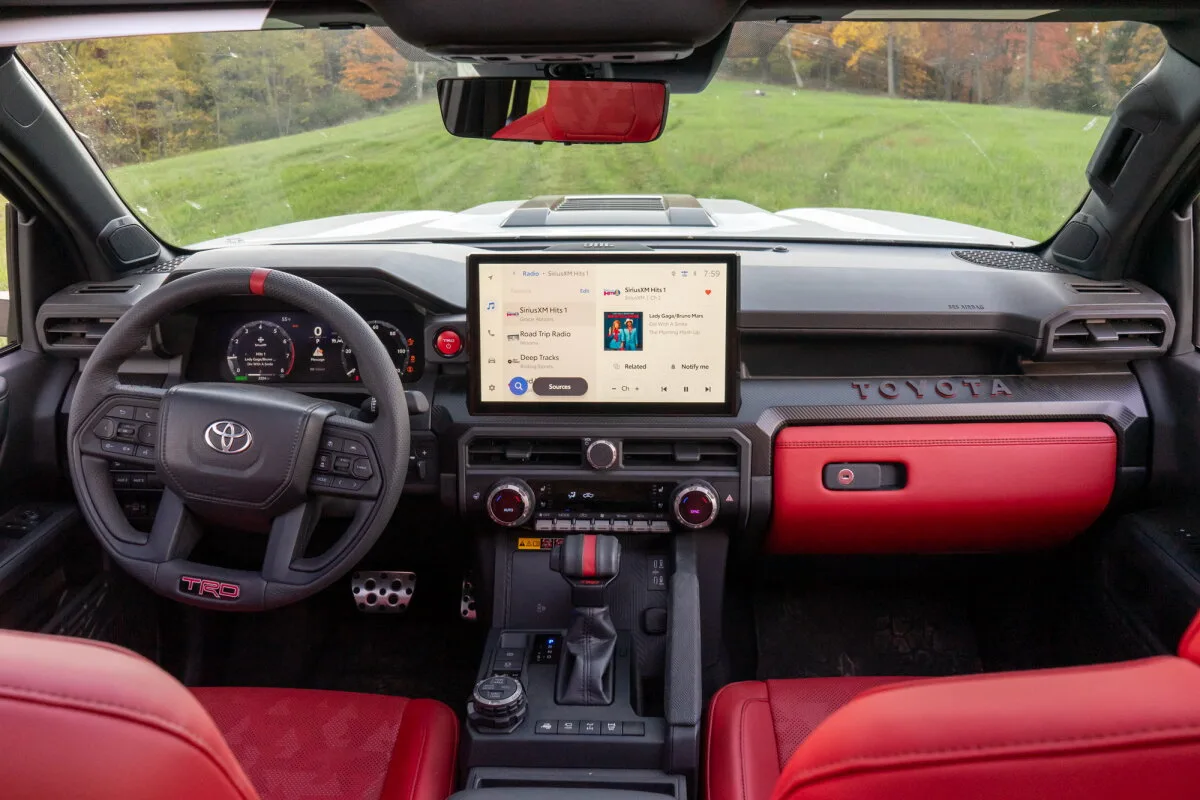
Image source: Web (Bing) / cars.usnews.com (Web image (fair-use with source credit))
Cold Start and First Drive
Start the truck when it's cold. The engine should idle smoothly without excessive vibration. Listen for any ticking or knocking sounds from the turbocharger.
Drive immediately after starting. The transmission should shift smoothly even when cold. If it hesitates or clunks during the first few minutes, that's a red flag.
Transmission Behavior in Stop-and-Go and Highway Merge
Drive in stop-and-go traffic. The transmission should shift smoothly from 1st to 3rd gear. If it hesitates or jerks, note it.
Merge onto a highway. The transmission should downshift quickly and smoothly. If it hesitates or clunks, that's a problem.
Infotainment Boot-Up and CarPlay Pairing
Turn on the infotainment system. It should boot within 15 seconds. If it freezes or takes longer, there's a problem.
Pair your phone with Apple CarPlay or Android Auto. It should connect within 10 seconds. If it drops the connection or fails to pair, the system may have issues.
Sunroof, Tailgate, and Paint Inspection
Open and close the sunroof. It should operate smoothly without any binding. Check for water stains on the headliner around the sunroof.
Open and close the power tailgate multiple times. It should operate consistently. If it sticks or fails to open, that's a problem.
Inspect the paint on the front bumper and hood. Look for chips or scratches. The clear coat is thin, so minor chips are common.
But excessive damage suggests poor quality control.
Hybrid System Transition (If Testing i-FORCE MAX)
If you're testing the hybrid, accelerate gently from a stop. The transition from electric to gas power should be smooth. If you feel a vibration or hear a drone, note it.
Drive at low speeds in electric mode. The truck should be nearly silent. If you hear whining or grinding, that's a problem.
The Verdict: Who Should Buy a 2025 Tacoma and Who Should Wait
The 2025 Tacoma is a capable truck with modern features. But it's also a first-year redesign with known issues. Here's who should buy one and who should wait.
Best For: Towing, Off-Road, and Long-Term Ownership (If You Inspect)
If you need a truck for towing or off-roading, the 2025 Tacoma is a strong choice. The TNGA-F platform is robust. The i-FORCE MAX hybrid offers excellent torque for towing.
The off-road trims are genuinely capable.
If you plan to keep the truck for 10 years or more, the Tacoma's long-term reliability history is a plus. Toyota has a track record of improving its trucks over time. The 2025 model will likely be better in its second year, but it's not a bad buy if you're willing to work through the issues.
Best Avoided: Early Adopters, Risk-Averse Buyers, Commuters
If you're risk-averse, avoid the 2025 Tacoma. The transmission issues and infotainment glitches are real. You'll likely spend time at the dealer getting them fixed.
If you commute in stop-and-go traffic, the transmission hesitation will be a daily annoyance. The fuel economy is also below EPA estimates, which adds to the cost of ownership.
If you're looking for a trouble-free ownership experience, consider a third-gen Tacoma or a Nissan Frontier. They're less refined but more reliable.
The Timing Play: When to Expect a Better Production Run
The best time to buy a 2025 Tacoma is in late 2025 or early 2026. By then, Toyota will have implemented most of the running changes. The transmission TSBs will be applied at the factory.
The infotainment software will be updated.
If you can wait for the 2026 model year, that's even better. Second-year models typically have fewer issues. The 2026 Tacoma will likely be a more polished product.
Frequently Asked Questions
Are the 2025 Tacoma transmission problems fixed?
Not completely. Toyota has issued ECU reflash updates that improve shift quality. But many owners report that hesitation and harsh shifts persist after the update.
The transmission behavior is better than early 2024 builds, but it's not as refined as the old 6-speed.
Is the i-FORCE MAX hybrid more reliable than the gas-only?
The hybrid has fewer transmission complaints because the electric motor smooths out low-speed response. But it has its own issues with transition noise and vibration. The gas-only engine is simpler and has fewer unique failure points.
Both powertrains have similar overall reliability risk.
Should I buy a 2025 Tacoma or wait for the 2026 model year?
Wait if you can. Second-year models typically have fewer issues. Toyota will have implemented most running changes by then.
If you need a truck now, buy a late 2025 build with a March 2025 or later production date and check that all TSBs have been applied.
What is the warranty coverage for these issues?
The 2025 Tacoma comes with a 3-year/36,000-mile basic warranty and a 5-year/60,000-mile powertrain warranty. Recalls are covered at no cost regardless of mileage. TSB repairs are covered under the basic warranty.
After that, you pay out of pocket.
How do I check if a specific VIN has open recalls or TSBs?
Visit the NHTSA website and enter the VIN in the recall lookup tool. For TSBs, check the Toyota Owner's website or ask a dealer service department. The VIN lookup is free and takes less than a minute.
Do this before you buy any used 2025 Tacoma.