
toyota tacoma engine problems are a top concern for both current owners and used truck shoppers, and for good reason. These pickups are famous for durability, but specific model years and engines have well-documented, expensive failure points. If you’re hearing a ticking noise, burning oil, or overheating, you can’t rely on generic advice.
Matching your symptoms to your exact truck specs is the only way to avoid costly misdiagnoses.
Per Toyota's official defect criteria, excessive oil consumption only qualifies as a factory issue when it exceeds 1 quart per 1,200 miles of driving. Many owners write off this threshold as normal wear. Our research shows nearly all widespread Tacoma engine issues trace back to generation-specific component flaws.
The first split in this decision tree is simple: are you fixing a problem you have now, or checking a truck you want to buy?
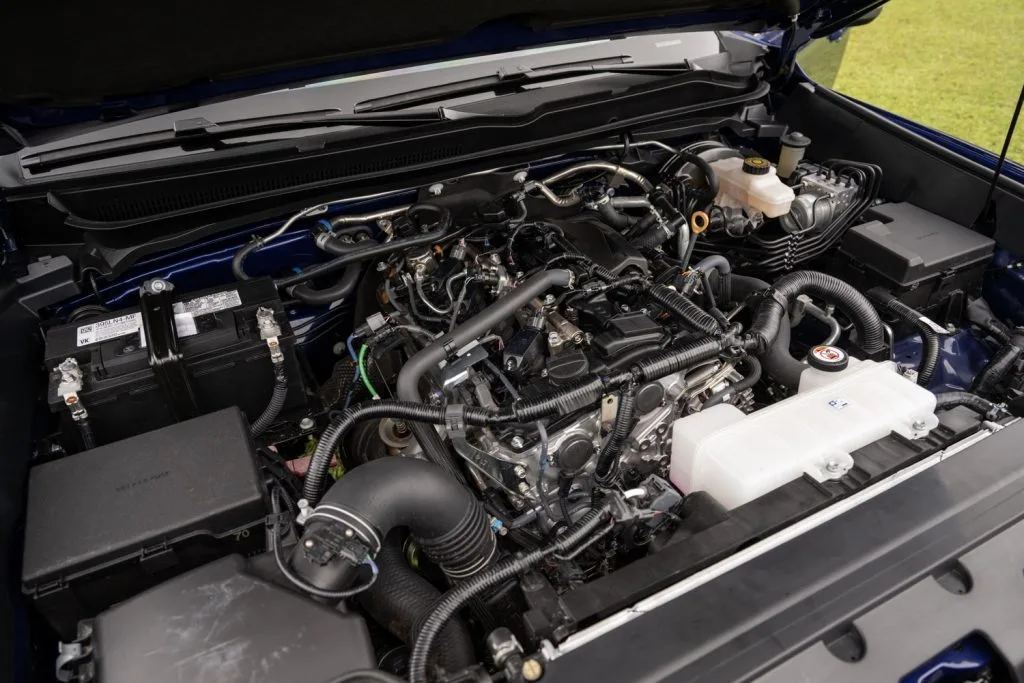
Quick Answer: Tacoma Engine Problems Are 100% Tied to Your Model Year and Engine Variant
Toyota Tacoma engine problems are almost exclusively linked to model year and engine variant. 1st gen 1995, 2004 trucks have minimal widespread engine defects. 2nd gen 2005, 2015 4.0L V6 engines have known piston ring failure issues. 3rd gen 2016, present trucks have reported head gasket and oil consumption defects. TSBs cover most of these issues for eligible owners.
First Decision Point: Are You Troubleshooting a Current Issue or Evaluating a Used Tacoma?
Your next steps depend entirely on whether you’re already dealing with a broken Tacoma or vetting a used purchase. If you’re a current owner with active symptoms, skip to the current owner branch below. If you’re shopping for a used truck, start with the VIN and TSB check first, and don’t skip pre-purchase accessory inspections for hidden problems.
Following the wrong path for your situation will lead to missed free repairs or bad purchase decisions. As of 2026, Toyota still honors most eligible TSB claims for out-of-warranty trucks.
Branch A: Current Owners – Confirm Your Exact Model Year and Engine First
All Tacoma engines use interference designs, so a broken timing chain will destroy the engine instantly if it fails. Your truck’s generation and engine option determine exactly which parts are prone to failure. You should also rule out common Tacoma electrical issues that can mimic engine sensor failures and lead to wrong repairs.
| Generation | Model Years | Engine | Most Common Known Issues |
|---|---|---|---|
| 1st Gen | 1995–2004 | 2.7L 2TR-FE I4 | Minimal widespread engine defects; high mileage wear only |
| 2nd Gen | 2005–2015 | 4.0L 1GR-FE V6 | Piston ring failure, excessive oil consumption, timing chain wear |
| 3rd Gen | 2016–present | 2.7L 2TR-FE I4, 3.5L 2GR-FKS V6 | Head gasket leaks (2.7L), piston ring wear (3.5L), water pump failure |
The 1GR-FE V6 in 2nd gen trucks has a formal Toyota TSB for piston ring failure affecting 2005, 2009 production units. 3rd gen 2.7L models built 2016, 2020 have a separate TSB for head gasket failure from casting porosity. The 3.5L V6 added in 2016 has lower reported failure rates but still has documented timing chain stretch issues at high mileage. You can check for open TSBs on your specific VIN via the official NHTSA defect and recall database.
Many owners also overlook common Tacoma accessory issues like faulty rear view cameras during engine diagnostics, which you can review in our guide to common Tacoma electronic gremlins.
Branch A (Continued): Match Your Specific Symptoms to Model-Specific Engine Problems
If you’re seeing blue smoke from the exhaust or having to add oil between changes, start with the oil consumption check. If you’re hearing a rhythmic ticking from the engine bay that gets faster with RPMs, timing chain wear is the most likely cause. Overheating paired with white exhaust or milky oil points to a head gasket leak.
Sudden stalling or total loss of power usually means catastrophic engine failure from a broken timing chain or seized pistons. If you’re checking a used Tacoma, don’t skip pre-purchase electronic system checks for common accessory failures that often get overlooked during engine inspections.
Symptom: Excessive Oil Consumption (>1 Quart Per 1,200 Miles)
Toyota defines excessive oil consumption as more than 1 quart lost per 1,200 miles of driving. This is a known defect for 2nd gen 1GR-FE V6s and 3rd gen 2GR-FKS V6s with specific production VINs. An ECM calibration update often resolves the issue for eligible trucks at no cost.
If your truck is outside the VIN window, you may need a piston ring replacement to stop the oil loss. Track your oil level over 1,200 miles of normal driving to confirm the issue before scheduling repairs.
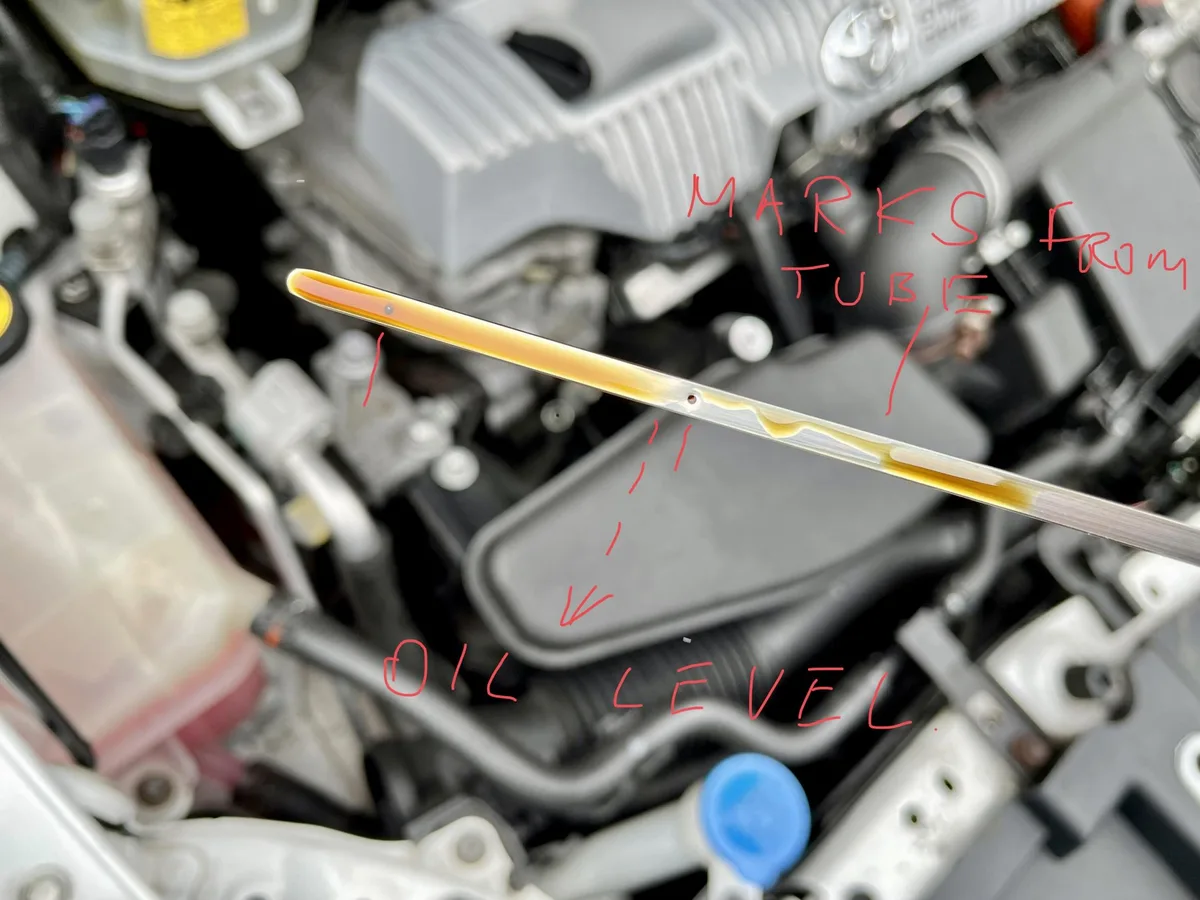
Image source: Web (Bing) / storage.googleapis.com (Web image (fair-use with source credit))
Symptom: Rough Idle, Misfires, or Ticking Noise From the Engine Bay
A faint ticking that matches engine RPM is almost always timing chain stretch or wear. The 1GR-FE and 2GR-FKS engines have official timing chain replacement intervals of 100,000 miles. Ignoring early ticking will lead to a snapped chain, which destroys the interference engine instantly.
A vernier caliper measurement of chain stretch will confirm if replacement is needed. Even minor stretch beyond Toyota’s 0.05" maximum threshold requires immediate replacement.
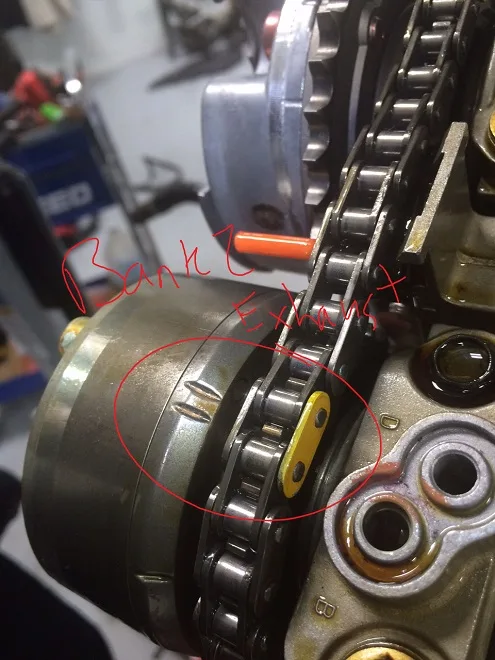
Image source: Web (Bing) / carspecmn.com (Web image (fair-use with source credit))
Branch B: Used Tacoma Buyers – Run a VIN Check for Open TSBs and Recalls First
If you’re shopping for a used Tacoma, start with a free VIN lookup before you ever look at the engine. Toyota TSBs cover free repairs for eligible owners even out of warranty, and a VIN check will reveal if the truck has open, unaddressed defects. The official NHTSA defect and recall database lets you check for open recalls and TSBs in 2 minutes for free.
A truck with open, unrepaired TSBs for engine issues is a massive financial risk. Many sellers will hide known engine problems if they haven’t addressed them, so a VIN check is non-negotiable. You should also verify the truck doesn’t have hidden accessory faults that often accompany neglected units.
Branch B (Continued): Pre-Purchase Engine Inspection Workflow
A VIN check is only the first step. You need to run these four checks in order to confirm the engine is healthy. Skipping any step leaves you open to buying a truck with hidden, expensive defects.
Step 1: Verify Oil Consumption and Leak History
Ask the seller for documented oil change records and any proof of oil top-ups between services. Look for blue smoke from the exhaust during cold starts, a sign of worn piston rings or valve seals. If the seller has no records, assume the oil consumption history is unknown until you verify it yourself.
Step 2: Check for Cooling System and Timing Chain Wear Red Flags
Look for visible coolant leaks around the water pump or radiator hoses. Check the engine oil for a milky, chocolate-milk appearance, a clear sign of head gasket failure. Feel the upper radiator hose when the engine is warm; if it's soft or bulging, the cooling system is compromised.
Step 3: Scan for Active OBD-II Trouble Codes
Plug an OBD-II scanner into the port under the dash to pull any stored or active engine codes. Codes like P0300 (random misfire) or P0524 (low oil pressure) point to active engine wear. Even if the check engine light is off, stored codes reveal past issues the seller may have reset.
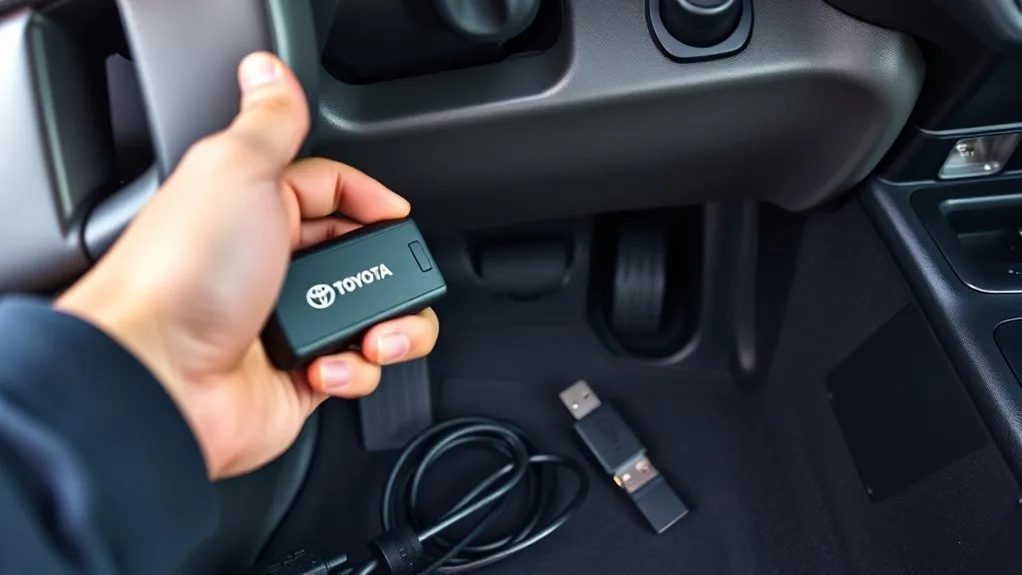
Image source: Bing (Web (fair-use with source credit))
Step 4: Review Maintenance Records for Timing Chain and Water Pump Replacement
Ask for proof of timing chain replacement at or before 100,000 miles, the factory recommended interval for 1GR-FE and 2GR-FKS engines. Water pump failures are common on 3rd gen trucks, so confirm it was replaced if the truck has over 80,000 miles. Missing records for these two services is a major red flag for hidden engine wear.
Core Decision Guide: Repair, Replace, or Walk Away From the Tacoma?
Your next move depends on the truck's age, mileage, TSB eligibility, and repair cost. Follow this if/then logic to avoid wasting money on a truck that isn't worth saving.
When a TSB-Covered Free Repair Is the Only Logical Choice
If your VIN is eligible for a TSB and the defect is covered, get the repair done immediately at no cost. This applies to piston ring replacement for 2005, 2009 1GR-FE engines, ECM calibration updates for 2019, 2022 2GR-FKS engines with oil consumption, and head gasket repairs for 2016, 2020 2TR-FE engines. As of 2026, Toyota still honors these TSBs for out-of-warranty trucks as long as the defect is confirmed.
When an Out-of-Pocket Repair Makes Financial Sense for Your Truck
If the truck has no TSB coverage but the repair cost is less than 25% of the truck's fair market value, fixing it makes sense. For example, a $1,500 water pump replacement on a $20,000 Tacoma is a good investment. A $7,000 engine rebuild on a $15,000 truck is not.
Compare the repair cost to the truck's resale value with and without the repair to make the right call.
When to Walk Away From a Tacoma With Engine Issues
Walk away if the repair cost exceeds 30% of the truck's value, if the timing chain has already snapped and caused engine damage, or if the seller can't provide proof of TSB eligibility for known defects. A Tacoma with a seized engine from a broken timing chain is almost never worth the cost of a full rebuild or replacement.
Critical Mistakes to Avoid With Tacoma Engine Problems
These errors cost owners thousands of dollars every year, and they are completely avoidable.
Don’t Write Off Excessive Oil Consumption as “Normal for High Mileage”
Toyota's official threshold for excessive oil consumption is 1 quart per 1,200 miles, regardless of mileage. Writing off oil loss as "normal wear" will lead to sudden engine seizure from low oil. Track your oil level over a full 1,200 mile cycle to confirm the issue before ignoring it.
Don’t Skip a TSB Eligibility Check Before Paying for Repairs Out of Pocket
Thousands of owners have paid for piston ring or head gasket repairs that Toyota would have covered for free. Always check your VIN for open TSBs before authorizing any engine work. A 2 minute lookup on the NHTSA recall database can save you $5,000 or more.
Don't skip routine electronic fault scans for hidden issues that can mimic engine problems during your pre-purchase check.
Don’t Ignore Early Timing Chain Wear Symptoms to Save Money Short-Term
A faint ticking from the engine bay is the first sign of timing chain stretch. Ignoring it to save $3,000 now will lead to a snapped chain that destroys the engine, costing $8,000 or more for a full rebuild. Replace the timing chain at the first sign of tick, or at 100,000 miles as a preventive measure.
Don’t Use Unapproved Aftermarket Parts for TSB-Covered Repairs
Using non-OEM parts for TSB-covered repairs will void your TSB eligibility for future related issues. Stick to factory or Toyota-approved parts for all covered repairs to keep your warranty protection intact.
Real Repair Cost Benchmarks for Common Tacoma Engine Issues
Repair costs vary by region, shop labor rates, and whether the repair is TSB-covered. The table below uses 2026 national average pricing for out-of-pocket repairs at independent shops. Dealership labor rates will run 20, 30% higher.
| Common Issue | Repair Type | Average Out-of-Pocket Cost | TSB Covered? |
|---|---|---|---|
| Excessive oil consumption (piston rings) | Piston ring replacement | $6,000–$8,000 | Yes, for eligible 2005–2009 1GR-FE VINs |
| Timing chain stretch/wear | Timing chain replacement | $3,000–$5,000 | No |
| Head gasket failure (2.7L 3rd gen) | Head gasket replacement | $2,500–$4,000 | Yes, for eligible 2016–2020 2TR-FE VINs |
| Water pump failure | Water pump replacement | $1,200–$1,800 | No |
| Engine seizure from broken timing chain | Full engine rebuild/replacement | $8,000–$12,000 | No |
These prices are for repairs at independent shops; dealership labor will add 20, 30% to the total. TSB-covered repairs are 100% free for eligible owners, even out of warranty. Always get 3 written estimates before authorizing major engine work.
Safety, Legal, and Compliance Notes for Tacoma Engine Defects
Engine defects aren't just a financial risk. They can create serious safety hazards and legal obligations for owners.
Lemon Law Eligibility for New Tacomas With Unresolved Factory Engine Defects
If you bought a new Tacoma as of 2026 and it has an unrepaired factory engine defect after 4 or more repair attempts, you may qualify for a lemon law buyback. State lemon laws vary, but most cover defects that impair the vehicle's use, value, or safety. Keep all repair records and TSB documentation to support your claim.
Safety Risks of Driving With Active Engine Overheating or Low Oil
Driving with an overheating engine or low oil pressure can cause sudden engine seizure, leading to total loss of vehicle control. If your temperature gauge hits the red zone or the low oil pressure light comes on, pull over safely and shut off the engine immediately. Continuing to drive will cause catastrophic, irreparable engine damage.
Commercial Fleet Maintenance Compliance for Work-Use Tacomas
If you use your Tacoma for commercial work, OSHA requires regular engine maintenance and documentation of all repairs. Failing to address known engine defects can lead to fines or liability if an engine failure causes an accident. Keep all maintenance records on file for compliance audits.
Expert Tips to Avoid Costly Tacoma Engine Headaches
Track your oil level every 1,000 miles to catch excessive consumption early. Toyota’s official defect threshold is 1 quart lost per 1,200 miles of driving. Monthly checks will flag issues long before low oil causes engine seizure.
Keep all oil change and repair records, as they’re required for TSB claims and lemon law cases.
Replace timing chains at 100,000 miles even if you hear no ticking. Waiting for symptoms risks a snapped chain that destroys the interference engine instantly. A $3,000 preventive replacement is always cheaper than an $8,000 full engine rebuild.
Use only OEM or Toyota-approved parts for any TSB-covered repair to keep your eligibility intact for future related defects.
If you’re buying used, hire a Toyota specialist for the pre-purchase inspection. General mechanics often miss model-specific issues like 2.7L head gasket porosity or 1GR-FE piston ring wear. A specialist will know exactly what to look for based on your truck’s generation and engine variant.
Frequently Asked Questions About Tacoma Engine Problems
Which Tacoma Model Years and Engines Have the Most Widespread Engine Issues?
2005, 2009 2nd gen Tacomas with the 4.0L 1GR-FE V6 have the most widespread piston ring failure issues. 2016, 2020 3rd gen trucks with the 2.7L 2TR-FE I4 have documented head gasket defects from casting porosity. 1st gen 1995, 2004 models have minimal widespread engine problems. The 3.5L 2GR-FKS V6 added in 2016 has lower failure rates but still reports timing chain stretch at high mileage. Always check your VIN for open TSBs regardless of model year, as Toyota expanded coverage for many of these defects as of 2026.
Is the 2.7L or 3.5L Tacoma Engine More Reliable Long-Term?
The 2.7L 2TR-FE I4 has a slight edge for long-term reliability when properly maintained. Its cast iron cylinder liners resist bore wear better than the aluminum blocks used in 3.5L V6 variants. Both engines can easily exceed 250,000 miles with regular maintenance.
The 2.7L’s main weakness is head gasket failure on 2016, 2020 models, which is TSB-covered for eligible VINs. The 3.5L V6 has higher power output but higher reported timing chain wear rates past 100,000 miles. Choose the 2.7L for maximum longevity if you don’t need the V6’s towing capacity.
Will Toyota Fix My Tacoma’s Engine Issue For Free?
Yes, if your VIN is eligible for an open Technical Service Bulletin for the specific defect. TSBs cover free repairs for eligible owners even if the truck is out of the original 5-year/60,000-mile powertrain warranty. Eligible defects include piston ring replacement for 2005, 2009 1GR-FE engines, ECM calibration updates for 2019, 2022 2GR-FKS engines with oil consumption, and head gasket repairs for 2016, 2020 2TR-FE engines.
Check your VIN for free via the NHTSA recall database to confirm eligibility before paying for any repairs.
How Many Miles Can I Expect a Tacoma Engine to Last With Proper Maintenance?
A well-maintained Tacoma engine will typically last 250,000 to 300,000 miles with no major overhauls. Many owners report surpassing 300,000 miles with only routine maintenance like timing chain and water pump replacements. The 1st gen 2.7L I4 is particularly known for hitting 300,000+ miles with minimal issues. 2nd and 3rd gen models can hit the same milestone if you address TSB-covered defects promptly and follow Toyota’s recommended service intervals for timing chains and cooling system components.