
If you own a 1999 Toyota 4Runner, the single most important thing you can do for its engine is pick the right oil. Get it wrong and you are looking at sludge buildup, premature wear, or in the worst case, a seized motor. The 1999 toyota 4runner oil type that Toyota engineers designed the engine around is 5W-30, and that recommendation holds for the vast majority of driving conditions.
The engine itself, either the 3.4L 5VZ-FE V6 or the 2.7L 3RZ-FE inline-four, was built to tight tolerances that demand the correct viscosity and API rating.
Manufacturer specifications from the 1999 owner's manual call for API service category SJ or newer, with an ILSAC GF-2 rating as the baseline. As of 2026, the standard has moved forward through SL, SM, SN, and now SP. Any of those backwards-compatible grades work perfectly in this engine.
The key is understanding which viscosity fits your climate, whether to use conventional or synthetic, and how to avoid the common mistakes that send these otherwise bulletproof engines to an early grave.
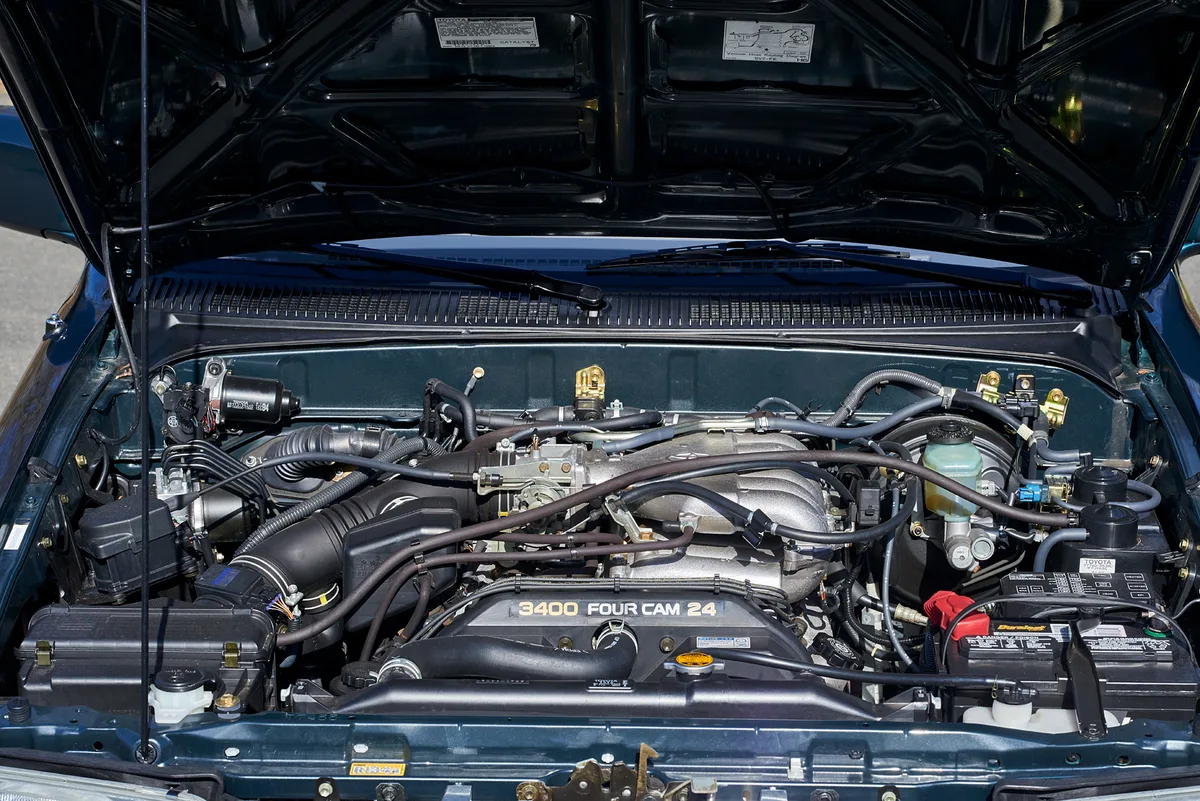
Image source: Web (Bing) / toyota-4runner.org (Web image (fair-use with source credit))
Quick Answer
The recommended oil for a 1999 Toyota 4Runner is 5W-30. Use API SN or SP rated oil. It holds about 5.5 quarts with filter.
Conventional oil is fine for normal driving. Synthetic is better for extreme temperatures or towing.
The Short Answer: What Oil Most 1999 4Runners Need
Both engine options in the 1999 4Runner share the same oil recommendation from the factory. The 3.4L V6 and the 2.7L I4 both call for SAE 5W-30 motor oil that meets API service category SJ or higher. That is the baseline, and it has not changed in over two decades of real-world driving.
| Oil Property | Specification |
|---|---|
| Viscosity | SAE 5W-30 |
| API Rating | SJ, SL, SM, SN, or SP |
| ILSAC Standard | GF-2 through GF-6 |
| Capacity (V6) | 5.5 quarts (with filter) |
| Capacity (I4) | 4.5 quarts (with filter) |
| Recommended Oil Type | Conventional or synthetic |
The filler cap on your valve cover will likely say "5W-30" right on it. Toyota printed that recommendation clearly for a reason. If you see "10W-30" instead, that was an alternate recommendation for sustained operation in temperatures above 100°F.
But 5W-30 covers virtually every normal driving scenario from winter cold to summer heat.
Why Getting the Right Oil Matters for Your 1999 4Runner
The 5VZ-FE V6 engine in the 1999 4Runner earned a reputation for lasting 300,000 miles or more. That reputation is not accidental. It comes from solid engineering combined with owners who understood that oil choice matters.
These engines use hydraulic lifters and roller rockers, not flat tappets, so they do not need the high zinc content that some older engines require. What they do need is clean, properly rated oil that flows correctly at startup.
Cold starts are the most damaging moments for any engine. The "5W" in 5W-30 means the oil has a winter viscosity rating of 5, which keeps it thin enough to flow through the oil pump and reach critical components the instant you turn the key. A heavier oil like 10W-30 will take longer to circulate on a cold morning, leaving metal parts grinding against each other for those first few seconds.
Over years of cold starts, that wear adds up.
Running the correct oil also prevents sludge formation. The 5VZ-FE is not especially prone to sludge compared to some other Toyota engines from the same era. But it can still build deposits if you use the wrong oil or stretch intervals too far.
The API and ILSAC ratings on modern oils include detergents and dispersants that keep contaminants suspended and out of your oil passages.
The Two Engines: 3.4L V6 vs. 2.7L I4 – Same Oil?
Yes, both engines take the same oil. The 3.4L 5VZ-FE V6 and the 2.7L 3RZ-FE inline-four share the same oil specification. Toyota designed both around 5W-30 with an API SJ or newer certification.
The only difference between them is oil capacity.
The V6 holds about 5.5 quarts including the filter. The four-cylinder holds about 4.5 quarts. That is roughly one full quart less.
If you own the I4 version, buy a 5-quart jug and a separate quart. The V6 owner will want the 5-quart jug plus the separate quart to top off.
Both engines use the same type of oil filter thread and bypass valve specifications. You can use the same filter part number for either engine. Toyota's OEM filter for this generation is the 90915-YZZD1.
Aftermarket options from Wix, Purolator, and Mobil 1 also work well as long as they match the thread pitch and bypass pressure.
Viscosity Choices: 5W-30 vs. 10W-30 vs. 0W-30 – What to Pick Based on Your Climate
Most 1999 4Runner owners should stick with 5W-30 year-round. It is the factory recommendation and it covers a temperature range from about -20°F all the way up to 100°F. That covers the vast majority of driving conditions across North America.
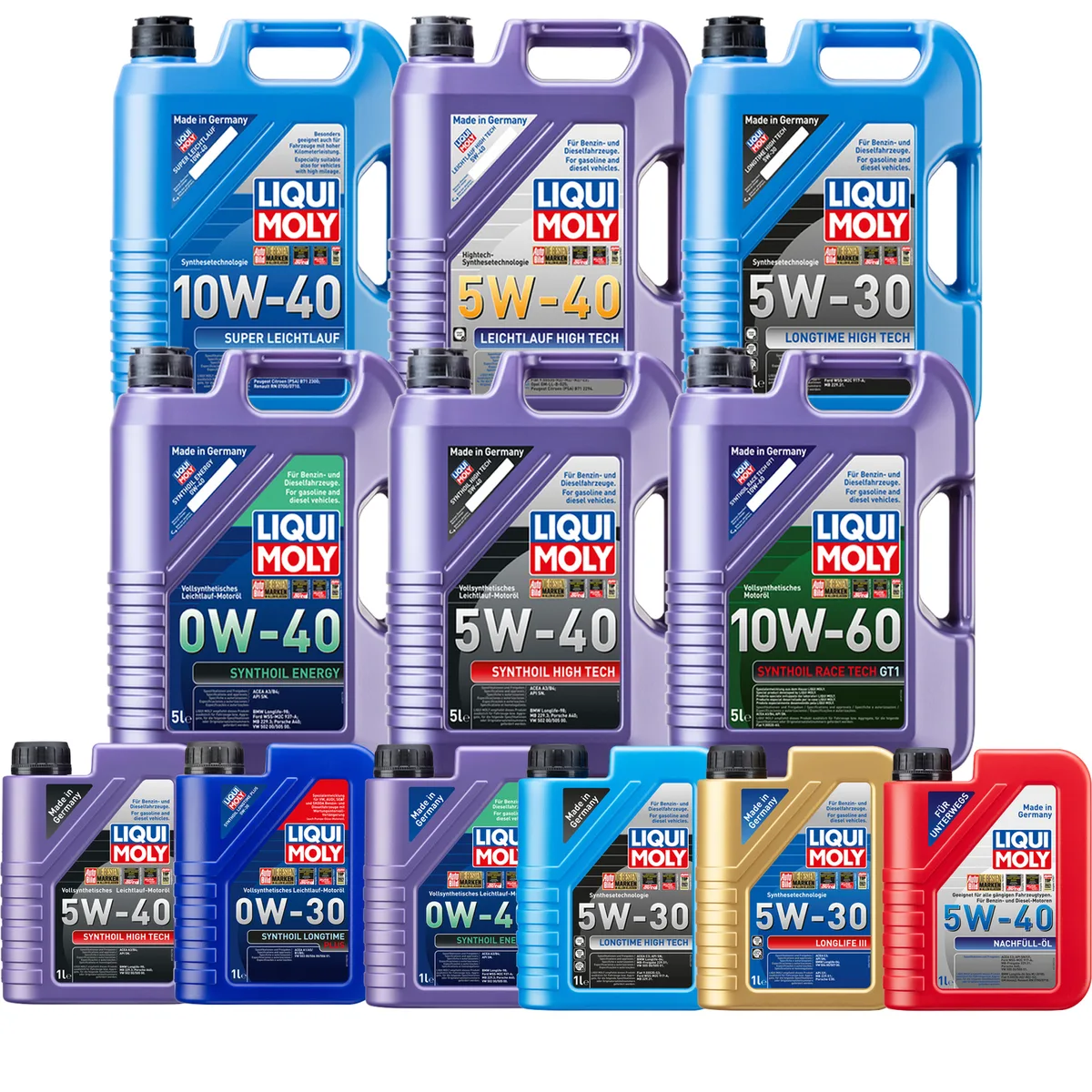
Image source: Bing (Web (fair-use with source credit))
| Viscosity | Best For | Temperature Range | Notes |
|---|---|---|---|
| 5W-30 | Daily driving, most climates | -20°F to 100°F | Factory recommendation |
| 10W-30 | Hot climates, towing | Above 32°F | Acceptable but not preferred |
| 0W-30 | Extreme cold | Below -20°F | Excellent cold flow, safe for this engine |
If you live in Phoenix or Las Vegas and your 4Runner sits in 110°F heat regularly, 10W-30 will provide slightly better film strength at extreme operating temperatures. That said, many owners in those climates still run 5W-30 without issues. The engine's operating temperature is regulated by the cooling system regardless of ambient temperature.
For owners in northern Canada, Alaska, or mountain regions where temperatures drop below -20°F, 0W-30 is a smart upgrade. It flows even better at extreme cold while still providing the same protection at operating temperature as 5W-30. The owner's manual from 1999 does not list 0W-30.
But it meets the same SAE 30 hot-viscosity requirement and has been widely adopted by owners in cold climates.
Avoid 20W-50 or any heavy straight-weight oil. These engines use narrow oil passages and hydraulic lifters that require thin oil to function properly. Thick oil will cause slow lifter bleed-down, noisy valve trains, and potential oil starvation on cold starts.
Conventional, Synthetic, or High-Mileage Oil – Which One Is Right for You?
Conventional 5W-30 meeting API SN or SP is perfectly adequate for a 1999 4Runner driven under normal conditions. Toyota designed the engine for conventional oil. Synthetic oil offers real advantages, but it is not required.
Conventional oil costs roughly $4 to $6 per quart. It works well for daily driving with 3,000-mile change intervals. If your 4Runner is a basic commuter that never sees extreme temperatures or heavy loads, conventional oil is money saved.
Synthetic blend costs $6 to $8 per quart. It mixes conventional base stock with synthetic additives for better oxidation resistance. This is a reasonable middle ground for owners who want some synthetic benefits without paying full price.
Full synthetic oil costs $8 to $12 per quart but offers measurable advantages. It flows better at cold temperatures, resists thermal breakdown under high heat, and allows longer intervals, typically 5,000 to 7,500 miles depending on driving conditions. If you tow a trailer, drive off-road, or live in extreme climates, synthetic is worth the premium.
High-mileage oil is formulated for engines over 75,000 miles. It contains seal conditioners that can reduce minor leaks and additives that help prevent sludge. Many 1999 4Runners are well past 200,000 miles as of 2026.
High-mileage oil is a sensible choice for older engines. Just make sure it still carries the correct 5W-30 viscosity and API rating.
The Complete Step-by-Step Oil Change Process for a 1999 4Runner
Changing the oil on a 1999 4Runner is straightforward. You do not need specialty tools or a lift. A set of jack stands, a 14mm socket, and an oil filter wrench will get the job done in about 30 minutes.
Tools and materials you will need:
| Item | Specification |
|---|---|
| Socket | 14mm for drain plug |
| Oil filter wrench | Cap-style or strap wrench |
| Drain pan | At least 8-quart capacity |
| Jack stands | 2-ton minimum |
| New oil | 5W-30, API SN or SP |
| New oil filter | OEM 90915-YZZD1 or equivalent |
| Drain plug gasket | Copper or aluminum, single-use |
Step 1: Warm up the engine. Run it for two to three minutes. Warm oil drains faster and carries more suspended contaminants. Do not run it long enough to get hot, just warm to the touch.
Step 2: Lift and secure the vehicle. Use a floor jack at the front crossmember. Set jack stands under the frame rails. Shake the vehicle to confirm it is stable before sliding underneath.
Step 3: Remove the oil fill cap. This lets air in and helps the oil drain completely. It also reminds you to put oil back in before starting.
Step 4: Drain the oil. Position your drain pan under the 14mm drain plug at the rear of the oil pan. Turn counterclockwise with a socket or wrench. Let it drain for at least three minutes.
Step 5: Replace the drain plug. Install a new crush washer on the plug. Torque it to 30 to 35 ft-lbs. Overtightening can crack the oil pan threads.
Hand tight plus a quarter turn with the wrench is a safe rule of thumb.
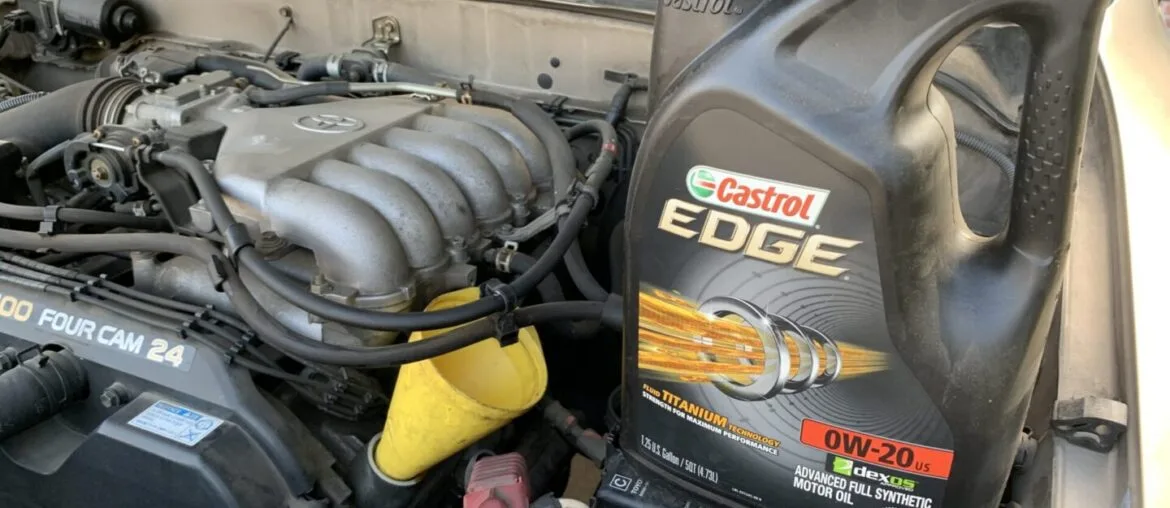
Image source: Web (Bing) / thetrackahead.com (Web image (fair-use with source credit))
Step 6: Remove the old oil filter. On the 3.4L V6, the filter is on the driver's side of the engine block, above the starter motor. It faces downward, so some oil will spill as you unscrew it. Use a filter wrench if it is tight.
If it is too tight to turn, a screwdriver driven through the filter body gives you a lever arm.
Step 7: Install the new oil filter. Rub a thin layer of fresh oil on the rubber gasket. This keeps the gasket from sticking and lets you remove it by hand next time. Screw the filter on until the gasket contacts the mounting surface.
Tighten by hand another three-quarters of a turn. Do not use a wrench to tighten it.
Step 8: Add the new oil. Remove the oil fill cap. Pour in about 80 percent of the total capacity. For the V6, that is roughly 4.5 quarts.
Wait about 30 seconds for the oil to drain into the pan. Check the dipstick.
Step 9: Check the level and inspect for leaks. Add oil in small increments until the dipstick reads between the low and full marks. Run the engine for 30 seconds. Shut it off.
Wait one minute. Recheck the dipstick. Top off as needed.
Look under the vehicle for drips.
Step 10: Dispose of the old oil properly. Pour the used oil into a sealed container. Most auto parts stores accept used oil for free. Pouring oil down a drain or into the trash is illegal in all 50 states under EPA regulations.
Common Mistakes That Can Damage Your 4Runner's Engine
These are the errors that show up repeatedly in owner forums and repair shop logs. Avoid them and your 5VZ-FE will easily hit 300,000 miles.
Using the wrong viscosity. The most common mistake is grabbing 10W-40 or 20W-50 because it is on sale or because a friend recommended it for an older engine. Those oils are too thick for the hydraulic lifters in this engine. They will cause noisy valve trains and reduced oil flow at startup.
Overtightening the oil filter. This warps the gasket and causes a slow leak. The filter only needs hand tight plus a quarter turn after the gasket contacts the housing. Use a wrench only if you physically cannot turn it by hand.
Forgetting the drain plug washer. The crush washer deforms under torque to create a seal. Reusing an old washer risks a drip. A new copper or aluminum washer costs about 50 cents at any auto parts store.
Overfilling the crankcase. Too much oil causes the crankshaft to whip air into the oil, creating foam. Foam does not lubricate well. It also increases pressure inside the engine, forcing oil past seals.
Fill to the full mark on the dipstick, never above.
Sticking to 3,000-mile intervals with synthetic oil. If you switch to full synthetic, you can run 5,000 to 7,500 miles between changes depending on driving conditions. Changing synthetic at 3,000 miles wastes money. If you drive mostly short trips under three miles, stick to the shorter interval regardless of oil type.
Oil Specifications You Need to Know: API Rating, ILSAC, and the Filler Cap
Two markings on the oil bottle matter more than everything else when choosing oil for a 1999 4Runner.
The API donut. This is the circular certification mark on the back of every motor oil bottle. It shows the API service category and the SAE viscosity. For your 4Runner, you need API SJ or newer.
As of 2026, API SP is the current standard. Any bottle with SP, SN, or SM works perfectly. The older oils are backwards compatible.
Image source: Web (Bing) / motoroilguide.com (Web image (fair-use with source credit))
The ILSAC starburst. This is a separate mark that looks like a starburst shape. It certifies that the oil meets the International Lubricant Standardization and Approval Committee requirements. For a 1999 4Runner, GF-2 or newer is acceptable.
Current bottles carry GF-6. Any starburst on the bottle means the oil is safe for your engine.
The filler cap. Pop the hood and look at the oil fill cap on your valve cover. It likely says "5W-30" in raised letters. Toyota stamped this recommendation into the engine.
Trust it over forum advice or what the previous owner used. If yours says "10W-30," the engine was originally sold for hot climate markets. But 5W-30 still works fine year-round.
What you do not need for this engine is high zinc content. The 5VZ-FE uses roller rockers, not flat tappets. High zinc oils like those marketed for classic cars will not hurt the engine.
But they offer no benefit and cost more.
When to Use Special Oil: Towing, Off-Road, Extreme Cold, and High Mileage
Standard 5W-30 conventional oil covers most driving. But your specific use case might justify stepping up to synthetic or high-mileage oil.
Towing and heavy loads. If you regularly tow a trailer or haul heavy cargo, the engine runs hotter for extended periods. Full synthetic oil resists thermal breakdown better than conventional oil. It maintains viscosity under sustained high temperatures.
Towing owners who switch to synthetic often see lower oil consumption between changes.
Off-road driving. Dusty trails and steep inclines put extra strain on the oil. Dust contamination accelerates wear. Synthetic oil's longer change interval matters here because you may not have easy access to do an oil change mid-trip.
Stick to 5W-30 even off-road. The viscosity does not need to change.
Extreme cold. Below -20°F, 5W-30 becomes thick enough to slow cranking. Switch to 0W-30 for winter months if you live in northern Canada or Alaska. It pumps faster at low temperatures while providing the same protection at operating temperature.
High mileage. Once your 4Runner passes 150,000 miles, consider high-mileage oil. It contains seal conditioners that can reduce minor leaks around valve cover gaskets and the rear main seal. It also has extra detergents to clean existing sludge.
Many owners report reduced oil consumption after switching to high-mileage formulations.
What about diesel oil? Do not use it. Diesel oil has different additive packages designed for soot control and high cylinder pressures in diesel engines. It is too thick for the 5VZ-FE and lacks the proper friction modifiers for gasoline engine valvetrains.
How Often Should You Change the Oil? Intervals for Conventional vs. Synthetic
The right interval depends on your oil type and driving habits.
Conventional oil: Change every 3,000 miles or three months. That is the conservative recommendation from Toyota for severe service conditions. It covers most real-world driving including short trips, stop-and-go traffic, and dusty roads.
Synthetic blend: Change every 4,000 to 5,000 miles. The blend offers moderate resistance to breakdown compared to conventional oil. It splits the difference in both cost and interval length.
Full synthetic: Change every 5,000 to 7,500 miles. Synthetic oil resists thermal breakdown and holds its viscosity longer. Many owners running synthetic report used oil analysis showing the oil still has life at 5,000 miles.
Severe service conditions require shorter intervals regardless of oil type. If you frequently tow, drive on dusty dirt roads, make trips under three miles, or let the engine idle for extended periods, stick to 3,000 miles even with synthetic oil.
Where to Find the Correct Oil Filter and Drain Plug Torque Specs
Two common sources of leaks after an oil change are the drain plug and the oil filter. Getting the torque right eliminates that risk.
Drain plug torque: 30 to 35 ft-lbs. This is tight enough to crush the new washer and create a seal. It is loose enough to avoid stripping the oil pan threads.
If you do not have a torque wrench, snug it with a 14mm socket and give it a firm quarter turn. Do not stand on the wrench.
Oil filter torque: Hand tight plus a quarter turn after the gasket contacts the mounting base. No tools needed. A filter wrench is only required for removal.
Tightening a filter with a wrench risks warping the gasket or crushing the filter body.
Oil filter part numbers: The OEM Toyota filter is 90915-YZZD1. Quality aftermarket alternatives include Wix 51358, Purolator PL14610, and Mobil 1 M1-102. Avoid the cheapest no-name filters.
They often have incorrect bypass valve pressures that can restrict oil flow at cold startup.
Final Verdict: The Safest Oil Choice for a 1999 Toyota 4Runner
Stick with SAE 5W-30 that carries API SN or SP certification. Use conventional oil if you change it every 3,000 miles and drive normally. Switch to full synthetic if you tow, live in extreme climates, or want the peace of mind of longer intervals and better cold-start protection.
For high-mileage engines over 150,000 miles, choose a high-mileage formulation of the same viscosity. It will not fix a major leak. But it can reduce minor seepage and keep seals flexible.
The 5VZ-FE engine in the 1999 4Runner is one of the most reliable gasoline engines Toyota ever built. Give it clean 5W-30 at the right intervals and it will outlast the rest of the truck.
Frequently Asked Questions
Can I use 10W-30 instead of 5W-30 in my 1999 4Runner?
Yes, but only if you live in a consistently hot climate above 100°F. For most drivers, 5W-30 provides better cold-start protection and covers the same operating temperature range. Stick with 5W-30 unless you have a specific reason to switch.
Does a 1999 4Runner need synthetic oil?
No. Conventional 5W-30 meets all of Toyota's original specifications. Synthetic offers better protection in extreme conditions and allows longer intervals, but it is not required.
The engine was designed for conventional oil and runs fine on it.
How many quarts of oil does a 1999 4Runner take?
The 3.4L V6 takes 5.5 quarts including the filter. The 2.7L I4 takes 4.5 quarts including the filter. Always check the dipstick after filling and add small amounts as needed to reach the full mark.
What happens if I use the wrong oil in a 1999 4Runner?
Using oil that is too thick causes slow circulation at startup, noisy lifters, and increased wear. Using oil that is too thin may not provide adequate film strength at operating temperature. Either way, the engine will not last as long as it should.
Can I switch from conventional to synthetic oil in an older 4Runner?
Yes, and it will not cause leaks. That myth comes from early synthetic formulations that could shrink gaskets. Modern synthetic oils are fully compatible with conventional oil residue.
You can switch at any mileage without special preparation.