
If you own a 2005 Toyota Camry with the 2.4-liter engine, you have one of the most reliable powertrains Toyota ever built. The 2AZ-FE four-cylinder is known to run well past 200,000 miles with proper care. But that care starts with one simple thing: getting the 2005 toyota camry 2.4 oil capacity right.
Put in too little oil and you risk low oil pressure and engine wear. Put in too much and you can blow seals, flood the PCV system, and cause rough running. Manufacturer specifications indicate the correct capacity with a filter change is 4.5 quarts (4.3 liters) of 5W-30 motor oil.
That number is your starting point, but there are a few details that matter if you want to do the job right. Let's walk through them.
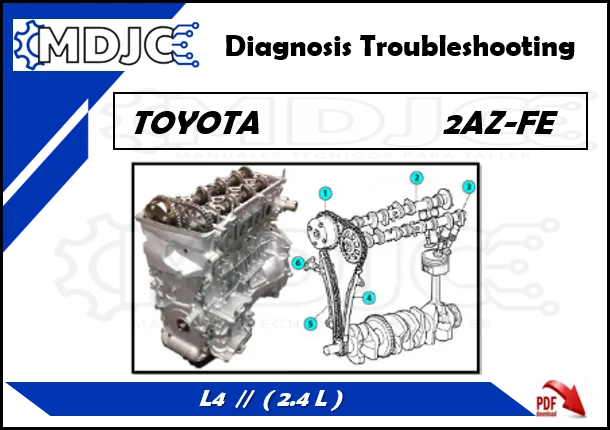
Image source: Bing (Web (fair-use with source credit))
Quick Answer
The 2005 Toyota Camry 2.4 takes 4.5 quarts of 5W-30 oil with a filter change. Without a filter change it takes 4.4 quarts. Use API-certified SL grade or higher.
Do not overfill. Check the dipstick after the engine has run and sat for five minutes.
Why Getting the Oil Capacity Right Matters on This Engine
The 2AZ-FE engine in your 2005 Camry has a known weakness. It can develop oil consumption issues as mileage climbs, especially if oil changes have been stretched or the wrong viscosity was used. Sludge buildup is another real problem on this generation of Toyota four-cylinders.
Getting the oil capacity right matters for three specific reasons.
Overfilling is surprisingly easy to do. The 2AZ-FE oil pan is relatively shallow. Adding even half a quart too much can push oil levels high enough that the crankshaft whips the oil into a foam. Foamy oil does not lubricate properly, and it can overwhelm the PCV system, sending oil vapor into the intake and causing smoke, rough idle, or even a misfire.
Underfilling is just as dangerous. The oil pickup tube sits near the bottom of the pan. If you are down a quart, the pickup can suck air during hard cornering or uphill driving. That means a momentary loss of oil pressure.
Enough of those moments and your rod bearings start talking to you with that telltale knock.
High-mileage engines burn oil differently. Many 2005 Camrys still on the road have well over 150,000 miles. If yours is burning oil, you need to know the exact baseline fill so you can track consumption accurately. Starting from the wrong level throws off your whole maintenance picture.
This is especially important if you are comparing oil use to what's normal for other Toyota engines, checking our guide on the correct fluid level for newer models can give you a good reference point.
The 2AZ-FE Engine and Why It's Picky About Oil
The 2AZ-FE is a 2.4-liter dual-overhead-cam four-cylinder with variable valve timing. Toyota produced it from 2002 through 2011 and put it in the Camry, RAV4, Scion tC, and a handful of other models. It is a solid engine, but it has two quirks that make oil choice and level especially important.
First, the VVT-i system relies on oil pressure. The variable valve timing actuator is controlled by engine oil pressure. If your oil is too thick, too thin, or too low, the actuator cannot move the cam timing properly. That can cause a P1349 VVT system malfunction code, rough idle, or poor fuel economy.
Toyota engineered the system around 5W-30 oil specifically. Straying from that viscosity messes with the timing curve.
Second, the 2AZ-FE is prone to piston ring sticking. This is the main cause of high oil consumption in these engines. Carbon buildup from extended oil change intervals or low-quality oil can cause the oil control rings to gum up. Once they stick, oil bypasses the rings and burns in the combustion chamber.
The best prevention is fresh, high-quality oil at the right level changed on schedule.
One more thing to keep in mind. The 2005 model year is right in the middle of the timeframe where Toyota had some sludge issues across their four-cylinder lineup. Using a high-quality conventional or synthetic blend with detergent additives helps keep deposits from forming. As of 2026, these engines are old enough that most surviving examples benefit from synthetic oil, which resists breakdown better and keeps the engine cleaner over extended intervals.
Oil Capacity Specs: Dry Fill vs. Filter Change vs. Top-Off
Here is where a lot of confusion happens. The 2005 Camry 2.4 oil capacity is not one single number. It depends on what you are doing.
| Scenario | Oil Capacity |
|---|---|
| Engine rebuild or dry block (completely empty) | 4.8 quarts |
| Oil change with filter replacement | 4.5 quarts |
| Oil change without filter replacement | 4.4 quarts |
| Top-off from low mark on dipstick | Roughly 1 quart to raise from low to full |
| Overfilled engine (drain and correct) | Remove excess until at full mark |
The number you need is 4.5 quarts. That is the standard oil change capacity including the filter. Buy a 5-quart jug of 5W-30 and you will have about half a quart left over for top-offs between changes.
One note on the filter. The 2AZ-FE uses a spin-on cartridge filter. If you drain the oil and change the filter, the filter housing holds roughly 0.1 to 0.2 quarts of oil that does not drain out. That is why the "with filter" capacity is slightly higher than "without filter." If you skip the filter change, you lose that small amount of capacity, so stick to 4.4 quarts and check the dipstick.
Dry fill capacity matters if you are rebuilding the engine or replacing the oil pan. In that case, every cavity is empty, the oil cooler lines, the VVT actuator passages, the filter housing. Toyota spec for a completely dry 2AZ-FE is 4.8 quarts. If you are just doing an oil change, ignore this number.
What Type of Oil to Use (Viscosity, Grade, and Certification)
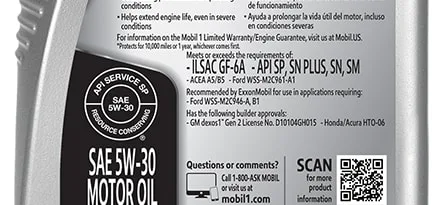
Image source: Bing (Web (fair-use with source credit))
Toyota recommends 5W-30 for the 2005 Camry 2.4 in virtually all climates. You can check your owner's manual or the oil filler cap, but 5W-30 is the factory spec for the 2AZ-FE in this model year.
| Specification | Requirement |
|---|---|
| Viscosity | 5W-30 (SAE) |
| API rating | SL or higher (SM, SN, SP are all backward-compatible) |
| ILSAC rating | GF-3 or higher |
| Type | Conventional, synthetic blend, or full synthetic |
| Capacity | 4.5 quarts (with filter) |
A quick word on viscosity. 5W-30 means the oil flows like a 5-weight when cold and behaves like a 30-weight at operating temperature. The "5W" part gives you good cold-start flow, which protects the VVT system during warm-up. The "30" part provides enough film strength at highway speeds and high temperatures.
Can you use 10W-30? In warmer climates, some owners run 10W-30 without issues. But the cold-flow difference between 5W and 10W is significant near freezing. If you live where winter temperatures drop below 40°F, stick with 5W-30.
The VVT system will thank you on cold starts.
Can you use 0W-30? Yes, and it is actually a great choice for cold climates. 0W-30 flows even better in subzero temperatures and still provides the same 30-weight protection at operating temperature. It costs a little more but offers better cold-start protection.
Synthetic vs. conventional. This is a personal choice, but here is the practical reality for a 2005 Camry in 2026. If the engine has run conventional oil its whole life and has over 150,000 miles, switching to full synthetic can sometimes cause leaks because synthetic detergents clean out deposits that were acting as seals. A better approach is to use a high-quality synthetic blend or a full synthetic designed for high-mileage engines, which includes seal conditioners.
One final check, look for the API donut on the bottle. The American Petroleum Institute certification mark tells you the oil meets current industry standards. Avoid off-brands that do not carry the API certification. The extra dollar per quart is cheap insurance for an engine that is approaching two decades old.
Step-by-Step: How to Check and Fill Oil Correctly
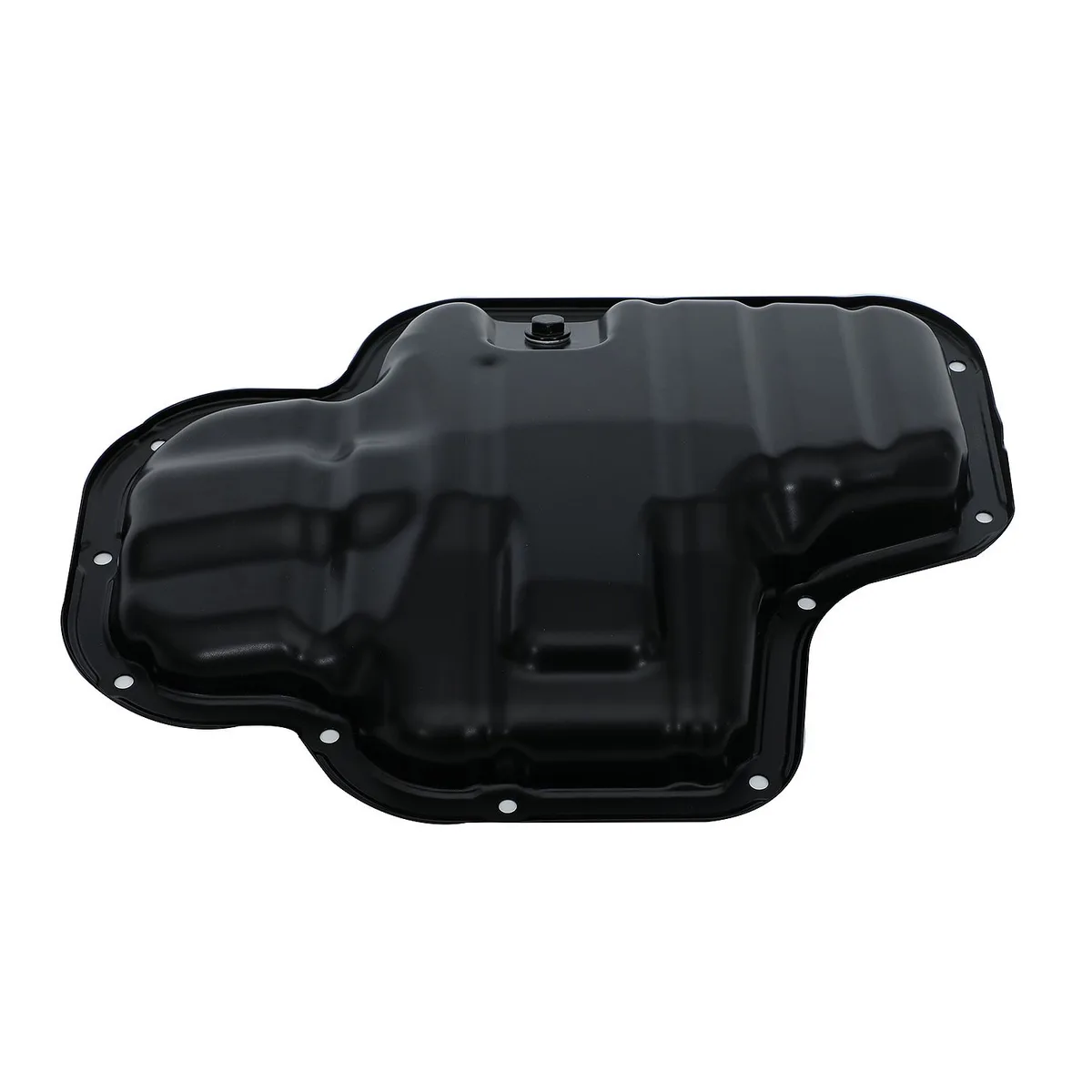
Image source: Web (Bing) / 100manualidades.com (Web image (fair-use with source credit))
You can do this yourself in about 20 minutes. Here is the correct process for the 2005 Camry 2.4.
Tools and materials you will need.
- 5 quarts of 5W-30 motor oil (API certified)
- Toyota-compatible oil filter (part numbers 90915-YZZD3 or 90915-YZZE1)
- Oil filter wrench (if the filter is tight)
- 14mm socket or box-end wrench for the drain plug
- Oil drain pan (at least 6-quart capacity)
- Funnel
- New crush washer for the drain plug (Toyota part 90430-12031 or a generic M12 copper washer)
- Rags or shop towels
- Jack and jack stands if the car is low
Step 1: Warm the engine. Run the engine for two to three minutes. Warm oil drains faster and carries more contaminants out with it. Do not run it long enough to get the exhaust hot enough to burn you.
Step 2: Lift and secure the car. Park on level ground. If you cannot reach the drain plug comfortably, jack up the front of the car and set it on jack stands. Never work under a car supported only by the factory scissor jack.
Step 3: Drain the oil. Place the drain pan under the oil pan. Loosen the drain plug with a 14mm socket. Remove it by hand once it is loose.
Be careful, the oil will be warm. Let it drain completely, about three to five minutes.
Step 4: Replace the crush washer. This is a small copper or aluminum washer that sits between the drain plug and the oil pan. Replace it every time. A reused crush washer can leak.
Install the new washer, hand-thread the drain plug, then torque it to 29 ft-lbs. If you do not have a torque wrench, snug it firmly with a socket wrench. Do not overtighten.
Step 5: Remove and replace the oil filter. The filter is on the front of the engine, driver's side, near the oil pan. Place the drain pan under it. Loosen it with a filter wrench if it is tight.
Spin it off by hand. Wipe the mounting surface clean. Lightly oil the new filter's rubber gasket with fresh oil.
Hand-tighten the filter until the gasket contacts the mounting surface, then give it another three-quarters turn. Do not use a wrench to tighten.
Step 6: Fill with oil. Lower the car. Remove the oil filler cap. Insert a funnel.
Add 4 full quarts of 5W-30. Replace the filler cap. Start the engine and let it run for about 30 seconds.
The oil pressure light should go out within a few seconds. If it stays on, shut the engine off and check for a leak or a missed step.
Step 7: Check the oil level. Turn the engine off. Wait five minutes for the oil to drain back into the pan. Pull the dipstick, wipe it clean, insert it fully, and pull it again.
The oil level should be between the low and full marks. Add the remaining half quart if it is below the full mark.
Step 8: Check for leaks. With the engine running, look under the car at the drain plug and oil filter. A few drops mean you need to snug the plug or filter slightly. Wipe any spilled oil off the exhaust manifold to avoid smoke and smell.
A visual reference helps here. Locate the dipstick and oil filler cap before you start. On the 2005 Camry 2.4, the dipstick is near the front of the engine, slightly toward the passenger side. The oil filler cap is on the valve cover, clearly marked "Oil."
Common Mistakes That Can Ruin This Engine
The 2AZ-FE is forgiving, but it has limits. Here are the mistakes we see most often in aggregate owner reports and forum discussions.
Mistake one: trusting the dipstick right after filling. This is the number one cause of overfilling. You pour in 4.5 quarts, check the dipstick immediately, and it shows low. So you add more.
The problem is that oil takes time to drain into the pan. If you check before the oil has settled, you get a false reading. Always wait five minutes after running the engine.
Check on level ground.
Mistake two: using the wrong viscosity because it is on sale. A 10W-30 deal at the auto parts store is tempting. But aggregate reviews from owners who switched to 10W-30 report more cold-start rattle and occasional VVT trouble codes below freezing. The 5W-30 spec exists for a reason.
Use it.
Mistake three: skipping the crush washer replacement. That tiny copper ring costs about a dollar. Reusing it flattens the metal and creates a slow drip. Over months, that drip can lower your oil level by half a quart.
Check for a wet spot on your driveway. If you see one, the crush washer is the first thing to replace. Our guide to the proper servicing routine for other Toyota models covers similar drain plug care.
Mistake four: overtightening the oil filter. Hand-tight plus three-quarters turn is the rule. Cranking it on with a wrench crushes the gasket and makes the next change a nightmare. It can also distort the filter housing threads on the engine block.
Mistake five: running too long between changes. The 2AZ-FE is hard on oil because of its operating temperature and VVT system. Conventional oil should be changed every 3,000 to 5,000 miles. Synthetic can stretch to 5,000 or 7,500 miles.
Do not push past 7,500 miles even with synthetic. Sludge builds fast on this engine past that point.
Signs Your Oil Level Is Wrong (Too High or Too Low)
Your Camry will tell you something is off. You just have to know what to listen for.
Signs of low oil.
- A ticking or tapping noise at idle. This is the valvetrain running dry. It gets louder as the oil level drops.
- The oil pressure light flickers or stays on during hard turns or uphill driving.
- The engine feels sluggish. Low oil means low oil pressure, which means the VVT actuator cannot adjust timing properly.
- A burning oil smell. If the level is low enough to cause a leak past worn valve seals, oil can burn on hot exhaust parts.
Signs of overfilled oil.
- Foamy oil on the dipstick. Pull the dipstick and look for tiny bubbles. That means the crankshaft is aerating the oil.
- Rough idle or misfire codes. Excess oil can get pushed into the intake through the PCV system. It fouls spark plugs and causes misfires.
- Blue smoke from the exhaust. Oil burning in the combustion chamber produces that telltale blue-gray smoke.
- Oil leaking from the valve cover gasket or dipstick tube. Too much pressure in the crankcase forces oil past seals.
How to confirm the level. Park on level ground. Remove the dipstick. Wipe it clean.
Insert it fully. Remove it and read the level. The oil should be between the two marks.
If it is above the top mark, you are overfilled. If it is at or below the low mark, you need oil.
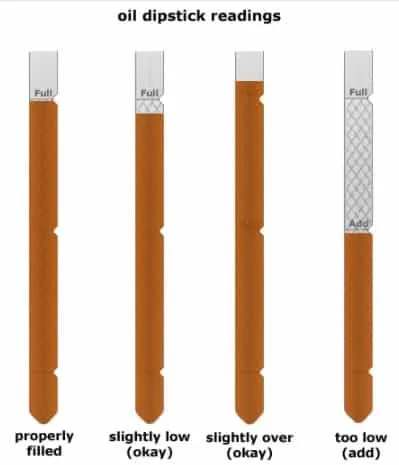
Image source: Web (Bing) / freeautomechanic.com (Web image (fair-use with source credit))
What to do if you overfilled. Do not drive it. Loosen the drain plug just enough to let a little oil out. Catch it in a clean pan.
Tighten the plug. Check the dipstick. Repeat until the level drops to the full mark.
Oil Change Interval: Conventional vs. Synthetic in This Engine
Oil change intervals depend more on how you drive than what the bottle says.
| Driving Condition | Recommended Interval (Conventional) | Recommended Interval (Synthetic) |
|---|---|---|
| Mostly highway cruising | 5,000 miles | 7,500 miles |
| Stop-and-go city driving | 3,000 miles | 5,000 miles |
| Short trips under 5 miles | 3,000 miles | 5,000 miles |
| Hot or dusty conditions | 3,000 miles | 5,000 miles |
| Towing or heavy loads | 3,000 miles | 5,000 miles |
Short trips are the worst thing for this engine. The 2AZ-FE takes time to reach operating temperature. Short trips never burn off condensation and fuel dilution in the oil. That creates sludge over time.
If most of your drives are under 10 minutes, change your oil more often regardless of what type you use.
Synthetic oil helps with cold starts. It flows better at low temperatures, which means the VVT system gets oil pressure faster. For northern climate owners, synthetic is worth the extra cost purely for cold-start protection.
High-mileage oil is a good option past 100,000 miles. These formulations include seal conditioners that help reduce small leaks. They also have extra detergents to keep piston rings clean. If your 2005 Camry has over 150,000 miles, a high-mileage synthetic blend is a smart choice.
Many owners on forums report reduced oil consumption after switching.
One hard rule. Do not extend intervals beyond 7,500 miles regardless of oil type. The oil filter on the 2AZ-FE is not huge. It can only hold so much contaminant.
Past 7,500 miles, the filter goes into bypass mode and unfiltered oil circulates through the engine.
When to Walk Away and Let a Mechanic Handle It
Most oil changes on this car are straightforward. But there are situations where you should call a shop.
The drain plug is stripped. If the previous owner overtightened it, the threads in the oil pan can strip. You will know because the plug will not tighten or it leaks immediately. Stop.
Do not try to force it. A shop can install a thread repair insert or replace the oil pan. Continuing to drive with a loose drain plug risks losing all your oil.
You cannot get the oil filter off. Filters on the 2AZ-FE can seize if overtightened or if the gasket bonds to the engine. If the filter spins but will not come loose, or if the metal canister starts crumpling, stop. A mechanic has better tools and access to filter removal sockets.
You see metal shavings in the drained oil. A little metallic glitter is normal on a high-mileage engine. But visible flakes or chunks mean internal damage. Do not just put fresh oil in and hope.
Have a mechanic inspect the oil and possibly drop the pan to check for bearing wear.
The check engine light comes on after an oil change. If it is a P0010 or P0012 code (VVT system), the issue is usually oil related. It could be the wrong viscosity, low oil level, or a clogged VVT oil control valve. A professional diagnostic will save you from replacing parts unnecessarily.
You are not comfortable working under the car. This is a valid reason. The 2005 Camry sits low enough that getting under it safely requires jack stands. If you do not have them or do not feel confident, pay a shop.
A $40 oil change is cheaper than a hospital visit.
Real Scenario: What Happens When You Get It Wrong
Let's walk through a real example from aggregate owner reports.
A 2005 Camry 2.4 with 145,000 miles. The owner switched to 10W-30 to save money. He also started pushing oil changes to 8,000 miles.
At 160,000 miles, he noticed a ticking sound at idle. The dipstick showed low by about a quart. He topped it off, but the ticking came back within a week.
He took it to a shop. The diagnosis was sludge buildup in the VVT oil control valve screen. The screen was partially clogged, restricting oil flow to the actuator.
The repair involved removing the valve, cleaning the screen, and flushing the engine. The bill was $380.
The root cause was not the oil type alone. It was the combination of heavier oil, extended intervals, and the 2AZ-FE's tendency to build sludge under those conditions. A switch to 5W-30 synthetic and a strict 5,000-mile schedule could have prevented it entirely.
The lesson. A $20 oil change is cheap insurance. Skimping on it costs more in the long run, especially on an engine known for oil-related issues as it ages. If your Camry already has high mileage, the maintenance you do today determines how much longer it lasts.
Our guide to the recommended oil for older Camry models covers similar advice for other years in this range.
Frequently Asked Questions
Can I use synthetic oil in my 2005 Camry 2.4 after using conventional for years?
Yes, but switch to a high-mileage synthetic blend. Full synthetic can clean out old deposits too aggressively, potentially causing leaks past aged seals. A high-mileage formula includes seal conditioners that ease the transition.
How do I reset the oil maintenance light on a 2005 Camry?
Turn the ignition to the ON position without starting the engine. Press the trip reset button until the odometer shows "ODO." Turn the ignition off. Hold the trip reset button while turning the ignition back to ON.
Continue holding until the light blinks and turns off.
What happens if I put 5W-20 instead of 5W-30?
The engine will run, but the thinner oil can cause increased wear over time. The VVT system relies on the 30-weight film strength at operating temperature. Stick with 5W-30 for long-term reliability on the 2AZ-FE.
Why does my 2005 Camry 2.4 burn oil?
Piston ring sticking is the most common cause on this engine. Carbon buildup prevents the oil control rings from scraping oil off the cylinder walls. Regular oil changes with high-quality 5W-30 help prevent it.
Switching to a high-mileage oil can sometimes slow existing consumption.
How often should I check the oil level?
Check it every other fuel fill-up. The 2AZ-FE can burn a quart between changes, especially over 100,000 miles. Catching it early prevents low oil pressure events that damage bearings.
Is 4.5 quarts exactly right, or should I measure differently?
Start with 4 quarts, run the engine, let it settle, and check the dipstick. Add the remaining half quart if needed. The 4.5 quart spec assumes a complete drain with filter replacement.
Differences in drain time or filter brand can shift the final level slightly.