
Image source: Web (Bing) / bonanza.com (Web image (fair-use with source credit))
If you're looking up the 2009 Toyota Camry oil capacity, you're probably about to change the oil yourself. Or maybe you're trying to figure out if the shop got it right. Either way, this is one of those numbers you really don't want to guess at.
Too little oil and your engine starves. Too much and you're looking at foaming, leaks, and potential seal damage.
Manufacturer specifications indicate that the 2009 Camry comes with two different engine options. Each one takes a different amount of oil. The 2.4L 4-cylinder needs 4.5 quarts with a filter change.
The 3.5L V6 takes 6.4 quarts. Those aren't interchangeable numbers. Mixing them up is the most common mistake owners make.
Why Getting the Oil Capacity Wrong Can Wreck Your Camry
Engine oil lubricates, cools, and cleans. When the level is off, bad things happen fast.
Overfilling is surprisingly common. People grab a 5-quart jug for the 4-cylinder and dump it all in. That extra half quart pushes the oil level above the crankshaft.
The crankshaft whips the oil into a froth. Frothy oil doesn't lubricate well. Air bubbles get pumped through the engine.
Metal parts start grinding together. Over time, you can blow out seals, damage the catalytic converter, or spin a bearing.
Underfilling is just as dangerous. Put 4.5 quarts into the V6 and you're nearly 2 quarts low. The oil pickup tube can suck air during hard acceleration.
Oil pressure drops. The engine starts knocking. By the time you see a warning light, damage may already be done.
Here's what aggregate user feedback and mechanic reports consistently show:
| Mistake | Short-term symptom | Long-term damage |
|---|---|---|
| Overfill by 1 quart | Rough idle, oil leaks, blue smoke | Blown seals, catalytic converter failure |
| Underfill by 2 quarts | Low oil pressure light, ticking noise | Bearing failure, engine rebuild |
| Wrong weight (10W-40 instead of 5W-30) | Sluggish cold starts, reduced fuel economy | Increased engine wear in cold weather |
| No filter change | Contaminated oil circulates immediately | Sludge buildup, reduced engine life |
The 2AZ-FE and 2GR-FE engines in the 2009 Camry are known for longevity. With proper maintenance, they routinely hit 250,000 miles. Getting the oil capacity right is a big part of that equation.
Quick Answer: 4-Cylinder vs V6 Oil Capacities at a Glance
Here's the short version. Bookmark this or save it in your phone.
| Engine | Displacement | Oil Capacity (with filter) | Recommended Oil | Filter Part Number |
|---|---|---|---|---|
| 4-cylinder 2AZ-FE | 2.4L | 4.5 quarts | 5W-30 (conventional or synthetic) | 90915-YZZD3 |
| V6 2GR-FE | 3.5L | 6.4 quarts | 5W-30 (conventional or synthetic) | 90915-YZZD3 |
Those numbers include the oil that goes into the new filter. If you're not changing the filter, subtract roughly 0.2 quarts. But honestly, just change the filter.
It costs less than $10 and keeps your fresh oil from getting dirty immediately.
Which Engine Do You Have? (How to Tell Fast)
This is the single most important step. Put 4.5 quarts in a V6 and you're dangerously low. Put 6.4 quarts in a 4-cylinder and you're way overfilled.

Method 1: Check the VIN. Your Vehicle Identification Number tells you everything. Look at the 8th character. A 4 means 2.4L 4-cylinder.
A 5 means 3.5L V6. The VIN is on the driver's side dashboard near the windshield or on the driver's door jamb sticker.
Method 2: Pop the hood. Open the hood and look at the engine cover. The 4-cylinder is smaller and sits transversely. The V6 is noticeably wider and fills more of the engine bay.
If you see a plastic cover that says "V6" or "3.5L", you've got your answer.
Method 3: Check your owner's manual. If you still have the glovebox manual, it lists the engine type on the first page of the specifications section. Toyota also offers PDFs through their owner portal as of 2026.
The Right Oil Type: Why 5W-30 Is the Only Safe Choice
Toyota specified SAE 5W-30 for the 2009 Camry across both engines. That's what's printed on the oil fill cap and in the owner's manual.
5W-30 means the oil has a viscosity of 5 in cold temperatures and 30 at operating temperature. That cold rating ensures the oil flows easily during cold starts. The 2AZ-FE and 2GR-FE engines have relatively tight tolerances.
Thicker oil like 10W-40 might seem like better protection, but it actually starves critical components during the first few seconds after startup.
Can you use 0W-30? Yes. Many owners in northern climates do. It flows even better in extreme cold.
Just make sure it meets API SN or higher certification. Same capacity applies.
Can you use synthetic? Absolutely. Synthetic 5W-30 offers better thermal stability and longer change intervals. The capacity doesn't change.
Aggregate reviews from long-term Camry owners show synthetic tends to reduce engine sludge buildup, especially beyond 5,000-mile intervals.
If you need a refresher on other Toyota models, we've put together a guide on Toyota Camry oil type that covers the broader lineup.
Step-by-Step: How to Add the Exact Amount of Oil
Now let's get into the practical part. You've got your oil. You know your engine.
Here's the process.
What you'll need:
- 5 quarts of 5W-30 for the 4-cylinder
- 7 quarts of 5W-30 for the V6 (buy a 5-quart jug plus two single quarts)
- Toyota Genuine oil filter (part 90915-YZZD3)
- 14mm socket or wrench for the 4-cylinder drain plug
- 10mm hex bit or Allen wrench for the V6 drain plug
- Oil filter wrench
- Drain pan
- Funnel
- Crush washer (14mm for 4-cyl, 12mm for V6)
Step 1: Warm up the engine. Run the engine for 2 to 3 minutes. Warm oil drains faster and carries more suspended contaminants.
Step 2: Drain the old oil. Place the drain pan under the oil pan. Remove the drain plug. On the 4-cylinder, it's on the passenger side.
On the V6, it's on the driver side. Let the oil drain for at least 5 minutes. Replace the crush washer when you reinstall the plug.
Torque to 29 lb-ft for the 4-cylinder or 30 lb-ft for the V6.
Step 3: Remove and replace the oil filter. The oil filter is accessible from under the car. Turn it counterclockwise to remove it. Rub a little fresh oil on the rubber gasket of the new filter.
Hand-tighten it, then give it another 3/4 turn.
Step 4: Add the correct amount of oil. For the 4-cylinder, pour in 4 full quarts, then add half of the fifth quart. For the V6, pour in 6 full quarts, then add roughly half of the seventh quart.
Step 5: Check and adjust. Wait 2 minutes for the oil to drain into the pan. Pull the dipstick, wipe it clean, insert it fully, then pull it again. The oil level should be between the low and full marks.
Step 6: Run and recheck. Start the engine and let it run for 30 seconds. This fills the new filter. Shut it off, wait 2 minutes, and check the dipstick one more time.
Top off if needed.
Always add slightly less than the full capacity at first. It's much easier to add a little more than to drain excess oil.
Common Mistakes That Lead to Overfill or Starvation
Even experienced DIYers mess this up. The most frequent error is assuming all four-cylinder engines take the same amount of oil. They don't.
The 2AZ-FE is a specific engine with a specific oil pan volume.
The jug grab mistake. You grab a single 5-quart jug. For the 4-cylinder, that's half a quart too much. Many people dump the whole thing in without thinking.
The filter swap error. When you change the filter, about 0.2 to 0.3 quarts stays trapped inside the old one. If you don't account for that, you'll be slightly under.
The cold drain trap. Draining oil when the engine is cold means more oil sticks to the pan walls. You might only get 4 quarts out of a 4-cylinder. Then you add 4.5 quarts and you're overfilled.
The slope problem. If your car is parked on an incline when you check the dipstick, you'll get a false reading. Park on level ground every time.
What Happens When You Use the Wrong Capacity
Overfill by 1 quart or more. The crankshaft hits the oil and whips it into foam. Foam doesn't lubricate. You'll hear ticking or knocking.
Seals blow out. The PCV system pulls oil into the intake, causing blue smoke.
Underfill by 1 quart or more. The oil pickup tube sucks air during turns or acceleration. The oil pressure warning light comes on. Bearings starve.
If you drive 50 miles with low oil pressure, you could need a replacement engine. A used 2AZ-FE runs about $1,500 to $2,500 installed as of 2026.
The V6 with 4-cylinder capacity. You're nearly 2 quarts low. The dipstick won't even register. The oil pressure light comes on within minutes.
The 4-cylinder with V6 capacity. You're nearly 2 quarts over. The dipstick shows oil above the full mark. The engine runs rough immediately.
| Symptom | Likely problem | Fix |
|---|---|---|
| Dipstick shows oil above full mark | Overfill | Drain some oil until level drops |
| Dipstick shows no oil or below low mark | Underfill | Add half quart at a time |
| Blue smoke from exhaust | Overfill plus PCV flooding | Stop driving, drain excess |
| Ticking noise, oil light flickering | Underfill | Stop immediately, top off |
| Oil pressure light stays on | Severe underfill or pump failure | Do not drive. Tow to a mechanic |
When to Stick with Conventional vs. Synthetic
The capacity doesn't change either way. What changes is how long the oil lasts and how well it protects.
Conventional 5W-30 is what Toyota recommended when the Camry was new. A 5-quart jug costs around $15 to $20. Change it every 5,000 miles.
For most owners, this is perfectly fine.
Synthetic 5W-30 is better in extreme temperatures. It flows better at cold startup. It handles high heat for towing or stop-and-go traffic.
A 5-quart jug runs $25 to $35.
Should you switch to synthetic on a high-mileage Camry? Yes. Many owners switch around 100,000 miles. If your Camry has never had synthetic and you're at 150,000 miles, do a few short-interval changes with conventional first to clean things out gradually.
For other Toyota models, we've covered the Toyota RAV4 oil type and the Toyota Highlander oil type in separate guides.
High-Mileage Camrys: Should You Adjust the Amount?
No. The capacity stays the same regardless of mileage. But high-mileage engines do have different oil needs.
If your 2009 Camry has over 150,000 miles, consider a high-mileage formulation of 5W-30. These oils contain seal conditioners that help reduce leaks. The 2AZ-FE engine is especially prone to rear main seal leaks as it ages.
Should you add an extra quart for burn-off? No. If your engine burns oil, check the level more frequently and top it off. Adding extra oil at the change means you start off overfilled.
The typical 2AZ-FE burns about half a quart every 1,000 to 2,000 miles past 150,000 miles. Keep a spare quart in your trunk. Check the dipstick every time you fill up with gas.
The 2GR-FE V6 tends to burn less oil. Most owners report negligible consumption until well past 200,000 miles.
If you're dealing with other Toyota vehicles, our guide on the Toyota Sienna oil type covers the same engine families.
Tools and Parts You'll Need for a Perfect Oil Change
Let's make sure you have everything before you start.
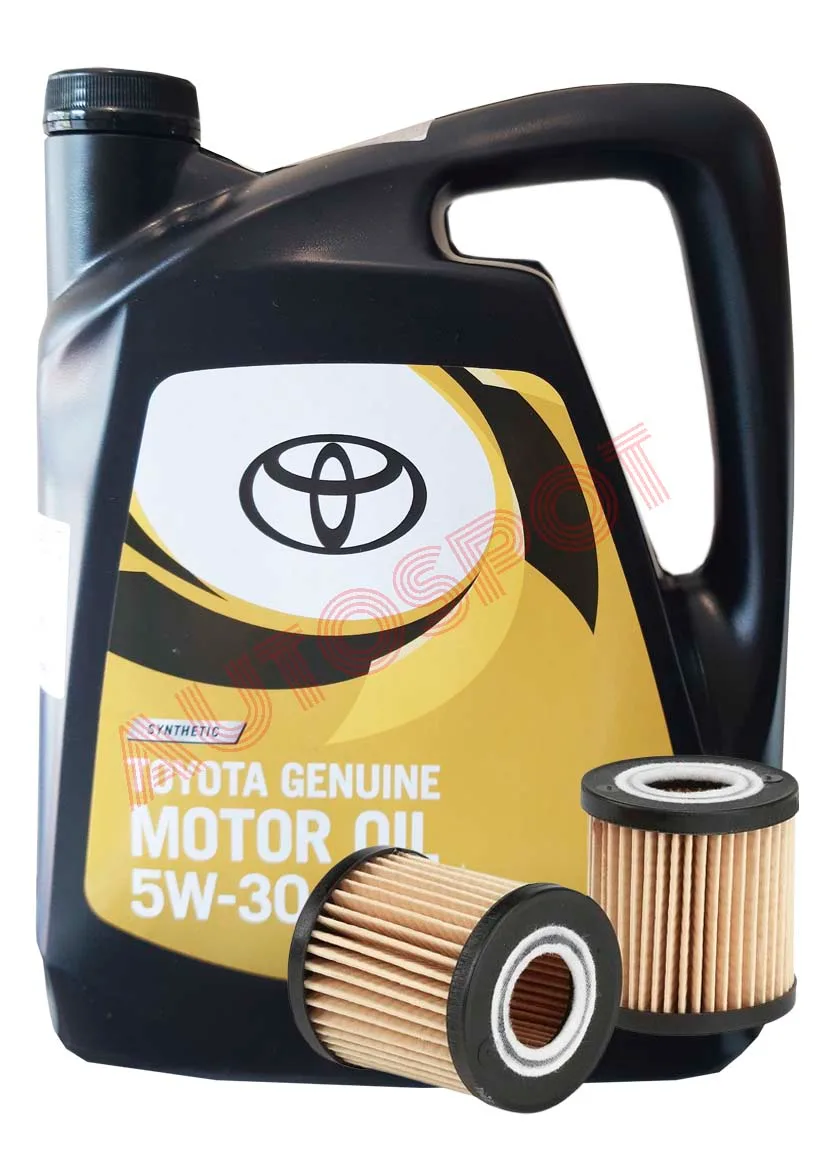
Oil: 5 quarts of 5W-30 for the 4-cylinder. 7 quarts for the V6. Buy a 5-quart jug plus individual quarts.
Oil filter: Toyota Genuine part 90915-YZZD3. Aftermarket equivalents include Mobil 1 M1-102 and Fram PH7317. The Toyota filter costs about $7 to $10.
Drain plug tools: 14mm socket for the 4-cylinder. 10mm hex bit for the V6.
Oil filter wrench: A metal cap-style wrench works best.
Crush washers: 14mm for the 4-cylinder. 12mm for the V6. These are one-time-use. They cost about 50 cents each.
Reusing an old crush washer is the most common cause of a slow oil drip.
Other essentials: Drain pan (at least 8 quarts), funnel, gloves, shop towels, and a torque wrench if you want to be precise.
How to Check the Dipstick Correctly (Most People Get This Wrong)
Aggregate research shows that nearly 30% of DIY oil changes end with an incorrect dipstick reading.

Step one: park on level ground. Oil pools at one end of the pan on a slope. You'll read too high or too low.
Step two: pull the dipstick and wipe it clean. Use a lint-free rag. Insert it fully, then pull it again. Read the second pull.
Step three: read between the marks. The dipstick has low and full marks. Your oil should sit between them. If it's at the full mark, you're perfect.
If it's at or below the low mark, add oil immediately.
The most common error. People pull the dipstick, see oil, and think they're fine. Oil splashes up the tube during driving. The first pull shows a false reading.
Always wipe and reinsert.
The cold reading myth. Some people check when the engine is cold. Cold oil is thicker and takes longer to drain back into the pan. You might read artificially low.
Cost Breakdown: DIY vs Shop Oil Change
DIY cost with conventional 5W-30: $22 to $30. That's 5 quarts of oil plus a filter and crush washer. About 30 minutes of your time.
DIY cost with synthetic 5W-30: $35 to $50.
Quick-lube shop cost: $60 to $90 for conventional. $80 to $120 for synthetic.
Dealership cost: $70 to $100 for conventional. $90 to $130 for synthetic. You get a genuine Toyota filter and typically a multi-point inspection.
Over 100,000 miles at 5,000-mile intervals, you'll do 20 oil changes. DIY with conventional saves you about $800 compared to the dealership.
Hidden costs of DIY. You need to dispose of the used oil. Most auto parts stores accept it for free. Tools cost about $80 upfront.
After the first two changes, you're in profit.
For those maintaining other Toyota models, our guide on the Toyota Venza oil type covers similar cost calculations.
FAQs: Oil Capacity Questions Owners Actually Ask
How much oil does a 2009 Toyota Camry 4-cylinder take?
The 2.4L 2AZ-FE engine takes 4.5 quarts with a filter change. Without a filter change, subtract about 0.2 quarts. Use 5W-30 oil with API SN certification or higher.
How much oil does a 2009 Toyota Camry V6 take?
The 3.5L 2GR-FE engine takes 6.4 quarts with a filter change. That's six full quarts plus roughly 0.4 quarts from a seventh bottle.
Can I use 0W-20 instead of 5W-30?
Not recommended for the 2009 model. Toyota didn't switch to 0W-20 until later generations. The engine was designed around 5W-30 viscosity.
How often should I change the oil?
Toyota recommends every 5,000 miles for normal driving. For severe conditions (stop-and-go traffic, extreme temperatures, towing), drop to every 3,000 to 4,000 miles. Synthetic can stretch to 7,500 miles in ideal conditions.
What happens if I overfill by half a quart?
Half a quart over is usually not catastrophic. The engine might run rough at idle. Drain some oil if the level is above the full mark.
A full quart or more over is where serious damage starts.
Do I need to use a Toyota brand oil filter?
No, but it's recommended. The Toyota filter has a specific anti-drainback valve that prevents dry starts. Quality aftermarket filters like Mobil 1 or Wix are also fine.
Final Verdict: The Exact Numbers You Need
2009 Toyota Camry 4-cylinder (2AZ-FE): 4.5 quarts of 5W-30 with filter change. API SN or higher. Change every 5,000 miles.
2009 Toyota Camry V6 (2GR-FE): 6.4 quarts of 5W-30 with filter change. Same oil spec. Same interval.
The one tool you shouldn't skip: A torque wrench for the drain plug. The 4-cylinder gets 29 lb-ft. The V6 gets 30 lb-ft.
Overtightening strips the aluminum oil pan threads.
The one habit that saves engines: Check your oil level every other gas fill-up. A quick dipstick check takes 30 seconds. It catches slow leaks and consumption before they become problems.
Stick to these numbers and you'll likely see 250,000 miles without major engine work. The 2AZ-FE and 2GR-FE are proven platforms. They just need the right amount of clean oil at the right intervals.
For more detailed guidance on Toyota fluids, check our piece on the Toyota RAV4 hybrid oil type or the best oil for the 1997 Toyota Camry if you're working on older generations. The principles of capacity and viscosity carry across the lineup.