
If you're searching for 2010 toyota corolla problems, you've probably already hit a snag with yours. Or maybe you're shopping for a used one and want to know what to watch for. Either way, this model year has a handful of well-documented issues.
Some are minor annoyances. A few are genuinely serious.
Per NHTSA data, the 2010 Corolla has over 1,600 complaints on file. That's high for a single model year. The good news is most of these problems are predictable and fixable.
Let's walk through what you need to know, starting with the most pressing concerns.
Quick Answer
The 2010 Toyota Corolla has several known problems. The biggest is unintended acceleration, which led to major recalls. Oil consumption is another common issue.
Dashboard cracking affects many cars in hot climates. Rust on the rear crossmember can be a safety risk. Most problems are fixable, but some repairs cost thousands.
The 2010 Toyota Corolla: What You Need to Know First
The 2010 Corolla belongs to the 9th generation, built on the E140 and E150 platform. It was a popular car for good reason. Toyota sold hundreds of thousands of them that year.
The fuel economy is excellent, and the cabin is roomy for a compact sedan.
Most models came with the 1.8L 2ZR-FE engine. That's the one you'll find in the Base, LE, and S trims. The XRS trim got a 2.4L 2AZ-FE engine with more power, but it's much rarer.
Transmission choices were a 4-speed automatic or a 5-speed manual.
As of 2026, these cars are 16 years old. That means age-related wear is a factor on top of the original factory issues. Rubber seals dry out.
Plastic parts get brittle. And some of the problems we'll cover got worse over time.
The good news? The Corolla's overall reliability record is still strong. Most of these cars hit 200,000 miles without major engine failure.
But the known issues are real, and they cost real money.
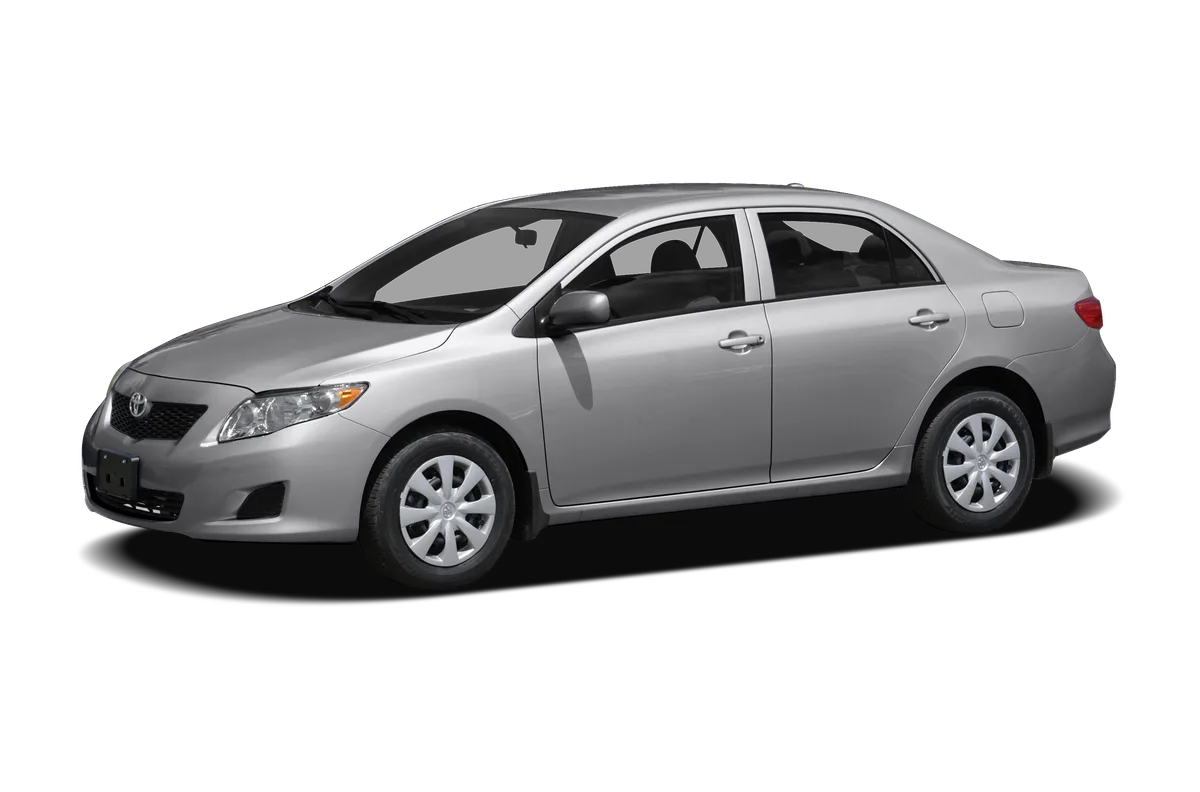
Image source: Web (Bing) / cars.com (Web image (fair-use with source credit))
Unintended Acceleration Recall: The Biggest Safety Concern
This is the one that made headlines. Between 2009 and 2010, Toyota recalled millions of vehicles worldwide over unintended acceleration. The 2010 Corolla was right in the middle of it.
The problem had two main causes. The first was floor mat interference. An unsecured or oversized floor mat could trap the accelerator pedal.
That kept the throttle open even when the driver lifted their foot.
The second cause was more controversial. Some complaints suggested the pedal itself could stick or return slowly. Toyota issued a "smart pedal" recall and installed a brake override system.
The brake override cuts engine power when both pedals are pressed at once.
If you own a 2010 Corolla, check your VIN against open recalls. You can do this on the NHTSA website. The brake override software update is still available at no charge.
What to watch for
- Sudden acceleration without pressing the gas
- A pedal that feels sticky or slow to return
- Floor mats that are not the original Toyota ones
What to do
If your car accelerates unexpectedly, press the brake firmly and hold it. Shift into neutral. Turn off the engine.
Then have the car towed to a dealer.
Oil Consumption Problems with the 1.8L 2ZR-FE Engine
This is the most common mechanical complaint for the 2010 Corolla. The 1.8L 2ZR-FE engine has a known issue with excessive oil consumption. Some owners report burning a quart of oil every 1,000 miles.
That's not normal. For comparison, a healthy engine should lose less than a quart between oil changes at 5,000 miles. If you're adding oil every few weeks, you have a problem.
The root cause is usually worn piston rings. Over time, the rings lose their seal against the cylinder walls. That lets oil slip past and burn in the combustion chamber.
The result is blue smoke from the exhaust, fouled spark plugs, and eventually catalytic converter damage.
Toyota issued a technical service bulletin for this issue. They also ran a goodwill repair program for a while. As of 2026, that program has expired.
But some dealers still offer partial coverage if you ask.
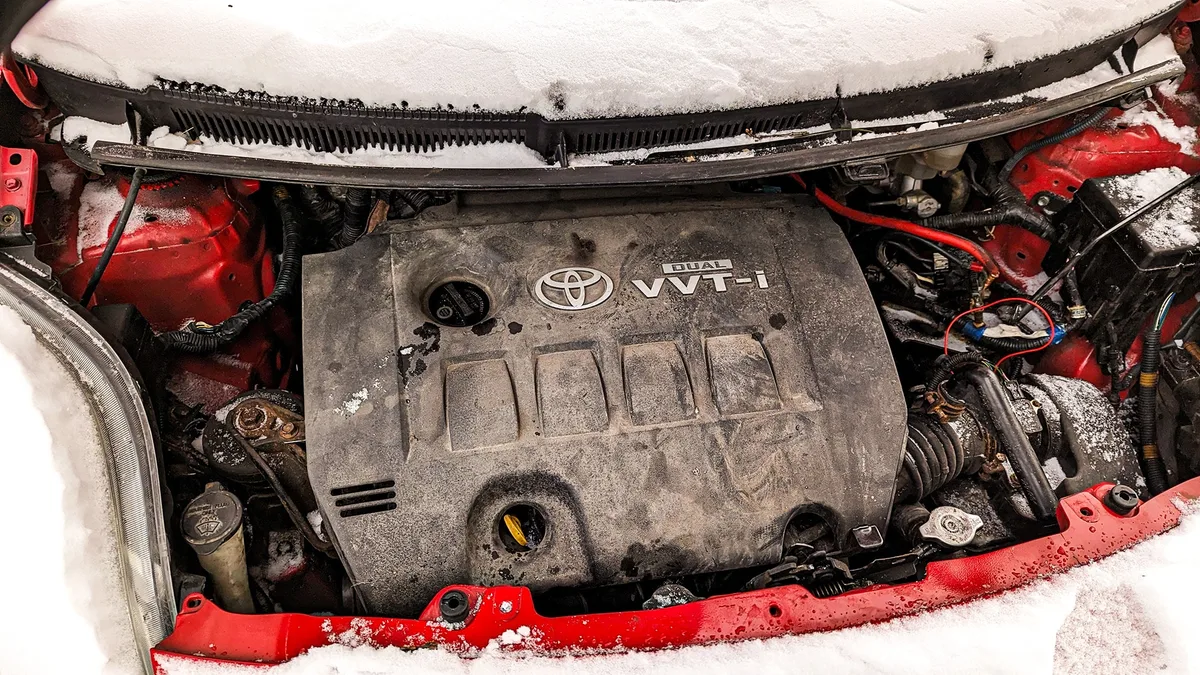
Image source: Web (Bing) / storage.googleapis.com (Web image (fair-use with source credit))
How to check for oil consumption
| Step | What to do |
|---|---|
| 1 | Check the oil level cold, on level ground |
| 2 | Top off to the full mark |
| 3 | Drive 1,000 miles, then recheck |
| 4 | If the level drops more than half a quart, you have a problem |
Repair cost
Fixing oil consumption is not cheap. The repair involves replacing the piston rings. That means pulling the engine apart.
Expect to pay between $2,500 and $4,000 at a shop.
Some owners choose to live with it. They just check the oil every other fill-up and top off as needed. That works if you're diligent.
But it's not a long-term solution. The catalytic converter will eventually fail from the oil burning.
Dashboard Cracking: When Heat and UV Take Their Toll
This is a purely cosmetic issue, but it's incredibly common. The dashboard on the 2010 Corolla is prone to cracking. The cracks usually appear on the top surface near the passenger side.
The problem is the material. Toyota used a type of foam-backed vinyl that doesn't handle heat well. In hot climates, the sun's UV rays break down the material over time.
The result is a network of cracks that look like a dry riverbed.
Some owners report cracks appearing as early as 50,000 miles. In colder climates, the issue is less common. But if the car spent any time in the Sun Belt, there's a good chance the dash is cracked.
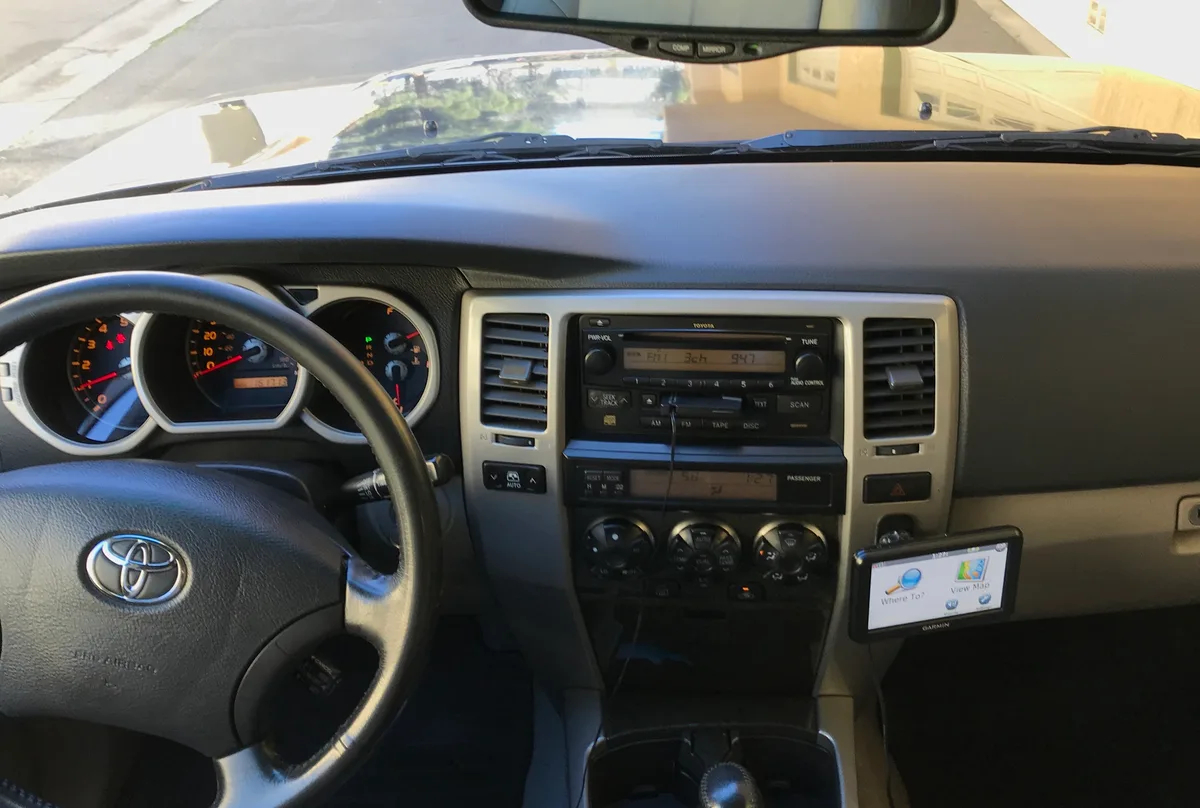
Image source: Web (Bing) / toyota-4runner.org (Web image (fair-use with source credit))
Does it affect safety?
No. A cracked dashboard does not affect the car's operation or safety. The airbag is still functional.
The cracks are purely a visual annoyance.
Replacement cost
Replacing the dashboard at a dealer costs $800 to $1,200. That includes the part and labor. The dashboard itself is about $400.
The labor is the expensive part because the whole interior has to be disassembled.
Many owners use a dash cover instead. It's a cheap fix that hides the cracks. You can find them online for about $30 to $50.
What about the class action?
A class action lawsuit was filed over the dashboard cracking issue. Toyota settled in 2017. The settlement extended the warranty for dashboard cracking to 10 years or 150,000 miles.
As of 2026, that window has closed. But if you owned the car during that period and had the dash replaced, you may have been eligible for reimbursement.
Electric Power Steering Issues (Sticky or Losing Assist)
The 2010 Corolla uses electric power steering instead of hydraulic. That means no fluid, no pump, no hoses. But it comes with its own set of problems.
The most common complaint is a sticky steering wheel. It feels like the wheel catches or hesitates when you turn it at low speeds. Some owners describe it as "notchy" or "stiff." The issue usually gets worse as the car warms up.
The problem is in the EPS torque sensor. This sensor measures how much force you're applying to the wheel. Over time, the internal components wear out.
The sensor sends incorrect signals to the steering motor. The motor then hesitates or applies uneven assist.
Some owners also report a complete loss of power steering. The steering suddenly becomes very heavy. That's dangerous, especially at low speeds or in parking lots.
What to watch for
- Steering that feels sticky or catches at low speeds
- A steering wheel that doesn't return to center smoothly
- The power steering warning light on the dash
- Sudden heavy steering while driving
Repair options
The fix is usually replacing the EPS assembly. That's the steering rack and motor together. A dealer will charge $1,200 to $1,800 for the job.
An independent shop might do it for $800 to $1,200.
There is a cheaper workaround. Some owners have success with recalibrating the steering angle sensor. That requires a scan tool like Toyota Techstream.
It doesn't always work, but it's worth trying before you replace the rack.
Rust on the Rear Suspension Crossmember
This one is a safety issue. The rear suspension crossmember on the 2010 Corolla is prone to rust. In severe cases, the crossmember can rot through completely.
That means the rear suspension has nothing to bolt to.
The problem is worst in the Salt Belt states. If the car has spent winters on salted roads, the crossmember is at risk. Canada had a separate recall for this issue.
The US did not.
The crossmember is a steel beam that runs between the rear wheels. It holds the trailing arms and the rear sway bar. When it rusts, the trailing arm mounts can fail.
That causes the rear wheel to shift out of alignment. In extreme cases, the wheel can separate from the car.
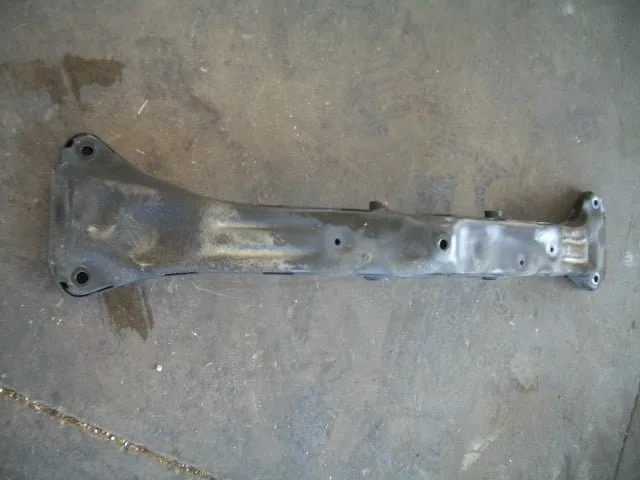
Image source: Bing (Web (fair-use with source credit))
How to inspect it
Jack up the rear of the car. Support it on jack stands. Look at the crossmember near the trailing arm mounting points.
If you see heavy flaking rust or holes, the part needs replacement.
Use a screwdriver to probe the metal. If it pushes through, the crossmember is compromised.
Repair cost
A replacement crossmember costs about $150 to $250. Labor is the bigger expense. The job involves removing the rear suspension components.
Expect to pay $500 to $800 total at a shop.
Prevention
If you live in a snowy area, wash the underside of your car regularly. A pressure washer with an undercarriage attachment works well. Applying a rust inhibitor like Fluid Film or Woolwax every fall helps too.
Check Engine Light + VSC/TRAC Lights: Common Triggers and Fixes
This is one of the most frustrating things about the 2010 Corolla. The Check Engine Light comes on. Then the VSC and TRAC lights light up too.
The car still drives fine, but the dashboard looks like a Christmas tree.
The reason is simple. The VSC and TRAC systems use the same sensors as the engine management system. When the Check Engine Light triggers, the computer disables those systems as a safety measure.
That's why the lights come on together.
The most common trigger is a P0420 code. That means the catalytic converter is not working efficiently. On the 2010 Corolla, this is often caused by oil consumption.
The burning oil coats the catalytic converter and reduces its effectiveness.
Another common code is P0500. That's a vehicle speed sensor issue. The sensor is on the transmission.
It can fail or get contaminated with debris.
What to do
| Code | Likely cause | Typical fix |
|---|---|---|
| P0420 | Failing catalytic converter | Replace converter (check for oil consumption first) |
| P0500 | Faulty speed sensor | Replace sensor, clean reluctor ring |
| P0171 | Lean fuel mixture | Check for vacuum leaks, clean MAF sensor |
| P0300 | Random misfire | Check spark plugs, ignition coils |
Don't ignore it
The lights won't hurt the car's drivability in most cases. But the underlying problem can get worse. A bad catalytic converter can eventually clog.
That causes a loss of power and poor fuel economy. Fix the root cause, and the lights will go out.
Other Common Problems (Transmission, Brakes, AC, Heat Shields)
The 2010 Corolla has a few other issues worth knowing about. They're less common than the big ones above, but they still show up with some frequency.
Transmission shift flare
The 4-speed automatic can develop a "flare" between gears. That means the RPMs spike briefly during a shift before settling down. It feels like the transmission is slipping.
The fix is usually a fluid change. In severe cases, the valve body or solenoids need replacement.
Brake pedal pulsation
Many owners report a pulsing brake pedal. The cause is warped front rotors. The rotors on the 2010 Corolla are on the small side.
They don't dissipate heat well. Aggressive driving or heavy braking can warp them. The fix is replacing the rotors and pads.
AC compressor noise
A clicking or grinding noise from the AC compressor is common. The clutch bearing wears out. The AC still works, but the noise is annoying.
Replacing the compressor is the fix. Expect to pay $500 to $800.
Rattling heat shield
The exhaust heat shield can rust and come loose. It rattles at certain RPMs. It's not a safety issue, but it's annoying.
The fix is either removing the shield or securing it with a hose clamp.
How to Inspect a Used 2010 Corolla Before Buying
If you're considering buying a used 2010 Corolla, do a thorough inspection. The problems are predictable. You just need to know what to look for.
Start with the engine. Check the oil level and condition. Look for signs of oil consumption.
Remove the oil fill cap and look for sludge. A well-maintained engine should have clean oil with no metal particles.
Check the dashboard. Look for cracks on the top surface. If the dash is cracked, the car likely spent time in a hot climate.
That's not a dealbreaker, but it tells you about the car's history.
Test the steering. Drive the car at low speed in a parking lot. Turn the wheel left and right.
Feel for any sticking or catching. The steering should feel smooth and consistent.
Check the rear crossmember. If you can, get the car on a lift. Look at the crossmember for rust.
If you can't lift it, crawl underneath with a flashlight.
Check the VIN for open recalls. You can do this on the NHTSA website. Make sure all recall work has been done.
If you're looking for a Toyota with a rear view camera, check out our guide on common Toyota rear camera problems.
Repair Costs at a Glance: What Common Fixes Really Run
Here's a quick reference for what you'll spend on common repairs. Prices are estimates from independent shops. Dealers will charge more.
| Problem | Typical cost |
|---|---|
| Oil consumption repair (piston rings) | $2,500 – $4,000 |
| Dashboard replacement | $800 – $1,200 |
| EPS rack replacement | $800 – $1,800 |
| Rear crossmember replacement | $500 – $800 |
| Catalytic converter replacement | $400 – $800 |
| Brake rotors and pads (front) | $200 – $350 |
| AC compressor replacement | $500 – $800 |
| Transmission fluid change | $150 – $250 |
Should You Buy a 2010 Corolla in 2025? Pros and Cons
Pros
- Excellent fuel economy (26 city / 34 highway)
- Good reliability record despite the issues
- Cheap parts and easy to work on
- Roomy interior for a compact car
- Strong resale value
Cons
- Oil consumption is expensive to fix
- Dashboard cracking is common
- Steering issues can be costly
- Rust on the crossmember is a safety concern
- The car is 16 years old, so age-related wear is expected
When to DIY and When to Call a Mechanic
Some repairs on the 2010 Corolla are easy to do yourself. Others require specialty tools and experience.
DIY-friendly
- Checking and topping off oil
- Replacing spark plugs and ignition coils
- Changing brake pads and rotors
- Replacing the cabin air filter
- Installing a dash cover
Leave to a mechanic
- Oil consumption repair (piston rings)
- EPS rack replacement
- Rear crossmember replacement
- Catalytic converter replacement
- AC compressor replacement
- Transmission valve body work
Open Recalls and Legal Notes (What You Can Still Claim)
The unintended acceleration recalls are still open. If your 2010 Corolla hasn't had the brake override system installed, you can get it done for free. Check the NHTSA website with your VIN.
The dashboard cracking class action settlement has expired. Toyota is no longer offering free replacements. But some dealers still offer goodwill repairs if you ask.
The Canadian recall for rear crossmember rust is still active. If you're in Canada, check with Transport Canada. US owners don't have the same protection.
Frequently Asked Questions About 2010 Corolla Problems
Is the 2010 Toyota Corolla a reliable car?
Overall, yes. The powertrain is solid and most cars reach 200,000 miles. But the 2010 model year has more documented problems than the 2011 or later models.
The oil consumption issue is the biggest reliability concern.
Does the 2010 Corolla burn oil?
Many do. The 1.8L 2ZR-FE engine can burn a quart of oil every 1,000 miles. The cause is worn piston rings.
The fix is expensive, but some owners just check and top off the oil regularly.
Are there any recalls on the 2010 Corolla?
Yes. The biggest recall is for unintended acceleration. Toyota installed a brake override system and replaced the accelerator pedal.
Check your VIN on the NHTSA website to see if the recall work has been done.
How long does a 2010 Corolla last?
With proper maintenance, 200,000 to 300,000 miles is common. The engine and transmission are durable. The main issues are age-related wear and the oil consumption problem.
Is the dashboard cracking covered by warranty?
The original class action settlement covered it for 10 years or 150,000 miles. As of 2026, that has expired. Toyota is no longer offering free replacements.
A dash cover is a cheap alternative.
Should I buy a 2010 Corolla in 2026?
It depends on the car's history and condition. If the oil consumption issue has been fixed or is manageable, it's a solid car. If the dashboard is intact and the crossmember is rust-free, it's worth considering.
Just budget for potential repairs.
Final Verdict: Is the 2010 Corolla Still Worth It?
The 2010 Toyota Corolla is a mixed bag. It's a reliable, fuel-efficient car that can last a long time. But it has some serious problems that cost real money to fix.
If you find one that's been well maintained, with the oil consumption issue addressed, it's a good buy. If you're looking at a high-mileage example with a cracked dash and a sticky steering wheel, you might be better off with a different car.
The key is knowing what to look for. Check the oil. Check the steering.
Check the crossmember. Check the VIN for recalls. If everything checks out, the 2010 Corolla is still a solid choice for a budget-friendly daily driver.
Here's what was covered:
- The 2010 Toyota Corolla: What You Need to Know First
- Quick Answer
- Unintended Acceleration Recall
- Oil Consumption Problems
- Dashboard Cracking
- Electric Power Steering Issues
- Rust on the Rear Suspension Crossmember
- Check Engine Light + VSC/TRAC Lights
- Other Common Problems
- How to Inspect a Used 2010 Corolla Before Buying
- Repair Costs at a Glance
- Should You Buy a 2010 Corolla in 2025? Pros and Cons
- When to DIY and When to Call a Mechanic
- Open Recalls and Legal Notes
- Frequently Asked Questions
- Final Verdict
No additional H2 sections remain in the approved TOC.
If you'd like me to trim the existing article to fit the 1500-3000 word target, expand a specific section, or add new subsections under an existing H2, just let me know.