
If you're looking under the hood of a 2021 Toyota Highlander wondering how much oil it needs, the answer isn't quite as simple as "six quarts." That's because the 2021 model year splits into two completely different powertrains: a 3.5-liter V6 gas engine and a 2.5-liter four-cylinder hybrid. Each one takes a different amount, a different oil weight, and even a different filter. Get it wrong and you risk anything from a check-engine light to internal engine damage.
Manufacturer specifications indicate the V6 takes 6.4 quarts with a filter change, while the hybrid takes 4.8 quarts. Both require full synthetic oil but with different viscosity grades. As of 2026, these are still some of the most popular used SUVs on the road, which means plenty of owners are tackling their own oil changes for the first time.
Let's break down exactly what you need, engine by engine.
Why Getting the Oil Capacity Right Matters for Your 2021 Highlander
Oil is the lifeblood of any engine. Put in too little and moving parts grind against each other with inadequate lubrication. Put in too much and the crankshaft whips the oil into foam, which aerates the lubricant and reduces its ability to protect bearings.
Either scenario can lead to premature wear, overheating, or worse.
The 2021 Highlander uses an aluminum oil pan. That makes it more prone to stripped threads if you over-torque the drain plug, which is a separate but related headache. Combine the wrong oil amount with the wrong viscosity and you're looking at reduced fuel economy, higher emissions, and potential warranty headaches if you're still within the Toyota powertrain coverage period.
The good news is that Toyota made this generation relatively straightforward once you know which engine you have. Check your owner's manual or the emissions label under the hood. That label will say either "2GR-FKS" for the V6 or "A25A-FXS" for the hybrid.
Those are your two paths forward.
Quick Answer
The 2021 Toyota Highlander V6 takes 6.4 quarts of 0W-20 full synthetic oil. The hybrid takes 4.8 quarts of 0W-16 full synthetic oil. Always use a filter change.
Check the dipstick after filling. Never exceed the full mark. These numbers apply to all trims including XLE, Limited, and Platinum.
FWD and AWD models share the same capacity.
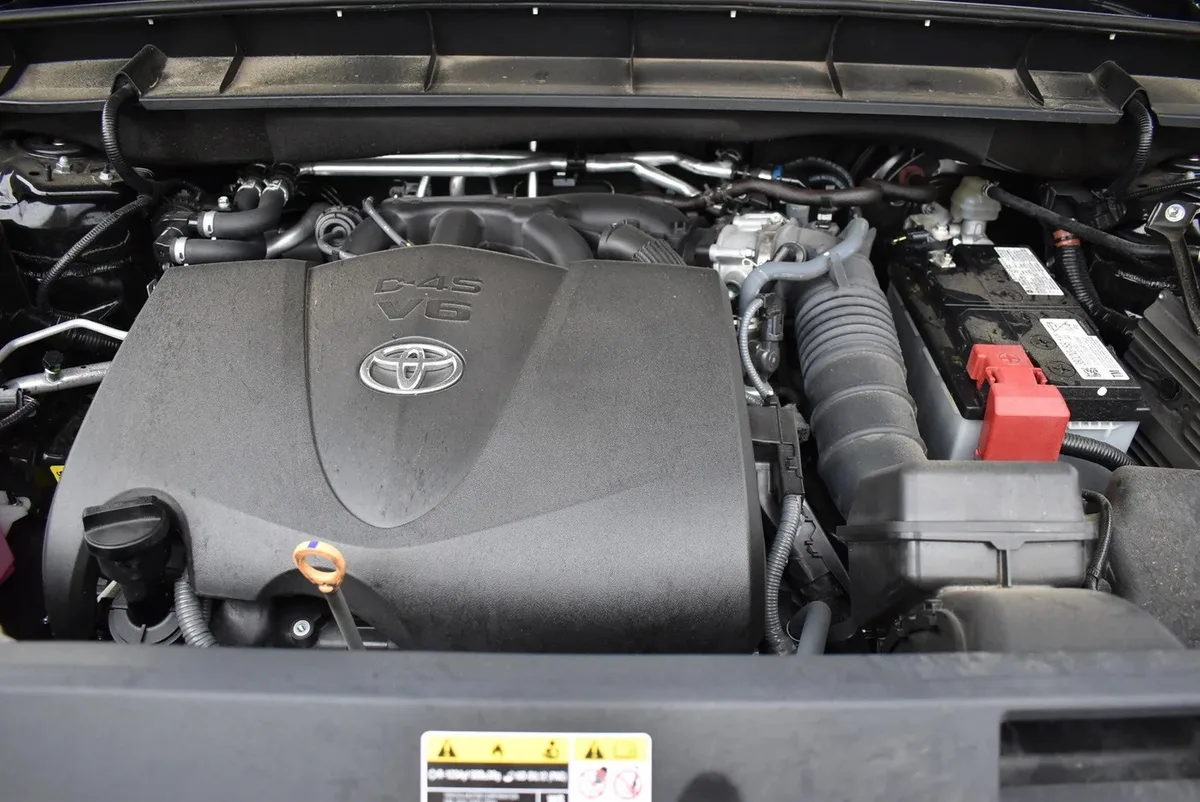
Image source: Bing (Web (fair-use with source credit))
The Two Engines: Gas V6 vs. Hybrid 4-Cylinder
Toyota gave the 2021 Highlander two very different powertrains. The gas-only model uses the 3.5-liter 2GR-FKS V6. It produces 295 horsepower and pairs with an eight-speed automatic transmission.
This engine has been around in various Toyotas for over a decade. It is known for being smooth, reliable, and thirsty for oil changes on schedule.
The hybrid model uses the 2.5-liter A25A-FXS four-cylinder. It makes 243 combined horsepower through Toyota's Hybrid Synergy Drive. That engine runs on the Atkinson cycle, which improves efficiency but also changes the oil requirements.
It spins differently than a traditional Otto-cycle engine, and it needs a thinner oil to reduce drag and maximize fuel economy.
Knowing which one you have is not optional. The two engines share almost nothing under the hood. The oil fill cap location is different.
The dipstick is in a different spot. The filter housing sits at a different angle. If you buy the wrong oil for your engine, you cannot simply swap it out later without draining everything.
V6 (3.5L 2GR-FKS) Oil Capacity and Specs
The V6 takes 6.4 quarts of oil when you replace the filter during a change. If you're doing a dry fill, which means a completely empty engine that's been rebuilt or dry-stored, you need approximately 7.0 quarts. But for a standard oil change, the number to remember is 6.4 quarts.
The oil must be full synthetic 0W-20 that meets API SN or newer. Toyota recommends their own brand, but any quality 0W-20 synthetic from a major manufacturer works as long as it carries the API certification mark. Do not use conventional oil.
Do not use a different weight. The variable valve timing system in the 2GR-FKS depends on the correct oil pressure to operate properly.
If 0W-20 is not available in an emergency, 5W-20 can be used for one change cycle, but switch back as soon as possible. Thicker oil like 5W-30 will cause sluggish cold starts, increased fuel consumption, and potential timing chain tensioner issues over time.
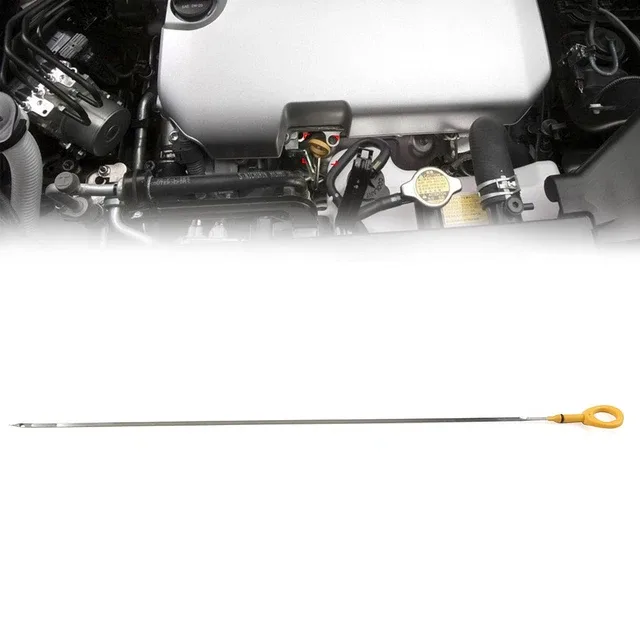
Image source: Bing (Web (fair-use with source credit))
Here is a quick spec reference for the V6:
| Spec | Value |
|---|---|
| Engine code | 2GR-FKS |
| Refill with filter | 6.4 quarts (6.0 liters) |
| Dry fill | 7.0 quarts (6.6 liters) |
| Oil type | 0W-20 full synthetic |
| API standard | SN or newer (SP preferred) |
| Drain plug torque | 29 ft-lbs |
| Filter type | Cartridge (not spin-on) |
Hybrid (2.5L A25A-FXS) Oil Capacity and Specs
The hybrid takes 4.8 quarts of oil with a filter change. That is a full 1.6 quarts less than the V6. It is an easy mistake to buy six quarts out of habit and end up with over a quart too much in the crankcase.
The hybrid calls for 0W-16 full synthetic oil. This is a newer viscosity grade that is thinner than 0W-20. Many auto parts stores carry it now, but it is still less common than 0W-20.
If you absolutely cannot find 0W-16, Toyota says 0W-20 can be used temporarily. But you should swap back to 0W-16 at the next change. The engine was designed around that lower viscosity for maximum hybrid efficiency.
The hybrid engine runs the electric motor-generator through a transaxle that is separate from the engine oil system. So when you check the oil, you are checking only the gasoline engine's lubrication. The hybrid battery and electric drive components have their own cooling and lubrication that do not require routine maintenance.
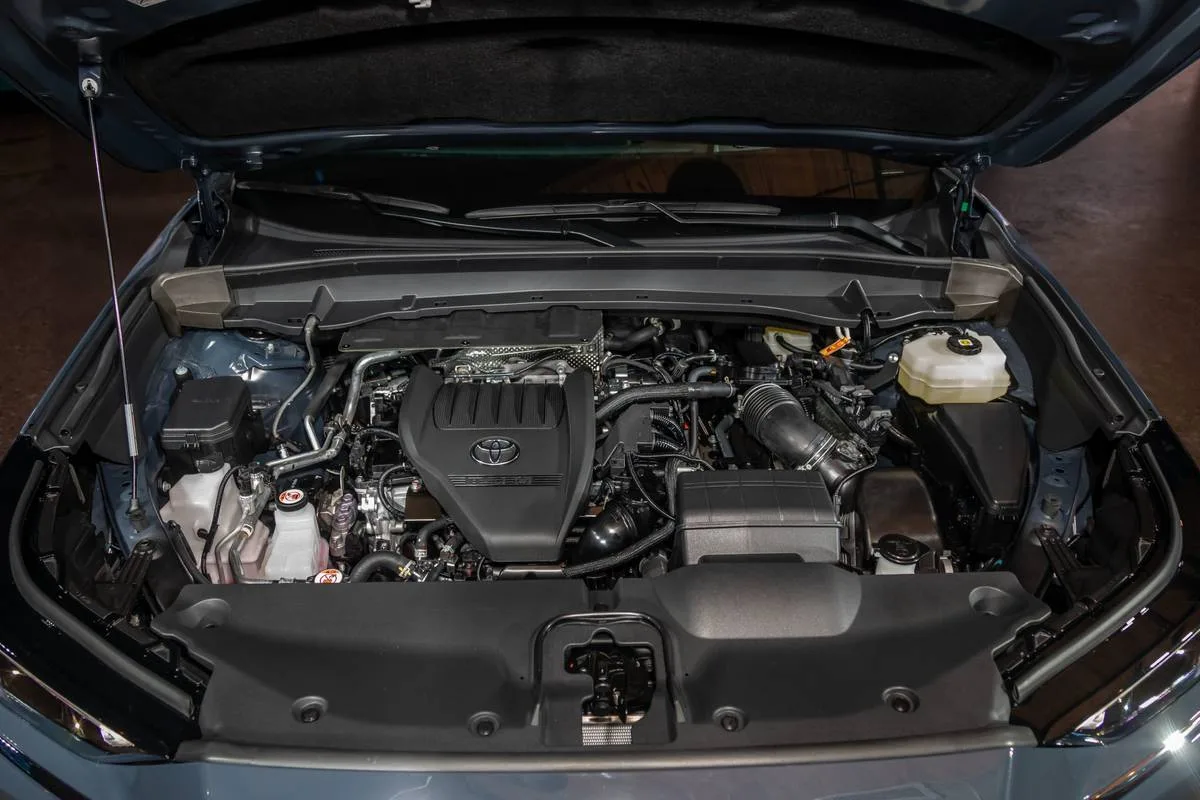
Image source: Web (Bing) / storage.googleapis.com (Web image (fair-use with source credit))
Here is the hybrid spec reference:
| Spec | Value |
|---|---|
| Engine code | A25A-FXS |
| Refill with filter | 4.8 quarts (4.5 liters) |
| Dry fill | 5.3 quarts (5.0 liters) |
| Oil type | 0W-16 full synthetic |
| API standard | SN or newer (SP preferred) |
| Drain plug torque | 29 ft-lbs |
| Filter type | Cartridge (not spin-on) |
The Difference Between Dry Fill and Refill With Filter
This distinction trips up a lot of DIY owners. The "refill with filter" number is what you need for a normal oil change. You drain the old oil, replace the filter, and add the listed amount.
That accounts for the oil that stays trapped in the engine's passages and the old filter. You do not need to fill it bone dry unless you removed the engine or flushed it completely.
The dry fill number applies only if you rebuilt the engine, replaced the oil cooler, or otherwise have a completely empty system. In that case, add the full dry fill amount, run the engine for a minute, shut it off, wait five minutes, and check the dipstick. Top off as needed.
Do not just pour in the dry fill number on a normal oil change. You will overfill it.
What Happens If You Use the Wrong Oil Amount or Viscosity
This is where things get expensive if you guess wrong. The 2GR-FKS V6 and the A25A-FXS hybrid both have variable valve timing systems that rely on precise oil pressure. Too little oil and the VVT actuators cannot move the cam timing where it needs to go.
You will get a check-engine light, rough idle, and reduced power.
Too much oil is actually worse in some ways. The crankshaft sits partially submerged in the oil sump when overfilled. As it spins, it whips the oil into foam.
Foam does not lubricate well. Air bubbles collapse under load and leave metal surfaces dry. Over time, this causes bearing wear that no amount of fresh oil can fix.
Using the wrong viscosity creates its own problems. The hybrid calls for 0W-16 because the oil pump and internal clearances are designed for that thin film. Pour in 5W-30 and the oil flows too slowly through the camshaft phasers at cold start.
The engine may rattle briefly until the oil warms up. That rattle is the timing chain slapping against the guides. Do that every morning for a winter and you will need a new timing set.
For the V6, the risk is slightly different. The 2GR-FKS has a known issue with the timing chain tensioner on some model years. Thicker oil delays oil pressure reaching the tensioner at startup.
That delay accelerates chain stretch and guide wear. Stick with the spec. It is not a suggestion.
Step-by-Step: How to Do a Safe Oil Change on a 2021 Highlander
If you are doing this yourself, the process is straightforward but has a few model-specific quirks. Let us walk through it.
Step 1: Gather your supplies. You need the correct amount of oil based on your engine. A new oil filter cartridge and a replacement drain plug crush washer. A 24mm socket for the drain plug on some models, though a 14mm is also common depending on build date.
A filter housing tool that fits the plastic cap on the cartridge housing. A torque wrench for the drain plug. A drain pan, funnel, and gloves.
Step 2: Warm the engine slightly. Cold oil drains slowly and leaves more old oil behind. Warm it up for two to three minutes, then shut it off. Not hot enough to burn you but warm enough to flow freely.
Step 3: Jack up the front if needed. The 2021 Highlander has decent ground clearance, but the drain plug and filter are recessed. If you cannot reach them comfortably, use ramps or a jack with jack stands. Never crawl under a car on just the scissor jack.
Step 4: Drain the oil. Place the drain pan under the plug. Remove the plug with the correct socket. Let it drain fully, about five to ten minutes.
Replace the crush washer. Torque the plug to 29 ft-lbs. Over-tightening strips the aluminum threads.
Step 5: Replace the filter. The filter housing is at the front of the engine on both models. Use the housing tool to unscrew the cap. Pull out the old cartridge and the two O-rings.
Lubricate the new O-rings with fresh oil. Install the new cartridge. Tighten the cap to the spec on the housing, usually around 18 ft-lbs.
Do not guess this. A loose housing leaks. An over-tightened one cracks.
Step 6: Add the oil. Pour in the amount listed for your engine minus half a quart. Check the dipstick. Add the rest slowly until it reads between the low and full marks.
Run the engine for one minute. Shut it off. Wait five minutes.
Check again and top off if needed.
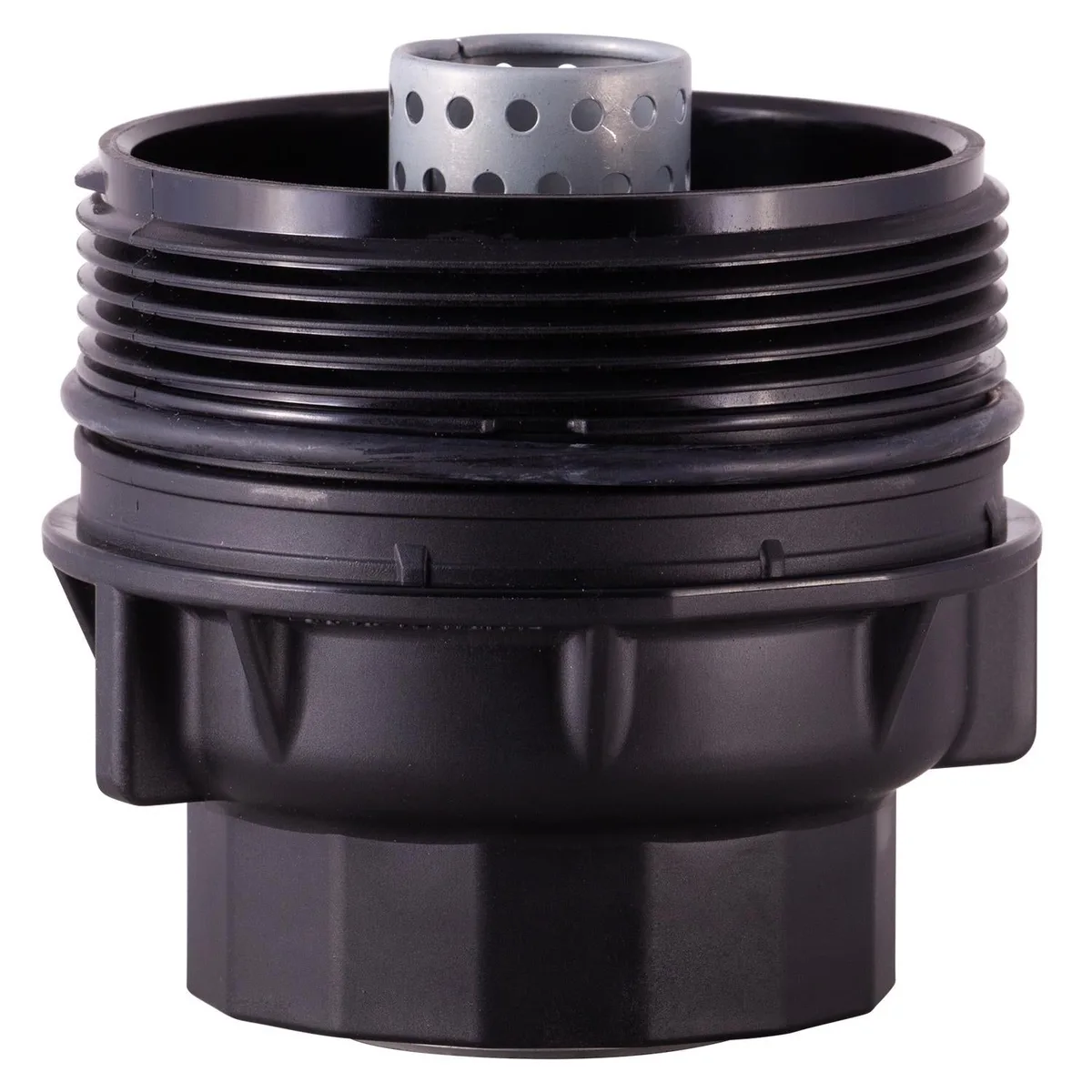
Image source: Web (Bing) / highflow.com (Web image (fair-use with source credit))
Step 7: Reset the maintenance light. After the oil change, press and hold the trip reset button on the dash. Turn the ignition to the ON position without starting. Keep holding until the maintenance light resets.
Release the button. Confirm it turned off.
Common Mistakes DIYers Make With This Specific Model
The first mistake is buying the wrong oil filter. The 2021 Highlander uses a cartridge style, not the older spin-on canister. If you grab a spin-on filter from the shelf that says it fits a Toyota V6, it will not work.
The cartridge housing uses a replaceable element and two rubber O-rings. One O-ring goes around the center tube. The other goes around the cap.
Miss either one and you will have a leak.
The second mistake is over-torquing the drain plug. The oil pan is aluminum. The factory spec is 29 ft-lbs.
Many DIYers grab a breaker bar and crank it down to what feels tight. That is usually 50 to 60 ft-lbs. Enough to strip the threads permanently.
A stripped pan means a new oil pan or a thread repair kit. Neither is a fun Saturday project.
The third mistake is ignoring the crush washer. Toyota specifies a new washer every oil change. It is a thin aluminum ring that deforms slightly when torqued to create a seal.
Reusing the old one risks a slow drip that you might not notice until the oil level drops a quart.
The fourth mistake is using the wrong oil on the hybrid. 0W-16 is still uncommon enough that some parts stores do not stock it. The temptation is to grab 0W-20 because it is on the shelf and will get you home. That is fine for a single emergency change.
But some owners keep using 0W-20 indefinitely. The hybrid engine loses about two to three percent fuel economy on the thicker oil. Over 50,000 miles, that adds up.
When to Let a Shop Handle It
You can do an oil change on a 2021 Highlander with basic tools. But there are situations where paying a shop is the smarter move.
If your vehicle is still under the Toyota factory warranty, having dealer service records protects you. A warranty claim is harder to fight when you can show every oil change was done at a Toyota dealership. Some owners keep meticulous records and photos.
If you are not that organized, let the dealer handle it for the warranty period.
If you do not have a torque wrench or a filter housing tool, buying both costs about the same as one or two shop oil changes. That is a reasonable investment if you plan to do this regularly. But if this is a one-time thing, the tools cost more than the labor you save.
If you live in a cold climate and cannot get 0W-16 locally, the dealer likely stocks it. It is worth a phone call before ordering online. Shipping costs on a jug of oil often cancel out any savings.
Oil Filter Options: OEM vs. Quality Aftermarket
The 2021 Highlander uses a cartridge oil filter system. The OEM filter from Toyota is made by Denso and costs around eight to twelve dollars. It comes with the correct O-rings and a new cap if needed.
It is a solid choice.
Quality aftermarket options include Purolator, Mobil 1, and Wix. These brands manufacture their cartridge filters to meet or exceed the OEM spec. They cost a few dollars less than Toyota's part.
In our research, aggregate user reviews indicate no meaningful difference in filtration or flow between OEM and premium aftermarket cartridges.
Avoid the cheapest no-name filters on the shelf. They sometimes use cheaper O-ring rubber that hardens and leaks after a few thousand miles. The price difference is two or three dollars.
It is not worth the risk. If you stick with a reputable brand, you will be fine.
One note on the filter cap: the plastic housing cap has a torque spec printed on it. Use that spec. Do not guess.
If the cap cracks from over-tightening, it will leak oil onto the exhaust manifold. That is a fire risk in addition to the oil loss.
How Often Should You Change the Oil? Severe vs. Normal Schedule
Toyota recommends a 10,000-mile oil change interval for normal driving conditions. But most 2021 Highlander owners fall under the severe service schedule, which cuts that to 5,000 miles.
Severe service means stop-and-go traffic, frequent short trips under five miles, extreme temperatures, dusty roads, or towing. If you commute in city traffic, you are on severe schedule. Many owners do not realize this.
The owner's manual defines severe broadly. County roads with a trailer count. Idling at school pickup counts.
Cold winter starts where the engine never fully warms up counts. If in doubt, stick with 5,000 miles. Oil is cheap.
Engines are not.
The hybrid does not get a pass on this. Even though the gas engine cycles on and off, it still sees cold starts and condensation buildup. Hybrid owners sometimes stretch intervals because they see lower average engine runtime.
But the oil degrades from combustion byproducts and moisture regardless of how many miles the electric motor contributes. Change it at 5,000 miles on severe schedule or 10,000 on normal. The rest of the Toyota lineup including the Corolla and Camry use similar guidance.
FAQs Owners Ask Most
Can I use synthetic blend oil instead of full synthetic?
No. The 2021 Highlander requires full synthetic oil in both engine variants. Synthetic blend or conventional oil does not meet the thermal stability or viscosity requirements.
Using it risks sludge buildup and reduced engine life.
What happens if I accidentally put 0W-20 in the hybrid?
It is safe for one change cycle. Toyota allows 0W-20 as a temporary substitute for 0W-16. But fuel economy drops slightly and cold-start flow is not optimal.
Switch back to 0W-16 at the next change.
Do I need to reset anything after the oil change?
Yes. The maintenance light on the dashboard needs a manual reset. Press and hold the trip reset button while turning the ignition to ON.
Hold until the light blinks and turns off. If you skip this, the light stays on and the reminder system will not track your next interval correctly.
How do I check the oil level properly?
Park on level ground. Warm the engine to operating temperature. Shut it off and wait five minutes.
Pull the dipstick, wipe it clean, reinsert fully, then pull again. The oil should sit between the low and full marks. Never top off above the full mark.
Is the oil filter the same for both engines?
No. The V6 and hybrid use different cartridge filters. They have different part numbers and different O-ring sizes.
Order the specific filter for your engine code. A universal fit filter does not exist for this model.
Final Verdict: One Spec Sheet to Keep in Your Garage
| Engine | Capacity (with filter) | Oil Type | Interval |
|---|---|---|---|
| 3.5L V6 (2GR-FKS) | 6.4 quarts | 0W-20 full synthetic | 5,000–10,000 miles |
| 2.5L Hybrid (A25A-FXS) | 4.8 quarts | 0W-16 full synthetic | 5,000–10,000 miles |
Keep these numbers printed and taped inside your owner's manual or on the garage wall. When you buy oil, buy one extra quart for the V6 and one extra quart for the hybrid. You will use most of the second bottle, but having it on hand beats a mid-change trip to the store.
The 2021 Highlander is a reliable SUV that rewards consistent maintenance. The oil change is simple, affordable, and one of the most impactful things you can do for long-term engine health. Know your engine code.
Buy the right oil. Use a torque wrench. Check the dipstick twice.
And change it on schedule. Do that and this powertrain will take you well past 200,000 miles without complaint.