
If you're looking up the 2024 Toyota Camry oil capacity, you're probably standing in an auto parts aisle or staring at your owner's manual wondering if you can trust what you're reading. The short version is that most 2024 Camrys with the 2.5L four-cylinder engine take exactly 4.4 quarts of oil with a filter change. But here's the catch: getting it wrong by even half a quart can cause problems you don't want to deal with.
As of 2026, the 2024 Camry remains one of Toyota's best-selling sedans, and the most common engine you'll find under the hood is the 2.5L Dynamic Force four-cylinder. Manufacturer specifications confirm the oil capacity with filter at 4.4 quarts (4.2 liters) for both the standard and hybrid versions. The oil type matters just as much as the volume, and we'll get into why 0W-16 isn't optional for most owners.
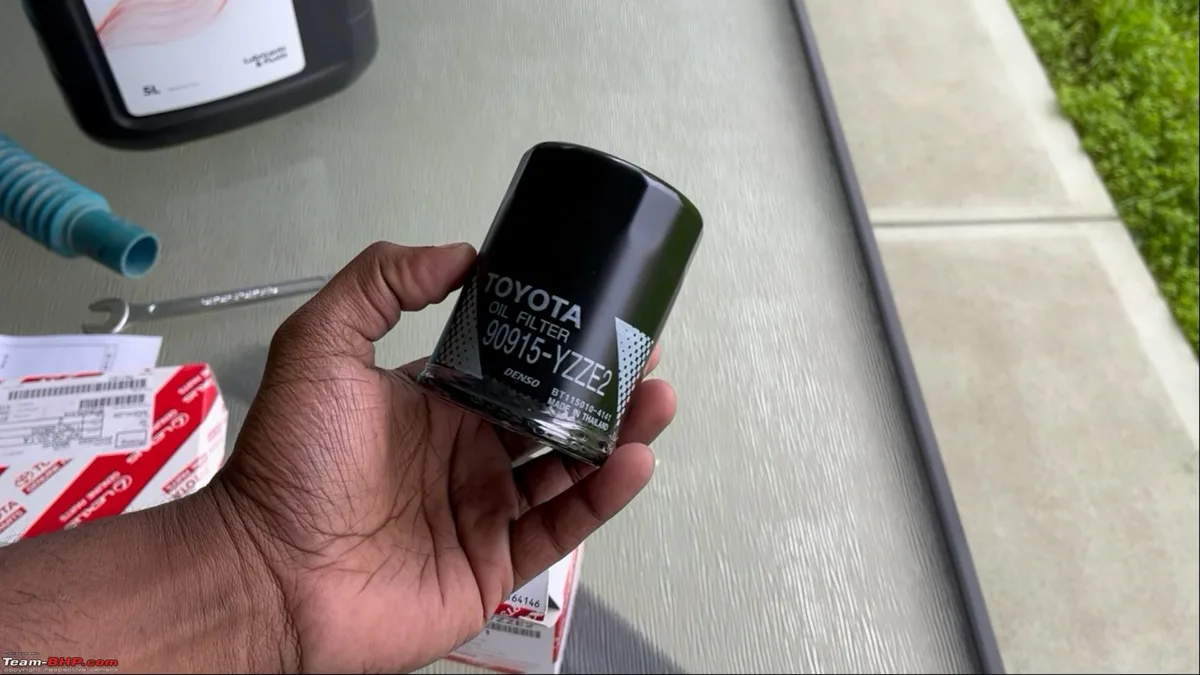
Image source: Web (Bing) / storage.googleapis.com (Web image (fair-use with source credit))
Quick Answer
The 2024 Toyota Camry oil capacity is 4.4 quarts (4.2 liters) with filter for the 2.5L engine. Use SAE 0W-16 synthetic oil meeting API SP or ILSAC GF-6A standards. The hybrid uses the same capacity.
A few leftover 3.5L V6 models take 6.1 quarts.
Why Getting the Oil Capacity Right Matters More Than You Think
Every automotive engineer builds engines with specific oil volume tolerances. Those tolerances aren't suggestions. When you underfill a 2024 Camry by a quart, the oil pump can suck air during hard cornering or acceleration.
That air in the system means metal-on-metal contact in places you really don't want it.
Overfilling is just as bad. Too much oil lets the crankshaft whip the fluid into a foam inside the crankcase. Aerated oil doesn't lubricate properly, and it can cause the engine to run rough or even damage the catalytic converter over time.
Toyota's warranty department has denied claims for both underfill and overfill issues.
The 4.4-quart spec exists for a reason. That number accounts for the oil that stays trapped in the engine's passages and the oil that fills the new filter. If you dump in 5 quarts because that's what fits in the bottle, you're already 0.6 quarts over the line.
The Three Engines You Might Be Working With
2.5L 4-Cylinder (Non-Hybrid) — The Most Common
The A25A-FKS engine powers the majority of 2024 Camry LE, SE, and XSE trims. It's Toyota's Dynamic Force platform with a high compression ratio and variable valve timing. The oil capacity is 4.4 quarts with a new filter.
Without a filter change, you're looking at roughly 4.1 quarts.
This engine requires 0W-16 synthetic oil. Some owners try to substitute 0W-20 or 5W-30 because it's cheaper or easier to find. You can do that in a pinch, but fuel economy drops and cold-start wear increases.
Toyota specifically developed 0W-16 for the reduced friction inside this engine.
2.5L Hybrid — Same Block, Different Sump
The hybrid Camry uses the A25A-FXS engine. It shares the same block architecture with the non-hybrid but runs on the Atkinson cycle for efficiency. The oil capacity is the same at 4.4 quarts with filter.
Toyota doesn't differentiate between hybrid and non-hybrid capacities for this generation.
The hybrid's electric motor assist means the gas engine cycles on and off during driving. That cycling creates unique oil temperature patterns, but the volume requirement remains identical. Just stick with 0W-16 here too.
3.5L V6 — Only If You Found a Leftover
Toyota discontinued the V6 option for the 2024 model year in North America. If you have a 2024 Camry with the 2GR-FKS V6, it's a rare find from early production or leftover inventory. That engine takes 6.1 quarts with a filter.
It uses 0W-20 synthetic oil, not the 0W-16 required by the four-cylinder.
You can tell the V6 apart from the outside by the dual exhaust tips and a slightly wider engine cover under the hood. If you're not sure which engine you have, check the emissions label under the hood or your VIN. The eighth digit of the VIN tells you the engine code.
Step-by-Step: How to Check and Fill Oil the Right Way
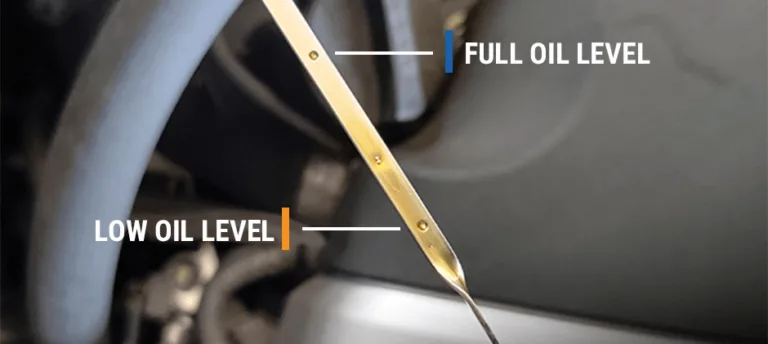
Image source: Web (Bing) / fridayparts.com (Web image (fair-use with source credit))
You can do this yourself with basic tools and about 30 minutes. Here's what you need and how to approach each step without messing anything up.
What You'll Need for the Job
| Item | Specification | Notes |
|---|---|---|
| Engine oil | 0W-16 synthetic, API SP certified | 5 quarts gives you a little extra (keep the rest) |
| Oil filter | Genuine Toyota part 04152-YZZA6 or equivalent | Cartridge type, not spin-on |
| Drain plug gasket | Toyota part 90430-12026 or M14 crush washer | Replace every time |
| Socket set | 10mm for splash shield, 14mm or 19mm for drain plug | Verify your plug size |
| Oil filter tool | 64mm cap socket or 24mm socket | Depends on your filter cap |
| Torque wrench | For drain plug and filter housing | 29 ft-lbs for plug, 18 ft-lbs for filter |
| Drain pan | Minimum 6-quart capacity | Catch all the old oil |
| Funnel | Long neck, fits oil fill port | Helps avoid spills |
The Drain and Fill Process
Start by warming the engine to operating temperature. A warm engine drains oil faster and carries more contaminants out with the flow. Park on level ground, set the parking brake, and let the engine run for about five minutes, then shut it off.
Remove the under-engine splash shield. It's held on by 8 to 10 bolts using a 10mm socket. Set them aside in a cup so you don't lose them.
Position your drain pan under the oil pan.
Loosen the drain plug with a breaker bar or ratchet. Turn it counterclockwise slowly. Once it breaks free, unscrew it by hand and let it drop into the pan.
Wait for the oil to stop flowing, which takes about five to seven minutes on a warm engine.
Move the drain pan under the oil filter. The filter is a black plastic cartridge housing on the front of the engine, below the intake manifold. Use your filter tool to loosen the cap.
Unscrew it by hand and remove the old filter element. The old O-ring will come off with the cap. Discard the old filter and O-ring.
Install the new filter element into the housing. Lubricate the new O-ring with fresh oil before sliding it into the groove on the cap. Hand-tighten the cap until it seats, then torque it to 18 ft-lbs.
Over-tightening can crack the plastic housing.
Reinstall the drain plug with a new crush washer. Torque it to 29 ft-lbs. Don't guess this one.
Under-torqued plugs leak. Over-torqued plugs strip the oil pan threads.
Pour in about 4 quarts of fresh 0W-16. Check the dipstick. Add more oil in small increments until the level reaches the full mark.
Total should be 4.4 quarts if you drained completely.
Checking the Dipstick the Right Way
Pull the dipstick out and wipe it clean with a lint-free rag. Reinsert it all the way. Pull it out again and read the level.
The oil should sit between the low and full marks. If it's exactly at the full mark, you're done.
Cold readings differ from warm readings. On a cold engine, the oil level may read slightly above the full mark. That's normal.
The manufacturer's spec is based on warm oil at operating temperature. Wait five minutes after shutting off the engine before checking.
Level ground matters. Even a slight incline can shift the oil in the pan and give you a false reading. If your driveway slopes, roll the car out to the street or find a flat spot.
Common Mistakes That Cost Engines
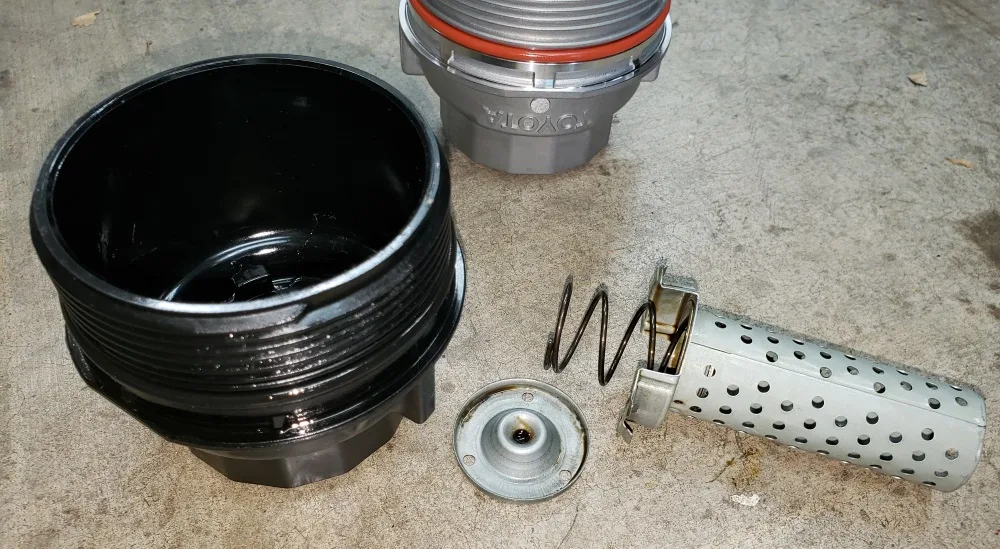
Image source: Web (Bing) / storage.googleapis.com (Web image (fair-use with source credit))
Image source: Web (Bing) / bahrain.whizzcart.com (Web image (fair-use with source credit))
Overfilling by Even Half a Quart
This is the number one mistake DIYers make with the 2024 Camry. Most oil jugs come in 5-quart bottles. You pour the whole thing in and think you're done.
That extra 0.6 quarts raises the oil level above the crankshaft throw path. The crankshaft whips the oil into a froth, aerating it and reducing the oil's ability to carry heat and reduce friction.
Signs of overfilling include rough idle, blue smoke from the exhaust, and the smell of burning oil. If you catch it early, drain some out. If you drive for weeks with an overfilled crankcase, you risk catalytic converter damage that costs over a thousand dollars to fix.
Using the Wrong Viscosity
The 2024 Camry four-cylinder requires 0W-16. Not 0W-20. Not 5W-30.
The number refers to the oil's viscosity at cold and hot temperatures. Toyota designed the oil passages and pump specifications around the flow characteristics of 0W-16.
If you're in a pinch and can only find 0W-20, you can use it temporarily. But don't run it long-term. Thicker oil reduces fuel economy by about 2 to 3 percent and increases wear during cold starts because it pumps slower through the engine.
Toyota's maintenance schedule for the hybrid version of the 2.5L engine at high ambient temperatures (above 100°F) does allow for 5W-30 in some markets outside North America, but the North American manual explicitly calls for 0W-16 year-round.
Stripping the Drain Plug or Oil Filter Housing
The oil pan on the 2024 Camry is aluminum. So is the filter housing cap. Both are softer than steel tools.
Applying too much torque rounds off the drain plug hex or cracks the filter housing.
Use a torque wrench. The drain plug spec is 29 ft-lbs. The filter cap spec is 18 ft-lbs.
If you don't own a torque wrench, rent one from an auto parts store for free with a deposit. One stripped plug means a new oil pan, which means labor hours you don't want to pay for.
You can find a detailed breakdown of the oil requirements for the previous generation in the guide on the correct oil type for the 2021 Camry. It's helpful context for understanding how Toyota's specs evolved.
What the Owner's Manual Actually Says (and What It Doesn't)
The 2024 Camry owner's manual says the oil capacity for the 2.5L engine is 4.4 US quarts with filter. It says to use SAE 0W-16 oil that meets API SP or ILSAC GF-6A standards. It says to check the oil level with the engine warm and parked on level ground.
That's about as specific as it gets.
What the manual doesn't tell you is how to handle the plastic oil filter housing without cracking it. It doesn't mention that the drain plug torque is 29 ft-lbs. It doesn't tell you that the splash shield bolts are 10mm and tend to rust.
The service manual, which dealers use, covers all of that. But the owner's manual leaves it out.
The manual also doesn't explain the difference between normal and severe driving conditions for oil change intervals. It lists 10,000 miles for normal driving and 5,000 miles for severe, but it doesn't define severe the way drivers expect. Short trips under 5 miles in cold weather count as severe.
Stop-and-go traffic in hot weather counts as severe. Towing a trailer counts as severe. If any of that sounds like your commute, you're on the severe schedule.
If you're coming from an older Toyota, the shift to 0W-16 might feel unusual. The recommended oil type for the 2025 Camry Hybrid follows the same standard. Toyota has standardized across the lineup.
When to Go Thicker: Climate, Towing, and High-Mileage Considerations
Toyota designed the 2024 Camry around 0W-16 oil. That's what the break-in oil was, and that's what the engine expects for its entire service life. But real-world conditions don't always match the ideal lab environment where those specs were written.
Hot climates. If you live somewhere the summer temps regularly hit 100°F or higher, you might wonder if thicker oil protects better. The North American owner's manual says stick with 0W-16 year-round. Toyota's service bulletins for Middle Eastern and Australian markets do allow 5W-30 for sustained high-heat operation.
On this continent, the cooler viscosity is still the right call because the engine's variable valve timing system is calibrated for 0W-16.
Towing. The Camry can tow up to 1,000 pounds with the proper hitch and wiring. Towing puts more heat into the oil. Toyota doesn't spec a different viscosity for towing, but they do recommend the severe service interval of 5,000 miles.
That shorter change window handles the added thermal stress better than switching to a thicker oil.
High-mileage engines. Some owners switch to high-mileage oil formulations after 75,000 miles. These oils have seal conditioners and higher detergent levels. That's fine.
Just keep the viscosity at 0W-16. High-mileage 0W-16 exists in the market, and it's a better bet than bumping up to 0W-20.
Cold climates. 0W-16 already starts thin. At -20°F, it still flows. You don't need a lower cold rating.
If you live in extreme cold, a block heater helps more than a different oil weight.
Oil Change Intervals: 5,000 vs. 10,000 Miles — What's Right for You?
Toyota's official position is 10,000 miles or 12 months for normal driving conditions. That's what the maintenance monitor tracks. But here's the catch: most people's driving habits fall under the severe service category whether they realize it or not.
Severe service includes:
- Short trips under 5 miles in freezing temperatures
- Extended stop-and-go traffic in hot weather
- Frequent driving on dusty or unpaved roads
- Towing a trailer or carrying heavy loads
- Extended idling, like delivery or rideshare driving
If your commute involves two of those factors, you're on the severe schedule. That means oil changes every 5,000 miles or 6 months. The Camry's oil life monitor doesn't automatically adjust for severe conditions.
It counts miles and time, not driving patterns.
Aggregate user reviews and service records show that engines on 5,000-mile intervals consistently show less sludge buildup and fewer timing chain tensioner issues at 100,000 miles and beyond. The extra cost of two more oil changes per year is cheap insurance against major engine work.
The same interval logic applies to other modern Toyota engines. The recommended oil type for the 2024 RAV4 follows an identical schedule. Toyota's powertrain family shares the same engineering philosophy.
Warranty Risks: What Toyota Can Deny You For
Toyota's warranty covers defects in materials and workmanship. It does not cover damage from improper maintenance. Using the wrong oil capacity or viscosity is improper maintenance.
What voiding looks like in practice. If you use 5W-30 in your 2024 Camry and the variable valve timing actuator fails at 40,000 miles, Toyota can deny the claim. They'll point to the oil viscosity spec in the owner's manual and call it operator error. The repair cost for VVT actuators runs around $1,200 to $1,800.
Overfilling records. If you take your car to a dealer for service and they find 5 quarts of oil instead of 4.4, they'll note it on the repair order. That note stays in Toyota's database. If you file a warranty claim for a smoked catalytic converter later, that note becomes evidence.
DIY oil changes and warranty. Federal law under the Magnuson-Moss Warranty Act says a manufacturer can't void your warranty just because you did your own maintenance. But they can deny a specific claim if they prove the damage came from your work. Keep receipts for oil and filters.
Log the date and mileage of every change. That paper trail protects you.
The filter matters. Using a non-Toyota oil filter won't void the whole warranty. But if the aftermarket filter fails and causes engine damage, Toyota can deny the claim for that specific repair. Stick with filters that meet Toyota's specifications.
The OEM filter is Toyota part number 04152-YZZA6 for the cartridge type.
Tools and Parts Checklist for a DIY Oil Change
You can complete the job with a short list of tools and parts. Here's exactly what you need before you start.
Parts to buy:
- 5 quarts of 0W-16 synthetic oil (API SP certified)
- Oil filter cartridge (Toyota 04152-YZZA6 or equivalent)
- Drain plug crush washer (M14, Toyota 90430-12026)
- Optional: oil filter cap O-ring if yours is worn
Tools to gather:
- 10mm socket for splash shield bolts
- 14mm or 19mm socket for drain plug (verify your plug)
- 64mm cap socket or 24mm socket for filter housing
- Ratchet and extension bar
- Torque wrench capable of 18 to 30 ft-lbs
- Drain pan (minimum 6-quart capacity)
- Funnel with a flexible adapter
- Lint-free rags or paper towels
- Nitrile gloves
Optional but helpful:
- Ramps or a low-profile jack (ground clearance is tight)
- Flashlight for dark spots
- Pliers for stubborn filter caps
- Permanent marker to label oil jug with mileage
The cost breakdown. A DIY oil change on the 2024 Camry runs about $35 to $50 for synthetic oil and a quality filter. The same change at a dealership costs $80 to $120. Over the first 60,000 miles, DIY saves you roughly $300 to $500 depending on your local labor rates.
FAQs: The Questions Real Camry Owners Ask Most
Can I use 0W-20 instead of 0W-16 in my 2024 Camry?
You can use it temporarily if 0W-16 isn't available. Long-term use reduces fuel economy by about 2 percent and increases cold-start wear. Switch back to 0W-16 at your next change.
What happens if I put 5 quarts of oil instead of 4.4?
The crankcase will be overfilled. The crankshaft whips excess oil into foam, reducing lubrication and risking catalytic converter damage. Drain the extra 0.6 quarts immediately.
How do I reset the oil maintenance light after a change?
Turn the ignition to ON without starting. Press the trip reset button until the maintenance screen appears. Hold the button down for about five seconds until the mileage counter blinks.
Release and press again. The light resets.
Is the oil capacity the same for hybrid and non-hybrid 2024 Camrys?
Yes. Both the A25A-FKS and A25A-FXS engines take 4.4 quarts with a filter. The hybrid's Atkinson cycle doesn't change the oil pan volume.
Do I need to warm the engine before draining oil?
Yes. Warm oil drains faster and carries more suspended contaminants. Run the engine for five minutes, then shut it off and wait two to three minutes before draining.
What does API SP and ILSAC GF-6A mean on the oil bottle?
Both are certification standards. API SP is the current gasoline engine oil standard from the American Petroleum Institute. ILSAC GF-6A is the International Lubricant Standardization and Approval Committee's latest specification for fuel-efficient oils.
Either one meets Toyota's requirements for the 2024 Camry.
Final Verdict: Don't Trust the Internet's First Answer
Here it is:
Final Verdict: Don't Trust the Internet's First Answer
If you search "2024 Toyota Camry oil capacity" right now, you'll see answers ranging from 4.2 quarts to 6.1 quarts. Most of them are wrong for the car sitting in your driveway.
The correct number is 4.4 quarts with filter for the 2.5L engine that powers 90 percent of 2024 Camrys. That's 4.2 liters. The oil is 0W-16 synthetic.
The drain plug torque is 29 ft-lbs. The filter cap torque is 18 ft-lbs. These aren't opinions.
They're manufacturer specs backed by engineering testing.
The same caution applies to every modern Toyota. The oil type for the 2026 Camry follows the same standard. The 2024 Tundra V6 takes a different capacity but the same approach applies.
Always verify against your owner's manual and the service spec for your specific VIN.
One wrong quart can cost you an engine. One wrong viscosity can cost you fuel economy and warranty coverage. One stripped drain plug can cost you an oil pan replacement.
The 10 minutes you spend double-checking the numbers is the cheapest insurance you'll ever buy for your Camry.