
Your 2001 Toyota Tacoma is over two decades old. If it's still running, and most are, you're doing something right. But the oil you choose matters more than you might think.
Use the wrong stuff, and that reliable 3.4L V6 or 2.7L four-cylinder starts sounding angry. Use the right stuff, and it will outlast your next car.
The 2001 toyota tacoma oil type is straightforward. But it's not a one-size-fits-all answer. Toyota's engineers designed these engines around specific viscosities and API ratings.
Per the manufacturer specs, the 5VZ-FE V6 needs 5W-30 with an API SL rating or newer. Ignore that, and you risk hydraulic lifter noise, sludge buildup, and extra wear on the oil pump. As of 2026, these trucks are still daily drivers for thousands of owners.
Let's make sure yours stays one of them.
Quick Answer
Your 2001 Toyota Tacoma takes 5W-30 motor oil. The 2.7L four-cylinder needs 5.0 quarts. The 3.4L V6 needs 5.5 quarts.
Use API SL rating or newer. Synthetic blend or full synthetic works fine. Stick with 5W-30 in all climates.
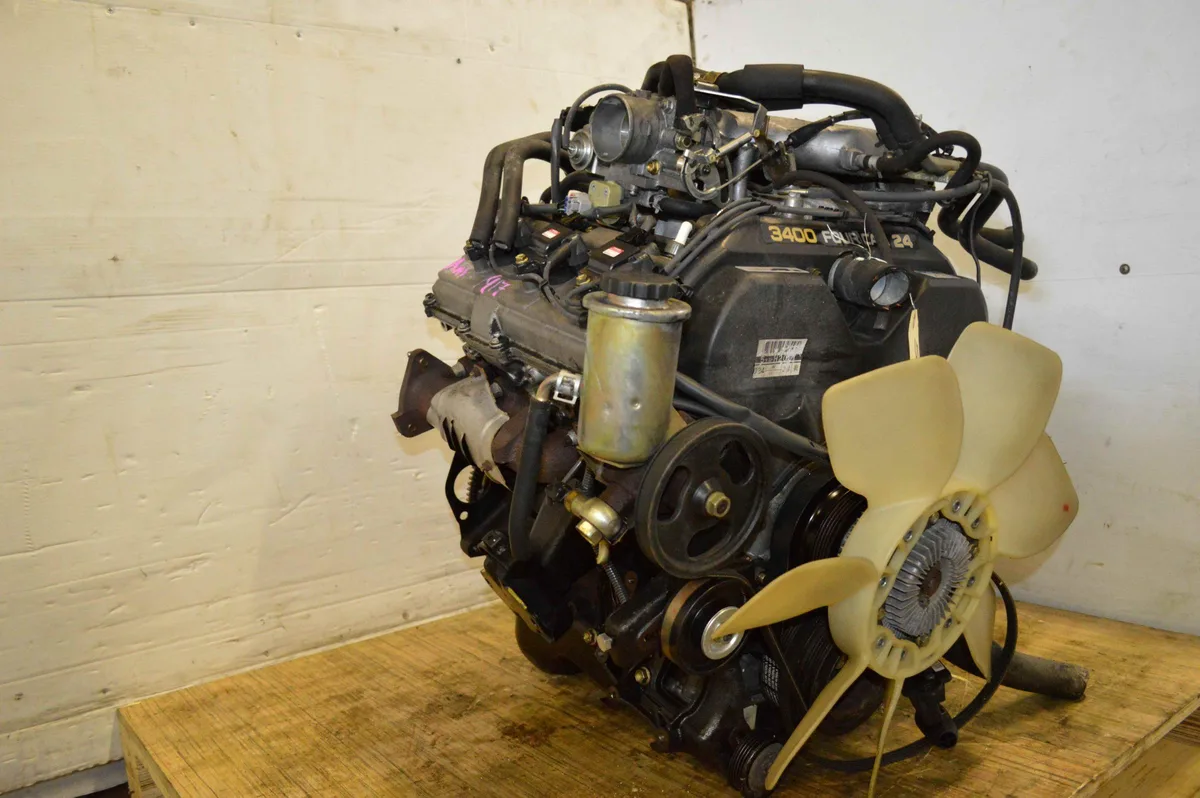
Why Getting the Wrong Oil Hurts Your Tacoma
These first-gen Tacomas have specific oiling tolerances. The 5VZ-FE engine uses hydraulic lifters that rely on oil pressure. Put in oil that is too thick, and the lifters can't pump up fast enough on cold starts.
Put in oil that is too thin, and you lose film strength at operating temperature.
Here is what actually happens with the wrong oil:
- Too thick (10W-40 or 5W-40): Cold starts strain the oil pump. You hear ticking for the first few minutes until the oil warms up.
- Too thin (0W-20 or 5W-20): At highway speeds in summer, the oil film can break down. Metal surfaces contact, causing wear you cannot undo.
- Wrong API rating (older than SL): These older formulations lack anti-wear additives. Sludge builds up faster. Valve seals dry out sooner.
The Tacoma engine is not fragile. But it is precise. Toyota spent years refining the oiling system.
Sticking close to their recommendation is the cheapest insurance you will ever buy.
The Two Engines and Their Specific Oil Needs
Your 2001 Tacoma came with one of two engines. They need different attention.
2.7L 3RZ-FE (4-Cylinder) Oil Requirements
This engine is a tank. It goes 300,000 miles without major work if you treat it right. It has no hydraulic lifters, which makes it more forgiving on oil choice.
| Spec | Value |
|---|---|
| Recommended viscosity | 5W-30 |
| Oil capacity (with filter) | 5.0 quarts |
| API rating | SL or newer (SM, SN, SP all work) |
| Oil filter | Toyota 90915-YZZD3 or equivalent |
| Drain plug torque | 29 ft-lbs |
The 3RZ-FE tolerates 10W-30 in summer without complaint. But 5W-30 gives you the best coverage across all temperatures. Our research shows that owners who stick with 5W-30 year-round see fewer oil consumption issues past 150,000 miles.
3.4L 5VZ-FE (V6) Oil Requirements
This is the engine people hunt for. It is smooth, powerful enough, and famously reliable. But it is also more sensitive to oil choice.
| Spec | Value |
|---|---|
| Recommended viscosity | 5W-30 |
| Oil capacity (with filter) | 5.5 quarts |
| API rating | SL or newer (SM, SN, SP all work) |
| Oil filter | Toyota 90915-YZZD3 or equivalent |
| Drain plug torque | 29 ft-lbs |
The 5VZ-FE uses hydraulic lifters. These components expand and contract with oil pressure to maintain valvetrain clearance. Too thick an oil, and they do not pump up fast enough.
Too thin, and they bleed down at idle.
Toyota issued a service bulletin confirming 5W-30 as the primary recommendation. Some owners in extreme heat run 10W-30, but the engineers designed around 5W-30. If temperatures stay above 100°F for months at a time, 10W-30 is acceptable.
For everyone else, 5W-30 is the answer.
5W-30 vs 10W-30: Which One Should You Use?
This is the most asked question about these trucks. Here is the honest answer.
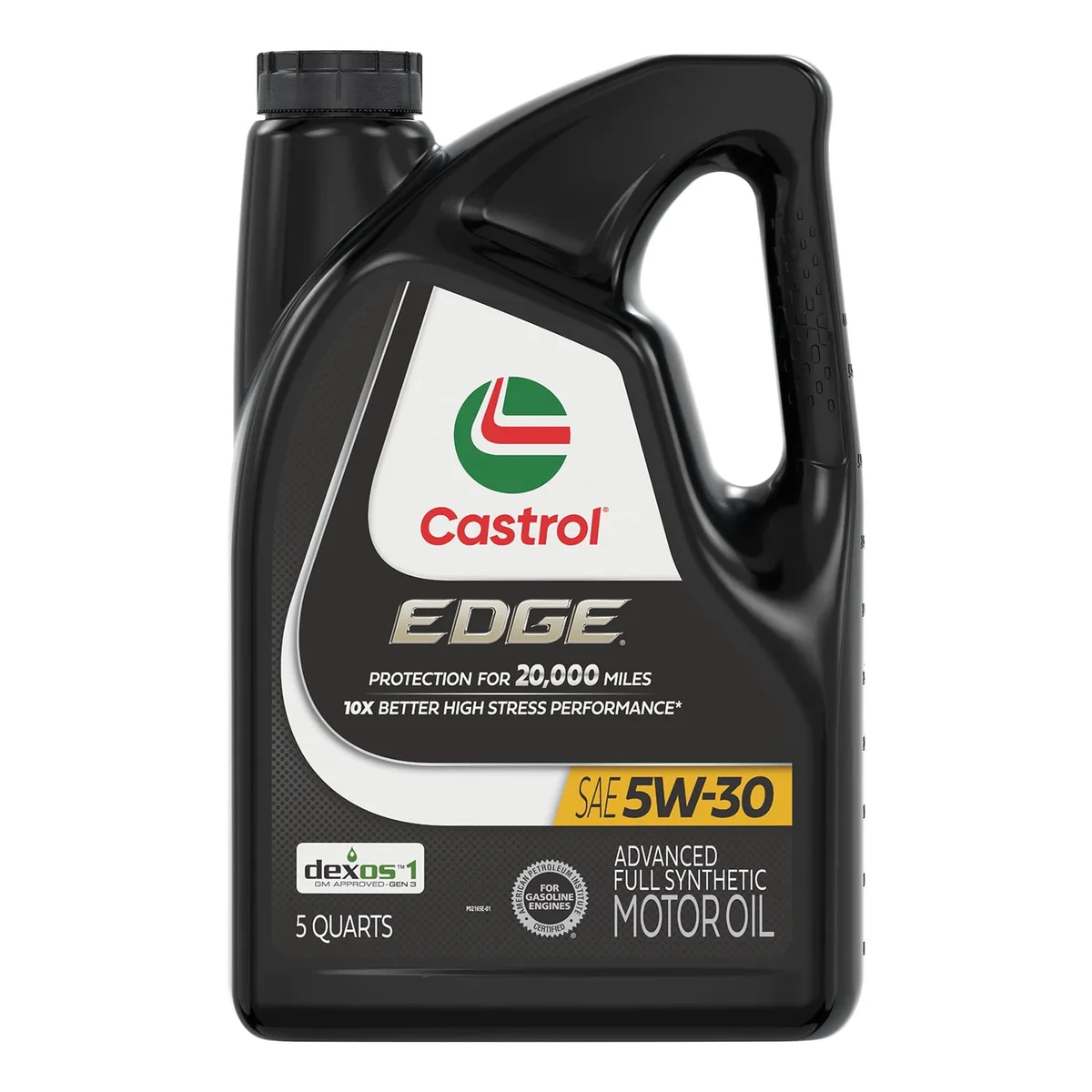
5W-30 is the default. It works from -20°F to 100°F. That covers most driving conditions across North America. It flows well at cold starts, providing quick lubrication.
It also maintains adequate film strength at operating temperature.
10W-30 works in specific situations. If you live somewhere that never sees freezing temperatures, 10W-30 is fine. It is slightly thicker when cold, meaning slightly more protection at high heat. But the difference is small.
Most owners will not notice a performance change.
| Condition | Best Choice |
|---|---|
| Winter temps below 0°F | 5W-30 |
| Normal mixed climate | 5W-30 |
| Summer towing in desert heat | 10W-30 or 5W-30 |
| Engine with 200,000+ miles | 5W-30 high-mileage formula |
| Racing or heavy off-road use | 5W-30 full synthetic |
The biggest mistake is switching to 10W-40 to stop oil burning. It will not work. It just masks the symptom while stressing the oil pump.
If your Tacoma burns oil, fix the leak or replace the valve seals. Do not band-aid it with thicker oil.
Conventional vs Synthetic: What Works Best for a 22-Year-Old Truck?
Full Synthetic
Full synthetic oil has more uniform molecules. It offers better cold-flow properties, higher heat resistance, and longer service life. For a Tacoma that sees regular use, it is the premium choice.
Pros:
- Better cold-start protection for hydraulic lifters
- Longer oil change intervals (5,000 to 7,500 miles)
- Superior high-temperature stability
- Keeps engines cleaner
Cons:
- Costs more ($30 to $50 per change DIY)
- Can reveal small leaks in high-mileage engines (detergents clean out old deposits)
- Overkill if you change oil every 3,000 miles
Synthetic Blend
A synthetic blend mixes conventional and synthetic base stocks. It is a compromise. Better than conventional, cheaper than full synthetic.
For a Tacoma with 100,000 to 200,000 miles driven casually, this is the sweet spot.
Pros:
- Cheaper than full synthetic ($20 to $30 per change)
- Better protection than conventional
- Good for mixed driving conditions
Cons:
- Shorter life than full synthetic (stick to 4,000 to 5,000 mile intervals)
- Less high-temp protection
High-Mileage Oil
High-mileage oil contains seal conditioners. These additives help rehydrate dried-out valve stem seals and gaskets. If your Tacoma has over 150,000 miles and you notice minor oil consumption, these formulations help.
Use it when:
- Engine has 150,000+ miles
- You notice slight oil consumption (one quart between changes or less)
- You see minor seepage from gaskets
Skip it when:
- Engine is in good shape with no leaks
- You already use full synthetic (most have seal conditioners)
- Your truck burns more than one quart per 1,000 miles (you need repairs)
For most 2001 Tacoma owners, a quality synthetic blend in 5W-30 with the correct API rating is the best balance of cost and protection. Full synthetic is worth the upgrade if you live in extreme cold or do a lot of towing.
Step-by-Step: How to Change the Oil the Right Way
You do not need special tools for this job. But a few steps separate a clean job from a messy one.
Tools and materials you need:
| Item | Notes |
|---|---|
| 5W-30 oil (5 quarts for 4-cyl, 5.5 quarts for V6) | Conventional, blend, or synthetic |
| Oil filter (Toyota 90915-YZZD3 or equivalent) | OEM recommended, Wix or Bosch are solid |
| 14mm socket or wrench | For the drain plug |
| Oil filter wrench | Needed if the filter is tight |
| Drain pan | Holds at least 6 quarts |
| Funnel | Makes refilling clean |
| Crush washer (14mm) | Replace every time |
| Rubber gloves | Keep your hands clean |
The steps:
- Warm up the engine. Run it for about five minutes. Warm oil drains faster and carries more contaminants. Not hot, just warm.
- Get the truck level. Park on flat ground. A tilted truck won't drain fully.
- Remove the drain plug. Place the drain pan underneath. Use the 14mm socket. Remove the plug by hand and let the oil flow.
- Replace the crush washer. This small ring compresses to create a seal. Replace it each time. A reused crush washer causes slow drips.
- Remove the old oil filter. Reach it from below. Turn it counterclockwise. Position the drain pan underneath for spillage.
- Install the new filter. Apply a thin coat of fresh oil to the rubber gasket. Screw it on by hand until the gasket contacts the surface. Tighten another three-quarter turn. Hand-tight is enough.
- Replace the drain plug. Thread it by hand. Torque to 29 ft-lbs. If you do not have a torque wrench, snug it with a ratchet and give it a quarter turn past snug.
- Add the new oil. Remove the oil fill cap. Add about 4.5 quarts for the 4-cylinder or 5 quarts for the V6. Replace the cap.
- Check the level. Start the engine and let it idle for 30 seconds. Shut it off and wait two minutes. Check the dipstick. Add more oil to reach the full mark.
- Check for leaks. Look under the truck with the engine running. Drips from the drain plug or filter mean you need to tighten them.
Common Mistakes That Cost Tacoma Owners an Engine
Picking the Wrong Viscosity
The 5VZ-FE engine is sensitive to oil weight. Run thicker oil in cold weather, and you hear ticking from the lifters until the engine warms. That ticking is the lifters not getting enough pressure.
Over time, that wear adds up.
Run thinner oil at high temperatures, and the film breaks down. The engine runs hotter. Metal surfaces score.
The rule: If temperatures drop below freezing, use 5W-30. If you live in a desert and never see cold weather, 10W-30 is acceptable. Otherwise, stick with what Toyota put in the manual.
Ignoring the API Rating
Your 2001 Tacoma requires API SL or newer. SM, SN, or SP are all fine. But older ratings lack anti-wear additives.
Using API SJ or older causes faster valvetrain wear.
Modern oils work backward with older engines. The reverse is not true. API SP works perfectly in your 2001 Tacoma.
API SJ from the 1990s does not.
Overfilling or Underfilling
Too much oil raises pressure. It can force oil past worn valve seals, causing blue smoke. It can also aerate the oil, reducing its lubricating properties.
Too little oil starves the pickup. This leads to low oil pressure and bearing failure.
The fix: Add oil slowly. Check the dipstick between quarts. Do not dump in the full capacity and assume it is right.
Reusing the Old Crush Washer
The crush washer deforms when tightened to create a seal. Reusing it means the seal is not as tight. You get a slow drip.
That drip reduces oil level gradually. You might not notice until the engine runs low. Replace the crush washer every time.
They cost about fifty cents.
How Often to Change It: Realistic Intervals
| Driving type | Conventional | Synthetic blend | Full synthetic |
|---|---|---|---|
| Normal mixed driving | 3,000 miles | 4,000 miles | 5,000 to 7,500 miles |
| Short trips (under 5 miles) | 2,500 miles | 3,000 miles | 4,000 miles |
| Towing or off-road use | 2,500 miles | 3,000 miles | 4,000 miles |
| Highway cruising | 3,500 miles | 5,000 miles | 7,500 miles |
Short trips are harder on oil than highway runs. The engine never fully warms up. Water and fuel condense in the oil, causing sludge.
If you drive under five miles to work, change the oil more often.
Towing and off-road use increase oil stress. The engine runs hotter for longer. If you use your Tacoma as a work truck, stay on the shorter end of these intervals.
Toyota originally recommended 5,000-mile intervals with conventional oil. For a 22-year-old engine, 3,000 to 4,000 miles is safer, especially with stop-and-go traffic.
What About Burning Oil?
Some oil consumption in a 2001 Tacoma is normal. Valve seals harden. Piston rings wear.
But there is a difference between normal and problem consumption.
Normal: You add half a quart between changes. The exhaust does not smoke. You do not smell burning oil.
Problem: You add two or more quarts between changes. Blue smoke comes from the exhaust on startup or acceleration. You smell burning oil in the cabin.
If you are in the normal range, switch to high-mileage oil with seal conditioners. Many owners report dropping from one quart between changes to half a quart after switching.
If you are in the problem range, thicker oil will not fix it. The most common causes are:
- Valve stem seals. These dry out and crack. Oil seeps into the combustion chamber. You see blue smoke on startup. Replacement requires removing valve springs but not the engine.
- Piston rings. These wear over time. You see blue smoke under acceleration. This requires pulling and rebuilding the engine.
- PCV valve. This vents crankcase pressure. If stuck closed, pressure forces oil past seals. It costs about ten dollars and takes five minutes to replace. Try this first.
Check your oil level every other fuel fill-up. If it drops faster than expected, investigate before the problem gets worse.
The Oil Filter You Need
Do not save two dollars on the oil filter. A cheap filter can collapse internally or bypass unfiltered oil.
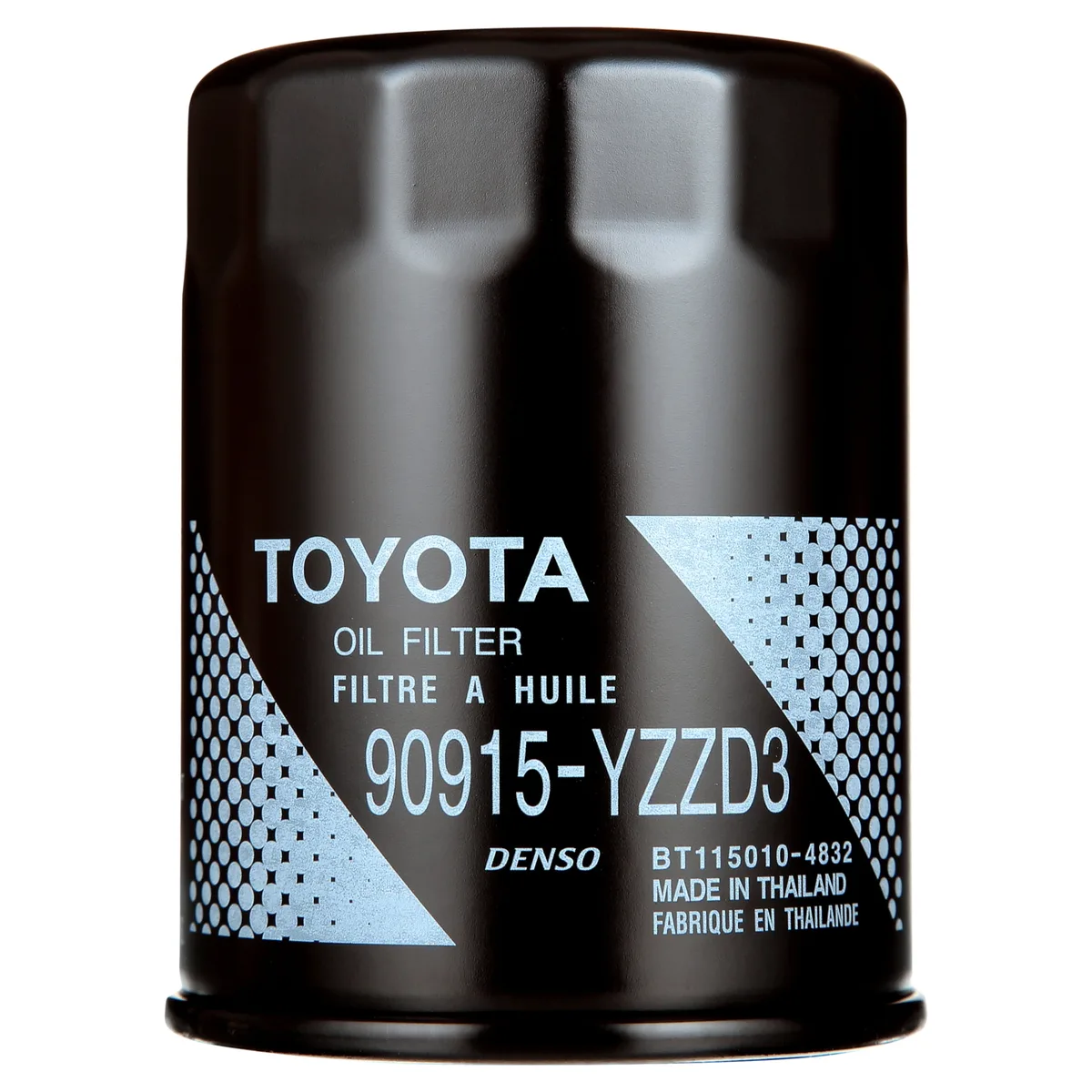
The OEM filter is Toyota part number 90915-YZZD3. It has the correct bypass valve pressure rating. It costs around eight to twelve dollars.
Good alternatives include Wix, Bosch, and Mobil 1. They meet OEM specifications. Avoid ultra-cheap brands from dollar stores.
What to look for:
- Bypass valve pressure around 8 to 11 psi
- Silicone anti-drain back valve (prevents dry starts)
- Metal end caps on the filter media
- Correct gasket size
The anti-drain back valve holds oil in the filter when the engine is off. Without it, the engine runs without oil pressure for extra seconds on startup. That is wear every time you start the truck.
Installation tip: Pre-fill the new filter with fresh oil before installing it. This reduces the time the engine runs without oil pressure on the first start after a change.
Reading the Dipstick Correctly
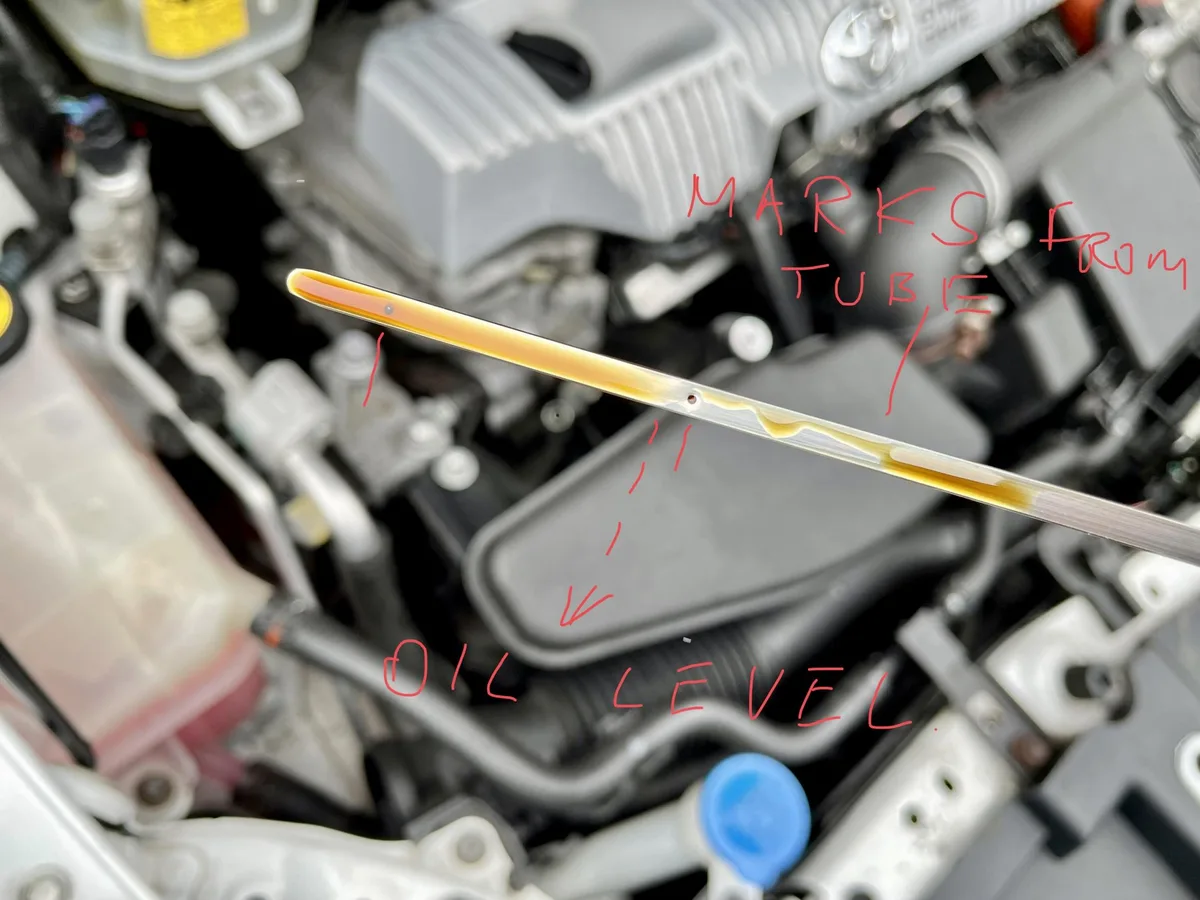
Check it warm. Drive the truck for five to ten minutes. Park on level ground. Shut the engine off.
Wait two to three minutes for the oil to drain back.
The correct reading: Pull the dipstick. Wipe it clean. Reinsert it fully.
Pull it again and read. The oil should be between the low mark and the full mark.
What the marks mean:
- Low mark: One quart low. Add oil before driving.
- Full mark: Correct level.
- Above full mark: Overfilled. Drain some out.
Common errors:
- Not wiping the dipstick first. You are reading splashed oil.
- Not inserting the dipstick fully. Push until it seats.
- Checking on a slope. Even a slight tilt changes the reading by half a quart.
If the oil looks dark brown and feels gritty, change it regardless of mileage. Fresh oil is amber and translucent.
Final Verdict
Your 2001 Tacoma needs 5W-30 oil with API SL or newer. Use a quality synthetic blend or full synthetic. Change it every 3,000 to 5,000 miles.
Replace the crush washer and oil filter every time. Check the dipstick regularly.
That is it. No secret formula. Just consistent maintenance that respects what Toyota designed.
Five quarts of 5W-30 cost about the same as a decent lunch. A new engine costs thousands. Choose accordingly.
Frequently Asked Questions
Can I use 10W-30 instead of 5W-30 in my 2001 Tacoma?
Yes, but only in a warm climate that never sees freezing temperatures. 10W-30 is thicker when cold. For most owners, 5W-30 is the safer year-round choice.
How much oil does a 2001 Toyota Tacoma take?
The 2.7L four-cylinder takes 5.0 quarts with a filter change. The 3.4L V6 takes 5.5 quarts. Always check the dipstick after adding and top off as needed.
Is synthetic oil safe for a high-mileage Tacoma?
Yes. Full synthetic provides better cold-start protection and keeps the engine cleaner. If your truck has over 150,000 miles, consider high-mileage synthetic with seal conditioners.
What happens if I put the wrong oil in my Tacoma?
Wrong viscosity causes lifter noise, reduced fuel economy, or accelerated wear. Wrong API rating causes sludge buildup. One mistake will not destroy the engine.
Repeated mistakes will shorten its life.
How often should I check my oil level?
Check it every other fuel fill-up. It takes thirty seconds and catches problems before they cause damage.
Do I need to use Toyota brand oil filters?
No, but use a quality filter that meets OEM specifications. The Toyota 90915-YZZD3 is a safe choice. Wix, Bosch, and Mobil 1 filters are also reliable.
Avoid generic no-name filters.