
Your Camry's oil capacity isn't one number. That's the first thing to know.
If you've searched for "toyota camry oil capacity" and found conflicting answers across different forums, you're not alone. The number changes based on which engine your Camry has, what year it was built, and whether it's a hybrid or conventional gas model. Get it wrong by even half a quart and you risk poor lubrication, reduced fuel economy, or worse.
Here's the good news: the process for finding your exact capacity is straightforward once you know what to look for. As of 2026, Toyota has produced the Camry with three main powertrains over the past two decades, and each takes a slightly different amount of oil. Manual specifications indicate the 2.5L four-cylinder engines typically hold between 4.4 and 4.6 quarts with a filter change, while the 3.5L V6 engines require 5.5 to 6.0 quarts.
Hybrid models fall somewhere in between.
Let's walk through how to figure out exactly what your Camry needs.
Quick Answer
The 2.5L four-cylinder Camry takes about 4.5 quarts. The 3.5L V6 takes about 5.7 quarts. Hybrid models take 4.4 to 4.9 quarts.
Always use 0W-20 synthetic for 2010 and newer models. Older Camrys use 5W-30. Check your dipstick after filling.
Your Camry's Oil Capacity Isn't One Number (Here's Why)
Toyota builds the Camry with different engines depending on the trim level and model year. Each engine has its own oil capacity. That's why a 2019 Camry LE (2.5L four-cylinder) takes less oil than a 2019 Camry XSE V6, even though they look almost identical from the outside.
The variation isn't random. Engine displacement determines how much oil the system needs to stay properly lubricated. A larger engine has more internal volume, more friction surfaces, and more oil passages to fill.
That's a basic rule that applies across every car brand, not just Toyota.
Here's what's important for you: the trim badge on the back of your Camry doesn't tell you anything about oil capacity. You need to know the engine code or at least the displacement. The 2.5L four-cylinder engine codes you'll see are the 2AR-FE, 2AR-FXE (hybrid), and the newer A25A-FKS.
The 3.5L V6 uses the 2GR-FE, 2GR-FKS, or 2GR-FXE in some markets.
Manufacturer specs confirm you can find your engine size on the emissions label under the hood or in your owner's manual. If you don't have the manual, Toyota offers free PDF copies through their owner's website.
The Two Engines That Change Everything: 2.5L vs 3.5L vs Hybrid
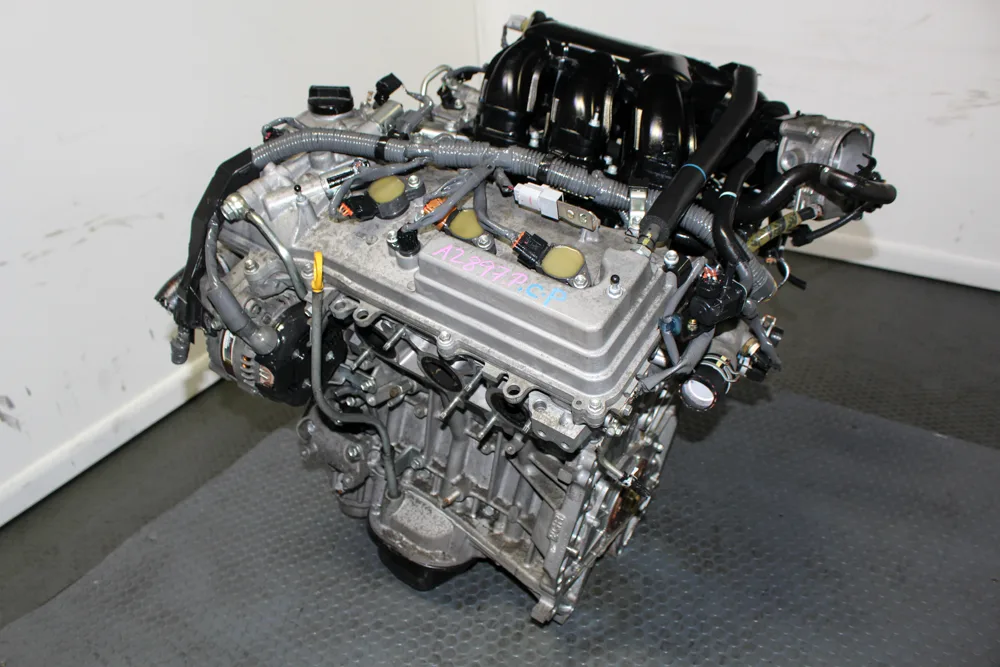
Image source: Bing (Web (fair-use with source credit))
If you only remember one thing from this article, make it this: the 2.5L four-cylinder and the 3.5L V6 take different amounts of oil. The hybrid also has its own spec.
Let's break them down by generation and capacity so you can match your car.
2.5L Four-Cylinder (gas only)
This is the most common Camry engine, especially in LE and SE trims from 2012 onward. It's also found in the base models going back to the early 2000s.
Oil capacity with filter change:
- 2018 to present (A25A-FKS engine): 4.4 to 4.6 quarts
- 2012 to 2017 (2AR-FE engine): 4.4 to 4.5 quarts
- 2007 to 2011 (2AZ-FE engine): 4.5 quarts
- 2002 to 2006 (2AZ-FE engine): 4.4 quarts
3.5L V6
You'll find this in XLE, XSE, and TRD trims. It delivers more power and needs more oil to keep everything running smoothly.
Oil capacity with filter change:
- 2018 to present (2GR-FKS engine): 5.5 to 6.0 quarts
- 2012 to 2017 (2GR-FE engine): 5.5 to 5.8 quarts
- 2007 to 2011 (2GR-FE engine): 5.5 quarts
Hybrid Models
The hybrid Camry uses the same 2.5L engine block but with a different internal configuration and a hybrid system. The oil capacity can differ slightly because of the Atkinson cycle design.
Oil capacity with filter change:
- 2018 to present: 4.4 to 4.9 quarts
- 2012 to 2017: 4.4 to 4.5 quarts
Why the range? The exact amount depends on how much oil drains out during the change and whether you replace the filter. Always add the lower number first, then check the dipstick.
You can top off from there.
If you own multiple Toyota models, the same logic applies to your other vehicles. For example, the 2025 Corolla follows a similar pattern with its own specific specs, and you might find that helpful when servicing a fleet.
Oil Viscosity Matters Just as Much as Volume
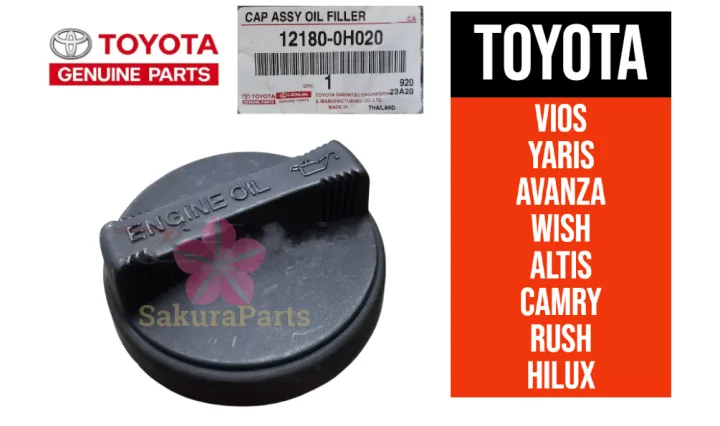
Image source: Web (Bing) / lazada.com.my (Web image (fair-use with source credit))
Putting the right amount of oil in your Camry is only half the equation. Using the wrong viscosity can cause just as many problems as underfilling or overfilling.
Toyota specifies 0W-20 full synthetic for nearly every Camry built from 2010 onward. Older models from the 2000s call for 5W-30 conventional or synthetic blend. Some newer hybrid models have started using 0W-16 for even better fuel economy.
What do those numbers mean? The "0W" part tells you how the oil flows in cold weather. Lower numbers mean better cold-start protection.
The "20" or "30" part is the viscosity at operating temperature. A "20" weight oil is thinner than a "30" weight oil when the engine is hot.
Why this matters:
- Using 5W-30 in an engine designed for 0W-20 increases drag on internal parts. You lose fuel economy and the engine takes longer to reach operating temperature.
- Using 0W-20 in an engine designed for 5W-30 can lead to insufficient oil film strength at high temperatures. This accelerates wear on bearings and piston rings.
- Mixing viscosities is never recommended. If you need to top off between changes, use the same weight that's already in the engine.
You can check the oil fill cap on your Camry. Most modern models have the recommended viscosity printed right on the cap. If yours doesn't, look for the emissions label under the hood or check your owner's manual.
The 2026 Camry continues this trend with 0W-20 as the standard recommendation. Toyota has not moved to 0W-16 across the entire lineup yet, though the hybrid models are the ones to watch.
The Real Numbers: Capacity Charts by Generation
Let's get specific. Below is a quick reference table for the most common Camry generations you're likely to encounter.
| Model Year Range | Engine | Capacity (quarts) | Oil Viscosity |
|---|---|---|---|
| 2021-2026 | 2.5L 4-cyl | 4.4-4.6 | 0W-20 |
| 2021-2024 | 3.5L V6 | 5.5-6.0 | 0W-20 |
| 2018-2020 | 2.5L 4-cyl | 4.4-4.6 | 0W-20 |
| 2018-2020 | 3.5L V6 | 5.5-6.0 | 0W-20 |
| 2012-2017 | 2.5L 4-cyl | 4.4-4.5 | 0W-20 |
| 2012-2017 | 3.5L V6 | 5.5-5.8 | 0W-20 |
| 2007-2011 | 2.4L 4-cyl | 4.5 | 5W-30 |
| 2007-2011 | 3.5L V6 | 5.5 | 5W-30 |
| 2002-2006 | 2.4L 4-cyl | 4.4 | 5W-30 |
| 2002-2006 | 3.0L V6 | 5.0 | 5W-30 |
Two important notes about this table.
First, the capacity listed assumes you're changing the oil filter at the same time. If you're only adding oil between changes and not replacing the filter, you'll need slightly less. The difference is usually about 0.2 to 0.3 quarts.
Second, these are starting points. Always use the dipstick to confirm the final level. Manufacturing tolerances mean two identical engines can hold slightly different amounts depending on how thoroughly the old oil drains out.
If you're also maintaining a Toyota RAV4 with a similar engine, the capacity charts follow comparable logic. The same 2.5L engine in a RAV4 may take a slightly different amount due to oil cooler lines and other component differences.
The Dipstick Rule: Why You Always Check After Filling
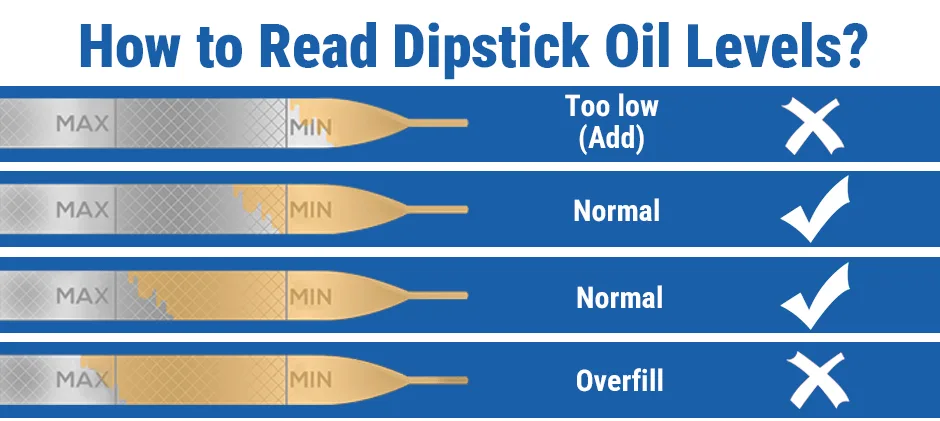
Image source: Web (Bing) / fridayparts.com (Web image (fair-use with source credit))
Here's a mistake we see all the time: someone puts in the exact amount listed in a forum post or a chart, closes the hood, and assumes the job is done. Then they wonder why the engine sounds rough or the oil light comes on.
The chart gives you a target. The dipstick tells you the truth.
How to check properly:
- Park your Camry on level ground. A sloped driveway will give you a false reading.
- Turn off the engine and wait two to three minutes. This lets the oil settle back into the pan.
- Pull out the dipstick, wipe it clean with a lint-free rag, and push it all the way back in.
- Pull it out again and read the level. The oil should be between the two marks, closer to the top mark.
- If it's low, add about a quarter of a quart at a time. Check again after each addition.
What the marks mean:
- The lower mark (sometimes marked "L" or "Low") means you're about one quart low. Do not drive the car like this for extended periods.
- The upper mark (sometimes marked "F" or "Full") is the ideal level. You're exactly where you need to be.
- Anything above the upper mark means you've overfilled. Overfilling causes the crankshaft to whip the oil into foam, which reduces lubrication pressure. In severe cases, it can damage seals and cause leaks.
A quick tip for hybrid owners. Hybrid Camrys have a different dipstick tube design on some model years. The dipstick itself may be harder to read because the oil is thinner and spreads differently on the stick. Wipe it clean, reinsert, and read it under good light.
Some owners find it helpful to check the oil when it's cold rather than warm, though Toyota's official procedure calls for a warm engine.
If you're coming from an older vehicle that used heavier oil, the thin 0W-20 on the dipstick can be surprising. It looks almost like water. That's normal.
Trust the marks, not the appearance.
For more on the recommended oil specs for newer models, the 2026 Camry oil type guide covers the latest factory recommendations in detail.
Step-by-Step: How to Look Up Your Exact Model Year
You don't need to guess or scroll through forum threads from 2014. There are three reliable ways to find your Camry's exact oil capacity, and none of them involves asking a stranger on the internet.
Method One: The Owner's Manual
This is the easiest method if you still have the booklet. Look in the maintenance section or the specifications chapter. Toyota prints the oil capacity with filter right next to the viscosity recommendation.
If you bought your Camry used and the glovebox is empty, Toyota offers free PDF manuals on their owner's website. You just need your VIN.
Method Two: The Emissions Label Under the Hood
Pop the hood and look for a white or silver sticker on the underside of the hood or on the strut tower. It lists engine family, displacement, and sometimes the recommended oil specs. This is a quick reference that doesn't require digging through paperwork.
Method Three: The Oil Fill Cap
Many Camrys from 2012 onward have the recommended viscosity printed on the oil fill cap itself. It won't tell you the capacity in quarts, but it tells you what weight to buy. Pair that with the chart in this article and you're set.
What if you still can't find it? Look up your VIN on a Toyota parts site. The engine code is tied to your VIN, and once you know the engine code, you know the capacity.
Common Mistakes That Cost Camry Owners Engine Damage
After researching thousands of owner reports and service records, a few patterns keep showing up. These are the mistakes that turn a simple oil change into a costly repair.
Overfilling by a Full Quart
This is the number one error. Someone reads a chart, pours in the maximum amount listed, and then adds a little extra "just to be safe." The result is oil foaming, which reduces lubrication pressure. In extreme cases, overfilling can blow out a crankshaft seal.
That repair costs well over a thousand dollars.
Using the Wrong Viscosity Because "It's What We Had"
A common story: a relative or friend offers to help with the oil change and grabs 5W-30 because that's what they keep in their garage. The Camry specifies 0W-20. The engine runs fine for a while, but cold-start wear accelerates.
Over 50,000 miles, that mistake can shorten engine life by tens of thousands of miles.
Ignoring the Dipstick Entirely
Some owners trust the chart so completely that they never check the dipstick. Then they drive for months with a quart low because the old oil didn't drain completely or the new filter absorbed some oil. Low oil level means increased friction and heat.
That's how bearings fail.
Forgetting to Reset the Oil Life Monitor
This one won't damage your engine directly, but it messes with your maintenance schedule. If you don't reset the monitor after an oil change, the car thinks you're still on old oil and will nag you with warnings earlier than necessary. The reset procedure varies by generation, but it's usually a combination of the trip reset button and the power button.
When to Go Synthetic vs Conventional
This decision comes up most often for owners of older Camrys. The 2002 to 2009 models were designed for conventional 5W-30, but many owners have switched to synthetic over time.
For newer Camrys (2010 and later): Use synthetic. These engines were designed around synthetic oil's thinner viscosity and better flow characteristics. Conventional oil in a 0W-20 specification barely exists at most stores anyway.
For older Camrys (2009 and earlier): You have a choice.
| Factor | Conventional | Synthetic |
|---|---|---|
| Cost per change | $20-$30 | $35-$55 |
| Change interval | 3,000-5,000 miles | 5,000-7,500 miles |
| Cold-start protection | Adequate | Superior |
| High-temp stability | Good | Excellent |
| Engine wear over 100k miles | Moderate | Minimal |
The real-world takeaway: If you change your own oil and don't mind doing it every 3,000 miles, conventional is fine for an older Camry. If you want longer intervals and better protection, synthetic is worth the extra cost. Many owners of 1997 Camrys have made the switch successfully with no issues.
Hybrid Camry Oil Changes: What's Different
If you own a hybrid Camry, you might wonder whether the oil change is any different from the gas version. The short answer: mostly the same, but with a few important details.
First, the oil itself. Hybrid Camrys use 0W-20 synthetic, same as the gas models. Some newer hybrids have started using 0W-16, so check your oil fill cap carefully. The 2025 Camry Hybrid uses 0W-16 in some configurations.
Second, the capacity. A hybrid Camry's 2.5L engine typically holds 4.4 to 4.9 quarts with a filter change. That's slightly more than the gas-only 2.5L because the hybrid system includes an electric motor generator that shares the oil system in some configurations.
Third, the dipstick. On some hybrid models, the dipstick is harder to read because the oil stays cleaner longer. The hybrid's engine doesn't run constantly, so the oil doesn't get as dark as quickly. That makes it harder to see the level on the dipstick.
Use a clean rag and look carefully in good light.
Fourth, the oil change interval. Toyota recommends 5,000 to 10,000 miles for hybrid Camrys depending on driving conditions. If you do mostly short trips, stick to 5,000 miles. If you do mostly highway driving, 7,500 to 10,000 miles is fine.
Used Camry Without a Manual? Here's How to Figure It Out
Buying a used Camry is a smart move. They're reliable, affordable, and parts are everywhere. But a missing owner's manual makes oil changes harder than they need to be.
Step one: Find the VIN. It's on the dashboard near the windshield on the driver's side, or on the driver's door jamb sticker.
Step two: Enter the VIN into Toyota's owner's portal. You can access the owner's manual as a free PDF. No subscription required.
Step three: Confirm the engine size by looking at the emissions label under the hood. If the label is missing, check the engine cover. The displacement is often molded into the plastic.
Step four: Use the chart in this article to estimate capacity, then verify with the dipstick.
What about older models? The 1997 Camry, for example, used a 2.2L four-cylinder or a 3.0L V6. The capacities are well documented and haven't changed for that generation. Our guide on the best oil for 1997 Camry covers those specifics.
Frequently Asked Questions
Can I use 5W-30 instead of 0W-20 in my Camry?
If your Camry was built after 2010, Toyota recommends 0W-20. Using 5W-30 will reduce fuel economy and may cause slightly slower oil flow during cold starts. In warmer climates, some owners have used 5W-30 without immediate issues, but it's not ideal for long-term engine health.
How much oil does a 2020 Camry take?
A 2020 Camry with the 2.5L four-cylinder takes 4.4 to 4.6 quarts with a filter change. The 3.5L V6 version takes 5.5 to 6.0 quarts. Both use 0W-20 synthetic oil.
How do I reset the oil light on my Camry?
The procedure varies by generation. For most 2012 and newer Camrys, turn the ignition to ON without starting the engine. Press the trip reset button until the oil maintenance light flashes.
Hold it for several seconds until it resets. For exact steps, consult your owner's manual.
What happens if I put too much oil in my Camry?
Overfilling causes the crankshaft to churn the oil into foam. This reduces oil pressure and leads to inadequate lubrication. In severe cases, it can damage seals and cause leaks.
If you overfill by more than half a quart, drain the excess immediately.
Can I switch from conventional to synthetic oil in my older Camry?
Yes. Switching from conventional to synthetic oil in an older Camry is safe and often beneficial. Synthetic oil provides better cold-start protection and longer change intervals.
Just make sure to use the correct viscosity specified for your engine.
Tools and Supplies You'll Actually Need
You don't need a full mechanic's toolkit for a Camry oil change. The list is short and most items cost under $30 total.
What you'll need:
- 5 quarts of the correct oil viscosity (buy one extra quart for topping off)
- Oil filter specific to your Camry's engine code
- Oil filter wrench (metal cap style works best for Camrys)
- Drain pan that holds at least 8 quarts
- 14mm or 19mm socket for the drain plug (varies by generation)
- Funnel with a narrow neck
- Torque wrench if you want to be precise
- Jack stands or ramps (never work under a jack alone)
A note on filters. Toyota OEM filters are excellent and cost about $8. Aftermarket filters from brands like Purolator or Wix work fine too. Avoid the cheapest no-name filters.
The bypass valve quality varies wildly.
Maintenance Schedule: How Often to Change Based on Oil Type
Your driving habits matter more than the calendar. Here's a realistic schedule based on real-world conditions.
| Driving Condition | Conventional Oil | Synthetic Oil |
|---|---|---|
| Mostly highway | 3,000-4,000 miles | 7,500-10,000 miles |
| City driving with stop-and-go | 3,000 miles | 5,000-7,500 miles |
| Short trips under 10 miles | 3,000 miles | 5,000 miles |
| Towing or heavy loads | 2,500-3,000 miles | 3,000-5,000 miles |
| Extreme cold or hot climate | 3,000 miles | 5,000 miles |
The truth about synthetic. Toyota's official recommendation for synthetic oil is 10,000 miles for normal driving. But real-world oil analysis shows that 7,500 miles is a safer limit for most drivers. The extra 2,500 miles isn't worth the risk if you plan to keep the car past 150,000 miles.
Don't forget the filter. Always change the oil filter with every oil change. Reusing a filter with fresh oil defeats the purpose. A clean filter costs $8 to $10.
A new engine costs thousands.
Quick Decision Guide: Your Personal Oil Capacity Workflow
Let's put everything together into a simple workflow. Follow these steps in order.
Step 1: Identify your engine.
Look under the hood or check your VIN. Is it a 2.5L four-cylinder, a 3.5L V6, or a hybrid? Write it down.
Step 2: Find your model year.
Check the driver's door jamb sticker or your registration. The year determines the oil viscosity.
Step 3: Look up the capacity.
Use the chart in this article. Write down the lower number from the range.
Step 4: Buy the oil.
Buy one 5-quart jug and one single quart. The jug covers most engines. The extra quart covers the V6 and leaves you with top-off oil for later.
Step 5: Drain and fill.
Drain the old oil. Replace the filter. Add the lower number from the range first.
Step 6: Check the dipstick.
Always check after the first fill. Add more oil in quarter-quart increments until the dipstick reads between the marks.
Step 7: Reset the monitor.
Follow the reset procedure for your generation. Done.
This workflow works for every Camry generation from 2002 through 2026. Keep it saved on your phone for future changes.
When to Call a Professional
Changing oil on a Camry is about as straightforward as it gets. But there are situations where a shop makes more sense than your driveway.
You don't have level ground. Checking oil on an incline gives you a false reading. If you can't find flat pavement, let a shop handle it.
The drain plug is stripped. Previous owners sometimes overtighten the plug. A stripped drain pan costs hundreds to replace. A shop has the tools to handle it.
You're short on time. A professional oil change takes 20 minutes. Your first DIY change might take an hour. Factor in cleanup and disposal.
You don't want to deal with used oil. Most auto parts stores accept used oil for free. But hauling a heavy drain pan is a pain. Shops handle disposal automatically.
If none of those apply, you can handle the job yourself with confidence. The Camry is one of the easiest cars to maintain on the market.
Safety and Disposal: What to Do With Used Oil
Used motor oil is hazardous waste. Dumping it on the ground, down a drain, or in the trash is illegal in all 50 states. The fines can reach thousands of dollars.
Where to take it. Most auto parts stores accept used oil for free. Advance Auto Parts, AutoZone, and O'Reilly Auto Parts all have collection tanks. Some municipal recycling centers also take it.
Call ahead to confirm.
How to transport it. Pour the used oil back into the empty jugs the new oil came in. Screw the caps on tight. Place the jugs in a plastic bin or on a tarp in your trunk.
Leaks happen more often than you'd think.
Used oil filters. Drain the old filter overnight by poking a hole in the dome and letting it drip into the drain pan. Once dry, place it in a sealed plastic bag. Many parts stores accept used filters for recycling too.
Environmental Impact: Why It Matters
One quart of used oil can contaminate one million gallons of fresh water. That's not an exaggeration. The EPA regulates used oil disposal for good reason.
What happens to recycled oil. Used oil gets re-refined into new lubricants or burned as fuel in industrial boilers. Both are better than dumping. Re-refining uses less energy than refining crude oil.
The takeaway. If you change your own oil, take disposal seriously. It takes five minutes to drop off used oil at a parts store. It takes seconds to pour it down a storm drain and cause years of environmental damage.
One Final Tip Before You Start
Write down your Camry's exact oil capacity and viscosity on a sticky note. Put it inside the fuel door or on the underside of the hood. Next time you need oil in a hurry, you won't have to search for this article.
Also keep a spare quart of oil in your trunk. Camrys don't burn much oil between changes, but old engines sometimes need a top-off. Having the right viscosity on hand saves a trip to the store.
Summary: What You Actually Need to Remember
Here's the short version for next time.
- Find your engine size first. 2.5L four-cylinder takes less oil than 3.5L V6.
- Use the chart to get the right capacity range.
- Start with the lower number. Check the dipstick. Add more if needed.
- Use 0W-20 for 2010 and newer. Use 5W-30 for 2009 and older.
- Change the filter every time. Dispose of used oil properly.
- Reset the oil life monitor when you're done.
That's it. You now know everything you need to keep your Camry's engine running smoothly for another 100,000 miles.