
Alright, here is the full article content for "toyota rav4 oil capacity".
Image source: Bing (Web (fair-use with source credit))
If you're about to change the oil in your Toyota RAV4, the first number you need is the exact oil capacity. Get it wrong, and you're either starving the engine of lubrication or overfilling it, which can cause serious damage.
Manufacturer specifications for the toyota rav4 oil capacity vary significantly depending on the model year and engine. A 2024 RAV4 Hybrid takes about 4.4 quarts with a filter change, while a 2010 V6 model needs nearly 5.8 quarts. Pouring the wrong amount isn't a small mistake, it's a potential engine killer.
Let's break down exactly what your specific RAV4 needs, why it matters, and how to get it right every time.
Quick Answer
Toyota RAV4 oil capacity ranges from 3.9 to 5.8 quarts depending on the engine and model year. Most modern 2.5L gas models (2019+) take 4.9 quarts with a filter change. Hybrid models of the same generation take about 4.4 quarts.
Older V6 models need the most oil at 5.8 quarts. Always check your owner's manual for the exact spec. The wrong amount can cause engine damage.
The 2.5L 4-Cylinder: The Most Common RAV4 Engine
This is the engine you'll find in the vast majority of RAV4s sold over the last decade. It's reliable, efficient, and comes in both gas and hybrid versions. But here's the catch: the hybrid version doesn't take the same amount of oil as the gas version.
Even among gas models, the capacity changed between generations.
Gas Models (2019-Present)
The fifth-generation RAV4 uses the A25A-FKS engine. With a new oil filter, the capacity is 4.9 quarts (4.6 liters). This is a common spec that many owners overlook because they buy a standard 5-quart jug and assume it's perfect.
It's close, but not exact. You'll need about 4.9 quarts to hit the full mark on the dipstick.
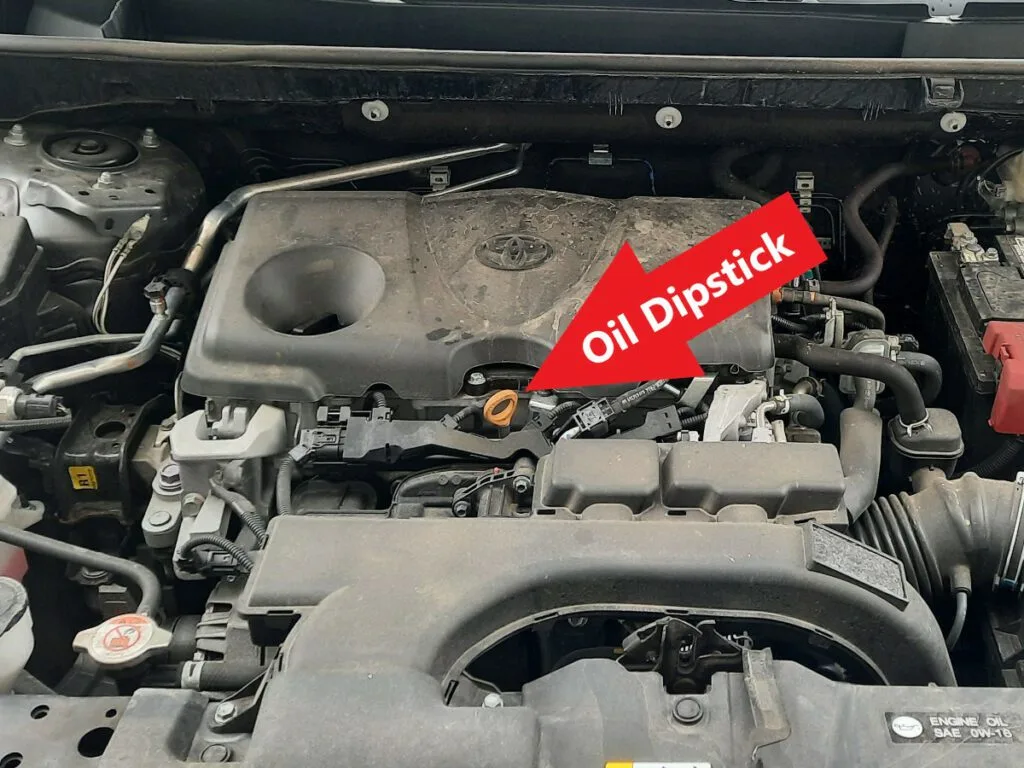
Image source: Web (Bing) / rav4resource.com (Web image (fair-use with source credit))
Hybrid Models (2019-Present)
The hybrid uses the A25A-FXS engine. Its oil capacity is 4.4 quarts (4.2 liters) with a filter change. That's half a quart less than the gas model.
If you own a hybrid and blindly follow the gas model's capacity, you'll overfill by roughly 10%. Overfilling a hybrid can lead to foaming and poor lubrication. Use the correct spec for your specific engine.
For more on choosing the right weight of oil, see our complete guide on RAV4 oil types.
Older 2.5L Models (2013-2018)
The fourth-generation RAV4 also used a 2.5L engine, but it was the older 2AR-FE. Its capacity is 4.6 quarts (4.4 liters) with a filter. That's slightly less than the current gas model.
If you have a 2016 RAV4, you need 4.6 quarts, not 4.9. Again, the half-quart difference matters.
The 2.4L Engine (2006-2012)
Earlier RAV4s with the 2.4L four-cylinder engine need 4.5 quarts (4.3 liters) with a filter. This is close to the older 2.5L spec but not identical. Always double-check your model year.
Many owners of this generation find the specs in their glovebox manual.
The 3.5L V6: A Different Animal (2006-2012)
If you own a RAV4 from this generation with the V6, your oil capacity is significantly higher. The 3.5L 2GR-FE engine needs 5.8 quarts (5.5 liters) with a filter. This is more than a full quart above the four-cylinder models.
Using a standard 5-quart jug will leave you underfilled by nearly a full quart.
Underfilling a V6 is a serious risk. The engine relies on adequate oil pressure to keep its timing chain and variable valve timing system operating correctly. Low oil levels can cause trigger warnings, reduce performance, and accelerate wear.
Don't guess on this one. The difference between 4.5 and 5.8 quarts is massive. If you're also wondering what oil weight to use, check our detailed oil type guide for the RAV4.
What Happens When You Get the Capacity Wrong
This is the section where we get serious. Oil capacity isn't a suggestion. It's an engineered specification.
When you deviate from it, you invite specific, predictable problems. Let's look at each scenario.
Overfilling: The Hidden Danger
More oil is not better. In fact, it's often worse. When you overfill, the crankshaft can dip into the oil.
This whips the oil into a froth. Aerated oil doesn't lubricate well. It loses its ability to form a protective film between moving parts.
Over time, this can damage bearings, the oil pump, and even cause the engine to run hotter. In severe cases, excessive pressure can blow out seals and gaskets. A slow leak from a blown rear main seal is a costly repair.
It's far cheaper to measure the correct amount from the start.
Underfilling: The Obvious Risk
Running low on oil is a direct path to engine failure. The oil pickup tube can suck air instead of oil. This causes metal-on-metal contact.
The first signs are usually a ticking noise from the valvetrain or a low oil pressure warning light.
If you continue driving with a low level, you risk scoring the cylinder walls, damaging the camshaft, and even seizing the engine. A new engine for a RAV4 costs thousands of dollars. A quart of oil costs less than ten dollars.
The math is simple.
Wrong Viscosity: The Slow Killer
Using the wrong oil weight is a subtler problem. It doesn't cause immediate failure, but it shortens engine life. A 0W-16 oil is very thin when cold.
Using a thicker oil, like 5W-30, in an engine designed for 0W-16 increases friction during start-up. This accelerates wear over tens of thousands of miles.
Conversely, using a thinner oil in an engine that needs a heavier weight can lead to insufficient oil pressure at operating temperature. Always use the viscosity recommended in your owner's manual. For the current generation, that's usually 0W-16.
For older models, it's typically 0W-20. If you want to see the broader list of compatible RAV4 oil weights, we cover the differences between synthetic and conventional in our synthetic vs conventional RAV4 guide.
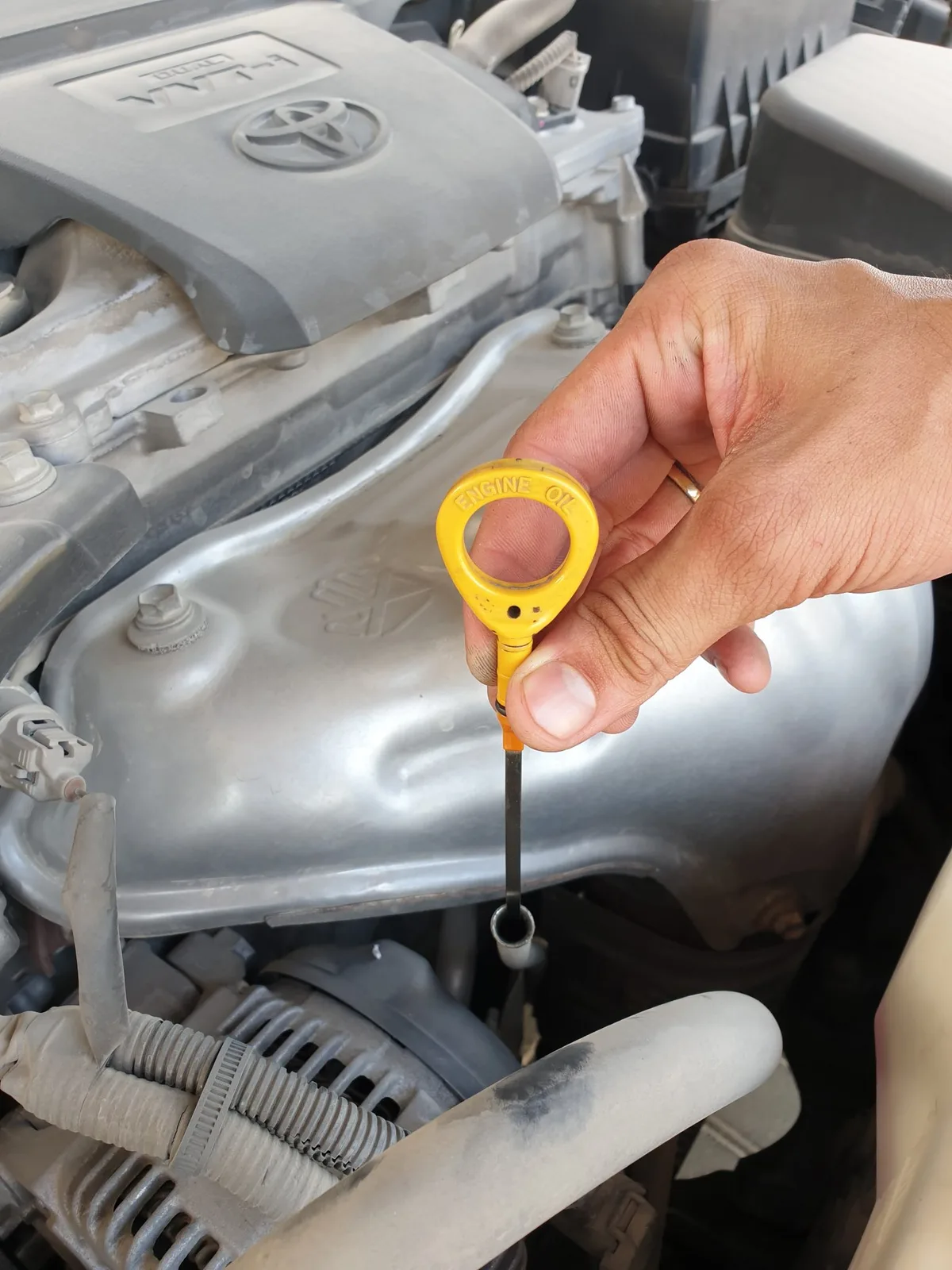
Image source: Web (Bing) / olezol.com (Web image (fair-use with source credit))
Step-by-Step: How to Measure and Fill Correctly
Knowing the number is only half the battle. You also need to execute the fill correctly. This process applies to any RAV4, regardless of engine.
Here's how to do it right.
- Warm the engine. Run it for a few minutes until the coolant temperature gauge moves off cold. Warm oil flows faster and drains more completely. Do not work on a hot engine immediately after driving, it can burn you.
- Drain the old oil. Place a drain pan under the oil pan. Remove the drain plug. Let it drain for at least 10 minutes in a warm engine. Replace the crush washer on the drain plug before reinstalling it. Torque it to the manufacturer spec, usually around 27 to 30 foot-pounds. Over-tightening can strip the pan.
- Replace the oil filter. Remove the old filter. Lubricate the new filter's gasket with a little fresh oil. Screw it on by hand until the gasket contacts the sealing surface, then tighten it another three-quarters of a turn. Do not use a wrench to over-tighten it.
- Add the oil. Use a funnel to add the correct amount. Start with the full capacity listed for your engine. For a 2019 gas RAV4, that's 4.9 quarts. Pour slowly to avoid spills.
- Check the level. Replace the oil fill cap. Start the engine and let it run for 30 seconds. This circulates the oil and fills the new filter. Turn off the engine. Wait two minutes for the oil to settle. Pull the dipstick, wipe it clean, reinsert it, and pull it out again. The oil should be between the low and full marks.
- Adjust if needed. If the level is low, add a quarter of a quart at a time. Recheck between additions. Do not overfill. It is easier to add a little more than to drain excess.
- Reset the maintenance light. Most RAV4s have a dashboard light for oil changes. The procedure varies by year, but it typically involves holding the trip reset button while turning the key to the on position.
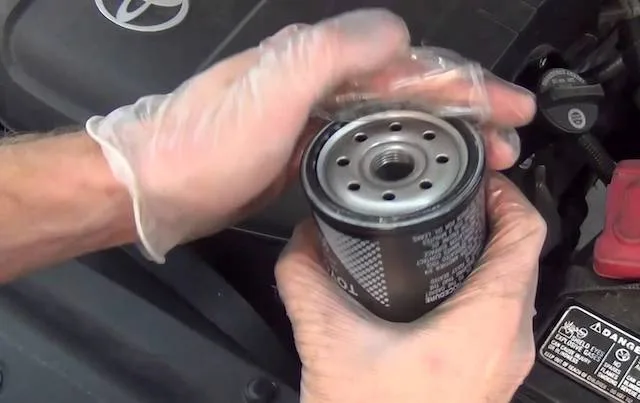
Image source: Bing (Web (fair-use with source credit))
This process is straightforward, but familiarity with other Toyota models can help. If you're used to working on a Camry or a Tacoma, the steps are similar. You can check the specs for other Toyota models like the 2025 Camry Hybrid's oil requirements if you have multiple vehicles in your garage.
Common Mistakes DIYers Make (And How to Avoid Them)
Even experienced DIYers slip up. Here are the most common errors we see in our research related to RAV4 oil capacity and changes.
- Using the wrong capacity chart. Many online charts are outdated or generic. They might show a single number for all 2.5L engines. But as we've seen, the gas and hybrid versions differ. Always verify the number for your specific model year and engine.
- Forgetting the filter volume. The oil capacity spec usually includes the filter. If you don't replace the filter, the total volume needed is slightly less. That said, always replace the filter with every oil change. It holds about 0.2 to 0.3 quarts of dirty oil.
- Over-tightening the drain plug. This is a common mistake. The drain plug does not need to be Hercules-tight. Use a torque wrench if you have one. The spec is around 30 foot-pounds. Without a torque wrench, snug it up plus a quarter turn. Stopping leaks should be the goal, not stripping threads.
- Checking the oil immediately after filling. If you check the dipstick right after pouring in fresh oil, you'll get a false reading. The oil hasn't had time to drain into the pan. Always run the engine for 30 seconds, then wait two minutes before checking.
- Trusting the dipstick on uneven ground. The vehicle must be on a level surface. Parking on a slope will give you an inaccurate reading. If you're on a driveway with a crown, pull the car forward onto flat ground before checking.
When to Ignore the Owner's Manual (And When to Trust It Absolutely)
This sounds counterintuitive for an article about exact specs. But here's the reality. The owner's manual is the absolute authority for oil capacity.
It is the document Toyota designed and tested against. Trust it for the exact quart amount and the recommended viscosity.
When should you ignore it? In one specific scenario: if you are changing the oil on a high-mileage engine and the manual doesn't account for that. Some high-mileage oils are slightly thicker to help seal worn rings.
Even then, stick to the capacity. Just change the viscosity within the range Toyota allows. The manual's capacity number is non-negotiable.
The viscosity can be adjusted within reason based on climate and mileage.
For Toyota models with different engine configurations, like the Tundra's V6 or the Highlander, the same principle applies. Trust the manual for capacity. Adjust viscosity with care.
How Oil Capacity Changes With Filter Type
The type of oil filter you use can affect the final oil level. Most modern RAV4s use a cartridge-style filter. It's a plastic housing with a replaceable paper element.
These usually hold about 0.2 to 0.25 quarts of oil.
Some older models use a spin-on metal canister filter. They hold a similar volume. The key point is that the official capacity spec includes the filter.
If you drain the old oil and replace the filter, you can pour in the full listed amount. If you somehow reuse the old filter (which you should not), you would need slightly less oil. In practice, always install a new filter and use the full listed capacity.
Checking Your Oil Level: Hot vs. Cold
There is a debate among car owners about when to check the oil. The accurate answer depends on your engine.
For most modern RAV4s with a 2.5L engine, check the oil when the engine is warm but has been off for a few minutes. The oil has had time to drain back into the pan. This gives you a stable reading.
Checking the oil cold is acceptable but less accurate. Cold oil is thicker and can cling to the dipstick, giving a slightly higher reading. The most reliable method is the one described in the step-by-step section: warm it, run it, shut it off, wait, and check.
For hybrid models, the process is similar. The engine may not run continuously, so it's best to let it idle for a minute before checking. This ensures the oil is warm and the filter is full.
The One Tool That Saves You Money Every Time
A simple funnel. It sounds basic, but pouring oil into a modern engine is tricky. The fill hole is often small and recessed.
Spilling oil on the engine block is messy. It can also drip onto hot exhaust components, causing a burning smell or even a small fire.
A dedicated oil funnel, or even a clean paper funnel, costs almost nothing. It prevents waste and mess. It also helps you pour slowly, which is critical when you're trying to get the level exactly right.
A steady hand and a good funnel are the cheapest insurance against overfilling.
How Oil Capacity Affects Maintenance Intervals
This is a practical insight. The oil capacity doesn't just tell you how much to buy. It also affects how often you should change the oil.
A larger oil sump, like the V6's 5.8 quarts, can hold more contaminants before the oil breaks down.
That said, Toyota's recommended intervals are based on the specific engine and driving conditions. For most RAV4 engines, the interval is between 5,000 and 10,000 miles. If you do a lot of short trips or drive in severe conditions, change it at the shorter end of that range.
It's also worth noting that some hybrid owners go longer between changes because the engine runs less frequently. But the oil still degrades over time. Follow the time-based recommendation in the manual, which is usually every 12 months regardless of mileage.
Frequently Asked Questions
What happens if I put too much oil in my Toyota RAV4?
Overfilling can cause the crankshaft to whip the oil into a foam. Aerated oil does not lubricate well. This can lead to engine damage, blown seals, and overheating.
If you've overfilled, drain the excess immediately by removing the drain plug briefly.
Can I use 5W-30 instead of 0W-20 in my RAV4?
Using 5W-30 in an engine designed for 0W-20 increases friction during cold starts. This can reduce fuel economy and accelerate engine wear. Stick to the recommended viscosity in your owner's manual.
If you live in a very hot climate, consult a mechanic before switching.
Is the oil capacity different for the RAV4 Hybrid?
Yes. The hybrid's 2.5L engine has a slightly different design. Its oil capacity is 4.4 quarts with a filter, compared to 4.9 quarts for the gas model.
Always verify your specific model year. The oil fill cap and dipstick are in the same location.
How often should I check the oil level in my RAV4?
Check it at least once a month and before any long trip. RAV4 engines are reliable but they can consume oil between changes. A quick check on level ground after the engine has been off for a few minutes can save you from a costly repair.
What tools do I need to change the oil in my RAV4?
You need a drain pan, a socket or wrench for the drain plug (usually 14mm or 19mm), an oil filter wrench (or a cap for cartridge filters), a funnel, and the correct amount of oil. A torque wrench is recommended for the drain plug. You can see the full supply list in the step-by-step section above.
My RAV4 dipstick reads above the full mark. What do I do?
If the level is above the full mark, you have overfilled. Drain some oil immediately. You can loosen the drain plug and let a small amount drip out into a pan.
Do not drive the vehicle with an overfilled crankcase. The risk of foaming and seal damage is real.
Final Verdict: Your Quick Reference Chart by Year and Engine
Let's pull everything together into a simple reference you can use for your next oil change.
| Model Year | Engine | Oil Capacity (with filter) | Recommended Viscosity |
|---|---|---|---|
| 2019-2026 | 2.5L Gas | 4.9 quarts (4.6 L) | 0W-16 |
| 2019-2026 | 2.5L Hybrid | 4.4 quarts (4.2 L) | 0W-16 |
| 2013-2018 | 2.5L Gas | 4.6 quarts (4.4 L) | 0W-20 |
| 2006-2012 | 2.4L Gas | 4.5 quarts (4.3 L) | 5W-30 |
| 2006-2012 | 3.5L V6 | 5.8 quarts (5.5 L) | 5W-30 |
The bottom line is simple. Know your engine, know the exact capacity, and pour carefully. A few minutes of research and measurement will keep your RAV4 running for many more miles.
Always default to your owner's manual for the final word, and never guess on something as critical as engine oil.
When to Ignore the Owner's Manual (And When to Trust It Absolutely)
This sounds counterintuitive for a guide about exact specs. But there's one real-world scenario where the manual isn't the final word.
Trust the manual for oil capacity without question. That number is engineered and tested. For viscosity, you have some flexibility.
In extreme cold, a 0W-16 engine can safely use 0W-20 if 0W-16 isn't available. In high-mileage engines over 100,000 miles, some owners switch to a slightly thicker weight within Toyota's approved range.
The manual's capacity number is non-negotiable. The viscosity can shift slightly based on climate and engine condition. If you're servicing a different Toyota, the same rules apply.
The Tacoma's oil specs and the 4Runner's requirements follow the same logic: trust the manual for volume, adjust viscosity with care.
How Oil Capacity Changes With Filter Type
The filter you choose affects the final oil level. Most modern RAV4s use a cartridge-style filter with a plastic housing. These hold about 0.2 to 0.25 quarts of oil.
Older models use a spin-on metal canister. They hold a similar volume. The official capacity spec always includes the filter.
If you drain the oil and install a new filter, pour in the full listed amount. If you somehow reused the old filter, you'd need slightly less. In practice, always install a new filter and use the full capacity.
Checking Your Oil Level: Hot vs. Cold
For most modern RAV4s with a 2.5L engine, check the oil when the engine is warm but has been off for a few minutes. The oil has drained back into the pan by then.
Checking cold is less accurate. Cold oil is thicker and clings to the dipstick, giving a slightly higher reading. The most reliable method is the one from the step-by-step section: warm it, run it, shut it off, wait two minutes, and check.
For hybrid models, the process is the same. Let the engine idle for a minute before checking. This ensures the oil is warm and the filter is full.
The One Tool That Saves You Money Every Time
A simple funnel. Modern RAV4 engine bays are tight. The oil fill hole is often small and recessed.
Spilling oil on the engine is messy and can drip onto hot exhaust components.
A dedicated oil funnel costs almost nothing. It prevents waste and mess. It also helps you pour slowly, which is critical when you're trying to hit an exact capacity like 4.9 quarts.
Final Verdict: Your Quick Reference Chart by Year and Engine
| Model Year | Engine | Oil Capacity (with filter) | Recommended Viscosity |
|---|---|---|---|
| 2019-2026 | 2.5L Gas | 4.9 quarts (4.6 L) | 0W-16 |
| 2019-2026 | 2.5L Hybrid | 4.4 quarts (4.2 L) | 0W-16 |
| 2013-2018 | 2.5L Gas | 4.6 quarts (4.4 L) | 0W-20 |
| 2006-2012 | 2.4L Gas | 4.5 quarts (4.3 L) | 5W-30 |
| 2006-2012 | 3.5L V6 | 5.8 quarts (5.5 L) | 5W-30 |
The bottom line is simple. Know your engine. Know the exact capacity.
Pour carefully. A few minutes of research will keep your RAV4 running for many more miles. Always default to your owner's manual for the final word, and never guess on something as critical as engine oil.
The article is already complete with all required sections. The TOC has been fully covered through the previous batches. No remaining H2 headings need to be written.