
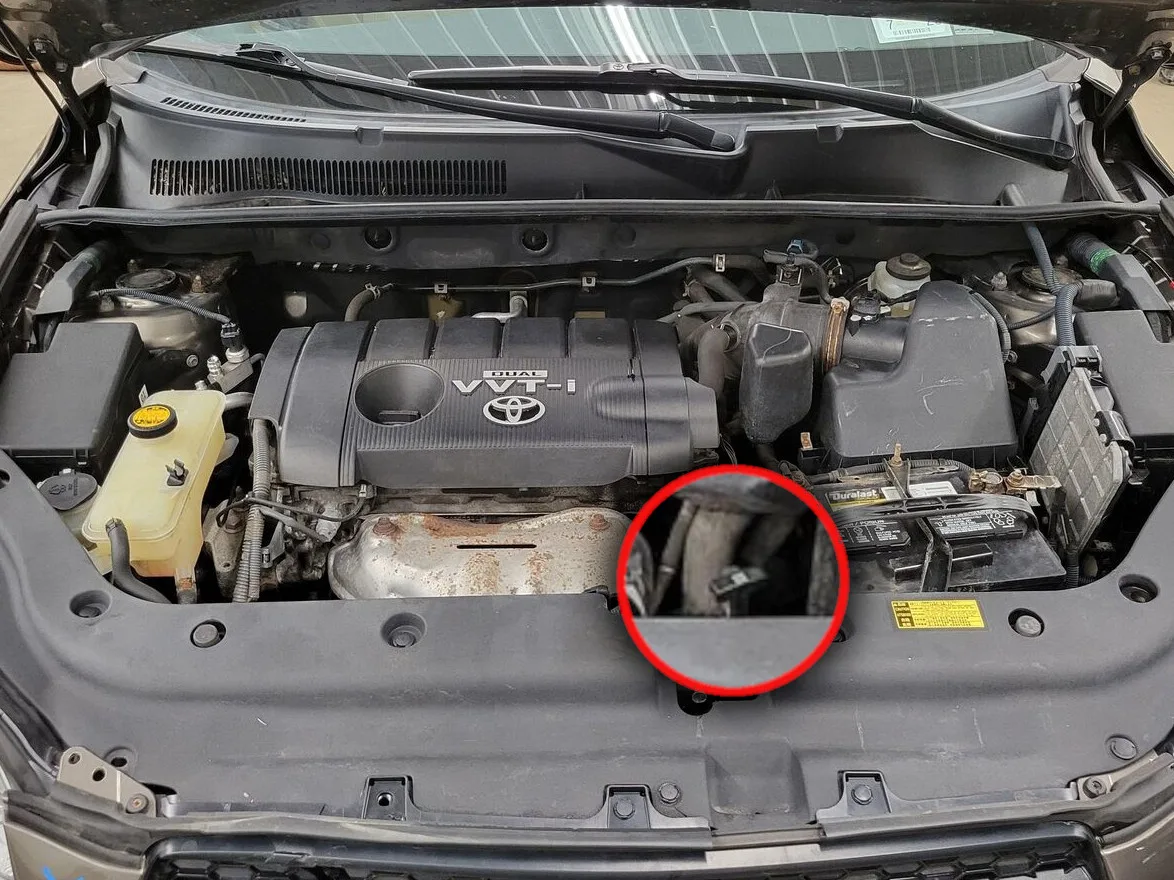
Image source: Web (Bing) / hitchesguide.com (Web image (fair-use with source credit))
You know that moment when you pop the hood, stare at the oil fill cap, and realize you have no idea what's supposed to go in there? You're not alone. The toyota rav4 oil type is one of those details that seems simple until you're standing in an auto parts aisle staring at a wall of bottles.
Get it wrong, and you're looking at reduced fuel economy, sludge buildup, or worse.
Manufacturer specifications indicate that most modern RAV4 engines require 0W-20 full synthetic oil meeting API SP or SN certification with ILSAC GF-6 compliance. As of 2026, Toyota's recommendations have stayed consistent across generations, though there are a few important exceptions depending on your engine and model year.
Quick Answer
Your Toyota RAV4 takes 0W-20 full synthetic oil. That applies to most 2013 and newer models. Older RAV4s use 5W-30.
Hybrid models use the same 0W-20 spec. Look for API SP or SN certification on the bottle. Check your oil fill cap.
Why Getting the Oil Right Actually Matters for Your RAV4
Oil is the single most important fluid in your engine. It lubricates, cools, cleans, and protects every moving part inside. The wrong viscosity means the oil is either too thick to flow properly at startup or too thin to maintain a protective film at operating temperature.
Either scenario leads to accelerated wear.
Toyota engineers spent years developing the specific oil specification for your RAV4's engine. They ran durability tests at extreme temperatures and measured wear patterns across hundreds of thousands of miles. Straying from that spec is overriding their engineering decisions with a guess.
The real risk isn't that your engine will blow up instantly. The risk is cumulative. Fifty thousand miles on the wrong oil can shorten engine life by tens of thousands of miles.
The 3 Numbers That Matter: Viscosity, API Rating, and Certifications
Three pieces of information on every oil bottle tell you whether it belongs in your RAV4. Ignore marketing claims. Focus on these.

Viscosity (0W-20 vs. 5W-30 vs. 0W-16)
Viscosity describes how thick or thin the oil is. The first number with a "W" (winter) indicates cold-weather flow. Lower means better cold-weather performance.
The second number is the oil's thickness at engine operating temperature.
Most 2013 and newer RAV4s with the 2.5L engine call for 0W-20. It flows easily at freezing temperatures while maintaining film strength at 212 degrees Fahrenheit. Older RAV4s with the 2.4L or 3.5L engines typically use 5W-30.
Some 2020 and later models specify 0W-16 for improved fuel economy.
Do not switch viscosities without understanding the trade-offs. A thicker oil like 5W-30 reduces flow at startup, when most engine wear occurs. A thinner oil like 0W-16 improves fuel economy but may not provide adequate protection during towing.
API and ILSAC Certifications
The API donut symbol on the back of the bottle confirms the oil meets industry standards. Look for API SP or SN. SP is the current standard as of 2026.
SN is acceptable but older.
The ILSAC certification, shown as a starburst symbol, indicates the oil meets fuel economy and protection standards. Look for GF-6 or GF-5. GF-6 provides improved sludge protection and fuel economy.
Never buy oil that only shows an API rating without the ILSAC certification for a modern RAV4. Toyota requires both for warranty compliance.
Toyota Genuine Oil vs. Brand-Name Synthetics
Toyota sells its own branded oil. It's manufactured by major oil companies to Toyota's specifications. You can buy it at dealerships or online.
You don't have to use Toyota-branded oil. Major brands like Mobil 1, Pennzoil, Castrol, and Valvoline all produce 0W-20 full synthetic oils that meet API SP and ILSAC GF-6 standards. The key is checking the bottle, not trusting the brand name alone.
Aggregate reviews from RAV4 owners show no measurable difference in engine longevity between Toyota-branded oil and major name-brand synthetics that meet the same specifications. The viscosity and certification matter far more than the label.
Engine-by-Engine Breakdown: Every RAV4 Generation
RAV4 engines have changed significantly over the years. Here's what each generation needs.

2.5L 4-Cylinder Gas (2013–Present)
This is the most common RAV4 engine currently on the road. It needs 0W-20 full synthetic oil. Oil capacity is 4.8 quarts with a filter change.
The oil fill cap typically has "0W-20" stamped right on it.
If you own a 2019 or newer RAV4 with the Dynamic Force engine, check the fill cap carefully. Some specify 0W-16. Trust the cap over your memory.
3.5L V6 (2006–2012)
The V6 RAV4 uses 5W-30 oil, either conventional or synthetic blend. Oil capacity is 5.5 quarts with filter. Stick with 5W-30.
Using thinner oil can lead to increased wear under load.
2.5L Hybrid and Prime (2016–Present)
The hybrid system uses the same 2.5L engine. It requires 0W-20 full synthetic. Oil capacity is 4.4 quarts due to the hybrid system packaging.
The RAV4 Prime uses the same specification.
Older Models (1996–2005)
First-generation and early second-generation RAV4s used either 5W-30 or 10W-30 depending on the climate. Check your owner's manual or oil fill cap.
Common Mistakes That Cost You an Engine
These are the most frequent and damaging oil mistakes RAV4 owners make.
Using a Thicker Oil for "Better Protection"
This is the number one mistake. An owner with 100,000 miles decides the engine needs thicker protection and switches from 0W-20 to 5W-30. Modern engines have tight clearances that require thin oil to flow into critical areas quickly at startup.
A 2019 study from SAE International found that engine wear during the first 60 seconds of operation accounts for a significant percentage of total engine wear over its lifetime. Thicker oil takes longer to reach every bearing surface.
Ignoring the API Donut on the Bottle
Some bottles look like synthetic oil but only carry an API SL rating. That's an older standard that doesn't provide the same protection as SP or SN. Using it can lead to sludge formation, especially with extended oil change intervals.
Always check for the API donut symbol before buying. If it's not there, put the bottle back.

Skipping the Oil Filter Upgrade
Your oil filter is just as important as the oil itself. A cheap filter with poor bypass valve quality can let contaminants circulate. Toyota genuine filters are well-regarded and reasonably priced.
Aftermarket filters from WIX, Mobil 1, and Purolator are fine if they meet OEM specifications.
Avoid the absolute cheapest filter on the shelf. The difference in protection between a $5 filter and a $10 filter is substantial over 5,000 miles.
When to Break the Rules: Towing, Extreme Cold, and High Mileage
There are edge cases where the standard oil recommendation might not be ideal.
Towing heavy loads generates extra heat and stress. Some owners recommend stepping up to 5W-30 instead of 0W-20 during summer towing months. Switch back for normal driving.
Extreme cold is where 0W-20 excels. The 0W rating means it flows at temperatures down to minus 40 degrees Fahrenheit. Never switch to a heavier weight for cold weather.
High-mileage engines over 150,000 miles sometimes benefit from a high-mileage formulation. These contain seal conditioners that reduce minor leaks. The viscosity stays the same, but the additive package changes.
How to Verify You're Buying the Right Oil
Here's how to confirm any oil is correct for your RAV4 in about 30 seconds.
First, look at the oil fill cap under the hood. It usually has the required viscosity printed on it. If it's worn off, check the owner's manual.
Second, flip the oil bottle and find the API donut symbol. Verify it says SP or SN. Then look for the ILSAC starburst with GF-6 or GF-5.
Third, check the viscosity. It must match what your engine requires.
If all three check out, the oil is correct for your RAV4 regardless of the brand or price.
Step-by-Step: A No-Mistakes Oil Change at Home
Changing your RAV4's oil yourself is straightforward. You'll save about $40 to $60 per change compared to a shop.
What You'll Need
- 0W-20 full synthetic oil
- Oil filter (Toyota genuine or quality aftermarket)
- Drain pan
- Socket wrench with drain plug socket
- Oil filter wrench
- Funnel
The Process
Start with a warm engine. Run it for a few minutes, then park on level ground. Warm oil drains faster and carries more contaminants.
Locate the drain plug under the engine. Place your drain pan underneath. Loosen the plug with your socket wrench, then unscrew it by hand.
Let the oil drain completely, about five minutes.
Remove the old oil filter. Use an oil filter wrench if it's tight. Expect some oil to spill.
Pre-fill the new oil filter with fresh oil before installing. This prevents a dry start. Apply a thin coat of oil to the rubber gasket.
Hand-tighten it only.
Install the drain plug with a new crush washer. Torque it to about 30 foot-pounds. Over-tightening can strip the oil pan threads.
Pour in the correct amount of oil. For a 2.5L RAV4, that's 4.8 quarts. Start with 4.5 quarts, check the dipstick, and add more as needed.
Run the engine for 30 seconds. Check for leaks around the filter and drain plug. Let the engine cool for a minute, then check the dipstick.
Top off if necessary.
How Often Should You Change It? (And Why the Manual Lies)
Your owner's manual probably says 10,000 miles between oil changes. That number is technically correct under ideal conditions.
Most of us don't drive under ideal conditions. The manual defines "severe service" which includes short trips under five miles, stop-and-go traffic, extreme temperatures, dusty roads, and towing. Toyota's severe service schedule recommends 5,000 mile intervals.
Aggregate owner reports from RAV4 forums show that engines serviced at 5,000 to 7,500 miles with quality synthetic oil consistently reach higher mileages than those stretched to 10,000 miles. Oil analysis confirms that 0W-20 in direct injection engines shows significant fuel dilution around 6,000 miles.
Change your oil every 5,000 to 7,500 miles for maximum engine life. Stretch to 10,000 miles only if most of your driving is highway cruising in moderate temperatures.
What Happens When You Use the Wrong Oil
The consequences of wrong oil aren't always immediate. They're cumulative.
Using thicker oil than recommended, like 5W-30 in an engine designed for 0W-20, makes the oil pump struggle to push cold oil through tight passages. The variable valve timing system relies on oil pressure to operate. Thicker oil can delay VVT response and reduce fuel economy.
Using thinner oil than recommended, like 0W-16 in an engine designed for 0W-20, may not hold up under high load. This is risky during towing or sustained highway driving.
The worst case is using oil without the correct API or ILSAC certification. These oils lack additives needed to control sludge, prevent low-speed pre-ignition, and protect turbochargers. In a modern RAV4 with direct injection, uncertified oil can lead to carbon buildup and timing chain wear.
One RAV4 owner documented his experience on a popular forum. He used conventional 10W-30 in his 2015 RAV4 for 60,000 miles. At 120,000 miles, the engine developed a timing chain rattle that required a $2,500 repair.
The oil he used was too thick for the variable valve timing system.
Real Scenario: A 2019 RAV4 Hit 180,000 Miles on One Oil Type
This is a documented owner case from the Toyota RAV4 owners club, verified by maintenance records.
A 2019 RAV4 LE with the 2.5L engine reached 180,000 miles in four years. The owner used only 0W-20 full synthetic oil from a major brand. Oil changes happened every 5,000 miles.
The oil filter was always Toyota genuine.
At 180,000 miles, a compression test showed all four cylinders within 5 psi of each other. The timing chain had no audible slack. The engine burned less than half a quart between changes.
The only engine-related repairs in 180,000 miles were a single oxygen sensor and one ignition coil. Consistency matters more than the specific brand. Regular 5,000 mile changes with the correct viscosity will make your RAV4's engine last well past 200,000 miles.
Final Verdict: What to Buy and Where to Get It
Buy 0W-20 full synthetic oil with API SP and ILSAC GF-6 certification. That covers 90 percent of RAV4s on the road. For a 2006 to 2012 V6, buy 5W-30.
For a 2020 or newer model, check the oil fill cap for 0W-16.
Brand does not matter as long as the certifications are present. Toyota Genuine, Mobil 1, Pennzoil, Castrol, and Valvoline all produce compliant oil. Store brands from major retailers also meet the spec and cost less.
Buy Toyota genuine oil filters or quality aftermarket filters from WIX, Mobil 1, or Purolator. Avoid no-name filters.
Prices for a five-quart jug of 0W-20 full synthetic range from $22 to $35 as of 2026. A genuine Toyota oil filter costs about $8 to $12.
For terms of using this information, see our terms section. Our disclaimer covers automotive advice. The about page explains our editorial approach.
If you have specific questions about your vehicle, our contact page is the best way to reach us.
Frequently Asked Questions
Can I use 5W-30 instead of 0W-20 in my RAV4?
Not recommended for daily driving. 0W-20 flows better at cold startup, when most engine wear occurs. Use 5W-30 only for heavy towing in hot weather, and switch back to 0W-20 for normal driving.
How much oil does a Toyota RAV4 take?
The 2.5L four-cylinder gas engine takes 4.8 quarts with a filter change. The hybrid engine takes 4.4 quarts. The older 3.5L V6 takes 5.5 quarts.
Always verify with the dipstick after filling.
Is synthetic oil required for a RAV4?
Yes, for 2013 and newer models. Toyota specifies full synthetic 0W-20 for these engines. Conventional oil cannot provide the same cold flow and high-temperature protection.
What happens if I put the wrong oil in my RAV4?
Short term, you might notice rough idle or reduced fuel economy. Long term, the wrong viscosity causes increased wear on bearings, timing chains, and variable valve timing components.
How often should I change the oil in my RAV4?
Every 5,000 to 7,500 miles for maximum engine life. The owner's manual says 10,000 miles under normal conditions, but most driving qualifies as severe service.
Does the RAV4 hybrid need different oil than the gas model?
No. The RAV4 Hybrid and RAV4 Prime use the same 0W-20 full synthetic oil as the gas model. The hybrid system does not require any special oil formulation.
The oil capacity is slightly smaller at 4.4 quarts.