
The 2007 toyota camry hybrid problems list reads like a warning label written by engineers who knew the weak points. You are not buying a normal Camry with a battery bolted on. You are buying a brake-by-wire system that can lose assist without warning.
You are buying an inverter cooled by a plastic pump recalled for a reason. The hybrid badge changes everything about how this car ages.
NHTSA data shows three safety recalls still open on many surviving examples as of 2026. The brake actuator accumulator fails around 120,000 miles. The inverter coolant pump fails sooner if the recall was skipped.
The HV battery rarely makes it past 15 years without module rot. Let's walk through each system so you know what you are actually signing up for.
Quick Answer
The 2007 toyota camry hybrid problems center on three high-cost failures. The brake actuator accumulator fails near 120,000 miles and costs $2,500 to replace. The inverter coolant pump recall 10V-101 must be done or the $4,000 inverter dies.
The HV battery degrades after 15 years and block replacement costs $1,800 to $2,500. Engine oil consumption and catalytic converter theft round out the top five issues.
Why the 2007 Camry Hybrid Demands Different Ownership Rules
This generation uses the Hybrid Synergy Drive architecture shared with the second-generation Prius. The transaxle houses two motor-generators called MG1 and MG2. The inverter converts DC battery power to three-phase AC for those motors.
The brake system uses an electric pump and accumulator to create hydraulic pressure on demand. There is no direct mechanical link between your foot and the calipers.
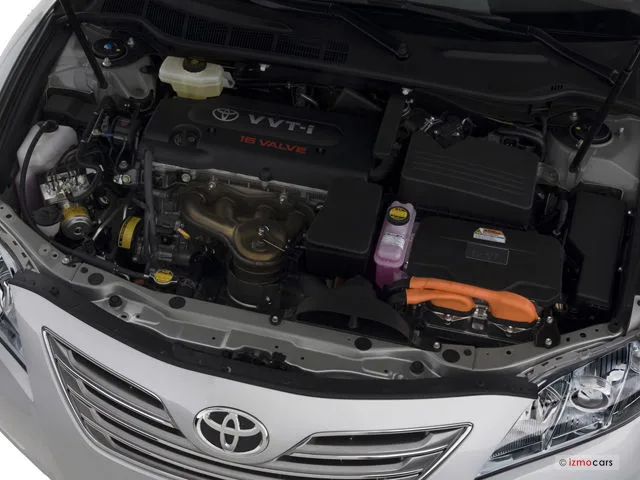
Standard Camry maintenance schedules do not cover these components. Toyota's hybrid supplement adds brake fluid changes every three years using a scan tool bleed procedure. It adds inverter coolant inspection at every service.
It adds HV battery cooling fan cleaning at 60,000 miles. Skip any of these and the failure timeline accelerates. Most independent shops lack the Techstream software to bleed the brakes correctly.
Most quick-lube shops drain inverter coolant by mistake because the reservoir looks like the engine coolant tank.
Ownership math shifts hard at 150,000 miles. A conventional 2007 Camry V6 needs timing belt water pump service at 90,000 miles and maybe a transmission drain-fill at 120,000 miles. The hybrid needs brake actuator accumulator at 120,000 miles.
It needs inverter coolant pump if the recall was missed. It needs HV battery modules by 180,000 miles. Budget $3,000 to $6,000 for the big three repairs before 200,000 miles.
That is the real cost of admission.
The Two Systems That Define This Car: Hybrid Synergy Drive & Brake-by-Wire
Hybrid Synergy Drive in this car uses a power-split device. It is a planetary gear set that blends engine torque with MG2 torque. MG1 acts as a generator and starter.
MG2 drives the wheels and regenerates braking energy. The inverter controls both motors through insulated gate bipolar transistors. The HV battery is a 244.8-volt nickel-metal-hydride pack with 28 modules wired in series.
Brake-by-wire is the part that surprises new owners. When you press the pedal a stroke sensor measures displacement. The ECU commands the brake actuator pump to build pressure in the accumulator.
That pressure applies to the calipers through solenoid valves. Regenerative braking handles the first half of pedal travel. Friction brakes blend in seamlessly.
If the accumulator loses pressure the pedal goes soft and the red brake light flashes. You still have hydraulic backup on the front wheels only. Rear brakes are completely lost.
The system throws specific codes you must recognize. C1241 means low accumulator pressure. C1345 means pump motor circuit fault.
C1256 means accumulator pressure sensor malfunction. These are not generic OBD-II codes. You need a scanner that reads Toyota chassis codes.
A generic $50 scanner will show nothing while the car is unsafe to drive. Techstream or a high-end bidirectional scanner is mandatory for diagnosis.
Brake Actuator Failure: The $2,500 Repair That Comes Back Without ECU Calibration
The brake actuator assembly sits under the driver-side cowl. It contains the pump motor the accumulator and the pressure sensors. The accumulator is a nitrogen-charged bladder that stores hydraulic energy.
The bladder cracks after years of pressure cycles. Nitrogen escapes. The pump runs constantly trying to recharge.
The motor burns out or the ECU sets C1241 and disables brake assist.
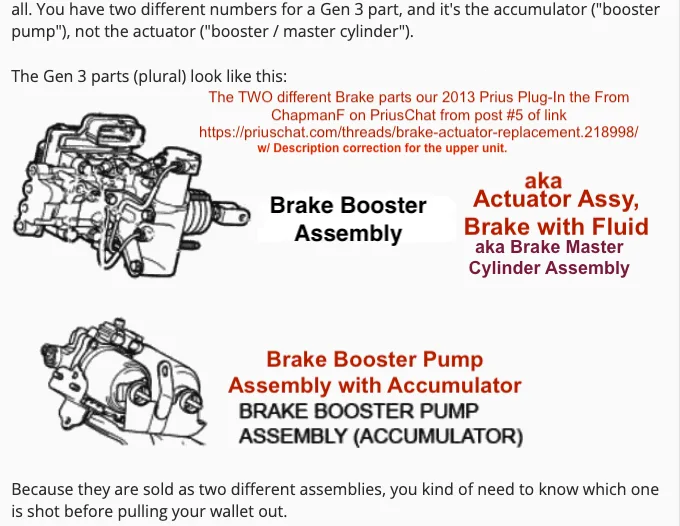
Toyota issued a redesigned accumulator with a thicker bladder wall. The part number supersedes the original. Many shops replace only the accumulator to save labor.
That works for about 30,000 miles then the new bladder fails because the ECU still runs the old pump duty cycle. The updated ECU calibration reduces peak pressure and extends bladder life. Without that flash the repair is temporary.
Dealers charge $1,200 for the accumulator plus $1,300 labor plus $200 for calibration. Independent hybrid specialists charge $900 for the part plus $600 labor plus $150 calibration.
Do not drive with C1241 active. The pedal travel increases. Emergency stops require full leg force.
Rear wheels contribute zero braking. The vehicle stability control system cannot intervene because it relies on the same actuator. Tow the car.
The $150 tow bill is cheaper than the $4,000 inverter you might hit if you lose control.
Inverter Coolant Pump Recall (10V-101): Why Ignoring It Kills a $4,000 Inverter
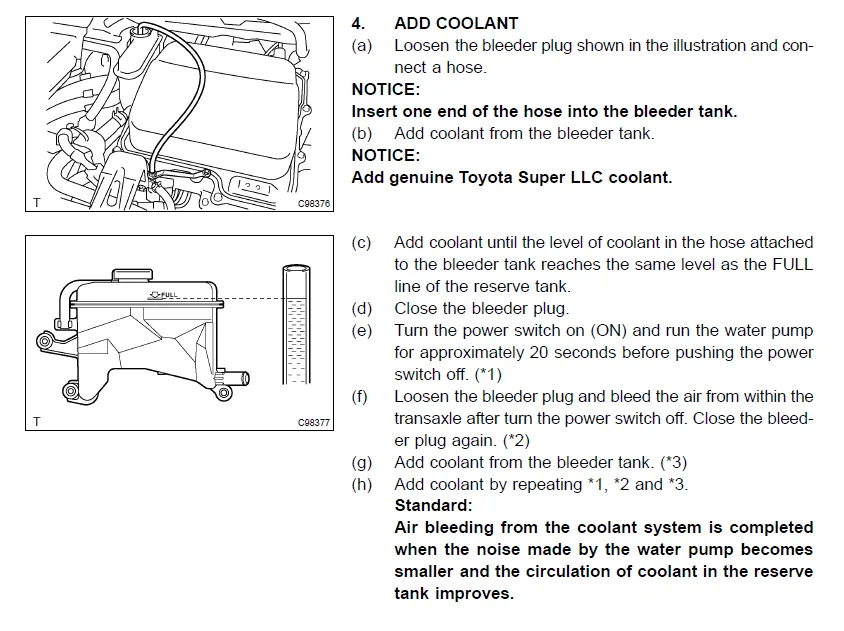
The inverter has its own dedicated cooling loop. A small electric pump circulates coolant through the inverter heat sink. The original pump uses a plastic impeller that cracks at the hub.
Coolant leaks onto the inverter power board. The board shorts. The inverter fails.
Toyota recalled this pump under campaign 10V-101. The replacement uses a metal impeller and updated seals.
Check your VIN on the NHTSA recall lookup. If the recall was performed the pump housing will have a green paint dot on the connector. If there is no dot the original pump is still installed.
The pump sits on the passenger side of the inverter bolted to the heat sink. It is visible from under the car with the splash shield removed. Replacement takes 45 minutes with basic hand tools.
The pump costs $130 from Toyota parts counters.
Inverter replacement costs $3,800 for the remanufactured unit plus $600 labor. The inverter coolant loop holds 1.8 quarts of Toyota SLLC. Do not use universal coolant.
The SLLC formulation prevents electrolysis on the aluminum heat sink. Mix 50/50 with distilled water. Burp the system using the bleeder screw on the inverter housing.
Run the car in maintenance mode until the pump cycles. Top off the reservoir. This is the cheapest insurance on the car.
HV Battery Degradation at 17 Years: Block Replacement vs. Full Rebuild Economics
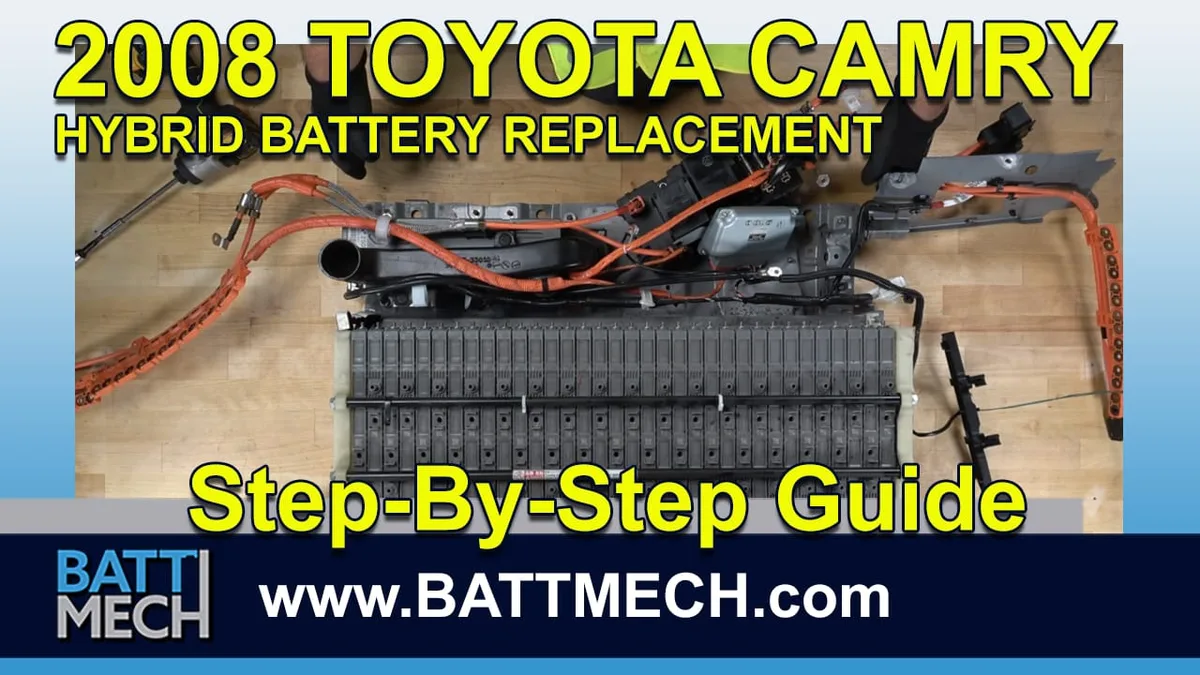
The 244.8-volt pack contains 28 modules. Each module is six 1.2-volt cells spot-welded in series. The modules are grouped into four blocks of seven modules each.
Block one is at the front. Block four is at the rear. The battery ECU monitors voltage per block not per module.
A single weak cell drags down its whole block voltage.
Symptoms show up as reduced EV mode duration. The engine runs more often to charge the battery. Fuel economy drops from 38 mpg to 30 mpg.
The dashboard battery gauge swings wildly. Techstream shows block voltage delta exceeding 0.3 volts under load. That is the failure threshold.
Individual module replacement costs $45 per module plus $400 labor per block. A typical repair replaces four to six modules across two blocks. Total $1,200 to $1,800.
Full remanufactured pack costs $2,300 to $2,800 installed with a 12-month warranty. New Toyota pack costs $4,500. The math favors block repair if the car has under 180,000 miles and you plan to keep it three more years.
Full rebuild makes sense if you want five more years or the car has 200,000 miles. Aftermarket lithium conversions exist but void the hybrid system warranty and confuse the battery ECU. Stick with NiMH modules matched for internal resistance.
The battery cooling fan sits behind the rear seat backrest. It pulls cabin air through a duct into the pack. The intake screen clogs with pet hair and dust.
Clean it every 30,000 miles. A clogged fan raises module temperature by 15 degrees Fahrenheit. That cuts module life in half.
The service plug is orange and located on top of the pack. Pull it before any pack work. It isolates the high voltage.
Wait five minutes for capacitors to discharge. Verify zero volts at the inverter input before touching anything orange.
12V Auxiliary Battery: The Silent Killer of Hybrid Readiness
The 12-volt battery in the trunk does not start the engine. It powers the hybrid ECU the brake actuator ECU and the contactors that connect the HV pack. If voltage drops below 10.5 volts during boot the car throws a check hybrid system warning and refuses to go ready.
The dash lights up but the car stays dead. This confuses owners who expect a crank-no-start symptom.
AGM is the only correct chemistry. Flooded lead-acid cannot handle the constant partial-state-of-charge cycling. The DC-DC converter charges at 14.2 volts then floats at 13.4 volts.
An AGM rated for 600 CCA fits the OEM tray. Group 46R or 151R depending on production month. Replace every four years regardless of load test results.
Internal resistance rises before capacity drops. A battery that tests good at 12.6 volts can still fail the readiness check.
Jump starting through the underhood terminals works but risks voltage spikes. The positive terminal is under a red cap near the inverter. The negative is a bolt on the strut tower.
Connect jumper cables there. Do not connect directly to the trunk battery. The ECU sees the spike and can set permanent codes.
If you must charge the trunk battery directly use a 2-amp AGM smart charger. Disconnect the negative terminal first.
Engine Oil Consumption (2AZ-FXE): Piston Ring Design Flaw or Maintenance Casualty
The 2AZ-FXE 2.4-liter four-cylinder uses low-tension piston rings for reduced friction. The oil control ring has narrow drain holes that carbon up. Oil scrapes past the rings and burns.
Toyota considers one quart per 1,200 miles within spec. Real world data shows many engines use one quart per 800 miles after 100,000 miles. The hybrid runs the engine at high load low rpm during battery charging which increases vacuum and oil draw.
Use 0W-20 synthetic meeting API SN Plus or SP. Change every 5,000 miles not 10,000. The shorter interval keeps detergent levels high enough to prevent ring sticking.
Check the dipstick every fuel stop. The hybrid shuts the engine off at lights so the dipstick reads full when cold. Check after the engine has run for five minutes.
Add oil at the 3/4 mark on the dipstick not the low hole.
TSB 0094-11 covers piston ring replacement for excessive consumption. The repair requires engine removal and costs $3,200. Most owners manage with top-offs.
The engine tolerates low oil better than most because the hybrid system limits rpm. Do not let it drop below the low hole. The oil pressure light comes on at 3 psi.
At that point camshaft damage is minutes away.
Transaxle Whine & MG1/MG2 Bearing Wear: Diagnose Before It Grenades
The eCVT transaxle uses planetary gears with needle bearings on the sun gear shaft. MG1 rotor bearing fails first. It whines at 40 mph under light acceleration.
The pitch changes with vehicle speed not engine speed. MG2 bearing whines during regeneration. Both bearings run in transaxle fluid not engine oil.
The fluid is Toyota WS ATF. Capacity is 4.2 quarts drain and fill.
Fluid change every 60,000 miles prevents bearing failure. The drain plug is on the bottom of the transaxle case. The fill plug is on the driver side.
Use a hand pump. Overfill by 0.2 quarts then pull the overflow plug with the car level and running in maintenance mode. The fluid is red when new.
Brown means overheating. Silver glitter means bearing material. Black means clutch wear from the damper.
Rebuild costs $2,800 for bearings and seals. Used transaxle from a 2007 to 2011 Camry or 2004 to 2009 Prius costs $900 plus $600 labor. The damper assembly between the engine and transaxle fails separately.
It clunks on engagement. Replace the damper with the transaxle out. The updated damper part number ends in 040.
Do not reuse the old one.
Catalytic Converter Theft Target: Why the 2007 Is High-Value Prey
The 2007 hybrid converter contains more precious metal than the gas model. The engine runs leaner and cooler so the catalyst needs higher platinum rhodium palladium loading to light off. Scrap yards pay $800 to $1,200 for an OEM unit.
Thieves cut it in 90 seconds with a battery reciprocating saw. The pipe diameter is 2.25 inches. A universal cat shield bolts to the frame rails in 20 minutes.
Toyota offers an anti-theft etching kit. The dealer engraves the VIN on the converter shell. Some insurers discount comprehensive premium with proof of etching.
Park near cameras. Weld the flange bolts if you never plan to remove the converter. The OEM replacement costs $2,200 installed.
Aftermarket CARB compliant units cost $1,100 but fail smog in California after 30,000 miles. Federal cars can use the cheaper unit.
Check your insurance deductible. Comprehensive covers theft minus deductible. Some policies cap converter payout at $1,500.
The OEM replacement exceeds that. A $300 shield pays for itself after one attempted theft. The shield also reduces road debris damage to the oxygen sensors.
The upstream sensor is in the manifold. The downstream sensor is in the converter. Both are wideband air-fuel ratio sensors not narrowband O2.
NHTSA Recalls & TSBs Still Open: How to Verify Yours Are Done
Three recalls affect the 2007 Camry Hybrid. 10V-101 inverter coolant pump. 14V-400 brake actuator accumulator calibration. 20V-460 fuel pump assembly. The fuel pump recall replaces the pump module inside the tank. The updated module has a different impeller shape.
The job takes two hours. The dealer must bleed the fuel system with Techstream after install.
TSB BR007-07 covers brake actuator noise. TSB EG018-07 covers engine oil consumption diagnosis. TSB HV002-07 covers battery fan cleaning.
TSBs are not recalls. The dealer performs them free only under warranty. Out of warranty you pay.
Print the TSB and bring it to an independent hybrid shop. They can follow the procedure without the dealer labor rate.
Run your VIN at nhtsa.gov/recalls. Check the Toyota owners portal at toyota.com/recall. Call the dealer service department with your VIN.
Ask for the recall completion dates. Ask for the TSB list for your VIN. Write it down.
Keep the printout in the glove box. When you buy a used 2007 verify every recall shows completed. If any are open schedule them before you drive the car home.
Safe Triage: Which Codes You Can Drive With vs. Tow Immediately
P0A80 replace hybrid battery pack. You can drive gently but the engine will run constantly. Fuel economy drops to 25 mpg.
Schedule repair within two weeks. P0A7F hybrid battery deterioration. Same guidance.
P3000 battery ECU malfunction. Tow immediately. The ECU may open contactors while driving.
C1241 C1345 C1256 brake actuator codes. Tow immediately. Rear brakes are non-functional.
C1259 brake ECU malfunction. Tow immediately. Stability control is disabled.
P0A1B inverter cooling system performance. Drive only if coolant level is full and pump runs. Stop if temperature warning appears.
P0A93 inverter cooling pump stuck off. Tow immediately. Inverter will overheat in five minutes.
Finding a Shop That Actually Knows Gen 2 Hybrid Systems
Ask three questions before booking. Do you have Toyota Techstream software? Can you bleed the brake actuator with a scan tool?
Do you stock SLLC inverter coolant? A yes to all three means they work on these cars regularly. Avoid shops that say "we can figure it out." The brake bleed procedure requires cycling the pump 50 times while monitoring pressure sensors.
Guessing destroys the accumulator. The inverter coolant fill requires maintenance mode and a specific bleed sequence. Guessing traps air and cooks the inverter.
Hybrid specialty shops charge $130 to $150 per hour. Dealers charge $180 to $220. General mechanics charge $100 but often sublet the hybrid work adding markup.
Ownership Cost Reality: Budgeting $3,000–$6,000 for the Big Three Repairs
Brake actuator accumulator with ECU calibration $2,500. Inverter coolant pump if recall missed $150. HV battery block repair $1,800.
Engine oil consumption management $500 in top-offs over 50,000 miles. Transaxle fluid changes $300 every 60,000 miles. Catalytic converter shield $300. 12V AGM battery every four years $250.
Total five-year ownership repair budget $5,800 if all hit at once. Staggered they arrive at 120k 140k 160k 180k miles. A $150 monthly repair fund covers the wave.
Skip the fund and a single tow plus actuator repair breaks the budget.
FAQ: Real Questions from 2007 Owners
Can I drive with the check hybrid system light on?
Depends on the code. P0A80 yes. C1241 no.
Read the code first.
Is the brake actuator recall free?
Recall 14V-400 covers ECU calibration only. The accumulator replacement is not covered.
How long does a rebuilt HV battery last?
Three to five years if modules are matched. One year if random used modules are installed.
Does the 2007 qualify for the oil consumption warranty extension?
TSB 0094-11 extended coverage to 10 years or 150,000 miles. That window closed in 2017.
Can I use a generic OBD2 scanner?
No. You need Toyota chassis code capability. Generic scanners miss C-codes entirely.
What coolant goes in the inverter?
Toyota SLLC only. Universal coolant causes electrolysis on the inverter heat sink.
Verdict: Keep, Fix, or Walk Away — The Decision Framework
Keep if the brake actuator recall is done the inverter pump has the green dot and the HV battery shows under 0.2 volt block delta. Fix if one major item is due and the car has under 180,000 miles. Walk away if the actuator is failed the inverter coolant is low or the battery delta exceeds 0.5 volts.
The math works only when you control the repair timeline. Surprise failures on this platform cost double because tow bills and rental cars add up while you wait for hybrid parts. Buy a Techstream cable learn the bleed procedures and own the maintenance schedule.
That is the only way the 2007 Camry Hybrid stays cheaper than a car payment.