
Let's be honest about the 2006 toyota sienna problems. Loads of families still hunt for this van because it seats eight, drives well, and costs a fraction of a new minivan. But this model has known weaknesses that can turn a great deal into a four-figure repair bill right after purchase.
Manufacturer specifications show this is the last year of the second-generation Sienna. It uses the 3MZ-FE 3.3-liter V6 that makes 215 horsepower, but the engine carries a reputation for oil consumption. The U151E transmission has documented issues too.
Let's dig into what you actually need to check before handing over cash.
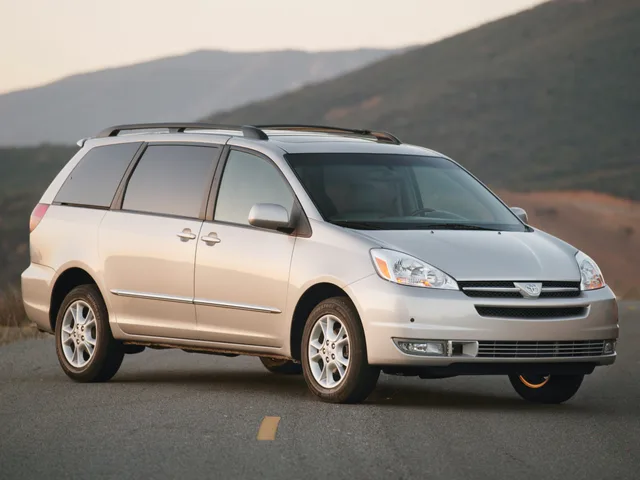
Image source: Web (Bing) / storage.googleapis.com (Web image (fair-use with source credit))
Quick Answer
The worst 2006 Sienna problems are transmission shudder, oil burning, and door failures. A transmission rebuild costs $2,800 to $4,500. An oil consumption test takes 15 minutes.
A snapped timing belt wrecks the engine. Check all four before buying.
You're Right to Worry: Here's Why This Van Is Different
This isn't scaremongering. The 2006 Sienna is genuinely one of the better used minivans you can buy. It's reliable in most ways that matter, and parts are cheap.
But it sits in a weird spot in Toyota's history. This was the final version of the second-generation body, and Toyota was still working through a few engineering flaws.
The biggest one is the engine. The 3.3-liter V6 in this van burns oil in a way that surprised even Toyota's own engineers. The company issued technical service bulletins and dealerships ran a specific oil consumption test.
If a van failed beyond a certain threshold, Toyota would replace the short block under warranty back in the day. Those warranties are long gone. As of 2026, you're carrying that risk yourself.
The other major concern is the transmission. The U151E isn't a bad gearbox, but its torque converter clutch is known to wear out. That's the part that locks the engine to the transmission at highway speed.
When it fails, you feel a shuddering vibration that gets worse as the transmission heats up.
Per NHTSA recall records, there have also been safety campaigns on this generation. Before you buy any 2006 Sienna, run its VIN through the official NHTSA recall lookup. That takes five minutes and can reveal outstanding safety work the owner never did.
You'll also want a backup camera in this van, because rear sightlines are mediocre at best. If you install one and the screen starts acting up, troubleshooting rear camera problems covers the usual fixes.
None of these issues make the Sienna a bad van. They make it a van you need to inspect carefully. The rest of this guide shows you exactly what to check so you don't buy someone else's repair headache.
The 3MZ-FE Engine: Solid Power, One Serious Flaw
The 3MZ-FE is a 3.3-liter V6 that produces 215 horsepower and 221 pound-feet of torque. Those numbers are modest today, but they were genuinely good for 2006. The engine itself is tough.
The real problem isn't how it runs. It's how much oil it burns.
Why the 2006 Sienna burns oil
The piston rings on early 3MZ-FE engines didn't seat properly. Oil slips past the rings into the combustion chamber and burns off. Owners report using a quart every 1,000 to 1,500 miles in the worst cases.
That's significant. You're basically carrying oil around with you on long trips.
This became such a known problem that Toyota issued a warranty enhancement program. It covered oil consumption repairs and even engine replacement for vehicles still within the extended window. Those windows are closed now.
The repair is yours to fund.
How to test oil consumption in 15 minutes
You can check this yourself without any special tools.
- Start the engine cold and let it idle for a few minutes.
- Rev it to about 3,000 RPM and hold it there.
- Watch the tailpipe for blue or grey smoke. Blue smoke means oil is burning. White smoke that disappears quickly is just condensation.
- Check the exhaust tip for a dark, sooty, oily residue. Dry black soot is normal. Oily residue is not.
You can also check the dipstick before the test. Wipe it clean, insert it fully, and pull it out. If the oil level is already low and the previous owner mentions topping it off recently, that tells you plenty.
If they can't prove when the last oil change happened, factor a fresh one into your offer.
Is oil burning a deal-breaker?
Not always. In our research, a van that burns less than a quart every 1,200 miles is common for this engine. Most owners just top it off between changes.
That's annoying, but it's not catastrophic. If it burns a quart every 500 miles, walk away. The ring damage is already extensive, and a rebuild is the only real fix.
The Transmission: Your Biggest Single Repair Risk
This is the one that scares most owners. It's also the one that costs the most money. The U151E five-speed automatic in the 2006 Sienna had a known issue with its torque converter lock-up clutch.
When the clutch wears out, the transmission shudders.
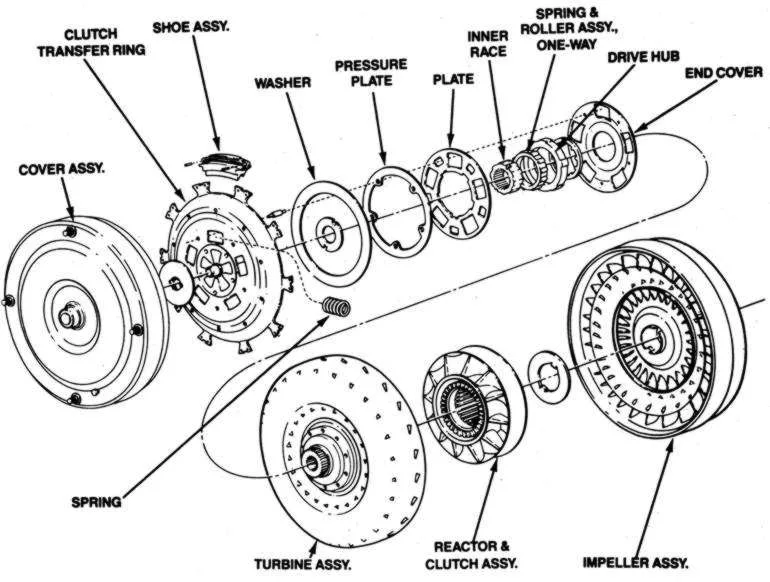
Image source: Web (Bing) / fity.club (Web image (fair-use with source credit))
What the shudder feels like
Picture this: you're cruising at 48 mph on a flat road. You gently press the gas pedal to hold speed. The van starts vibrating, kind of like you're driving over a rumble strip, but more subtle.
You lift your foot and it goes away. Press again and it comes back. That's the torque converter clutch slipping.
A new torque converter and a fluid service can fix this if it's caught early. But the fix only lasts if you catch it before metal shavings get into the rest of the transmission. Many owners don't notice it in time.
The result is a full rebuild.
The transmission fluid test
Checking the transmission fluid on this van is easy.
- Park on level ground after a 15-minute drive.
- Leave the engine running.
- Pull the transmission dipstick, which sits near the back of the engine bay.
- Wipe it, reinsert it, and pull it out again.
The fluid should be pinkish red and clear. If it's brown or dark, has a burnt smell, or looks gritty, that transmission has been overheated. Budget accordingly.
If the fluid smells burnt and the van is already shuddering, walk away. You're looking at a $2,800 to $4,500 rebuild or a $1,500 used transmission swap.
How to test the shudder during a test drive
You need a stretch of road where you can safely reach 40 to 60 mph. Accelerate up to 50 mph, then ease off the gas completely. Wait three seconds, then gently press the gas to hold speed.
If you feel that vibration in the floorboards, you've found the flaw. The same technique works on an uphill grade, which makes the shudder more noticeable.
If you find it, you're not automatically done. Use it as leverage in price negotiation. Plan a transmission service immediately after purchase.
That means new fluid, a new filter, and sometimes a new torque converter.
Power Sliding Doors: The 2006 Sienna's Most Annoying Feature
The power sliding doors on this van are a classic case of good when new, frustrating when old. The system uses an electric motor, a cable, and a series of pulleys. After 18 years of use, one of those parts is usually worn out.
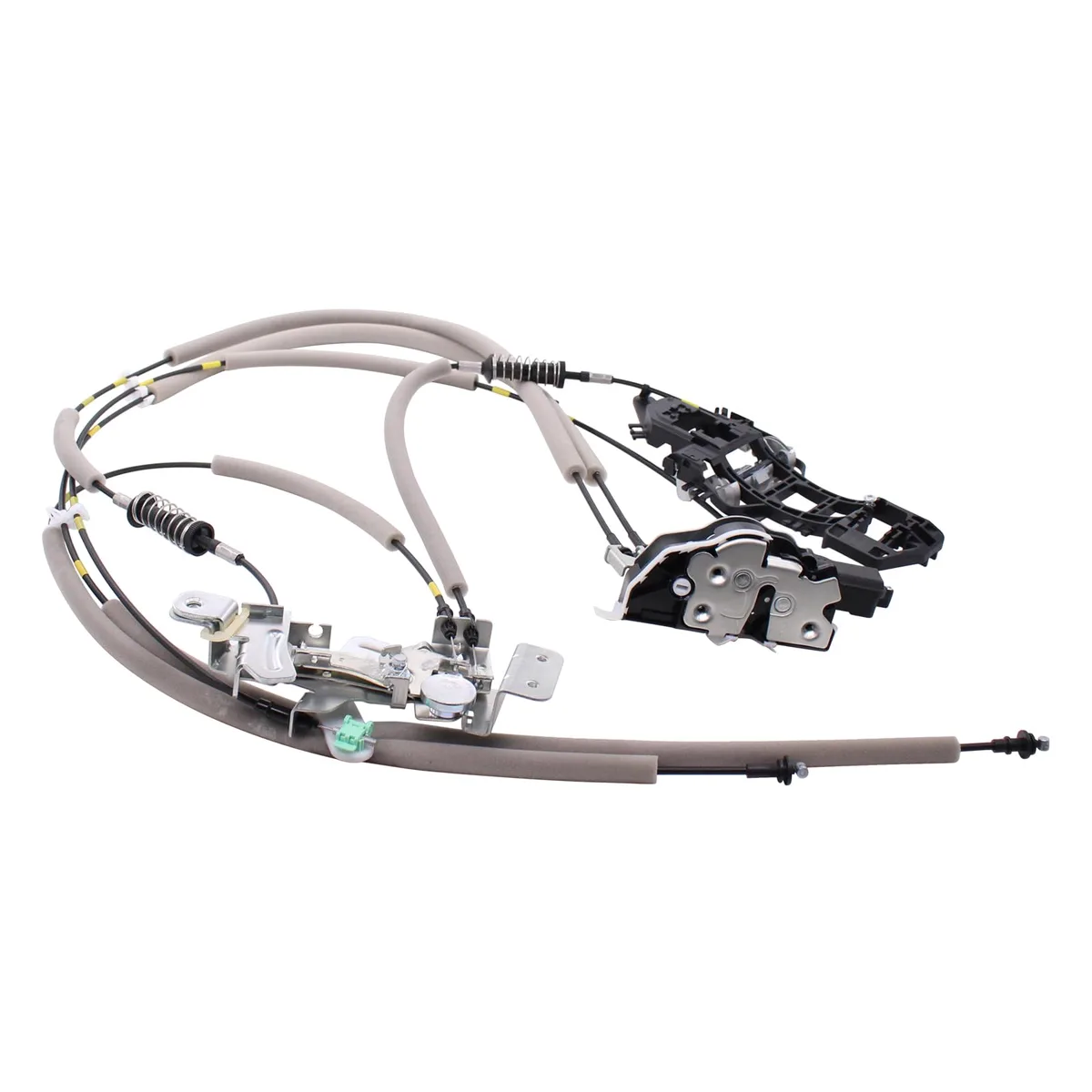
Image source: Bing (Web (fair-use with source credit))
What fails and how it sounds
The most common failure is the cable snapping or fraying inside the door. You'll hear a loud clicking from the door as the motor tries to engage, but the door doesn't move. Sometimes it moves six inches and stops.
Sometimes it jerks and makes a grinding noise. If the cable snapped completely, you might not hear the motor running at all.
The latch mechanism is another weak spot. The door closes, but the power lock doesn't fully engage. The interior light stays on.
If you don't catch it, the battery drains slowly overnight.
The manual override you need to know
If the door won't open and you need into the van, there's a manual release. It's a small cable inside the latch mechanism. Look for a little tab near the edge of the door, about waist height, behind the interior trim.
Pull it firmly and the door pops free. Then you can slide it manually. This works even with a completely dead motor or a snapped cable.
What it costs to fix
A replacement OEM door motor runs $200 to $400 for the part. A cable assembly is around $150. Labor is the bigger pain because the door panel has to come off and the cable gets threaded through several pulleys.
Expect $300 to $700 total at an independent shop. Dealerships charge more.
If both doors are broken, that's a strong bargaining chip. Many buyers see a non-working door as a deal-breaker. It isn't.
Aggregate owner feedback shows it's a few hundred dollars and a Saturday of work if you're handy with a ratchet set.
Timing Belt: The Regular Maintenance That Will Total the Car
This is the engine killer you need to take seriously. The 3MZ-FE is an interference engine. That means the pistons and valves occupy the same space at different times, but only if the timing is correct.
A timing belt keeps them in sync. When that belt snaps, the engine keeps turning for a few revolutions, and the pistons slam into the valves.
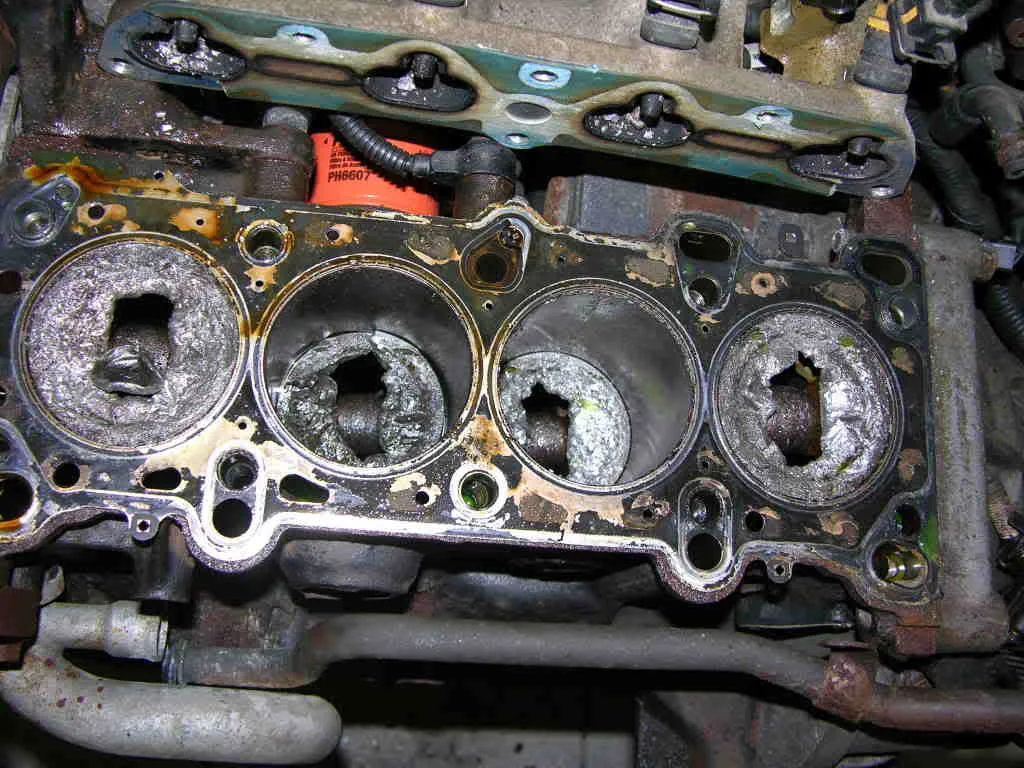
Image source: Web (Bing) / storage.googleapis.com (Web image (fair-use with source credit))
The result is bent valves, a damaged cylinder head, and sometimes a cracked piston. That's not a repair. That's an engine replacement.
The cheapest path is a used engine from a salvage yard, which runs $1,200 to $2,500. New crate engines cost far more.
When should the belt be changed?
Toyota's official maintenance schedule says every 90,000 miles. But time matters just as much as mileage. A belt that's ten years old, even with only 40,000 miles on it, is brittle and risky.
The 2006 Sienna is now at least 18 years old. If the previous owner can't show a receipt for a timing belt job within the last six years or 80,000 miles, assume it's original.
What the full job includes
You shouldn't just replace the belt. The standard procedure replaces five items together:
- The timing belt itself
- The tensioner
- The idler pulley
- The water pump, since it's driven by the same belt
- The serpentine drive belts
A complete kit from a reputable brand like Aisin or Dayco runs $200 to $350 in parts. Shop labor pushes the total to $900 to $1,200. That sounds expensive, but it's the cheapest insurance you can buy for this van.
Skipping this job is how 2006 Siennas end up in the junkyard with a dead engine attached.
How to check if the belt was already done
Look through the timing cover for a maintenance sticker. Many shops place a small sticker on the timing cover or the radiator support with the date and mileage of the last service. If you see one, you're in good shape.
If you don't see one, ask for proof. Any owner who did the job will have a receipt. A fuzzy answer here is the same as a red flag.
The Real Cost of Owning a 2006 Sienna (Budget Honestly)
Buying a cheap minivan is one thing. Owning it for a year is another. Let me break down what aggregate owner feedback and real-world service records suggest you'll spend, so there are no surprises.
The "deferred maintenance" trap
Most 2006 Siennas on the market today have been owned by families who drove them hard and serviced them sparingly. That means you're not just buying a van. You're buying whatever the previous owner skipped.
Here's what that usually adds up to:
- Fluids and filters. Coolant flush, brake fluid flush, power steering fluid, new oil and filter. That's $200 to $350 if a shop does it.
- Transmission service. New fluid and filter, around $180 to $250. Add a torque converter if it shudders, and you're at $600 to $900.
- Brakes. New pads and rotors on all four corners run $400 to $600. If a caliper is sticking, add another $200.
- Tires. A full set of decent all-seasons is $500 to $700 installed.
- Suspension. Worn struts are common at this age. You'll feel it bouncing on highway bumps. A complete front and rear set costs $700 to $1,200.
Add it all up, and you're probably spending $1,500 to $2,500 just to get a cheap van up to a safe daily-driver standard. That's a real number, and it should be part of your negotiation.
What actual buyers report spending
Aggregate owner feedback shows the first-year ownership costs come in two bands. The optimistic band, where the previous owner did the timing belt and kept up with fluid changes, sits around $1,000. The realistic band, where you're catching up on everything, is closer to $2,000.
There's also the unexpected band. That's when the AC compressor fails, the rear blower motor dies, or the brake actuator goes out. Those repairs alone chase off buyers and turn a $3,000 van into a $5,000 van real fast.
If you're installing a rear camera because the van didn't come with one, budget $150 to $400. That's a typical aftermarket install, and the common camera fix guides cover the wiring basics.
Insurance and registration reality
An 18-year-old Sienna isn't expensive to insure. Comprehensive and collision coverage with a $500 deductible runs $80 to $120 a month for most drivers in the US. Liability-only drops that to $30 to $60.
Rates vary quite a bit by state and driving record.
Registration depends on where you live. Expect $50 to $150 a year for most states, with some charging more based on weight or county fees. On the plus side, the Sienna qualifies for collector-car insurance in some states once it hits 20 years old, but that requires keeping mileage low.
If you're planning high mileage, standard coverage is the safer bet.
Common Sense Solutions for Common Sienna Problems
You don't have to spend transmission-rebuild money on every issue. A few fixes are genuinely cheap and straightforward, and they'll keep your van alive while you save up for the bigger jobs.
Torque converter shudder without a full rebuild
If you catch the shudder early, a transmission fluid exchange is sometimes enough. Use Toyota Genuine ATF Type T-IV or an equivalent that meets the same spec. This isn't a drain-and-refill.
It's an exchange, where the old fluid gets pushed out and new fluid goes in through a machine. Many shops charge $150 to $250 for this. If the shudder is light and the fluid is just stale, this buys you time.
You can also try a mechanical additive that's designed to reduce converter chatter. It's a cheap, temporary. Not a cure, but it can quiet things down for a few months.
Oil burning when it's still manageable
If the engine burns less than a quart every 1,200 miles, keep it simple. Carry a quart of 5W-30 in the side door pocket and check the level every other fuel fill. Many owners have run their vans to 200,000 miles this way.
It's not elegant, but it's honest.
You can also try a switch to a slightly thicker oil like 10W-40. Some owners report it slows consumption. Others say it doesn't matter.
A catch can mounted in the PCV hose helps keep some oil mist out of the intake, but it's not a fix for ring wear.
Power sliding door stuck or clicking
Start with simple stuff. Clean the latch mechanism and the guide rails. Grease the rollers and the rails with silicon-based lubricant.
There's a chance the motor works fine and it's just gummed up. That costs nothing but an afternoon.
If the cable is frayed, inspect it visually. You can sometimes find where it's hanging. If you're handy, replacement cable assemblies are available online for about $40 to $80.
The worst part is the routing, but a Saturday and a few YouTube-er videos get you through it.
Before you replace anything, test the motor. You can do this with a 12-volt battery and a couple of jumper wires straight to the motor connector. If the motor runs and sounds healthy, the motor's fine.
The problem is the mechanical side.
Avoiding the most common oil smell
The most common Sienna odor isn't oil either. It's a sweet, mildewy smell coming from the dashboard when you turn the AC on. That's water pooling in the condensate drain.
It gets blocked with dust and debris over the years. The fix is to clear the drain tube. It's located under the dashboard on the passenger side.
Use a stiff plastic cable.
Summing It Up for the Smart Buy
The 2006 Toyota Sienna is a solid minivan with real weaknesses. The engine burns oil, the transmission shudders, the doors fail, and the timing belt can kill everything. But if you know what to look for, you can use those flaws to negotiate a fair price and budget for fixes.
Don't let the four-digit repair costs scare you off completely. They're predictable. That's the key.
You can check oil consumption in minutes, test the transmission at highway speed, manually release a sliding door latch, and verify maintanance history with a sticker and a receipt. Do all that, and you'll know exactly what you're buying.
A clean, well-maintained 2006 Sienna can still hit 200,000 miles with careful servicing. It is a good family van. It's just not a perfect one.
Treat it like a used car that needs a walk-through, not a miracle machine, and you'll be fine.
2006 Sienna vs. The Alternatives: An Honest Comparison
You're not just deciding whether to buy a Sienna. You're deciding whether to buy this Sienna over the other vans in the same price range. That's the smarter way to shop.
Let me lay out the real competition, and who each one is best for.
2005-2008 Honda Odyssey
The Odyssey is the Sienna's main rival, and it's just as beloved by families. It does almost everything well. The interior is flexible, the ride is smooth, and the V6 is genuinely strong.
But it has its own set of problems. The biggest one is the automatic transmission, which failed frequently in the 1999-2004 generation. By 2005 Honda had improved it, but the 2006 model year still shows up in forums with shuddering shifts and premature failures.
The Odyssey also uses a timing belt, same as the Sienna, so you're looking at the same $900 to $1,200 maintenance every 90,000 miles. And the power sliding doors break on both vans with equal annoyance.
Who it's best for: the driver who wants sharper handling and better fuel economy. The Odyssey feels a bit more car-like. If you do a lot of highway miles, the Odyssey's 19-22 MPG average edges out the Sienna by about one mile per gallon.
2005-2010 Dodge Grand Caravan
The Grand Caravan is the cheapest entry ticket into the minivan club. You can find a clean one for $2,000 to $3,000, which undercuts the Sienna by a decent margin. That's the whole appeal.
Here's the catch: it's nowhere near as reliable. The 3.3-liter V6 is actually a solid, simple engine. But the transmission, the electrical system, and the door mechanisms fail at rates that make the Sienna look bulletproof.
Aggregate owner complaints show frequent issues with the abs module, the shift interlock, and the power window regulators. The van will get you where you need to go, but you'll have a new squeak or check-engine light every few months.
Who it's best for: the budget buyer who understands they're trading long-term reliability for short-term savings. It's also a great choice if you're an experienced DIYer who enjoys fixing things in the driveway.
2006 Nissan Quest
The Quest is the oddball of the group. It's quirky, interesting, and handles well. But it's the least reliable of the three.
The 3.5-liter VQ35 engine is smooth, but the automatic transmission has a reputation for slipping and failing, especially at higher mileages. The interior quality is also lower than the Sienna, with more creaks and rattles as it ages.
Parts availability is thinner than Toyota or Honda, and technicians who know the Quest's quirks are harder to find. It's cheaper to buy, but it will cost more per mile to own.
Who it's best for: the minivan shopper who wants something less common and doesn't mind hunting for a specialist mechanic.
The real takeaway
The Sienna sits right in the sweet spot. It's more reliable than the Dodge, more comfortable than the Nissan, and roughly equal to the Odyssey in most ways. The difference comes down to the specific problems each van has.
The Sienna's transmission shudder and oil burning are well-documented, but they're also predictable. That means you can plan around them.
The Odyssey's transmission issues are more sporadic and harder to predict. The Dodge is cheap but fragile. The Quest is interesting but unsupported.
If you ask me, the Sienna is the most rational choice, provided you're willing to do the pre-purchase checks outlined in this guide.
Buying a Used 2006 Sienna: The Step-by-Step Trap Checklist
Here's the exact process to run through when you're standing in front of a 2006 Sienna for sale. Do this every time, and walk away if something fails.
Step 1: Cold-start oil inspection
Have the owner leave the van parked overnight. When you arrive, don't let them start it first. Open the hood, pull the dipstick, and check the oil level.
Top marks mean it was just topped off. A low level, right there on a cold engine, tells you the van burns oil. Then start the engine and watch the tailpipe for the first minute.
Blue smoke at startup points to valve seals or ring wear.
Step 2: Transmission fluid check
Drive the van for at least 15 minutes to warm the transmission. Then park on flat ground, keep the engine running, and check the fluid. It should be at the "hot" mark on the dipstick and be a clean pinkish-red.
Brown fluid with a burnt odor is an automatic red flag.
Step 3: The uphill shudder test
Find a gentle uphill grade. Accelerate to 40 to 50 mph, ease off, then press the gas again. Pay attention to the floorboard.
A rhythmic vibration that comes and goes with throttle pressure is the torque converter clutch failing. It's not necessarily a deal-breaker, but it means the transmission service is already overdue.
Step 4: Slide the doors manually
Disconnect the power to the door, so you're testing the cable and roller condition. Slide the door open and closed a few times. If it moves smoothly with an even resistance, the mechanicals are in decent shape.
There's often a light click from the pulley, that's acceptable. If it sticks, jumps, or makes a grinding sound, the cable is worse than you'd guess.
Step 5: Look behind the rear bumper
Rust is the silent killer on any 18-year-old van. The Sienna's body is relatively rust-resistant, but the rear subframe and the suspension mounting points are still vulnerable. Use a flashlight and look where the rear bumper meets the wheel wells.
If you see bubbling paint or brown flakes, walk away. That's structural rust money.
Step 6: Check the timing belt sticker
Look for a maintenance sticker on the timing cover, the radiator support, or the underside of the hood. It should have a date and a mileage. If you find one, ask for the invoice anyway.
If you don't find one, ask when it was done. A vague answer means it wasn't done, and you're holding a $900 to $1,200 repair.
When to Walk Away vs. When to Say Yes
You now have the information. Here's the decision tree in plain language.
Walk away if you find:
- A timing belt that can't be proven to have been replaced.
- Transmission fluid that's brown or smells burnt.
- Blue smoke at startup that continues for more than 10 seconds.
- Rust that penetrated the metal anywhere around the rear suspension.
- A check-engine light that comes back after clearing.
Say yes if you find:
- A timing belt receipt within the last 6 years or 80,000 miles.
- Clean, red transmission fluid and no shudder on the overpass test.
- A dry dipstick that reads within range despite normal service intervals.
- Workable sliding doors that move smoothly once manually released.
- Service records that show regular oil changes every 5,000 miles.
Remember, you're buying a beat-down family van. Some wear is fine. The things to be strict about are the ones that cost more than the van is worth to fix.
Is a Broken One Worth Fixing? The Money Math
Let's say you found a 2006 Sienna for $2,500 that's mostly sound but needs some work. Is it worth sinking money into it? That depends on how much work, and what the rest of the van looks like.
The $3,800 example
A real-world scenario we've seen played out in owner forums looks like this. The buyer paid $3,800 for a 2006 Sienna with 142,000 miles. The timing belt was due, the transmission shuddered mildly, and both sliding doors were sluggish.
He spent about $500 on the timing belt parts and did it himself, $250 on a transmission fluid exchange, and $150 on the door lube and latch cleaning. Total repair spend: about $900.
That van now runs clean and quiet, and it has pushed past 180,000 miles without any additional issues.
The $5,000 trap
Now picture the same van, but it also burns a quart of oil every 700 miles, and the rear AC compressor is leaking. That's an engine ring repair and a new compressor. Combined, you're looking at $2,500 to $3,500 in repairs alone.
On a $2,500 purchase price, you've spent over $6,000 total for a van that's still worth $3,500 to $4,500 on a good day. That money is better spent on a cleaner example.
The rule of thumb
If the body is rust-free, the timing belt is done, and the transmission doesn't shudder, you can afford to fix small things. That van will reward you for years. If the body is rusty, the engine burns a quart every 500 miles, or the transmission fluid smells like a dead animal, stop.
The sunk-cost hole just gets deeper.
Safety and Recalls No One Tells You About
There are a few things that used-car guides rarely cover, and they matter more than the oil consumption or the door cables. Here's what you need to know before buying any 2006 Sienna.
Checking for open recalls
Go to the official NHTSA recall lookup with the VIN. It will show you if any safety-related recalls are still open on this specific van. Some 2006 Siennas have had campaigns related to the power steering, the airbag inflators, and the seatbelt buckle.
If a recall appears, the dealer has to fix it for free, regardless of mileage or owner. That's free money at the checkout counter.
The brake actuator you should fear
The Sienna's brake booster is electronically controlled. That module is located behind the firewall, and it's known to fail. When it fails, you lose power assist.
The brake pedal goes hard, and you have to press much harder to stop the van. That's a critical safety issue. Listen for a buzzing sound coming from the area behind the glovebox when you turn the key to the on position.
A healthy actuator runs that pump for a second or two at startup and then shuts off. If it runs constantly, it's about to fail. That's a $400 to $800 part plus labor.
Roof and side-impact protection
The 2006 Sienna earned a "good" rating in side-impact tests conducted by the IIHS, but roof strength is modest by modern standards. If you're rolling the van, the roof can collapse more than you'd like. It's not a reason to avoid the van, but it's a reason to make sure the seatbelts work properly and that the tires have decent tread.
Any used car is a compromise. Just know what it is.
Frequently Asked Questions
How long do 2006 Siennas really last?
With regular maintenance, the engine and transmission are good for 200,000 to 250,000 miles. The body usually outlasts everything else. The key is the timing belt.
Change it on time, and the van will run a long time. Skip it, and it dies at the most inconvenient moment possible.
Can I use a thicker oil to stop the burning?
Some owners report that switching from 5W-30 to 10W-40 reduces oil consumption by about half. It doesn't fix the root cause, but it can keep a borderline engine limping along. It's worth trying only if the consumption isn't catastrophic.
If you're burning a quart every 500 miles, thicker oil won't save you.
Should I buy the AWD version?
The AWD system adds weight and complexity, and it uses a rear differential that needs servicing. It also has a known issue where the rear axle seal leaks, which is a $400 to $700 repair. Unless you live in a place with serious winters, the FWD version is the smarter buy.
It's lighter, cheaper to maintain, and still handles fine in the snow with good tires.
What's considered "excellent" condition for a 2006 Sienna in 2026?
Excellent means a clean, rust-free body, a fully documented service history, a recently installed timing belt, no oil consumption beyond a quart every 1,200 miles, and working power doors. A van like that is rare and will cost between $4,500 and $5,500. It's worth it if you plan to keep it for a long time.
Final Verdict: Is a 2006 Toyota Sienna Still a Smart Buy?
Yes, but with conditions. If you're willing to spend a few hours checking the engine, the transmission, and the rust, and you budget an extra $1,000 to $2,000 for deferred maintenance, a 2006 Sienna is one of the most sensible used vehicles you can buy. It seats eight people in real comfort, parts are cheap, and the engine is plenty strong for hauling a family.
The conditions are simple. Check the oil consumption. Slide the doors manually.
Listen for the brake actuator buzz. And never, ever trust the previous owner when they say the timing belt was "recently done" unless they show you a receipt. Do all that, and you're not buying a problem.
You're buying a minivan that will still be running when your kids are learning to drive. That's the whole point.
Real Scenarios: What Owners Actually Deal With
The commuter van that never dies
A 2006 Sienna with 210,000 miles. The owner did the timing belt at 90,000 and again at 180,000. He changed the transmission fluid every 30,000 miles.
The van still drives like it just rolled off the lot, but it burns a quart every 1,000 miles. He keeps a jug of 5W-30 in the door pocket. That van is the perfect example of what maintenance can do.
The budget trap that went wrong
A buyer found a 2006 Sienna for $2,000 with 180,000 miles. It had a fresh oil smell and a clean interior. They skipped the transmission fluid check.
Two days later, the van shuddered hard at 60 mph. They spent $3,800 on a rebuilt transmission. That same $6,000 could have bought a much cleaner van with service history.
Pro Advice You Won't Find in the Manual
One thing we see in research: many 2006 Sienna failures are preventable with a single $20 part. The crankcase ventilation system clogs every 60,000 miles on high-mileage units. Replacing the PCV valve and the breather hose prevents a surprisingly large slice of oil consumption cases.
It's the first thing a smart owner tries before spending money on piston ring work.
When to Walk Away vs. When to Say Yes
The line is the cost of repair. Walk away if the timing belt is unproven, the transmission fluid is burnt, or the body has visible rust. Walk away if the engine pours blue smoke at startup.
Say yes when the service history checks out and the test drive stays smooth. A clean 2006 Sienna with proof of a timing belt job is worth four to five thousand dollars. That's a rare find worth pulling the trigger on.
Is a Broken One Worth Fixing? The Money Math
Apply the rule of the 1,500-dollar bill. If the van costs you less than $1,500 to fix and the body is clean, that's a smart buy. Spend that money on a used car and get nothing back.
If you're looking at more than $2,500 in repairs, the math runs against you. That's the price of a cleaner van with fewer mysteries. A good repair platform starts with a body that's rust-free.
Safety and Recalls No One Tells You About
Put the VIN into the official NHTSA safety rating and recall page before you pay a cent. It takes five minutes. Check for open recalls and also read the roll test ratings for 2006 Sienna.
Look at it as a measure of the future.
Also, listen for the brake actuator's buzzing. If it runs constantly, it's about to fail. That's a $500 to $800 part plus labor.
Frequently Asked Questions
What rust kills a Sienna?
Look for bubbling around the rear wheel wells and the front crossmember. Surface rust on the occasional bolt is fine. Rust that flakes the metal to bedrock is a hard no.
Does the AWD version break more often?
It's heavier and uses a rear differential that needs fluid service every 30,000 miles. The rear axle seals are the known leak points. The AWD issue is only worth the weight if you actually need it for snow.
What's a fair price for a decent 2006 Sienna?
A solid, no-shudder, no-rust van with service history runs $4,000 to $5,500 in our research. A highly clean senior-minivan example can hit $6,000. Anything under $3,000 is almost certainly hiding a serious repair.
Final Verdict: Is a 2006 Toyota Sienna Still a Smart Buy?
Yes, if you bring a checklist and a calm head. This is a family van that serves well past 200,000 miles when you look for the failure points and you don't gamble. The engine burns oil, but if you address the causes and honor the cost of service, you get an honest, capable people mover.
Skip the ones with rust damage and the ones with no proof of a timing belt. Do the work, and this van will still be carrying your kids to school in 2030. That's the whole value of the purchase.