
Picking the right Toyota 4Runner oil type sounds simple. Then you look up the spec and find five different answers. The oil that works perfectly in a 1998 4Runner will cause problems in a 2018 model.
Wrong viscosity leads to engine noise, poor fuel economy, or long-term wear. Your owner's manual is the ultimate guide. But many people buy used 4Runners without one, or they get confused by conflicting advice online.
We're going to clear that up.
As of 2026, the most common 4Runner on the road is the 5th generation with the 1GR-FE engine. It requires 0W-20 synthetic oil meeting API SP or ILSAC GF-6 standards. That's a big change from earlier generations that used 5W-30 or 10W-30.
Understanding why that shift happened and what it means for your specific truck is what this guide covers.
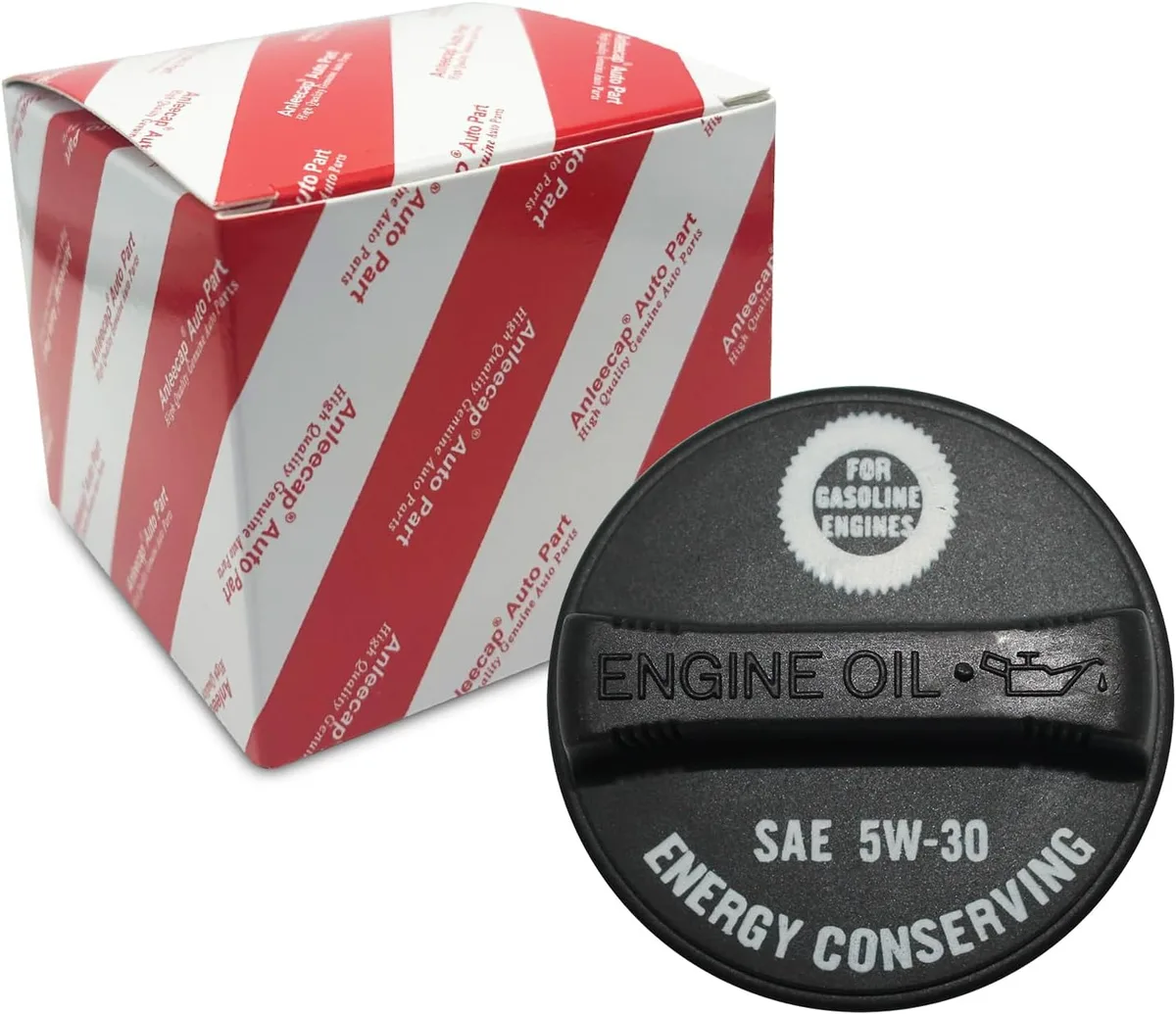
Image source: Bing (Web (fair-use with source credit))
Quick Answer
The Toyota 4Runner oil type depends on model year and engine. For 2010-2026 5th gen 1GR-FE, use 0W-20 full synthetic (API SP). For 2003-2009 4th gen, use 5W-30 synthetic blend (API SN or newer).
For 1996-2002 3rd gen, use 5W-30 conventional. For 1984-1995 first and second gen, use 10W-30 or 5W-30 with adequate zinc content. Always check your oil filler cap first.
Step 1 – Find Your 4Runner's Model Year and Engine
Before you buy a quart of oil, know exactly which 4Runner you own. The year and engine code are the two most important pieces of information.
Check the door jamb sticker. Open the driver's door and look for a white or silver sticker on the door frame. It lists the VIN, model year, tire pressures, and other specs. The model year is clearly printed.
If the sticker is faded or missing, check the VIN. The 10th character of the VIN indicates the model year. For example, "L" means 2020, "N" means 2022.
Identify the engine code. The engine code is stamped on a metal tag bolted to the front of the engine, usually near the timing chain cover. You can also find it in the owner's manual or by looking up your VIN on Toyota's official website. Here are the engines used in 4Runners:
| Generation | Years | Engine Code | Displacement | Notes |
|---|---|---|---|---|
| 1st | 1984-1989 | 22R-E | 2.4L | Fuel-injected 4-cylinder |
| 2nd | 1990-1995 | 3VZ-E | 3.0L | V6 |
| 3rd | 1996-2002 | 5VZ-FE | 3.4L | V6, very common |
| 4th | 2003-2009 | 1GR-FE (V6) / 2UZ-FE (V8) | 4.0L / 4.7L | Two engine options |
| 5th | 2010-2026 | 1GR-FE | 4.0L | V6 only |
If you can't find your engine code, use a simple rule. If your 4Runner has a V8, it's a 4th gen (2003-2009) with the 2UZ-FE. If it's a 5th gen, it's always the 1GR-FE V6.
Image source: Web (Bing) / toyota-4runner.org (Web image (fair-use with source credit))
Step 2 – Read the Oil Filler Cap and Owner's Manual
Once you know your year and engine, look at the oil filler cap. Toyota prints the recommended viscosity right on the cap. It's usually a small black or yellow plastic cap on top of the valve cover.
If it says "0W-20", use 0W-20. If it says "5W-30", use 5W-30.
What if the cap is missing or the engine was swapped? Then you need the owner's manual. If you don't have a physical copy, Toyota provides free PDFs for every model year at their official website.
Search for your year and model, download the maintenance section, and look for the oil viscosity table.
A quick rule of thumb by generation:
- 5th gen (2010-2026): 0W-20 is mandatory. No exceptions unless the manual specifically allows 5W-30 for severe duty. Check your manual.
- 4th gen V6 (2003-2009): 5W-30 is the factory fill. Some later manuals also list 0W-20 as acceptable in cold climates. The official Toyota specification calls for API SL or newer.
- 4th gen V8 (2003-2009): 5W-30 only. The 2UZ-FE engine was designed for 5W-30 and does not benefit from thinner oil.
- 3rd gen (1996-2002): 5W-30 conventional or synthetic blend. Avoid 0W-20. It's too thin and can increase oil consumption.
- 1st and 2nd gen (1984-1995): 10W-30 or 5W-30. Be careful about zinc additives. Modern "energy conserving" oils may not have enough zinc for flat-tappet camshafts.
Decision Branch A – 5th Gen (2010-Present) with 1GR-FE
If you own a 5th generation 4Runner (model years 2010 through 2026), you have the 1GR-FE V6 engine. This is the most common 4Runner on the road today. Its oil requirements are very specific.
The correct oil is 0W-20 full synthetic meeting API SP or ILSAC GF-6. Do not use 5W-30 unless you are in an extreme case described below. Here's why:
- VVT-i system: The 1GR-FE uses Variable Valve Timing with intelligence. The system relies on oil pressure to adjust timing. 0W-20 flows faster at cold start, delivering oil to the phasers quickly. Thicker oil like 5W-30 can cause a rattle on startup and may eventually damage the VVT actuators.
- Fuel economy: 0W-20 reduces parasitic drag inside the engine. Toyota's official testing shows a 2-3% improvement in fuel economy compared to 5W-30 in this engine.
- Emissions: Thinner oil helps the engine reach operating temperature faster, reducing cold-start emissions.
Image source: Bing (Web (fair-use with source credit))
Exceptions that allow 5W-30:
| Condition | Can I use 5W-30? | Notes |
|---|---|---|
| Towing heavy loads over 5,000 lb in hot weather | Yes, per Toyota severe-service guidelines | Use if you regularly tow in desert heat above 100°F |
| High mileage over 100k miles with oil consumption | Yes, but only as a temporary fix | Switch back to 0W-20 after 5,000 miles |
| Engine replacement with non-VVT-i engine | Only if the new engine spec says so | Rare, most replacement engines are still 1GR-FE |
| You live in extreme cold below -30°F | No, 0W-20 remains best | 0W-20 already handles -40°F |
If you do switch to 5W-30 for severe service, make sure it's a full synthetic that meets API SP. Switch back to 0W-20 when conditions return to normal.
Oil capacity: 6.0 quarts with filter. Use exactly 6.0 quarts, then check the dipstick and adjust. Overfilling causes foaming and can damage the PCV system.
Decision Branch B – 4th Gen (2003-2009) with 1GR-FE or 2UZ-FE
The 4th generation 4Runner came with two engine options: the 1GR-FE V6 and the 2UZ-FE V8. Each has different oil requirements.
For the V6 (1GR-FE) in 2003-2009:
The factory fill was 5W-30. Toyota later issued a service bulletin allowing 0W-20 for improved fuel economy. However, many owners report increased oil consumption with 0W-20 in these engines.
Our research shows that sticking with 5W-30 is safer for long-term reliability.
- Standard: 5W-30 synthetic blend or full synthetic (API SN or newer)
- Cold climate (below 0°F): You can use 0W-30 or even 0W-20, but monitor oil consumption
- High mileage (over 100k): Consider switching to a high-mileage 5W-30 with seal conditioners
- Capacity: 5.5 quarts with filter (V6)
For the V8 (2UZ-FE) in 2003-2009:
The 2UZ-FE is a legendary engine known for its durability. It was designed for 5W-30 and does not respond well to 0W-20. Toyota never approved 0W-20 for this engine.
Stick with 5W-30, preferably full synthetic.
| Aspect | 4th Gen V6 (1GR-FE) | 4th Gen V8 (2UZ-FE) |
|---|---|---|
| Recommended viscosity | 5W-30 (0W-20 optional) | 5W-30 only |
| Capacity (with filter) | 5.5 quarts | 6.5 quarts |
| Approves 0W-20? | Yes (but watch consumption) | No |
| Best oil type | Synthetic blend | Full synthetic |
| API rating required | SN or newer | SL or newer |
A common mistake among 4th gen owners is using 0W-20 in the V8. They hear "thinner is better for newer engines." That's false for the 2UZ-FE. The V8 benefits from the slightly thicker 5W-30, especially when towing or off-roading.
Decision Branch C – 3rd Gen (1996-2002) with 5VZ-FE
The 3rd generation 4Runner is a beloved workhorse. It uses the 5VZ-FE 3.4L V6 engine. This engine is known for going 300,000 miles with proper maintenance.
The standard oil is 5W-30 conventional or synthetic blend. Here's what you need to know:
- API rating: SH, SJ, or SL. Newer oils like SN or SP are backward compatible and safe to use.
- Capacity: 5.5 quarts with filter.
- Conventional is fine. This engine was designed before synthetic oils became common. A good 5W-30 conventional oil changed every 5,000 miles will serve you well.
- High-mileage options: If your engine has over 100,000 miles and you notice oil consumption, switch to a high-mileage 5W-30. It contains seal conditioners that help reduce leaks.
Avoid 0W-20 in this engine. The 5VZ-FE has looser tolerances than modern engines. Thin oil can slip past piston rings and valve seals, causing increased oil consumption and potential sludge issues. Stick with 5W-30.
What about 10W-30? It's acceptable in hot climates (above 90°F consistently). But 5W-30 provides better cold-start protection and is the better all-around choice.
Decision Branch D – 2nd Gen (1990-1995) and 1st Gen (1984-1989)
These older 4Runners are different animals. They use older engine designs that require special consideration when choosing oil.
For the 2nd gen (3VZ-E 3.0L V6):
- Viscosity: 10W-30 or 5W-30
- Capacity: 4.8 quarts with filter
- API rating: SF, SG, or newer (backward compatible)
- Critical: Use oil with adequate zinc (ZDDP). Modern "energy conserving" oils have reduced zinc levels to protect catalytic converters. Older engines with flat-tappet camshafts need zinc for wear protection. Look for oils labeled "high zinc" or "classic car" formulations. Brands like Valvoline VR1 and Shell Rotella T4 are popular choices among owners of this generation.
For the 1st gen (22R-E 2.4L 4-cylinder):
- Viscosity: 10W-30 or 5W-30
- Capacity: 5.1 quarts with filter
- API rating: SF, SG, or newer
- Same zinc requirement. The 22R-E has a flat-tappet design. Use oil with at least 1,200 ppm of zinc.
What happens if you use modern low-zinc oil? You risk camshaft and lifter wear. Symptoms include ticking noises, rough idle, and eventually engine failure. It's not worth the risk.
Decision Branch E – Special Conditions That Override the Manual
Your owner's manual covers normal driving conditions. But what if you live in extreme climates, tow heavy loads, or take your 4Runner off-road every weekend? These conditions change the oil recommendation.
Severe service defined. Toyota defines severe service as:
- Frequent short trips (under 5 miles) in cold weather
- Extensive idling
- Towing a trailer
- Driving on dusty or muddy roads
- Off-road use
If any of these apply to you, consider the following adjustments:
| Condition | Oil Adjustment | Explanation |
|---|---|---|
| Frequent towing over 5,000 lb | Use one viscosity grade thicker (e.g., 0W-20 to 5W-30) | Higher oil film strength under load |
| Off-road in dusty conditions | Shorten oil change interval to 3,000-4,000 miles | Contaminants enter oil more quickly |
| Extreme cold below -20°F | Stick with 0W-20 or 0W-30 | Cold flow is critical |
| High mileage over 150,000 miles | Use high-mileage formulation | Seal conditioners reduce leaks |
Important: If you switch to a thicker oil for towing, switch back to the standard viscosity for normal driving. Running 5W-30 in a 5th gen during daily commutes hurts fuel economy and may cause VVT issues over time.
Winter storage. If you store your 4Runner for winter, change the oil before storage. Old oil contains acids and moisture that can damage the engine over months of sitting.
Mistakes to Avoid (Even Experienced Owners Make Them)
These are the most common oil mistakes we see with 4Runners. Avoid them and your engine will thank you.
Using 5W-30 in a 2010+ 4Runner. This is the most common mistake. People say "I've always used 5W-30 in my Toyotas." That's fine for older models, but wrong for the 5th gen. The VVT-i system needs 0W-20.
Using 5W-30 causes startup rattle and can lead to phaser damage.
Ignoring the API rating. You can buy 0W-20 that meets API SP or 0W-20 that doesn't. Always look for the API starburst symbol on the bottle. Using oil without the right rating can void your warranty and cause sludge buildup.
Mixing synthetic and conventional. It's technically safe to do once in an emergency. But don't make it a habit. The additive packages in synthetic and conventional oils are different.
Consistent oil type gives consistent protection.
Overfilling the engine. Adding extra oil "for safety" is dangerous. Overfilling causes the crankshaft to whip the oil into foam. Foam doesn't lubricate properly.
It can also damage the PCV system and cause oil leaks. Always fill to the correct capacity and check the dipstick.
Using the wrong oil filter. Toyota uses a specific bypass valve pressure in their filters. Aftermarket filters may not match this spec. Stick with Toyota Genuine filters (part 04152-YZZA1 for 4th and 5th gen) or high-quality aftermarket brands like Wix or Purolator that explicitly list compatibility.
Decision Guide: Your Personalized Oil Choice in 3 Questions
Here's a simple flow chart to find your exact oil type. Answer three questions.
Question 1: What year and engine does your 4Runner have?
| If your 4Runner is… | Then use… |
|---|---|
| 2010-2026 (5th gen, 1GR-FE V6) | 0W-20 full synthetic, API SP |
| 2003-2009 (4th gen, 1GR-FE V6) | 5W-30 synthetic blend, API SN or newer |
| 2003-2009 (4th gen, 2UZ-FE V8) | 5W-30 full synthetic, API SL or newer |
| 1996-2002 (3rd gen, 5VZ-FE V6) | 5W-30 conventional or synthetic blend |
| 1990-1995 (2nd gen, 3VZ-E V6) | 10W-30 or 5W-30 with zinc |
| 1984-1989 (1st gen, 22R-E 4-cyl) | 10W-30 or 5W-30 with zinc |
Question 2: Do you have severe service conditions?
- Towing over 5,000 lb? Go up one viscosity grade.
- Off-road or dusty roads? Shorten interval, keep same viscosity.
- Extreme cold? Keep the standard viscosity (it's already ideal).
Question 3: Does your engine have over 75,000 miles?
- Yes? Consider high-mileage oil formulations.
- Over 150,000 miles? High-mileage oil is strongly recommended.
Pro Tips for the DIY Oil Change
Changing your own oil saves money and ensures it's done right. Here's what you need for a 4Runner.
Oil capacity by engine:
| Engine | Capacity with Filter |
|---|---|
| 1GR-FE (5th gen) | 6.0 quarts |
| 1GR-FE (4th gen) | 5.5 quarts |
| 2UZ-FE (4th gen) | 6.5 quarts |
| 5VZ-FE (3rd gen) | 5.5 quarts |
| 3VZ-E (2nd gen) | 4.8 quarts |
| 22R-E (1st gen) | 5.1 quarts |
Oil filter part numbers:
- 4th and 5th gen: Toyota 04152-YZZA1 (or YZZA6 for some years)
- 3rd gen: Toyota 04152-50010
- 2nd and 1st gen: Toyota 04152-38010
Torque specs:
- Drain plug: 29 ft-lb. Do not overtighten, the oil pan threads strip easily.
- Filter housing (if equipped): 18 ft-lb.
How to reset the maintenance light (5th gen):
- Turn the ignition to ON (do not start the engine).
- Set the odometer to trip A.
- Turn the ignition OFF.
- Hold the trip reset button while turning the ignition to ON.
- Continue holding until the maintenance light turns off.

Image source: Web (Bing) / parts4hybrid.co.uk (Web image (fair-use with source credit))
When to Abandon the Manual and Ask a Mechanic
Sometimes the standard advice doesn't apply. Here are situations where you should get professional help.
Engine swaps. If your 4Runner has a non-original engine, the oil spec changes. A 5th gen with a 2UZ-FE swap needs 5W-30, not 0W-20. A 3rd gen with a 1GR-FE swap needs 0W-20.
Know what engine you have.
Rebuilt engines. After a rebuild, some builders recommend a specific break-in oil (often a conventional 10W-30 with high zinc). Follow the builder's instructions. Do not switch to synthetic until they say it's safe, usually after 3,000-5,000 miles.
Vehicles with unknown history. If you just bought a used 4Runner and don't know what oil was used, start fresh. Change the oil and filter immediately. Use the standard oil for your year and engine.
This gives you a baseline.
Symptoms of wrong oil. If you notice ticking noises on startup, increased oil consumption, or a check engine light related to VVT, you might have the wrong oil. Switch to the correct viscosity and see if symptoms improve. If not, see a mechanic.
Frequently Asked Questions
Can I use 5W-30 instead of 0W-20 in my 5th gen 4Runner?
Not recommended. The 1GR-FE engine was designed for 0W-20. Using 5W-30 can cause VVT-i rattle, reduced fuel economy, and potential phaser damage.
Only use 5W-30 for severe towing in extreme heat, and switch back afterward.
What happens if I put the wrong oil in my 4Runner?
Short-term effects include engine noise, reduced fuel economy, and potential oil leaks. Long-term effects include sludge buildup, VVT actuator damage, and accelerated engine wear. If you used the wrong oil, drain it and refill with the correct viscosity.
How often should I change the oil in my 4Runner?
Toyota recommends every 5,000 miles for conventional oil and every 7,500-10,000 miles for synthetic under normal conditions. For severe service (towing, off-road, short trips), change every 3,000-4,000 miles regardless of oil type.
Does my 4Runner need synthetic oil?
Only 5th gen 4Runners (2010+) require full synthetic. 4th and 3rd gen 4Runners run fine on conventional or synthetic blend. Synthetic offers better protection and longer intervals, but it's optional for older models.
What oil filter should I use on my 4Runner?
Toyota Genuine filters are the safest choice. For 4th and 5th gen, use part 04152-YZZA1. For 3rd gen, use 04152-50010.
High-quality aftermarket brands like Wix and Purolator are acceptable if they list exact compatibility with your engine.
Can I switch from conventional to synthetic oil?
Yes. Switching is safe and beneficial. Synthetic oil offers better protection and longer intervals.
No special procedure is needed, but make sure to use the correct viscosity grade for your specific 4Runner generation.