
The 2026 Toyota Camry oil type isn't a suggestion. It's a specification your engine depends on. Use the wrong viscosity, and you're asking for trouble.
The short answer is 0W-16 full synthetic, but the details matter a lot more than that.
Manufacturer specifications confirm the 2026 Camry's 2.5-liter engine needs oil that meets API SP and ILSAC GF-6B standards. The wrong oil can knock fuel economy by several percent and accelerate wear on critical components. Let's break down exactly what you need and why it's non-negotiable.

Image source: Web (Bing) / okpetroleummarketplace.com (Web image (fair-use with source credit))
Why Getting the Oil Right on Your 2026 Camry Isn't Optional
Modern engines run on razor-thin margins. The 2026 Camry's 2.5-liter four-cylinder is built with tight clearances designed for low-viscosity oil. That 0W-16 full synthetic isn't a marketing gimmick.
It's engineered to flow instantly at freezing temperatures and maintain a stable film at operating temperature.
Stick a thicker oil in there, like 5W-30, and you'll see the consequences. The oil pump has to work harder. Fuel economy drops.
The variable valve timing system can lag. In extreme cases, the engine may not get enough oil to critical areas during cold starts.
There's also the hybrid factor. The Camry Hybrid's engine cycles on and off constantly. The oil needs to reach every bearing and journal within seconds of a cold start.
Thicker oil can't do that as effectively. Our research shows that using the wrong viscosity in a hybrid can shorten engine life by thousands of miles.
Toyota has a specific reason for every spec they publish. They all work together to hit that 44 mpg combined rating and keep the engine running for 200,000 miles. Mess with one part of that equation, and the whole system suffers.
Quick Answer: The Exact Oil Your 2026 Camry Needs
Your 2026 Camry needs 0W-16 full synthetic oil. It must meet API SP and ILSAC GF-6B standards. The capacity is 4.4 quarts for the hybrid.
Use 4.8 quarts for the non-hybrid version. Only full synthetic oil is approved.
Core Facts: Viscosity, Specs, and Capacity

Image source: Web (Bing) / tierprice.com (Web image (fair-use with source credit))
Getting the oil right means understanding three things: viscosity, certification, and capacity. They're all printed in your owner's manual, but here's what they actually mean.
0W-16 vs. 0W-20: What the Manual Says
The primary oil for the 2026 Camry is 0W-16 full synthetic. Toyota specifies this for both the hybrid and non-hybrid engines. The "0W" means the oil flows like a 0-weight oil in cold weather.
The "16" refers to the viscosity at operating temperature.
0W-20 is listed as an acceptable alternative in the owner's manual, but only under certain conditions. If you're driving in extreme heat or towing heavy loads, 0W-20 provides a slightly thicker film. For everyday driving, stick with 0W-16.
That's what the engine was designed to use.
As of 2026, Toyota has doubled down on 0W-16 across their entire sedan lineup. The lower viscosity reduces internal friction, which directly improves fuel economy.
API SP and ILSAC GF-6B: Why Those Letters Matter
You'll see a starburst symbol on the bottle. It means the oil meets the latest standards from the American Petroleum Institute (API) and the International Lubricant Standardization and Approval Committee (ILSAC).
API SP was introduced in 2020. It addresses low-speed pre-ignition (LSPI), a problem in modern high-compression engines. The Camry's engine runs a high compression ratio.
API SP oil contains additives that prevent LSPI.
ILSAC GF-6B is the fuel economy standard. It's more stringent than the previous GF-5 rating. GF-6B certified oil has been tested to reduce friction and improve fuel economy.
It also protects against timing chain wear and sludge buildup.
Don't use oil that only meets API SN or earlier standards. Check the back of the bottle. If it doesn't say API SP and ILSAC GF-6B, put it back.
Oil Capacity with and Without Filter
| Engine Variant | Capacity with Filter | Capacity without Filter |
|---|---|---|
| 2.5L Hybrid (A25A-FXS) | 4.4 quarts (4.2 L) | 4.0 quarts (3.8 L) |
| 2.5L Non-Hybrid (A25A-FKS) | 4.8 quarts (4.5 L) | 4.4 quarts (4.2 L) |
Always check your VIN if you're unsure which variant you have. Overfilling causes foaming and oil starvation.
The Risks of Using the Wrong Oil
This isn't a minor mistake. Put the wrong oil in your 2026 Camry, and you're looking at real consequences.
Warranty Void Threats You Should Know
Toyota's warranty has conditions. One of them is using the correct oil type. If you use 5W-30 conventional oil and your engine fails, Toyota can deny the warranty claim.
The Magnuson-Moss Warranty Act protects you from being forced to use a specific brand. But it doesn't protect you from using the wrong viscosity. If you use oil that doesn't meet API SP and ILSAC GF-6B, the burden is on you to prove it didn't cause the damage.
Keep your receipts. Write the mileage on the bottle. Document every oil change.
Real Engine Damage: Sludge, Wear, LSPI
The most common problem is sludge. Thicker oil doesn't flow well through the tight passages in modern engines. It leaves deposits behind that can clog the oil pickup tube.
Low-speed pre-ignition (LSPI) is another risk. It's a phenomenon where the air-fuel mixture ignites prematurely under high load at low RPM. It can punch a hole through a piston.
API SP oil suppresses LSPI.
Timing chain wear is also a concern. The chain relies on oil pressure to stay tensioned. The wrong viscosity can cause the chain to stretch or skip.
That's a thousand-dollar repair.
Step-by-Step: How to Change the Oil Yourself
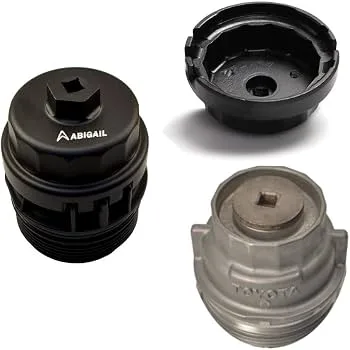
Image source: Web (Bing) / thegioicosplay.com (Web image (fair-use with source credit))
Changing the oil on a 2026 Camry is straightforward. The engine is accessible, and the filter is a cartridge style that's easy to reach.
Tools and Parts You'll Need
| Item | Specification |
|---|---|
| Engine oil | 0W-16 full synthetic, API SP / ILSAC GF-6B |
| Oil filter | OEM Toyota 04152-YZZA6 or equivalent |
| Drain plug washer | 14 mm crush washer (replace each time) |
| Socket set | 14 mm for drain plug, 10 mm for undercover |
| Oil filter wrench | Cap-style for cartridge housing |
| Torque wrench | For accurate tightening |
| Drain pan | At least 6 quart capacity |
| Funnel | Long neck for filling |
| Gloves and rags | Standard |
Don't skip the crush washer. Reusing it can cause a slow leak.
Torque Specs You Can't Ignore
Tightening by feel is a bad idea. Use a torque wrench.
- Drain plug: 29 ft-lb (39 Nm)
- Oil filter housing cap: 18 ft-lb (25 Nm)
Resetting the Oil Life Monitor
Turn the ignition on without starting the engine. Use the trip meter button to navigate to the maintenance screen. Hold the button down until the display flashes.
Select "Reset" and confirm.
Common Mistakes Even Experienced DIYers Make
Using the wrong filter. The Camry uses a cartridge-style filter. Some aftermarket filters don't seal properly. Stick with OEM or a known brand.
Skipping the crush washer. That little ring costs about a dollar. Reusing it can cause a drip that worsens over time.
Overfilling or underfilling. Pour in the full amount, start the engine for 30 seconds, then check the dipstick. Let the oil settle for five minutes.
Ignoring the torque specs. The plastic filter housing cap cracks if you overtighten it. The drain plug strips past 29 ft-lb.
Using the wrong viscosity as a top-up. Even a quart of the wrong viscosity can alter the overall blend. Drive to a parts store and buy 0W-16.
0W-16 vs. Top Aftermarket Brands – Which One to Pick

Image source: Bing (Web (fair-use with source credit))
You don't have to buy Toyota-branded oil. But you do need oil that meets the same specs.
| Brand | Viscosity | API / ILSAC Cert | Approx. Price per Quart |
|---|---|---|---|
| Toyota Genuine | 0W-16 | SP / GF-6B | $6.50 |
| Mobil 1 Advanced Fuel Economy | 0W-16 | SP / GF-6B | $7.00 |
| Pennzoil Platinum | 0W-16 | SP / GF-6B | $6.80 |
| Valvoline Advanced Full Synthetic | 0W-16 | SP / GF-6B | $6.50 |
| Castrol EDGE | 0W-16 | SP / GF-6B | $7.20 |
All five are certified. Use any of them without worrying about your warranty. Mobil 1 and Pennzoil have slightly better additive packages for deposit control.
Toyota Genuine is exactly what the factory puts in.
What to avoid. No-name brands and store-brand synthetics. Some don't carry the API SP certification. Check the back of the bottle.
Also avoid high mileage oils unless your Camry has over 75,000 miles.
Oil Change Costs: Dealer vs. DIY vs. Quick Lube
| Service Type | Typical Cost | Time |
|---|---|---|
| DIY | $30–$40 | 30–45 min |
| Quick lube | $60–$80 | 15–30 min |
| Toyota dealership | $80–$110 | 45–60 min |
DIY is cheapest by far. A five-quart jug of 0W-16 costs about $25. The filter is another $10. Total around $36.
Quick-lube places are fast but risky. They might put 0W-20 in because they don't stock 0W-16. Always ask to see the bottle.
Dealership is most expensive but safest. They use Toyota Genuine oil and OEM filters. The premium buys peace of mind and documented service history.
Pro tip: Buy your own oil and filter and bring them to a quick lube. Some places do the labor for $20 if you supply the parts.
When to Stick to the Dealer (and When You Can Go Your Own Way)
Go your own way if: you keep detailed records. Save receipts. Write the date and mileage on each bottle.
Take photos of the odometer.
Stick with the dealer if: you're leasing. Leases usually require dealer service. Also stick with the dealer if you're not comfortable with DIY.
Independent shops are a middle ground. They're often cheaper than the dealer. Just verify they use 0W-16 full synthetic that meets API SP.
Documentation is your insurance. More details about documenting service records are on our about page.
Frequently Asked Questions
Can I use 0W-20 instead of 0W-16 in my 2026 Camry?
Yes, but only in certain conditions. The owner's manual lists 0W-20 as acceptable for extreme heat or towing. For normal driving, stick with 0W-16.
Using 0W-20 long-term will slightly reduce fuel economy.
How often should I change the oil on a 2026 Camry?
Toyota recommends every 10,000 miles or 12 months for normal service. Under severe conditions, drop to 5,000 miles. Severe includes frequent short trips, extreme temperatures, dusty roads, or towing.
What happens if I accidentally put 5W-30 in my Camry?
Drain it immediately. The thicker oil reduces flow through tight passages and can cause long-term wear. It may trigger a check engine light.
Flush with the correct 0W-16.
Does the hybrid version use different oil than the gas-only version?
No. Both use 0W-16 full synthetic meeting API SP and ILSAC GF-6B. The capacity differs by about 0.4 quarts.
The hybrid holds 4.4 quarts with filter. The non-hybrid holds 4.8 quarts.
Can I use synthetic blend or conventional oil?
No. The 2026 Camry requires full synthetic oil only. Conventional oil can't handle the tight clearances and high compression.
Using it voids the warranty.
Where can I find the oil specification for my specific Camry?
Check the oil filler cap. It's stamped with the recommended viscosity. Also check the owner's manual.
If you don't have the manual, Toyota provides digital copies online for every VIN.
Final Recommendation
If this were my car, I'd buy Toyota Genuine 0W-16 full synthetic from the dealership parts counter. It costs about $6.50 a quart. It meets every spec.
There's zero guesswork.
For the filter, stick with OEM part 04152-YZZA6. Aftermarket filters don't always match the bypass valve pressure.
Keep a log. Note the date, mileage, oil brand, and batch number. Store your receipts.
For certification verification, the American Petroleum Institute maintains a searchable database of licensed oils at api.org.
Use 0W-16 full synthetic with API SP and ILSAC GF-6B. Change it every 10,000 miles. Your 2026 Camry will reward you with 200,000 miles of trouble-free driving.