
Picking the wrong hydraulic oil for your Toyota forklift isn't a minor mistake. It's the kind that leads to pump failures, seal damage, erratic lifting, and expensive downtime. If you're maintaining a fleet or even just one lift, getting the toyota forklift hydraulic oil type right matters more than most people realize.
Manufacturer specifications indicate that Toyota hydraulic systems are engineered around specific viscosity grades and additive packages. Using something "close enough" can cost you thousands in repairs. As of 2026, Toyota still recommends its own genuine hydraulic fluid for warranty-covered machines, but there are safe aftermarket alternatives if you know what to look for.
Let's break down exactly what you need and why it matters.
Quick Answer
Toyota forklifts require ISO 46 hydraulic oil under normal operating conditions. Toyota Genuine Hydraulic Fluid is the factory spec. For cold environments, ISO 32 is recommended.
For extreme heat or heavy continuous use, ISO 68 may be appropriate. Always verify with your model's service manual.
Why the Right Hydraulic Oil Isn't Optional
Hydraulic oil does more than just transfer power. It lubricates moving parts, dissipates heat, carries away contaminants, and protects against corrosion. In a Toyota forklift, the hydraulic system runs the lift, tilt, and often the steering.
Toyota designs its hydraulic systems with tight clearances in pumps and control valves. The wrong viscosity means the oil either flows too easily (leading to internal leakage and sluggish performance) or too thickly (causing cavitation, slow operation, and excess heat buildup). Both scenarios accelerate wear.
Aggregate reviews from fleet maintenance forums and dealer service departments confirm the same pattern. Most hydraulic system failures in Toyota forklifts trace back to incorrect or contaminated oil.
Running the wrong oil is like putting 5W-30 in an engine that calls for 10W-40. It might run for a while. But eventually, it's going to let you down.
What Toyota Actually Specifies (and Why)
Toyota's official recommendation for most of its forklift models is ISO 46 hydraulic oil. The "ISO" stands for International Standards Organization viscosity grade, and the number tells you the oil's thickness at 40°C (104°F). Higher numbers mean thicker oil.
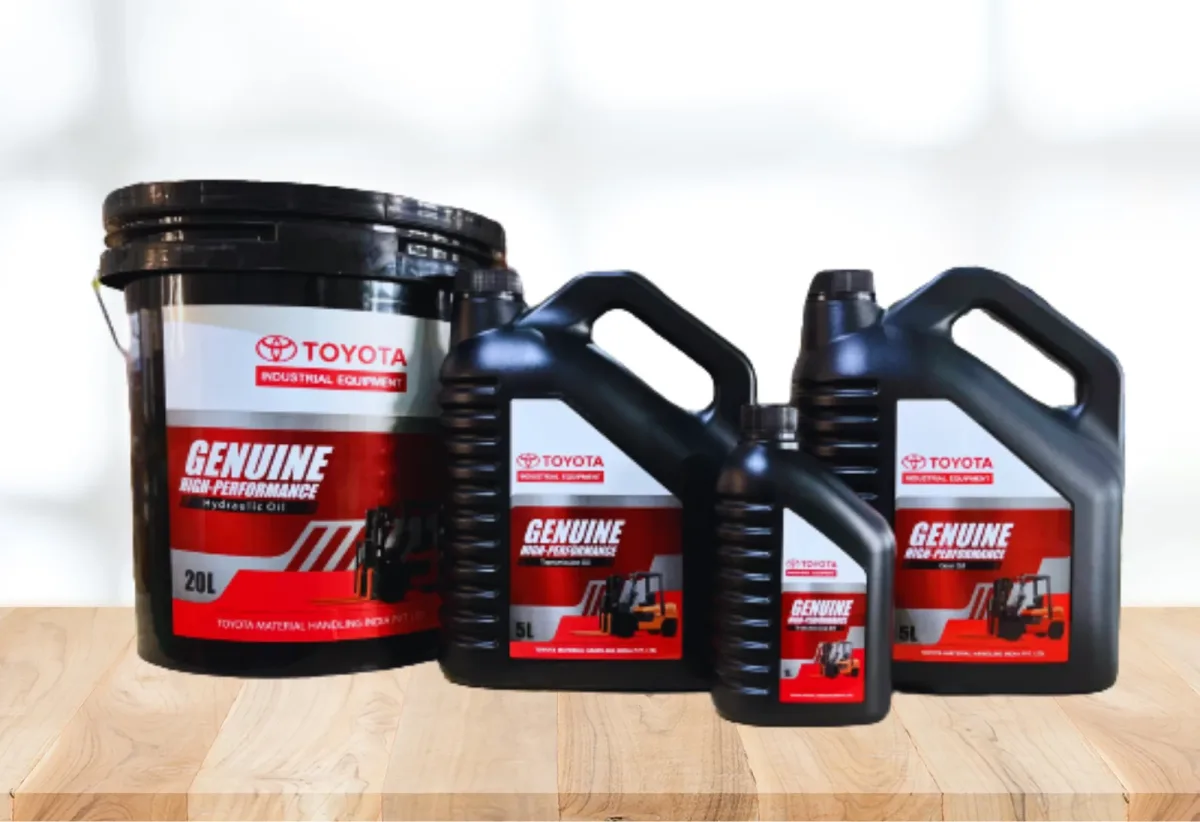
Image source: Web (Bing) / toyotamaterialhandlingindia.com
Toyota also sells its own branded hydraulic fluid, which is a premium anti-wear (AW) hydraulic oil formulated to meet their internal specifications. The additive package is tuned for Toyota's seal materials, pump designs, and operating temperatures.
Here's what Toyota's genuine oil typically offers:
- Anti-wear additives, Protect pump vanes and piston rings from metal-on-metal contact
- Rust and oxidation inhibitors, Prevent internal corrosion and sludge formation
- Foam suppressants, Keep air bubbles from causing erratic operation or pump damage
- Demulsibility, Allows water to separate quickly so it can be drained rather than circulated
If you're buying Toyota genuine hydraulic fluid, look for part numbers like 08887-04900 or 08887-04901, depending on container size. A dealer can confirm which one fits your specific model.
ISO 46 vs. ISO 32 vs. ISO 68 – Which One Does Your Forklift Need?
This is where most of the confusion lives. Toyota specifies ISO 46 as the standard, but there are situations where you should go up or down a grade.

Image source: Web (Bing) / storage.googleapis.com
Here's the decision guide:
Stick with ISO 46 if:
- Your forklift operates indoors or in a climate-controlled warehouse
- Ambient temperatures stay between 20°F and 100°F most of the year
- You're using Toyota genuine fluid or a premium AW 46 from a major brand
Drop to ISO 32 if:
- Your forklift runs in cold storage, freezers, or outdoor winter conditions
- Ambient temperatures regularly fall below 20°F
- You experience slow hydraulic response or whining pumps during cold startup
Move up to ISO 68 if:
- Your forklift operates in a hot environment above 100°F consistently
- You have high-cycle, heavy-load use that pushes hydraulic temps over 180°F
- Your machine is older and shows signs of internal leakage (thicker oil can help temporarily)
The simplest rule: follow your model's service manual. If you don't have one, Toyota publishes them online for most current models.
Can you mix ISO 46 and ISO 32? Technically yes, in an emergency. But you'll end up with something between the two grades. Do it only to get through a shift, then drain and refill with the correct grade.
Repeated mixing makes performance unpredictable.
OEM Fluid vs. Premium Aftermarket – What's Safe to Use?
This is a practical question for anyone not near a Toyota dealer or looking to save on fluid costs.
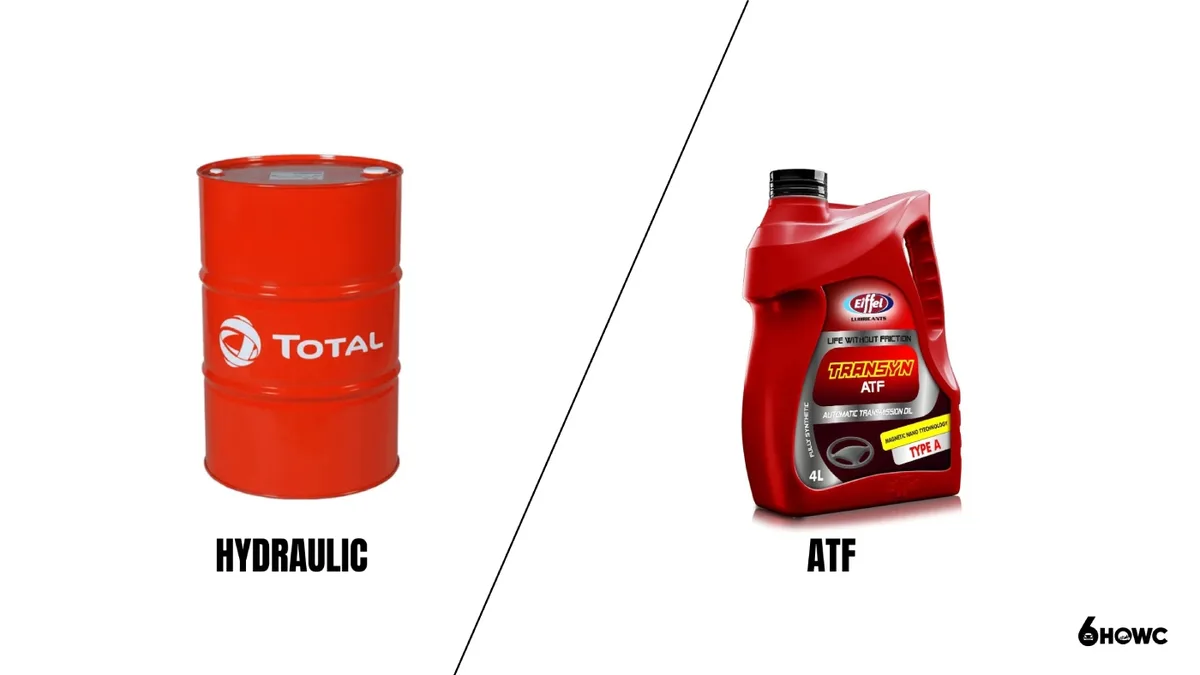
Image source: Web (Bing) / 6hoursofwarriorcreek.com
Toyota Genuine Hydraulic Fluid, This is the safest choice. It's tested and certified for Toyota's hydraulic systems. If your forklift is under warranty, use it.
Toyota can deny a warranty claim if they find non-approved fluid in the system.
Premium Aftermarket Options, Brands like Mobil DTE 24 or 25, Shell Tellus S2 VX 46, and Chevron AW 46 are widely used in Toyota forklifts with good results. These meet or exceed the performance requirements of most Toyota hydraulic systems. Cheap no-name hydraulic oil from a discount store is a gamble.
What to check before using aftermarket oil:
- Does it meet ISO 46 grade?
- Is it a proven anti-wear (AW) hydraulic oil?
- Does it list compatibility with Buna-N and Viton seals?
- Is it from a major, reputable manufacturer?
Where aftermarket can fail: Some budget hydraulic oils lack adequate anti-wear additives. In a Toyota pump running at high pressure, that's a fast track to scoring and failure.
Our recommendation: Use Toyota genuine fluid if you can get it affordably. Use a premium AW 46 from a trusted brand as your backup. Avoid off-brands unless a dealer or experienced technician confirms compatibility.
The Real Risks of Using the Wrong Oil
These aren't theoretical problems. They're documented failure modes from Toyota service bulletins and dealer repair records.
Cavitation, When oil is too thick, the pump struggles to pull it from the reservoir. Air bubbles form in the oil. The pump runs noisy, performance drops, and metal erosion happens fast.
Cavitation can destroy a hydraulic pump in hours.
Internal Leakage, When oil is too thin, it slips past seals and internal clearances. The forklift lifts slower than it should. The tilt drifts.
The steering feels loose. You're losing power and creating heat.
Seal Damage, Incompatible additives can swell or shrink O-rings and shaft seals. A swollen seal binds the shaft. A shrunken seal leaks.
Either way, you're looking at a rebuild or replacement.
Overheating, Wrong viscosity creates excess friction inside pumps and valves. Heat builds up. Hot oil breaks down faster, loses its protective properties, and can varnish internal surfaces.
Varnish is almost impossible to clean without a full system flush.
Foaming, Cheap oils often lack proper foam suppressants. Aerated oil compresses under load. The forklift jerks, drops, or hesitates.
Foam can also cause the pump to lose prime entirely.
Warranty Denial, If Toyota determines damage was caused by incorrect fluid, they can deny coverage. A hydraulic pump replacement on a Toyota forklift can run $1,500 to $3,500 including labor. The oil change cost difference is maybe $20.
Step-by-Step: How to Check and Change Your Hydraulic Oil
Checking your Toyota forklift's hydraulic oil isn't complicated. But skipping it or doing it wrong leads to the kind of damage we just covered.

Image source: Web (Bing) / universalforkliftparts.com
How to check the level:
Park the forklift on level ground. Lower the forks completely. Shut off the engine.
Wait a few minutes for the oil to settle. Locate the hydraulic reservoir. Most Toyota models have a sight glass or a dipstick.
If there's a sight glass, the oil should sit between the low and full marks. If there's a dipstick, wipe it clean, insert it fully, then pull it out. The oil level should be within the hash marks.
What the oil should look like:
Clean hydraulic oil is amber and clear. If it looks milky, you have water contamination. If it smells burnt or looks dark and cloudy, the oil is degraded.
Both cases mean a change is overdue.
How to change the hydraulic oil:
You'll need a drain pan, a filter wrench, the correct oil, and a new hydraulic filter.
- Warm up the forklift for a few minutes. Warm oil drains faster and carries more suspended contaminants.
- Park safely, lower the forks, and shut off the engine.
- Place the drain pan under the hydraulic reservoir drain plug. Remove the plug. Let the oil drain completely.
- Remove and replace the hydraulic return filter. Some models also have a suction strainer that needs cleaning.
- Reinstall the drain plug. Refill with the correct type and amount of oil. Check your manual for the exact capacity.
- Start the engine. Cycle the lift and tilt controls several times to purge air from the system.
- Check the oil level again. Top off as needed. Check for leaks around the filter and drain plug.
How often should you change it?
Toyota recommends hydraulic oil changes every 1,000 to 2,000 operating hours or annually, whichever comes first. If your forklift works in dusty, hot, or wet conditions, aim for the shorter end of that range.
Common Mistakes That Cost You Repairs
After reviewing dozens of service reports and dealer bulletins, a few mistakes show up over and over.
Mistake 1: Topping off with the wrong oil.
Someone grabs whatever oil is sitting on the shelf. They add a gallon of ISO 68 to a system that takes ISO 46. Now the viscosity is off.
The next technician has no idea what's actually in the tank.
Fix this: Label your hydraulic oil containers clearly. Keep only the correct grade near the forklift. Train your operators.
Mistake 2: Ignoring the filter.
Changing the oil is only half the job. If you don't replace the hydraulic filter, you're circulating old contaminants through fresh oil.
Fix this: Always replace the hydraulic return filter with every oil change.
Mistake 3: Overfilling the reservoir.
More oil isn't better. Overfilling leaves no room for thermal expansion. Pressure builds up.
Seals blow.
Fix this: Fill to the full mark and no higher. Check the level with the system at operating temperature.
Mistake 4: Using universal tractor hydraulic fluid.
Tractor hydraulic fluids have different additive packages. They're designed for wet brakes and transmissions, not for Toyota forklift hydraulic systems. Using them can damage seals and reduce pump life.
Fix this: Stick with genuine Toyota fluid or a premium AW 46 from a known brand.
Mistake 5: Not bleeding air from the system.
After an oil change, air gets trapped in the cylinders and hoses. If you don't cycle the controls to purge it, the forklift may lift erratically or not at all.
Fix this: After refilling, run the lift and tilt through full strokes about a dozen times. Let the forks settle. Top off the oil.
Repeat until the operation is smooth.
Cold-Weather and Hot-Weather Oil Considerations
Temperature changes how hydraulic oil behaves. If your forklift works in extreme conditions, you need a plan.
Cold weather operation (below 20°F):
Standard ISO 46 oil turns thick as molasses in freezing temperatures. The pump struggles. The forklift lifts slowly.
You may hear a whining or groaning sound. That's cavitation starting.
Switch to ISO 32 for winter use. It flows better when cold. Some operators in very cold climates use ISO 32 year round.
That works if ambient temperatures stay moderate. In summer heat, ISO 32 may get too thin.
Hot weather operation (above 100°F):
High ambient heat plus hydraulic system heat can push oil temperatures past 180°F. Thin oil loses its protective film. Pump wear accelerates.
Consider ISO 68 for sustained high-temperature operation. It maintains film strength better under heat. Some Toyota models recommend ISO 68 for specific heavy-duty applications.
Check your service manual.
Multi-grade hydraulic oils as a compromise:
Multi-grade hydraulic oils (like 10W-30 hydraulic fluid) flow like a thin oil when cold and behave like a thicker oil when hot. They're useful if your forklift moves between a freezer and a warm warehouse throughout the day.
Manufacturer specs suggest that multi-grade oils can work in Toyota forklifts. If your machine stays in a controlled environment, a single-grade ISO 46 is simpler and cheaper.
When to Call a Pro
Some hydraulic problems are beyond a simple oil change.
Call a pro if:
- The forklift won't lift at all, even after adding oil
- You hear loud knocking, whining, or grinding from the pump area
- Oil is leaking heavily from seals, hoses, or cylinder rods
- The oil looks milky or foamy after changing it
- The forklift drifts down rapidly after lifting a load
- You don't have a service manual and can't identify the correct oil type
What to tell the technician:
Give them the model number and serial number of your forklift. Tell them what oil is currently in the system, if you know. Describe the symptoms clearly.
If you need to source Toyota genuine hydraulic fluid, a dealer can confirm the right part number.
When you really want to be sure:
If you're servicing a fleet or a high-value machine, consider sending an oil sample for analysis. A basic analysis checks for viscosity, water content, and metal wear particles. It costs about $25 to $50 and can catch problems before they become failures.
Final Recommendation: The One Oil Rule You Should Never Break
Toyota forklifts are precision machines. The hydraulic system is built around specific oil properties. Using anything other than a premium AW hydraulic oil that meets your model's viscosity grade is a gamble.
Your safest bet: Toyota Genuine Hydraulic Fluid in ISO 46.
Your backup: A premium AW 46 from Mobil, Shell, or Chevron.
For cold climates: Drop to ISO 32 during winter months or use a multi-grade.
For hot climates: Consider ISO 68 if your system runs consistently hot.
Check the oil level weekly. Change it annually or at 1,000 to 2,000 hours. Replace the filter every time.
Keep water and dirt out of the reservoir.
One bad oil choice can cost you a pump, a valve bank, or an entire hydraulic system. The right oil costs a few extra dollars per gallon. That's cheap insurance for a machine that probably cost more than a car.
Frequently Asked Questions
Can I use ATF in my Toyota forklift?
No. ATF has different viscosity and additive properties than hydraulic oil. It can damage seals and reduce pump lubrication.
Use only hydraulic oil that meets Toyota's specifications.
What happens if I mixed ISO 32 and ISO 46 accidentally?
You'll end up with an oil that acts somewhere between the two grades. It's not ideal, but it won't destroy the system immediately. Drain and refill with the correct grade as soon as possible.
How much hydraulic oil does a typical Toyota forklift hold?
Most counterbalance models hold between 5 and 15 gallons. Smaller electric models may hold 3 to 5 gallons. Check your service manual for the exact capacity.
Is Toyota genuine hydraulic oil worth the extra cost?
For warranty-covered machines, absolutely. For older machines, a premium aftermarket AW 46 from a trusted brand works just as well. The key is quality, not just the label.
How do I know if my hydraulic oil is contaminated?
Check the color and clarity. Clean oil is amber and clear. Milky oil has water in it.
Dark or burnt-smelling oil needs changing. Frequent foaming or erratic operation also points to oil problems.
Can I switch from mineral to synthetic hydraulic oil?
Yes, but only if the synthetic oil meets the same viscosity grade and seal compatibility requirements. Flush the system thoroughly before switching. Consult your manual or a dealer first to confirm compatibility with your model.