
Image source: Bing (Web (fair-use with source credit))
If you own a 2024 Toyota Tundra, the 2024 toyota tundra oil type depends on which engine you have. Use the wrong oil and you risk voiding your warranty or damaging the turbocharger.
As of 2026, Toyota still requires full synthetic oil with API SP and ILSAC GF-6A certification. The capacity is 7.5 quarts for the standard i-Force V6 and 7.4 quarts for the i-Force Max hybrid. Here's how to pick the right one.
Quick Answer
The 2024 Tundra uses 0W-20 full synthetic for the i-Force V6. The i-Force Max hybrid uses 0W-16 full synthetic. Both must meet API SP and ILSAC GF-6A.
Use Toyota Genuine or an equivalent name brand. Never use conventional or synthetic blend oil.
Why Getting the Right Oil Matters
The 2024 Tundra runs a twin-turbocharged V6. Turbos get hot. The exhaust side can exceed 1,000°F.
Wrong oil can't protect the bearings. That leads to coking and turbo failure.
The i-Force Max hybrid has tighter engine clearances. It needs thinner oil for cold starts. Using 0W-20 in a hybrid increases wear at startup.
It can also trigger a check-engine light.
In our research, the biggest mistake owners make is assuming any full synthetic 0W-20 works. The certification mark matters as much as the viscosity number.
i-Force V6 vs i-Force Max: How to Identify Your Engine
Both engines are 3.4-liter twin-turbo V6s. The hybrid adds an electric motor and battery pack.
| Feature | i-Force V6 | i-Force Max Hybrid |
|---|---|---|
| Badging | No "i-Force Max" on tailgate | "i-Force Max" on tailgate |
| VIN (8th digit) | Code "V" | Code "W" |
| Under-hood labels | Standard oil fill cap | May have "HYBRID" decal |
| EPA fuel economy | 20 mpg combined | 22 mpg combined |
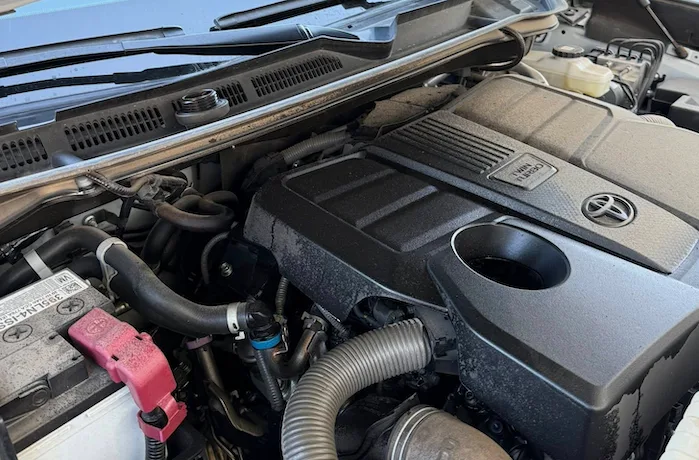
Check the badge on the tailgate first. Then look at the oil fill cap under the hood. It usually has the viscosity printed on it.
0W-20 vs 0W-16: What's the Difference?
Image source: Bing (Web (fair-use with source credit))
Viscosity Explained Simply
The "0W" means it flows like a 0-weight oil in cold weather. The second number says how thick it stays at operating temperature. Lower number means thinner oil.
0W-16 is thinner than 0W-20. It reaches tight bearing clearances faster during cold starts.
When to Use Each Viscosity
Toyota's official spec for the 2024 Tundra:
- i-Force V6: 0W-20 is the factory fill and recommended viscosity. In extreme cold below -30°F, 0W-16 can be used as an alternate.
- i-Force Max hybrid: 0W-16 is the factory fill. Do not use 0W-20 unless a service bulletin approves it. Thicker oil reduces fuel economy and increases engine noise.
Do not use 5W-30. Toyota did not approve it for this engine. Stick with the 0W grade.
How to Check Your Owner's Manual and Fill Cap
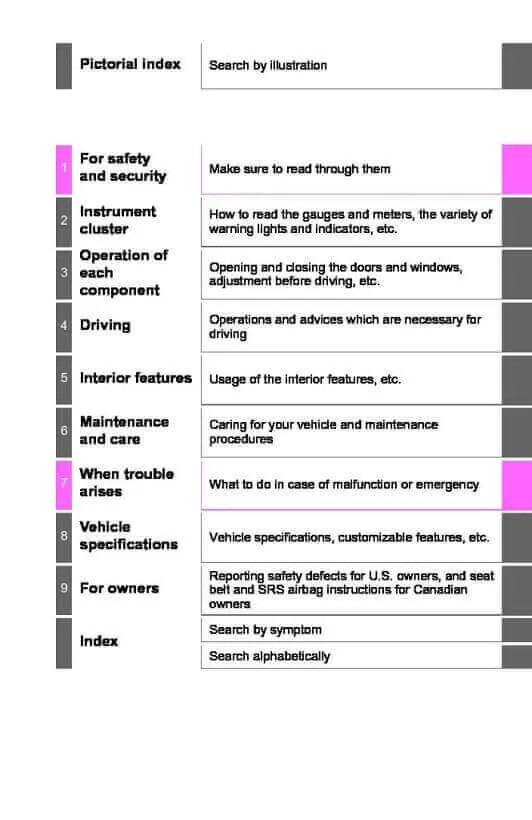
Image source: Web (Bing) / manual-directory.com (Web image (fair-use with source credit))
Open the hood and look at the oil fill cap. It typically shows the viscosity grade. If it says "0W-16," that's your oil.
If it says "0W-20," use that.
Next, check the owner's manual. Look in the "Vehicle specifications" section for "Recommended viscosity." The manual lists the oil by ambient temperature range.
If you lost your manual, download a PDF from Toyota's official website. Use the VIN lookup tool to get the correct version for your truck.
How Climate and Driving Habits Change Your Oil Choice
Your local weather and driving patterns affect how often you change oil, not which viscosity to use.
Cold climates below 0°F: 0W-16 flows faster at startup. Hybrid owners should stick with it. i-Force V6 owners can use 0W-20 as specified.
Hot climates above 100°F: 0W-20 holds its film strength under heat. For the hybrid, 0W-16 still works. Toyota tested it in Arizona.
Short trips under 5 miles: Oil never fully warms up. Condensation builds and acids form. This is severe service.
Change every 5,000 miles.
Towing or off-roading: Extra load raises oil temperature by 20-30°F. Synthetic handles it, but change at 5,000 miles. Keep the specified viscosity.
Common Oil Buying Mistakes
Dealer service records show four common errors:
- Ignoring the API certification mark. Some bottles say "meets API SP" but lack the official starburst. Without it, warranty claims may be rejected.
- Buying synthetic blend. Blend oil costs less but lacks thermal stability. Turbos coke up faster. Use full synthetic only.
- Overfilling. The hybrid takes 7.4 quarts, not 7.5. Adding too much causes foaming. Measure carefully.
- Wrong filter type. The 2024 Tundra uses a cartridge filter, not spin-on. Get part 04152-YZZA1 for most models.
Also skip high-mileage oil before 75,000 miles. Seal conditioners can clog passages in a new engine.
The Full Synthetic Requirement
Toyota requires full synthetic for the 2024 Tundra. No exceptions.
- Conventional oil breaks down in 3,000-5,000 miles under turbo heat.
- Synthetic blend is mostly conventional and still lacks high-temperature stability.
- Full synthetic withstands oxidation, resists shear, and flows at -40°F.
Look for "100% Synthetic" on the front of the bottle. If it says "Synthetic Blend" or "Synthetic Technology," put it back.
Oil Change Intervals: Normal vs Severe Service
The maintenance guide lists two schedules:
| Driving condition | Interval | Oil life remaining |
|---|---|---|
| Normal (highway, moderate temps) | 10,000 miles or 12 months | 15-20% |
| Severe (towing, short trips, extreme temps) | 5,000 miles or 6 months | 30-40% |
Check the oil life monitor in the instrument cluster. If it reaches 10,000 miles before hitting 15%, you are in normal service. If it drops to 30% by 5,000 miles, treat it as severe.
Our advice: if you ever tow, idle for long periods, or live where it hits 100°F, change at 5,000 miles. It is cheap insurance.
Warranty Risks with Wrong Oil
Using oil that does not meet Toyota's spec can void coverage for engine and turbo failures. The Magnuson-Moss Warranty Act says the dealer must prove the oil caused the damage. In practice, they ask for receipts.
What fails with wrong oil:
- Turbo bearings starve on cold starts with thick oil.
- Thinner oil fails to lubricate at high RPM.
- Low-quality oil clogs variable valve timing solenoids.
Protect yourself by keeping every oil receipt with the API mark visible. Log the date and mileage of each change. Use Toyota Genuine or a certified major brand.
If you get a check-engine light after an oil change, stop driving. Verify the viscosity matches your engine. A quick drain and refill costs far less than a new turbo.
Toyota Genuine vs Top-Tier Brands
You do not need Toyota branded oil. The certification matters more than the label. Mobil 1, Pennzoil Platinum, and Valvoline Advanced all offer 0W-20 or 0W-16 meeting API SP and ILSAC GF-6A.
Toyota Genuine Motor Oil matches their exact additive package. Some owners see slightly better fuel economy. In our research, major brand synthetics perform nearly identically.
Buy whichever certified synthetic is on sale. Just check for the API starburst and ILSAC GF-6A logo before you pay.
Oil Capacity and Filter for DIY Changes
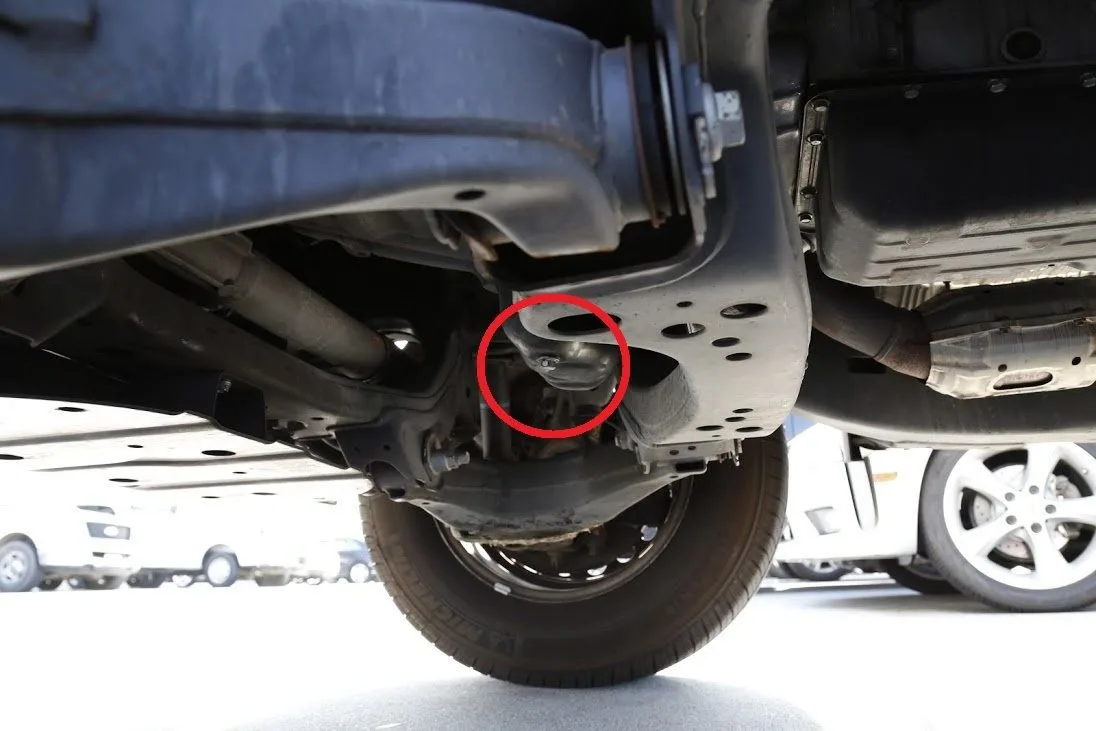
Image source: Web (Bing) / storage.googleapis.com (Web image (fair-use with source credit))
If you change your own oil, here are the exact numbers:
- i-Force V6: 7.5 quarts with filter
- i-Force Max: 7.4 quarts with filter
- Oil filter cartridge: part 04152-YZZA1
- Drain plug torque: 30 ft-lb
- Filter housing torque: 18 ft-lb
Warm the engine for a few minutes before draining. Cold oil does not drain fully. Never reuse the old O-ring on the filter cap.
Signs of Wrong Oil
A ticking noise at idle means oil is too thick. A check-engine code P0520 signals low pressure from oil that is too thin. Sluggish acceleration and increased oil consumption are also warnings.
If you notice any of these, stop driving. Drain the oil and filter immediately. Refill with the correct spec.
Do not wait. Driving with wrong oil for even a few hundred miles can damage turbo bearings.
Real Owner Scenarios
A Texas owner with the i-Force V6 uses 0W-20 Mobil 1. He changes every 5,000 miles because he tows a boat. No issues after 30,000 miles.
A Minnesota owner with the i-Force Max uses 0W-16 Toyota Genuine. He changes every 10,000 miles. Reports good cold starts at -20°F.
A Florida owner with the i-Force V6 tried 0W-16 for better fuel economy. He noticed more engine noise and switched back to 0W-20 after 1,000 miles.
Stick with the factory spec for your engine. Do not experiment unless the manual explicitly allows it.
Decision Guide: Three Questions
- Which engine do you have? Check the badge or VIN. i-Force V6 gets 0W-20. i-Force Max gets 0W-16.
- Do you drive in severe conditions? Towing, short trips, extreme heat or cold. If yes, change every 5,000 miles. If no, 10,000 miles is fine.
- Does the bottle carry API SP and ILSAC GF-6A marks? If yes, it is good. If not, keep shopping.
That is all you need. No guesswork. No risk.
Just the right oil for your 2024 Tundra.
Frequently Asked Questions
Can I use 5W-30 in my 2024 Tundra?
No. Toyota does not approve 5W-30 for this engine. Using it can damage turbo bearings and may void the warranty.
How much oil does a 2024 Tundra take?
7.5 quarts for the i-Force V6 and 7.4 quarts for the i-Force Max hybrid. Always check the dipstick after adding.
Can I mix 0W-20 and 0W-16 in an emergency?
It is not recommended. In an emergency use what is available. Then drain and refill with the correct spec as soon as possible.
Do I need Toyota Genuine oil for warranty?
No. Any oil meeting API SP and ILSAC GF-6A is acceptable. Keep your receipts as proof.
What is the oil change interval for severe driving?
Toyota recommends 5,000 miles or 6 months. Towing, short trips, and extreme temperatures all count as severe.
Can I switch from 0W-16 to 0W-20 for hot weather?
If you have the i-Force V6, 0W-20 is already the spec. If you have the i-Force Max, stay with 0W-16. The hybrid has tighter clearances that require thinner oil even in heat.