
If you own a 2008 Toyota Sienna and you're about to change the oil yourself, there's one number you need to get right before you pour a single drop. The 2008 toyota sienna oil capacity isn't the same across all models, and using the wrong amount can cause serious engine trouble fast.
Toyota switched engines mid-year on this generation, so your van could have one of two completely different powerplants under the hood. One takes 6.4 quarts of 5W-30. The other takes 6.7 quarts of 0W-20.
Mix them up and you're either running low on lubrication or overfilled to the point of seal damage. Let's figure out exactly which engine you have and what it needs.
Quick Answer
The 2008 Toyota Sienna takes either 6.4 quarts or 6.7 quarts of engine oil. It depends on which engine is under your hood. The 3.3L 3MZ-FE V6 takes 6.4 quarts of 5W-30.
The 3.5L 2GR-FE V6 takes 6.7 quarts of 0W-20. Always change the oil filter with every oil change. Check the dipstick after filling to confirm the level is correct.
Why Getting the Oil Capacity Right Matters (And What Happens if You Don't)
This isn't one of those "close enough" situations. Engine oil does a lot more than just lubricate moving parts. It cools critical components, cleans sludge and deposits, and maintains hydraulic pressure for variable valve timing systems.
Miss the mark on volume or viscosity and you compromise every one of those jobs.
Here's what happens when you get it wrong:
- Overfilling by even a quart. The crankshaft whips the extra oil into foam. Foam doesn't lubricate well. Air bubbles get trapped in the oil passages and starve bearings of protection. You can also blow out seals and gaskets, which turns into an expensive leak repair.
- Underfilling by a quart. Oil pressure drops. The pickup tube can suck air during hard cornering or steep hills. Metal-on-metal contact happens fast. A spun rod bearing or seized camshaft means a rebuild or replacement engine.
- Wrong viscosity. Too thick and the oil doesn't flow quickly enough at cold startup, leaving cylinder walls and valvetrain components dry for precious seconds. Too thin and the oil film shears apart under high heat and load, especially during highway towing or hot summer driving.
Toyota engineered these engines with very specific clearances and oil pump volumes. The numbers in the owner's manual aren't suggestions. They're the result of thousands of hours of testing.
Aggregate owner feedback across forums and service records confirms that sticking to the specified capacity and grade dramatically reduces the chance of premature engine wear.
The stakes are higher on a minivan too. Most Siennas see family duty with long trips, full passenger loads, and occasional towing. That's severe service territory where proper lubrication matters even more.
The Two Engines in the 2008 Sienna: Which One Do You Have?
This is the single most important step before you buy oil or turn a single bolt. The 2008 model year was a transition point for Toyota. Early production vans came with the 3.3L 3MZ-FE V6.
Late production vans got the newer 3.5L 2GR-FE V6. The capacity and oil type are different between them.
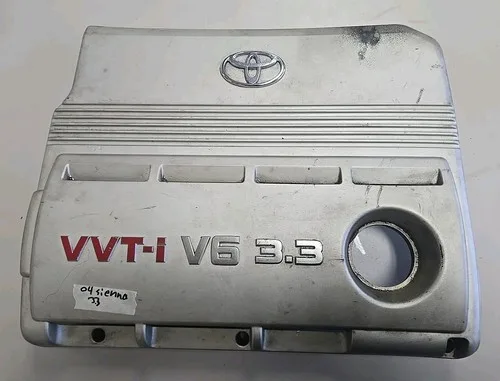
Image source: Bing (Web (fair-use with source credit))
Where to Find Your Engine Code
You have three ways to confirm which engine you have. Use at least two of them to be certain.
Method 1: Check the eighth character of your VIN. Every 2008 Sienna has a 17-character VIN. The eighth digit is the engine code. It's usually visible through the windshield on the driver's side dash, or on the door jamb sticker.
A "3" means you have the 3.3L engine. An "8" means you have the 3.5L engine.
Method 2: Look at the engine cover. Pop the hood. The plastic cover on top of the engine has a label. The 3.3L engine cover says "VVT-i" and has individual ignition coils visible along the top.
The 3.5L engine cover is larger and flatter with "DUAL VVT-i" stamped on it.
Method 3: Check the oil fill cap. The 3.5L engine typically has the recommended oil viscosity printed right on the cap. Look for "0W-20" or "5W-20" on the cap itself. The 3.3L cap won't have a viscosity printed on it.
3.3L 3MZ-FE: Specs and Oil Capacity
The 3.3L engine was carried over from the 2004-2007 Sienna. It's a proven, reliable motor but it's an older design. Here are the numbers you need:
| Specification | Value |
|---|---|
| Engine code | 3MZ-FE |
| Displacement | 3.3 liters |
| Oil capacity with filter | 6.4 quarts (6.1 liters) |
| Oil capacity without filter | 6.0 quarts (5.7 liters) |
| Recommended viscosity | 5W-30 |
| API rating | SN or higher |
| ILSAC rating | GF-5 or higher |
Always use 6.4 quarts if you're replacing the oil filter, which you should be doing every single oil change. The extra 0.4 quarts accounts for the oil that fills the new filter element.
3.5L 2GR-FE: Specs and Oil Capacity
The 3.5L engine was Toyota's next-generation V6. It debuted in the Sienna mid-2008 and became standard for all future model years. It's more powerful and more efficient, but it has tighter internal tolerances.
| Specification | Value |
|---|---|
| Engine code | 2GR-FE |
| Displacement | 3.5 liters |
| Oil capacity with filter | 6.7 quarts (6.3 liters) |
| Oil capacity without filter | 6.3 quarts (6.0 liters) |
| Recommended viscosity | 0W-20 |
| API rating | SN or higher |
| ILSAC rating | GF-5 or higher |
The 3.5L engine requires 0W-20 oil. Do not substitute 5W-30 unless it's an emergency and you live in a very hot climate. Even then, switch back to 0W-20 at the next change.
The variable valve timing system and bearing clearances are designed for the thinner oil.
Oil Type and Viscosity: What the Manual Actually Says
The owner's manual spells this out clearly, but most people never crack it open after purchase. Let's save you the page flipping.
5W-30 for the 3.3L
This is a conventional or synthetic blend viscosity that's widely available at any auto parts store or big box retailer. The 3.3L engine was designed in an era when 5W-30 was the standard for most Toyota V6 engines. It provides good cold-start flow down to about -22 degrees Fahrenheit and maintains adequate film strength at operating temperature.
You can use conventional, synthetic blend, or full synthetic 5W-30 in this engine. The engine doesn't require synthetic to last. What matters more is changing it on time.
Conventional oil every 3,000 to 5,000 miles keeps the 3.3L healthy. Synthetic extends that interval and provides better protection during cold starts and high-heat towing.
0W-20 for the 3.5L
This is a lighter viscosity that flows more freely at cold temperatures. Toyota moved to 0W-20 across most of its engine lineup starting around 2008 to improve fuel economy and reduce internal friction. The 2GR-FE engine was engineered specifically for this oil weight.
You must use 0W-20 in the 3.5L engine. It's almost always sold as a full synthetic oil because the viscosity requires high-quality base stocks. Don't try to save money by using a heavier conventional oil.
The engine won't run as efficiently and you may notice slightly rougher idle or reduced fuel mileage.
Can You Switch Between Conventional and Synthetic?
Yes, and it's a common question. Switching between conventional and synthetic oil in either engine is completely safe. The two types are compatible.
You won't damage seals or cause leaks by switching, despite the old mechanic's tale.
What matters more than the base stock is the viscosity grade and the API rating. As long as you're using the right weight and it meets API SN or ILSAC GF-5 standards, the engine doesn't care whether the molecules came from crude oil or a chemical plant.
That said, if you're running the 3.5L engine, you're buying synthetic anyway because 0W-20 is almost exclusively sold that way. For the 3.3L, synthetic provides longer intervals and better protection, but conventional at proper change intervals is perfectly adequate. For more details on what other Toyota models call for, check out the specs on the latest Toyota Camry oil type or see what's recommended for a 2025 Toyota Corolla oil type and capacity guide if you're comparing across generations.
Step-by-Step: How to Do the Oil Change Yourself
If you've never changed oil on a Sienna before, don't worry. It's a straightforward job on both engines. The main difference is the oil filter location.
Let's walk through it.
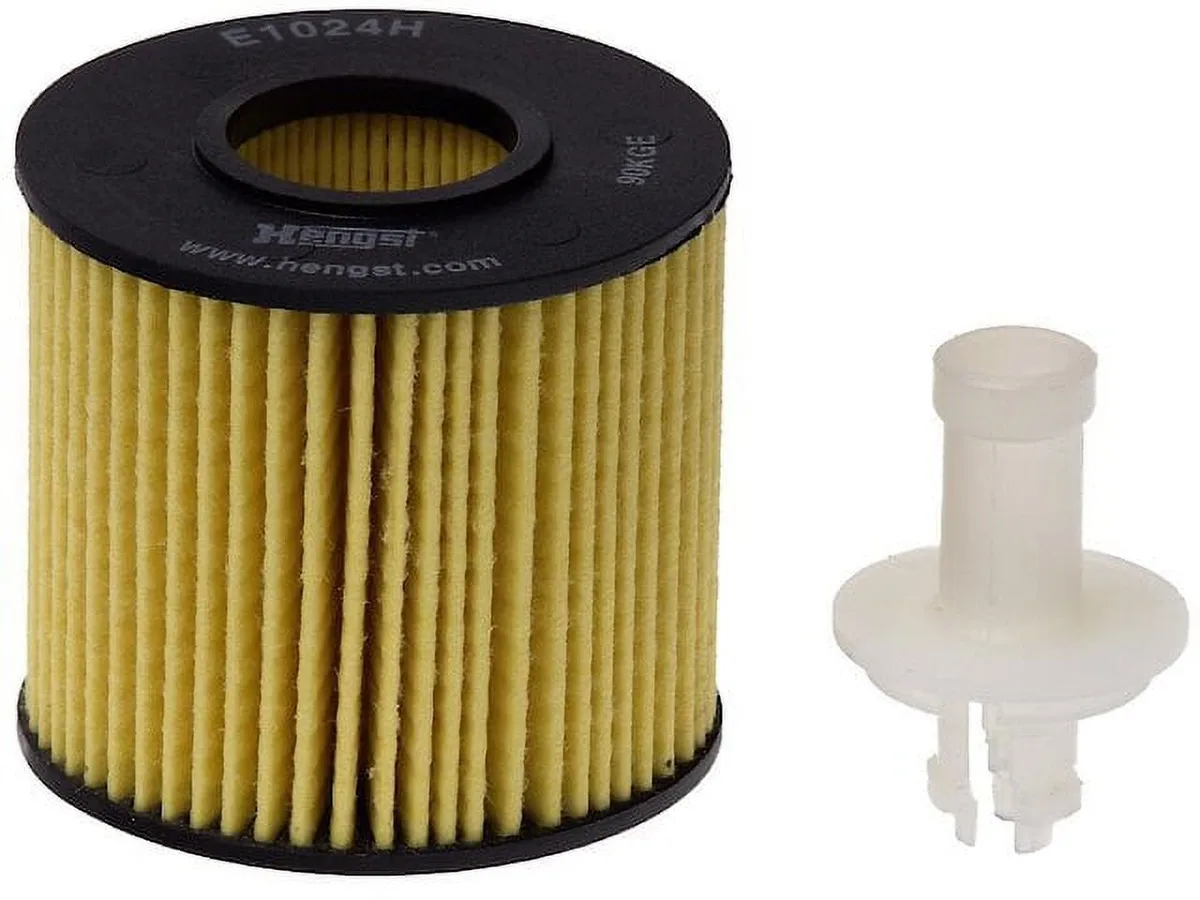
Image source: Bing (Web (fair-use with source credit))
Tools and Parts You'll Need
| Item | Specification |
|---|---|
| Engine oil | 6.4 or 6.7 quarts per engine type above |
| Oil filter | Toyota 90915-YZZD3 (3.3L) or 04152-YZZA1 (3.5L) |
| Drain plug washer | 14mm copper or aluminum crush washer |
| Socket wrench | 3/8-inch drive |
| Drain plug socket | 14mm |
| Oil filter wrench | Cap-style or strap wrench |
| Jack and jack stands | Or ramps |
| Catch pan | 8-quart minimum capacity |
| Funnel | Long neck for hard-to-reach fill cap |
| Rags | For cleanup |
| Gloves | Nitrile recommended |
Draining the Old Oil
Start with the engine warm but not hot. Run it for a couple minutes to warm the oil. Warm oil drains faster and carries more suspended contaminants out with it.
Park on level ground. Engage the parking brake. Lift the front of the van using a jack and place jack stands under the front pinch welds or frame rails.
Never work under a vehicle supported only by a jack.
Slide under the van with your catch pan. Locate the drain plug on the oil pan. It's a 14mm bolt facing downward.
Place the pan under it. Loosen the plug with your socket wrench, then unscrew it by hand. Let the oil drain completely.
This takes about five to ten minutes.
While the oil drains, clean the drain plug threads and inspect the old crush washer. It should be flat and uniform. Replace it if it's deformed or if it's been used more than two or three times.
Replacing the Oil Filter (Different Locations by Engine)
This is where the two engines differ.
On the 3.3L engine. The oil filter is mounted on the front of the engine, low down, accessible from underneath. It's a traditional spin-on metal canister. Use a filter wrench to loosen it.
It will be full of oil, so have your catch pan positioned underneath. Unscrew it by hand once it's loose. Wipe the mounting surface clean with a rag.
Apply a thin film of fresh oil to the new filter's rubber gasket. Screw the new filter on by hand until the gasket contacts the mounting surface, then tighten another three-quarter turn. Don't overtighten.
On the 3.5L engine. The oil filter is a cartridge-style element housed in a plastic cap on top of the engine, near the front passenger side. You access it from above, no need to crawl underneath. Remove the plastic engine cover if needed.
Unscrew the black plastic filter cap using a 24mm socket or a specialized filter cap tool. Pull the old filter element and the two O-rings out. Install the new filter element into the cap.
Lubricate the new O-rings with fresh oil. Reinstall the cap and tighten to 18 ft-lbs of torque. Do not overtighten or the plastic cap can crack.
Adding the Correct Amount of New Oil
Put the drain plug back in with the new crush washer. Tighten it to 30 ft-lbs of torque. Don't guess on this one.
Too loose and it leaks. Too tight and you risk stripping the aluminum oil pan threads.
Move to the engine bay. Remove the oil fill cap. Insert your funnel.
Pour in the correct amount of oil based on your engine type. For the 3.3L, that's the full 6.4 quarts. For the 3.5L, that's 6.7 quarts.
Replace the fill cap. Start the engine and let it run for about 30 seconds. This circulates oil through the new filter and fills it.
Shut the engine off.
Checking the Dipstick the Right Way
Wait two to three minutes after shutting the engine off. This gives the oil time to drain back into the pan. Pull the dipstick out.
Wipe it clean with a rag. Insert it all the way back in. Pull it out again and read the level.
The oil should be between the lower and upper marks on the dipstick. Ideally, it's right at the upper mark or just below it. If it's low, add a quarter quart at a time and recheck.
If it's over the upper mark, you've added too much. You'll need to drain some out.
Never fill to the point where oil drips from the dipstick when the engine is off. That's overfilled. Run the engine one more time, let it sit, and recheck the level to be sure.
For a thorough understanding across different Toyota models, you can read the complete Toyota oil type guide for the Sienna or compare notes with the Toyota RAV4 oil type full guide for owners to see how other engines differ in their requirements.
Common Mistakes That Cause Real Damage
These are the errors we see most often in DIY oil changes and even at some quick-lube shops. Avoid them and your engine will thank you.
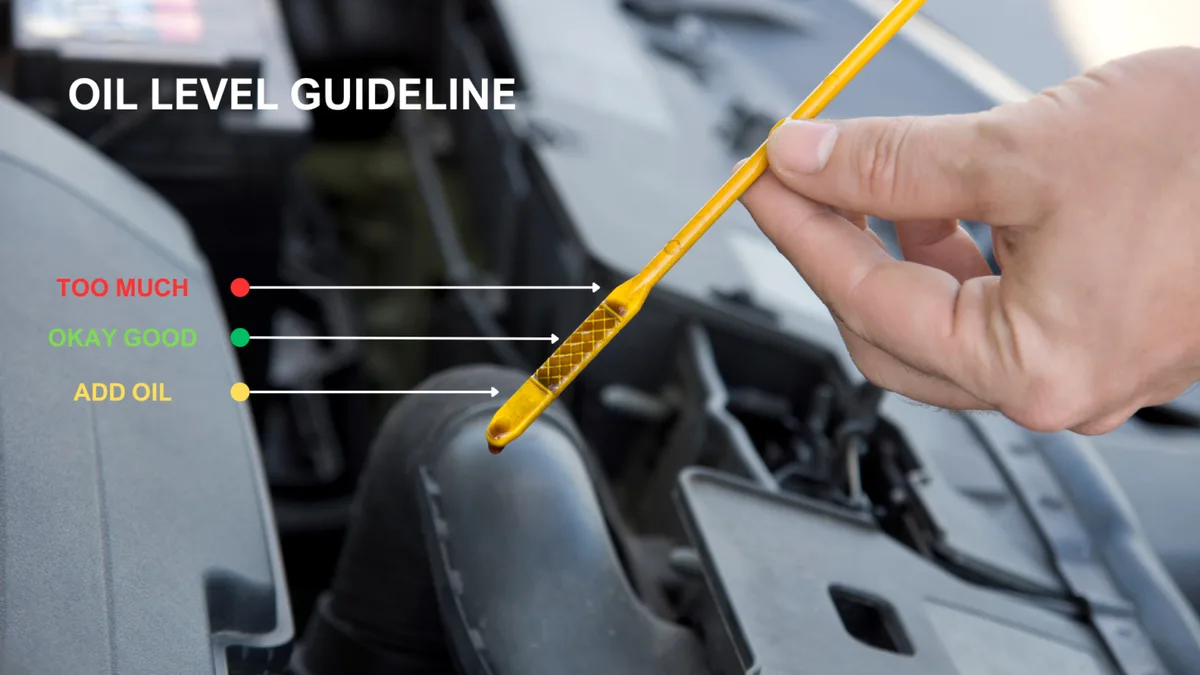
Image source: Web (Bing) / hitchesguide.com (Web image (fair-use with source credit))
Overfilling and Underfilling
Overfilling is more common than you'd think. People buy a five-quart jug and a two-quart bottle, dump the whole five in, then add the two without measuring. That's seven quarts.
Too much.
The oil level should sit between the two marks on the dipstick. The distance between those marks is usually about one quart. So a reading that's even slightly above the upper mark could be half a quart overfilled.
Drain it out.
Underfilling happens when people trust a measurement that's wrong. If you thought you had the 3.3L and actually have the 3.5L, you'd be about 0.3 quarts short. That's not catastrophic for a short period, but running consistently low increases oil temperature and reduces hydraulic pressure for the variable valve timing system.
Using the Wrong Viscosity
Putting 5W-30 in the 3.5L engine is the most common mistake on this vehicle. The oil cap might not even say 0W-20 on some early 2008 models with the 3.5L because Toyota started printing it on caps later in production. So you check the cap, see nothing, assume 5W-30, and fill it.
The engine will run on 5W-30. It won't blow up immediately. But cold starts will be harder on the engine.
The variable valve timing phasers, which use oil pressure to adjust cam timing, will respond slower. Fuel economy drops slightly. Over 50,000 miles of using the wrong oil, you'll see accelerated timing chain wear and increased sludge buildup.
Forgetting the Crush Washer
That little copper or aluminum ring on the drain plug costs maybe 50 cents. Skipping it costs you a slow leak that deposits oil on your driveway, your garage floor, and potentially your exhaust system, which can smoke and smell terrible.
Replace it every other oil change at minimum. Some people replace it every time. That's overkill but not harmful.
The important thing is to not reuse a crushed washer more than two or three times. Once it's flattened, it doesn't seal as well.
Stripping the Drain Plug
The oil pan on both Sienna engines is aluminum. The drain plug threads into this soft metal. If you overtighten the drain plug or cross-thread it during installation, you'll strip the threads in the pan.
The fix involves either a thread repair insert or a whole new oil pan.
Torque the drain plug to 30 ft-lbs. That's not very tight. If you're using a standard ratchet, it's about a firm pull with one hand, not both hands with all your weight behind it.
Use a torque wrench if you have one.
Cost Breakdown: DIY vs. Dealer vs. Quick Lube
If you're deciding who does the oil change, the price gap is bigger than you might think.
DIY oil change costs. You're looking at about $35 to $55. A five-quart jug of conventional 5W-30 runs around $18 to $22. A single quart adds another $5.
Synthetic 0W-20 for the 3.5L engine costs more, roughly $28 to $35 for a five-quart jug with another $8 per extra quart. The oil filter is $6 to $12 for a quality brand. The crush washer is a dime.
Dealer oil change costs. Expect to pay $80 to $120. You're paying for the Toyota-branded oil filter, bulk oil, and labor at $100 to $150 per hour. The benefit is a trained tech who knows the torque specs and the exact filter location.
Aggregate reviews suggest dealer prices are highest but consistency is better than quick-lube chains.
Quick lube costs. Most chains charge $50 to $75 for conventional and $70 to $95 for synthetic. The risk here is a worker who doesn't know the 2008 Sienna had two different engines. We've seen documented cases of 3.5L vans getting 5W-30 or being overfilled by a quart.
Always confirm what they put in before you leave the lot.
When to Go Synthetic (and When It's Not Worth It)
Full synthetic oil offers real advantages but it's not mandatory for every driver.
Go synthetic if: You live in a cold climate where temperatures drop below zero regularly. You tow a trailer or carry heavy loads frequently. You tend to go beyond 5,000 miles between changes.
You want maximum protection for a high-mileage engine you plan to keep another 100,000 miles.
Stick with conventional if: You change oil every 3,000 to 4,000 miles without fail. You live in a moderate climate. The van is older and you're not worried about long-term engine life.
The 3.3L engine runs perfectly well on conventional 5W-30 for hundreds of thousands of miles with disciplined maintenance.
Synthetic blend sits in the middle. It costs less than full synthetic but offers better protection than conventional. For most 2008 Sienna owners, a quality synthetic blend at 5,000-mile intervals hits the sweet spot between cost and protection.
How Often Should You Change the Oil? Intervals Explained
The official Toyota recommendation for the 2008 Sienna is every 5,000 miles or six months, whichever comes first. That's a safe general guideline.
Normal driving conditions. Mixed highway and city driving with moderate temperatures and light loads. You can stretch to 5,000 miles with conventional oil and 7,500 to 10,000 with full synthetic. Always check the dipstick monthly to monitor level and condition.
Severe service conditions. This is where most Siennas actually fall. Short trips under five miles where the engine never reaches full operating temperature. Frequent stop-and-go traffic.
Extended idling. Towing. Driving on dusty roads.
Operating in extreme heat or cold.
Under severe service, Toyota recommends 3,000-mile intervals with conventional oil and 5,000-mile intervals with synthetic. Ignore this and you risk sludge buildup, especially in the 3.3L engine which is more prone to oil passage blockages than the 3.5L.
What About High-Mileage Oil? (100k+ Miles)
Once your Sienna passes 100,000 miles, high-mileage oil becomes worth considering. It contains seal conditioners that help reduce leaks past worn valve stem seals and crankshaft seals.
For the 3.3L engine. High-mileage 5W-30 is widely available and reasonably priced. It won't fix a major leak but it can slow down minor weeping around the valve cover gasket and oil pan seal. Many owners report reduced oil consumption after switching.
For the 3.5L engine. High-mileage 0W-20 is more expensive and harder to find. Some brands don't even make it. Mobil 1 and Valvoline offer it.
If you can't find it, standard full synthetic 0W-20 is fine. The seal conditioners in high-mileage oil aren't essential on this engine because the 2GR-FE doesn't have the same reputation for seal failures as the 3.3L.
One thing to note. If the engine already has a significant oil leak, high-mileage oil won't fix it. You need new gaskets.
The oil is a preventative measure, not a repair.
Safety Warnings for DIY Oil Changes
Working under a vehicle carries real risks. A few simple precautions make the difference between a routine maintenance job and a trip to the emergency room.
Never rely on a jack alone. The factory scissor jack is for emergency tire changes only. It can tip or fail. Use a pair of jack stands rated for at least 3,000 pounds each.
Place them under the frame rails or reinforced jack points. Rock the vehicle after setting them to confirm stability.
Hot oil burns. Drain the oil when the engine is warm, not hot. Warm oil flows quickly but won't burn your skin on contact. After a long highway drive, let the engine cool for 20 to 30 minutes before draining.
Used oil disposal is legally required. Every state and most countries prohibit dumping used oil in the trash or down drains. It contaminates groundwater and soil. Most auto parts stores accept used oil for free.
Some municipalities have collection centers. Pour the old oil back into the empty jugs and drop them off the same day.
Gloves and eye protection. Engine oil contains carcinogenic compounds. Extended skin contact isn't safe. Wear nitrile gloves.
Safety glasses keep splashes out of your eyes, especially when removing the oil filter which can drip unpredictably.
Frequently Asked Questions
Will the capacity change if I don't replace the filter?
Yes. Without a filter change, the 3.3L engine takes about 6.0 quarts instead of 6.4. The 3.5L takes about 6.3 quarts instead of 6.7.
We still recommend replacing the filter every time. It holds dirty oil and old contaminants that fresh oil immediately picks up.
Can I use 5W-30 in the 3.5L engine?
In an emergency, yes. For regular use, no. The 2GR-FE engine was designed around 0W-20 for proper variable valve timing operation and cold-start protection.
Long-term use of 5W-30 reduces fuel economy and increases wear during cold startups. Switch back at the next change.
What's the oil filter part number for each engine?
For the 3.3L engine, the Toyota part number is 90915-YZZD3. For the 3.5L engine, it's 04152-YZZA1. Aftermarket equivalents from Purolator, Mobil 1, and Fram work fine if they match these numbers.
Just avoid the cheapest no-name filters.
How do I check the oil level correctly?
Park on level ground. Wait two to three minutes after shutting the engine off. Pull the dipstick, wipe it clean, reinsert it fully, then pull it again.
The oil should sit between the two marks. Never check it immediately after driving when oil is still draining back to the pan.
Is there a difference in capacity between FWD and AWD models?
No. The oil capacity is identical for front-wheel drive and all-wheel drive versions of the same engine. The AWD system draws power from a transfer case and rear differential, both of which use their own separate fluid.
The engine oil pan and capacity are unchanged.