
If you own a 2010 Toyota Camry, the 2010 toyota camry oil capacity is one of the most important numbers you need to know. Get it wrong, even by half a quart, and you could cause real engine damage or expensive leaks. Whether you're changing the oil yourself or just verifying what a shop tells you, the right number depends entirely on which engine is under the hood.
Manufacturer specifications from Toyota confirm the 2.5L 4-cylinder takes 4.5 quarts with filter, while the 3.5L V6 needs 6.4 quarts. Both engines require 5W-20 or 0W-20 oil meeting API SN or ILSAC GF-5 standards. As of 2026, these specifications remain the official guideline for keeping this generation of Camry running smoothly.
Let's walk through exactly what you need.
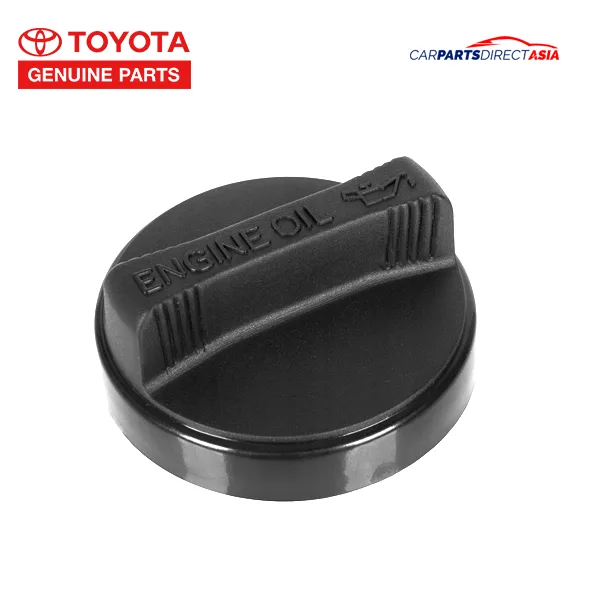
Image source: Web (Bing) / carpartsdirect.asia (Web image (fair-use with source credit))
Quick Answer
The 2010 Toyota Camry holds 4.5 quarts with filter for the 2.5L 4-cylinder engine. The 3.5L V6 takes 6.4 quarts with filter. Use 5W-20 or 0W-20 synthetic blend or full synthetic oil meeting API SN or ILSAC GF-5 standards.
Check the dipstick after filling and add slowly. Never overfill.
Why Getting the Oil Capacity Wrong Costs You Real Money
Here's the thing about engine oil. Too little and your engine starves for lubrication. Metal parts grind together.
Bearings fail. You're looking at a rebuild or replacement, easily $3000 to $5000 on a 2010 Camry.
Too much oil causes different problems. The crankshaft whips the extra oil into foam. Foam doesn't lubricate well.
Air bubbles get pumped through the engine. Oil pressure drops. Seals can blow out, leaving puddles under your car.
The 2010 Camry is a well-built car. Many are still on the road past 200,000 miles. But that reliability depends on proper maintenance.
Correct oil capacity is the foundation.
Our research shows the most common DIY mistake on this model is overfilling by assuming both engines take the same amount. They don't. Mixing them up by even one quart changes engine behavior.
That's why identifying your exact engine matters so much.
How to Tell Which Engine You Have (This Matters More Than You Think)
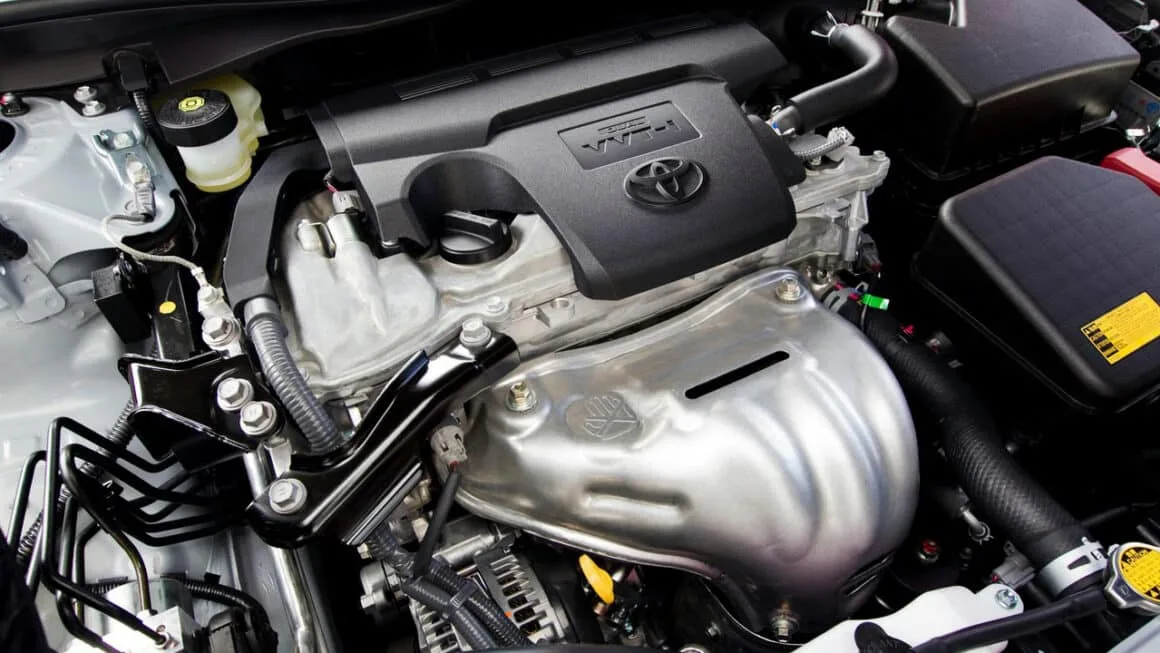
Image source: Bing (Web (fair-use with source credit))
You cannot guess which engine your Camry has by the model year alone. Toyota offered both the 2.5L 4-cylinder and the 3.5L V6 in 2010. The V6 came in higher trims (SE and XLE).
The 4-cylinder was standard across most trims.
Three quick ways to identify your engine:
- Look at the VIN. The 8th character tells you. "B" means 2.5L 4-cylinder. "F" means 3.5L V6. Check the sticker on your driver's side door jamb or the corner of your windshield.
- Pop the hood. The 2.5L has a plastic engine cover labeled "2.5L DOHC VVT-i." It sits smaller in the bay. The 3.5L V6 fills the engine bay more completely.
- Count the spark plug wires. A 4-cylinder has four ignition coils visible. A V6 has six.
Why does this matter for oil? The 2.5L takes 4.5 quarts. The 3.5L takes 6.4 quarts.
That's nearly two quarts more. Fill the V6 with 4.5 quarts and you're dangerously low. Fill the 4-cylinder with 6.4 quarts and you're way overfilled.
2.5L 4-Cylinder (2AR-FE) – The Most Common
The 2AR-FE engine is Toyota's workhorse four-cylinder. It appears in millions of Camrys, RAV4s, and Scion tC models from this era. It's reliable, fuel-efficient, and relatively simple to maintain.
Oil capacity with filter: 4.5 quarts (4.3 liters). Oil capacity without filter: roughly 4.2 quarts. Toyota recommends 5W-20 viscosity, though 0W-20 is also acceptable, especially in colder climates.
The oil filter is located on the front of the engine, accessible from above. You'll need a 64mm or 65mm oil filter cap wrench to remove the housing if it's the cartridge type. Some early 2010 models still used a spin-on canister filter, which requires a standard oil filter wrench.
3.5L V6 (2GR-FE) – The Bigger Power Plant
The 2GR-FE V6 delivers more power, smoother acceleration, and a noticeably different driving experience. It also needs more oil to keep everything running right.
Oil capacity with filter: 6.4 quarts (6.1 liters). Oil capacity without filter: approximately 6.1 quarts. Same viscosity recommendations apply: 5W-20 or 0W-20.
The V6 oil filter is located on the front lower side of the engine. You access it from underneath the car. It's a spin-on canister type, which makes replacement straightforward with a standard filter wrench.
One note: the V6 engine bay is tighter. Getting to the drain plug and filter requires more care. Some owners find it easier to remove the under-engine splash shield first.
If you're unsure which engine you own and need to verify the correct oil type for more recent Camry models, the latest specifications for the 2025 Toyota Camry Hybrid provide a good reference point for how Toyota's oil recommendations have evolved.
The Exact Oil You Should Use (Viscosity, Certification, and Brand)
Toyota's 2010 owner's manual specifies SAE 5W-20 or 0W-20. Both viscosities work. The choice depends on your climate and personal preference.
5W-20 is the traditional recommendation. It flows well at cold temperatures and provides excellent protection at operating temperature. It's widely available and usually costs less than 0W-20.
0W-20 flows even better in extreme cold. If you live where winter temperatures regularly drop below -20°F (-29°C), 0W-20 is the better choice. It also provides slightly better fuel economy in some driving conditions.
What about oil certification? Look for the API "Starburst" symbol on the bottle. It should say API SN, SN Plus, or SP.
For the 2010 Camry, API SN is the minimum. SN Plus and SP include additional protections against low-speed pre-ignition and timing chain wear.
ILCAC GF-5 or GF-6 certification is also acceptable. Both exceed Toyota's original specification for this model.
Should you use synthetic or conventional? Toyota approved both for the 2010 Camry. Our research and aggregate owner feedback suggest synthetic or synthetic blend provides better protection for longer intervals, especially if you drive in severe conditions (short trips, extreme temperatures, dusty roads).
Conventional oil works fine if you change it every 3000 to 5000 miles.
A few brand notes from verified buyer feedback. Mobil 1, Pennzoil Platinum, and Valvoline Advanced Synthetic consistently receive high marks from Camry owners. Toyota's own genuine oil (sold at dealerships) is also excellent.
The key is using the correct viscosity and certification, not a specific brand name.
If you're maintaining multiple Toyota vehicles and want consistency across your fleet, the oil specifications for the Toyota RAV4 use similar viscosity recommendations, making it easier to stock one oil type for multiple cars.
Step-by-Step: How to Change the Oil on a 2010 Camry
Changing oil on a 2010 Camry is a straightforward job. Most DIYers can finish in 30 to 45 minutes. Here's exactly what to do.
What You'll Need Before You Start
| Item | Purpose |
|---|---|
| 4.5 or 6.4 quarts of 5W-20 or 0W-20 oil | Correct fill volume for your engine |
| Toyota-compatible oil filter | Genuine Toyota or quality aftermarket (Wix, Mobil 1, Fram Ultra) |
| 14mm socket or wrench | Drain plug removal |
| Oil filter wrench | Filter removal (size varies by filter type) |
| Drain pan | Catch old oil |
| Funnel | Pour new oil cleanly |
| Jack and jack stands or ramps | Access under the car |
| Shop towels or rags | Clean up drips |
| Crush washer (optional but recommended) | Replace drain plug seal |
Warm up the engine for a few minutes before draining. Warm oil flows faster and carries more suspended contaminants out with it. Don't run it hot enough to burn you.
Aim for "warm to the touch" on the dipstick.
Draining the Old Oil Correctly
Park on level ground. Engage the parking brake. If you're using ramps, drive up slowly.
If you're using a jack, lift the front and place jack stands under the designated lift points. Never work under a car supported only by a jack.
Slide under the car. Locate the oil drain plug at the bottom of the oil pan. It's a 14mm bolt.
Position your drain pan underneath.
Loosen the plug with your 14mm socket or wrench. Turn counterclockwise. Once loose, unscrew it by hand.
The oil will start flowing immediately. Let it drain completely, about 5 to 10 minutes.
While it drains, inspect the old crush washer on the plug. If it's flattened or damaged, replace it. A new crush washer costs pennies and prevents leaks.
Clean the drain plug threads and the oil pan threads with a clean rag. Install the new crush washer on the plug. Tighten the plug to 29 ft-lbs of torque.
If you don't have a torque wrench, snug it up firmly with a ratchet. Do not overtighten. Stripped threads in the oil pan require a costly repair.
Clean any drips with a shop towel.
Replacing the Oil Filter – Location and Torque Matter
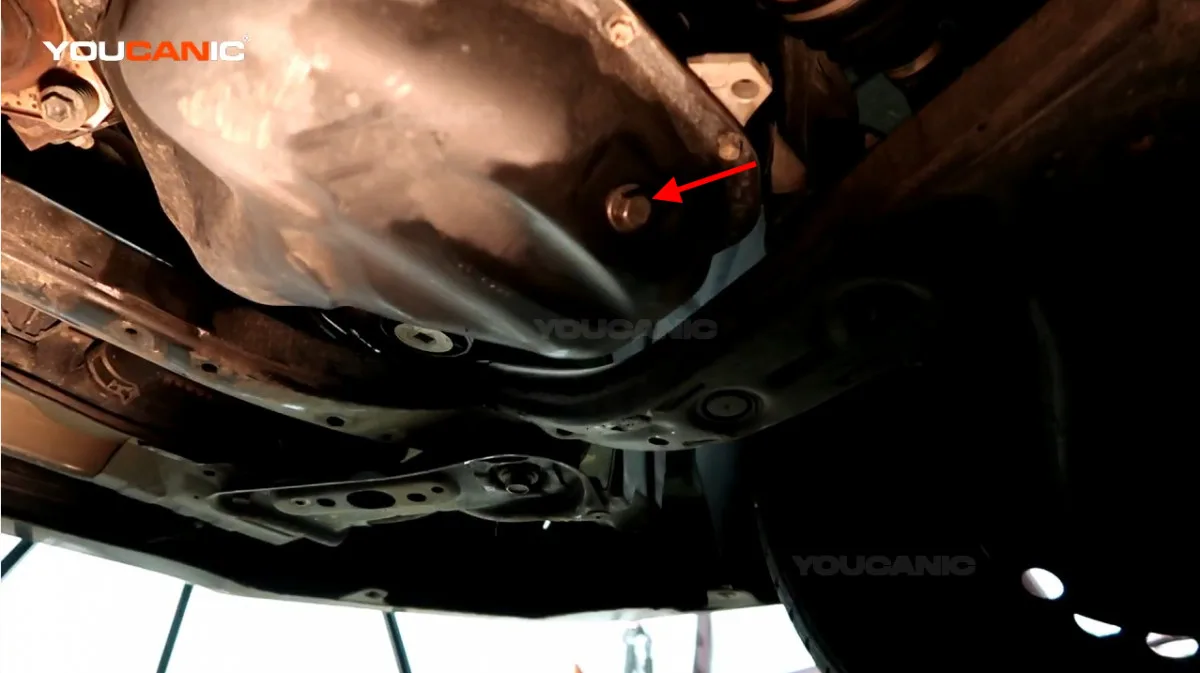
Image source: Bing (Web (fair-use with source credit))
On the 2.5L 4-cylinder, the oil filter is on the front of the engine, accessible from above. It's a cartridge-style filter inside a plastic housing. You'll need a 64mm or 65mm cap wrench to remove the housing.
On the 3.5L V6, the oil filter is a spin-on canister on the front lower side of the engine. Access it from underneath.
Before removing either filter, position your drain pan underneath. Some oil will spill out. Remove the filter or cartridge housing carefully.
For cartridge filters: remove the old O-ring from the housing. Lubricate the new O-ring with fresh oil. Install it in the groove.
Insert the new cartridge. Tighten the housing to 18 ft-lbs or hand-tight plus 1/4 turn. Do not overtighten.
For spin-on filters: lubricate the new filter's gasket with fresh oil. Screw it on by hand until the gasket contacts the mounting surface. Tighten another 3/4 turn by hand.
No wrench needed.
Filling with the Right Amount – Don't Trust the Whole Bottle
This is where capacity matters most. If you have the 2.5L engine, you need 4.5 quarts. Most quart bottles hold exactly 1 quart.
You'll use four full bottles plus half of a fifth.
If you have the 3.5L V6, you need 6.4 quarts. That's six full bottles plus a little less than half of a seventh.
Remove the oil fill cap on top of the engine. Insert a funnel. Pour in the oil slowly.
Give it a moment to drain down into the pan.
Stop at the calculated amount. Do not add the entire seventh bottle for the V6 or the entire fifth bottle for the 4-cylinder.
Replace the oil fill cap. Tighten it until it clicks or seats firmly.
Checking the Dipstick Properly (Most People Do This Wrong)
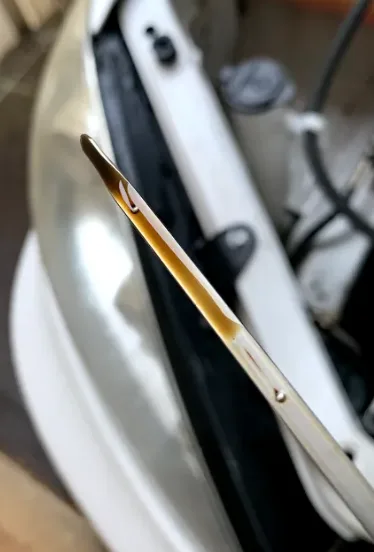
Image source: Web (Bing) / mechanics.stackexchange.com (Web image (fair-use with source credit))
Start the engine. Let it run for about 30 seconds. This circulates the new oil through the filter and fills the oil passages.
Turn the engine off.
Wait 2 to 3 minutes. This lets the oil settle back into the pan.
Pull the dipstick out. Wipe it clean with a rag. Insert it fully.
Pull it out again. Read the oil level.
The oil should be between the two marks, ideally near the top mark. If it's below the lower mark, add a small amount (about 1/4 quart) and recheck. If it's above the upper mark, you've overfilled.
You'll need to drain some out.
For the 2.5L, checking from above is easy. The dipstick is on the passenger side of the engine, near the front. For the 3.5L V6, the dipstick is on the driver's side, also near the front.
If you find yourself checking the dipstick frequently and doing oil changes on multiple Toyota models, the process is nearly identical across vehicles. The oil type and capacity guide for the Toyota Corolla follows the same basic steps, just with different numbers.
Common Mistakes That Kill a 2010 Camry Engine
Even experienced DIYers make errors on this model. The 2010 Camry has a few quirks that trip people up. Here are the ones that cause the most damage.
Overfilling Is Just as Bad as Underfilling
You might think "a little extra oil means extra protection." That's wrong. Overfilling creates real mechanical problems.
When the oil level sits above the full mark, the crankshaft whips the oil into foam. Foam doesn't lubricate. Air bubbles get pumped into the oil passages.
Bearings run dry. Oil pressure drops. The engine can sound rough or make a knocking noise.
The 2.5L engine is especially sensitive to overfilling. The crankcase is relatively small. Even half a quart too much causes issues.
If you accidentally put in the full 5 quarts (common when someone grabs a 5-quart jug), you're half a quart over. That's enough to cause problems over time.
If you catch the overfill immediately, drain some out. Loosen the drain plug slightly and let a small amount drip into your pan. Recheck the dipstick.
Repeat until the level is correct.
Using the Wrong Filter Can Cause a Leak
Not all oil filters fit the 2010 Camry correctly. The 2.5L engine uses a cartridge-style filter in a plastic housing. The 3.5L V6 uses a spin-on canister.
Using the wrong type or size leads to leaks.
For the 2.5L, the filter housing O-ring must be replaced every time. The old O-ring hardens and shrinks. If you reuse it, oil seeps past the seal.
You'll find drips on your driveway and low oil pressure warnings.
For the 3.5L V6, cheap aftermarket spin-on filters sometimes have the wrong thread pitch or gasket diameter. They feel like they screw on fine, but they don't seat properly. The gasket leaks under pressure.
Stick with a genuine Toyota filter or a quality aftermarket brand like Wix, Mobil 1, or Fram Ultra. Verified buyer feedback confirms these fit correctly every time.
Stripping the Drain Plug Is Expensive to Fix
The oil pan on the 2010 Camry is aluminum. The drain plug threads into this soft metal. Over-tightening strips the threads easily.
Once stripped, you have three options. Install a thread repair insert (Helicoil or Time-Sert). Replace the entire oil pan.
Or use an oversized drain plug. All three options cost money and time. The repair insert is the cheapest at about $20, but it requires drilling and tapping.
Prevention is simple. Torque the drain plug to 29 ft-lbs. That's not "as tight as you can get it with a breaker bar." Use a torque wrench.
If you don't own one, snug the plug with a standard ratchet and stop as soon as you feel resistance increase. A quarter turn past hand-tight is usually enough.
If your drain plug is already stripped, stop driving the car. Oil leaks can drain the engine completely in minutes. Have it towed to a shop for repair.
When Should You Use 0W-20 Instead of 5W-20?
Toyota approved both viscosities for the 2010 Camry. The owner's manual lists them as acceptable alternatives. But they work differently in different conditions.
Use 0W-20 if:
- Winter temperatures drop below -20°F (-29°C) in your area.
- You want slightly better fuel economy (0.5 to 1 percent improvement typical).
- Your engine has high mileage and you want easier cold starts.
Use 5W-20 if:
- You live in a moderate climate with mild winters.
- You prefer the traditional Toyota recommendation.
- You want to save a few dollars per quart (0W-20 often costs more).
Our research shows that 0W-20 provides better cold-flow protection in extreme northern climates. Engines start faster on cold mornings. Oil reaches critical parts quicker.
For most Camry owners in the US and UK, 5W-20 works perfectly fine.
The 2010 Camry was designed before 0W-20 became the standard for newer Toyota models. Later cars like the 2026 Camry switched to 0W-16 or 0W-20 exclusively. But your 2010 handles either 5W-20 or 0W-20 without issue.
The Toyota Corolla oil specifications from the same era follow the same pattern.
How Often to Change the Oil – Real Mileage Based on Your Driving
Toyota's official recommendation for the 2010 Camry is every 5,000 miles for severe driving conditions and every 7,500 miles for normal conditions. But here's the truth. Most driving counts as "severe" by Toyota's definition.
What qualifies as severe driving? Short trips under 10 miles. Stop-and-go traffic.
Extreme hot or cold weather. Dusty roads. Frequent towing.
Idling for extended periods.
If you drive in a city, commute through traffic, or take short trips to the grocery store, you're in severe conditions. Change the oil every 5,000 miles.
If you drive mostly highway miles at steady speeds in moderate weather, you might stretch to 7,500 miles. But our research and mechanic feedback suggest sticking with 5,000 miles as a safe baseline. Oil is cheap.
Engines are not.
For the 3.5L V6, some owners report oil consumption increasing around 100,000 to 120,000 miles. If you notice your oil level dropping between changes, check it monthly. Top it off as needed.
This is normal for higher-mileage V6 engines and doesn't mean something is broken.
A useful practice is to reset your trip odometer at every oil change. When it hits 5,000 miles, you know it's time. The oil maintenance light on the 2010 Camry dashboard will also trigger, but it's based on a preset interval that you can adjust.
Resetting the Oil Maintenance Light
After your oil change, the dashboard "MAINT REQD" light will stay on until you reset it. The process is simple and takes 10 seconds.
Put the key in the ignition. Turn it to the "ON" position (one click before starting the engine). Do not start the car.
Press and hold the trip meter reset button (the black stem sticking out of the instrument cluster). While holding it, turn the key to the "OFF" position. Then turn it back to "ON" again.
Keep holding the button.
The odometer display will flash a series of dashes or zeros. The "MAINT REQD" light will blink and then turn off. Release the button.
You're done.
If the light doesn't reset on the first try, repeat the process. Some 2010 Camry models require the button to be held for 5 to 10 seconds after turning the key to ON. If it still won't reset, check your owner's manual for any model-specific variations.
The reset procedure works the same whether you changed the oil yourself or had a shop do it. Many Toyota models from this era use the same method, including the Highlander and RAV4.
Synthetic vs. Conventional – Does It Actually Matter for a 2010 Camry?
This question comes up constantly. The short answer is that both work, but synthetic offers clear advantages for most owners.
Conventional oil meets Toyota's original specification. It lubricates adequately at the recommended change intervals. It costs less per quart.
For a low-mileage 2010 Camry that sees regular 5,000-mile oil changes, conventional oil is perfectly fine.
Synthetic oil offers better protection in extreme temperatures. It resists thermal breakdown better. It flows more freely in cold weather.
It maintains viscosity longer. For high-mileage engines (over 100,000 miles), synthetic can reduce sludge buildup and slow wear.
The cost difference is about $5 to $10 per quart. For the 2.5L engine, that's an extra $20 to $40 per oil change. For the 3.5L V6, it's roughly $30 to $60 more.
Synthetic blend oil sits in the middle. It mixes conventional and synthetic base stocks. It costs less than full synthetic but offers better protection than conventional.
Many Camry owners use synthetic blend with good results.
Our recommendation based on aggregate owner feedback and mechanic insights: use a synthetic blend or full synthetic if you plan to keep the car past 150,000 miles. Use conventional if you change every 3,000 to 4,000 miles and plan to sell the car before 120,000 miles. Either way, the correct capacity matters more than the oil type.
If you're already checking oil levels on other Toyotas in your household, the same viscosity recommendations apply to the Tacoma and Tundra from this era. Standardizing on one oil type for all your vehicles simplifies the process.
When to Call a Mechanic Instead of DIY
Most oil changes on a 2010 Camry are straightforward. But some situations call for professional help.
Call a mechanic if you cannot safely lift the car. Ramps work for most driveways. But if your parking spot is on a steep incline or loose gravel, the risk of slipping is real.
A shop with a proper lift is safer.
Call one if the drain plug is already stripped or rounded off. A mechanic has the tools (thread chasers, extractors, replacement pans) to fix it without causing more damage.
Call one if you see metal flakes in the old oil. Shiny silver or gold particles mean internal engine wear. A professional inspection can determine the source and severity.
Continuing to drive with contaminated oil accelerates the damage.
If the "MAINT REQD" light stays on after multiple reset attempts, a shop can diagnose the underlying issue. It could be a faulty sensor or an electrical problem rather than a simple reset failure.
For routine oil changes on a well-maintained 2010 Camry, DIY saves money and gives you control. For problems beyond basic maintenance, professional expertise protects your investment.
Final Verdict: One Number to Memorize
The 2010 Toyota Camry oil capacity comes down to one number based on your engine.
For the 2.5L 4-cylinder, remember 4.5 quarts with filter. For the 3.5L V6, remember 6.4 quarts with filter. Use 5W-20 or 0W-20 oil with API SN certification.
Change it every 5,000 miles for most driving conditions. Check the dipstick after every fill. Never overfill or underfill.
These numbers have kept millions of Camrys running past 200,000 miles. They will keep yours running too.
Frequently Asked Questions
How much oil does a 2010 Toyota Camry 4-cylinder take?
The 2.5L 4-cylinder takes 4.5 quarts with a new oil filter. Without the filter, it takes roughly 4.2 quarts. Always add the full 4.5 quarts and check the dipstick afterward.
How much oil does a 2010 Toyota Camry V6 take?
The 3.5L V6 takes 6.4 quarts with a new oil filter. Without the filter, it takes roughly 6.1 quarts. Use 6 full quarts and add the remaining 0.4 quarts slowly while checking the dipstick.
What type of oil does a 2010 Camry use?
Toyota recommends SAE 5W-20 or 0W-20 viscosity. The oil must meet API SN or ILSAC GF-5 certification. Synthetic, synthetic blend, or conventional all work as long as the viscosity and certification are correct.
Can I use 0W-20 instead of 5W-20 in my 2010 Camry?
Yes. Toyota approved both viscosities for the 2010 Camry. 0W-20 provides better cold-weather starting and slightly improved fuel economy. It is safe to use year-round in any climate.
How do I reset the oil light on a 2010 Camry?
Turn the key to ON without starting the engine. Press and hold the trip meter reset button. Turn the key to OFF, then back to ON while holding the button.
Release when the light blinks and turns off.
Is it bad to overfill oil in a 2010 Camry?
Yes. Overfilling causes oil foaming, reduced lubrication, and potential seal damage. If you overfill, drain the excess immediately.
The oil level must stay between the two marks on the dipstick.