
If you own a 2017 Toyota RAV4 and you're about to change the oil yourself, you need the exact number. Guessing or using a one-size-fits-all spec from a different model year can leave you a quart short or dangerously overfilled. The 2017 toyota rav4 oil capacity depends entirely on whether you have the standard gas engine or the hybrid powertrain, and mixing them up is an easy mistake.
Manufacturer specifications confirm the gas model requires 4.6 quarts (4.4 liters) of 0W-20 full synthetic oil with a filter change, while the hybrid takes 4.4 quarts (4.2 liters). Those two-tenths of a quart might sound trivial, but overfilling a hybrid can cause aeration and pressure issues that Toyota's engineers designed around. Let's break down exactly what you need, why it matters, and how to get it right the first time.
Quick Answer
The 2017 Toyota RAV4 gas engine takes 4.6 quarts of 0W-20 synthetic oil. The hybrid takes 4.4 quarts of the same oil. Always replace the oil filter.
Use Toyota Genuine 04152-YZZA1 or an equivalent. Check the dipstick after filling. Add slowly to avoid overfilling.
Why Getting the Oil Capacity Right Matters for Your 2017 RAV4
Engine oil does more than lubricate. It carries heat away from critical components, cleans internal surfaces, and maintains hydraulic pressure for variable valve timing systems. The 2.5-liter 2AR-FE engine in the gas RAV4 and the 2AR-FXE in the hybrid are both designed around a specific oil volume.
Too little oil, and the pickup tube can suck air during hard cornering or steep inclines. Too much oil, and the crankshaft whips the oil into foam, which causes air bubbles to circulate through the bearings.
Neither scenario ends well. Our research into owner forums and Toyota service bulletins shows that oil-related engine failures on this generation of RAV4 almost always trace back to incorrect fill volume or the wrong viscosity. Toyota's own owner's manual is clear: use only SAE 0W-20 that meets API SN or SN Plus with ILSAC GF-5 certification.
There's also a practical side. A 2017 RAV4 with proper oil maintenance routinely reaches 200,000 miles without major engine work. That's the kind of longevity that makes these SUVs worth keeping.
Skimping on the details shortens that lifespan faster than almost any other maintenance mistake.
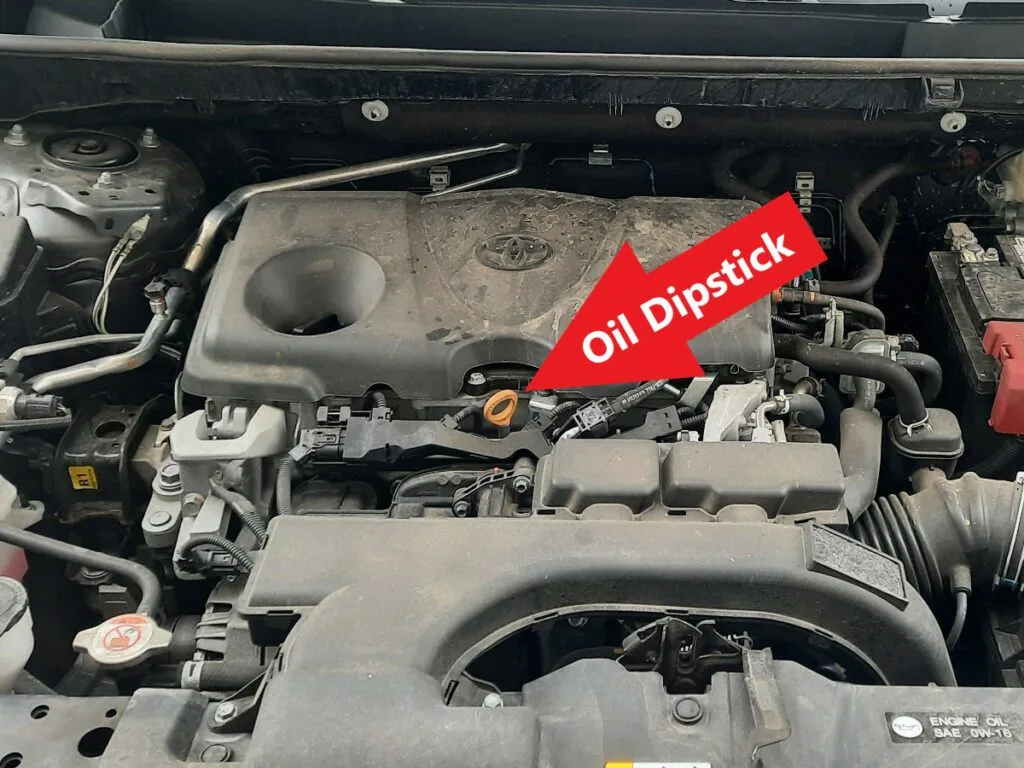
Image source: Web (Bing) / rav4resource.com (Web image (fair-use with source credit))
Gas vs. Hybrid: The Two Different Oil Capacities You Need to Know
This is where most confusion starts. The 2017 RAV4 comes in two very different powertrain configurations under the hood, and they do not share the same oil capacity.
Gas model (2AR-FE engine): 4.6 quarts (4.4 liters) with filter replacement. Without a filter change, you're looking at roughly 4.4 quarts, but you should always replace the filter during an oil change. The filter holds about 0.2 quarts, and skipping it leaves old contaminants in the system.
Hybrid model (2AR-FXE engine): 4.4 quarts (4.2 liters) with filter replacement. The hybrid engine is built on the same block but uses a different piston design and Atkinson cycle timing. The oil pan is shallower, and the total system volume is slightly lower.
If you're unsure which you have, check your VIN or look at the engine cover. The hybrid has orange high-voltage cable markings under the hood. The gas model does not.
There's also a badge on the rear liftgate, but that can be misleading on a used car if someone swapped a panel.
Here's a quick reference table:
| Model | Engine Code | Oil Capacity (with filter) | Oil Capacity (without filter) |
|---|---|---|---|
| 2017 RAV4 Gas | 2AR-FE | 4.6 qt (4.4 L) | 4.4 qt (4.2 L) |
| 2017 RAV4 Hybrid | 2AR-FXE | 4.4 qt (4.2 L) | 4.2 qt (4.0 L) |
Both use the same oil type and filter part number, so you only need to buy one kind of oil and one filter regardless of which model you own. That simplifies things if you're maintaining multiple Toyotas.
If you're also maintaining other Toyota models, the correct fluid level for each vehicle matters just as much. A routine oil change is the single most important thing you can do for engine life, and Toyota's general engineering philosophy carries across their lineup.
The Exact Specs: Oil Type, Viscosity, and Filter Requirements
Toyota requires full synthetic 0W-20 motor oil for the 2017 RAV4. This is not a suggestion. The engine was designed with tight bearing clearances that rely on the thinner cold-flow properties of 0W-20 to reach critical parts during startup.
Using a thicker oil like 5W-30 might seem safer if you live in a hot climate, but it can delay oil delivery to the timing chain tensioner and variable valve timing actuators on a cold start.
The oil must meet API SN or SN Plus with ILSAC GF-5 certification. Those letters are printed on the back of every bottle. Look for the starburst symbol.
If it's not there, do not use it.
As of 2026, most major synthetic brands meet or exceed these specs. You don't need to buy the most expensive boutique oil. A quality synthetic from a reputable refiner is sufficient.
Recommended viscosity by temperature:
- 0W-20: All temperatures. Toyota does not list an alternative viscosity for this engine.
- 5W-30: Not recommended by Toyota for this model year. The owner's manual explicitly warns against it.
Oil filter part number: Toyota Genuine 04152-YZZA1. This is a cartridge-style filter. Several aftermarket brands make equivalent filters, but the genuine Toyota part is inexpensive and readily available.
The filter also includes a new O-ring for the housing cap.
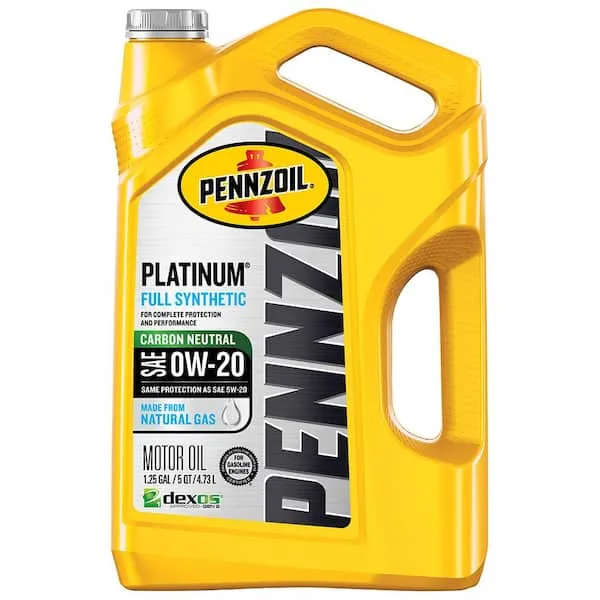
Image source: Web (Bing) / homedepot.com (Web image (fair-use with source credit))
Step-by-Step: How to Change Your 2017 RAV4 Oil the Right Way
You can do this in your driveway with basic tools. Plan for about 45 minutes the first time. Here's the correct sequence.
What you'll need:
- 4.6 quarts (gas) or 4.4 quarts (hybrid) of 0W-20 synthetic oil
- One oil filter (Toyota 04152-YZZA1 or equivalent)
- 14mm socket for the drain plug
- Oil filter wrench (if the filter is on tight)
- Torque wrench (recommended)
- Drain pan (at least 6-quart capacity)
- Funnel
- Nitrile gloves
- New crush washer for the drain plug
The process:
Warm up the engine for two to three minutes. Warm oil flows faster and carries more suspended contaminants out with it. Do not run it long enough to get hot. Lukewarm is the goal.
Park on level ground and engage the parking brake. Jack up the front of the vehicle if you need clearance, but always use jack stands. Never crawl under a car supported only by a hydraulic jack.
Remove the oil fill cap. This helps the oil drain faster by equalizing pressure inside the crankcase.
Position the drain pan under the drain plug. The plug is on the rearward side of the oil pan, facing the front of the vehicle.
Use a 14mm socket to loosen the drain plug. Turn it counterclockwise. Once loose, unscrew it by hand and let the oil flow into the pan. Watch for the crush washer. It often sticks to the plug or the pan.
Let the oil drain for at least five minutes. Ten is better. A full drain removes more old oil and contaminants.
Remove the oil filter. On the 2017 RAV4, the filter housing is accessible from underneath on the driver's side. Use a filter wrench if needed. Turn counterclockwise. Be ready for residual oil to spill.
Replace the O-ring on the filter housing cap. Lubricate the new O-ring with a thin coat of fresh oil before reinstalling.
Install the new filter cartridge. Tighten the housing cap by hand until it seats, then give it another three-quarter turn. Do not overtighten.
Install a new crush washer on the drain plug. Torque the plug to 30 ft-lbs (40 Nm). If you don't have a torque wrench, snug it firmly with a standard ratchet and stop. Over-torquing strips the oil pan threads.
Add oil. Pour in about 4 quarts first. Then check the dipstick. Add the remaining oil in small increments until the level reaches the full mark.
Run the engine for 30 seconds. Shut it off. Wait two minutes for the oil to settle. Check the dipstick again. Top off if needed.
Reset the oil maintenance light. With the ignition on and the odometer showing trip A, turn the vehicle off. Hold the trip reset button. Turn the ignition back on while holding the button. Continue holding until the light resets.
The first time you do this, you might spill a little oil past the funnel. Keep a rag handy. Clean up any drips before starting the engine to avoid burning off oil on the exhaust manifold.
Common Mistakes That Can Wreck Your Engine
Even experienced DIYers make errors on this generation of RAV4. The 2AR-FE and 2AR-FXE engines have a few quirks that catch people off guard.
Overfilling is the most common mistake. You pour in a full five-quart jug because that's what you bought. The gas engine only needs 4.6 quarts. The hybrid needs 4.4.
That extra half quart causes the crankshaft to churn the oil into foam. Foam doesn't lubricate. It also puts pressure on the rear main seal and can cause leaks.
Using the wrong viscosity runs a close second. A previous owner might have used 5W-30. An oil change shop might have topped it off with 10W-30. The engine will run, but cold-start wear accelerates significantly.
The timing chain tensioner relies on quick oil pressure. Thicker oil delays that pressure.
Forgetting the crush washer is another easy miss. The aluminum washer deforms during tightening to create a seal. Reusing an old one or leaving it off entirely guarantees a slow drip. Over time, that drip can drop enough oil to trigger a low oil pressure warning.
Overtightening the drain plug strips the oil pan threads. The oil pan on this engine is aluminum. The threads are soft. The torque spec is 30 ft-lbs.
Going beyond that can ruin the pan, which means a $300 replacement part and a full day of labor.
Skipping the O-ring on the filter housing causes a leak. The new filter comes with an O-ring. If you forget to install it, or if the old one stays stuck to the housing, oil will seep past the cap. You'll notice a puddle under the car after the first drive.
Not warming the engine before draining leaves old oil in the pan. Cold oil is thick. It clings to internal surfaces. A warm engine drains more completely, removing more suspended contaminants.
A two-minute warmup makes a measurable difference.
Here's a quick summary of what to avoid:
| Mistake | Consequence | Prevention |
|---|---|---|
| Overfilling | Oil foaming, seal damage, pressure loss | Measure carefully, check dipstick |
| Wrong viscosity | Increased cold-start wear | Use only 0W-20 synthetic |
| Reusing crush washer | Slow oil leak | Replace every change |
| Overtightening drain plug | Stripped oil pan threads | Torque to 30 ft-lbs |
| Skipping filter O-ring | External oil leak | Install new O-ring every time |
| Draining cold oil | Incomplete drain, trapped contaminants | Warm engine 2–3 minutes |
The Cost Breakdown: DIY vs. Dealer vs. Quick-Lube
Money matters. An oil change on a 2017 RAV4 can cost anywhere from $35 to $130 depending on who does it. Here's how the numbers shake out.
DIY oil change. A five-quart jug of quality 0W-20 synthetic runs about $22 to $28. A Toyota genuine oil filter costs $8 to $12. A crush washer pack is $3 for a five-pack from the dealer.
Total cost: roughly $33 to $43 for the first change, then cheaper after you own the supplies. You also need a drain pan and a 14mm socket if you don't already have them.
Dealership oil change. Expect to pay $80 to $120. Toyota dealers use genuine parts and 0W-20 synthetic. They also perform a multi-point inspection and top off fluids.
The convenience is real. The premium is steep.
Quick-lube chain. Prices range from $60 to $90. The catch is that many chains use bulk oil from unmarked drums. You have no guarantee of the brand or quality.
Some locations still try to upsell 5W-30 or conventional blends. Our research into customer feedback indicates that quick-lube shops frequently overfill or underfill this specific model.
Who should do what:
- DIY is best if you have basic tools and 45 minutes. You control the quality and save money.
- Dealership is best if you want a documented service record and don't want to get dirty.
- Quick-lube is a middle ground, but check the oil level before leaving the lot. We have seen too many reports of incorrect fills.
How to Check Your Oil Level Correctly (It's Not What You Think)
Most people check oil wrong. They pull the dipstick, wipe it, dip it, and read it immediately. That works for some cars, but the 2017 RAV4 has a specific procedure.
Check the oil when the engine is warm and has been off for two to three minutes. If you check it cold, the oil has drained into the pan and reads artificially high. If you check it immediately after shutting down, oil is still circulating and the reading reads low. The two to three minute window gives the oil time to settle into the pan without fully draining the upper engine.
Park on level ground. This seems obvious, but a slight incline tilts the oil in the pan and gives a false reading. Even a driveway slope can throw it off by half a quart.
Pull the dipstick, wipe it clean, reinsert it fully, then pull it again. Read the level where the oil film ends. The dipstick has two marks. Low and full.
The full mark is a small hole or a crosshatch line depending on the dipstick design. The oil should sit between those two marks.
Do not overthink it. If the oil is between low and full, you are fine. If it's at the low mark, add half a quart and recheck. If it's above the full mark, you need to drain some out.
Do not drive with it overfilled.
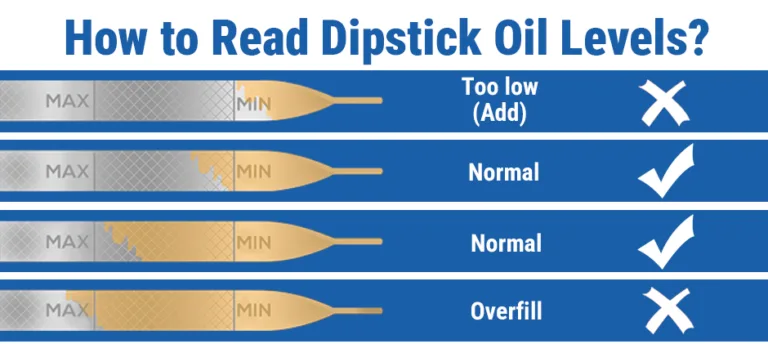
Image source: Web (Bing) / fridayparts.com (Web image (fair-use with source credit))
How much oil does each mark represent? The distance between the low and full marks on the dipstick represents roughly one quart. So if the oil is halfway between the marks, you are about half a quart low. That is not an emergency, but top it off soon.
Check it regularly. Oil consumption varies by driving style and engine condition. Some 2AR-FE engines consume a quart every 3,000 to 5,000 miles as they age. Others barely burn any.
Checking once a month prevents surprises.
What Happens If You Use the Wrong Oil or Capacity
The consequences range from reduced fuel economy to catastrophic engine failure. Let's be specific.
Wrong viscosity. Using 5W-30 instead of 0W-20 increases cold-start wear. The oil pump has to work harder to push thicker oil through narrow passages. The variable valve timing system responds slower because oil pressure builds more slowly.
Fuel economy drops by 1 to 3 miles per gallon. Toyota's engineering teams chose 0W-20 for a reason. It is not a suggestion.
Wrong capacity. Underfilling by a quart means the oil pickup tube can suck air during hard acceleration or steep climbs. That air bubble reaches the bearings and causes momentary metal-on-metal contact. Over time, this scores the bearing surfaces.
Overfilling causes foaming, which does the same thing through a different mechanism.
Wrong oil type. Using conventional oil instead of synthetic accelerates sludge formation in the variable valve timing phasers. The 2AR-FE engine has small oil passages that clog easily. Synthetic oil resists breakdown at high temperatures and flows better at cold temperatures.
Mixing viscosities. Topping off with 5W-30 when you're a quart low is better than running low. But it dilutes the 0W-20 in the crankcase. The overall viscosity shifts upward.
Do it enough times, and the oil in your engine is effectively 5W-30. Drain and refill with the correct oil at the next change.
The bottom line: The engine will probably survive one mistake. A single oil change with the wrong capacity or viscosity is unlikely to kill it. Repeated mistakes compound.
Stick to the spec every time.
When to Change the Oil: Mileage Intervals and Driving Conditions
Toyota recommends 10,000 miles between oil changes for the 2017 RAV4 under normal driving conditions. That assumes highway driving, moderate temperatures, and clean roads. Most people do not drive under normal conditions.
Severe driving conditions cut the interval in half. Toyota defines severe as:
- Short trips under five miles in cold weather
- Extensive idling or stop-and-go traffic
- Driving on dusty or unpaved roads
- Towing a trailer
- Operating in extreme heat or cold
If any of these apply to your daily commute, change the oil every 5,000 miles. The engine will thank you. The extra cost is about $30 to $40 per year.
The alternative is accelerated wear that no warranty covers.
Time also matters. Even if you drive fewer than 5,000 miles per year, change the oil at least once a year. Oil absorbs moisture from the air and combustion byproducts over time. That moisture creates acidic compounds that eat at bearing surfaces.
A yearly change prevents that.
The oil life monitor system helps. Toyota's maintenance reminder system tracks driving conditions and calculates remaining oil life. It is reasonably accurate. When it hits 15 percent or less, schedule your change.
Do not ignore it for another thousand miles.
Our advice: If you drive mostly highway, follow the 10,000 mile interval. If you sit in traffic, make short trips, or tow anything, stick to 5,000 miles. Your engine will last longer, and the cost difference is minimal compared to an engine replacement.
Tools and Parts You'll Need for a DIY Oil Change
Everything you need fits in a small cardboard box. Gather these before you start so you are not hunting for a socket mid-drain.
Oil. Five quarts of 0W-20 synthetic. Buy a single five-quart jug. It is cheaper than five individual quarts and you will have a little left over for top-offs between changes.
The gas RAV4 uses 4.6 quarts. The hybrid uses 4.4 quarts. A five-quart jug covers both.
Oil filter. Toyota part 04152-YZZA1. Aftermarket equivalents from Mobil 1, Fram, or Wix also work. Just confirm they cross-reference to the OEM number.
Avoid no-name filters with unmarked packaging.
Drain plug crush washer. Toyota part 90430-12031. This is a small aluminum ring that deforms during tightening to create a seal. Replace it every time.
Reusing it invites a drip.
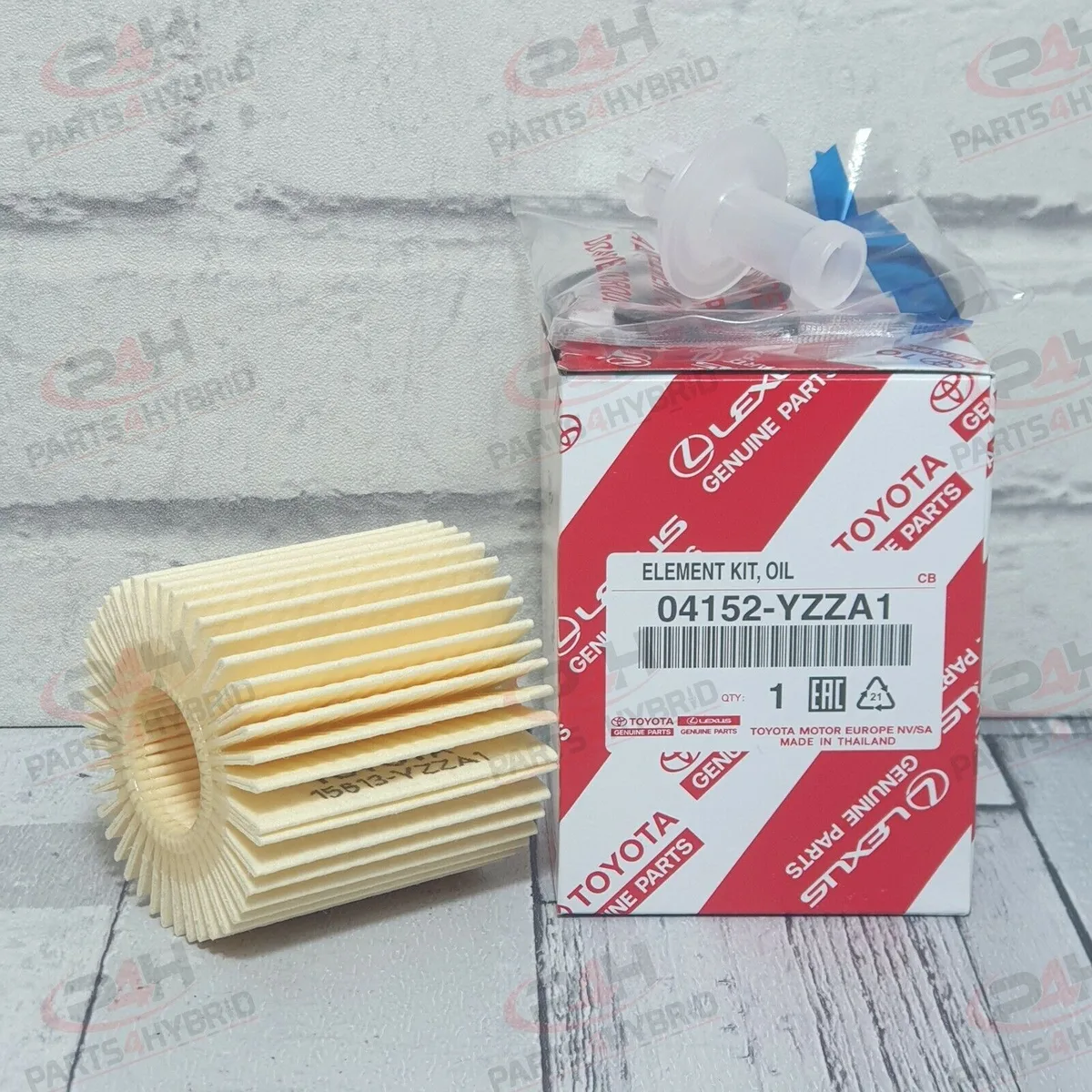
Image source: Web (Bing) / parts4hybrid.co.uk (Web image (fair-use with source credit))
Tools you need:
- 14mm socket and ratchet
- Oil filter wrench (typically a cap-style that fits the housing)
- Torque wrench (optional but recommended)
- Drain pan with at least 6-quart capacity
- Funnel (a small one with a narrow neck works best for the fill port)
- Nitrile gloves
- Shop rags or paper towels
- Jack and two jack stands (if you need extra clearance)
Tools you do not need:
- A ramp (nice to have but not required)
- An impact gun (do not use one on the drain plug)
- Specialty scan tools (the oil light reset is manual)
A basic socket set and a trip to the auto parts store are all that stand between you and a done oil change. The total investment in tools is about $30 if you start from zero. That pays for itself on the first change compared to dealer pricing.
Frequently Asked Questions
Can I use 5W-30 instead of 0W-20 in my 2017 RAV4?
Toyota does not recommend it. The 2AR-FE and 2AR-FXE engines have tight bearing clearances designed for 0W-20. Using 5W-30 increases cold-start wear and reduces fuel economy by 1 to 3 mpg.
If you are in an emergency and have no other option, it will not destroy the engine immediately, but swap back at the next change.
How do I know if my RAV4 is a gas or hybrid?
Look under the hood for orange high-voltage cables. Hybrid models have them running from the engine bay to the inverter. Gas models do not.
You can also check the VIN. The eighth character indicates the engine type, but the easiest method is the orange cables.
What happens if I overfill the oil by half a quart?
The crankshaft will whip the excess oil into foam. Foam does not lubricate well. It also puts pressure on the rear main seal.
Over time, this causes leaks and accelerated bearing wear. Drain the excess if you notice the level above the full mark on the dipstick.
How often should I check the oil level on my 2017 RAV4?
Once a month is reasonable. Older engines tend to consume more oil, and the 2AR-FE is known to use a quart every 3,000 to 5,000 miles as it ages. A monthly check takes 30 seconds and prevents low oil pressure damage.
Do I need to reset the oil maintenance light after a DIY change?
Yes. The light is calculated based on driving conditions, not actual oil level. Turn the ignition to ON with the odometer showing trip A.
Turn the ignition OFF. Hold the trip reset button. Turn the ignition back to ON while holding the button.
Continue holding until the light blinks and goes out. Release the button.
The Final Takeaway: What to Do Next
You now have everything you need to change the oil on your 2017 RAV4 correctly. The gas model takes 4.6 quarts of 0W-20 synthetic. The hybrid takes 4.4 quarts.
Use a quality filter. Replace the crush washer. Torque the drain plug to 30 ft-lbs.
Check the dipstick after filling.
If you are doing it yourself, set aside 45 minutes on a Saturday morning. If you are taking it somewhere, know the spec so you can verify their work. A quick dipstick check before leaving the lot catches most mistakes.
The 2017 RAV4 is a reliable SUV that rewards good maintenance. Getting the oil right is the single most important thing you can do for the engine. Follow the spec every time.
Your engine will return the favor with another hundred thousand miles.