
If you own a 2022 Toyota Highlander, the last thing you want is to dump the wrong amount of oil into the engine. It sounds simple, but the 2022 toyota highlander oil capacity changes depending on which engine is under the hood. Put in too little and you risk engine starvation.
Too much and you can blow seals or damage the catalytic converter.
Manufacturer specifications from Toyota confirm three different engines were offered this model year, and each one has a distinct fill volume. As of 2026, these numbers haven't changed, so you can trust the factory specs whether you are doing the oil change yourself or just double-checking the shop's work. Let's walk through exactly what you need to know.
Quick Answer
The 2022 Toyota Highlander holds between 4.4 and 5.7 quarts of oil. The hybrid takes 4.4 quarts. The 2.4L turbo takes 4.8 quarts.
The gas V6 takes 5.7 quarts. All three engines require SAE 0W-20 full synthetic oil. Check your dipstick after filling for confirmation.
Why Getting the Oil Capacity Wrong Can Cost You Thousands
An extra quart of oil sounds like no big deal. But inside a modern Toyota engine, the crankshaft spins through a pool of oil at the bottom of the pan. When you overfill, the crankshaft whips that oil into a froth.
Aerated oil doesn't lubricate well. Thin, foamy oil can't maintain proper oil pressure, and that leads to metal-on-metal contact inside the bearings.
The consequences aren't subtle. Overfilled engines can push oil past piston rings, causing excessive oil consumption and fouled spark plugs. The excess pressure can blow out the rear main seal, a repair that easily runs $1,500 to $2,500 at a shop.
On the hybrid model, overfilling can damage the transaxle assembly because the electric motor and transmission share the same oil system in some configurations. That repair lands closer to $4,000.
Underfilling is equally dangerous. When the oil level drops too low, the oil pickup tube sucks air instead of oil. Low oil pressure warnings flash, and the engine's internal components start wearing fast.
A spun rod bearing from oil starvation typically means a full engine replacement, which can cost $6,000 to $8,000 on a Highlander.
Toyota's warranty is strict about this. If a dealer finds evidence of the wrong oil level or wrong oil type during a warranty claim, they can deny coverage. That makes knowing the exact specification a financial protection, not just a maintenance preference.
The Three Engines in the 2022 Highlander and Their Specs
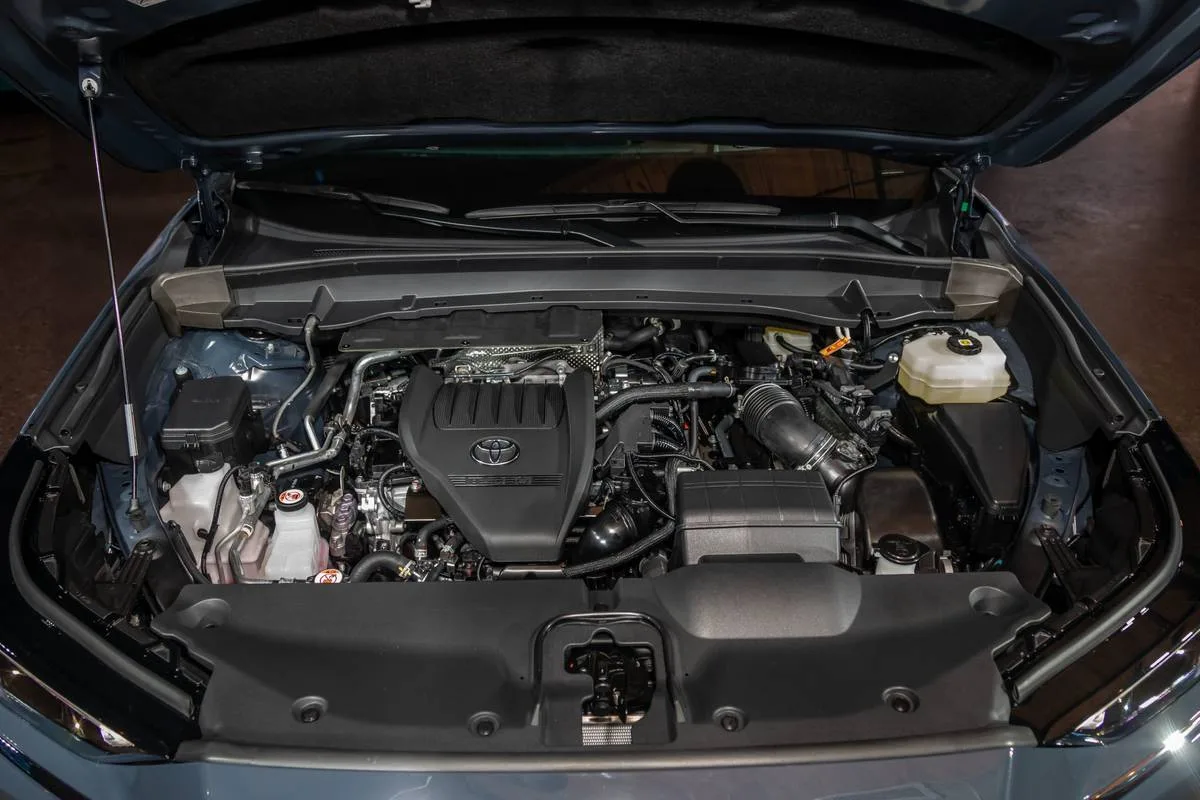
Toyota gave buyers three powertrain options for the 2022 model year. Each has a different oil capacity because the oil pan size and internal architecture vary. Here is the breakdown.
3.5L V6 Gas Engine – 5.7 Quarts
This is the 2GR-FKS engine, a proven V6 that Toyota has used across multiple platforms. It produces 295 horsepower and requires 5.7 quarts of oil with a filter change. The oil pan is deeper than the other two engines, which explains the larger capacity.
If you are draining the oil and replacing the filter, measure out the full 5.7 quarts before pouring. Start with about 5.3 quarts, check the dipstick, then top off slowly.
2.5L Hybrid Engine – 4.4 Quarts
The hybrid powertrain uses the A25A-FXS four-cylinder engine paired with electric motors. This engine holds 4.4 quarts total. The smaller capacity reflects the engine's compact design and lower oil demand.
Many owners mistakenly add 5 quarts because they assume a crossover SUV takes a standard amount. Do not do that. Pour in 4 quarts, check the level, then add the remaining 0.4 quarts gradually.
2.4L Turbo Engine – 4.8 Quarts
The 2.4L turbocharged four-cylinder (T24A-FTS) was new for 2022, replacing the old 2.0T in the base model. It holds 4.8 quarts. Turbocharged engines run hotter and put more stress on the oil, so staying at the exact fill level matters even more.
Underfilling by even half a quart can cause oil starvation to the turbocharger, which grenades quickly.
Here is a quick reference table:
| Engine | Displacement | Oil Capacity (with filter) | Recommended Oil |
|---|---|---|---|
| 3.5L V6 | 3,456 cc | 5.7 quarts (5.4 L) | SAE 0W-20 |
| 2.5L Hybrid | 2,487 cc | 4.4 quarts (4.2 L) | SAE 0W-20 |
| 2.4L Turbo | 2,393 cc | 4.8 quarts (4.5 L) | SAE 0W-20 |
What Kind of Oil Does It Take?
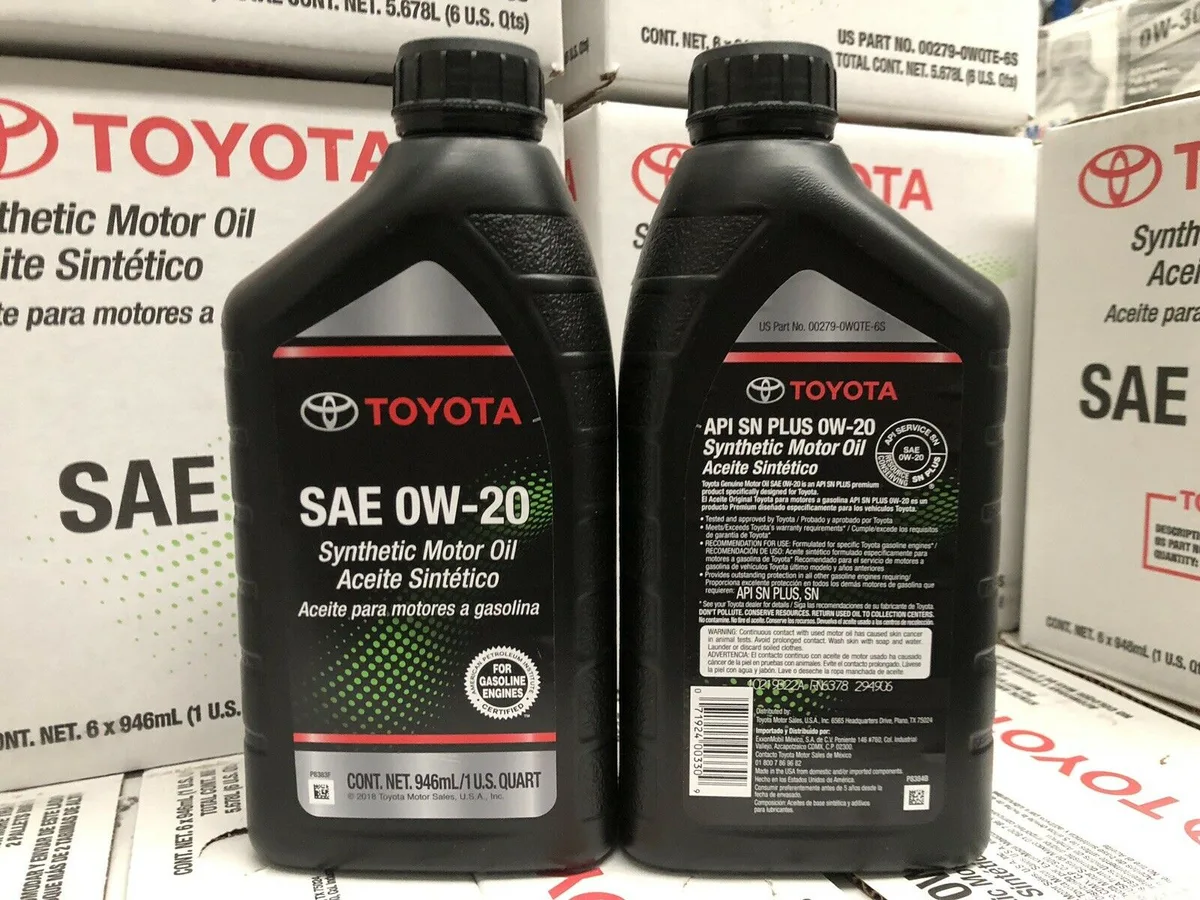
Oil type is just as critical as oil quantity. Toyota specifies SAE 0W-20 full synthetic oil for all three 2022 Highlander engines. That is not a suggestion.
It is a required viscosity grade for warranty compliance and proper engine operation.
Viscosity: 0W-20 Across the Board
The "0W" means the oil flows like a thin 0-weight oil when cold. That matters for cold starts. The 2022 Highlander uses variable valve timing systems that rely on oil pressure to adjust cam timing.
Thick oil on a cold morning delays that response. The "20" means the oil thickens to a 20-weight at operating temperature, which provides the right film strength for the tight clearances in these modern engines.
Some owners wonder if they can switch to 5W-30 for hotter climates or higher mileage. Toyota's official position is no. The engine was designed around 0W-20.
Using a thicker oil reduces fuel economy, increases engine wear during warm-up, and can trigger check engine lights on some models because the oil pressure sensor sees higher-than-expected readings. Stick with 0W-20.
Synthetic vs. Conventional – Can You Switch?
Toyota recommends full synthetic oil from the factory. The 2022 Highlander's recommended oil change interval is 10,000 miles, and conventional oil cannot reliably last that long. Synthetic oil resists thermal breakdown better, flows better in cold weather, and protects turbocharger bearings more effectively.
Can you use conventional oil if you are in a pinch? Yes, but only as a temporary measure. If you are stranded and the only oil available is conventional 0W-20, it will get you home.
But change it back to synthetic at the next interval. Using conventional oil long-term will require more frequent changes, roughly every 3,000 to 5,000 miles, and it won't protect the variable valve timing system as well over the engine's life.
API and ILSAC Ratings That Matter
Look for the API "SN" or "SP" certification mark on the bottle. The "SP" rating is the latest and includes better protection against low-speed pre-ignition, which is important for the turbocharged engine. The ILSAC GF-6 rating is the newest standard and covers fuel economy and deposit control.
Any oil bottle with both marks is safe.
Common Mistakes That Kill Highlander Engines
If you want your Highlander to hit 200,000 miles, avoid these four errors. Each one is surprisingly common among DIY owners and even some quick-lube shops.
Overfilling – The Silent Engine Killer
The most frequent mistake is dumping a full 5-quart jug into the V6 engine without checking the dipstick. That 5.7-quart capacity means you need to add the 5-quart jug plus about 0.7 quarts more. But many people overpour.
The dipstick shows oil above the full mark, and they assume it is fine.
Overfilling by even half a quart causes the crankshaft to dip into the oil. The rotating assembly churns the oil into foam. Foam does not lubricate.
The oil pump picks up aerated oil, and hydraulic lifters start ticking. Within a few hundred miles, bearing surfaces can show wear. On the hybrid model, the risk is even higher because the electric motor cooling system shares oil with the engine in certain configurations.
Using the Wrong Viscosity
Some owners mistakenly believe heavier oil protects better. They pour in 5W-30 or 10W-30 because that is what they used in their old truck. On a 2022 Highlander, 5W-30 increases engine drag, drops fuel economy by about 2 to 3 percent, and increases cold-start wear.
The oil pressure sensor may also trigger a warning light if the thicker oil causes higher-than-normal pressure readings at idle.
Forgetting the Crush Washer
The drain plug on the Highlander uses a crush washer that deforms during tightening to create a seal. If you reuse the old washer or forget to install a new one, the plug will leak. A slow drip over time drops the oil level enough to cause damage.
The crush washer costs about a dollar. Replace it every oil change.
Stripping the Drain Plug
The oil pan is aluminum. The drain plug threads into soft metal. Overtightening with a long ratchet strips the threads instantly.
The torque spec for the 2022 Highlander drain plug is 30 foot-pounds for the V6 engine and 27 foot-pounds for the hybrid and turbo. Use a torque wrench. If you strip the threads, you either need a thread repair kit or a new oil pan, which costs several hundred dollars.
How Often Should You Change the Oil?
Toyota's official maintenance schedule says every 10,000 miles or 12 months, whichever comes first. But that is under normal driving conditions. Most people do not drive under normal conditions.
Normal Service Schedule (10,000 Miles)
Normal service means highway driving at moderate speeds in moderate temperatures. If your commute is 30 minutes on the freeway each way and you don't tow anything, 10,000-mile intervals are fine. Use full synthetic 0W-20 and a quality filter.
Toyota's genuine filter or a premium aftermarket filter like Wix or Purolator works well.
Severe Service Schedule (5,000 Miles)
Toyota defines severe service as frequent short trips (under 5 miles), stop-and-go traffic, extreme heat or cold, dusty roads, or towing. If you live in Phoenix and commute through city traffic, you are on severe service. The owner's manual explicitly recommends 5,000-mile oil changes for severe service.
What Counts as Severe Service?
Let's be honest. Most city driving qualifies. If the engine does not reach full operating temperature on most of your trips, condensation builds up in the oil.
That water contamination breaks down the oil's additives. If you idle in traffic for 20 minutes a day, the oil sees extended high-temperature exposure without enough airflow to cool it. For the turbo engine, heat soak after a hard drive degrades the oil faster.
Our rule of thumb: if your average trip is under 10 miles, change the oil every 5,000 miles. It costs an extra $30 to $50 per year and adds years to the engine's life. That is cheap insurance against a $7,000 engine replacement.
For other Toyota models, the same principles apply. If you own a different Toyota, check out our guides on the recommended oil for the RAV4 and the correct fluid level for the Tacoma. Each engine platform has its own specific requirements.
Step-by-Step: How to Check Your Oil Level Correctly
Knowing the capacity is one thing. Reading the dipstick accurately is another. A surprising number of people check the oil level wrong, and that leads to either overfilling or underfilling.
Cold Check vs. Warm Check – Which One Is Right?
Toyota recommends checking the oil when the engine is warm and has been turned off for about five minutes. Warm oil flows back into the pan faster. A five-minute wait lets the oil drain down from the upper engine components but keeps it warm enough to read accurately.
A cold check works too, but the level will read slightly lower because cold oil is thicker and drains slower. If you check cold, the level might show a quarter quart low even when the engine is perfectly full. That can trick you into adding oil you do not need.
Here is the procedure that works every time:
- Park on level ground. Even a slight tilt throws off the reading.
- Turn the engine off and wait five minutes.
- Pull the dipstick out and wipe it clean with a lint-free rag.
- Insert it all the way back in, then pull it out again.
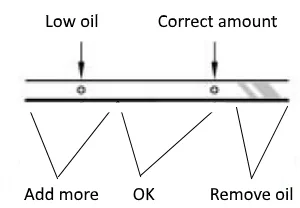
- Read the oil level. It should sit between the low and full marks.
- The full mark is usually indicated by a dot, a line, or a crosshatch area.
Reading the Dipstick Accurately
The dipstick on the 2022 Highlander has two marks. The lower mark means you are one quart low. The upper mark is the full level.
If the oil sits anywhere between those two marks, you are within the safe operating range.
The tricky part is that some dipsticks show oil smeared across the entire blade. That happens when you pull the dipstick out too quickly or when the tube is narrow. To get a clean reading, pull the dipstick out slowly and steadily.
Wipe it thoroughly. Reinsert it and let it sit for two seconds before pulling it out again. The oil line should be crisp and clean.
If you see bubbles on the dipstick that is a warning sign. Bubbles mean air is getting mixed into the oil, which points to either overfilling or a failing oil pump. Address it quickly.
DIY Oil Change – What You'll Need
You can change the oil on a 2022 Highlander in about 30 minutes. The tools and parts are straightforward. Here is exactly what you need.
Tools and Parts List
Gather these items before you start. Running to the auto parts store mid-job is frustrating and wastes time.
| Item | Specification | Notes |
|---|---|---|
| Oil | 0W-20 full synthetic, API SP rated | 5-quart jug plus 1 quart |
| Oil filter | Toyota 04152-YZZA6 or equivalent | OEM or premium aftermarket |
| Drain plug washer | Toyota 90430-12031 or generic M12 crush washer | Replace every change |
| Socket set | 14mm socket for the drain plug | 3/8-inch drive works fine |
| Torque wrench | 30 ft-lb (V6) or 27 ft-lb (hybrid/turbo) | Do not skip this |
| Oil filter wrench | Metal cap-style or strap wrench | Plastic filters can be tight |
| Drain pan | 8-quart capacity minimum | The V6 drains 5.7 quarts |
| Funnel | Long-neck funnel | Helps avoid spills |
| Rags | Lint-free shop towels | Microfiber or paper shop towels |
Torque Specs You Should Know
Torque specs are not optional on a modern Toyota engine. The oil pan is aluminum. The drain plug is steel.
Aluminum expands and contracts at a different rate than steel. If you overtighten the plug when it is cold, the threads can strip when the engine heats up and the aluminum expands.
- Drain plug torque (V6): 30 foot-pounds
- Drain plug torque (hybrid and turbo): 27 foot-pounds
- Oil filter torque: 18 foot-pounds (about hand tight plus three-quarters of a turn)
Most DIY owners overtighten the filter. The rubber gasket seals at hand tight. Going past that crushes the gasket and makes the next removal a nightmare.
Oil Filter Part Numbers
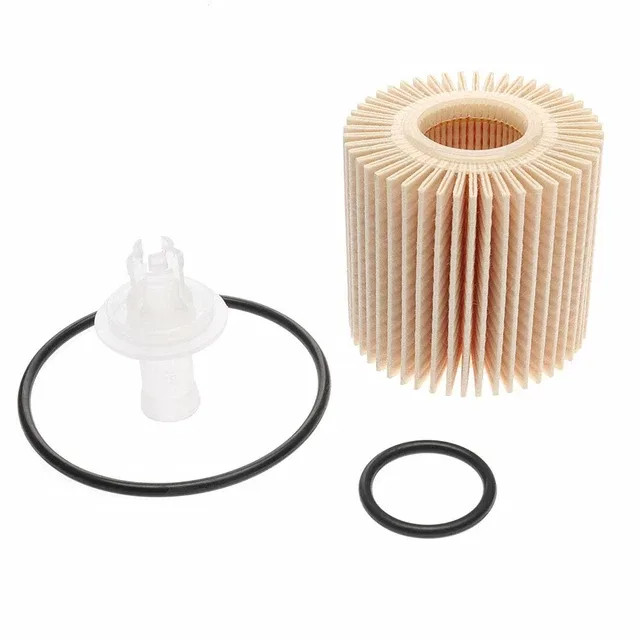
The OEM oil filter for the 2022 Highlander is part number 04152-YZZA6. That filter fits all three engines. If you cannot find the OEM filter, a Wix 57056 or Purolator PL14610 works well.
Avoid cheap no-name filters. A bad filter can collapse internally, bypass unfiltered oil, or leak at the gasket.
The filter location is on the front of the engine, mounted sideways. On the V6, it sits behind a plastic splash shield that you need to remove. Two clips and three bolts hold the shield in place.
It takes about two minutes to remove.
Dealer vs. DIY vs. Quick-Lube – Pros and Cons
You have three options for getting the oil changed. Each has trade-offs.
Dealer oil changes cost $80 to $120 on average. The benefit is that Toyota technicians see these engines every day. They know the capacity.
They have the correct oil in bulk. The downside is scheduling. You need an appointment.
The wait is often an hour or more. And some dealers push unnecessary services like fuel system cleaning or throttle body cleaning.
DIY oil changes cost about $35 to $45 for materials. That is a significant savings over time. The downside is your time and the need to dispose of used oil properly.
Auto parts stores like AutoZone and Advanced Auto Parts accept used oil for free. You also need space and tools. If you live in an apartment complex, DIY might not be practical.
Quick-lube chains cost $60 to $90 and take about 20 minutes. The convenience is real. But the risk is also real.
National chains have a reputation for using the wrong oil, overfilling, or stripping drain plugs. The turnover is high, and the technician working on your car might have been on the job for two weeks. If you go this route, verify the oil type and capacity on the work order before they start.
For the 2022 Highlander specifically, the hybrid model seems to confuse quick-lube techs most often. They see a Toyota crossover and assume it takes the standard 5 quarts. Make sure they know it takes 4.4 quarts.
When to Call a Mechanic Instead
Some oil-related problems require professional attention. If you see these signs, do not reach for a wrench. Reach for a phone.
Oil puddles under the car that are dark and oily usually point to a leak. The most common leak points on this engine are the valve cover gaskets and the oil pan gasket. Both require removing parts to access.
A valve cover gasket on the V6 takes about two hours of labor. The oil pan gasket takes longer because the front subframe has to be lowered in some cases.
If the check engine light comes on and the code points to oil pressure issues, do not just add oil and hope. Low oil pressure codes can mean a failing oil pump, a clogged oil pickup tube, or worn bearings. Each of those requires diagnostic time and specialized tools.
Smoke from the exhaust that smells like burning oil means oil is getting into the combustion chamber. On the turbo engine, that can be a failing turbocharger seal. On the V6, it can be worn valve stem seals.
Either way, a mechanic needs to confirm the source.
A ticking noise that gets louder as the engine warms up is often a sign of low oil pressure to the variable valve timing actuators. That can be a clogged oil control valve or low oil level. Check the dipstick first.
If the level is fine and the ticking persists, have a shop inspect the VVT system. Ignoring it can lead to timing chain issues down the road.
If you are unsure about any of these symptoms, the safest move is to schedule a professional inspection. Spending $100 on a diagnosis beats spending $6,000 on an engine.
Frequently Asked Questions
Can I use 5W-30 instead of 0W-20?
Toyota does not recommend 5W-30 for any 2022 Highlander engine. The engine was designed around 0W-20. Using 5W-30 reduces fuel economy, increases cold-start wear, and can trigger a check engine light on some models.
Stick with 0W-20 for warranty compliance and optimal engine life.
What happens if I put in too much oil?
Overfilling causes the crankshaft to churn the oil into foam. Foamy oil does not lubricate properly. Over time, this can damage bearings, seals, and the catalytic converter.
If you overfill by more than half a quart, drain the excess using the drain plug or an oil extractor before running the engine.
Does the hybrid take a different filter?
No. The oil filter part number is the same across all three engines: Toyota 04152-YZZA6. The hybrid and gas models use the same filter threads and bypass valve specification.
Just match the filter to the engine capacity for the correct fill volume.
How do I reset the oil maintenance light?
On the 2022 Highlander, turn the ignition to the ON position without starting the engine. Use the steering wheel controls to navigate to the settings menu. Select "Vehicle Settings," then "Oil Maintenance," then "Reset." Confirm the reset.
The light should turn off. If it stays on, repeat the process or consult your owner's manual.
How do I know which engine I have?
Check the sticker on the inside of the driver's side door jamb. It lists the engine displacement. A "3.5L" label means the V6.
A "2.5L" means the hybrid. A "2.4L" means the turbo. You can also check the owner's manual or the emissions label under the hood.
Can I mix synthetic and conventional oil?
Yes, in an emergency. Mixing synthetic and conventional oil will not damage the engine, but it dilutes the synthetic's performance. The resulting blend will need to be changed sooner.
If you mix, plan on a full oil change within 3,000 miles to restore full synthetic protection.
Can I Mix Synthetic and Conventional Oil?
Yes, in an emergency. Mixing synthetic and conventional oil will not damage the engine, but it dilutes the synthetic's performance. The resulting blend will need to be changed sooner.
If you mix, plan on a full oil change within 3,000 miles to restore full synthetic protection.
What About Oil Additives?
Skip them. Toyota engineers formulated the 0W-20 oil to meet the engine's exact needs. Additives like viscosity boosters or friction reducers can upset the chemical balance.
Some additives even cause sludge formation over time. The only thing your Highlander's engine needs is clean oil at the correct level.
How Do I Know If the Shop Used the Right Oil?
Check the invoice before you leave. It should list the oil viscosity and quantity. If it says 5W-30 or shows a total volume that seems off for your engine, ask questions.
You can also check the dipstick yourself after the change. The oil should be a clear amber color with a thin consistency. Dark or thick oil suggests the wrong type or old oil.
Where Can I Learn More About Toyota Oil Specs?
Toyota's official website has a maintenance section for each model year. The owner's manual PDF is available for free download. You can also check the API certification database for approved oils.
For other Toyota models, our guides cover the RAV4 hybrid, the Tacoma, and the Sienna. Each engine family has its own specs.
Final Verdict – One Simple Rule to Protect Your Engine
Here is the bottom line. Know your engine type before you buy oil. Check your dipstick after every fill.
And change the oil on schedule. Those three steps will keep your 2022 Highlander running past 200,000 miles without major repairs.
The 3.5L V6 needs 5.7 quarts. The 2.5L hybrid needs 4.4 quarts. The 2.4L turbo needs 4.8 quarts.
All three use SAE 0W-20 full synthetic oil with an API SP rating. The oil filter is the same across the board.
If you take one thing from this guide, let it be this. Do not trust a shop to know your engine's capacity. Verify it yourself.
A thirty-second dipstick check after an oil change can save you thousands of dollars in repairs down the road.
For other Toyota models, the same principle applies. The RAV4, the Camry, and the Tundra each have their own specific oil requirements. Always check the owner's manual for your exact model year and engine combination before pouring a single drop.