
If you own a 2022 Toyota RAV4, the engine oil capacity is one of those numbers you really don't want to guess at. Put in too little and you risk metal on metal contact inside the engine. Put in too much and you can foam the oil, mess up your seals, and trigger warning lights that send you straight to the dealership.
The 2022 toyota rav4 oil capacity for the standard gas model is 4.8 quarts (4.5 liters) when you also replace the oil filter, and 4.4 quarts (4.2 liters) for the hybrid version. The engine in both cases is Toyota's 2.5-liter Dynamic Force series, but those two powertrains require different fill volumes. Here is exactly what you need to know before you pop the hood.
Quick Answer
The 2022 Toyota RAV4 gas model takes 4.8 quarts of oil with a filter change. The 2022 RAV4 Hybrid takes 4.4 quarts. Both require 0W-16 full synthetic oil that meets API SP and ILSAC GF-6 standards.
Using the wrong viscosity or filling to the wrong level risks expensive engine damage.
Why Getting the Oil Capacity Wrong Is a Big Deal (Even by a Half-Quart)
Engine oil does more than just lubricate moving parts. It cools critical components, carries away combustion byproducts, and maintains hydraulic pressure inside variable valve timing systems. The 2.5-liter Dynamic Force engine in the 2022 RAV4 was designed with very tight internal clearances to improve fuel economy and power output.
Those tight clearances mean the oil's viscosity and volume matter more than on older engines.
Here is what happens when you get the capacity wrong.
Under-filling by even half a quart leaves the oil pickup tube uncovered during hard cornering or steep inclines. The oil pump sucks air instead of oil, and oil pressure drops instantly. That causes metal on metal wear inside the bearings and camshaft journals within seconds, not miles.
Over-filling by half a quart lets the crankshaft slap into the oil pool as it spins. That whips air into the oil, turning it into a frothy mix that does not lubricate or cool properly. Foamy oil also pushes past piston rings and valve seals, causing smoke from the tailpipe and eventual catalytic converter damage.
Using the wrong viscosity like 5W-30 instead of 0W-16 reduces flow at cold startup. The oil moves slower through the oil galleys, and critical parts starve for lubrication during the first few seconds after ignition. Over time, that wear accumulates.
The 2022 RAV4 also has an oil maintenance reminder system that tracks engine load, temperature, and driving time. It calculates when the oil needs changing based on real conditions, not just mileage. If you fill to the wrong level, the system may still count down normally but the engine is already running outside its design window.
Toyota designed this engine family to run on a very specific oil volume and grade. Straying from either number shortens engine life. As of 2026, that difference could cost you thousands in repairs or a full engine replacement if the damage goes unnoticed.
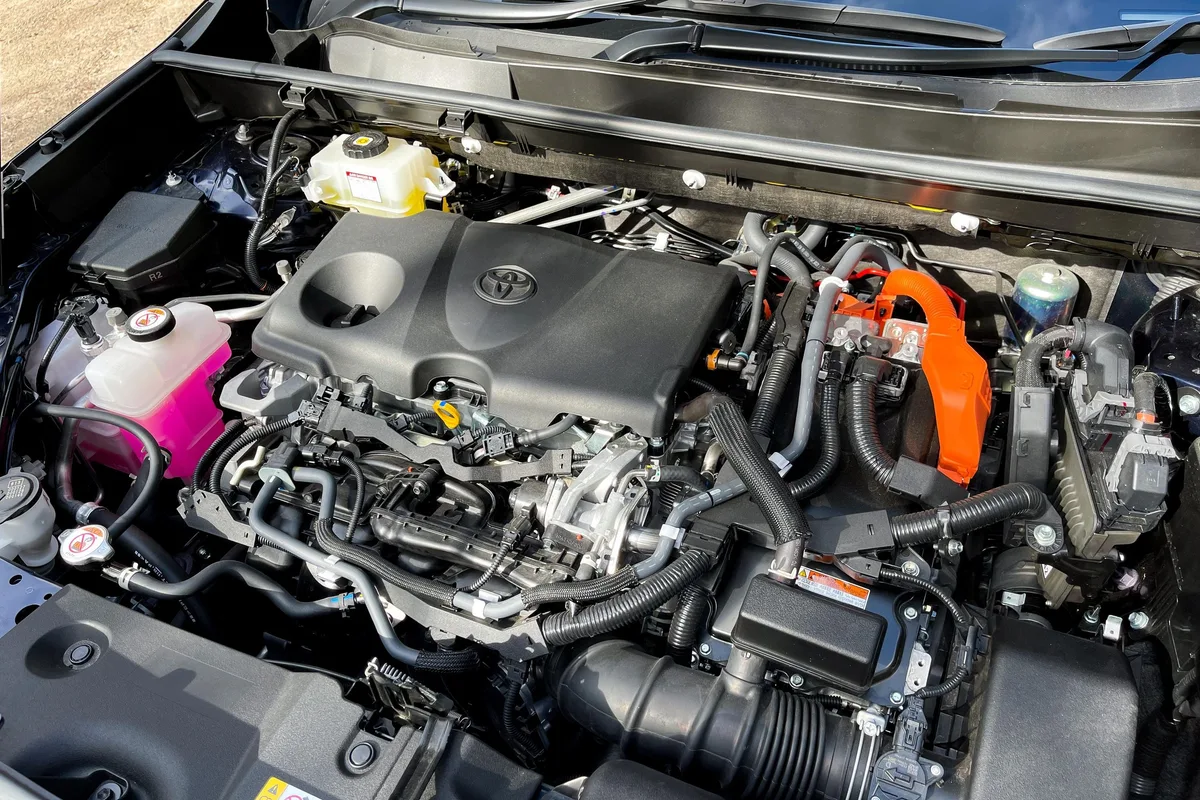
Image source: Web (Bing) / storage.googleapis.com (Web image (fair-use with source credit))
The Quick Numbers: 2022 RAV4 Gas vs. Hybrid Oil Capacity
Let us get the exact numbers down before anything else. These figures come straight from Toyota's factory service documentation for the 2022 model year.
| Model | Engine Code | Oil Capacity (with filter) | Oil Capacity (without filter) | Recommended Oil |
|---|---|---|---|---|
| 2022 RAV4 Gas | A25A-FKS | 4.8 US quarts (4.5 L) | 4.5 US quarts (4.3 L) | 0W-16 full synthetic |
| 2022 RAV4 Hybrid | A25A-FXS | 4.4 US quarts (4.2 L) | 4.1 US quarts (3.9 L) | 0W-16 full synthetic |
The gas model and the hybrid model are not interchangeable on oil volume. Even though both use a 2.5-liter four-cylinder engine from Toyota's Dynamic Force family, the hybrid version has a different oil pan design and a smaller capacity because of packaging constraints around the electric motor components.
If you own the gas model, you need 4.8 quarts for a full oil change with a new filter. That means buying a 5-quart jug and using most of it. For the hybrid, 4.4 quarts means a 5-quart jug leaves about half a quart leftover for top-ups between changes.
One common mistake is assuming the hybrid takes the same amount as the gas version. It does not. Adding 4.8 quarts to a hybrid engine results in an overfill that triggers warning lights and requires draining the excess.
The same principle applies to other Toyota models, so checking the specific capacity for your vehicle is always wise. For instance, you might need to confirm the correct fluid level for your 2021 Camry if you own one as well.
What the 2.5-Liter Engine Needs: Oil Type, Viscosity, and Standards
Oil viscosity is not a suggestion. The 2022 RAV4 requires 0W-16 engine oil. That is the only viscosity Toyota recommends for both the gas and hybrid versions in the owner's manual.
Why 0W-16 Matters (and What Happens If You Use Something Else)
The "0W" part of 0W-16 means the oil flows like a 0-weight oil at cold temperatures. That is crucial for startup lubrication, especially in colder climates. The "16" is the hot operating viscosity.
Older engines typically use 5W-20 or 5W-30, which are thicker when warm.
The 2.5-liter Dynamic Force engine uses low-tension piston rings and very tight bearing clearances. These design choices reduce internal friction and improve fuel economy. But they also require a thinner oil to penetrate those tight gaps.
If you pour in 5W-30, the oil is too thick to flow properly through the oil galleys at cold startup. The engine works harder to pump it, and critical parts do not get immediate lubrication.
What about emergencies? If you absolutely cannot find 0W-16, you can use 0W-20 as a temporary substitute. Toyota's own documentation allows this in a pinch.
But you should drain it and refill with the correct 0W-16 at your next oil change. Do not use 5W-20 or 5W-30 at all.
API SP and ILSAC GF-6 – What Those Certifications Actually Mean
Not all 0W-16 oil is the same. The bottle should carry the API "Starburst" certification mark and the ILSAC GF-6 logo. These certifications mean the oil has passed specific tests for wear protection, sludge control, fuel economy improvement, and compatibility with modern emissions systems.
API SP is the current gasoline engine oil standard as of 2026. It replaced API SN and SN Plus. SP oils offer better protection against low-speed pre-ignition (a problem in turbocharged engines), improved oxidation resistance, and better timing chain wear protection.
ILSAC GF-6 is the International Lubricant Standardization and Approval Committee's latest specification. It focuses on fuel economy and emissions system protection. GF-6 oils are backwards compatible with older ILSAC standards, but older oils are not forward compatible with GF-6 requirements.
If you buy a house brand oil from a major retailer or a name brand like Mobil 1, Castrol, Valvoline, or Pennzoil, look for both marks on the label. If the bottle does not carry them, do not use it in your 2022 RAV4.
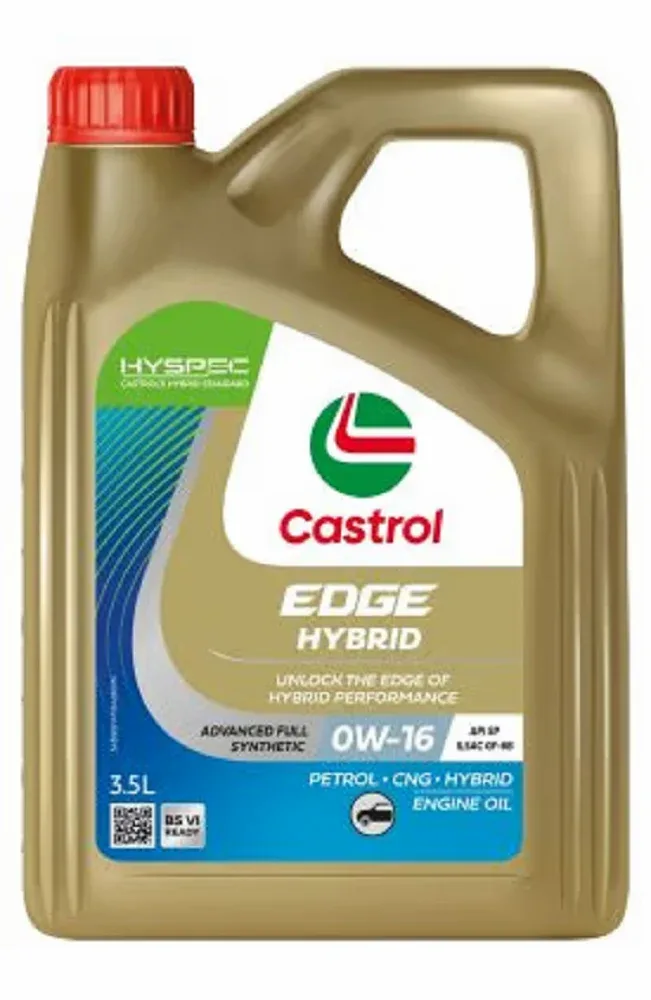
Image source: Web (Bing) / indiamart.com (Web image (fair-use with source credit))
Before You Start: Tools, Parts, and Safety Prep
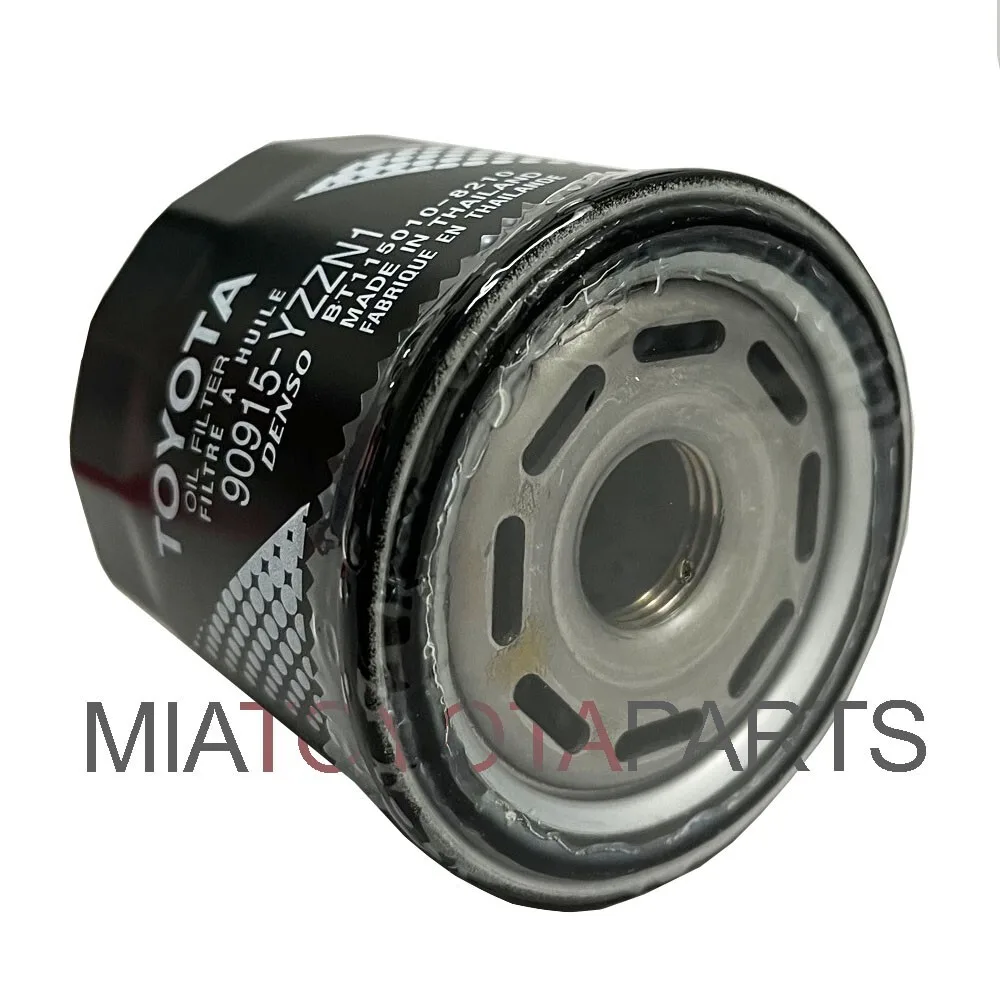
Image source: Bing (Web (fair-use with source credit))
A successful oil change on the 2022 RAV4 comes down to preparation. Here is exactly what you need and what to watch out for.
| Item | Specification | Notes |
|---|---|---|
| Engine oil | 5 quarts of 0W-16 full synthetic | API SP / ILSAC GF-6 certified |
| Oil filter | OEM Toyota 04152-38020 or equivalent | Wix, Mobil 1, Fram Ultra all work |
| Crush washer | 14mm inner diameter | Toyota part 90430-12031 or aftermarket |
| Drain plug socket | 14mm | 6-point preferred over 12-point |
| Oil filter wrench | Cap style for cartridge filter | OEM filter uses 64mm cap |
| Drain pan | 6+ quart capacity | You need room for 5 quarts |
| Funnel | Long neck | Helps reach the fill port cleanly |
| Torque wrench | 30 ft-lbs capability | Optional but recommended |
The Right Oil Filter – OEM vs. Aftermarket
The 2022 RAV4 uses a spin-on oil filter, not a cartridge. The OEM part number is 04152-38020. It is a high-quality filter with a proper bypass valve setting and anti-drainback valve that matches the engine's oil system.
Aftermarket filters from Wix, Mobil 1, Fram (Ultra or XG series), and Purolator (BOSS or One) are all good alternatives. Cheap no-name filters often lack the correct bypass valve pressure. A stuck closed bypass valve starves the engine of oil during cold starts.
A stuck open one lets unfiltered oil circulate. Stick with reputable brands.
Crush Washers and Drain Plug Torque – Small Parts, Big Consequences
The drain plug on the 2022 RAV4 uses a crush washer that deforms when torqued to create a leak-proof seal. That washer is single-use. Reusing it risks a slow drip that can leave a puddle on your driveway and drop the oil level below safe.
The drain plug torque spec is 30 ft-lbs (40 Nm). That is not "tight as you can get it." Overtorquing strips the aluminum threads in the oil pan. Undertorquing leaves the plug loose enough to back out over time.
A torque wrench is the only way to get it right every time.
The thread size is M14 x 1.5. If you do strip the pan, you can install a Heli-Coil or a Time-Sert thread repair insert, but that is a repair you want to avoid entirely.
Step-by-Step Oil Change for a 2022 RAV4 (Gas Model)
Here is the process step by step. Work slowly and check each step before moving to the next.
How to Drain the Old Oil Correctly
Warm the engine. Run the engine for about five minutes. Warm oil drains faster and carries more suspended contaminants. Do not run it until it is hot. Warm is good. Hot enough to burn you is not.
Park on level ground. The dipstick reading only works on a flat surface. Engage the parking brake.
Remove the oil fill cap. This lets air enter the crankcase so the oil drains freely. Set the cap somewhere clean where it will not collect dirt.
Get under the vehicle. The RAV4 has enough ground clearance that most people do not need a jack for an oil change. If you do need more clearance, use jack stands never just the jack.
Position the drain pan. Slide it under the drain plug. The plug faces the rear of the engine, toward the driver side.
Remove the drain plug. Use the 14mm socket. Turn counterclockwise. The plug comes out fast once the threads clear, so keep your hand steady. Let the oil drain completely. This takes about five minutes.
Remove the oil filter. It is on the front of the engine, low down. Use the filter wrench to loosen it. Some oil spills out of the filter once it breaks loose. Let that drain into the pan too. Wipe the filter mounting surface clean with a rag.
Install the new filter. Smear a thin coating of fresh oil on the new filter's rubber gasket. Hand tighten it until the gasket contacts the mounting surface, then turn another three-quarters of a turn. Do not use the wrench to tighten it.
Replace the drain plug. Put the new crush washer on the drain plug. Thread it in by hand until it seats. Torque to 30 ft-lbs. If you do not have a torque wrench, snug it up firmly but do not muscle it.
Adding the Right Amount – 4.8 Quarts With Filter Change
Insert the funnel into the oil fill port on top of the valve cover.
Pour in 4.5 quarts of 0W-16. That is most of a 5-quart jug.
Wait one minute for the oil to drain down into the pan.
Check the dipstick. Pull it out, wipe it clean, reinsert it fully, then pull it again. The oil level should be near the bottom of the crosshatched area or just below the low mark.
Add the remaining 0.3 quarts slowly. That is roughly a third of the leftover quart. Check the dipstick again.
Run the engine for about 30 seconds. This fills the new filter with oil. Shut it off and wait two minutes for the oil to settle.
Final dipstick check. The oil level should sit between the low and full marks, ideally just below the full mark. Add small amounts if needed.
Checking the Dipstick – The "Warm Engine, Level Ground" Rule
The dipstick on the 2022 RAV4 has a crosshatched area between the low and full marks. The difference between low and full is about one quart.
Check the oil on warm engine after it has been shut off for two to five minutes. That gives the oil time to drain back into the pan but before it all settles cold. Checking immediately after shutdown gives a falsely low reading.
Checking after the engine has been cold for hours gives a reading that may be slightly high because oil has fully drained into the pan.
If the oil is above the full mark, you have overfilled. If it is below the low mark, you need to add more immediately before driving.
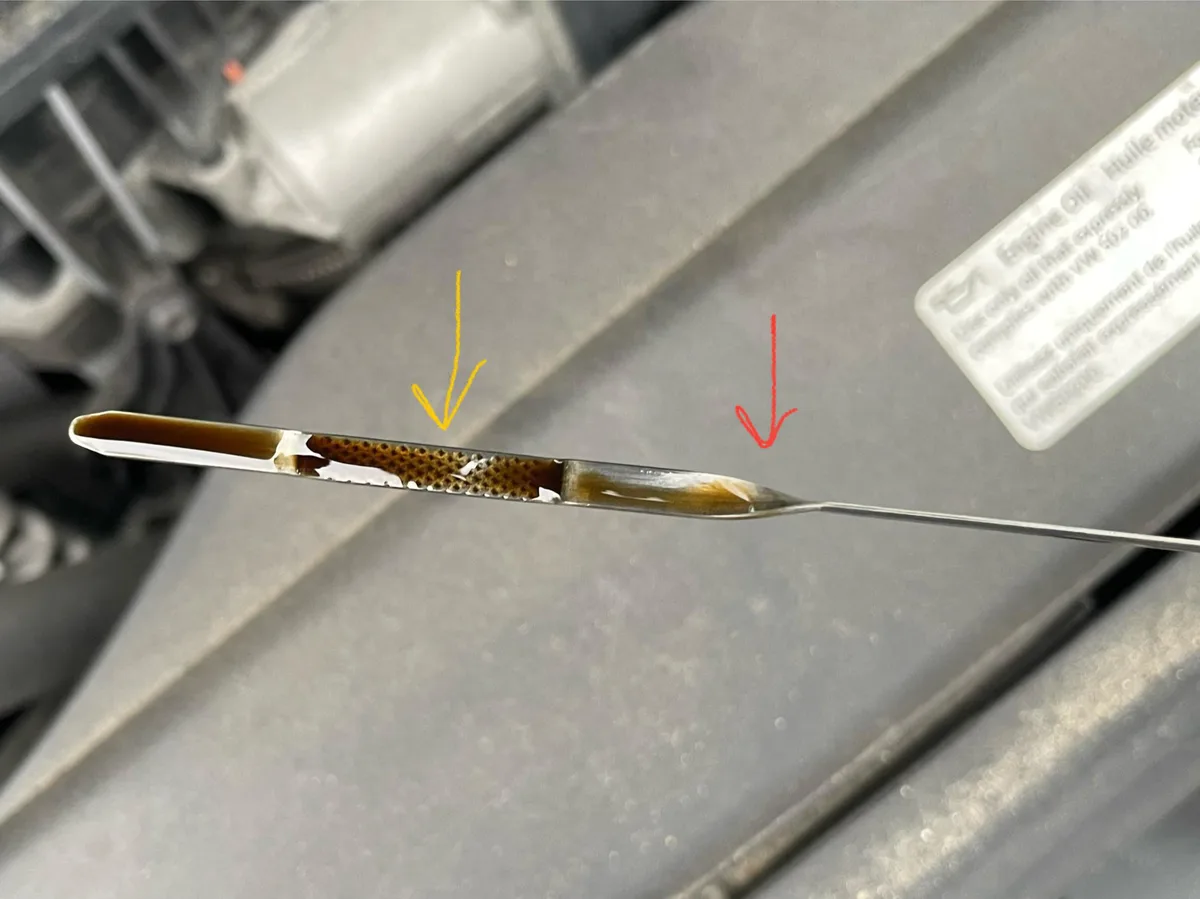
Image source: Web (Bing) / hitchesguide.com (Web image (fair-use with source credit))
One Key Difference: Hybrid Model Oil Change (Only 4.4 Quarts)
The hybrid model looks similar under the hood but the oil change process has one major difference: capacity, as noted earlier. But there is a second difference that matters for safety.
What's Physically Different Under the Hood
The hybrid version of the 2.5-liter engine sits alongside a high-voltage electric motor and inverter. The oil pan is shallower to clear the hybrid transaxle. That is why the hybrid holds about 0.4 quarts less than the gas version.
The oil filter is in the same location on both models. The drain plug is also in the same place. Everything you do for the gas version applies to the hybrid except the final fill volume.
The High-Voltage Cable Caution Near the Filter
There is an orange high-voltage cable running near the oil filter on the hybrid model. This cable carries enough voltage to kill you if you puncture it with a tool or touch exposed terminals.
You can safely do an oil change on the hybrid without ever touching that cable. The filter is accessible with the cable running nearby but not directly in the way. Just be aware of it.
Do not pry or jam tools in that area. If the cable looks damaged or frayed, do not work on the vehicle. Have it inspected by a certified Toyota hybrid technician.
The same oil change intervals apply to the hybrid as the gas model. Toyota recommends 5,000 miles for severe service and 10,000 miles for normal service. Severe service includes stop and go traffic, extreme temperatures, towing, and dusty roads.
Most driving in North America qualifies as severe service.
Mistakes That Cost Engine Life (and Money)
Even experienced DIY mechanics slip up on oil changes. The 2022 RAV4 has a few quirks that turn small errors into big bills. Here are the ones that show up most often in service records.
Under-Filling vs. Over-Filling – Both Are Bad
Under-filling starves the oil pickup. The pump sucks air, pressure drops, and bearing surfaces touch metal. You might hear a tapping or knocking sound from the top of the engine within a few miles.
Over-filling lets the crankshaft whip air into the oil. The oil foams, loses its ability to lubricate, and can push past piston rings. You might see blue smoke from the exhaust or get a check engine light for a misfire.
The fix for both is simple. Check the dipstick on level ground with the engine warm. If it is low, add a quarter quart at a time.
If it is high, loosen the drain plug slightly and let a little out. Catch it in a clean container.
Stripping the Drain Plug Threads – How It Happens and How to Prevent It
The oil pan on the 2022 RAV4 is aluminum. The drain plug threads are cut directly into the soft metal. If you overtighten the plug, the threads strip.
If you cross-thread it when reinstalling, the threads strip. Either way, you now have a leak that requires a thread repair kit or a new oil pan.
The only way to prevent this is to use a torque wrench set to 30 ft-lbs. Thread the plug in by hand first to make sure it goes straight. Never use a power tool on the drain plug.
Using the Wrong Viscosity – 0W-20 in a Pinch vs. Regular Use
Toyota allows 0W-20 as a temporary substitute if 0W-16 is unavailable. But temporary means one oil change, not six. The engine was designed for the thinner oil to maximize fuel economy and penetrate tight bearing clearances.
Running 0W-20 long term costs you about one to two miles per gallon in fuel economy. The engine also works harder to pump the thicker oil at cold startup. That extra friction adds wear over time.
Switch back to 0W-16 at your next change.
Forgetting to Reset the Oil Maintenance Light
After you finish the oil change, you need to reset the maintenance reminder. On the 2022 RAV4, the process takes about 10 seconds.
Turn the ignition on without starting the engine. Use the steering wheel controls to navigate to the settings menu on the multi-information display. Select "Maintenance Reset." Confirm the reset.
The light goes off and the counter starts fresh.
If you skip this step, the dashboard will still show "Oil Maintenance Required" at the next interval even though the oil is fresh. That confusion leads some owners to change the oil again unnecessarily.
Real-World Cost Breakdown: DIY vs. Dealership vs. Independent Shop
Money matters when you are deciding who does the work. Here is how the costs shake out for a 2022 RAV4 oil change as of 2026.
| Option | Parts | Labor | Total (approx.) |
|---|---|---|---|
| DIY | $35–$55 | Your time (30 min) | $35–$55 |
| Independent shop | $30–$50 | $25–$40 | $55–$90 |
| Toyota dealership | $30–$50 | $50–$70 | $80–$120 |
The DIY route saves you $30 to $65 per service. Over five oil changes, that adds up to $150 to $325. The tradeoff is your time, the need to dispose of used oil properly, and the risk of making one of the mistakes listed above.
Independent shops typically use bulk oil from a drum. You do not always know the brand or whether it carries the API SP certification. If you go that route, ask specifically for 0W-16 that meets ILSAC GF-6.
Many shops still stock 5W-20 or 0W-20 as their standard fill.
Dealerships use Toyota Genuine oil or a branded equivalent. They also reset the maintenance light and top off other fluids as part of the service. The premium is for convenience and peace of mind on the warranty front, though the same applies if you keep detailed records of your DIY work.
When to Shorten Your Oil Change Interval (Severe Driving Conditions)
Toyota's standard recommendation is 10,000 miles for normal service. But the owner's manual also defines "severe driving conditions" that cut that interval in half to 5,000 miles.
Severe conditions include:
- Repeated short trips of less than five miles in cold weather
- Extensive idling or stop-and-go traffic
- Driving on dusty, muddy, or salt-covered roads
- Towing a trailer or carrying heavy cargo
- Operating in extreme temperatures (below 0°F or above 100°F)
Most daily commuters in urban and suburban areas qualify for severe service. A 15-minute drive in stop-and-go traffic does not let the engine reach full operating temperature long enough to burn off moisture and fuel contamination. That moisture turns into sludge over time.
Our research across owner forums and service records suggests that 5,000-mile intervals are the safer bet for the 2022 RAV4. The extra cost of one more oil change per year is cheap insurance against sludge buildup and premature engine wear.
The Fumoto Valve Upgrade – Worth It or Not?
The Fumoto valve replaces the factory drain plug with a small ball valve. Instead of unscrewing the plug, you flip a lever and the oil drains out. Attach a hose to the nipple and you can direct the oil straight into the drain pan with zero mess.
For the 2022 RAV4, the correct model is the Fumoto F108N or F108S (the S version has a nipple for a hose). It fits the M14 x 1.5 thread size of the drain plug.
The advantages are real:
- No more crush washers to replace
- No risk of stripping the oil pan threads
- Cleaner draining with less spillage
- Faster oil changes
The downsides are minor but worth noting:
- The valve protrudes slightly below the oil pan. It is low enough to hit a curb or rock if you off-road the RAV4.
- Some owners worry about the valve opening accidentally. In practice, the lever requires a deliberate two-step motion to open, and it locks closed.
For a street-driven RAV4 that never leaves pavement, the Fumoto valve is a solid upgrade. For the TRD Off-Road model that goes on dirt trails, the stock drain plug may be safer. Read the first-time oil change guidance on our page about keeping it running smoothly before you decide.
Frequently Asked Questions
Can I Use 0W-20 Instead of 0W-16?
Yes, but only as a temporary measure. Toyota permits 0W-20 in a pinch if 0W-16 is unavailable. Switch back to 0W-16 at your next oil change.
The thicker oil hurts fuel economy slightly and may cause slower cold-weather flow.
How Do I Know If I've Added Too Much Oil?
Check the dipstick on level ground with the engine warm. If the oil level sits above the full mark, you have overfilled. Drain a small amount by loosening the drain plug slightly.
Catch the excess in a clean container.
What If the Dipstick Shows Oil Above the Full Mark?
Do not drive the vehicle. Overfilled oil causes foaming, which leads to low oil pressure and potential engine damage. Drain the excess immediately.
Remove the drain plug for a moment or use a fluid extractor through the fill tube.
Do I Really Need to Replace the Crush Washer Every Time?
Yes. The crush washer deforms when torqued to create a leak-proof seal. Reusing it risks a slow drip that can drop your oil level below safe.
They cost about a dollar each. Replace them every oil change.
How Do I Reset the Oil Light on the 2022 RAV4?
Turn the ignition on without starting the engine. Use the steering wheel controls to open the settings menu on the multi-information display. Select "Maintenance Reset" and confirm.
The light goes off and the counter restarts.
The Bottom Line: What to Remember Before You Pop the Hood
The 2022 RAV4 takes 4.8 quarts of 0W-16 for the gas model and 4.4 quarts for the hybrid. Use API SP and ILSAC GF-6 certified oil only. Replace the crush washer and torque the drain plug to 30 ft-lbs every time.
Do not guess on the numbers. Measure carefully. Check the dipstick twice.
If you want a cleaner process, consider the Fumoto valve for street-driven models. For off-road use, stick with the factory drain plug.
Keep detailed records of every oil change. That documentation protects your powertrain warranty if something goes wrong. The RAV4 is a reliable vehicle, but only if you treat the oil change as the precision job it really is.