
If you own a 2025 Toyota Camry, one of the first things you need to know is exactly how much oil it takes. Getting the 2025 toyota camry oil capacity right matters more than most owners realize. Put in too little and you risk metal-on-metal wear.
Pour in too much and you can cause foaming, pressure spikes, and eventual seal failure.
Manufacturer specifications indicate the non-hybrid 2.5L engine holds 4.4 quarts with a filter change, while the hybrid version takes exactly 4.0 quarts. Both require full synthetic 0W-16 oil meeting API SP or ILSAC GF-6A standards. These numbers come straight from Toyota Engineering, not from guesswork or forum chatter.
Let's walk through what that means for your car, your warranty, and your wallet.
Quick Answer
The 2025 Toyota Camry oil capacity is 4.4 quarts for the non-hybrid. The hybrid takes 4.0 quarts. Both figures include a new oil filter.
Use 0W-16 full synthetic oil only. Check the dipstick after filling. Top off if needed.
Never exceed the full mark.
Why Getting This Right Matters More Than You Think
Modern Toyota engines are precision machines. The 2.5L Dynamic Force engine found in the 2025 Camry uses low-tension piston rings and tight internal clearances. These design choices improve fuel economy and reduce emissions, but they make the engine extremely sensitive to oil quantity and viscosity.
Here is what happens with the wrong amount:
- Underfilling. Oil starvation leads to increased friction, higher operating temperatures, and accelerated bearing wear. In severe cases, you can seize the engine.
- Overfilling. Excess oil gets churned by the crankshaft. This aerates the oil, creating foam. Foam does not lubricate well, and air bubbles cause hydraulic pressure spikes that can damage seals and gaskets.
Toyota's powertrain warranty still covers the 2025 Camry for 5 years or 60,000 miles. But if a dealer finds evidence of improper oil maintenance, they can deny a claim. That is why knowing the correct capacity is not optional.
It is a requirement.
One more thing to keep in mind: as of 2026, Toyota continues to refine its oil specifications for the Camry lineup. Always confirm your specific trim's requirements in the owner's manual before starting any service.
Core Specs: The 2.5L Engine and Its Oil Needs
The 2025 Camry comes with one engine choice in the US market: the 2.5L four-cylinder. But it arrives in two distinct flavors depending on the trim.
Non-Hybrid (A25A-FKS) Oil Capacity
The standard gas engine uses Toyota's A25A-FKS. This is a direct-injection and port-injection engine that runs the Atkinson cycle at low loads and switches to Otto cycle under higher demand. The oiling system is designed around thin 0W-16 synthetic.
| Specification | Value |
|---|---|
| Oil capacity (with filter) | 4.4 US quarts (4.2 liters) |
| Oil capacity (without filter) | 4.2 US quarts (4.0 liters) |
| Recommended oil | SAE 0W-16 full synthetic |
| Required certification | API SP or ILSAC GF-6A |
| Drain plug torque | 29 ft-lbs (39 Nm) |
| Oil filter housing torque | 18 ft-lbs (25 Nm) |
Hybrid (A25A-FXS) Oil Capacity
The hybrid Camry uses the A25A-FXS variant. It shares most internal hardware but runs exclusively on the Atkinson cycle. The hybrid engine also has a different oil pan and a slightly smaller sump.
| Specification | Value |
|---|---|
| Oil capacity (with filter) | 4.0 US quarts (3.8 liters) |
| Oil capacity (without filter) | 3.8 US quarts (3.6 liters) |
| Recommended oil | SAE 0W-16 full synthetic |
| Required certification | API SP or ILSAC GF-6A |
| Drain plug torque | 29 ft-lbs (39 Nm) |
| Oil filter housing torque | 18 ft-lbs (25 Nm) |
The half-quart difference between gas and hybrid may seem small, but it matters. Adding 4.4 quarts to a hybrid will put you over the full mark. Adding 4.0 quarts to a non-hybrid will leave you low.
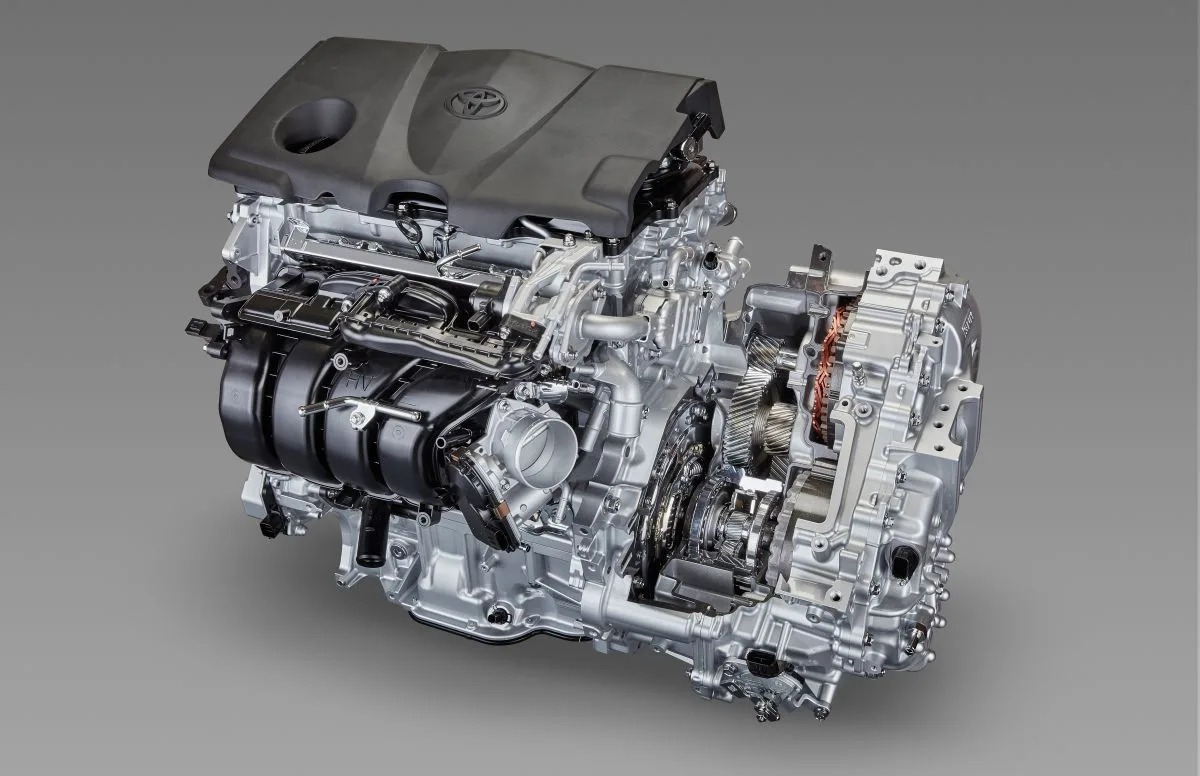
Image source: Web (Bing) / paultan.org (Web image (fair-use with source credit))
This cutaway shows the internal oil passages and the timing chain system that depends on proper oil level and pressure.
What Oil to Use: Viscosity, Certification, and Brand
You cannot just grab any bottle of oil off the shelf. The 2025 Camry demands a specific viscosity and certification. Here is what you need to know.
0W-16 vs. 0W-20 – What's the Real Difference?
Toyota started specifying 0W-16 in many of its newer engines starting around 2020. The "0W" means the oil flows at extremely low temperatures, down to around minus 30 degrees Celsius. The "16" is the viscosity rating at operating temperature.
0W-16 is thinner than 0W-20 at full operating temperature. That lower viscosity reduces internal drag on the engine, which directly improves fuel economy. Hybrid drivers notice this more than gas-only owners because the engine cycles on and off frequently.
Can you use 0W-20 instead? Toyota's official position is clear: use 0W-16. If 0W-16 is temporarily unavailable, 0W-20 may be used in an emergency, but you should switch back at the next oil change.
Prolonged use of thicker oil reduces fuel economy and may affect the variable valve timing system's response.
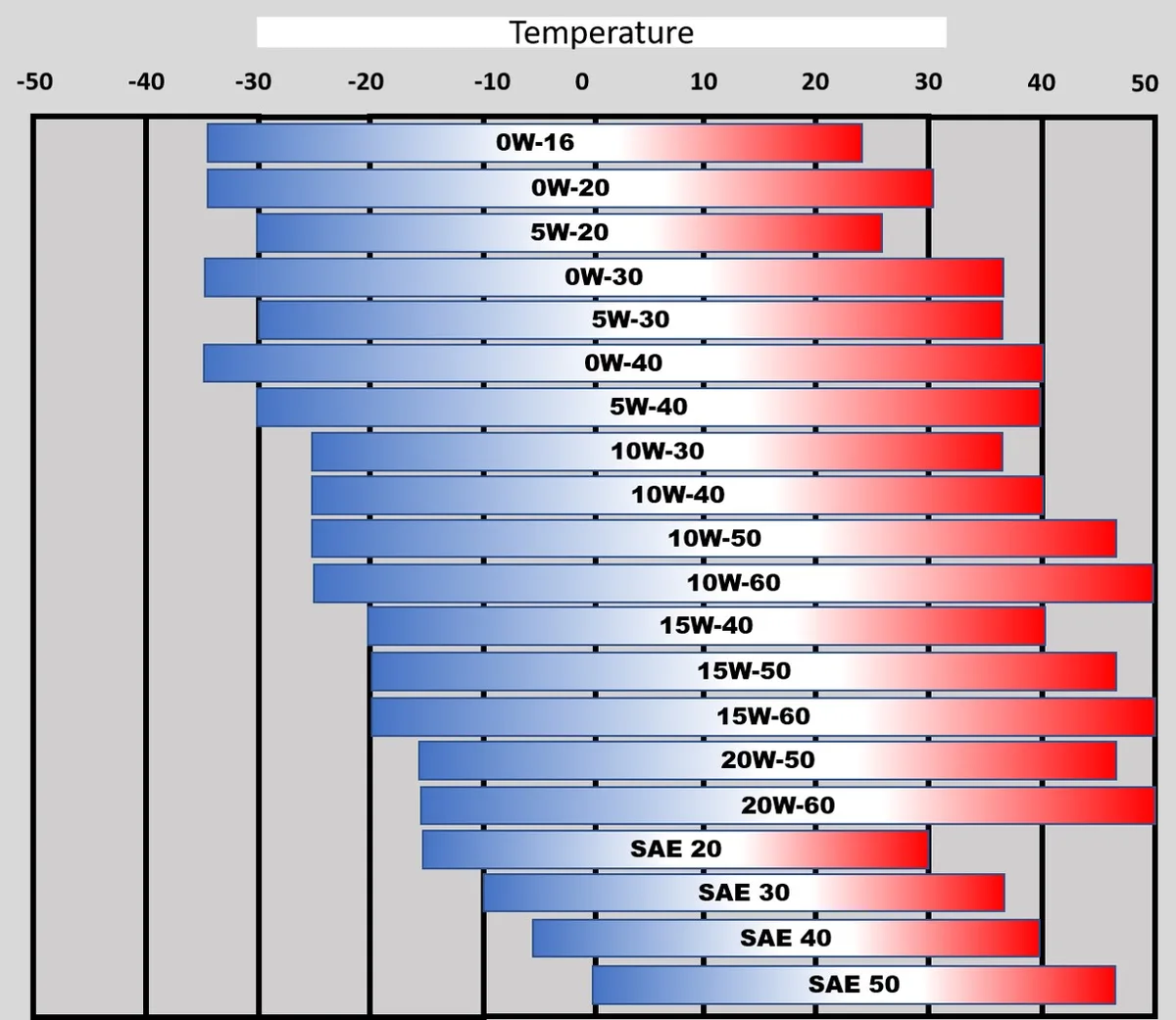
Image source: Web (Bing) / profertilitaet.de (Web image (fair-use with source credit))
This chart shows how 0W-16 remains thinner at operating temperature compared to 0W-20. The gap widens as the engine warms up.
Why API SP or ILSAC GF-6A Certification Isn't Optional
Here is where a lot of people slip up. They see "full synthetic" on the bottle and assume it is good enough. That is a mistake.
The API SP and ILSAC GF-6A certifications specifically address low-speed pre-ignition (LSPI) protection, timing chain wear prevention, and sludge control. These are the exact failure modes that the 2.5L Dynamic Force engine is prone to if you use the wrong oil.
Look for the API donut symbol on the bottle. If it says API SP or ILSAC GF-6A, you are safe. If it only says SN or older, put it back on the shelf.
Toyota also sells its own branded oil. Toyota Genuine Motor Oil in 0W-16 is made by ExxonMobil and meets all required certifications. It costs a bit more than store brands, but it removes any guesswork.
If you already know the oil specifications for earlier Camry models, the 2025 version follows the same logic but adds the 0W-16 requirement. The earlier 2021 models used similar engines but some trims still called for 0W-20, so always double check.
Step-by-Step: How to Change the Oil in a 2025 Camry
You can do this yourself. It is not complicated, but you need to follow the right sequence. Here is the full process.
Tools and Parts You'll Need
| Item | Details |
|---|---|
| Oil | 5 quarts of 0W-16 full synthetic, API SP certified |
| Oil filter | Cartridge-style, Toyota part 04152-YZZA1 or equivalent |
| Crush washer | Toyota part 90430-12031 (M14) |
| Drain pan | At least 6-quart capacity |
| Socket set | 17mm for drain plug, 24mm for filter housing |
| Torque wrench | Needed for drain plug and filter housing |
| Funnel | Long neck preferred |
| Gloves and rags | Standard shop supplies |
Optional but recommended: a filter housing cup tool. The 24mm deep socket works, but the dedicated cup tool reduces the chance of slipping and damaging the plastic housing.
Draining the Old Oil
Warm up the engine for a few minutes. Hot oil drains faster and carries more suspended contaminants out of the engine. Do not get it fully hot to operating temperature.
Just let it idle for three to five minutes.
Park on level ground. Engage the parking brake. Place the drain pan under the oil pan.
The drain plug uses a 17mm socket. Turn it counterclockwise. Remove the plug carefully because the oil will come out fast.
Let it drain completely. Most of the oil empties in about two minutes, but give it five.
Replace the crush washer every time. These washers deform during tightening to create a seal. Reusing one risks a slow leak.
Replacing the Filter and Crush Washer
The oil filter is a cartridge-style unit housed in a plastic cap on the front of the engine. Use the 24mm socket or filter cup to remove the cap. Be careful.
The cap is plastic and overtightening or cross-threading can crack it.
Pull the old filter element out. Discard the old O-ring seal from the cap. Lubricate the new O-ring with fresh oil before installing it.
Insert the new filter element into the housing. Hand-tighten the cap, then torque it to 18 ft-lbs.
Do not guess the torque. 18 ft-lbs feels tighter than most people expect on a plastic part. Too tight and you crack the housing. Too loose and you get a leak.
Filling to the Correct Capacity
Install the drain plug with the new crush washer. Torque it to 29 ft-lbs.
Pour in the oil. For the non-hybrid, add the full 4.4 quarts. For the hybrid, add 4.0 quarts.
Use the dipstick to check the level. Warm the engine, let it idle for one minute, shut it off, wait five minutes, then check the dipstick.
The oil level should sit between the low and full marks. If it is low, add a quarter quart and recheck. If it is overfilled, you must drain some out.
There is no shortcut.
Checking the Level and Resetting the Monitor
After confirming the oil level, reset the oil maintenance light. On the 2025 Camry, you do this through the multi-information display in the gauge cluster. Navigate to the maintenance settings, select "Oil Maintenance," and reset it to 100%.
The exact steps vary slightly by trim level, but the process is intuitive.
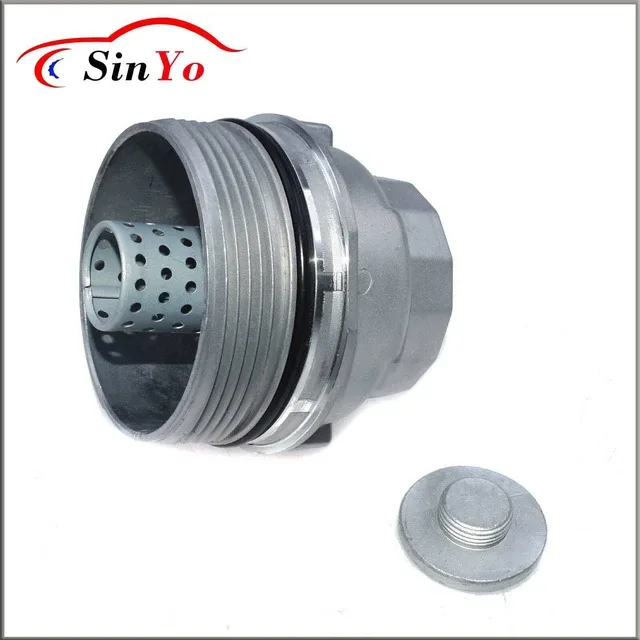
Image source: Web (Bing) / picclick.co.uk (Web image (fair-use with source credit))
This undercarriage shot shows the drain plug location and the cartridge filter housing. The plastic cap is the filter housing. The metal bolt just behind it is the drain plug.
Frequently Asked Questions
Where can I find the 2025 Toyota Camry oil capacity in my car?
Open your owner's manual. The oil capacity is listed in the specifications section near the back. It also appears on a decal under the hood near the radiator support.
Can I use 5W-30 in a 2025 Camry in hot weather?
No. Toyota does not recommend 5W-30 for this engine. The variable valve timing system and low-tension piston rings are designed for 0W-16.
Using thicker oil reduces flow to critical components and may cause timing chain rattle.
How do I know if I overfilled my Camry's oil?
Check the dipstick. If the oil level is above the full mark, you overfilled it. Symptoms include rough idle, blue smoke from the exhaust, and a burning oil smell.
Drain the excess immediately.
What happens if I use conventional oil instead of synthetic?
The 2025 Camry requires full synthetic oil. Conventional oil does not meet the thermal stability requirements of this engine. Using it can lead to sludge buildup and potential engine damage over time.
Do I need to change the oil every 5,000 miles or 10,000 miles?
It depends on your driving. If you do mostly highway driving in moderate temperatures, you can follow the normal schedule of 10,000 miles. If you drive in stop-and-go traffic, extreme temperatures, dusty conditions, or tow a trailer, follow the severe service schedule of 5,000 miles.
Is the oil capacity different for the 2025 Camry hybrid?
Yes. The hybrid takes 4.0 quarts with a filter change. The non-hybrid takes 4.4 quarts.
Always check which engine you have before adding oil.
Common Mistakes That Cost Camry Owners
Even experienced DIYers make errors with the 2025 Camry. The good news is these mistakes are easy to avoid once you know what to watch for.
Overfilling – The Silent Engine Killer
Overfilling is the most common mistake. People buy a 5-quart jug and dump it all in without checking the capacity. That extra half quart or full quart causes real problems.
Here is what happens inside the engine. The crankshaft whips through the excess oil at high speed. This aerates the oil into foam.
Foam does not lubricate. Air bubbles compress easily, so oil pressure drops. The variable valve timing actuators can lose their hydraulic pressure, causing drivability issues.
Signs you overfilled include a rough idle, a burning oil smell from the exhaust, and blue smoke under acceleration. If you catch it early, drain the excess through the drain plug. Let out a little at a time and recheck the dipstick until you hit the full mark.
Wrong Viscosity and Warranty Voiding
Using 5W-30 because it is what you kept in the garage is a gamble that can cost you. The 2025 Camry engine has tight clearances designed for thin oil. Thicker oil does not flow fast enough through the variable valve timing oil passages.
Toyota dealers are trained to check oil viscosity during warranty claim inspections. If they find evidence of non-specified oil, they can deny coverage. That means an engine replacement would come out of your pocket.
A replacement 2.5L engine runs around 5,000 to 7,000 dollars installed.
The same applies to using conventional oil. The Camry requires full synthetic. Conventional oil breaks down faster under the heat this engine generates and leaves sludge deposits behind.
Stripping the Drain Plug or Filter Housing
The oil pan on the 2025 Camry is aluminum. The drain plug threads are cut directly into soft metal. Over-torque the drain plug and you strip those threads.
The repair involves tapping the hole to a larger size or replacing the entire oil pan.
The filter housing cap is plastic. It cracks easily if overtightened. A cracked cap leaks oil slowly at first, then catastrophically under pressure.
Both repairs are avoidable. Use a torque wrench. Set it to 29 ft-lbs for the drain plug and 18 ft-lbs for the filter housing.
Never guess.
How Often Should You Change It? The Severe vs. Normal Service Debate
Toyota gives two oil change schedules for the 2025 Camry. Choosing the right one depends on how you drive.
Normal service: 10,000 miles or 12 months, whichever comes first. This applies if your driving consists mostly of highway miles at moderate speeds in temperate weather. No towing.
No extended idling.
Severe service: 5,000 miles or 6 months. This applies if you regularly drive in stop-and-go traffic, extreme heat or cold, dusty or sandy conditions, or if you tow a trailer. Short trips under 5 miles that never fully warm the engine also count as severe.
Here is the honest truth. Most people fall into the severe category. Commuting in city traffic counts.
Living in Phoenix or Minneapolis counts. Driving on unpaved roads counts. If you are unsure, go with the 5,000-mile interval.
It is cheap insurance.
Oil analysis reports from independent labs consistently show that the 0W-16 in these engines begins to shear down in viscosity around 5,000 to 6,000 miles in severe conditions. The oil still lubricates, but its protective properties degrade. Changing it sooner keeps the engine in peak condition.
Cost Breakdown: DIY vs. Dealership vs. Independent Shop
Here is what you can expect to pay for an oil change on the 2025 Camry.
| Option | Parts Cost | Labor Cost | Total (approx.) |
|---|---|---|---|
| DIY | $35 – $45 | $0 | $35 – $45 |
| Independent shop | $35 – $45 | $20 – $30 | $55 – $75 |
| Toyota dealership | $35 – $45 | $40 – $55 | $75 – $100 |
The parts cost assumes a 5-quart jug of name-brand 0W-16 full synthetic and a quality filter. Dealerships and shops typically charge a markup on oil, so their parts cost may run slightly higher.
DIY saves you 40 to 60 dollars per change. Over five years of twice-yearly changes, that is 400 to 600 dollars. Enough to buy a good torque wrench and a filter cup tool, with money left over.
One note on dealership oil changes. Toyota dealers often run service specials with coupons. A dealership oil change can drop to 60 dollars with a coupon.
It is worth checking your local dealer's website before you decide.
Hybrid vs. Non-Hybrid: What's Different Under the Hood
Beyond the half-quart capacity difference, the hybrid and non-hybrid Camry engines share most oil system components. Both use the same 0W-16 full synthetic. Both use the same filter.
Both have the same drain plug and crush washer.
The key difference is the oil pan. The hybrid has a smaller sump because the electric motor assist reduces the load on the engine during startup and low-speed operation. The engine also cycles on and off more frequently, which changes how oil circulates.
Hybrid owners should pay extra attention to the oil change interval. The frequent cold starts in a hybrid can accelerate oil contamination from fuel dilution. Short trips in a hybrid mean the engine may not fully warm up, which allows moisture and fuel to accumulate in the oil.
If you own the hybrid and your driving consists of short trips, stick to the 5,000-mile interval. It keeps the oil fresh and protects against sludge formation.
Toyota's hybrid system also uses an electric oil pump on some models, but the 2025 Camry hybrid retains a mechanical oil pump driven by the engine. The oil change procedure is identical to the non-hybrid version.
When to Call a Professional (and When to DIY)
You can absolutely change the oil on a 2025 Camry yourself. The process is straightforward and the required tools are basic. But it is not for everyone.
Call a professional if you lack a safe workspace. Working on a car with a jack and jack stands on an uneven driveway is dangerous. A shop lift is safer.
If you do not have level ground and proper jack stands, pay for the service.
Call a professional if you do not own a torque wrench. Guessing the torque on the drain plug and filter housing is a losing game. A torque wrench costs about the same as one professional oil change.
If you plan to do the work regularly, buy one. If this is a one-time thing, let the shop handle it.
DIY is the right choice if you have level pavement, a torque wrench, a drain pan, and an hour of time. The savings add up quickly, and you control the quality of oil and filter going into your engine.
One last thing. Keep records of every oil change you do yourself. Save the receipts for the oil and filter.
Write the date and mileage in a logbook or a note on your phone. If you ever need to make a warranty claim, those records prove the work was done properly.
Final Verdict: The Simple Truth About Your Camry's Oil
The 2025 Toyota Camry oil capacity is straightforward. The non-hybrid takes 4.4 quarts of 0W-16 full synthetic. The hybrid takes 4.0 quarts.
Use API SP or ILSAC GF-6A certified oil. Change it every 5,000 to 10,000 miles depending on your driving conditions.
Do not overthink it. Do not use thicker oil. Do not skip the torque wrench.
These three rules will keep your engine running smoothly for well over 200,000 miles.
If you are still unsure about your specific trim, pull out the owner's manual. The answer is printed right there. Toyota builds reliable cars, but they need the right fluids to stay that way.
The same principles apply across Toyota's lineup. If you own a RAV4, a Tundra, a Tacoma, or a Corolla, each has its own specific oil requirements. The process of checking specifications and following them is the same.
Get it right, and your Toyota will reward you with years of dependable service.