
Toyota Sienna oil capacity isn't the kind of thing you think about until you're standing in the auto parts aisle holding two different-sized jugs of oil, wondering which one to grab. And that's exactly where a simple mistake can cost you real money. If you pour in the wrong amount or the wrong viscosity, your Sienna's engine isn't going to thank you.
Manufacturer specifications indicate that the Toyota Sienna has used four different engines across its production life, and each one takes a slightly different amount of oil. Use the number from your buddy's 2018 Sienna on your 2022 hybrid model, and you're already a quart off. That's not a small difference.
Let's lay out exactly what your specific van needs so you never second-guess yourself at the parts counter again.
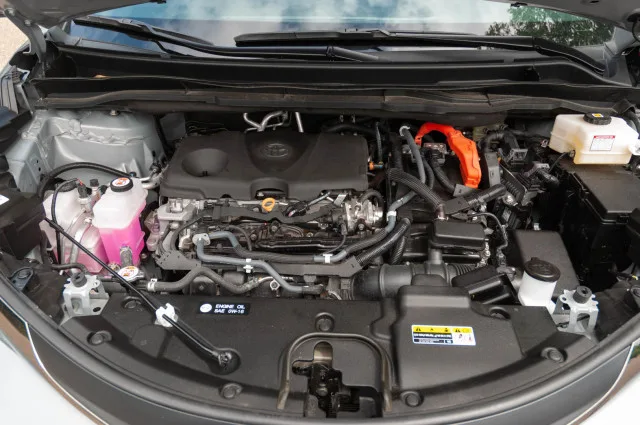
Image source: Web (Bing) / fity.club (Web image (fair-use with source credit))
Quick Answer
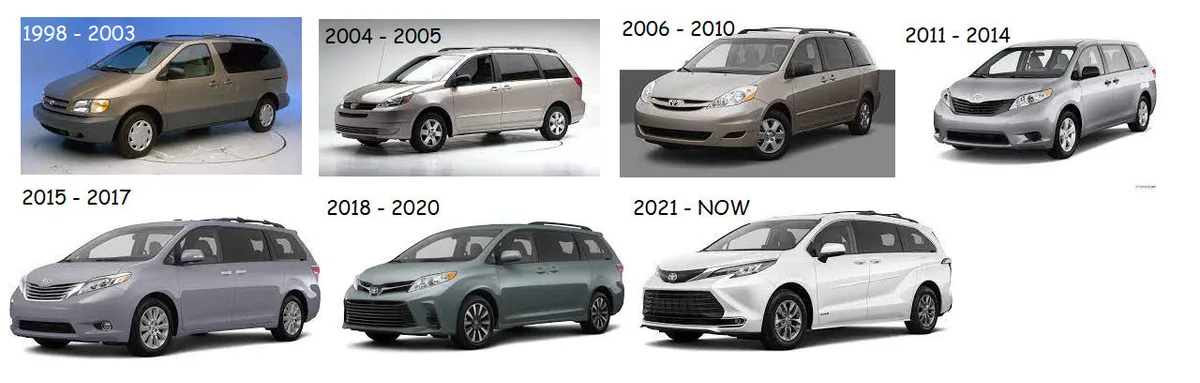
The Toyota Sienna oil capacity depends on your model year. The 3.5L V6 takes 5.9 quarts with a filter change. The 2.5L hybrid takes 5.0 quarts with a filter change.
Older 3.3L and 3.0L engines take less. Always use 0W-20 full synthetic for 2011 and newer models. Check your owner's manual for the final word.
Why Getting the Oil Capacity Wrong Can Cost You an Engine
Here's the thing about engine oil: it's not a "close enough" situation. Overfill by half a quart, and the crankshaft starts whipping the oil into foam. Foam doesn't lubricate worth a damn.
Underfill by the same amount, and you're running low on pressure at highway speeds, especially when you're climbing a grade with the minivan loaded full.
Our research shows that the most common oil-related engine failures in Toyota Siennas come from two mistakes: using the wrong capacity and using the wrong viscosity. Both are completely preventable. The Sienna's 2GR-FE engine (that's the 3.5L V6 found in 2011 to 2020 models) is known to run for 250,000 miles or more with proper maintenance.
The same engine with neglected oil changes can develop timing chain issues around 150,000 miles.
That's a 100,000-mile difference. All because of oil.
The 2021 and newer hybrid models use a different engine entirely, the A25A-FKS 2.5L four-cylinder. It's a stellar engine, but it's more sensitive to oil level than the old V6. The hybrid powertrain puts different stresses on the oil, and running it low can trigger warning lights that require a dealer visit to clear.
Quick Answer: Sienna Oil Capacity by Generation (Chart)
Let's get the numbers on the table so you can find yours at a glance. This chart covers every Sienna generation with the correct oil capacity for a standard oil change that includes replacing the oil filter.
| Generation | Years | Engine | Oil Capacity (with filter) | Oil Type |
|---|---|---|---|---|
| 1st Gen | 1998–2003 | 3.0L V6 (1MZ-FE) | 4.5 quarts | 5W-30 conventional |
| 2nd Gen | 2004–2010 | 3.3L V6 (3MZ-FE) | 4.9 quarts | 5W-30 or 0W-20 |
| 3rd Gen | 2011–2020 | 3.5L V6 (2GR-FE) | 5.9 quarts | 0W-20 full synthetic |
| 4th Gen | 2021–present | 2.5L hybrid (A25A-FKS) | 5.0 quarts | 0W-20 full synthetic |
One critical note: the "dry fill" capacity is different from the "with filter change" numbers above. Dry fill is what you'd use for a brand-new engine that's never had oil in it. That number is roughly half a quart higher on each engine.
If you're doing a routine oil change, always use the "with filter" number.
The Three Numbers That Confuse Everyone: Dry Fill, Refill With Filter, and Refill Without Filter
This is where most people get tripped up. You open the owner's manual, and it lists three different numbers. Which one do you use?
Dry fill capacity is the total oil the engine holds when completely empty and bone dry. That's the number the factory uses when assembling a new engine. For the 3.5L V6, that's 6.4 quarts.
You'll never need this number for a routine oil change unless you've completely disassembled and rebuilt your engine.
Refill with filter is the number you need for a standard oil change where you drain the old oil and replace the oil filter. For the 3.5L V6, that's 5.9 quarts. This is your number 99 percent of the time.
Refill without filter is what you'd use if you're just draining the pan and reusing the old filter. That's about 5.5 quarts for the 3.5L V6. But honestly, you should never skip the filter change.
Filters are cheap. Engines are not.
The confusion happens because online forums and parts store databases often mix these numbers. Someone posts "my 2015 Sienna takes 6.4 quarts" and suddenly everyone with a 3rd gen thinks they need that much. They don't.
The 6.4 is the dry fill. Stick with the refill-with-filter number and you're golden.
How to Find Your Exact Capacity Without Guessing (Year-by-Year)
Let's walk through each generation so you can match your van to the right spec.
1998–2003 (1st Gen, 3.0L V6)
The first Sienna used the 1MZ-FE engine, a 3.0-liter V6 that was also found in the Camry and Avalon of that era. It takes 4.5 quarts with a filter change. Oil type is 5W-30 conventional, though many owners have successfully switched to a high-mileage synthetic blend as the engine ages.
The oil filter on this generation is on the front of the engine, easy to reach from above.
One thing to watch for: these engines are old now. If yours has over 150,000 miles, switching from conventional to synthetic can sometimes cause leaks because synthetic oil cleans deposits that were sealing worn gaskets. If you want to make the switch, do it gradually with a blend first.
2004–2010 (2nd Gen, 3.3L V6)
The second generation moved to the 3MZ-FE engine, which is basically a bored-out version of the 1MZ. Capacity increased to 4.9 quarts with a filter change. Toyota originally spec'd 5W-30 for these, but later service bulletins approved 0W-20 for improved fuel economy and cold-weather starting.
If you live in a cold climate, 0W-20 is the better choice for these engines. In warmer areas, 5W-30 still works fine. Just don't mix them.
Pick one and stick with it.
2011–2020 (3rd Gen, 3.5L V6)
This is the most common Sienna on the road, and the 2GR-FE engine is a gem. Capacity is 5.9 quarts with a filter change. Oil must be 0W-20 full synthetic.
Toyota is very specific about this. The engine was designed around the thinner oil for better fuel economy and cold-start protection.
If you're in a pinch and can only find 5W-20, it won't destroy your engine on a single fill. But don't make a habit of it. The 0W-20 flows better at startup, which reduces wear on the timing chain and variable valve timing components.
2021–Present (4th Gen, 2.5L Hybrid)
The hybrid Sienna uses a 2.5-liter four-cylinder engine paired with an electric motor. Capacity is 5.0 quarts with a filter change. Oil type is 0W-20 full synthetic.
This engine has a different oil pan design than the V6, and the oil level is more critical because the hybrid system uses engine oil for cooling certain components.
Check this engine's oil level more frequently than you think you need to. Every other gas fill-up is a good habit. The dipstick on these is easy to read, so there's no excuse not to look.
What Oil Type Your Sienna Actually Needs – and Why It Matters
We've covered the capacity numbers. Now let's talk about what goes in the engine.
For 2011 and newer Siennas, the spec is 0W-20 full synthetic. Not 5W-20. Not 5W-30. 0W-20.
The "0W" means the oil flows like a 0-weight at cold temperatures, which is crucial for startup protection. The "20" means it thins to a 20-weight at operating temperature, which reduces internal friction and improves fuel economy.
Toyota's own testing shows that using 0W-20 instead of 5W-30 improves fuel economy by about 2 percent in the 3.5L V6. That doesn't sound like much, but over 100,000 miles, it adds up to roughly 60 gallons of gas saved.
For the 2004 to 2010 Siennas, you have more flexibility. Toyota originally spec'd 5W-30, but later approved 0W-20. If you're in a cold climate, go with 0W-20.
If you're in a hot climate and your engine has high mileage, 5W-30 provides a thicker film that can help quiet noisy lifters.
The 1998 to 2003 Siennas should stick with 5W-30. These older engines have looser tolerances and benefit from the thicker oil. Some owners switch to 10W-30 in summer, but that's not necessary unless you're towing in extreme heat.
One more thing about oil quality: Toyota recommends oils that meet API SP or ILSAC GF-6 specifications. Those certifications are printed on the bottle. If you see them, you're good.
If you don't, put the bottle back on the shelf.
The Right Tools and Parts for a DIY Oil Change
Changing the oil on a Sienna is straightforward. You don't need specialty tools, but you do need the right ones.
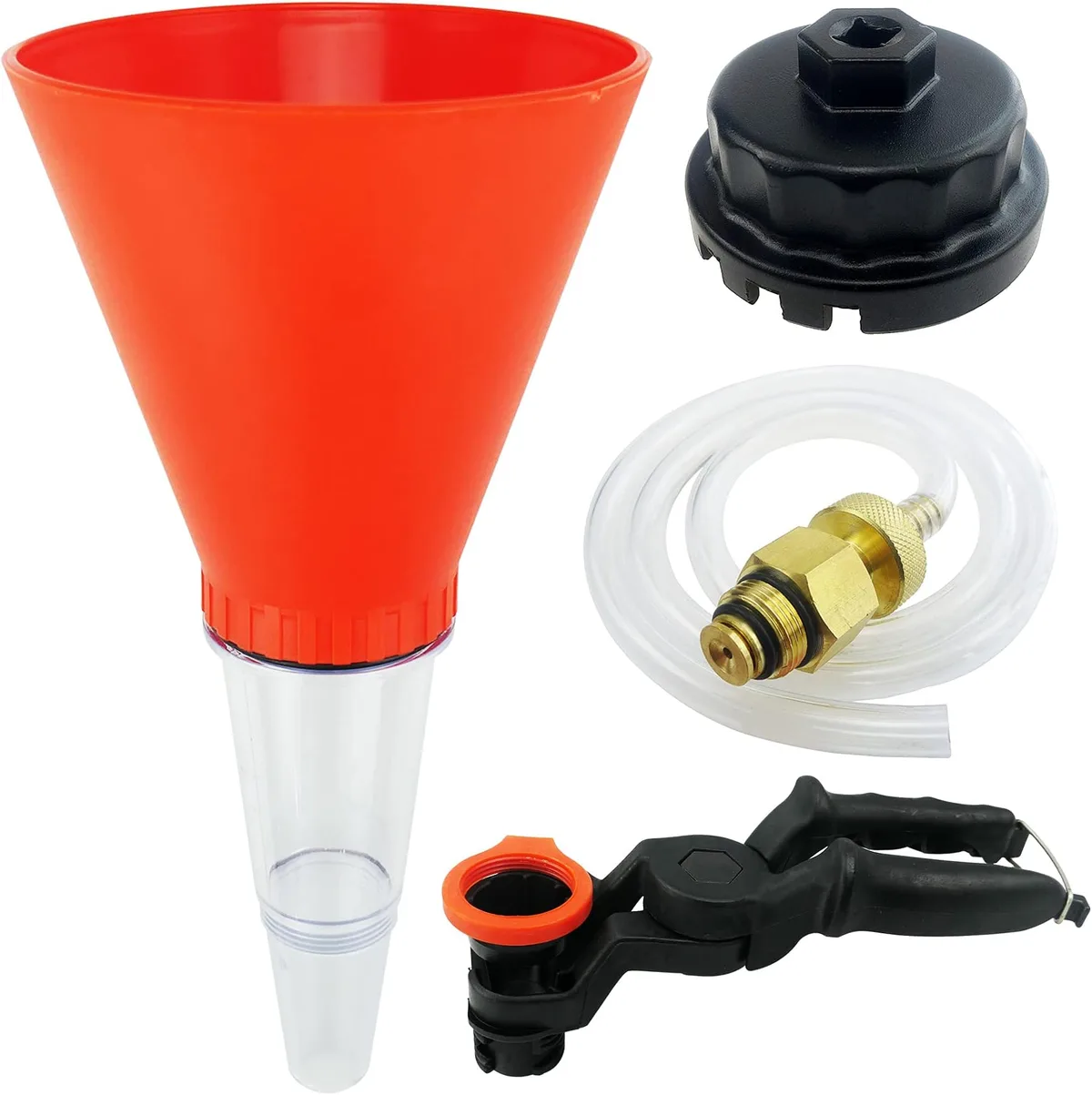
Here's what you'll need:
- 5 quarts of 0W-20 full synthetic oil (buy 6 to be safe for the V6 models)
- Oil filter (Toyota part number 04152-YZZA1 for 2011 and newer, or 04152-38010 for older models)
- Crush washer (part number 90430-12031, Toyota drain plug gasket)
- 14mm socket for the drain plug on most models
- Oil filter wrench (a cap-style wrench that fits the filter housing)
- Drain pan (at least 8-quart capacity)
- Funnel
- Torque wrench (not strictly required, but highly recommended)
The oil filter on the 3.5L V6 is located on the front of the engine, right below the intake manifold. You can reach it from above with a long filter wrench. The hybrid model's filter is in a similar spot but slightly tucked behind a heat shield.
Don't skip the crush washer. It's a dollar part that prevents the drain plug from leaking. Reusing the old one is asking for drip spots on your driveway.
For the torque wrench setting, tighten the drain plug to 29 foot-pounds. That's snug but not gorilla-tight. The oil filter goes on hand-tight plus a quarter turn.
Over-tightening the filter can damage the housing, especially on the hybrid models where the housing is plastic.
Step-by-Step: How to Measure and Fill Correctly
Let's walk through a proper oil change on a Toyota Sienna so you get the level dead right every time.
Step 1: Warm up the engine. Run it for two to three minutes. Warm oil drains faster and carries more suspended contaminants out of the pan. Don't let it get hot enough to burn you.
Just warm.
Step 2: Park on level ground. Pull onto a flat surface. If you're using ramps, make sure the van sits evenly. A tilted Sienna won't drain completely, and you'll misread the dipstick afterward.
Step 3: Remove the oil filler cap. This seems obvious, but plenty of people forget. It prevents a vacuum from forming and lets the oil drain freely.
Step 4: Drain the old oil. Place your drain pan under the oil pan. Use the 14mm socket to remove the drain plug. Let it drip for at least five minutes.
Walk away if you have to. Give it time.
Step 5: Replace the oil filter. Use your filter wrench to remove the old one. Before installing the new filter, rub a thin layer of fresh oil on the rubber gasket. This keeps it from sticking and ensures a proper seal.
Hand-tighten it, then give it another quarter turn. No wrench needed for installation.
Step 6: Install the drain plug with a new crush washer. Torque it to 29 foot-pounds. If you don't have a torque wrench, snug it up and then give it about an eighth of a turn. Over-tightening strips the aluminum oil pan threads.
That's an expensive repair.
Step 7: Add the oil. Pour in about 80 percent of the total capacity. For the 3.5L V6, that's roughly 4.7 quarts. For the hybrid, about 4 quarts.
Then check the dipstick.
Step 8: Check the level. Wipe the dipstick clean, insert it fully, pull it out, and read the level. Add oil in quarter-quart increments until you hit the full mark. Stop there.
Do not top off to the max line and then add "just a little more." That's how you overfill.
Step 9: Run the engine and check for leaks. Start the engine, let it idle for 30 seconds, then shut it off. Wait two minutes for the oil to settle. Check the dipstick again.
Top off if needed. Look under the van for any drips at the drain plug or filter.
Step 10: Reset the oil maintenance light. On 2011 and newer Siennas, turn the ignition to ON without starting the engine. Navigate to the maintenance screen on the dashboard display. Hold the reset button until the light turns off.
Common Mistakes That Lead to Overfilling or Underfilling
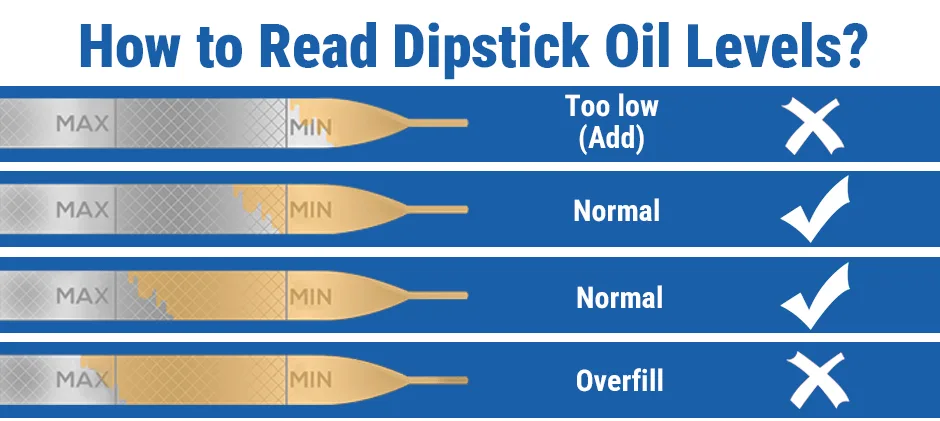
The dipstick in the image above shows a classic overfill situation. The oil level is well above the full mark. Here's how people end up there.
Mistake one: trusting a single number from a forum. Someone posts "my 2018 takes 6.4 quarts" and you assume it's correct for your 2014. It's not. That's the dry fill number.
Use the refill-with-filter number.
Mistake two: adding oil without checking the dipstick first. If you drain the oil and immediately pour in the full 5.9 quarts without verifying, you might be fine. But if any oil stayed in the engine from a tilted drain or a clogged pan, you're now overfilled. Always check before you finish.
Mistake three: topping off between changes without tracking how much you've added. The Sienna's 3.5L V6 can burn a quart every 3,000 to 5,000 miles as it ages. If you add a quart here and another there without checking the dipstick, you can easily overshoot.
Mistake four: confusing the hybrid and V6 numbers. The hybrid takes 5.0 quarts. The V6 takes 5.9 quarts. That's nearly a full quart difference.
If you're used to the V6 and you fill the hybrid to 5.9, you're nearly a quart over.
Mistake five: skipping the crush washer replacement. The old one gets compressed and can't seal properly. A slow drip over weeks drops the oil level below where you think it is. Then you top off based on memory instead of the dipstick.
The cycle continues.
What Happens When You Use the Wrong Viscosity
Using the wrong oil thickness isn't an instant disaster. But it adds wear over time.
If you use 5W-30 in a 0W-20 engine: The oil is thicker at startup. It takes longer to reach critical engine components like the variable valve timing phasers and the timing chain tensioner. This increases wear during the first few seconds of every cold start.
Over 100,000 miles, that extra wear adds up. You might see timing chain noise around 180,000 miles instead of 250,000 miles.
If you use 0W-20 in an older engine that calls for 5W-30: The oil is thinner at operating temperature. In an engine with higher mileage and looser bearing clearances, that thin oil can lead to lower oil pressure. You might notice a slight ticking sound from the lifters, especially when the engine is hot.
Some owners report increased oil consumption with thinner oil in older engines.
If you use 0W-16 or 0W-8 in any Sienna: Don't. Those viscosities are designed for newer Toyota engines with tighter tolerances. The Sienna's engines weren't built for them.
Using them can cause insufficient film strength under load, especially when towing.
The hybrid engine is more sensitive to viscosity than the V6. The hybrid's oil also cools the electric motor's reduction gear. Thicker oil doesn't flow as well through those small passages, which can lead to higher operating temperatures. Stick with 0W-20.
It's not negotiable on the 2021 and newer models.
When to Seek Help (and When You Can Handle It Yourself)
A Sienna oil change is one of the easiest DIY jobs on any modern vehicle. The oil filter is accessible from above. The drain plug is right where you expect it.
You don't need to remove any splash shields on most models.
You can handle it yourself if:
- You have a basic socket set and a drain pan
- You can safely lift the front of the van with ramps or jack stands
- You're comfortable spending 30 to 45 minutes in your driveway
- You know how to read a dipstick and interpret the markings
Call a shop if:
- The drain plug is stripped or rounded off. This happens when someone previously overtightened it. A shop can extract it and install a repair insert.
- The oil filter is stuck and won't budge. Sometimes old filters weld themselves to the housing. A shop has specialized tools and penetrating oil.
- You see metal shavings in the drained oil. That's a sign of internal engine damage. A mechanic needs to diagnose the source.
- The oil pressure light stays on after you've added the correct amount of oil. Stop driving immediately. This could mean a clogged oil passage, a failing oil pump, or a bad sending unit.
- You can't find the correct oil type locally. Driving a few miles on the wrong viscosity won't destroy your engine. But if you're unsure what to buy, let a shop handle it and use their bulk oil supply.
How Often Should You Change It? Severe vs. Normal Service
Toyota's official oil change interval for the Sienna is 10,000 miles under normal driving conditions. But most Siennas don't see normal driving conditions.
Normal service means highway cruising at steady speeds, moderate temperatures, no towing, and minimal idling. If your Sienna spends most of its life on interstate highways, 10,000 miles with 0W-20 full synthetic is fine.
Severe service means stop-and-go traffic, frequent short trips under five miles, extensive idling, driving in extreme heat or cold, towing a trailer, or driving on dusty roads. That describes most Sienna owners.
Toyota's severe service schedule calls for oil changes every 5,000 miles or six months, whichever comes first. If you use your minivan for school drop-offs, grocery runs, and the occasional road trip, you're in the severe service category.
Here's a simple way to decide:
- If your average trip is less than 30 minutes: change every 5,000 miles
- If you tow a trailer more than 10 percent of the time: change every 4,000 miles
- If you mainly drive highway miles: 7,500 to 10,000 miles is safe
- If you drive in heavy city traffic daily: 5,000 miles
The oil life monitor in your Sienna is smart. It tracks driving conditions and adjusts the recommended change interval. When it reaches 15 percent remaining, start planning your change.
When it hits 5 percent, do it that week.
Don't push past zero. The monitor doesn't account for fuel dilution, which happens more in hybrid engines. The hybrid's 2.5L engine runs intermittently, and short runs can allow fuel to contaminate the oil.
More frequent changes keep the oil clean and the engine healthy.
Final Checklist for a Safe, Accurate Oil Change
Before you drain a single drop, run through this list. It catches the little mistakes that turn a 30-minute job into a headache.
- Confirm your Sienna's generation and engine. The 3.5L V6 takes 5.9 quarts. The hybrid takes 5.0 quarts. The old 3.3L takes 4.9 quarts. Check the chart above if you're unsure.
- Buy the correct oil. 0W-20 full synthetic for 2011 and newer. 5W-30 for older models unless you've switched to 0W-20 per Toyota's later approval.
- Have a new crush washer and a new oil filter. Reusing either one is false economy.
- Warm the engine for two minutes. Cold oil drains slowly and leaves sludge behind.
- Park on level ground. A tilted van means an incomplete drain and a wrong dipstick reading.
- Fill to 80 percent first, then check the dipstick. Add in quarter-quart increments until you hit the full mark. Stop there.
- Reset the oil maintenance light. It's not optional if you want accurate reminders.
- Record the date and mileage. Write it on the oil filter with a permanent marker. Future you will thank you.
Frequently Asked Questions
How much oil does a 2022 Toyota Sienna take?
The 2022 Sienna hybrid takes 5.0 quarts of 0W-20 full synthetic oil with a filter change. The engine is the 2.5L four-cylinder A25A-FKS. Do not use the V6 capacity.
They are different engines with different oil pans.
Can I use 5W-30 in my 2015 Toyota Sienna?
Toyota specifies 0W-20 for the 2015 Sienna's 3.5L V6. Using 5W-30 once in an emergency won't destroy the engine. But prolonged use increases startup wear and reduces fuel economy by about two percent.
Stick with 0W-20 for routine changes.
What happens if I overfill my Sienna's oil by half a quart?
Half a quart over the full mark causes the crankshaft to whip air into the oil. That creates foam, which doesn't lubricate properly. You may see oil leaks from seals or a rough idle.
Drain the excess immediately if you catch it early.
How do I reset the oil light on a Toyota Sienna?
Turn the ignition to ON without starting the engine. Navigate to the maintenance screen using the dashboard controls. Hold the reset button until the oil light turns off.
On some models, you may need to cycle through the menu with the steering wheel buttons.
Is it okay to use synthetic blend oil in a Toyota Sienna?
Full synthetic is preferred and required for 2011 and newer models. Synthetic blend works in older Siennas that originally used conventional oil. For the 3.5L V6 and the hybrid, Toyota recommends full synthetic to meet the 0W-20 viscosity requirement.