
If you drive a 2007 Toyota Camry LE, the right oil type isn't just a suggestion. It's one of the few things that genuinely determines whether your engine hits 200,000 miles or starts knocking at 120,000. The short answer is SAE 5W-30 with at least API SL certification.
But there's more to it than grabbing the first bottle off the shelf.
The 2007 Camry came with two very different engines, and one of them has a well-documented history of sludge problems when owners use the wrong oil or stretch change intervals too far. Manufacturer specifications confirm the 2.4L four-cylinder (2AZ-FE) requires 5W-30, while the 3.5L V6 (2GR-FE) also calls for 5W-30. That sounds simple enough.
But between viscosity ratings, certification levels, synthetic versus conventional choices, and a few common pitfalls, there are real consequences for getting it wrong. Let's break it all down.
Quick Answer
Your 2007 Toyota Camry LE needs SAE 5W-30 motor oil. Use API SL or higher certification. The 2.4L four-cylinder takes 4.5 quarts with a filter change.
The 3.5L V6 takes 5.8 quarts. Change it every 5,000 miles for normal driving. Go every 3,000 miles if you do mostly short trips or heavy traffic.
Full synthetic or a synthetic blend is strongly recommended for the 2.4L engine to prevent sludge.
Why Getting the Oil Right on Your 2007 Camry LE Matters More Than You Think
Most people treat an oil change like a chore. Drain the old stuff, pour in whatever's on sale, move on with your day. That approach works fine on a lot of cars.
On the 2007 Camry LE, especially the four-cylinder model, it's a gamble you don't want to take.
The 2.4L 2AZ-FE engine has a reputation. It's reliable when maintained correctly. But it's also known for sludge buildup when oil changes are late or the wrong oil is used.
Sludge is thickened, oxidized oil that blocks passages and starves vital components of lubrication. Once it forms, the only real fix is an engine tear-down or replacement. That's a several-thousand-dollar problem that a ten-dollar quart of oil could have prevented.
The V6 2GR-FE engine is more forgiving, but it still has its own quirks. Using oil with an "energy conserving" label on the API donut can cause variable valve timing (VVT) actuator rattle. That's an annoying ticking noise at startup that gets worse over time.
So no, this isn't just about following a manual for the sake of it. Getting the oil right is about avoiding expensive repairs and keeping your car reliable. As of 2026, a well-maintained 2007 Camry with the right oil and regular changes can easily still be a daily driver.
One that's been neglected is probably already in the scrapyard.
The Two Engines in the 2007 Camry LE (and Why It Changes Everything)
The 2007 Camry LE came with two engine options. Both use 5W-30 oil, but the similarities end there.
The 2.4L Four-Cylinder (2AZ-FE)
This is the engine most Camry LE models have. It's a workhorse, but it has specific needs. This engine is prone to oil sludge if you don't stay on top of maintenance.
Toyota even extended the warranty on certain models for oil consumption issues related to the 2AZ-FE. The key here is using the right oil and changing it on time.
The 3.5L V6 (2GR-FE)
The V6 is a different beast entirely. It's smoother, more powerful, and generally less prone to sludge. But it's more sensitive to oil certification levels.
Using an oil marked "energy conserving" can cause the VVT system to make a ticking noise at startup. This isn't immediately damaging, but it's annoying and indicates the oil isn't providing enough friction for the VVT actuators to work properly.
Here is a quick reference for both engines:
| Engine | Capacity (with filter) | Recommended Oil | Filter Part (OEM) |
|---|---|---|---|
| 2.4L 4-cyl (2AZ-FE) | 4.5 quarts | SAE 5W-30, API SL+ | 04152-YZZA1 |
| 3.5L V6 (2GR-FE) | 5.8 quarts | SAE 5W-30, API SL+ | 04152-YZZA1 |
Both engines use the same oil filter, which simplifies things if you own the car for the long haul.
What All Those Oil Bottle Labels Actually Mean
Walk into any auto parts store and you're faced with a wall of oil bottles. They all look similar, but the labels tell a very different story. Here is what you actually need to look for.
Viscosity: 5W-30 vs. 0W-30 vs. 10W-30
The "5W-30" number is the viscosity grade. The "5W" means the oil flows like a 5-weight oil when cold (the W stands for winter). The "30" means it behaves like a 30-weight oil at operating temperature.
Your 2007 Camry LE calls for 5W-30. That is the factory recommendation and what you should use for most driving conditions.
Can you use 0W-30? Yes, in very cold climates. It flows better at sub-zero temperatures and provides faster protection on startup.
It's perfectly safe and meets the same hot-temperature protection as 5W-30. The trade-off is it costs slightly more.
Can you use 10W-30? Toyota does not recommend it for this engine. It's thicker when cold, which means slower oil flow during startup in colder weather.
In extremely hot climates, some owners use it without issues, but manufacturer specs confirm 5W-30 is the right choice for the best balance of cold-start protection and hot-operation stability.
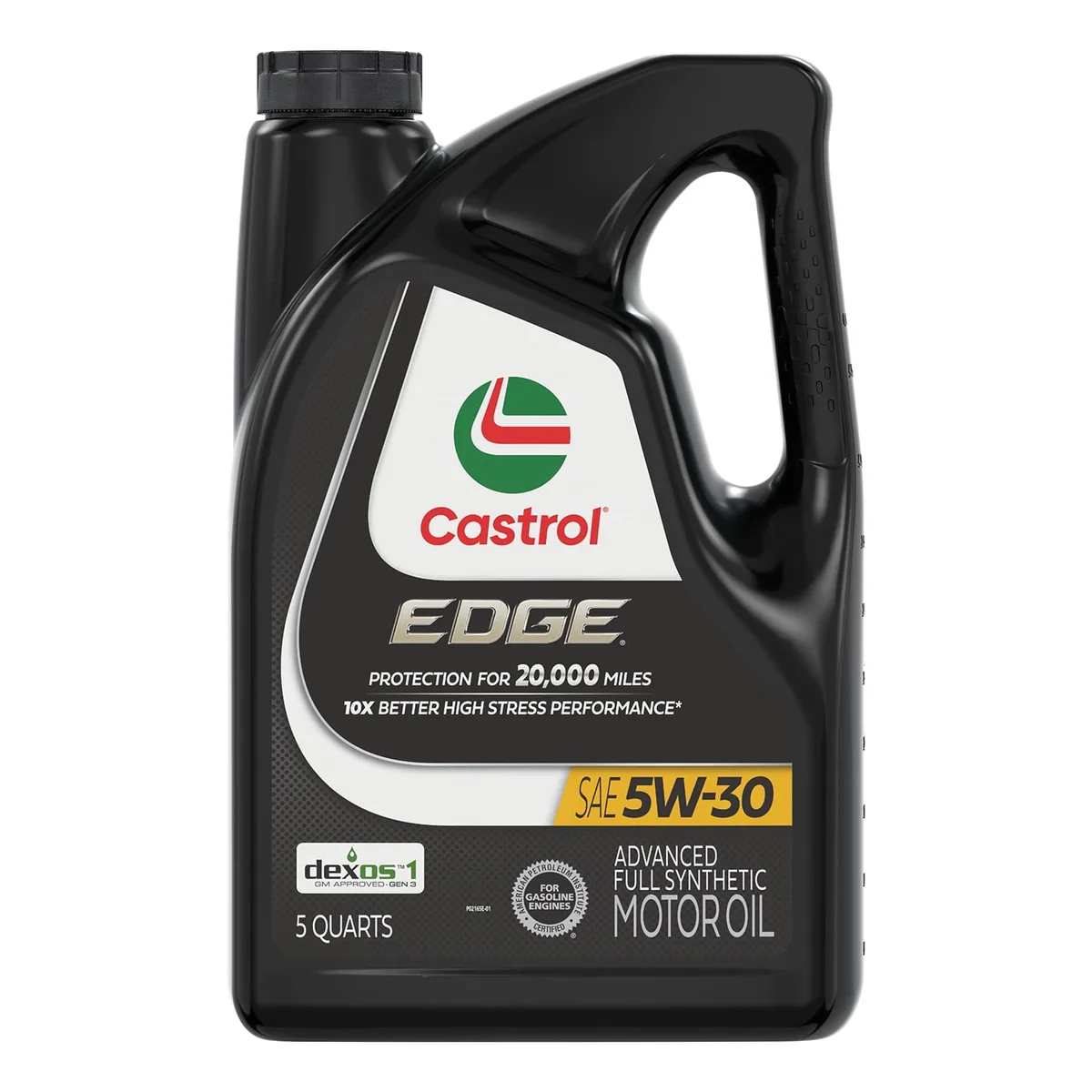
Image source: Web (Bing) / homedepot.com (Web image (fair-use with source credit))
API and ILSAC Certification Numbers (SL, SM, SN, SP)
The API (American Petroleum Institute) donut on the back of the bottle is your real guide. It tells you what year standard the oil meets.
- API SL was current when your Camry was built. It's the minimum you should use. It meets the requirements for the 2AZ-FE engine's emissions and protection needs.
- API SM came later. It offers better oxidation resistance and deposit protection than SL.
- API SN is even better. It provides improved high-temperature deposit protection and sludge control. This is the sweet spot for most 2007 Camry owners.
- API SP is the newest standard as of 2026. It offers the best protection against low-speed pre-ignition (LSPI) and timing chain wear. It is fully backward-compatible with your engine and is an excellent choice.
The ILSAC certification (GF-4, GF-5, GF-6) runs alongside API. GF-5 or GF-6 is ideal. Either provides better fuel economy and protection than the older GF-4 that was current when your car was built.
Conventional vs. Synthetic vs. High-Mileage Blends
This is where a lot of confusion happens. Here is the simple breakdown:
- Conventional oil: The cheapest option. It meets the basic requirements for your Camry. You need to change it every 3,000 to 5,000 miles. It offers less protection against sludge than synthetics.
- Synthetic blend: A mix of conventional and synthetic. It's a good middle ground. It offers better protection than conventional without the full synthetic price tag. This is what many Toyota dealerships use for routine oil changes.
- Full synthetic: The best protection. It resists oxidation and sludge formation much better than conventional oil. It flows better in cold weather. It lasts longer, allowing 5,000 to 7,500 mile intervals. For the 2AZ-FE engine, this is the safest choice.
- High-mileage oil: Designed for engines over 75,000 miles. It contains seal conditioners that help reduce leaks from dried-out gaskets. It also has extra detergents to clean existing deposits. If your Camry has over 100,000 miles and you're not sure about its maintenance history, this is a smart choice.
The Sludge Problem: Why the 2.4L 4-Cylinder Engine Is Picky
The 2AZ-FE engine in your 2007 Camry LE has a specific vulnerability. Its oil passages are narrow, and the engine runs relatively hot. Combine that with extended oil change intervals or low-quality conventional oil, and you get sludge.
Sludge isn't just thick oil. It's a semi-solid, tar-like deposit that forms when oil oxidizes and breaks down. Heat accelerates this process.
So does moisture from short trips where the engine never fully warms up.
Here is what happens step by step:
- Oil gets old and loses its additive package.
- Heat and moisture cause the oil to oxidize.
- Varnish and deposits form on internal surfaces.
- These deposits restrict oil flow through narrow passages.
- Critical components like the timing chain tensioner and variable valve timing system start getting less oil.
- Eventually, the engine starves and fails.
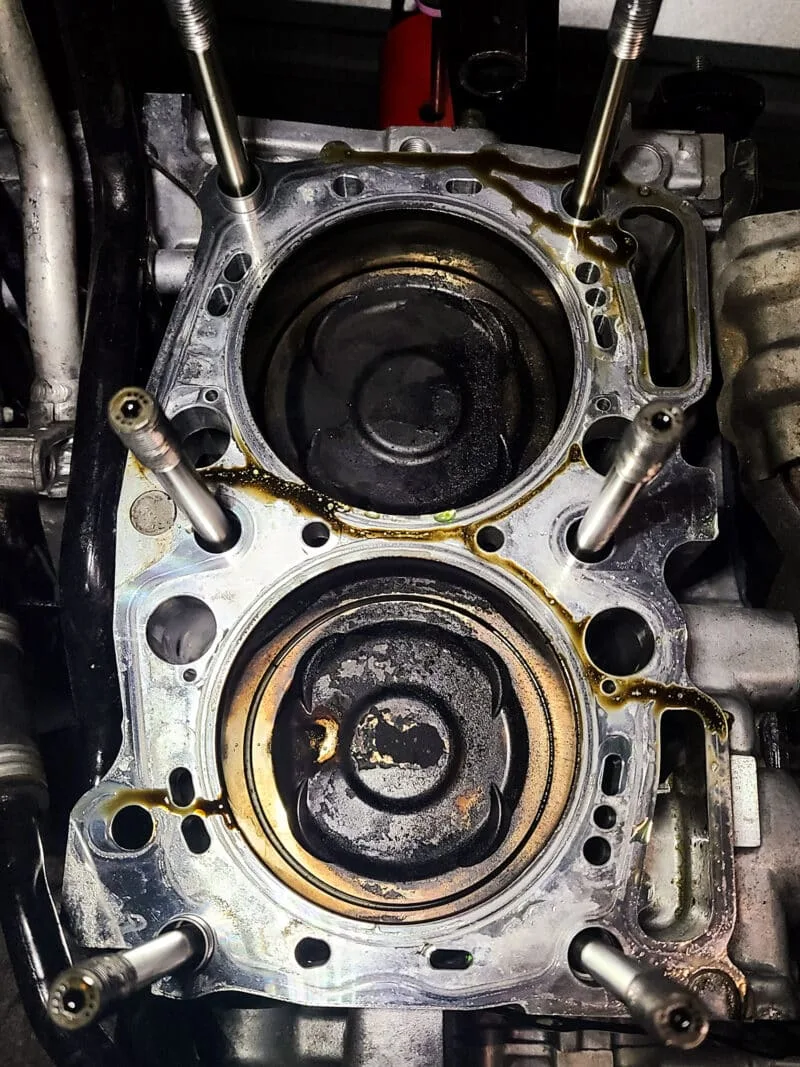
Image source: Web (Bing) / low-offset.com (Web image (fair-use with source credit))
The photo above shows what sludge looks like inside a neglected 2AZ-FE valve cover. That black, crusty coating is what you want to avoid at all costs.
How do you prevent it? Three things:
- Use a high-quality synthetic or synthetic blend oil with API SN or SP certification. These oils have much better resistance to oxidation than older standards.
- Change the oil every 5,000 miles maximum, even if you use synthetic. Do not push it to 7,500 miles unless you do mostly highway driving.
- Warm the engine up properly before driving hard. Let the oil reach operating temperature before you rev it past 3,000 RPM. This burns off moisture and keeps the oil from breaking down prematurely.
If you buy a used 2007 Camry LE with unknown maintenance history, consider a high-mileage synthetic blend for the first few changes. The extra detergents can help clean out light deposits before they turn into full-blown sludge. Just know that if the engine already has heavy sludge, no oil additive can fix it.
Common Mistakes That Shorten Engine Life
Even well-intentioned owners make mistakes. Here are the most common ones we see with the 2007 Camry LE.
Using the Wrong Viscosity
Some owners grab 10W-30 because it's cheaper or they live in a hot climate. This is a mistake. The 2AZ-FE engine was designed around 5W-30.
Using a thicker oil when cold means slower flow to critical components during startup. Over time, this increases wear.
Skipping the Oil Filter Upgrade
The oil filter is not optional. It catches debris and prevents it from circulating through the engine. A cheap, no-name filter can collapse or bypass, sending unfiltered oil straight into the bearings.
Always use a quality filter. The OEM Toyota filter (04152-YZZA1) is excellent. So are brands like Wix, Mobil 1, and Purolator.
Avoid the absolute cheapest options.
Ignoring the "Energy Conserving" Warning
On the V6 2GR-FE engine, this is a real issue. The API donut on the back of the bottle has two potential labels: "Energy Conserving" and "Resource Conserving." The energy conserving label means the oil contains friction modifiers that reduce fuel economy. For your V6 Camry, those friction modifiers can cause the VVT actuators to not function properly, leading to a ticking noise at startup.
Look for oil that does not say "Energy Conserving" in the lower portion of the API donut. Resource conserving oils (API SN Plus or SP) are fine.
Overfilling or Underfilling
Both are bad. Overfilling causes the crankshaft to churn the oil into foam. Foam doesn't lubricate well and can cause aeration, which leads to air bubbles in the oil pump.
Underfilling means the oil pickup tube can suck air during hard cornering or acceleration. Always check the dipstick after filling. Fill to the full mark, no higher.
Step-by-Step: How to Do an Oil Change the Right Way
Doing your own oil change on a 2007 Camry LE is straightforward. It saves you money and guarantees the job is done right.
Tools and Parts You'll Need
Gather everything before you start.
| Item | Spec / Part | Notes |
|---|---|---|
| Engine oil | 5W-30, 5 quarts (4-cyl) or 6 quarts (V6) | Synthetic blend or full synthetic |
| Oil filter | Toyota 04152-YZZA1 or equivalent | Wix, Mobil 1, Purolator are good alternatives |
| Drain plug gasket | 14mm copper or aluminum crush washer | Replace every time, costs about a dollar |
| Socket wrench | 14mm socket for drain plug | A 3/8-inch drive works fine |
| Oil filter wrench | Cap-style or strap wrench | The cap style grips the factory filter better |
| Drain pan | 6+ quart capacity | Any container that holds at least 6 quarts |
| Funnel | Flexible or rigid | Helps avoid spills when pouring |
| Jack and stands or ramps | Needed to get under the car | Never rely on just a scissor jack |
| Gloves and rags | Disposable nitrile gloves work well | Oil is messy and hard to wash off |
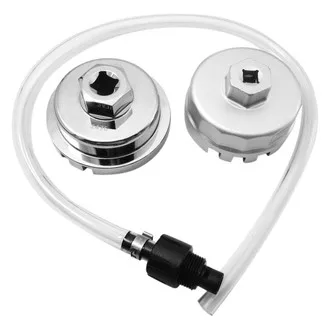
Image source: Web (Bing) / carid.com (Web image (fair-use with source credit))
Draining and Filter Replacement
Warm up the engine for about five minutes. Warm oil drains faster and carries more contaminants with it. Do not get it hot enough to burn you.
Just warm to the touch.
Park on level ground. Engage the parking brake. Jack up the front of the car and place jack stands under the front frame rails.
Ramps are easier if you have them.
Slide under the car. The drain plug is on the passenger side of the oil pan. It is a 14mm bolt.
Place the drain pan under it. Loosen the plug with the socket wrench and unscrew it by hand. Let it drain completely, about five minutes.
While the oil drains, remove the old oil filter. It is on the front of the engine, accessible from above or below. Use the filter wrench to break it loose.
Turn it counterclockwise. Let it drain into the pan.
Take the new filter. Rub a thin layer of fresh oil on the rubber gasket with your finger. This prevents the gasket from sticking.
Screw the new filter on by hand until the gasket contacts the mounting surface. Then tighten it another three-quarters of a turn by hand. Do not use a wrench to tighten the filter.
Install a new crush washer on the drain plug. Thread the plug back in by hand to avoid cross-threading. Tighten it to 29 ft-lbs with a torque wrench.
If you do not have a torque wrench, snug it firmly. Overtightening strips the threads in the oil pan.
Adding the Correct Amount of Oil
Lower the car back to the ground. Open the hood and remove the oil filler cap. Place the funnel in the opening.
For the four-cylinder, pour in 4 quarts first. For the V6, pour in 5 quarts first. Wait two minutes for the oil to drain into the pan.
Check the dipstick. Wipe it clean, insert it fully, pull it out, and read the level. Add the remaining oil slowly until the level reaches the full mark.
It usually takes about half a quart more for the four-cylinder and three-quarters of a quart more for the V6.
The final capacity for the 2.4L four-cylinder is 4.5 quarts with a filter change. The 3.5L V6 takes 5.8 quarts.
Replace the oil filler cap. Start the engine and let it run for 30 seconds. Check underneath for leaks at the drain plug and filter.
Turn the engine off. Wait two minutes. Check the dipstick one more time and top off if needed.
Resetting the Maintenance Light
After an oil change, the maintenance light on your dash will still be on. Resetting it is simple.
Turn the ignition to the ON position. Do not start the engine. Press the trip button until the odometer shows "ODO." Turn the ignition OFF.
Press and hold the trip button while turning the ignition back to ON. The maintenance light will flash and then turn off. Release the trip button.
What It Costs: DIY vs. Quick Lube vs. Dealership
Cost varies significantly depending on who does the work and what oil you choose.
| Option | Conventional Oil | Synthetic Blend | Full Synthetic |
|---|---|---|---|
| DIY | $20 to $25 | $25 to $35 | $35 to $50 |
| Quick lube shop | $35 to $50 | $45 to $65 | $65 to $90 |
| Toyota dealership | $50 to $70 | $60 to $80 | $80 to $110 |
The DIY cost includes oil, filter, and a new drain plug gasket. You provide your own tools and labor. The quick lube and dealership prices are averages from urban and suburban markets as of 2026.
The savings from doing it yourself are real. Over three years at two changes per year, you save $60 to $120 by going DIY instead of a quick lube shop. But there is a trade-off.
Quick lube shops and dealerships handle disposal of the old oil and filter. DIY means you need to take the used oil to an auto parts store or recycling center. Most states require this by law, and it is free to drop off at places like AutoZone or O'Reilly.
How Often Should You Change the Oil? (Severe vs. Normal Service)
Toyota's owner manual gives two service schedules. Which one applies to you makes a big difference.
Normal service means mostly highway driving at moderate speeds. The engine reaches full operating temperature and stays there. Moisture burns off.
Oil lasts longer. For normal service, Toyota recommends oil changes every 7,500 miles or 12 months.
Severe service covers most other driving. This includes short trips under five miles, frequent stop-and-go traffic, driving on dusty roads, and towing. For severe service, the recommendation drops to every 5,000 miles or six months.
Here is the honest truth. Most 2007 Camry LE owners fall into the severe service category whether they realize it or not. Commuting to work through traffic is stop-and-go driving.
The engine warms up, cools down, and never fully burns off condensation. That moisture mixes with the oil and accelerates breakdown.
Our recommendation for the 2.4L four-cylinder engine is simple. Change the oil every 5,000 miles regardless of driving conditions. Use a synthetic blend or full synthetic.
This gives you a comfortable margin of safety against sludge buildup. For the V6 engine, 5,000 miles is also a good target, but you can stretch to 7,500 miles if most of your driving is highway.
Safety, Disposal, and Legal Stuff You Can't Ignore
Used motor oil is classified as hazardous waste by the Environmental Protection Agency. Dumping it on the ground, down a storm drain, or in the trash is illegal in all 50 states. The penalties vary but can include fines of several thousand dollars.
The reason is simple. One quart of used oil can contaminate one million gallons of fresh water. It contains heavy metals, benzene, and other toxic compounds that do not break down in the environment.
Here is the safe way to handle disposal. Let the used oil cool completely. Pour it into a clean, sealable container.
Do not mix it with antifreeze, brake fluid, or any other automotive fluid. Take the container to any auto parts store. AutoZone, O'Reilly, Advance Auto Parts, and most Walmart auto centers accept used oil for free.
They also accept used oil filters.
Vehicle fluids like motor oil also contain chemicals known to the State of California to cause cancer and reproductive harm. That is the Proposition 65 warning you see on every oil bottle. Wearing gloves and washing your hands after an oil change is common sense.
When to Call a Mechanic (and When to DIY)
Oil changes are one of the easiest DIY jobs on a 2007 Camry LE. But there are situations where calling a professional makes more sense.
Call a mechanic if:
- You cannot get the drain plug loose. Overtightened or stripped plugs are common on older cars.
- The drain plug threads are damaged. If the plug feels loose when you tighten it, the oil pan threads may be stripped.
- You drive on a lot of gravel or dirt. Jacking a car on soft ground is dangerous.
- You have back or knee problems. Crawling under a car is hard on the body.
- You want peace of mind. A Toyota-focused shop will use the correct oil and filter.
Do it yourself if:
- You have a flat, level surface to work on.
- You have basic hand tools and a drain pan.
- You want to save $15 to $40 per change.
- You want to know exactly what oil and filter went in.
- You enjoy working on your car.
For the 2007 Camry LE, the two most common reasons people call a mechanic are a stuck drain plug and a stripped oil pan. Both happen when someone before you overtightened things. If you buy a used Camry and do not know its history, consider having a shop do the first oil change.
After that, you can take over for future changes.
The Final Verdict: One Oil Type for a Long-Lasting Engine
Here is the simple truth for your 2007 Camry LE. Use SAE 5W-30 with API SN or SP certification. Choose a full synthetic oil for the 2.4L four-cylinder engine.
A synthetic blend works fine for the V6. Change it every 5,000 miles or six months. Use a quality filter like the OEM Toyota 04152-YZZA1 or a Wix equivalent.
That combination gives you maximum protection against sludge, consistent performance in all seasons, and the longest possible engine life. It is not the cheapest option. But it is the cheapest insurance you can buy for a car that still has plenty of miles left.
Frequently Asked Questions
Can I use 0W-20 in my 2007 Camry LE?
No. Your 2007 Camry LE requires 5W-30. The 0W-20 viscosity was introduced in later model years and is too thin for the 2AZ-FE or 2GR-FE engines.
Using it can cause increased wear and potential engine damage over time.
How do I know if my Camry has the 2.4L or 3.5L engine?
Open the hood and look at the engine cover. The 2.4L four-cylinder has a plastic cover that says "VVT-i" across the top. The 3.5L V6 has a larger cover that says "V6" or "DOHC 24V." You can also check your VIN.
The 8th character is "F" for the V6 and "C" for the four-cylinder.
Is it okay to switch from conventional to synthetic oil?
Yes, absolutely. Switching is safe at any mileage. Synthetic oil will not cause leaks.
It may actually clean existing deposits that were masking a leak, so any drips after switching were probably already there. Just pick a quality 5W-30 synthetic and stick with it.
What happens if I accidentally put 10W-30 in my Camry?
In warm weather, 10W-30 will work but it provides slower protection at startup. In cold weather, it is thick enough to cause hard starting and increased wear. Drain it and replace it with 5W-30 at your next oil change.
One interval will not cause permanent damage.
How long can I go between oil changes with full synthetic oil?
For the 2007 Camry LE, stick to 5,000 miles maximum for the 2.4L four-cylinder. The V6 can stretch to 7,500 miles with synthetic. Going longer risks sludge formation in the 2AZ-FE engine regardless of oil quality.
Your engine's history matters more than the oil's theoretical lifespan.