
If you own a 2015 Toyota RAV4 or are thinking about buying one used, you've probably heard the rumors about reliability issues. The 2015 toyota rav4 problems are real enough that they deserve a close look before you hand over your money or sink more into repairs. Some of these issues are minor annoyances, while others can hit your wallet hard.
According to NHTSA data, the 2015 RAV4 has accumulated over 1,500 complaints and three major recalls as of 2026. That's not unusual for a mass-market SUV of this age, but certain patterns stand out. Let's walk through what you need to know.
Quick Answer
The 2015 Toyota RAV4 has several known problems. The most common are excessive oil consumption, transmission shudder, power steering rack noise, and A/C compressor failure. Three recalls affect this model year.
Not every RAV4 has these issues, but they are frequent enough that used buyers should budget for potential repairs.
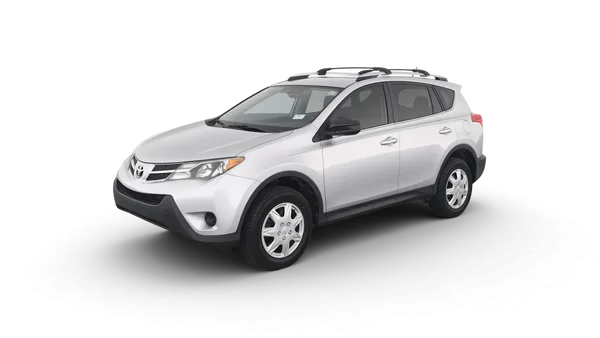
Image source: Bing (Web (fair-use with source credit))
Why Getting This Matters for Your Wallet and Safety
The 2015 RAV4 was a top seller for Toyota, and for good reason. It offers solid cargo space, decent fuel economy, and a proven 2.5L engine. But a few design flaws crept into this generation, and they show up more often than owners would like.
The biggest concern is cost. A torque converter replacement runs $1,500 to $2,500. A steering rack replacement can cost $1,200 to $1,800.
If you're shopping for a used RAV4 around $12,000 to $16,000, a $2,000 repair is a big chunk of the purchase price.
Safety is another factor. The Takata airbag recall affects this model year, and that's a serious issue. A faulty inflator can send metal fragments into the cabin during a crash.
Toyota has issued the recall, but not every owner has followed through. If you're buying used, that's the first thing you should check.
Resale value also takes a hit when a model has a reputation for problems. A well-maintained RAV4 still holds its value well, but one with a history of oil consumption or transmission issues will be harder to sell. The bottom line: knowing what to look for saves you money and stress.
The Most Common 2015 RAV4 Problems at a Glance
Here's a quick rundown of the issues that show up most often. Not every RAV4 has every problem, but these are the ones you'll see in owner forums, NHTSA complaints, and service records.
| Problem | Frequency | Typical Cost | Severity |
|---|---|---|---|
| Excessive oil consumption | High | $500–$2,000 | Moderate to high |
| Transmission shudder | Moderate | $1,500–$2,500 | High |
| Power steering rack noise | Moderate | $1,200–$1,800 | Moderate |
| A/C compressor failure | Moderate | $800–$1,200 | Low to moderate |
| AWD system binding | Low to moderate | $500–$1,500 | Moderate |
| Takata airbag recall | Affects all units | Free (recall) | Critical |
| Battery drain | Low to moderate | $100–$500 | Low |
| Rust on rear suspension | Climate-dependent | $500–$2,000 | Moderate |
The most expensive problems are the transmission and steering rack. The most common is oil consumption. The most serious is the airbag recall.
Let's dig into the big ones.
Excessive Oil Consumption: The 2.5L Engine's Achilles' Heel
The 2.5L 2AR-FE engine in the 2015 RAV4 is generally reliable. It's the same basic engine Toyota has used in the Camry and Highlander for years. But a subset of these engines burns oil at a rate that's higher than normal.
The symptoms are straightforward. You'll notice the oil level dropping between changes. You might smell burning oil or see blue smoke from the exhaust.
Some owners report adding a quart every 1,000 miles. Toyota's official threshold is 1 quart per 1,200 miles, but many owners consider that excessive.
The root cause is usually worn piston rings or valve stem seals. The rings don't seal properly, so oil slips past into the combustion chamber and burns off. This is more common in engines that were driven hard from cold starts or had extended oil change intervals.
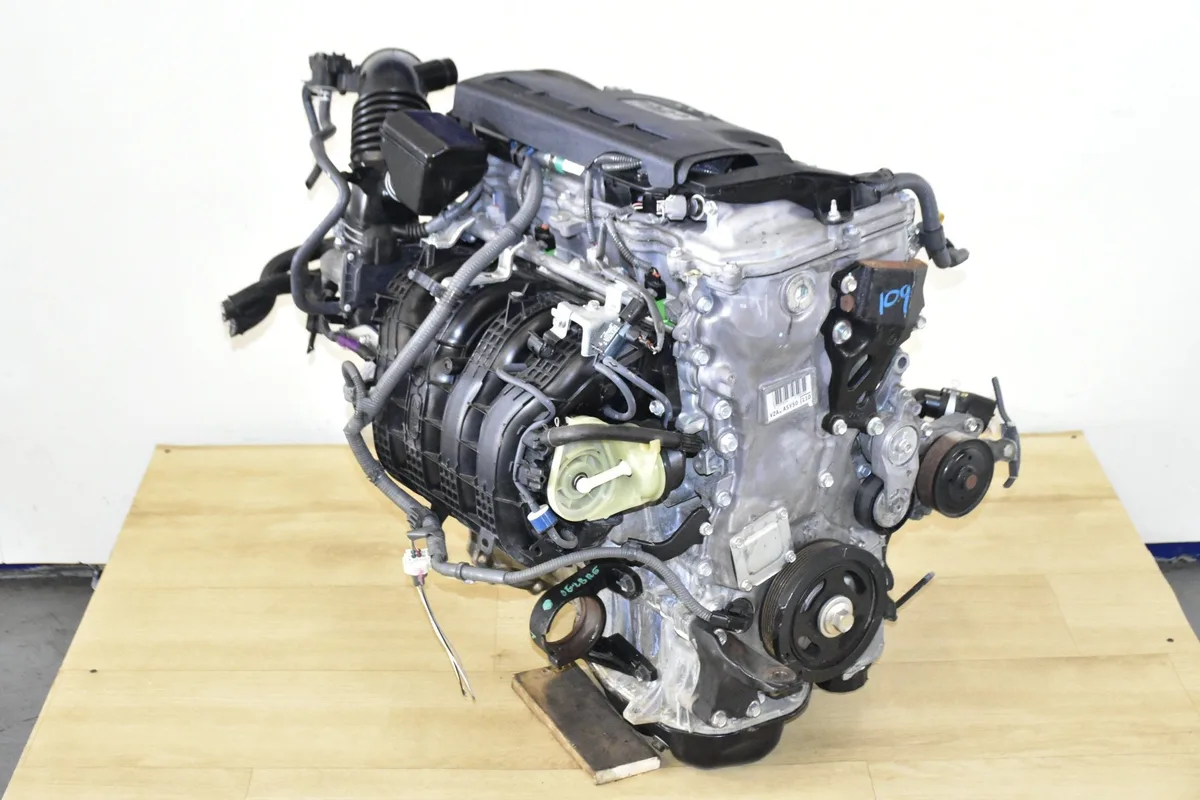
Image source: Web (Bing) / sanantoniojdmengines.com (Web image (fair-use with source credit))
How to check for oil consumption
If you're buying a used 2015 RAV4, ask the owner about oil changes. Look for records. Then do a simple test.
Check the oil level when the engine is cold. Write down the mileage. Drive 1,000 miles, then check again.
If it's down more than half a quart, you have a problem.
Toyota has a formal oil consumption test that dealerships use. It involves draining the oil, weighing it, driving a set distance, then weighing again. If the consumption exceeds the threshold, Toyota may offer a repair under warranty.
But for a 2015 model, the factory warranty is long gone.
What to do about it
The only permanent fix is engine work. That means new piston rings, new seals, and possibly new pistons. That's a $2,000 to $3,000 job at a shop.
Some owners switch to a thicker oil like 5W-30 instead of 0W-20 to slow the consumption. That helps a little but doesn't fix the root cause.
If you already own a RAV4 that burns oil, keep a quart in the trunk. Check the oil every other fill-up. Running low on oil can damage the engine, especially the bearings and timing chain.
Transmission Shudder and Hesitation: What to Listen For
The 2015 RAV4 uses a U760E six-speed automatic transmission. It's a solid unit overall, but it has a known issue with the torque converter. The torque converter is the component that connects the engine to the transmission.
When it starts to fail, you feel a shudder or vibration during light acceleration.
The shudder usually happens between 35 and 50 mph. It feels like driving over rumble strips. Some owners describe it as a slight hesitation or a "bucking" sensation.
If you let off the gas, it goes away. Get back on the gas, and it comes back.
This is almost always the torque converter clutch not engaging smoothly. The clutch plates inside the converter wear unevenly, and they start to slip. That creates the vibration.
How to diagnose it
The quickest way to check is a test drive. Find a flat road. Accelerate gently from 35 to 50 mph.
If you feel a vibration that disappears when you tap the brakes or shift to neutral, the torque converter is the likely culprit.
A transmission fluid check can also help. Dark or burnt-smelling fluid is a bad sign. If the fluid is low, the transmission might shudder from lack of pressure, not from a bad converter.
But in most cases, low fluid is a symptom of a leak, not the cause of the shudder.
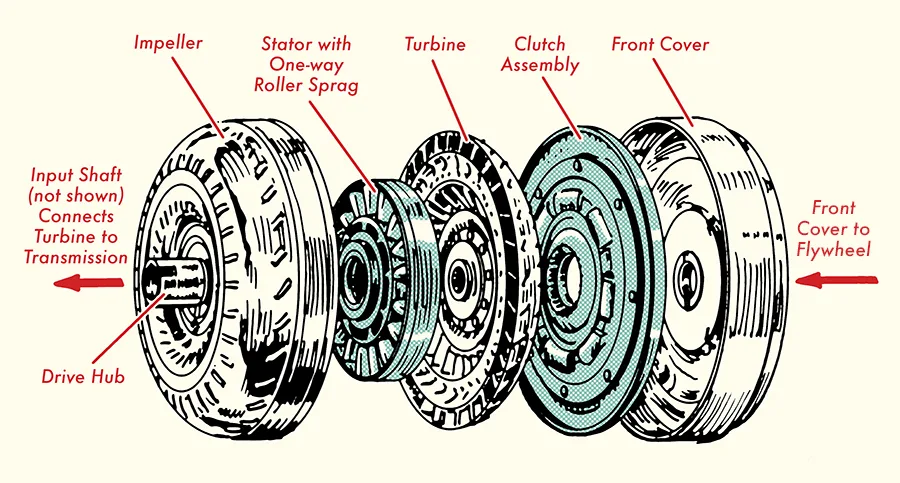
Image source: Web (Bing) / narodnatribuna.info (Web image (fair-use with source credit))
What the fix involves
Toyota issued a Technical Service Bulletin for this issue. TSB 0031-16 describes a software update and, in some cases, a torque converter replacement. The software update changes how the transmission controls the converter clutch.
That can smooth out the engagement and delay the shudder.
If the software update doesn't work, the converter needs to be replaced. That's a transmission-out job. The transmission has to be removed from the vehicle.
The old converter comes out, the new one goes in, and the transmission fluid gets flushed. It's a $1,500 to $2,500 job at a dealership.
Some independent shops offer a transmission flush with a friction modifier additive. That can delay the problem but rarely fixes it permanently. The only real fix is a new converter.
Can you drive with a shuddering transmission?
You can drive for a while, but it's not ideal. The shudder means the converter is wearing. Eventually, the debris from the worn clutch can clog the transmission valve body.
That can lead to more serious transmission failure. If you catch it early, you save the transmission. If you wait too long, you might need a full rebuild.
Power Steering Rack Noise: A Costly Fix Hiding in Plain Sight
The 2015 RAV4 uses electric power steering. There's no hydraulic pump, no fluid, no belts. The steering assist comes from an electric motor mounted on the steering rack.
That system is generally reliable, but the rack itself can develop a clunking noise.
The noise is most noticeable at low speeds. When you turn the wheel in a parking lot or driveway, you hear a metallic clunk or a moaning sound. It feels like there's play in the steering, like the wheel has a few degrees of dead travel before the tires respond.
The cause is usually wear in the rack's internal gears or the mounting bushings. The electric motor applies force to the rack, and over time, the gear teeth wear. The rack shifts slightly, and you hear the metal-on-metal contact.
How to confirm the issue
A simple test: park the car, turn the steering wheel back and forth while the engine is running. Listen for a clunk from the front of the car. If you feel a knock through the steering wheel, the rack is worn.
Another test: have someone turn the wheel while you look at the steering rack under the car. If the rack moves before the wheels move, the mounts are loose or the internal gears are worn.
What a replacement costs
A new steering rack from Toyota costs around $600 to $800 for the part. Aftermarket racks are cheaper, usually $300 to $500. Labor adds another $400 to $600.
Total cost: $1,000 to $1,800.
Some shops offer a rebuilt rack for less. A rebuilt rack has new internal seals and bearings. It's a good middle ground between a new OEM part and a used one.
Is it safe to drive with a noisy rack?
A clunking rack is annoying but not immediately dangerous. The rack is still providing steering assist. But if the noise gets worse, the rack can fail.
A failed rack means the steering wheel doesn't turn the wheels. That's a safety hazard, especially at highway speeds.
If you hear the noise, get it inspected. A mechanic can check for play in the steering and tell you if the rack needs replacement. The earlier you catch it, the less likely you are to have a sudden failure.
A/C Compressor Failure: A Predictable Breakdown
The air conditioning compressor in the 2015 RAV4 has a known weakness. The clutch assembly and shaft seal tend to fail earlier than you'd expect from a Toyota. Many owners report the A/C blowing warm air around the 60,000 to 80,000 mile mark.
The first sign is usually a clicking noise from the compressor when the A/C is on. That's the clutch trying to engage. Sometimes it engages, sometimes it doesn't.
Eventually the compressor seizes or the clutch stops engaging entirely.
What causes the failure
The compressor clutch is an electromagnetic unit. Over time, the clutch plate wears down and the gap between the plate and the pulley gets too wide. The magnet can't pull the plate in, so the compressor stops spinning.
Heat and humidity accelerate the wear.
Another common failure point is the shaft seal. When the seal leaks, refrigerant escapes. The system loses pressure, and the A/C stops cooling.
You might see oil residue around the front of the compressor pulley.
How much does a replacement cost
A new compressor from Toyota runs about $400 to $500. Aftermarket compressors are cheaper at $200 to $350. The labor involves evacuating the refrigerant, replacing the compressor, and recharging the system.
Total cost lands between $800 and $1,200.
Some shops offer a rebuilt compressor for around $250. That's a good option if you're on a budget. Just make sure the shop replaces the receiver drier and expansion valve at the same time.
Those components trap debris from the failed compressor, and they'll clog the new one if left in place.
Can you drive without A/C
Yes. The compressor has a separate belt and pulley. If the clutch fails, the pulley still spins freely.
The engine will run fine, you just won't have cold air. If the compressor seizes completely, the belt can snap or shred. That's a bigger problem because the same belt often drives the alternator or water pump.
If you hear a loud squeal from the belt area, shut off the A/C and get it inspected.
AWD System Binding: When All-Wheel Drive Works Against You
The all-wheel drive system in the 2015 RAV4 uses an electromagnetic coupling to send power to the rear wheels. It's a smart system that engages automatically when the front wheels slip. But it has a weakness that shows up on vehicles driven mostly on pavement.
The symptom is a binding or hopping feeling during tight turns at low speed. Think of a parking lot or a U-turn. The rear wheels feel like they're fighting the front wheels.
The car lurches and skips, almost like the parking brake is on.
What causes the binding
The AWD system uses a fluid coupling called the rear differential coupling. This coupling has clutches that engage to transfer power. If the fluid in the coupling breaks down or the clutches wear unevenly, the system doesn't release properly.
The rear wheels stay engaged even when they should be free.
The most common cause is neglected maintenance. Toyota recommends changing the rear differential fluid every 30,000 to 60,000 miles. Many owners never do it.
The fluid gets contaminated with clutch material, and the coupling starts to bind.
How to fix it
The first step is a differential fluid change. Drain the old fluid and refill with genuine Toyota differential fluid. This fixes the problem about half the time.
If the binding continues, the coupling itself needs replacement. That's a $500 to $1,500 job depending on the shop.
Some owners report that driving in reverse for a short distance can temporarily release the binding. That's a band-aid, not a fix. The real solution is fresh fluid and, if needed, a new coupling.
Does every RAV4 have this issue
No. The binding is most common in RAV4s that spend most of their time on dry pavement. Vehicles that see regular snow or gravel tend to cycle the AWD system more often, which keeps the fluid moving and the clutches from sticking.
If you live in a warm climate and rarely use the AWD feature, you're more likely to see this problem.
Recalls You Need to Check Right Now (Takata Airbag and Fuel Pump)
The 2015 RAV4 has three major recalls. The most critical is the Takata airbag inflator. This recall affects millions of vehicles across multiple manufacturers.
The inflator can explode with too much force, sending metal fragments into the cabin. That's a life-threatening defect.
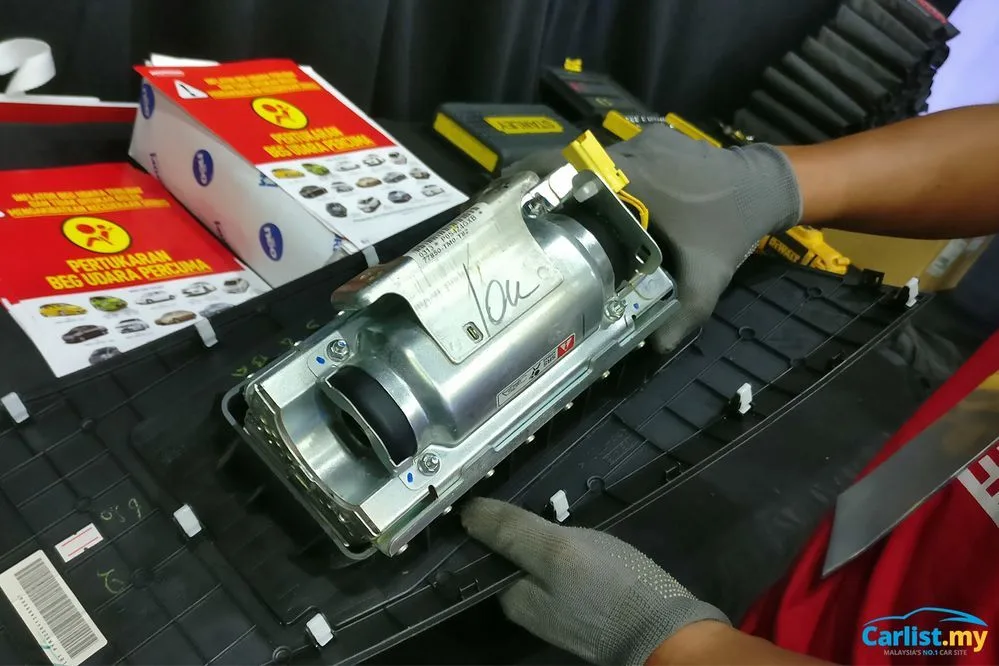
Image source: Web (Bing) / carlist.my (Web image (fair-use with source credit))
How to check if your RAV4 is affected
Go to the NHTSA website and enter your VIN. The site will show any open recalls for your specific vehicle. You can also call your local Toyota dealer with the VIN.
They'll look it up in Toyota's system.
The Takata recall covers both the driver and passenger front airbags. Toyota will replace the inflator at no cost. The replacement inflator uses a different chemical that doesn't degrade over time.
The fuel pump recall
A separate recall involves the fuel pump assembly. The pump can fail without warning, causing the engine to stall while driving. That's a safety hazard, especially at highway speeds.
Toyota issued this recall in 2020, and it affects some 2015 RAV4s built in certain production windows.
If the fuel pump fails, the engine won't start or will die while running. The replacement is free at any Toyota dealer. The job takes about an hour.
What about the cargo cover recall
There's a third recall for the cargo cover. The cover's plastic frame can separate from the cover itself. If it comes loose, it becomes a projectile in a crash.
Toyota will replace the cover assembly at no cost.
Why this matters for used buyers
If you're buying a used 2015 RAV4, check the recall status before you hand over cash. A dealer can perform the recalls for free, even if you're not the original owner. Recalls are safety items, and they don't expire.
If the seller hasn't had them done, factor that into your offer. A vehicle with open recalls is a negotiating point.
Electrical Gremlins: Battery Drain and Infotainment Glitches
The 2015 RAV4 has a few electrical issues that owners report. The most common is a parasitic battery drain. You park the car overnight, and the next morning the battery is dead.
The battery is fine, but something is drawing power with the ignition off.
The usual culprit is the Entune infotainment system. The system doesn't always go into sleep mode properly. It keeps communicating with the telematics module, and that drains the battery.
Some owners also report the audio system freezing or the Bluetooth connection dropping.
How to diagnose a battery drain
A multimeter and a test light are the basic tools. Connect the test light between the negative battery terminal and the negative battery cable. If the light glows, there's a draw.
Then pull fuses one at a time until the light goes out. That tells you which circuit is the problem.
For the RAV4, the most common circuits are the radio fuse and the telematics fuse. If you pull either one and the draw stops, you've found the issue.
How to fix it
The fix for the Entune battery drain is a software update. Toyota issued a TSB for this. The update changes the system's sleep behavior.
If the dealer has already performed the update, the problem is solved.
If the software update doesn't work, some owners install a battery disconnect switch. That's a kludge, not a fix. A better solution is to have the dealer check the telematics control unit.
That unit can fail and keep the system awake.
Other electrical issues
Some owners report the backup camera going dark or showing a distorted image. This is usually a loose connection or a failing camera. The fix is a new camera or a wiring repair.
The camera is about $150 to $200, and labor adds another $100.
The power liftgate, if equipped, can also act up. It might stop opening or close unexpectedly. The usual cause is a worn strut or a faulty latch sensor.
Replacement struts are about $50 to $100 each.
Rust and Corrosion: A Growing Concern for Snow-Belt Owners
The 2015 RAV4 has a rust problem that shows up on the rear suspension components. Specifically, the rear subframe and the lower control arms can corrode badly in areas that use road salt. This is a structural concern, not just cosmetic.
The rust starts on the surface and works inward. Over time, the metal weakens. The control arms can crack, and the subframe can lose its structural integrity.
That affects the alignment and handling of the vehicle.
Where to look for rust
Get under the car and look at the rear axle area. The lower control arms are the main culprits. They're stamped steel, and the paint can chip off.
Salt and moisture get in, and the rust takes over.
Also check the rear subframe where it bolts to the body. The mounting points can rust out. If the subframe separates from the body, the rear suspension collapses.
That's a dangerous failure.
How to prevent it
If you live in a salt-belt state, regular undercarriage washes are essential. Spray the underside of the car at least once a week during the winter months. The salt doesn't cause rust until it gets wet.
Keeping it washed off breaks the cycle.
Some owners apply a rust inhibitor like Fluid Film or Woolwax to the undercarriage. These products coat the metal and prevent salt from contacting it. They need to be reapplied annually.
What a repair costs
Replacing rusted control arms runs about $300 to $600 for parts and labor. A rusted subframe is a bigger job. A new subframe costs $500 to $800, and labor adds another $500 to $1,000.
The total can hit $1,500 to $2,000.
If the rust is caught early, you can sand and paint the affected areas. That's a much cheaper fix. Once the metal is pitted, the only option is replacement.
Cost of Repairs: What Each Fix Actually Runs You
Here's what you can expect to pay for the major repairs we've covered. These are national averages from independent shops, not dealership prices.
| Repair | Cost Range |
|---|---|
| Oil consumption (engine work) | $2,000–$3,000 |
| Torque converter replacement | $1,500–$2,500 |
| Steering rack replacement | $1,200–$1,800 |
| A/C compressor replacement | $800–$1,200 |
| AWD coupling replacement | $500–$1,500 |
| Rusted control arms | $300–$600 |
Used-Car Buyer's Checklist: What to Inspect Before You Buy
Check the oil level and look for a maintenance history. Take a test drive and listen for transmission shudder between 35 and 50 mph. Turn the wheel at low speed and listen for steering clunk.
Run the A/C and confirm cold air. Check the VIN on the NHTSA site for open recalls. Look under the car for rust on the rear suspension.
Maintenance Tips That Prevent the Biggest Problems
Change the oil every 5,000 miles with 0W-20. Don't wait for the reminder light. Flush the transmission fluid every 60,000 miles.
Replace the rear differential fluid every 30,000 miles if you have AWD. Wash the undercarriage weekly in winter. Replace the A/C belt and check the compressor annually.
When to DIY vs. When to Call a Pro
You can handle oil changes, air filters, and battery checks yourself. Leave the transmission work, steering rack, A/C system, and engine repairs to a mechanic. A torque converter job requires removing the transmission.
That's not a driveway project.
Frequently Asked Questions
Is the 2015 RAV4 reliable?
Overall yes, but it has above-average issues for a Toyota. The engine and transmission are generally solid, but oil consumption and torque converter failures are common enough to watch for.
How much oil does a 2015 RAV4 burn?
Some burn up to a quart every 1,000 miles. Toyota's official threshold is 1 quart per 1,200 miles. If you're adding oil between changes, that's a problem.
Does the 2015 RAV4 have transmission problems?
Some do. The torque converter can cause shudder between 35 and 50 mph. A software update helps, but replacement is needed in severe cases.
Are there any recalls on the 2015 RAV4?
Yes. Three major recalls exist: Takata airbag inflator, fuel pump assembly, and cargo cover. All are free at any Toyota dealer.
Is the 2015 RAV4 worth buying used?
If you find one with a clean history and no major issues, yes. It's still a spacious, practical SUV. But budget for potential repairs.
The Bottom Line: Is the 2015 RAV4 Still Worth It?
The 2015 RAV4 is a solid used SUV with a few known weaknesses. The oil consumption, torque converter shudder, and steering rack noise are the main concerns. If you inspect carefully, check for recalls, and budget for potential repairs, it's still a good choice.
If you want to avoid the headaches entirely, a 2016 or later model with the hybrid option might be worth the extra money.