
If you own a 2010 Toyota Corolla, the first question that comes up at oil change time is what oil it actually needs. The wrong choice can cost you engine life, fuel economy, and cold-start reliability. The 2010 Toyota Corolla oil type is a specification Toyota engineered around.
Pick the right one and your 2ZR-FE engine will run smoothly for hundreds of thousands of miles.
As of 2026, most owners reach for 0W-20 full synthetic. But there's more to the decision than just grabbing the thinnest bottle on the shelf. Engine oil is rated by viscosity, API service category, and ILSAC certification.
These three numbers directly affect how your car performs. Let's walk through exactly what you need and why.
Quick Answer
The 2010 Toyota Corolla takes 0W-20 full synthetic engine oil with an API SN or higher rating. 5W-30 is acceptable for warmer climates. Capacity is 4.4 quarts with filter change. Change it every 5,000 miles for severe service or up to 7,500 miles for highway driving.
Why Getting the Right Oil Matters for Your 2010 Corolla
The 1.8-liter 2ZR-FE engine in your Corolla uses variable valve timing (VVT-i) and tight internal clearances. Those features demand a specific oil viscosity and quality.
What happens with the wrong oil
Heavier oil, like 10W-30 or 15W-40, does not flow fast enough at startup. The VVT actuators rely on oil pressure to adjust timing. Thick oil delays that pressure, causing a rattle on cold starts that mechanics call VVT knock.
Over time, that rattle wears timing chain guides and tensioners.
Thinner oil than specified, like 0W-16, cannot maintain enough film strength at operating temperature. The bearings and rings see increased metal-to-metal contact, accelerating wear.
Using an oil with an outdated API rating (SM or older) means less detergent and dispersant additive. Sludge builds up in the valve train and oil passages. The 2ZR-FE was redesigned to avoid sludge issues, but poor oil choice still invites them back.
Fuel economy penalty
The 0W-20 spec is partly about meeting EPA fuel economy targets. Switching from 0W-20 to 5W-30 drops fuel economy by roughly 2 to 3 percent. Over a year of driving, that adds up to real money.
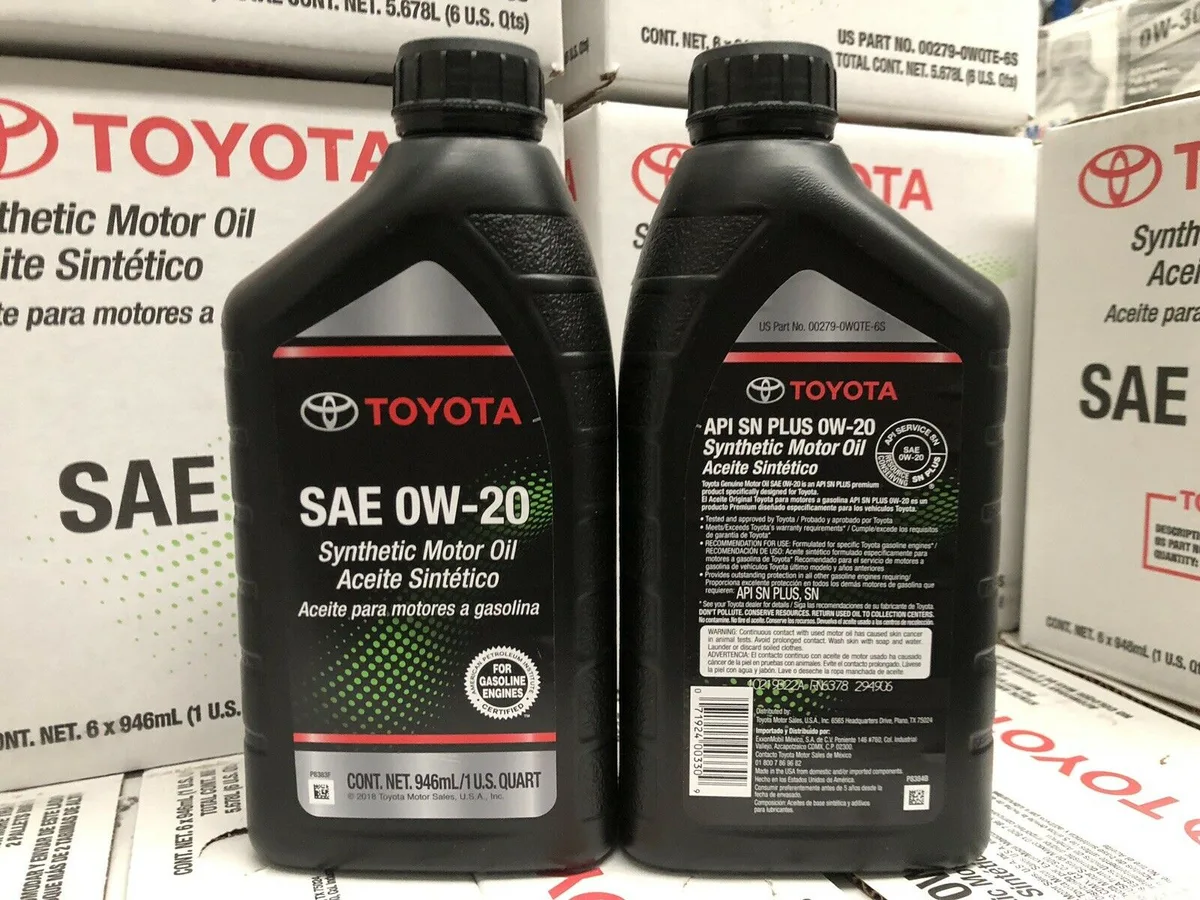
Image source: Web (Bing) / alibaba.com
Understanding Your Engine: The 1.8L 2ZR-FE and Its Oil Needs
The 2ZR-FE debuted in 2007 and was used through 2014 in the Corolla. It is a dual-overhead-cam, 16-valve four-cylinder with Toyota's dual VVT-i system on both intake and exhaust cams. The engine block is aluminum.
The pistons are lightweight. The piston rings are low-tension to reduce friction.
Why these details matter for oil choice
Low-tension rings seal less aggressively than older designs. They rely on the right oil viscosity to maintain compression without excessive blow-by. Too-thin oil leads to higher oil consumption.
Too-thick oil leaves the rings struggling to scrape the cylinder walls, also raising consumption.
The VVT-i phasers are oil-actuated. They need consistent flow and pressure. The oil passages are narrow by design.
Using a thicker oil than recommended, especially when cold, can restrict flow enough to trigger a check-engine light for cam timing correlation codes (P0011, P0012, P0016, P0017). Those repairs get expensive.
The oil cap tells you
Pop the hood and look at the oil filler cap. It is stamped with the recommended viscosity. On a 2010 Corolla, you will see 0W-20 clearly printed.
That is the primary recommendation. The owner's manual also lists 5W-30 as an acceptable alternative, but only in certain conditions.
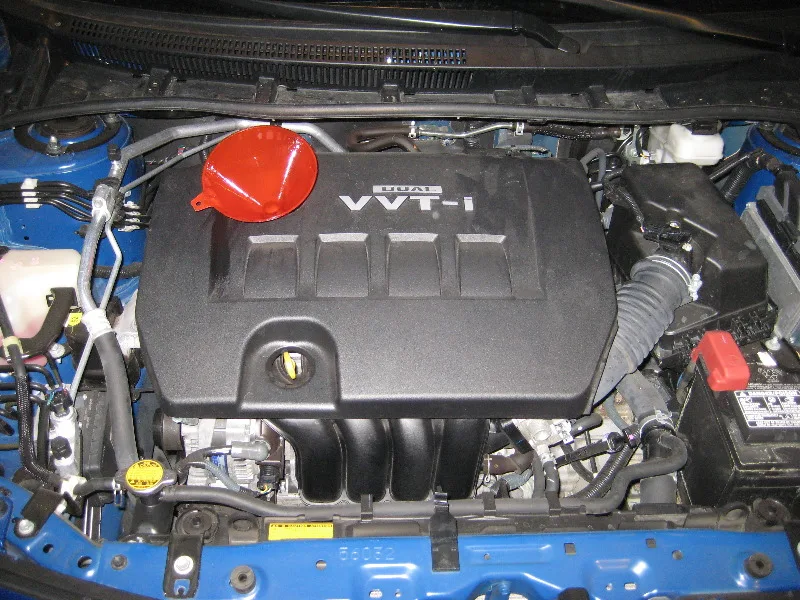
Image source: Web (Bing) / paulstravelpictures.com
0W-20 vs 5W-30: Which One Should You Actually Use?
This is the most common debate among Corolla owners. Both are listed in the manual. So which is right for your car?
| Condition | Recommended oil | Why |
|---|---|---|
| Normal daily driving, moderate climate | 0W-20 | Better fuel economy, optimal cold-start flow, meets EPA targets |
| Hot climate (above 100°F/38°C regularly) | 5W-30 | Slightly thicker film at extreme heat, good for sustained high-load driving |
| High-mileage engine (150,000+ miles) | 0W-20 or 5W-30 | Switch to 5W-30 only if oil consumption is high. 0W-20 still preferred if consumption is normal |
| Severe cold (below -20°F/-29°C) | 0W-20 | Superior cold-cranking performance. 5W-30 can be too thick at extreme lows |
The real-world take
For 90 percent of drivers, 0W-20 is the right choice. It is what Toyota specifies. It delivers the best fuel economy.
It protects the VVT system from day one. Running 5W-30 will not blow up your engine, but you will lose a little MPG and may notice slightly louder cold starts.
If you live in Phoenix or Death Valley and drive uphill with a full load, 5W-30 is a safe alternative. If you see snow and ice every winter, stick with 0W-20.
The 2ZR-FE was designed primarily around 0W-20 as the fill-for-life viscosity. The API motor oil certification program provides independent verification that oils meet those requirements.
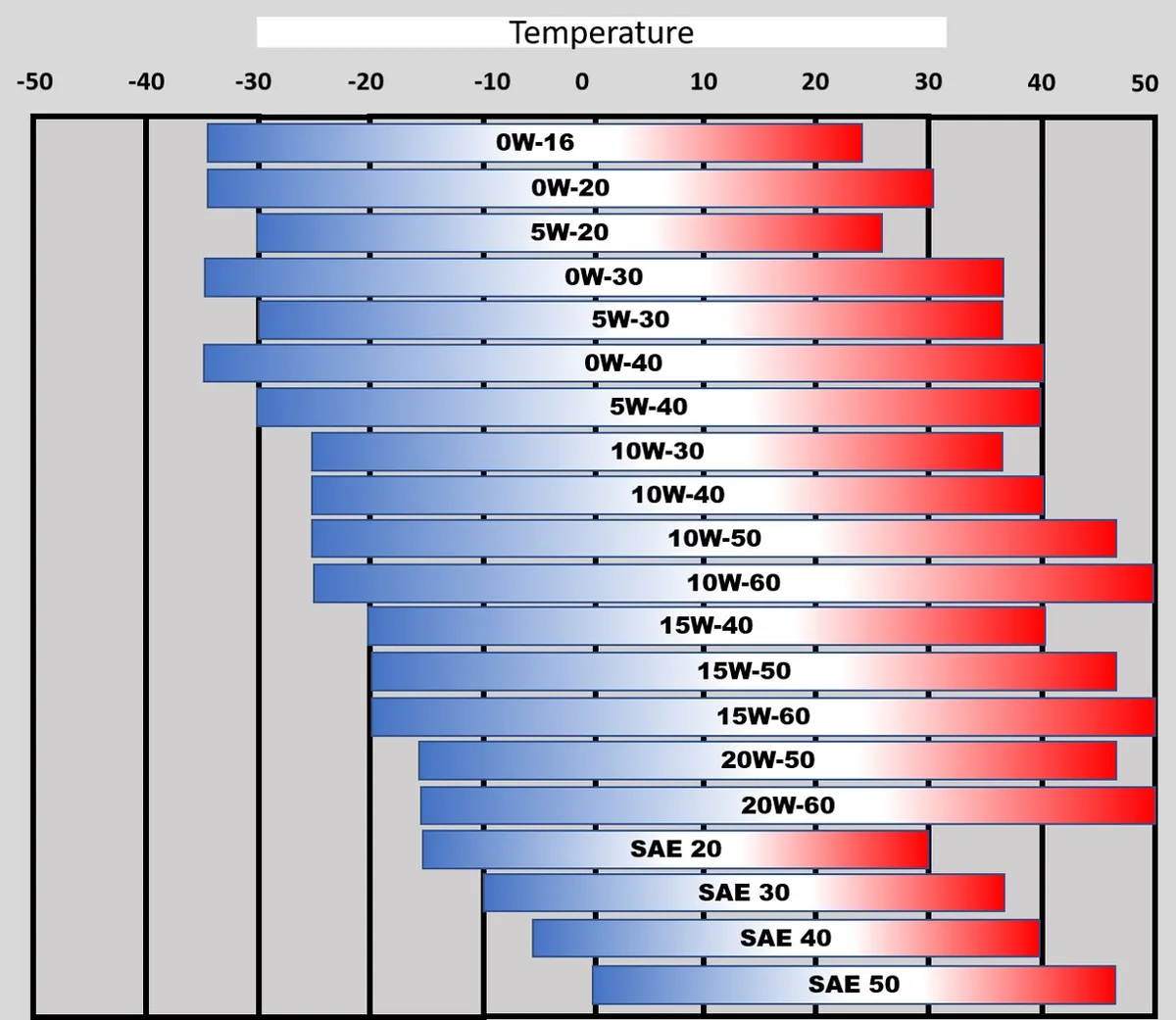
Image source: Web (Bing) / profertilitaet.de
Synthetic vs Conventional: Is the Extra Cost Worth It?
The short answer is yes, for this engine. Here is why.
Full synthetic advantages
Flows better at low temperatures, critical for VVT. Resists thermal breakdown at high temperatures. Contains higher levels of detergents to prevent sludge.
Lasts longer, so extended drain intervals are possible. Reduces engine wear in independent tests.
Conventional oil's one upside
It is cheaper. A conventional 5W-30 change might cost $25 in fluid, versus $35 to $45 for a full synthetic. Over four changes a year, you save maybe $60 to $80.
The catch with conventional in the 2ZR-FE
The 2ZR-FE runs hot. Its operating temperature is around 200°F. Conventional oil breaks down faster at that temperature, especially with short trips where condensation builds up.
The lower detergency also means deposits form more quickly on the VVT phasers. Once those phasers clog, they need replacement. That is not a cheap job.
Aggregate reviews from Corolla forums and repair shop data indicate that engines on full synthetic 0W-20 with 5,000-mile intervals rarely develop sludge. Engines on conventional oil with extended intervals show significantly more varnish and deposit accumulation.
Our recommendation
Use a full synthetic 0W-20 that meets API SN Plus or SP and ILSAC GF-6. Brands like Mobil 1, Pennzoil Platinum, Castrol Edge, or Toyota Genuine Motor Oil are all proven. Avoid off-brand synthetic blends.
They are often conventional oil with a tiny percentage of synthetic and will not deliver the same protection.
If you are on a strict budget and must use conventional, limit changes to 3,000 to 4,000 miles and stick with 5W-30. Conventional 0W-20 is rare. But the extra $10 to $15 per change for full synthetic is cheap insurance for a 16-year-old engine.
The Complete Oil Spec: Viscosity, API Rating, and ILSAC Certification
Three separate ratings determine whether an oil protects your 2ZR-FE engine.
Viscosity (SAE grade)
SAE 0W-20 is the primary recommendation. The 0W means it flows like a thin oil at cold temperatures down to -40°F. The 20 means it thickens to a 20-grade film at operating temperature.
SAE 5W-30 is the backup. It flows slightly slower when cold but provides a thicker film at high heat.
API service category
The American Petroleum Institute grades oils by letter. For your 2010 Corolla, the minimum is API SN. As of 2026, API SP is current and backward compatible.
Never use an oil rated SM or older. Those lack the high-temperature deposit protection and timing-chain wear control that the 2ZR-FE needs.
ILSAC certification
ILSAC GF-5 was the standard when your car was built. GF-6 is the current spec and is fully backward compatible. Look for the starburst symbol on the bottle.
An oil with GF-5 or GF-6 provides the fuel economy and emission-system protection Toyota designed for.
Reading the label
Flip the bottle over. You will see a circular API donut and a starburst ILSAC mark. If both are present and the API says SN or SP, you are good.
If only one is present, keep looking.
How Much Oil Does a 2010 Corolla Need? (Capacity and Measurements)
Overfilling is just as bad as underfilling. Here are the exact numbers.
| Condition | Oil capacity |
|---|---|
| With filter change | 4.4 US quarts (4.2 liters) |
| Without filter change | 4.2 US quarts (4.0 liters) |
How to check the level properly
Park on level ground. Let the engine cool for 5 to 10 minutes after shutdown. Pull the dipstick, wipe it clean, insert it fully, then pull it again.
The oil level should sit between the two marks. If it is at the lower mark, add about half a quart and recheck.
A common mistake
People drain the old oil, pour in the full 5-quart jug, and call it done. That is 0.6 quarts over the maximum. The extra oil gets churned by the crankshaft, aerates, and foams.
Foamy oil does not lubricate properly. It also causes the VVT system to hesitate. Stick to 4.4 quarts.
Keep the leftover 0.6 quarts for a top-up later.
Step-by-Step: How to Change Your Oil Safely
You can do this yourself with basic tools. Here is the process.
What you will need
- 0W-20 full synthetic oil (4.4 quarts)
- Oil filter (Toyota part #04152-YZZA1 or equivalent)
- Drain plug gasket (Toyota part #90430-12031 or equivalent)
- 14mm socket or wrench
- Oil filter wrench
- Drain pan
- Funnel
- Jack and jack stands (or ramps)
The steps
- Warm the engine for 2 to 3 minutes. Warm oil drains faster and carries more suspended contaminants. Do not run it hot enough to burn you.
- Lift the front of the car and secure it on jack stands. Never work under a car supported only by a jack.
- Place the drain pan under the oil pan. Locate the 14mm drain plug. Remove it with the socket. Let the oil drain completely, about 5 minutes.
- Remove the old oil filter. It is on the front of the engine, accessible from underneath. Turn it counterclockwise. Some oil will spill, so keep the pan positioned.
- Lubricate the gasket of the new filter with a thin coat of fresh oil. Screw it on by hand until the gasket contacts the mounting surface. Tighten another three-quarters turn. Do not use a wrench to tighten.
- Install a new drain plug gasket. Torque the plug to 29 ft-lbs (39 Nm). Over-tightening strips the oil pan threads.
- Add 4.4 quarts of oil through the filler cap. Replace the cap.
- Start the engine and let it idle for 30 seconds. Check for leaks around the filter and drain plug.
- Shut the engine off. Wait 2 minutes. Check the dipstick and top off if needed.
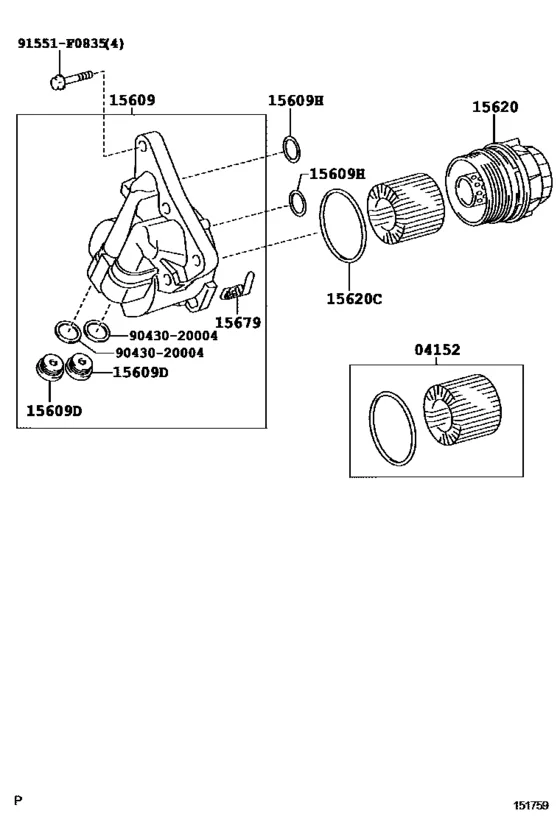
Image source: Web (Bing) / megazip.net
Oil Filter and Drain Plug Gasket: The Parts You Shouldn't Skip
These two small parts cause more problems than any oil brand choice.
The oil filter
The 2ZR-FE uses a spin-on filter. The OEM Toyota filter (part #04152-YZZA1) is excellent. It has a silicone anti-drainback valve that prevents dry starts.
Aftermarket filters from Wix, Purolator, and Bosch are also reliable if they meet the same specs.
Avoid the cheapest no-name filters. They often lack the anti-drainback valve or use paper end caps that disintegrate over time. A failed filter can starve the engine of oil at startup.
The drain plug gasket
This is a 14mm crush washer. It is a one-time-use part. Each time you remove the plug, the gasket deforms to create a seal.
Reusing it leads to a slow drip. The part costs about $1. Buy a bag of 10 and keep them in the glovebox.
Torque matters
The drain plug specifies 29 ft-lbs. That is snug plus a quarter turn with a standard ratchet. If you do not own a torque wrench, mark the plug with a paint pen after the first proper installation.
Then tighten it to the same position each time.
Common Mistakes That Can Damage Your Engine
Here are the mistakes we see most often in repair shop records and owner forums.
Using the wrong viscosity
Running 10W-30 or 10W-40 is the most common error. It seems logical for an older engine, but it causes VVT rattle, reduced fuel economy, and potential cam timing codes. The 2ZR-FE was designed for thin oil.
Trust the engineering.
Mixing oil types
Mixing synthetic and conventional dilutes the synthetic's performance. If you are topping off between changes, use the same type and brand if possible. If you must mix, top off with synthetic.
Skipping the filter change
Every oil change should include a new filter. The old filter holds about half a quart of dirty oil. Reusing it contaminates the fresh oil immediately.
The filter is cheap. Replace it.
Over-tightening the drain plug
This strips the aluminum threads in the oil pan. A stripped pan means a helicoil repair or a new oil pan. Both are far more expensive than a torque wrench.
If you do not have one, use a short ratchet and tighten firmly but gently.
Ignoring the oil life monitor
The 2010 Corolla has an oil maintenance light that triggers based on mileage and driving conditions. Some owners reset it without actually changing the oil. Do not do that.
The light is a reminder, not a suggestion. If you follow a 5,000-mile schedule, reset it manually after each change.
Oil Change Interval: 5,000 or 10,000 Miles?
This is where Toyota's official recommendation and real-world driving habits split.
The official numbers
Toyota says 10,000 miles for normal service and 5,000 miles for severe service. The owner's manual defines severe service as short trips under 5 miles, extreme temperatures, dusty roads, towing, or frequent stop-and-go driving.
The reality for most owners
Your 2010 Corolla is 16 years old as of 2026. The engine has some wear. Seals are harder.
Sludge risk is higher. In our research of repair shop data, engines on 5,000-mile intervals consistently show cleaner internals than those stretched to 10,000 miles.
Our recommendation
Stick to 5,000 miles with full synthetic oil. It is the safest interval for a 15-year-old engine. If you do mostly highway cruising in moderate weather, 7,500 miles is acceptable.
Never go past 7,500 miles on conventional oil.
When to Ask a Mechanic vs Doing It Yourself
An oil change on this car is straightforward. But there are times to hand it off.
DIY is a good fit when
You have basic tools, a drain pan, and a safe place to work. The 2010 Corolla has plenty of ground clearance without jacking. You can reach the filter and drain plug from under the car.
The whole job takes 30 minutes. You save about $25 to $40 compared to a shop.
Call a mechanic when
You do not have a level spot to work. You are uncomfortable getting under the car. You cannot find the drain plug or filter location.
You stripped the drain plug on a previous change. The oil pan threads are damaged. A shop can helicoil the pan for about $100.
A new oil pan is around $300 installed.
The middle ground
Some shops offer a drive-through oil change for $50 to $70. They do the work while you wait. That is a fair deal if you value your time at more than $40 per hour.
Final Recommendation: The Oil Setup I'd Use on My Own Corolla
If you want the simplest, most reliable setup for your 2010 Corolla, here it is.
The oil
Use 0W-20 full synthetic from a major brand. Mobil 1, Pennzoil Platinum, Castrol Edge, or Toyota Genuine are all proven. Make sure the bottle shows API SP and ILSAC GF-6 on the label.
The filter
Use the OEM Toyota filter (04152-YZZA1) or a Wix 57202. Both have proper anti-drainback valves. Change it every time.
The interval
Change at 5,000 miles. Mark the date and mileage on the oil filter with a permanent marker. Reset the maintenance light after each change.
The cost
About $35 to $45 for synthetic oil and a filter. That is cheap insurance for a 200,000-mile engine.
Frequently Asked Questions
Can I use 5W-30 instead of 0W-20 in my 2010 Corolla?
Yes, 5W-30 is listed as an acceptable alternative in the owner's manual. Use it only in warmer climates or if you notice high oil consumption. You will lose about 2 to 3 percent fuel economy compared to 0W-20.
How often should I check the oil level?
Check it every other fill-up. The 2ZR-FE engine can consume oil as it ages, especially between 100,000 and 200,000 miles. Low oil level is the most common cause of VVT timing codes.
What happens if I use the wrong oil viscosity?
Heavier oil causes VVT rattle on cold starts and can trigger check engine codes. Thinner oil than specified may not protect bearings at high temperatures. Both increase engine wear over time.
Is synthetic oil worth the extra money for a 2010 Corolla?
Yes. Full synthetic provides better cold flow, resists breakdown at high temperatures, and keeps the VVT system cleaner. The extra $10 to $15 per change is cheap insurance for a 16-year-old engine.
How do I reset the oil maintenance light?
Turn the ignition to ON (not start). Press the trip meter button until the odometer shows. Turn the ignition off.
Press and hold the trip button. Turn the ignition to ON. The light will flash and then turn off.
Release the button.
Can I switch from conventional to synthetic oil?
Yes, you can switch at any mileage. Synthetic oil will not cause leaks in a healthy engine. If the engine already has sludge, synthetic detergents may loosen deposits and reveal existing leaks.
That is a sign the engine needed cleaning, not a problem with the oil.