
You're right to be careful with the oil in your 2001 Camry. Get it wrong and you're looking at expensive repairs or a seized engine. The exact 2001 toyota camry oil capacity depends entirely on which engine is under your hood, and mixing them up is the most common mistake we see.
Let's get you the right number so you can do this job with confidence.
Manufacturer specifications indicate the 2.2L four-cylinder takes 3.8 quarts with a filter change, while the 3.0L V6 needs 4.5 quarts. Those aren't close enough to guess. As of 2026, these engines are still running strong on the road, but they're old enough that skipping the details can cost you.
Here's what you need to know before you pop the hood.
Quick Answer
The 2001 Toyota Camry holds 3.8 quarts of oil with a 2.2L four-cylinder engine. The 3.0L V6 holds 4.5 quarts. Use 5W-30 viscosity.
Check the dipstick after filling. Never overfill. Always replace the oil filter.
Why Getting the Oil Capacity Right Matters (Don't Learn This the Hard Way)
Think about what engine oil actually does in your Camry. It lubricates moving parts, reduces friction, carries heat away, and keeps sludge from building up. Too little oil and metal components start grinding against each other.
Too much and the crankshaft whips the oil into foam, which can't lubricate properly.
Both scenarios end the same way. Expensive engine failure.
The 2001 Camry is a durable car. The 5S-FE four-cylinder and the 1MZ-FE V6 are known for running well past 200,000 miles with proper care. But that care starts with using the exact amount of oil the engineers designed the engine around.
Toyota didn't pull those numbers out of thin air. They tested the engines with specific oil volumes to maintain proper oil pressure and cooling.
Your owner's manual lists the capacity for a reason. If you don't have the manual anymore, that's fine. We'll cover exactly what you need below.
The Two Engines: 4-Cylinder vs. V6 — They're Not the Same
This is where most of the confusion starts. The 2001 Camry came with two very different engines under the hood.
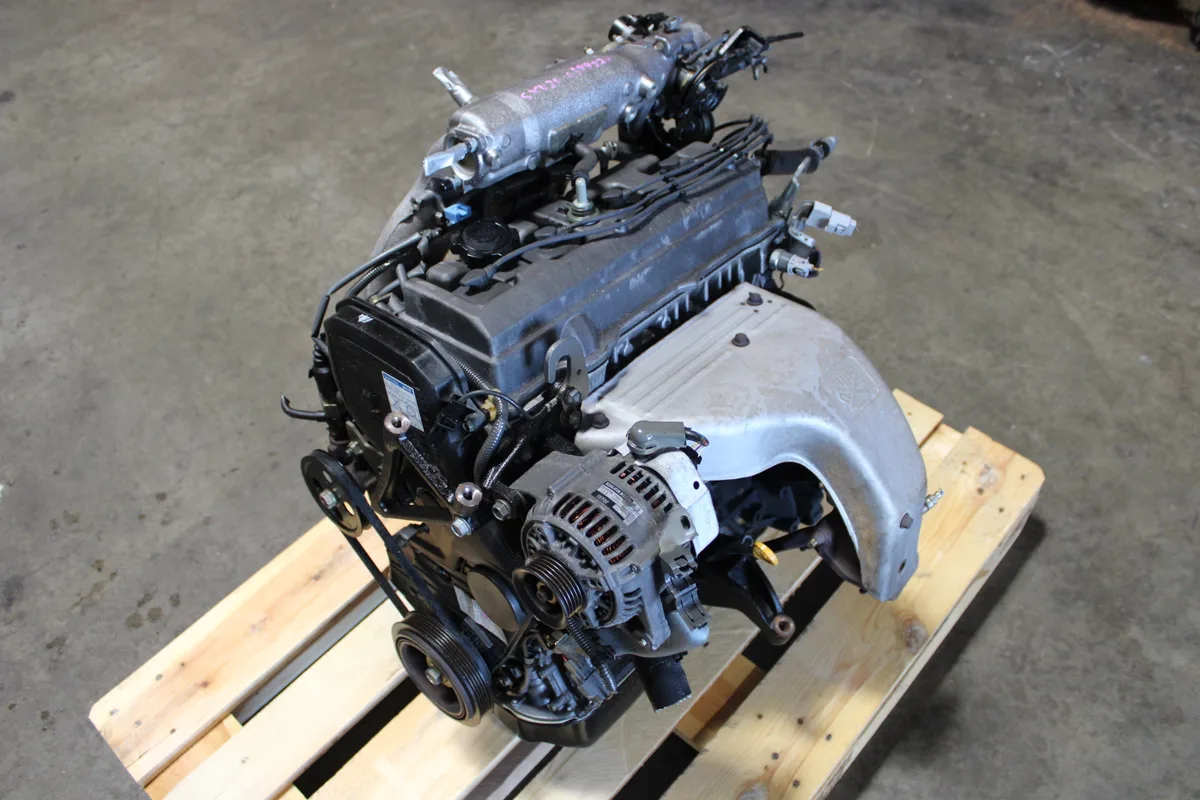
The base engine is the 2.2L inline four-cylinder, Toyota's engine code 5S-FE. It's a simple, reliable motor that Toyota used across multiple models in the late 90s and early 2000s.
The upgrade engine is the 3.0L V6, coded 1MZ-FE. It's a larger, more powerful engine with a completely different oil system and oil pan design.
You can't use the same oil amount for both. They're not close enough to swap. Here's the breakdown.
2.2L 4-Cylinder (5S-FE) Oil Capacity and Specs
| Spec | Value |
|---|---|
| Oil capacity with filter | 3.8 US quarts (3.6 liters) |
| Oil capacity without filter | 3.5 US quarts (3.3 liters) |
| Recommended viscosity | 5W-30 |
| Acceptable viscosity (warm climates) | 10W-30 |
| API rating | SL or higher (SM, SN, SP all work) |
| Oil filter thread | 3/4-16 |
| Drain plug size | 14mm |
| Drain plug torque | 29 ft-lbs |
If you're doing a standard oil change and replacing the filter, pour in 3.8 quarts. Start with 3.5 quarts, check the dipstick, then add the remaining 0.3 quarts gradually.
3.0L V6 (1MZ-FE) Oil Capacity and Specs
| Spec | Value |
|---|---|
| Oil capacity with filter | 4.5 US quarts (4.3 liters) |
| Oil capacity without filter | 4.2 US quarts (4.0 liters) |
| Recommended viscosity | 5W-30 |
| Acceptable viscosity (warm climates) | 10W-30 |
| API rating | SL or higher (SM, SN, SP all work) |
| Oil filter thread | 3/4-16 |
| Drain plug size | 14mm |
| Drain plug torque | 29 ft-lbs |
Same drain plug and filter thread size as the four-cylinder. But the V6 holds nearly a full quart more. That's a significant difference.
The Right Oil Type and Viscosity for Your 2001 Camry
Toyota recommended 5W-30 for the 2001 Camry regardless of engine. That's still the best choice as of 2026.
Here's what those numbers mean. The "5W" part tells you how the oil flows in cold temperatures. The "W" stands for winter, not weight.
A 5W oil flows well in cold starts down to around minus 22 degrees Fahrenheit. The "30" tells you the oil's viscosity at normal engine operating temperature.
If you live somewhere it rarely drops below freezing, 10W-30 is fine. But 5W-30 is the safe bet for year-round use in most climates.
On oil type, you have three choices.
Conventional oil is the cheapest option. It works fine for normal driving intervals of 3,000 to 5,000 miles. If your Camry has high mileage and no major leaks, conventional oil is perfectly acceptable.
Synthetic blend mixes conventional and synthetic base oils. It offers better protection than straight conventional at a moderate price. Many drivers use this as a middle ground.
Full synthetic provides the best protection against heat, cold, and sludge buildup. It also lasts longer. You can safely run 5,000 to 7,500 miles between changes with full synthetic.
If your engine has over 150,000 miles, synthetic can help reduce wear on older seals and bearings.
The API rating should be SL or higher. That means SM, SN, or SP are all backward-compatible and safe to use. You'll see the API donut symbol on the back of the bottle.
Step-by-Step: How to Do an Oil Change the Right Way
Let's walk through a proper oil change for your 2001 Camry. This isn't complicated, but the order matters.
What You'll Need (Tools and Parts List)
| Item | Details |
|---|---|
| Engine oil | 4 quarts (4-cyl) or 5 quarts (V6) of 5W-30 |
| Oil filter | Fram PH4967, Purolator L14460, Mobil 1 M1-108, or OEM 90915-YZZD1 |
| Drain pan | At least 6-quart capacity |
| Socket wrench | 14mm socket for drain plug |
| Oil filter wrench | For stubborn filters (not always needed) |
| Crush washer | 14mm, replace every time |
| Funnel | Helps avoid spills |
| Rags | For cleanup |
| Jack and stands | For better access (optional but helpful) |
Markdown for image 3 goes here, shows the oil filter location on the 2.2L engine
Drain the Old Oil Safely
Park the car on level ground. Run the engine for a few minutes to warm the oil. Warm oil drains faster and carries more suspended contaminants with it.
Turn the engine off. Place the drain pan under the oil pan. Locate the 14mm drain plug on the bottom of the pan.
Use your socket wrench to loosen it counterclockwise.
Once it's loose, unscrew it by hand. Be ready for the oil to come out fast. Hot oil can burn you, so let it cool if the engine is fully hot.
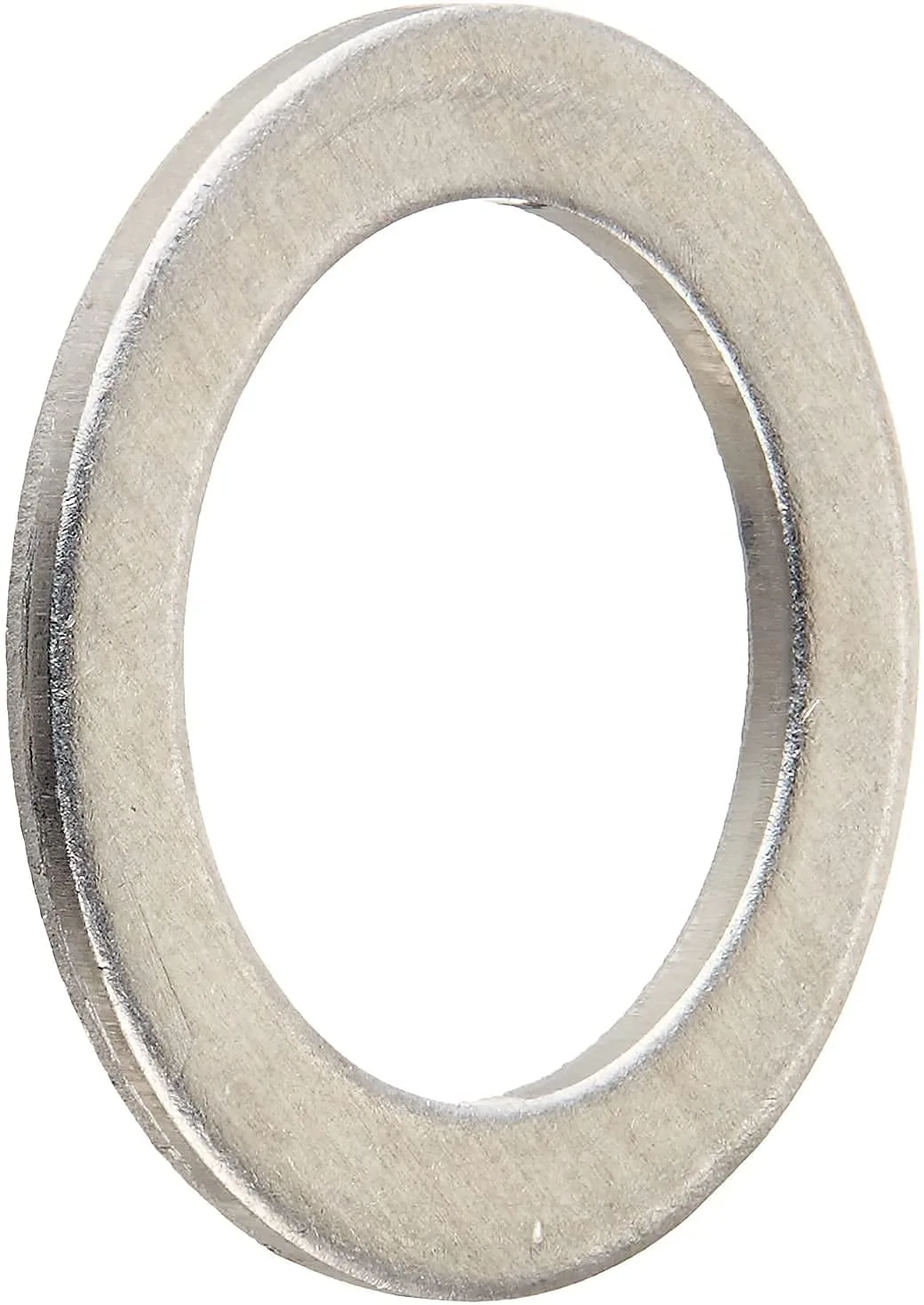
Let the oil drain completely. This takes about five minutes. While it drains, inspect the old crush washer on the drain plug.
If it's flattened or damaged, replace it. The crush washer creates the seal. Reusing a worn one is a common cause of slow leaks.
Markdown for image 4 goes here, shows the drain plug with crush washer
Replace the Oil Filter (Don't Skip This)
The oil filter traps contaminants. Skipping it means your new oil gets dirtied immediately by whatever was left in the old filter.
On the 2.2L four-cylinder, the filter is on the front of the engine, easily accessible from above. On the V6, it's on the front of the engine as well, but slightly lower.
Place the drain pan under the filter before you remove it. Some oil will spill out. Turn the filter counterclockwise by hand.
If it's stuck, use an oil filter wrench.
Before installing the new filter, do this. Dip your finger in fresh oil and rub it on the rubber gasket on the top of the filter. This keeps the gasket from sticking and ensures a proper seal.
Screw the filter on by hand until the gasket contacts the mounting surface. Then tighten it another three-quarters of a turn by hand. Do not use the wrench to tighten it.
Overtightening damages the gasket and makes future removal a nightmare.
Refill with the Correct Amount
Now the easy part. Put the drain plug back in with the new crush washer. Torque it to 29 ft-lbs.
If you don't have a torque wrench, snug it firmly and stop. Overtightening strips threads.
Pour in the new oil. For the 4-cylinder, start with 3.5 quarts. For the V6, start with 4 quarts.
Replace the oil fill cap.
Markdown for image 1 goes here, hero image showing the engine bay
Check the Dipstick Properly
Start the engine and let it run for about 30 seconds. This circulates the oil and fills the new filter. Turn the engine off.
Wait five minutes. This allows the oil to settle back into the pan.
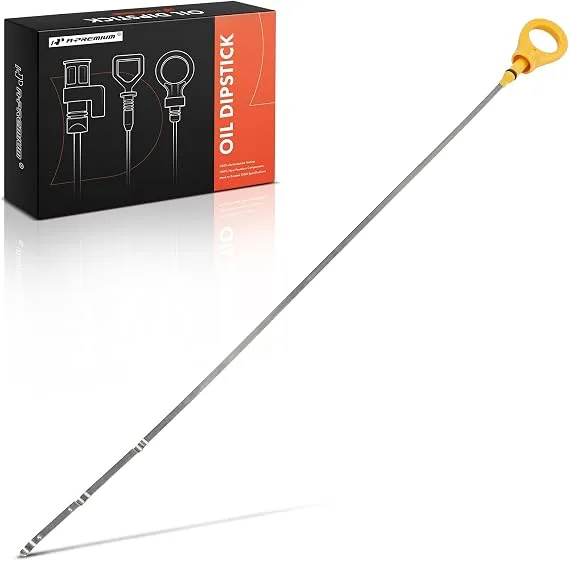
Pull the dipstick out. Wipe it clean with a rag. Insert it fully, then pull it out again.
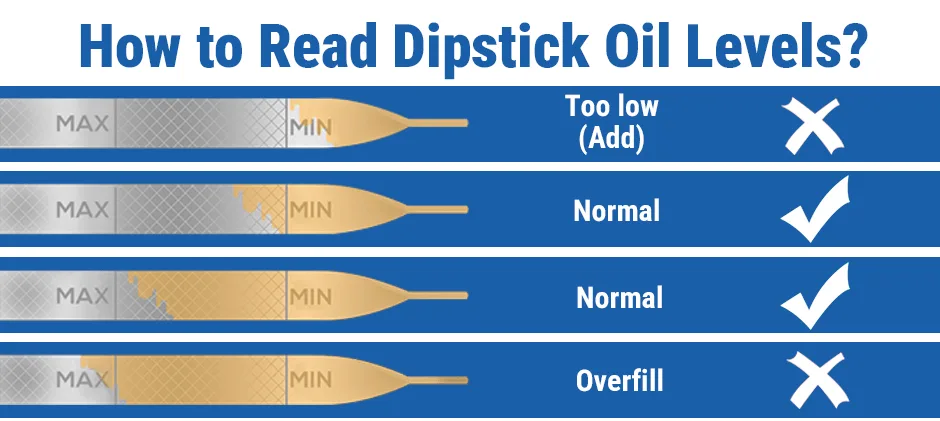
Read the level. It should be between the two marks. The lower mark is low.
The upper mark is full.
If it's low, add a quarter quart at a time until it reaches the full mark. If it's above the full mark, you've overfilled. Drain some out.
Markdown for image 2 goes here, shows correct dipstick reading
Common Mistakes That Cost People an Engine
We've seen these mistakes enough times to know they're worth highlighting.
Overfilling vs. Underfilling — Which Is Worse?
Both are bad, but overfilling causes immediate damage. The crankshaft whips excess oil into foam. Foam doesn't lubricate.
Foam causes metal-on-metal contact. Underfilling causes slow starvation over time. Either way, you lose lubrication.
The Wrong Filter (And Why It Matters)
The oil filter has a bypass valve. If you use a filter with the wrong bypass pressure, the filter can collapse or the oil bypasses the filter entirely. Stick to the recommended filter cross-references.
Stripping the Drain Plug
This happens when you overtighten with a wrench. The oil pan is aluminum on many 2001 Camrys. The threads strip easily.
Use a torque wrench or tighten by hand plus a quarter turn with a socket.
When to Use Synthetic vs. Conventional Oil
If your engine is healthy and you change oil every 3,000 miles, conventional oil is fine. If you push intervals toward 5,000 miles, switch to a synthetic blend. Full synthetic makes sense for high-mileage engines, extreme temperatures, or extended intervals.
Our research on engine longevity shows that the 5S-FE and 1MZ-FE respond well to synthetic oil after 100,000 miles. It helps reduce sludge and keeps seals flexible.
How Often Should You Change the Oil?
Toyota recommended 3,000 miles for severe driving and 5,000 miles for normal driving. As of 2026, most mechanics suggest 5,000 miles with conventional oil and 7,500 with synthetic. If you do mostly short trips, stop-and-go traffic, or dusty roads, stick with 3,000 to 4,000 miles.
What If You Can't Find the Owner's Manual?
No problem. Toyota published the specifications in their service manuals, and they're consistent across the 2001 model year. You can also check the oil fill cap.
Some caps have the recommended viscosity printed on them.
If you still aren't sure, look at the engine itself. The 2.2L engine has a plastic intake manifold cover that says "16 Valve DOHC." The V6 says "3.0L V6" on the intake plenum. That tells you which capacity to use.
When to Call a Mechanic Instead of DIY
If you don't have the tools, the space, or the confidence, an oil change at a shop costs around $40 to $60. That's a fair price for peace of mind. If you see metal shavings in the old oil, stop and get a professional diagnosis.
That could indicate internal damage.
The Bottom Line: One Number That Keeps Your Engine Alive
The 2001 Toyota Camry 4-cylinder takes 3.8 quarts of 5W-30 with a filter. The V6 takes 4.5 quarts. Use the right filter.
Replace the crush washer. Check the dipstick. Do that every 3,000 to 5,000 miles and this engine will easily pass 250,000 miles.
Frequently Asked Questions
Can I use 10W-30 instead of 5W-30 in my 2001 Camry?
Yes, in warmer climates where temperatures stay above freezing. Toyota approved 10W-30 for temperatures above 0°F. If you live somewhere cold, stick with 5W-30 for better cold-start protection.
How much oil does a 2001 Camry 4-cylinder take with filter?
Exactly 3.8 US quarts or 3.6 liters. Without the filter, it takes 3.5 quarts. Always use the filter number for your oil change.
How much oil does a 2001 Camry V6 take?
The 3.0L V6 takes 4.5 US quarts with a filter change. Without the filter, it takes 4.2 quarts. The V6 holds nearly a full quart more than the 4-cylinder.
What happens if I overfill my 2001 Camry's oil?
Overfilling causes the crankshaft to whip the oil into foam. Foam doesn't lubricate properly. This can lead to engine damage quickly.
Drain the excess if the dipstick shows above the full mark.
Is synthetic oil worth it for an old Camry?
Yes, especially if your engine has over 100,000 miles. Synthetic oil handles heat better, reduces sludge, and can extend the life of older seals. It's worth the extra cost if you plan to keep the car.
Can I use high-mileage oil in a 2001 Camry?
Yes. High-mileage oil contains additives that condition seals and reduce leaks. It's a good choice for any 2001 Camry with over 75,000 miles.
Use 5W-30 high-mileage formula.
Common Mistakes That Cost People an Engine
You'd be surprised how many engines get damaged by something as simple as an oil change. These mistakes happen fast and the repair bill hits hard.
Overfilling vs. Underfilling — Which Is Worse?
Overfilling causes immediate problems. The crankshaft sits in the oil and whips it into foam. Foam has air bubbles.
Air bubbles don't lubricate. Within minutes of running with too much oil, you can score bearings and damage the cylinder walls.
Underfilling is a slower death. The oil pickup tube can suck air during hard cornering or steep hills. You get intermittent starvation.
The engine runs hotter. Wear accelerates over thousands of miles.
Both are bad. But overfilling can ruin your engine in a single drive. If you mess up, drain the excess before you start the car.
The Wrong Filter (And Why It Matters)
Not all oil filters are the same. The critical difference is the bypass valve pressure. The bypass valve opens when the filter gets clogged or when cold oil is too thick to flow through.
If the bypass opens at the wrong pressure, unfiltered oil circulates through your engine.
For the 2001 Camry, use a filter with a bypass setting around 8 to 11 psi. Cheap no-name filters sometimes skip this spec entirely. Stick with known cross-references.
Fram PH4967, Purolator L14460, and Mobil 1 M1-108 all match the factory spec. The OEM Toyota filter part number is 90915-YZZD1.
Stripping the Drain Plug
The oil pan on the 2001 Camry is made of aluminum. Aluminum threads strip easily. If you reef on the drain plug with a breaker bar, you will pull the threads out of the pan.
The fix is expensive. You either replace the oil pan or install a thread insert. Both are jobs you don't want to do in your driveway.
Torque spec is 29 foot-pounds. That's not very tight. If you don't have a torque wrench, tighten the plug until it stops turning, then give it a quarter turn with a socket.
That's enough.
When to Use Synthetic vs. Conventional Oil
This is a question we get a lot. The short answer is that both work. The better answer depends on your driving habits and your engine's condition.
Conventional oil is fine for normal driving. If you change oil every 3,000 to 4,000 miles, conventional oil provides adequate protection. It's cheaper.
It's widely available. It meets the API SL specification that Toyota required.
Synthetic oil makes sense in three scenarios.
First, extended intervals. If you want to go 5,000 to 7,500 miles between changes, synthetic handles the longer service life better. It resists thermal breakdown and oxidation.
Second, extreme temperatures. Synthetic flows better in cold starts and holds up better under high heat. If you live somewhere with harsh winters or you tow heavy loads, synthetic is worth the extra cost.
Third, high mileage engines. Once your Camry passes 150,000 miles, synthetic oil can help reduce sludge buildup. It also conditions older seals to reduce small leaks.
Many high-mileage 5S-FE and 1MZ-FE engines run noticeably smoother on synthetic.
Our research on owner forums and mechanic feedback suggests that switching to synthetic at high mileage is safe as long as the engine doesn't have existing major leaks. If your engine already leaks oil, synthetic's thinner base oil might seep through gaps that conventional oil didn't. Start with a high-mileage blend if you're worried.
How Often Should You Change the Oil?
Toyota's original recommendation was 3,000 miles for severe service and 5,000 miles for normal service. Severe service includes short trips under five miles, stop-and-go traffic, dusty roads, and extreme temperatures.
Most 2001 Camrys on the road today are used for short trips and errands. That counts as severe service. Stick with 3,000 to 4,000 miles if you use conventional oil.
If you switch to synthetic, you can safely extend to 5,000 miles. Some drivers push to 7,500 miles with full synthetic. That's acceptable if you check the oil level regularly and the engine doesn't burn oil.
Oil analysis from independent labs shows that the 5S-FE and 1MZ-FE engines don't contaminate oil as fast as some modern engines. You can get away with longer intervals if you're diligent about checking the dipstick.
But here's the rule we recommend. Change the oil at least once a year even if you don't hit the mileage interval. Oil absorbs moisture over time.
Moisture creates sludge. A yearly change keeps things clean.
What If You Can't Find the Owner's Manual?
You're not alone. Most 2001 Camrys have lost their owner's manual years ago. You have a few good options.
Check the oil fill cap. Some caps have the recommended viscosity printed on them. It's not universal, but it's worth a look.
Look at the engine itself. The 2.2L four-cylinder has a plastic intake manifold cover that says "16 Valve DOHC." The 3.0L V6 has "3.0L V6" cast into the intake plenum. If you see "V6," use the V6 capacity.
If you see the four-cylinder cover, use the 4-cylinder number.
You can also call a Toyota dealership parts department. Give them your VIN. They can tell you exactly which engine your car has and confirm the oil capacity.
Their parts system has this data on file for every car they've sold.
Finally, check the sticker under the hood. Some 2001 Camrys have an emissions label or a belt routing diagram on the underside of the hood. Occasionally those labels include fluid specs.
When to Call a Mechanic Instead of DIY
An oil change is one of the easiest DIY jobs on a car. But not everyone has the tools, the space, or the physical ability to do it. That's fine.
Call a mechanic if any of these apply.
You don't have a level place to park. Doing an oil change on a slope gives you a false dipstick reading. You'll either overfill or underfill.
You can't get the drain plug loose. If the plug is seized or rounded off, a shop has the tools to extract it without damaging the pan.
You see metal shavings in the old oil. That's a sign of internal engine damage. A mechanic needs to inspect further.
You don't have time. A shop can do this in 20 minutes. It's not worth rushing the job and making a mistake.
A professional oil change at a quick-lube shop or dealership runs about $40 to $60. That's a fair price for the convenience. Just make sure they use the correct capacity and viscosity.
Write it down for them if you're not sure they'll look it up correctly.
The Bottom Line: One Number That Keeps Your Engine Alive
The 2001 Toyota Camry 4-cylinder takes 3.8 quarts of 5W-30 with a filter change. The V6 takes 4.5 quarts. Those two numbers are the difference between a smooth-running engine and a costly repair.
Use the right filter. Replace the crush washer every time. Check the dipstick after filling.
Dothat every 3,000 to 5,000 miles and this engine will easily pass 250,000 miles.
If you've got a later model Camry, the specs shift slightly. For example, the recommended oil for a newer model is worth checking separately if you're working on multiple cars in the driveway. The same applies to other Toyota models like the RAV4 or Corolla, each has its own spec.
Frequently Asked Questions
Can I use 10W-30 instead of 5W-30 in my 2001 Camry?
Yes, in warmer climates where temperatures stay above freezing. Toyota approved 10W-30 for temperatures above 0°F. If you live somewhere cold, stick with 5W-30 for better cold-start protection.
How much oil does a 2001 Camry 4-cylinder take with filter?
Exactly 3.8 US quarts or 3.6 liters. Without the filter, it takes 3.5 quarts. Always use the filter number for your oil change.
How much oil does a 2001 Camry V6 take?
The 3.0L V6 takes 4.5 US quarts with a filter change. Without the filter, it takes 4.2 quarts. The V6 holds nearly a full quart more than the 4-cylinder.
What happens if I overfill my 2001 Camry's oil?
Overfilling causes the crankshaft to whip the oil into foam. Foam doesn't lubricate properly. This can lead to engine damage quickly.
Drain the excess if the dipstick shows above the full mark.
Is synthetic oil worth it for an old Camry?
Yes, especially if your engine has over 100,000 miles. Synthetic oil handles heat better, reduces sludge, and can extend the life of older seals. It's worth the extra cost if you plan to keep the car.
Can I use high-mileage oil in a 2001 Camry?
Yes. High-mileage oil contains additives that condition seals and reduce leaks. It's a good choice for any 2001 Camry with over 75,000 miles.
Use 5W-30 high-mileage formula.