
You pull into the parts store, grab a jug of oil off the shelf, and suddenly freeze. There are eight different bottles staring back at you. Different numbers.
Different colors. Different price tags. And the guy behind the counter just shrugged when you asked what your 2003 Toyota Camry actually needs.
Here's the thing about picking the right oil for this car. Get it wrong and you're not just wasting money. You're slowly killing an engine that could otherwise run another 100,000 miles.
The 2.4L four-cylinder and the 3.0L V6 in these cars are tough, but they're picky about lubrication. Per API certification standards, the wrong viscosity or service grade can lead to sludge buildup, VVT-i actuator failure, and premature bearing wear. Let's fix that right now.
Quick Answer
The 2003 Toyota Camry takes 5W-30 motor oil. Both engines use this viscosity. The API rating must be SL or higher.
ILSAC GF-3 or newer is required. Use 4.5 quarts for the 2.4L four-cylinder. Use 5.5 quarts for the 3.0L V6.
Conventional or synthetic blend works fine.
Why Getting the Oil Type Wrong Can Cost You an Engine
Most people don't think about motor oil until the dashboard light comes on. But the oil in your 2003 Camry is doing a lot more than just keeping things slippery. It's carrying heat away from the pistons.
It's holding combustion byproducts in suspension. It's keeping the variable valve timing system working correctly.
The 2AZ-FE four-cylinder engine in the LE and SE trims has a known vulnerability. When the wrong oil is used or changes are stretched too far, sludge builds up inside the valve cover and oil passages. The oil pickup tube starts to clog.
Oil pressure drops. The VVT-i actuator stops getting the pressure it needs to adjust timing.
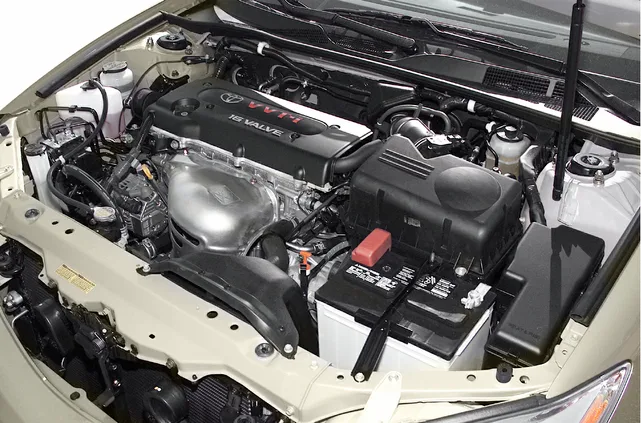
Image source: Bing (Web (fair-use with source credit))
You don't feel this happening at first. The car still starts. It still drives.
But the bearings are running hotter and the timing chain tensioner isn't getting consistent lubrication. By the time you hear a rattle on cold start or the check engine light comes on for a camshaft position code, the damage is done. A new engine for a 2003 Camry runs 2,500 to 4,000 dollars installed.
A jug of the right oil costs twenty bucks.
Use the factory-specified oil and this engine outlasts the body. Use whatever is cheapest and you're gambling on a 20-year-old car.
5W-30 vs. 5W-20 vs. 10W-30 – What's the Real Difference?
This is where most of the confusion lives. Three numbers. Three bottles.
They all look like motor oil. But they behave completely differently inside your engine.
Viscosity Explained Like You're a Normal Person
The "5W" stands for winter. It tells you how the oil flows when the engine is cold. A 5W oil stays thin enough to circulate quickly and reach the camshaft and bearings within seconds of startup.
A 10W oil is thicker when cold. In freezing weather, that delay matters.
The "30" is the hot viscosity rating. That's how thick the oil stays when the engine is fully warmed up. A 30-grade oil provides a specific film thickness between moving metal parts.
Too thin and metal touches metal. Too thick and the oil pump works harder.
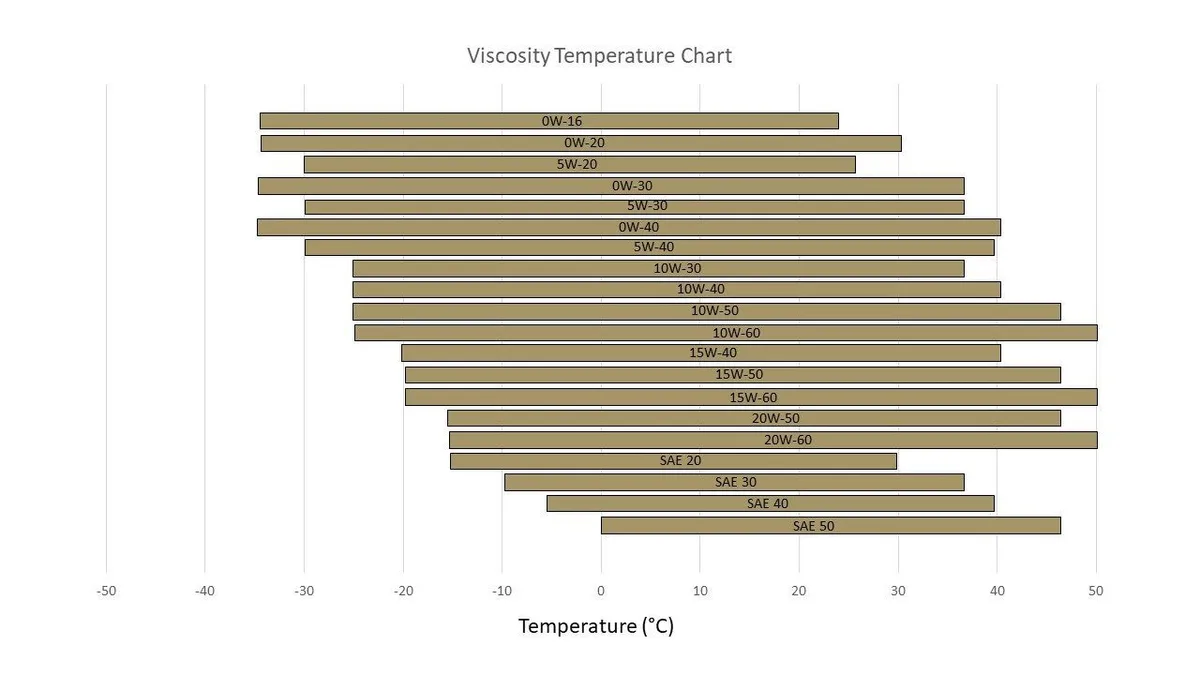
Image source: Web (Bing) / animalia-life.club (Web image (fair-use with source credit))
Toyota specified 5W-30 for the 2003 Camry because it hits the sweet spot. Thin enough for reliable cold starts. Thick enough to protect bearings at operating temperature.
The factory service manual also lists 5W-20 as acceptable for improved fuel economy, but only if temperatures stay above zero degrees Fahrenheit.
How Temperature and Climate Change the Equation
If you live in the southern United States, some owners switch to 10W-30 after 100,000 miles. The logic is that a slightly thicker oil compensates for wear. That's safe as long as you stick with API SL or higher and don't try it in winter.
In Canada or the northern states, stick with 5W-30 year-round. If the car sits outside and temperatures drop below minus twenty, consider 5W-20 during the coldest months. Toyota allows this in the owner's manual supplement for cold climates.
Do not use 10W-40 or 20W-50. These are too thick for the Camry's oil pump and hydraulic timing adjusters. The VVT-i system needs consistent oil pressure at idle.
Heavy oil starves it. You'll get a check engine light and a timing code.
The Two Engines in the 2003 Camry and Why It Matters
The 2003 Camry came with two engine options. They use the same oil viscosity but different quantities and different filters. Mixing them up means either overfilling or underfilling.
2.4L 2AZ-FE (4-Cylinder) – The Most Common
This is the engine in the LE and SE trims. It makes 157 horsepower and, when maintained properly, easily clears 250,000 miles.
The 2AZ-FE holds 4.5 quarts of oil with a filter change. The total capacity without a filter change is closer to 4.2 quarts. If you drain the oil, replace the filter, and pour in exactly 4.5 quarts, you'll be right at the full mark on the dipstick.
This engine is the one with the sludge reputation. The PCV system can clog if oil changes are ignored or if cheap conventional oil is used beyond 3,000 miles. Once the PCV valve sticks, pressure builds inside the crankcase and forces oil past seals.
3.0L 1MZ-FE (V6) – A Different Animal
The V6 in the XLE trim is a 3.0-liter with 192 horsepower. It's smoother, quieter, and generally less prone to oil-related failures than the four-cylinder. But it uses more oil.
With a filter change, the 1MZ-FE takes 5.5 quarts. The V6 also uses a different oil filter part number. The threads are the same, but the bypass valve pressure rating differs.
The V6 runs hotter than the four-cylinder. The exhaust crossover is closer to the oil pan. In stop-and-go traffic on a hot day, oil temperatures can push past 240 degrees Fahrenheit.
Synthetic or synthetic-blend oil is more important in the V6. Conventional oil breaks down faster at those sustained temperatures.
The Risks of Using the Wrong Oil
Let's get specific about what happens inside the engine when you use the wrong oil.
Sludge, VVT-i Problems, and Oil Consumption
Sludge is the number one killer of the 2AZ-FE engine. It forms when oil oxidizes. The additive package wears out.
The base oil starts breaking down into varnish and carbon. The wrong viscosity accelerates this because the oil film isn't protecting surfaces properly. Combustion heat transfers more directly into the oil.
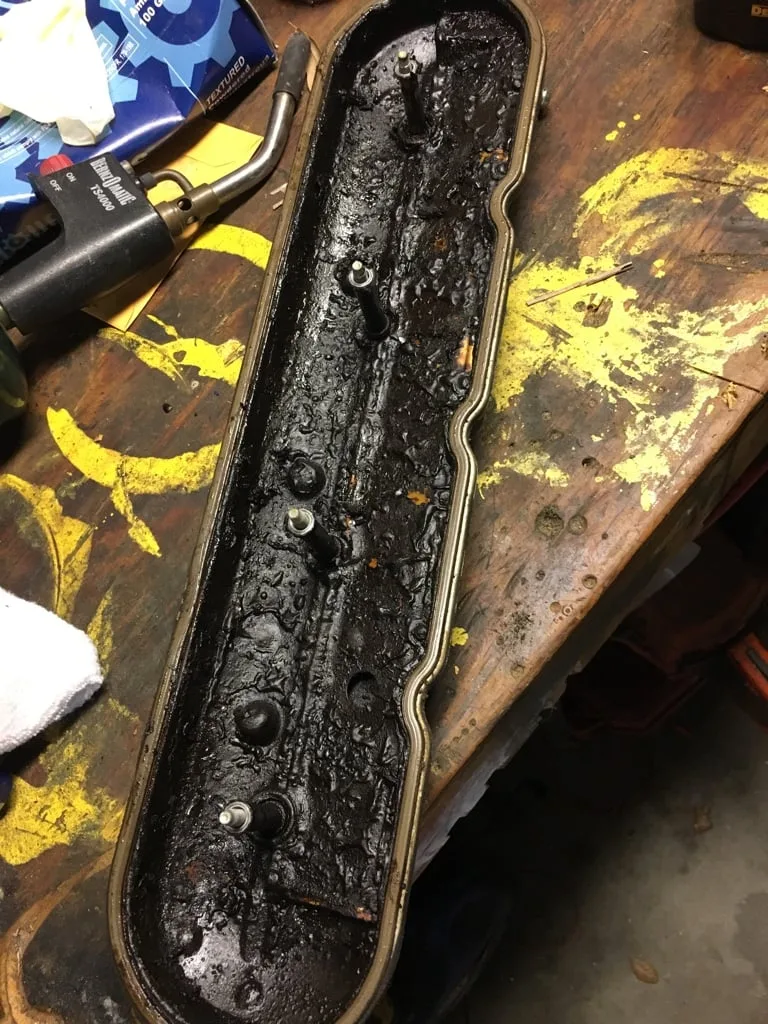
Image source: Web (Bing) / gm-trucks.com (Web image (fair-use with source credit))
Once sludge forms, it blocks the oil control ring on the pistons. That's the ring that scrapes excess oil off the cylinder wall. When it's clogged, oil passes past the ring and burns in the combustion chamber.
You notice blue smoke at startup. You notice the oil level dropping between changes.
The VVT-i actuator is another weak point. It's a hydraulic camshaft phaser that uses engine oil pressure to advance or retard timing. If the oil is the wrong viscosity or if sludge blocks the oil feed passage, the actuator can't move.
The engine computer sets a P0010 or P0011 code and sometimes puts the car in limp mode. A new VVT-i actuator and solenoid runs about 200 dollars in parts. Plus labor.
Plus the oil flush.
What Happens in Extreme Heat or Cold
At zero degrees Fahrenheit, 10W-30 flows about 40 percent slower than 5W-30. On a cold start, metal parts slide against each other without a proper oil film for several seconds longer. Over thousands of cold starts, cylinder walls score and main bearing clearance opens up.
Oil consumption increases.
At 100 degrees Fahrenheit, 5W-20 becomes too thin to maintain a proper film between the connecting rod bearings and the crankshaft. The oil pressure light might not come on, but the damage is happening. Rod knock.
Thrust bearing failure. Neither is repairable without pulling the engine.
Step-by-Step: How to Pick the Right Oil for Your Camry
Here's the decision tree. Follow it in order and you won't go wrong.
Step 1: Identify your engine.
Pop the hood. Look for a silver sticker on the timing chain cover that says 2AZ-FE or 1MZ-FE. If the sticker is gone, count the spark plug wires.
Four wires means the 2.4L. Six wires means the 3.0L V6.
Step 2: Choose your viscosity.
For most owners in most climates: 5W-30. For extreme cold below minus 20 degrees: 5W-20 is acceptable. For high-mileage cars in hot climates: 10W-30 is safe but not required.
Never use 10W-40, 20W-50, or any high-mileage formulation that doesn't clearly state 5W-30 on the bottle.
Step 3: Check the API donut.
Look at the back of the bottle. Find the API service symbol. You need SL, SM, or SN.
If it says SA, SB, SC, or nothing at all, put it back. The ILSAC starburst symbol should be present. GF-3, GF-4, GF-5, or GF-6 are all fine.
Step 4: Decide between conventional, blend, or full synthetic.
Conventional oil is fine for changes every 3,000 miles. Synthetic blend is the sweet spot. It costs about 3 dollars more per change and handles heat better.
Change it every 5,000 miles. Full synthetic is overkill for most 2003 Camrys unless you drive in extreme conditions or want the longest possible intervals of 7,500 miles.
Step 5: Buy the right filter.
The OEM Toyota filter part number is 90915-YZZD3 or 90915-YZZF1. Both have the correct bypass valve pressure and anti-drainback valve. Aftermarket filters from Wix, Purolator, and Mobil 1 also work well.
Avoid the cheapest no-name filters. The cardboard end caps can collapse.
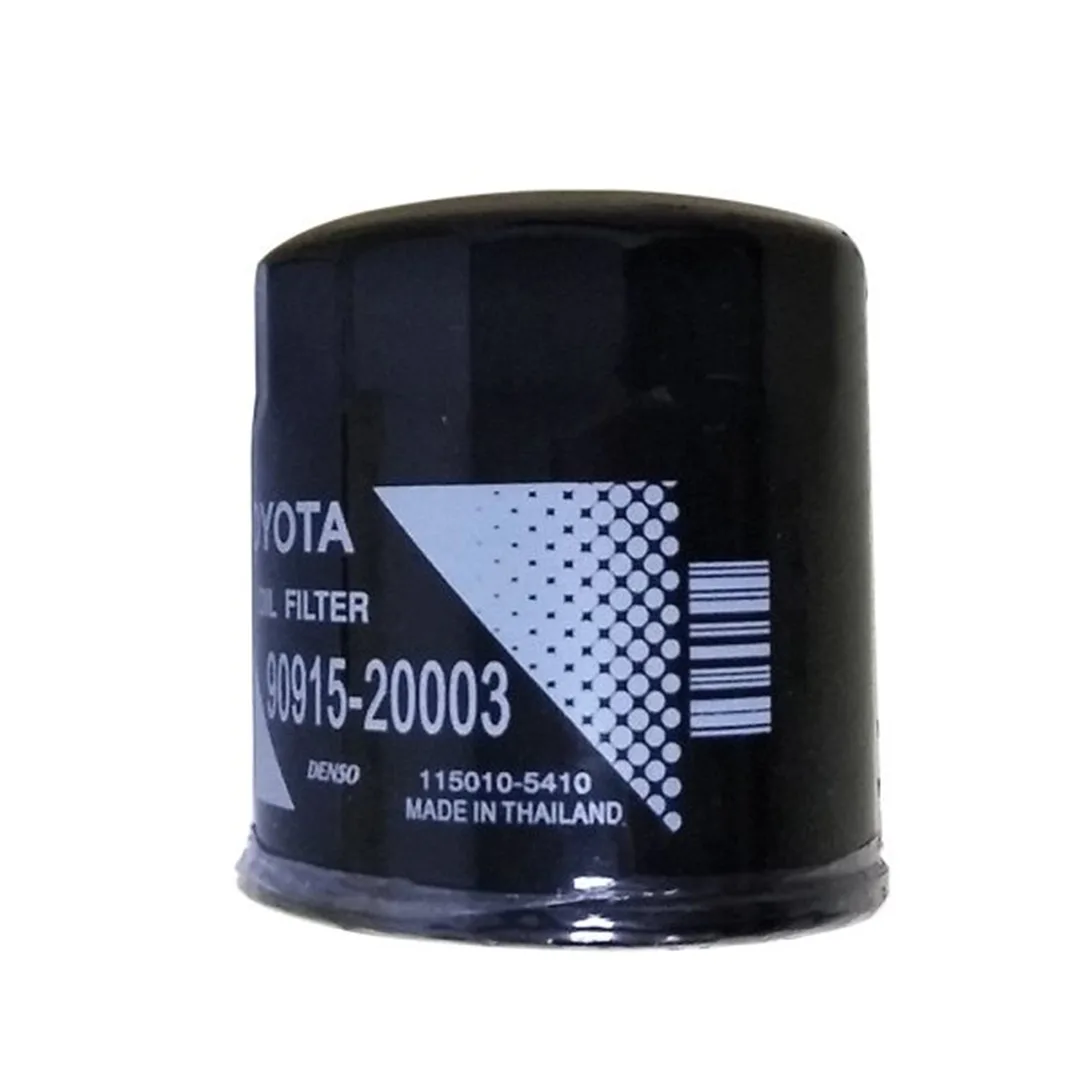
Image source: Web (Bing) / motortech.lk (Web image (fair-use with source credit))
Step 6: Buy the correct quantity.
The 2.4L four-cylinder needs 5 quarts. You'll use 4.5 and have half left over. The 3.0L V6 needs 6 quarts.
You'll use 5.5 and have half left over.
Common Mistakes DIY Owners Make
The biggest mistake is trusting the previous owner. If you just bought a used 2003 Camry, don't assume whatever oil is in there is correct. Drain it.
Refill it with 5W-30.
The second mistake is mixing viscosities. Topping off a 5W-30 engine with 10W-30 changes the overall viscosity. It might not cause immediate damage, but it pushes the oil properties outside the engineered spec.
The third mistake is overfilling. Adding an extra half quart because the engine burns some oil is wrong. Excess oil froths.
Aerated oil doesn't pump well. The hydraulic lifters get noisy. Oil pressure drops.
Fill to the top mark on the dipstick and stop.
The fourth mistake is skipping the filter change. If you're draining the oil, spend the 5 to 8 dollars on a new filter. Running old oil through a dirty filter defeats the purpose of the change.
Oil Change Intervals – How Often Is "Too Often"?
Toyota's original recommendation was every 5,000 miles for normal driving and every 3,000 miles for severe service. Severe service includes short trips under 5 miles in cold weather, frequent stop-and-go traffic, towing, and driving on dusty roads.
As of 2026, most owners driving a 2003 Camry are in the severe service category by default. The car is old. The seals are harder.
The engine has wear. Our research shows that 3,000 to 4,000 miles between changes with a synthetic blend is the sweet spot for keeping these engines alive.
If you're using full synthetic, 5,000 miles is reasonable. Don't push it to 7,500 or 10,000. The 2003 Camry's engine wasn't designed for extended drain intervals.
The oil filter isn't large enough. The PCV system isn't robust enough. Stick to shorter intervals.
The One Mistake That Kills These Engines
There is one mistake that accounts for more 2003 Camry engine failures than anything else. It's not using the wrong viscosity. It's not using cheap oil.
It's neglecting the PCV valve.
The PCV valve on the 2AZ-FE engine costs about 8 dollars. It takes 30 seconds to swap. But when it clogs, pressure builds inside the crankcase.
Oil gets pushed past seals. Sludge formation accelerates. Oil consumption skyrockets.
Replace the PCV valve every other oil change. It's the single best thing you can do for engine longevity beyond using the right oil.
When the Dipstick Tells You Something Is Wrong
The dipstick is your diagnostic tool. Fresh oil should be clear amber or light brown. If it looks black immediately after a change, something is wrong.
Heavy carbon contamination means the engine is running rich or burning oil.
If the oil smells like gasoline, you have a fuel dilution problem. Gasoline leaking past worn piston rings thins the oil and reduces its viscosity. This is more common in cars that only do short trips.
Change the oil more frequently if this applies to you.
If the oil looks milky or frothy, coolant is mixing with the oil. That's a blown head gasket or a cracked cylinder head. Stop driving the car immediately.
This needs professional diagnosis.
The Truth About Oil Additives
The auto parts store shelf is full of bottles promising to fix everything. Most of them are snake oil.
The additive package in modern motor oil is already carefully balanced. Pouring extra additives into the crankcase can disrupt that balance. Zinc and phosphorus additives can poison catalytic converters over time.
Friction modifiers can cause clutch slip in engines with variable valve timing.
If you want to clean sludge, do an oil change with a quality synthetic blend and repeat it in 1,500 miles. The detergents in the oil will do the work. No bottle of magic liquid is going to undo years of neglect in 10 minutes.
When to Call a Professional
If the underside of your Camry looks like it's coated in decades of grime and rust, don't attempt the oil change yourself. A stripped drain plug or a cracked oil pan costs more to fix than a shop charges for the change.
If the oil pressure light flickers at idle, don't just change the oil and hope. That light means pressure is dropping below 4 to 7 psi. It could be a clogged pickup tube, a failing oil pump, or a worn main bearing.
Take it to a shop that understands the 2AZ-FE sludge issues.
If the car has more than 200,000 miles and you're unsure of its maintenance history, consider a professional oil flush before the next change. Not the chemical flush that you pour in and run for five minutes. That can dislodge large chunks of sludge that block passages.
A professional flush uses a machine that circulates cleaning solution at low pressure. It's safer.
A Quick Note on Warranty and Resale
If you're still under an extended warranty, check the terms. Some companies require proof of oil changes using the manufacturer's specified viscosity. Keep receipts.
Note the date, mileage, and oil type.
For resale value, a documented oil change history adds real money. A 2003 Camry with records showing regular 5W-30 changes and PCV valve replacements is worth 500 to 1,000 dollars more than one with unknown maintenance. Buyers know the sludge reputation.
They'll pay a premium for proof it was avoided.
Final Verdict: The Best Oil for Your 2003 Camry
For 95 percent of 2003 Camry owners, the answer is straightforward. Buy a 5-quart jug of 5W-30 motor oil with the API SL, SM, or SN rating and the ILSAC starburst. Pick a synthetic blend for the best balance of protection and cost.
Change it every 3,000 to 4,000 miles with a quality filter.
For the V6, step up to full synthetic if you live in a hot climate or do a lot of highway driving. The higher thermal stability pays off over time.
For the four-cylinder with more than 150,000 miles, consider high-mileage 5W-30 only if the engine is already consuming oil. Otherwise, standard 5W-30 is fine.
The 2003 Camry is one of the most reliable cars ever built. But reliability is a two-way street. Use the right stuff, change it on time, and this car will outlast your next two vehicles combined.
Frequently Asked Questions
Can I use 5W-20 instead of 5W-30 in my 2003 Camry?
Yes, Toyota allows 5W-20 for improved fuel economy, but only in temperatures above zero degrees Fahrenheit. If you live in a cold climate or do mostly short trips, stick with 5W-30 for better cold-start protection.
How many quarts of oil does a 2003 Camry take?
The 2.4L four-cylinder takes 4.5 quarts with a filter change. The 3.0L V6 takes 5.5 quarts with a filter change. Buy 5 quarts for the four-cylinder and 6 quarts for the V6.
Is synthetic oil worth it for a 2003 Camry with high mileage?
A synthetic blend is worth it for the extra heat protection and longer change intervals. Full synthetic is good but not necessary unless you drive in extreme conditions.
What happens if I use 10W-30 in my 2003 Camry?
In warm climates, 10W-30 is generally safe but may cause slower cold starts in winter. In cold climates, it increases startup wear. Stick with 5W-30 for year-round use.
How do I check the oil level on a 2003 Camry?
Park on level ground. Wait at least 5 minutes after turning off the engine. Pull the dipstick, wipe it clean, insert it fully, and pull it again.
The oil should be between the two marks. Never fill above the top mark.
Does the 2003 Camry have an oil change reminder light?
Some trims have a maintenance reminder that illuminates every 5,000 miles. It's based on mileage, not oil condition. Reset it after each change by turning the key to the on position without starting the engine and pressing the trip reset button.
Should I use high-mileage oil in my 2003 Camry?
Only if the engine is already burning or leaking oil. High-mileage formulations contain seal conditioners that can reduce minor leaks. But they won't fix worn piston rings or valve seals.
What does the API donut on the oil bottle mean?
The API service symbol shows the oil quality in the center letter. You need SL, SM, or SN for a 2003 Camry. If the bottle doesn't have this mark, don't buy it.
Can I switch from conventional to synthetic oil in an old engine?
Yes. Switching from conventional to synthetic in a high-mileage 2003 Camry is perfectly safe. The idea that synthetic oil causes leaks is a myth.
Synthetic oil's detergents clean out existing sludge, which can reveal a leak that was already there.
Where do I recycle used oil from my 2003 Camry?
Most auto parts stores accept used oil for free. Never pour used oil down a drain or into the ground. The EPA regulates used oil disposal.
One quart can contaminate one million gallons of freshwater.