
If you're researching 2008 toyota rav4 problems, you've probably noticed the same names popping up again and again: oil consumption, VVT-i oil lines, ABS actuators. That's not random noise. This generation of RAV4 has several genuinely weak spots, and knowing them before you buy can save you thousands.
Manufacturer specifications indicate the 2008 RAV4 came with two engines, each with its own quirks. The most notorious is the 2.4L four-cylinder, which Toyota acknowledged could burn through a quart of oil every 1,000 miles or so. We'll cover the common failures, what they cost to fix, and how to spot them during a test drive.
2008 Toyota RAV4 Problems: What Owners Must Know
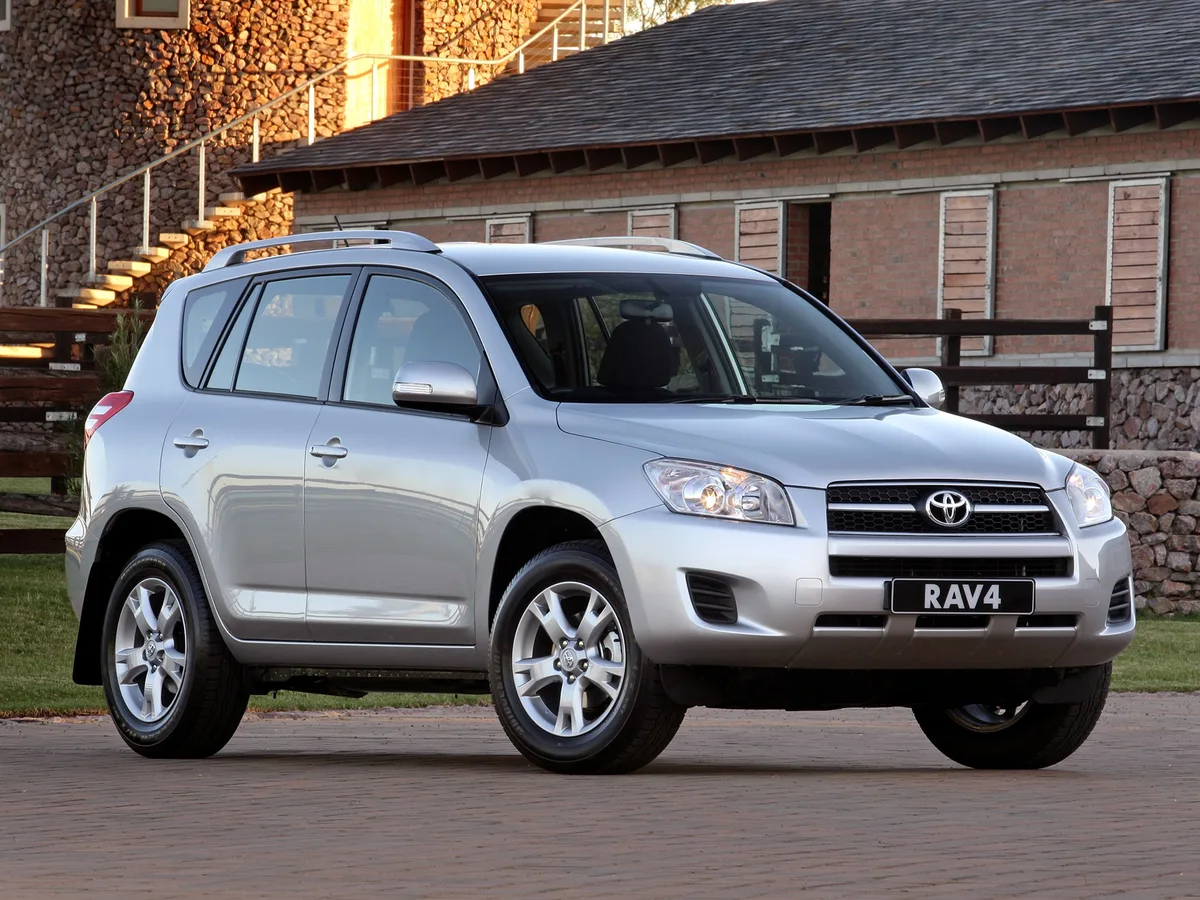
Image source: Bing (Web (fair-use with source credit))
Why Accuracy Matters When Shopping for a 2008 RAV4
The 2008 RAV4 sits in a weird spot in the used-car market. It's old enough to be cheap, but young enough that people still trust the Toyota badge. That trust is mostly earned.
The RAV4 is a solid, practical compact SUV with great visibility and a usable interior. But the third-generation models from this era have a handful of known issues that can turn a bargain into a money pit.
The key is separating real problems from internet noise. Head into any forum and you'll see people swapping horror stories about every single component. The truth is more specific.
This model year has a few repeat offenders, and they're well documented. Some are safety-related recalls. Others are mechanical failures that Toyota never officially recalled but quietly addressed with extended warranties and technical service bulletins.
As of 2026, plenty of these RAV4s are still on the road. That's a good sign. But it also means many of them have crossed 150,000 miles, and some have already had major repairs.
The real question isn't whether the 2008 RAV4 has problems. It's whether the car you're looking at has the specific problems we're about to cover.
The 2008 RAV4 Lineup: Engines, Trims, and AWD Systems
Before diving into the failures, you need to know what you're actually looking at. The 2008 RAV4 came in three trims: Base, Sport, and Limited. All three were offered with either front-wheel drive or all-wheel drive.
The drivetrain setup matters more than the trim level when it comes to reliability.
Under the hood, buyers had two choices. The first was a 2.4L four-cylinder engine, code name 2AZ-FE. It produced 166 horsepower and came mated to a four-speed automatic transmission.
The second was a 3.5L V6, code name 2GR-FE, with 269 horsepower and a five-speed automatic. The V6 is much quicker, but the four-cylinder outsold it by a wide margin.
Most of the 2008 toyota rav4 problems trace back to the 2.4L engine. That's the engine with the oil consumption issue. The V6 had fewer engine problems, though it had its own quirks, like a longer timing belt service interval and a few oil line concerns on some models.
AWD models added a rear differential and a more complex drivetrain. That means more parts to inspect and a slightly higher chance of wear on driveline components. For snowy states, AWD is worth it.
For everyone else, front-wheel drive is simpler and cheaper to maintain.
The Big One: 2.4L Engine Oil Consumption
This is the issue that dominates every conversation about 2008 toyota rav4 problems. The 2AZ-FE engine, used in the 2008 RAV4 with the four-cylinder, has a well-known piston ring design flaw. Over time, carbon deposits build up on the rings, causing them to stick.
Once that happens, the rings stop sealing properly and the engine starts burning oil.
The symptoms are pretty clear. You'll notice the oil level dropping between changes, sometimes dramatically. You might see blue smoke from the exhaust, especially on cold starts.
Eventually, the engine can run low enough on oil to cause serious damage, including a completely seized motor.
Toyota eventually issued a warranty enhancement program for this exact problem. It covered certain vehicles with excessive oil consumption, defined as more than one quart of oil every 1,200 miles. The fix involved replacing the piston rings and related components, which is essentially a major engine rebuild.
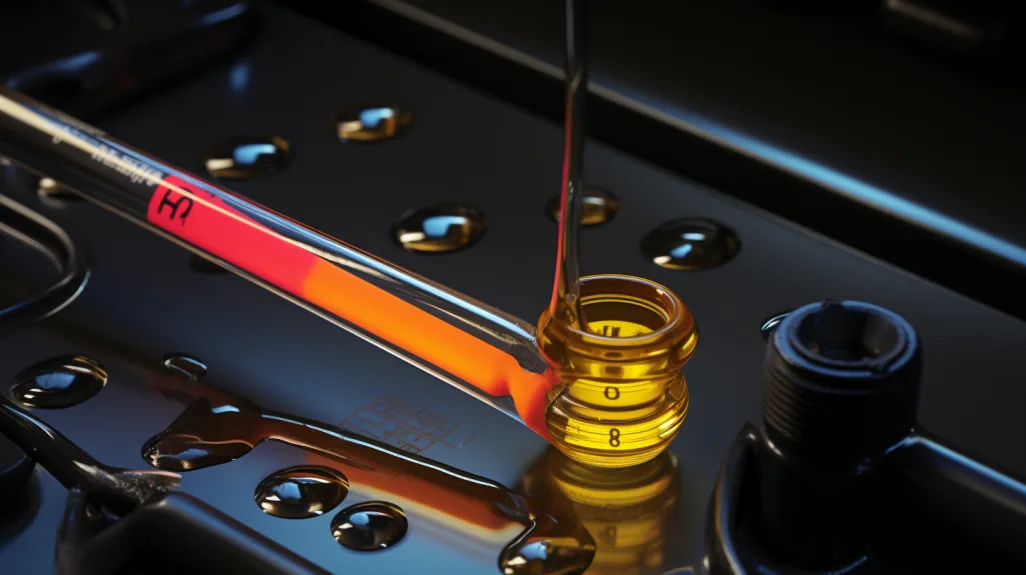
Image source: Web (Bing) / jbmotorwork.com (Web image (fair-use with source credit))
Here's what to do if you're looking at a 2008 RAV4 with the 2.4L engine. First, check the oil level on the dipstick while the engine is cold. If it's low, ask when it was last topped off.
Then, if you can, drive it for a while and check again. The ideal is to perform an oil consumption test over 1,000 miles, which means topping off the oil and measuring how much it loses in that window.
If the car already burns oil, it's not necessarily a dealbreaker. The repair is expensive, but you can use it as a negotiating chip. A full piston ring job can run $3,500 to $5,500 depending on where you live and who does the work.
Some shops will quote a used engine replacement instead, which can be cheaper but brings its own risks.
The good news is that not every 2.4L RAV4 has this problem. It's common, but it's not universal. Many owners have gotten well past 200,000 miles without serious oil loss.
The issue is more likely to show up on cars with long oil change intervals or a history of hard driving.
VVT-i Oil Line Failure: The Silent Engine Killer
While oil consumption gets all the attention, the VVT-i oil line failure is the one that can kill a healthy engine in minutes. VVT-i stands for Variable Valve Timing with intelligence. It's Toyota's system for adjusting valve timing to improve power and fuel economy.
The system relies on pressurized oil supplied through a small metal line that runs from the engine block to the VVT-i actuator.
On the 2.4L engine, that oil line can crack or rupture without warning. When it fails, the engine loses oil pressure almost instantly. The results are usually catastrophic.
The engine starts making a loud clattering or knocking noise, warning lights flash, and if you don't shut it off immediately, you're looking at a seized engine.
The scariest part is that there's usually no buildup. One day the oil line is fine, the next it's spraying oil all over the engine bay. It can happen at 60,000 miles or 150,000 miles.
Toyota did revise the part in later production years, and the updated line is generally more durable, but many 2008 models still have the original design.
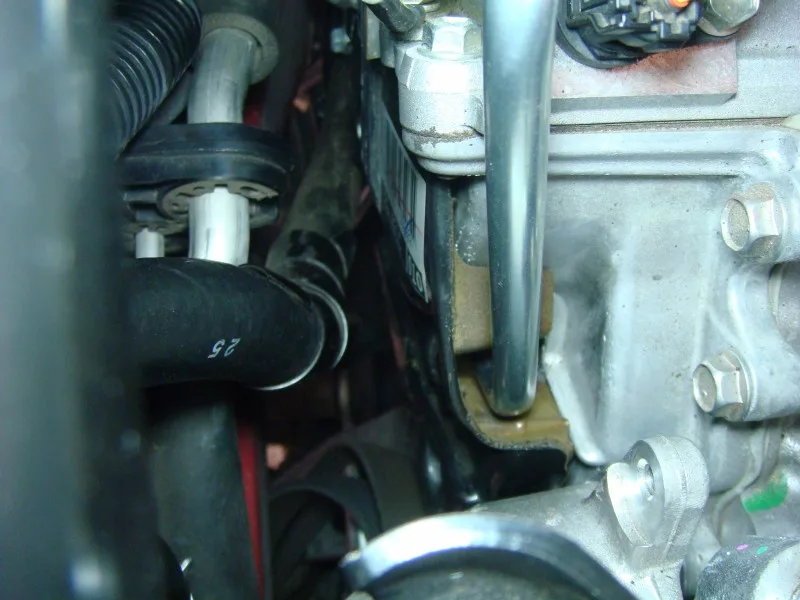
Image source: Web (Bing) / au.toyotaownersclub.com (Web image (fair-use with source credit))
When inspecting a used RAV4, you can't always see this problem coming, but you can look for clues. Pop the hood and check the area around the engine block for fresh oil residue. A light film is normal on an older car, but active dripping from the front of the engine is a red flag.
Also, listen for any rattling or clattering at idle, especially right after a cold start.
The replacement part itself is cheap, around $40 to $80 if you buy an aftermarket version. The labor is the bigger expense, since it's tucked into a tight spot. Expect a shop to charge $200 to $350 for the whole job.
That's not bad, and it's absolutely worth doing preventively if you buy a 2.4L RAV4 and don't know the history.
If you're handy with a wrench, this is a doable weekend project. But if you're not, the peace of mind from having a mechanic handle it is worth the cost. This is one of those repairs where ignoring it can total the car.
ABS and VSC Brake Actuator Problems
The third major issue on the 2008 RAV4 concerns the braking system, specifically the ABS and VSC brake actuator. ABS stands for anti-lock braking system, and VSC stands for vehicle stability control. Both systems rely on a hydraulic actuator that modulates brake pressure.
On this generation of RAV4, that actuator can fail prematurely.
When it fails, you'll usually see a cluster of warning lights on the dash, including ABS, VSC, and sometimes the brake warning light. In many cases, the vehicle's normal braking still works fine. That's the frustrating part.
The car stops normally, but the electronics are convinced something is wrong. In other cases, you'll notice a pulsing brake pedal or a complete loss of stability control and ABS assistance.
The problem is often triggered by internal electrical faults or corrosion, and it's a known issue strong enough that it led to class-action discussions in some circles. Toyota issued several technical service bulletins over the years, and some owners received goodwill repairs. But for most sellers, it's just an expensive repair bill.
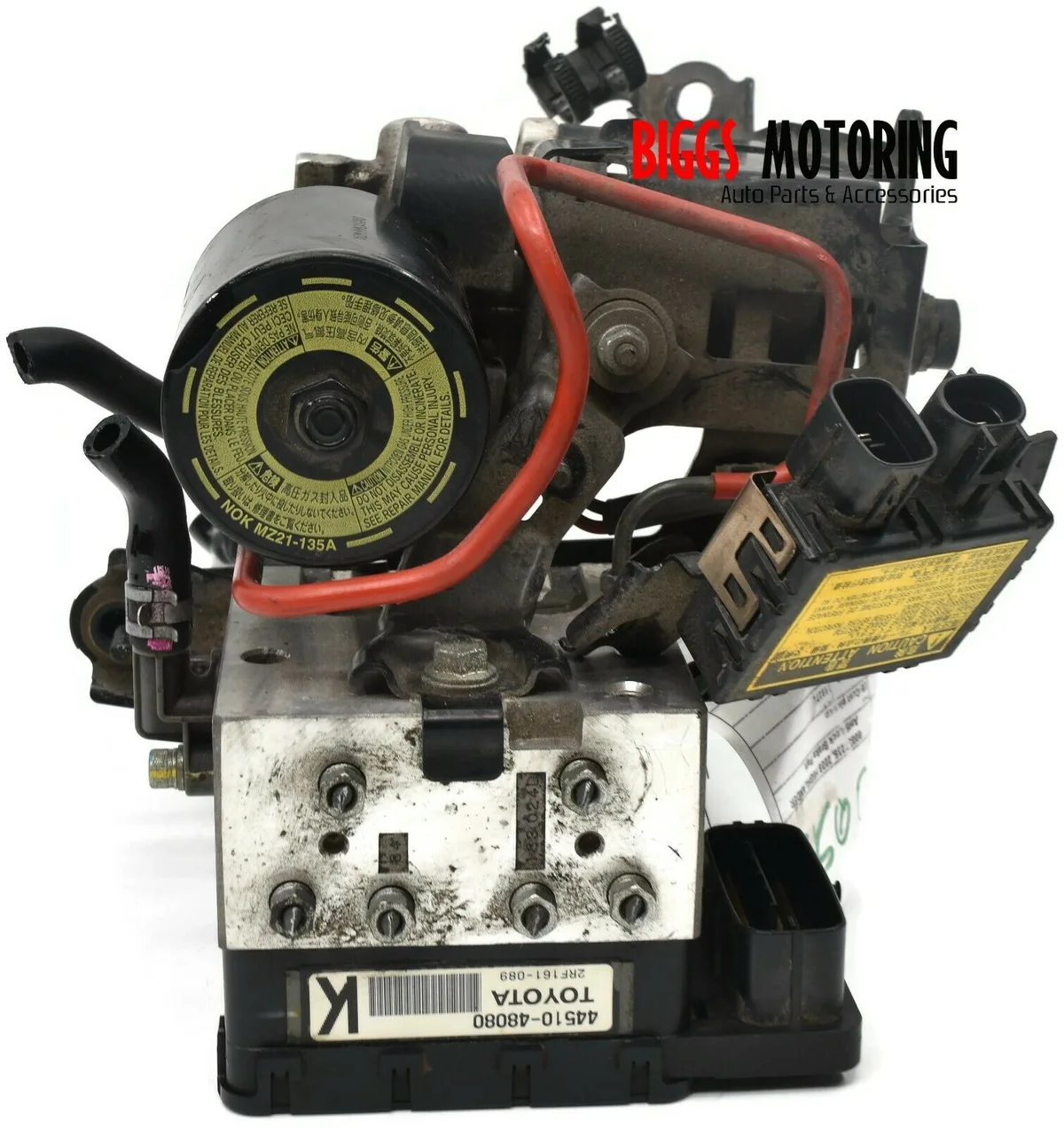
Image source: Web (Bing) / apexprefab.com.sg (Web image (fair-use with source credit))
The replacement part is the brake actuator assembly, which is a significant component. Genuine OEM parts can cost $1,000 or more, and with labor, total repair costs often land between $1,200 and $1,800. Some independent shops will rebuild the actuator for less, but that's a specialized job and not every mechanic offers it.
Before you buy a 2008 RAV4, make sure the ABS and VSC lights are not on during a test drive. If they are, that's your cue to negotiate hard. Even if the brakes feel fine, the repair cost is substantial.
A small discount of $500 to $1,000 might still be worth it, but you need to be willing to live with the repair or fix it right away.
In our research, this issue appears more frequently on cars that have spent a lot of time in wet or snowy climates. Road salt and moisture seem to accelerate the corrosion. If you're shopping in a rust belt state, pay extra attention to the brake system operation during your test drive.
Rear Wheel Bearings, TPMS, and Other Annoying Issues
The rear wheel bearings on the 2008 RAV4 are a known weak point. Owners typically report a low howling or grinding noise that gets louder as speed increases. The bearing assembly is non-serviceable, so the entire hub unit gets replaced.
Expect to pay $250 to $450 per side with labor. Many cars wear through them between 60,000 and 90,000 miles.
The TPMS, or tire pressure monitoring system, also causes steady irritation. The sensor batteries die over time, which triggers a permanent low-tire warning light on the dash. Replacement runs about $50 to $100 per sensor, plus mounting and programming.
It's not a safety crisis, but it's annoying.
Other quirks show up in owner reports. Front strut mounts often clunk over bumps. Brake rotors have a tendency to warp if the car sits for long periods.
In salt-belt states, rear suspension crossmembers can rust badly. The V6 models sometimes develop a power steering hose weep that drips fluid onto the garage floor. None of these are dealbreakers on their own, but they're worth checking on a test drive.
If you end up chasing Toyota electrical issues beyond this list, the rear camera system on later models has its own set of quirks.
Takata Airbag Recall and Safety Checks
The 2008 RAV4 is part of the massive Takata airbag recall. The passenger front airbag inflator can rupture in a crash and send metal fragments into the cabin. This is a serious safety defect, not a convenience issue.
A free replacement inflator is available at any Toyota dealer, and as of 2026, parts availability is no longer a problem for this model year.
Before you buy, check the VIN against the NHTSA recall database or Toyota's official recall page. If the recall hasn't been performed, make it a condition of the sale. It takes about an hour at the dealer, and the cost is covered entirely by Toyota.
Never skip this step, even if the car looks spotless.
How to Inspect a 2008 RAV4 Before Buying
Start with the paperwork. Run a VIN lookup first to confirm the title is clean and to see whether the airbag recall was completed. Then, get a prepurchase inspection from an independent mechanic who knows Toyotas.
It costs $100 to $200, and it's the best money you'll spend in this whole process.
During your test drive, listen for specific warning signs. A rhythmic howl that changes with speed points to a rear wheel bearing. A clunk over bumps suggests worn strut mounts.
Blue smoke at startup or a strong oil smell indicates the engine is burning oil. And if the ABS or VSC lights stay on after startup, budget for the brake actuator repair we covered earlier.
Pop the hood before you go anywhere. Check the oil level on the dipstick. Look for wet spots around the VVT-i oil line and the timing cover.
Fresh oil there means a recent leak, and the part should be considered at risk.
What Repairs Actually Cost
Here's a realistic snapshot of what each major repair runs, based on national average shop rates. These are parts plus labor, and prices vary by region and whether you use OEM or aftermarket parts.
| Repair | Typical Cost | Notes |
|---|---|---|
| Oil consumption piston ring repair | $3,500 to $5,500 | Essentially a rebuild |
| VVT-i oil line replacement | $200 to $350 | Cheap part, moderate labor |
| ABS brake actuator replacement | $1,200 to $1,800 | Common failure point |
| Rear wheel bearing replacement | $250 to $450 per side | Non-serviceable hub |
| TPMS sensor replacement | $50 to $100 per sensor | Plus reprogramming |
| Front strut mount noise repair | $300 to $600 | Often done in pairs |
A car with several of these issues can need $3,000 or more in repairs. That's the number to negotiate from when you're making an offer.
2008 RAV4 vs Its Rivals: CR-V, Forester, Rogue
The 2008 RAV4's main competitors were the Honda CR-V, Subaru Forester, and Nissan Rogue. Each has its own personality and its own baggage.
The Honda CR-V is the RAV4's closest rival. It's slightly more fuel-efficient and generally free of major engine problems, but it's also slower and less engaging to drive. If your absolute priority is trouble-free ownership and you don't care about power, the CR-V edges ahead.
The RAV4's V6 option, though, is in a different league entirely.
The Subaru Forester offers standard all-wheel drive and a great view of the road. However, the 2.5L boxer engine is more prone to head gasket failures around the same mileage range, and suspension noise is common. The RAV4 holds up better in the long run, especially if you live in a warmer climate.
The Nissan Rogue is the value pick, but its continuously variable transmission, or CVT, is a well-known weak point. The RAV4's conventional automatic is far more durable. If you're buying high-mileage either way, the RAV4 is the safer bet on drivetrain reliability alone.
Who Should Buy a 2008 RAV4 (and Who Should Skip It)
This RAV4 suits someone who wants a roomy, simple SUV and doesn't panic when a warning light appears. If you can turn a wrench or have a trusted independent mechanic, the 2008 RAV4 can be a bargain. The known fixes are well documented, and the parts are cheap.
Skip it if you expect a turnkey car that never needs attention. A four-cylinder model with oil consumption can become a serious financial sink. If you rely on dealer servicing for everything, the costs will eat the savings.
Maintenance That Prevents Common Failures
Preventive work makes a massive difference. Replace the VVT-i oil line if you don't know its history. It costs around $300 and protects the engine from catastrophic oil pressure loss.
Also, check the oil level monthly and never let it drop below the low mark.
Flush the brake fluid every two years to reduce the risk of ABS actuator corrosion. Listen for strut clunks over bumps and address worn mounts early. Later Toyota models also have known wiring issues around the rear camera system, so it's worth checking for common rear camera problems if you start seeing electrical glitches.
When to Walk Away from a Deal
Walk away if the car has heavy rust on the rear suspension crossmembers. That's structural work, and it's rarely worth the cost. Walk away if the VIN shows an open Takata recall that the seller won't fix before sale.
Also, walk away if the engine ticks or clatters at startup, especially in the 2.4L. And if the ABS, VSC, and check engine lights all stay on, you're looking at a multi-thousand-dollar repair. A seller who won't let an independent mechanic inspect the car is an automatic no.
Frequently Asked Questions
Is the 2008 Toyota RAV4 reliable?
The 2008 RAV4 is generally reliable, but the 2.4L engine has a known oil consumption issue. The V6 is more durable. With regular maintenance and early fixes, many examples pass 200,000 miles.
How long do 2008 RAV4s last?
Well-maintained RAV4s regularly last 200,000 to 250,000 miles. The V6 is more likely to reach that mark without major repairs. The 2.4L can too, but it needs careful oil monitoring.
Are 2008 RAV4 oil problems dangerous?
Excessive oil consumption can be dangerous if the engine runs low on oil. Low oil leads to overheating, increased wear, and possible engine seizure. Check the dipstick weekly and top off as needed.
Should I buy a 2008 RAV4 in 2026?
Yes, if you find a well-maintained example with records and a clean inspection. Avoid cars with heavy rust, open recalls, or signs of oil burning. Get a prepurchase inspection before committing.
Final Verdict: Is a 2008 RAV4 Worth It?
The 2008 RAV4 is worth buying if you go in with open eyes. The V6 is the safer choice. The 2.4L can be fine, but only if it wasn't neglected and doesn't have severe oil consumption yet.
Use the known problems as negotiation leverage. Buy the best example you can, fix the weak points early, and this RAV4 will still be a solid daily driver.