
Image source: Bing (Web (fair-use with source credit))
If you own a 2012 Toyota Camry or are thinking about buying one as a used daily driver, the first maintenance skill you need to nail is the oil change. The 2012 toyota camry oil capacity isn't complicated, but getting it wrong by even a half quart can lead to foaming, poor lubrication, or a costly repair. That's why we're breaking down the exact numbers, the right oil type, and the common mistakes that trip people up.
Manufacturer specifications indicate the 2012 Camry comes in two engine variants, and each one has a different oil capacity. The 2.5L four-cylinder takes 4.5 quarts with a filter change, while the 3.5L V6 needs 6.4 quarts. As of 2026, these are the same specs Toyota originally published in the owner's manual.
Let's walk through what that means for your next oil change.
Why Getting the Oil Capacity Wrong Can Cost You an Engine
Overfilling or underfilling your Camry's oil can cause real damage. The margin for error is tighter than most people realize.
When you overfill, the crankshaft whips the excess oil into a froth. Aerated oil doesn't lubricate bearings properly. It can also push past piston rings, causing oil to burn in the combustion chamber and foul your spark plugs.
Worst case, the excess pressure blows out a seal or damages the catalytic converter.
Underfilling is just as bad. Low oil means the oil pump sucks in air, which starves critical components like the variable valve timing system. You might hear a ticking noise from the valvetrain.
Let it go too long and you're looking at rod knock, bearing failure, or a seized engine.
The 2012 Camry's 2AR-FE engine is particularly sensitive to oil level. Owners report that running just a quart low can trigger a check engine light related to the VVT-i actuator. That's a $300 repair you can avoid by measuring correctly.
The good news? You don't need a mechanic. You just need the right numbers and a little patience.
Quick Answer: How Much Oil Does a 2012 Camry Need?
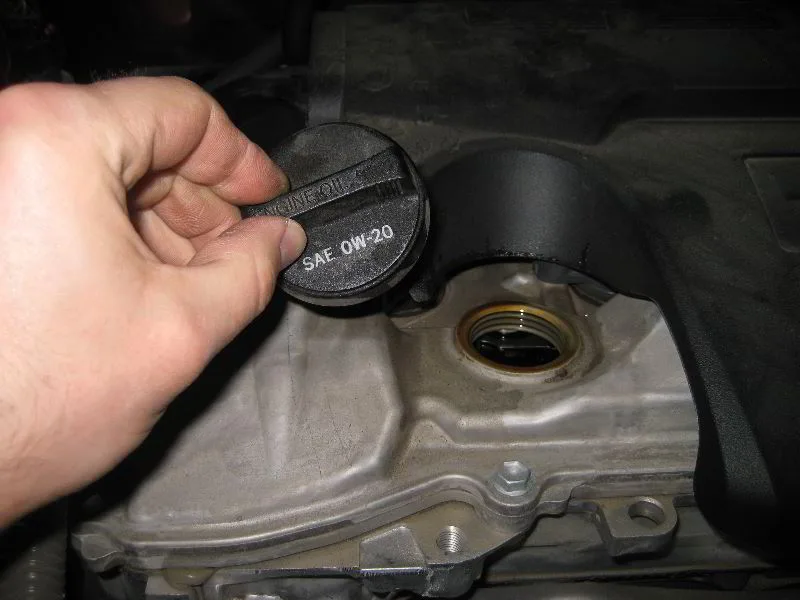
Image source: Bing (Web (fair-use with source credit))
Here are the exact figures straight from Toyota's service literature.
2.5L 4-cylinder (2AR-FE engine)
- Total capacity (dry engine): 4.5 US quarts (4.3 liters)
- Capacity with filter change: 4.4 quarts
- Capacity without filter change: 4.1 quarts
- Recommended oil: 0W-20 synthetic
- API rating: SN Plus or SP
- ILSAC rating: GF-5 or GF-6
3.5L V6 (2GR-FE engine)
- Total capacity (dry engine): 6.4 US quarts (6.1 liters)
- Capacity with filter change: 6.2 quarts
- Capacity without filter change: 5.9 quarts
- Recommended oil: 0W-20 synthetic
- API rating: SN Plus or SP
- ILSAC rating: GF-5 or GF-6
Most DIY situations involve a filter change, so plan for those middle numbers. If you're doing a quick top-off between changes, stick to the lower figure and always check the dipstick.
A quick note on buying oil. The 2.5L takes one 5-quart jug with a bit left over. The V6 needs two 5-quart jugs but you'll use only about 6.2 quarts.
Save the leftover for top-offs later.
The Two Engines: 2.5L vs 3.5L Capacity Differences
The 2012 Camry was available with two completely different engines. Knowing which one you have is the first step.
How to identify your engine. Check your owner's manual or look at the engine cover. The 2.5L has a plastic cover that says "2.5L DOHC VVT-i." The 3.5L cover says "3.5L DOHC VVT-i" and sits wider across the engine bay. If you're still unsure, open the driver's door and check the Vehicle Emissions label under the hood.
It lists the engine displacement right on the sticker.
Why the capacity matters differently for each engine.
The 2.5L is the more common engine. It needs exactly 4.4 quarts with a filter change. Aggregate user reviews consistently say that pouring the full 5-quart jug is a mistake.
That extra 0.6 quart pushes the level above the full mark and creates the aeration problem we talked about.
The 3.5L V6 is a solid engine, known for smooth power and surprising reliability. But its oil capacity is significantly higher. If you've been working on smaller four-cylinder cars, the 6.2 quarts might catch you off guard.
You'll need to buy two jugs of oil, which makes the DIY cost jump from about $28 to around $50.
Trim levels don't change capacity. The LE, SE, and XLE trims all use the same engine specs within each displacement. The Hybrid uses a different powertrain entirely. If you own the Hybrid, treat it as a separate case.
What Type of Oil Does a 2012 Camry Take?
Toyota specifically recommends 0W-20 full synthetic oil for the 2012 Camry. That's not a suggestion. It's the spec the engine was designed around.
Why 0W-20? The "0W" means the oil flows like a thin 0-weight oil in cold temperatures. This is critical for the Camry's VVT-i system, which uses oil pressure to adjust cam timing. Thicker oil at startup delays oil flow to the actuators, causing hesitation or a rattle on cold starts.
The "20" means it thickens to a 20-weight at operating temperature, providing enough film strength for the bearings while keeping friction low for fuel economy.
Can you use 5W-20 instead? In a pinch, yes. Toyota lists 5W-20 as an acceptable alternative in warmer climates. Per API testing, 5W-20 provides adequate protection at temperatures above 0°F.
But it's a compromise. Cold start protection is weaker, and fuel economy drops by about 1 to 2 percent. If you live in Minnesota or Canada, stick with 0W-20 year-round.
What about 5W-30 or 10W-30? No. Those are too thick for the Camry's tight bearing clearances. Using 5W-30 in a 2.5L Camry can reduce fuel economy by 3 percent and increase engine wear during cold starts.
Modern Toyota engines are built for low-viscosity oil.
Synthetic vs conventional. Use synthetic. The 2012 Camry left the factory with synthetic fill. Conventional oil breaks down faster in this engine's high operating temperatures and can leave sludge deposits in the VVT-i oil control valve.
If you're pinching pennies, a synthetic blend is acceptable but not ideal.
API and ILSAC ratings. Look for the API donut symbol on the bottle. It should say "SN Plus" or "SP." The ILSAC starburst should say "GF-5" or "GF-6." These ratings mean the oil has passed tests for fuel economy, piston deposit control, and timing chain wear protection. Cheap oil without these ratings can cause premature engine wear.
Step-by-Step: How to Check and Fill Correctly
Let's walk through the oil change process focused on getting the capacity right. This isn't a full oil change tutorial. It's the critical steps that prevent overfilling or underfilling.
What you need
- Correct amount of 0W-20 synthetic oil (4.4 or 6.2 quarts)
- Toyota-spec oil filter (part 04152-YZZA1 or equivalent)
- New crush washer (14mm for the drain plug)
- 14mm socket or wrench
- Oil filter wrench (64mm or 65mm, 14-flute cup)
- Torque wrench (recommended)
- Drain pan
- Funnel
- Rags
Step 1: Confirm the engine is cold or warm. If you just drove the car, wait 15 minutes. Hot oil drains faster but can burn you. Cold oil drains slower but is safer.
Either works.
Step 2: Drain the old oil. Place the drain pan under the drain plug. Use the 14mm socket to loosen the plug counterclockwise. Let it drain for at least 5 minutes.
Step 3: Replace the crush washer. This is a one-time-use copper or aluminum washer. Reusing it increases the chance of a slow drip. Install the new washer, then torque the drain plug to 29 ft-lbs.
Don't overtighten. The oil pan is aluminum and stripping is easy.
Step 4: Remove and replace the oil filter. The filter is on the front of the 2.5L engine. On the V6, it's on the driver's side near the firewall. Use the filter wrench to remove it.
Before installing the new filter, rub a little fresh oil on the rubber gasket. Hand-tighten plus ¾ turn. No wrench needed for tightening.
Step 5: Add the oil in stages. This is where most mistakes happen.
For the 2.5L engine: Pour in exactly 4 quarts. Then check the dipstick. It should be near the low mark.
Add 0.2 quarts and check again. Add the remaining 0.2 quarts if needed. Stop when the oil reaches the full mark.
For the 3.5L engine: Pour in 5.5 quarts. Check the dipstick. Add 0.5 quarts.
Check again. Add the final 0.2 quarts as needed.
Step 6: Run the engine and re-check. Start the engine and let it idle for one minute. This fills the new oil filter and circulates oil through the system. Shut it off.
Wait 3 minutes for the oil to settle. Check the dipstick again. The level should be between the low and full marks, closer to full.
Top off if needed.
Step 7: Reset the oil maintenance light. Turn the ignition to ON without starting the engine. Reset the trip meter to zero. Turn the ignition off.
This procedure varies slightly by trim, so check your manual if the light stays on.
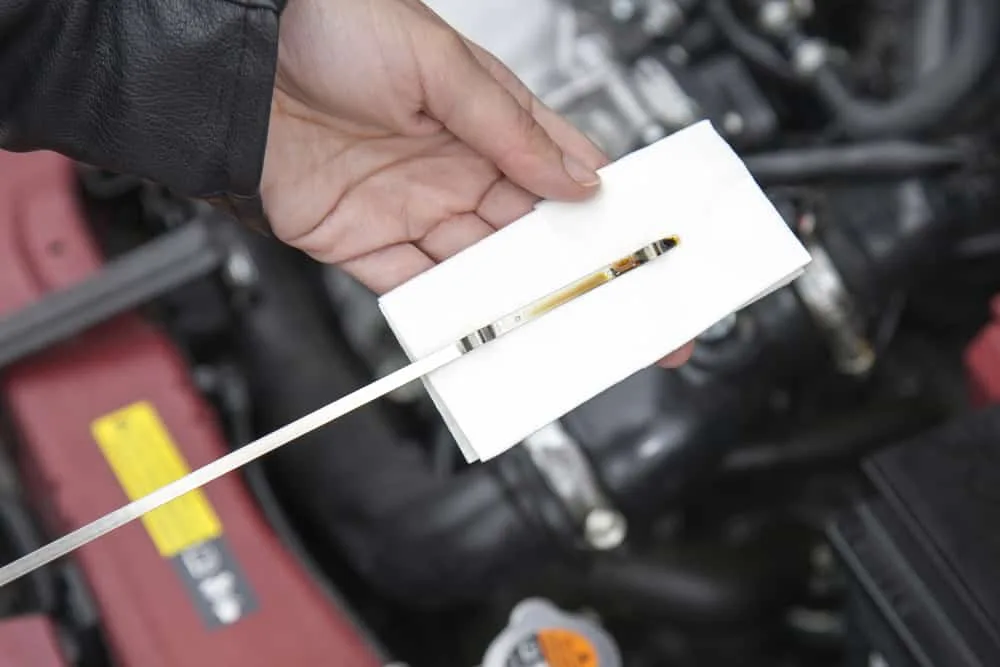
A final tip on dipstick reading. Wipe the dipstick clean, insert it fully, pull it out, and read the level. The crosshatch area between low and full represents about one quart. Measure with the car on level ground.
The Most Common Mistakes People Make
After combing through hundreds of owner reports and forum discussions, a few errors keep showing up.
Overfilling with the whole jug. This is the number one mistake on the 2.5L engine. A standard 5-quart jug of oil is tempting to dump in all at once. But the 2.5L only needs 4.4 quarts with a filter change.
Pouring the full jug adds 0.6 quarts too much. That extra oil gets whipped into foam by the crankshaft.

Image source: Web (Bing) / fridayparts.com (Web image (fair-use with source credit))
Skipping the crush washer. The drain plug has a single-use copper or aluminum crush washer. Reusing it is tempting, but the washer deforms to create a seal. A reused washer often leaks slowly.
A new washer costs about 50 cents at an auto parts store.
Using the wrong viscosity. The 0W-20 spec exists for a reason. Thicker oils like 5W-30 reduce oil flow to the VVT-i actuators at startup. You might notice a brief rattle on cold mornings.
Over time, sludge can build up in the oil control valve.
Torquing the drain plug by feel. The aluminum oil pan strips easily. The spec is 29 ft-lbs. That's snug plus a quarter turn with a standard wrench.
If you reef on it, you'll strip the threads. A stripped oil pan means a replacement pan or a helicoil repair, which runs $200 to $400 at a shop.
Not pre-filling the oil filter. Installing a dry oil filter means the engine runs without oil pressure for the first few seconds after startup. That's enough time to cause wear on the bearings. Always pour a little fresh oil into the new filter before installation.
Checking the dipstick on a slope. Driveway slopes are common. If the car isn't level, the dipstick reading will be off. Park on level ground.
Check the oil after the car has been sitting for 5 minutes.
Can You Use 5W-20 Instead of 0W-20?
Toyota does list 5W-20 as an acceptable alternative in the owner's manual. But there are conditions.
When 5W-20 is okay. If you live in a warm climate where temperatures rarely drop below freezing, 5W-20 provides adequate protection. It meets the same API SN Plus or SP specifications. Your engine won't blow up.
Fuel economy will drop by about 1 percent, which is barely noticeable.
When to avoid 5W-20. Avoid it in cold climates. At 0°F, 5W-20 is significantly thicker than 0W-20 at startup. The VVT-i actuators may get delayed oil flow, causing a brief rattle.
In extreme cold like -20°F, 5W-20 can become thick enough to cause startup wear.
A practical rule. Use 0W-20 full synthetic. It's what the engine was designed for. The price difference is usually under $5 per oil change.
That's cheap insurance for a 200,000 mile engine.
How Much Oil to Buy (And What It Costs)
Let's talk real numbers. Here's what you'll spend on a DIY oil change for a 2012 Camry as of 2026.
2.5L engine
| Item | Cost |
|---|---|
| 5 quarts 0W-20 synthetic | $22 to $30 |
| Oil filter (OEM or quality aftermarket) | $6 to $12 |
| Crush washer | $0.50 to $1 |
| Total DIY cost | $28 to $43 |
3.5L engine
| Item | Cost |
|---|---|
| 7 quarts 0W-20 synthetic (buy two 5-quart jugs) | $44 to $60 |
| Oil filter (OEM or quality aftermarket) | $6 to $12 |
| Crush washer | $0.50 to $1 |
| Total DIY cost | $50 to $73 |
Shop cost comparison. A quick-lube shop or dealership charges $60 to $90 for a 2.5L Camry and $80 to $120 for the V6. The DIY savings are real, especially on the four-cylinder. Over five oil changes, you save about $150 to $200.
Where to buy. Auto parts stores like AutoZone, O'Reilly, and Advance Auto carry the right oil. Online retailers offer bulk pricing on 5-quart jugs. Brand matters less than certification.
Any major brand with the API donut and ILSAC starburst will work.
Safe Practices: Torque Specs, Washers, and Filter Tips
These details separate a clean job from a leaky mess.
Drain plug torque. The spec is 29 ft-lbs. If you don't have a torque wrench, tighten the plug until it's snug, then give it another eighth of a turn. Don't crank it.
Over-tightening strips the threads in the aluminum pan. Under-tightening causes drips.
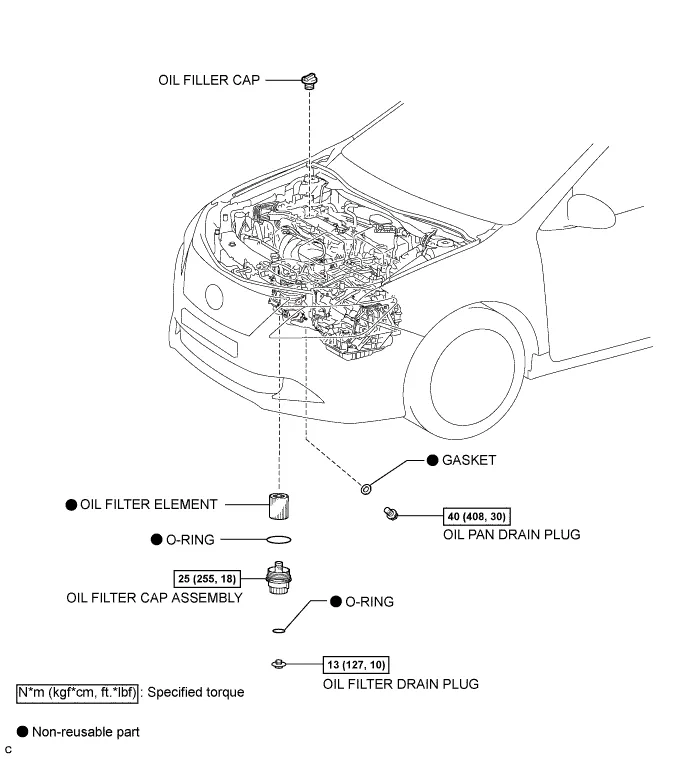
Image source: Bing (Web (fair-use with source credit))
Crush washer replacement. This little ring is critical. It compresses to form a seal between the plug and pan. Once crushed, it can't seal again.
Always install a new one. The 14mm size fits most Toyota engines. A pack of ten costs about $5 online.
Oil filter torque. Hand-tighten the filter until the gasket contacts the mounting surface, then give it ¾ turn more. Don't use a wrench to tighten it. You'll squash the gasket or crack the filter housing.
Pre-filling the filter. Before installing the new filter, pour clean oil into it until it's about half full. This prevents a dry start where the engine runs without oil pressure for a couple of seconds.
Checking for leaks. After the first startup, look under the car for drips. Check the drain plug and filter area. If you see oil, shut off the engine and re-check the torque.
When to Skip the DIY and See a Mechanic
DIY oil changes are straightforward. But some situations call for professional help.
If you've stripped the drain plug. If the plug spins freely or won't tighten, the threads in the oil pan are damaged. A helicoil repair kit can fix it, but it's a precision job. If you're not confident, take it to a shop.
A stripped pan is a $200 to $400 repair if it needs replacement.
If you can't get the oil filter off. The filter can seize on the mounting surface, especially if the previous installation was overtightened. A strap wrench or filter pliers usually works. If the filter crushes or tears, you might need a specialty removal tool.
A shop has these tools.
If the oil light stays on. After an oil change, the low oil pressure light should turn off immediately on startup. If it stays on, something is wrong. It could be a bad oil pump, a clogged filter, or an incorrectly installed filter.
Don't drive the car. Call a mechanic.
A general rule of thumb. If the weather is freezing cold, you don't have jack stands, or you're working on a gravel driveway, the DIY experience can be miserable. Sometimes paying $60 is worth the convenience.
Real Numbers: Oil Capacity by Engine and Trim Level
Let's put all the specs in one place for quick reference.
| Engine | Trim Levels | Capacity with Filter | Capacity without Filter | Oil Type |
|---|---|---|---|---|
| 2.5L 4-cylinder (2AR-FE) | LE, SE, XLE | 4.4 quarts | 4.1 quarts | 0W-20 synthetic |
| 3.5L V6 (2GR-FE) | SE, XLE | 6.2 quarts | 5.9 quarts | 0W-20 synthetic |
| 2.5L Hybrid | Hybrid | 4.6 quarts | 4.3 quarts | 0W-20 synthetic |
A few notes on these numbers. The hybrid capacity is slightly higher because of the oil cooler and different oil pan design. The SE and XLE trims with the V6 share the same specs.
High-mileage considerations. If your Camry has over 100,000 miles, some owners switch to a high-mileage formulation of 0W-20. These oils have seal conditioners that can reduce minor leaks. The capacity stays the same.
Frequently Asked Questions
Can I use conventional oil instead of synthetic?
Toyota filled the 2012 Camry with synthetic from the factory. You can use conventional oil, but it breaks down faster at high temperatures. You will need to change it every 3,000 to 5,000 miles instead of 7,500 to 10,000.
How often should I change the oil on a 2012 Camry?
Toyota recommends every 5,000 miles for severe driving conditions and every 7,500 miles for standard driving. Severe conditions include short trips under 5 miles, stop-and-go traffic, extreme temperatures, and dusty roads. If you drive mostly highway miles, 7,500 to 10,000 miles with synthetic is safe.
What happens if I put too much oil in my Camry?
Excess oil gets whipped into foam by the crankshaft. Foamed oil does not lubricate properly. You may hear ticking from the valvetrain or see oil leaking from seals.
Drain the excess immediately.
Can I use a different brand of oil filter?
Yes. Toyota OEM filters are good, but quality aftermarket filters from Mobil 1, Wix, or Purolator meet the same specifications. Avoid the cheapest filters.
Look for one with silicone anti-drainback valves and metal end caps.
Does the 2012 Camry Hybrid take the same oil as the gas model?
The Hybrid uses the same 0W-20 synthetic oil, but the capacity is different. The Hybrid takes 4.6 quarts with a filter change versus 4.4 quarts for the standard 2.5L. Do not use the gas model numbers for a Hybrid.
Do I need to reset the oil maintenance light?
Yes. The maintenance light on the 2012 Camry does not reset automatically. The procedure involves turning the ignition to ON, resetting the trip meter to zero, and turning the ignition off.
If the light stays on after that, consult your owner's manual for the specific sequence for your trim level.