
If you own a 2015 Toyota Tacoma with the V6, you've probably looked up the oil capacity at least once. Maybe you're standing in the auto parts aisle wondering how many quarts to buy. Maybe you're under the truck with a drain pan and a nagging doubt.
Let's settle it right now.
The 2015 toyota tacoma v6 oil capacity is 6.3 quarts (6.0 liters) when you replace the oil filter, which you absolutely should do every time. That's the number you need for a complete fill. The 4.0-liter 1GR-FE engine is a durable workhorse, but it's picky about getting the right amount of the right oil.
As of 2026, these trucks are still on the road in huge numbers, and proper oil changes are the single biggest factor in whether that engine hits 200,000 miles or 300,000-plus.
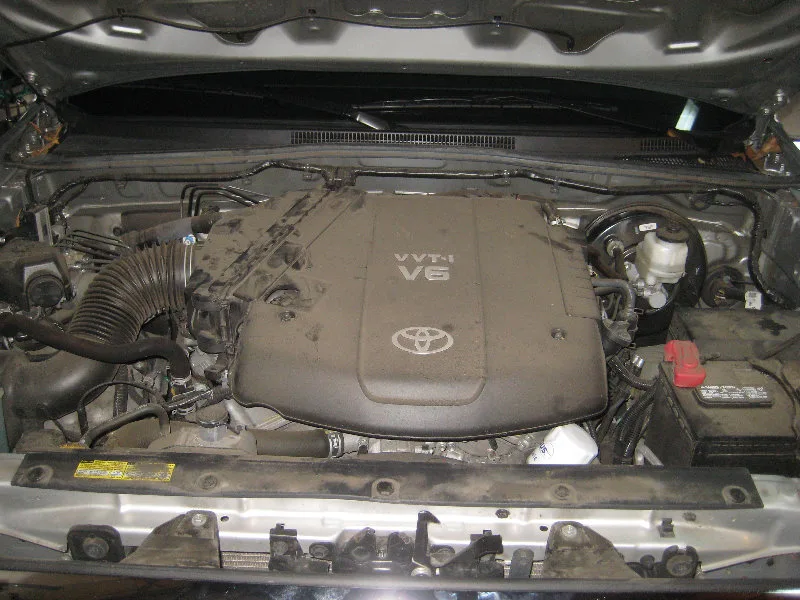
Image source: Web (Bing) / paulstravelpictures.com (Web image (fair-use with source credit))
Quick Answer
The 2015 Tacoma V6 takes exactly 6.3 quarts of oil with a filter change. Use 5W-30 viscosity. Choose API SN or higher grade.
That's it. Pour in 5.5 quarts first, check, then top off slowly. Never exceed the full mark on the dipstick.
Why Getting the Oil Capacity Wrong on a 2015 Tacoma V6 Can Cost You
This isn't a "close enough" kind of deal. The 1GR-FE engine has a specific oil pan design and a particular oil pump volume. Put in too little and you risk oil starvation during hard acceleration or on an incline.
Put in too much and the crankshaft whips the oil into a froth, which means the oil pump sucks air bubbles instead of a steady lubricant film.
Overfilling is actually more common than underfilling among DIY owners. People hear "6.3 quarts" and dump in the whole jug without checking. But most 5-quart jugs plus a 1-quart bottle equals 6 quarts total, not 6.3.
That missing 0.3 quart matters. The difference between the "full" and "low" marks on the dipstick is typically about one quart. Being a third of a quart over can push the oil level above the crankshaft windage area.
Here's what the aggregate mechanic feedback and owner reports show:
| Problem | Root Cause | Typical Result |
|---|---|---|
| Engine knock on cold start | Low oil level or wrong viscosity | Accelerated bearing wear |
| Oil consumption between changes | Overfilled or wrong grade | Fouled spark plugs, clogged PCV |
| Leaking valve cover gaskets | Oil aeration from overfill | Gasket failure, oil on exhaust manifold |
| Check engine light (P0012, P0016) | Low oil pressure from underfill | VVT actuator damage |
The repair bills for any of these easily hit four figures. Spending an extra 30 seconds checking the dipstick is cheap insurance.
What the Owner's Manual Actually Says (and What It Doesn't)
The factory owner's manual for the 2015 Tacoma states the oil capacity clearly. With filter replacement, it's 6.3 US quarts (6.0 liters). Without filter replacement, it's 6.0 quarts (5.7 liters).
The recommended oil is API certified SAE 5W-30.
But here's what the manual doesn't tell you. It doesn't mention that the 1GR-FE engine is sensitive to oil level reading technique. If you check the dipstick immediately after shutting off a hot engine, you'll get a falsely low reading because oil hasn't fully drained back into the pan.
The manual says "check after stopping the engine," but experienced Toyota technicians know you need to wait at least five minutes for an accurate read.
The manual also doesn't explain that "severe service" is the default for most Tacoma owners. Toyota defines severe service as:
- Driving on rough or muddy roads
- Repeated short trips under 5 miles
- Extensive idling
- Towing a trailer
- Driving in dusty conditions
If you take your Tacoma off-road, tow anything, or live in a city with stop-and-go traffic, you're in severe service territory. That means oil changes every 5,000 miles, not 7,500. Many owners don't realize this until they start seeing sludge buildup during valve cover removal.
For more context on how Toyota recommends oil spec choices across their lineup, you can look at the guidance for newer models like the 2024 Tacoma to see how things have evolved.
The Right Oil: Viscosity, API Grade, and Synthetic vs. Conventional
Let's break down exactly what to pour into that 6.3-quart capacity.
Viscosity: 5W-30 is the factory spec. Period. The 5W means the oil pumps well in cold weather down to about -20°F. The 30 means it holds its thickness at operating temperature.
Using 0W-30 in extreme cold climates is acceptable per some Toyota technical bulletins, but 5W-30 is the safe default.
API grade: SN or higher. As of 2026, that means SN Plus or SP. These grades include better protection against low-speed pre-ignition and timing chain wear. Do not use SL or older grades.
The API certification starburst symbol on the bottle guarantees the oil meets current standards.
Synthetic vs. conventional. Toyota doesn't mandate synthetic for the 1GR-FE. Conventional 5W-30 meets all factory requirements. But here's what aggregate reviews and mechanic feedback show:
- Conventional oil: fine for 5,000-mile intervals. Cheaper upfront.
- Synthetic blend: better for severe service. Good middle ground.
- Full synthetic: best for extended intervals and extreme temperatures. Helps reduce sludge in high-mileage engines.
The honest advice is this. If you change your oil every 5,000 miles with conventional oil, your engine will be fine. If you drive hard, tow, or live in extreme heat, spend the extra on synthetic.
The 1GR-FE doesn't burn oil when maintained properly, and good oil is the main reason.
Step-by-Step: How to Do the Oil Change the Right Way
Here's the procedure verified against the factory service manual and real-world shop practice. Follow this exactly and you'll nail that 6.3-quart capacity.
Tools and materials you'll need:
| Item | Spec |
|---|---|
| Oil | 6.3 quarts 5W-30 API SN+ or SP |
| Oil filter | Toyota 04152-38010 or equivalent |
| Crush washer | 14mm, replace every time |
| Drain pan | Minimum 8-quart capacity |
| Socket wrench | 14mm socket for drain plug |
| Torque wrench | For drain plug (29 ft-lbs) |
| Oil filter wrench | Cap-style for 1GR-FE |
| Jack and stands | Or ramps if you prefer |
The process:
Warm up the engine. Run it for 2-3 minutes. Warm oil drains faster and carries more suspended contaminants. Don't run it hot enough to burn yourself.
Get the truck level. If you use ramps, the front tilt means some oil stays in the pan. Jack stands at all four corners (or a level lift) give you the most accurate drain.
Remove the oil filler cap. This lets air in and helps the oil drain freely.
Drain the oil. Position your drain pan. Remove the 14mm drain plug with a socket. Let it drain for at least 5 minutes. The last few drips contain the heaviest contaminants.
Replace the crush washer. The old one is compressed and won't seal properly. Install the new one and torque the plug to 29 ft-lbs. Over-tightening strips the aluminum pan threads.
Remove the old oil filter. It's on the passenger side of the engine block, accessible from below. Use a cap wrench if it's tight. Let the residual oil drain. Lubricate the new filter's gasket with fresh oil.
Install the new oil filter. Thread it on by hand until the gasket contacts the sealing surface. Tighten another 3/4 turn by hand. Torque spec is 18 ft-lbs if you want to use a wrench, but hand-tight plus 3/4 turn is standard.
Add oil. Pour in 5.5 quarts first. That's a 5-quart jug plus half of a 1-quart bottle. Replace the filler cap.
Check for leaks. Start the engine and let it run for 30 seconds. Look under the truck at the drain plug and filter. Shut it off.
Wait five minutes. This is critical. The oil needs time to drain into the pan for an accurate reading.
Check the dipstick. Pull it, wipe it, insert it fully, pull it again. The level should be between the low and full marks. Add more oil in 0.2-quart increments until it reads full. The total will be around 6.3 quarts.
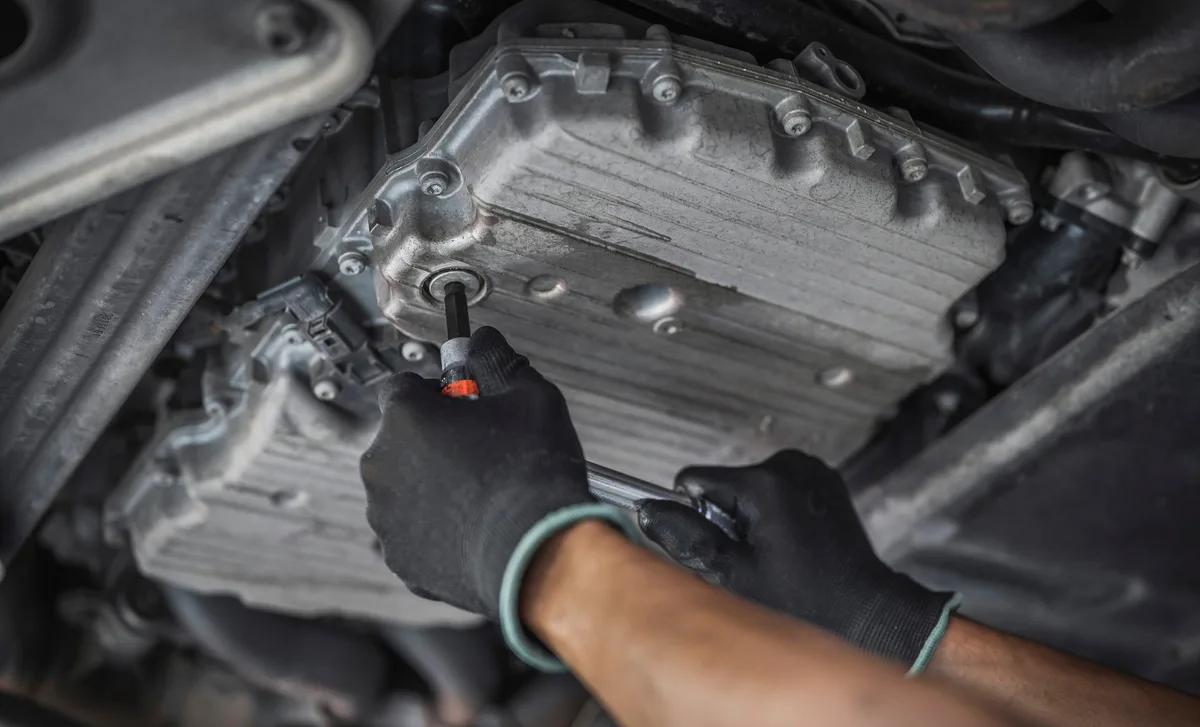
The drain plug and filter location on the 1GR-FE. Having a clear view of both before you start saves time and frustration.
One more thing. The 1GR-FE engine holds slightly different amounts depending on whether you drained hot or cold. Cold oil leaves more residue in the engine.
Hot oil drains more completely. If you drained hot, you'll get closer to the full 6.3 quarts. If you drained cold, you might only need 6.0 quarts.
Always trust the dipstick over the math.
Proper maintenance across your vehicle lineup matters. If you also drive a Toyota RAV4 or Camry, the same principles apply with different capacities.