
If you've ever stared at a bottle of 5W-20 wondering if it's the right call for your Camry, you're not alone. Getting the toyota camry oil capacity wrong by even half a quart can lead to rough idle, reduced fuel economy, or worse, internal engine damage that a warranty won't cover. The good news is it's a straightforward number once you know what to look for, and it doesn't change much between model years.
Manufacturer specifications show that most Camrys fall between 4.4 and 5.9 quarts depending on the engine under the hood. The vast majority of 2.5L four-cylinder models call for exactly 4.4 to 4.8 quarts of 0W-20 or 0W-16 synthetic oil as of 2026. V6 models step up to around 5.5 to 5.9 quarts.
That's a meaningful difference, and guessing wrong can cost you more than the price of an extra bottle.
Why Getting the Exact Oil Capacity Matters
Your Camry's engine is designed around a precise oil volume. Not "close enough." Not "a little extra for safety." The oil pan, pump, and bearing clearances are all engineered for a specific fill level.
Underfilling by a quart or more starves the oil pickup tube. That means less lubrication to the main bearings and connecting rods at highway speeds. Overfilling causes the crankshaft to whip the oil into foam.
Aerated oil doesn't lubricate nearly as well as liquid oil. Both scenarios shorten engine life.
Here's what's at stake:
- Oil starvation damages bearing surfaces. Once those soft metal layers wear through, you're looking at a bottom-end rebuild or a replacement engine.
- Foamed oil triggers false low-pressure warnings. That dashboard light might come on even when the pan is technically full.
- Excess oil pressure can blow out seals. Rear main seals and valve cover gaskets are common failure points on higher-mileage Camrys.
- Wrong viscosity combined with wrong capacity compounds the risk. Thicker oil at the wrong level means the pump works harder and delivers less volume.
The Camry's 2.5L four-cylinder (2AR-FE) alone has been in production for over a decade across multiple generations. The oil capacity didn't change, but the recommended viscosity did.
The Real Cost of a Wrong Oil Fill
A DIY oil change on a Camry runs about $25 to $40 using quality synthetic. That's the cost of five quarts plus a decent filter. A dealership charges $70 to $100 for the same job.
Now imagine you pour in four quarts when your 3.5L V6 actually needs six. You drive off. The low-oil light flickers at a stoplight.
You ignore it because the dipstick shows something on the end. By the time you hear engine knock, the damage is done. A used 2GR-FE engine from a salvage yard runs $2,500 to $3,500 before labor.
A blown head gasket from overfilling? That's a $1,500 repair minimum. A failed rear main seal?
Figure $800 to $1,200.
The real cost of getting the capacity wrong isn't the price of a quart of oil. It's the four-figure repair bill that follows.
Aggregate owner feedback across Camry forums and repair databases shows that overfilling by just one quart is the most common DIY mistake. The second most common is underfilling and assuming the dipstick reading is accurate without giving the oil time to drain into the pan.
Core Facts: What Your Camry Actually Needs by Year and Engine
4-Cylinder Engines (2.4L, 2.5L, and the Newer 2.5L Dynamic Force)
Most four-cylinder Camrys share a 4.4 to 4.8 quart capacity, but the filter change matters. Here's the breakdown:
- 2.4L 2AZ-FE (2002, 2011): 4.4 quarts with filter, 5W-20 or 0W-20. This engine is known for oil consumption on higher-mileage examples. Check the level every 1,000 miles.
- 2.5L 2AR-FE (2012, 2017): 4.4 quarts with filter, 0W-20 synthetic. Toyota switched to synthetic as standard on this generation. Do not use conventional oil.
- 2.5L Dynamic Force A25A-FKS (2018, 2025): 4.4 to 4.8 quarts with filter, 0W-16 or 0W-20. The 2018, 2020 models specify 0W-20. From 2021 onward, Toyota switched to 0W-16 for improved fuel economy. The AWD version takes 4.8 quarts.
V6 Engines (3.5L Across Generations)
The 3.5L V6 holds more oil, and the capacity varies slightly by generation:
- 3.5L 2GR-FE (2007, 2011): 5.5 quarts with filter, 5W-20 or 0W-20.
- 3.5L 2GR-FE (2012, 2017): 5.9 quarts with filter, 0W-20 synthetic.
- 3.5L 2GR-FKS (2018, 2024): 5.6 quarts with filter, 0W-20 synthetic. This engine uses D-4S injection, which has different oil dilution characteristics than older port-injection engines.
One important note: the V6 oil pan is deeper than the four-cylinder pan. If you're doing the change yourself, make sure your drain pan holds at least 7 quarts.
Hybrid Models (Same Engine, Different Details)
The Camry Hybrid uses the same 2.5L four-cylinder engine as the gas model, but the oil capacity is often listed slightly differently in the manual because of the electric motor integration:
- 2012, 2017 Camry Hybrid: 4.4 quarts with filter, 0W-20.
- 2018, 2025 Camry Hybrid: 4.4 to 4.5 quarts with filter, 0W-16.
Hybrid owners should know that the engine cycles on and off constantly. That means the oil never fully warms up on short trips. If you drive mostly city miles in a hybrid, consider changing oil at the shorter end of the interval, 5,000 miles instead of 10,000.
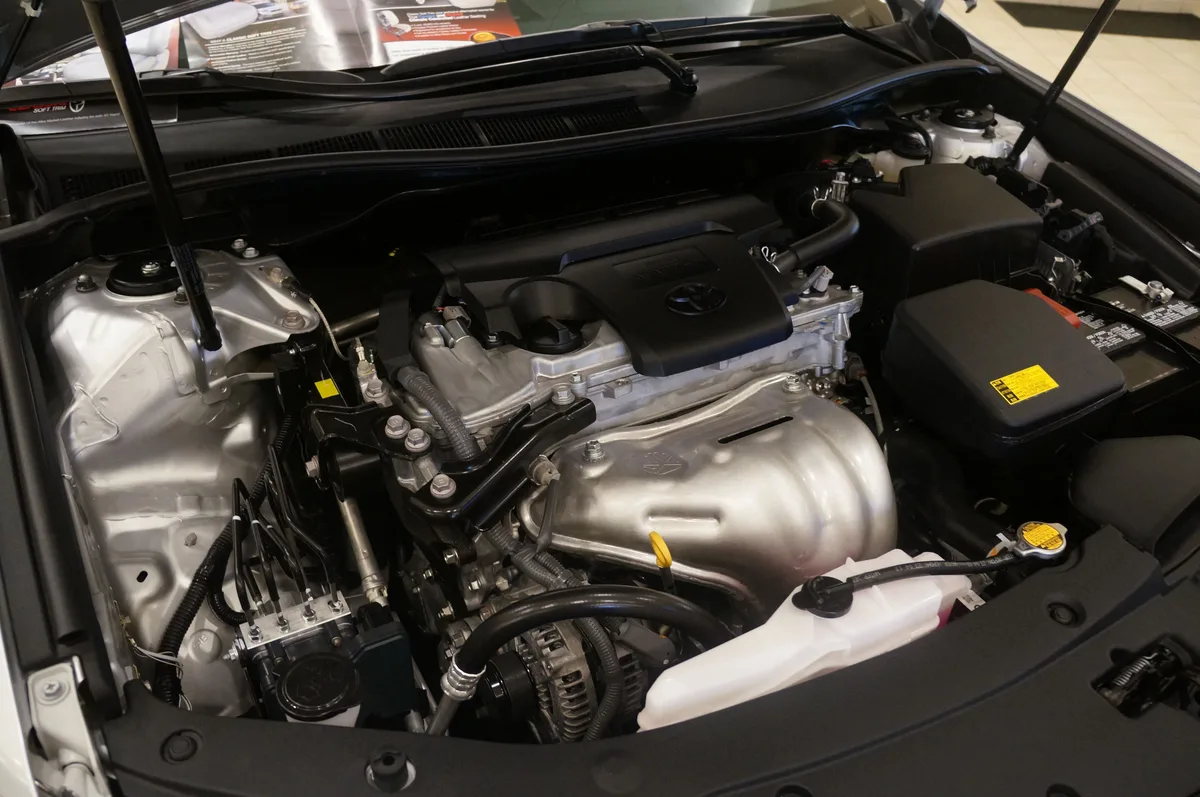
Image source: Bing (Web (fair-use with source credit))
How to Find Your Exact Capacity Without Guessing
You don't need to memorize capacity charts. You need two things: your model year and your engine code. Both are easy to find.
Step 1: Check the owner's manual. The oil capacity and viscosity are listed in the specifications section. If you don't have the physical manual, Toyota has PDF versions available on their official site for most models going back to the early 2000s.
Step 2: Look at the oil filler cap. Many Camrys have the recommended viscosity printed right on the cap. If it says 0W-20, use 0W-20. If it says 0W-16, don't substitute 5W-30 just because it's on sale.
Step 3: Verify your engine code. On most Camrys, the engine code is stamped on a flat metal pad on the front of the engine block. It'll look something like "2AR-FE" or "A25A-FKS." If you can't find it, the eighth character of your VIN tells you the engine type. Toyota's VIN decoder is freely available online.
Step 4: Cross-reference with a reliable source. This article gives you the common capacities. But if your Camry is a weird outlier, say, a 2003 model with the 1MZ-FE V6, double-check. That engine takes 5.1 quarts, not 5.5.
Step-by-Step: Filling Your Camry the Right Way
The Drain and Filter Swap
Start with a warm engine. Cold oil is thick and drains slowly. A five-minute drive warms it up enough to flow freely without burning you.
- Put the car on level ground. Jack stands or ramps are safer than a floor jack alone.
- Remove the oil fill cap before you drain. It helps the oil flow faster.
- Slide your drain pan under the engine. The drain plug is on the passenger side of the pan for most Camrys.
- Use a 14mm socket for most Camrys. Some 2018+ models use a 15mm plug. If it feels tight, stop and verify the size. Stripping this plug is a nightmare.
- Let the oil drain for at least five minutes. Ten is better. You want every drop out.
- Change the filter. Most Camrys use a cartridge-style filter in a plastic housing. The housing cap requires a special socket tool. The torque spec is 18 foot-pounds. Hand-tight plus a quarter turn is fine if you don't have a torque wrench, but don't overtighten. A cracked housing leaks badly.
Adding Oil: The Slow Pour Method
This is where people mess up. They pour all five quarts in at once and then discover it's overfilled.
- Pour in the first 80% of the expected capacity. For a 4.4-quart engine, that's about 3.5 quarts.
- Wait two minutes for the oil to settle into the pan.
- Check the dipstick. Wipe it clean, insert it fully, pull it out, and read the level.
- Add the remaining oil in half-quart increments. Check after each addition.
- Stop when the level reaches the upper dot or crosshatch mark. Do not fill to the top of the dipstick. That's overfilled.
The Dipstick Read: Hot vs. Cold
Reading the dipstick correctly is a skill most people skip. Here's the trick:
- Cold reading: The oil level should be somewhere between the low and high marks. If it's at the low mark when cold, you're about a quart low.
- Hot reading: After running the engine for a few minutes, shut it off, wait two minutes, then read. The level should be at the full mark or just below.
- The foolproof method: Check cold, add to the middle of the range. Run the engine for two minutes. Shut off. Check hot. Adjust as needed.
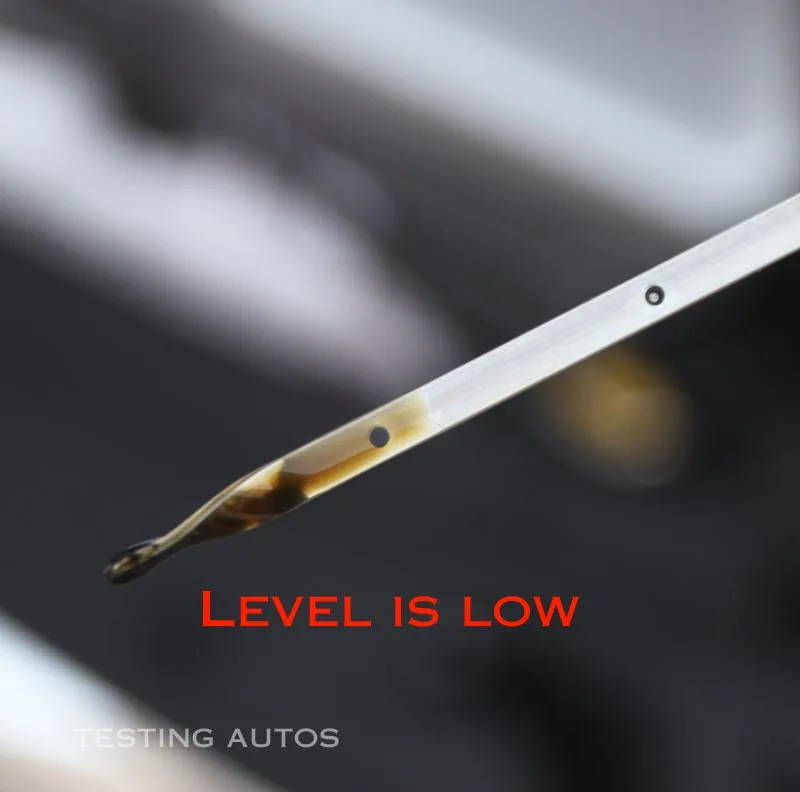
Image source: Web (Bing) / storage.googleapis.com (Web image (fair-use with source credit))
Common Mistakes DIYers Make (and How to Avoid Them)
Overfilling, Underfilling, and the "Just Top It Off" Trap
The most common mistake is adding oil without draining. You top off half a quart because the dipstick looks low. Next oil change, you drain the old oil and pour in the full spec amount.
Now you're half a quart over.
Always drain before adding. If you're not sure how much came out, measure it. A five-quart jug with markings on the side is your best friend.
Stripped Drain Plugs, Wrong Crush Washers, and Filter Fails
The drain plug crush washer is a one-time-use part. It's a thin copper or aluminum ring that deforms when you tighten the plug, creating a seal. Reusing it means a slow leak.
Over time, that leak loses you a quart between changes.
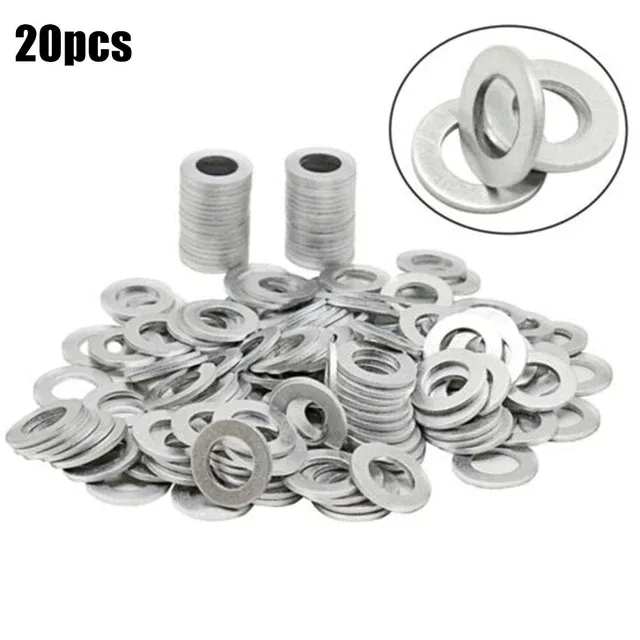
Image source: Web (Bing) / picclick.com.au (Web image (fair-use with source credit))
Stripping the drain plug thread is permanent. The Camry's oil pan is aluminum. It's soft.
If you crank the plug to 50 foot-pounds because "tight is tight," you'll strip it. The spec is 30 to 35 foot-pounds. Use a torque wrench.
The cartridge-style filter housing cracks if overtightened. A crack on the housing costs about $40 to replace. A crack on the engine-side fitting is a full oil pan replacement.
Oil Viscosity: Why the Right Weight Matters as Much as the Right Amount
The number on the oil bottle, 5W-20, 0W-20, 0W-16, is the viscosity rating. The "W" stands for winter, not weight. The first number is the cold-flow rating.
The second number is the operating temperature rating.
Here's why it matters on a Camry:
- 5W-20: Specified for older 2AZ-FE and 2GR-FE engines. It flows well at cold start but thickens slightly at operating temperature. Fine for warmer climates. Marginal in subzero cold.
- 0W-20: The standard for 2012, 2020 Camrys. Thinner at cold start than 5W-20, which means faster oil circulation on a freezing morning. It also improves fuel economy by about 1 to 2 percent.
- 0W-16: Toyota introduced this for 2021+ models. It's even thinner than 0W-20. Using 0W-20 in an engine designed for 0W-16 won't destroy it, but fuel economy drops slightly and the oil pump works harder.
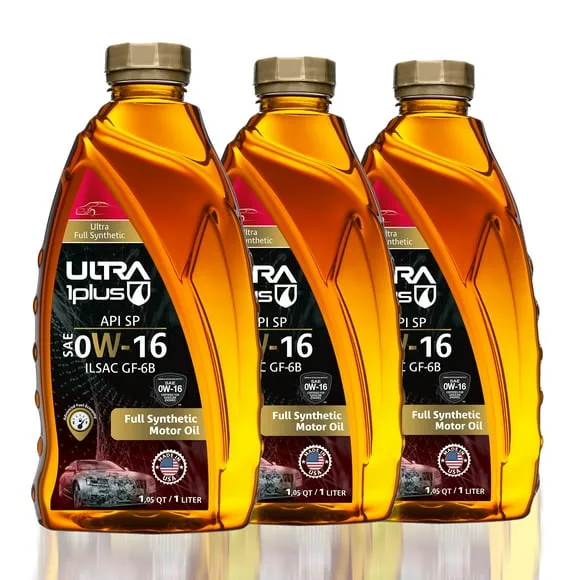
Image source: Web (Bing) / walmart.com (Web image (fair-use with source credit))
The API certification is just as important as the viscosity. Look for the API "SN Plus" or "SP" starburst on the bottle. These ratings include protection against low-speed pre-ignition (LSPI), which is a concern on direct-injection engines like the 2GR-FKS and A25A-FKS.
If you use an older API rating, you lose that protection.
When to Trust the Owner's Manual vs. Online Advice
The owner's manual is always the final authority. It was written by the engineers who designed your engine. Online forums, YouTube videos, and even well-meaning blog posts can't override what Toyota published for your specific VIN.
That said, the manual isn't perfect. Toyota occasionally revises oil recommendations after release. A Technical Service Bulletin (TSB) might supersede the original manual.
For example, the 2AZ-FE engine originally specified 5W-20, but later TSBs approved 0W-20 for better cold-start protection.
Here's how to make the right call:
- The manual wins for capacity. If it says 4.4 quarts, use 4.4 quarts. No forum post changes that.
- The filler cap wins for viscosity. If the cap says 0W-16, that's what Toyota wants in the engine. The manual might list alternatives, but the cap is the most recent directive.
- TSBs override both. If Toyota issued a bulletin updating the oil spec, the TSB is the latest engineering guidance. Search "Toyota TSB [your model year] oil viscosity" to check.
- Forums are great for real-world feedback, not specs. You'll find useful tips about drain plug torque and filter brands. But if someone says "I've been running 10W-30 for 100,000 miles with no issues," that's anecdotal, not authoritative.
When in doubt, use the Toyota Parts website to look up the exact oil and filter for your VIN. That's the same database dealers use.
Signs You Got It Wrong: Low Oil Pressure, Knocks, and Leaks
Your Camry will tell you if the oil level or viscosity is wrong. The trick is knowing what to listen for.
Low oil pressure warning light. This is the most obvious sign. If the light flickers at idle or comes on during hard cornering, you're likely low on oil. Shut the engine off and check the dipstick immediately.
Do not drive until you verify the level.
Engine knocking or ticking. A rhythmic tap from the top of the engine, especially on cold start, often means the hydraulic lifters aren't getting enough oil. This is common on higher-mileage 2AZ-FE engines when the oil level drops below the pickup tube. It's also a symptom of using oil that's too thick for cold starts.
Oil leaks around the valve cover or oil pan. Overfilling pressurizes the crankcase. That pressure pushes oil past gaskets and seals. A small leak might start as a drip on your driveway.
Over time, it can turn into a quart-loss-per-week problem.
Blue smoke from the exhaust. This means oil is burning in the combustion chamber. It can happen from overfilling, which forces oil past the piston rings. It can also happen from using the wrong viscosity, which allows oil to slip past valve stem seals.
Rough idle or stalling. Excess oil on the crankshaft creates drag. The engine struggles to maintain idle speed. This is rare but has been documented on Camrys overfilled by two or more quarts.
If you notice any of these symptoms after an oil change, drain the oil, measure it, and refill to the correct level. A 15-minute fix now beats a $3,000 engine replacement later.
Quick Reference Table: Camry Oil Capacities by Generation
Here's a clean look at what most common Camry configurations need. Use this as a starting point, but always verify with your owner's manual.
| Model Years | Engine | Oil Capacity (with filter) | Recommended Viscosity |
|---|---|---|---|
| 2002–2006 | 2.4L 2AZ-FE | 4.4 quarts | 5W-20 or 0W-20 |
| 2007–2011 | 2.4L 2AZ-FE | 4.4 quarts | 5W-20 or 0W-20 |
| 2007–2011 | 3.5L 2GR-FE | 5.5 quarts | 5W-20 or 0W-20 |
| 2012–2017 | 2.5L 2AR-FE | 4.4 quarts | 0W-20 synthetic |
| 2012–2017 | 3.5L 2GR-FE | 5.9 quarts | 0W-20 synthetic |
| 2018–2020 | 2.5L A25A-FKS | 4.4 quarts | 0W-20 synthetic |
| 2018–2020 | 3.5L 2GR-FKS | 5.6 quarts | 0W-20 synthetic |
| 2021–2025 | 2.5L A25A-FKS | 4.4 quarts | 0W-16 synthetic |
| 2021–2024 | 3.5L 2GR-FKS | 5.6 quarts | 0W-20 synthetic |
| 2025+ | 2.5L Hybrid Max | 4.5 quarts | 0W-16 synthetic |
One note on the filter: changing the filter absorbs about 0.2 to 0.3 quarts of oil. If you're only adding the "dry fill" capacity listed above without accounting for a new filter, you'll end up slightly low. Always add the filter-change capacity.
The Bottom Line on Camry Oil Capacity
Your Camry's oil capacity isn't a mystery. It's a specific number tied to your engine code and model year. Getting it right takes two minutes of research and prevents thousands of dollars in potential damage.
Here's a quick checklist to keep handy:
- Confirm your engine code using the VIN or block stamping.
- Verify the capacity in your owner's manual or a reliable source.
- Use the viscosity printed on your oil filler cap. If in doubt, 0W-20 works for most 2012+ models.
- Drain completely, measure, and fill slowly. Check the dipstick after every quart after the first three.
- Replace the crush washer and torque the drain plug to spec. A small leak wastes oil and money.
- If you're unsure, ask a Toyota dealer parts counter. They'll pull up your VIN and tell you exactly what it needs.
The Camry is one of the most reliable sedans on the road. Keeping the oil at the right level and weight is the single most effective way to keep it that way for another 100,000 miles. Don't overthink it.
Just get the spec right, use good oil, and change it on time. That's the whole secret.