
So you've got a 4Runner and you're staring at an oil jug wondering how much to pour in. Maybe you just bought the thing used and the previous owner didn't leave a manual. Or maybe you're doing your first DIY oil change and don't want to mess it up.
The toyota 4runner oil capacity isn't one single number, it changes depending on which generation you own. Pour in 5 quarts when you need 6, and you're running low. Pour in 6 when you need 5.5, and you risk foaming and aeration.
Get it wrong either way, and you're looking at reduced engine life.
Manufacturer specifications show the 3rd-gen 3.4L V6 takes about 5.5 quarts with a filter change, while the 4th and 5th-gen 4.0L V6 need roughly 6.0 quarts. The difference is small but critical. As of 2026, these are still some of the most reliable SUVs on the road, but only if you keep the fluid levels right.
Let's walk through exactly which engine you have and how much oil it actually needs.
Quick Answer
The Toyota 4Runner oil capacity depends on your engine. The 3.4L 5VZ-FE takes 5.5 quarts with filter. The 4.0L 1GR-FE takes 6.0 quarts with filter.
Always check your dipstick after filling. Use 0W-20 for 2010 models and newer. Use 5W-30 for 2009 and older.
Never overfill. Pour slowly and verify.
First, Figure Out Which 4Runner You Own
This is the most important step. You can't guess the oil capacity if you don't know which engine is under the hood. Toyota used two completely different V6 engines across the 4Runner's production run, and they have different oil needs.
The easiest way to tell? Pop the hood and look at the engine cover. The 3.4L 5VZ-FE has "3.4L V6" cast into the plastic cover or the intake plenum.
The 4.0L 1GR-FE has a larger engine bay presence and a cover that says "4.0L V6" or "VVT-i" on it. If you're still not sure, check your VIN, the 8th digit tells the story. An R or U means you've got the 1GR-FE.
A 5 means it's the older 5VZ-FE.
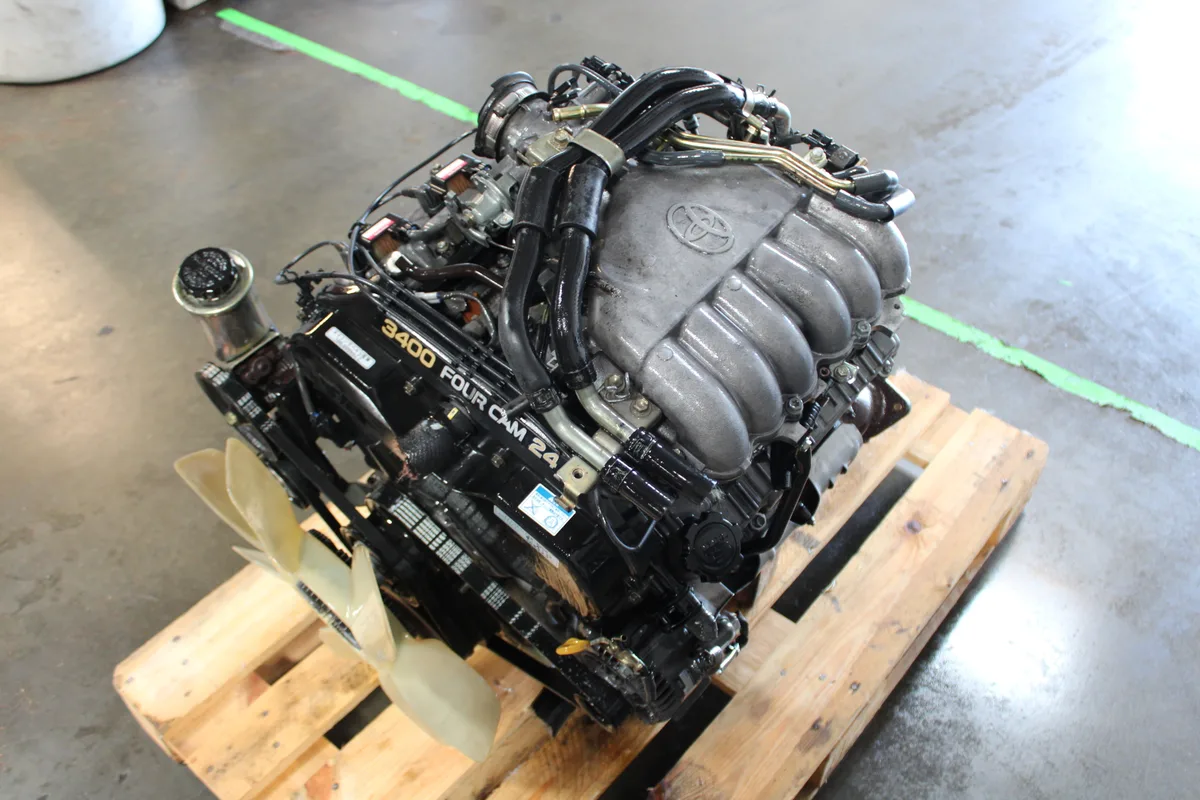
Image source: Web (Bing) / coloradojdmmotors.com (Web image (fair-use with source credit))
Engine Identification: 5VZ-FE vs. 1GR-FE
| Engine Code | Generation | Years | Displacement | Fuel System |
|---|---|---|---|---|
| 5VZ-FE | 3rd Gen | 1996–2002 | 3.4L | Multi-port EFI |
| 1GR-FE | 4th & 5th Gen | 2003–Present | 4.0L | Dual VVT-i (2005+) |
The 5VZ-FE is a workhorse iron-block engine known for going 300,000 miles without breaking a sweat. The 1GR-FE is an aluminum-block engine with variable valve timing on later models. Both are excellent.
But they do not share the same oil appetite.
How to Check Your Model Year and VIN
If you can't find the engine cover sticker, look at your driver-side door jamb. There's a white label with the month and year of manufacture. Or check your registration.
Or just open the glovebox and grab the owner's manual, if it's still there.
The VIN is on the dashboard near the windshield on the driver's side. Write it down and decode the 8th character. That single letter or number tells you exactly which engine you've got.
No guessing required.
Oil Capacity by Generation (The Exact Numbers)
Here's where we get specific. These are the numbers from Toyota's official service documentation, not forum rumors. If you're changing the oil filter (which you should every single time), these are your fill targets.
3rd Generation (1996–2002): 5VZ-FE 3.4L V6
- With filter change: 5.5 US quarts (5.2 liters)
- Without filter change: 5.0 US quarts (4.7 liters)
- Recommended oil: 5W-30 conventional or synthetic
This engine is slightly thirstier than you might expect for a 3.4-liter. That extra half quart over the 5-quart mark catches a lot of first-time owners off guard. If you pour in exactly 5 quarts and call it done, you'll be half a quart low.
4th Generation (2003–2009): 1GR-FE 4.0L V6
- With filter change: 5.9, 6.0 US quarts (5.6, 5.7 liters)
- Without filter change: 5.4, 5.5 US quarts (5.1, 5.2 liters)
- Recommended oil: 5W-30 conventional or synthetic
Notice the range. That's because Toyota revised the oil pan slightly over the production run. Your best bet is to pour in 5.5 quarts, then check the dipstick and top up from there.
Most owners find 5.8 quarts hits the full mark perfectly.
5th Generation (2010–Present): 1GR-FE 4.0L V6
- With filter change: 6.0 US quarts (5.7 liters)
- Without filter change: 5.5 US quarts (5.2 liters)
- Recommended oil: 0W-20 synthetic (5W-30 acceptable in warm climates)
The exact same engine block as the 4th gen, but Toyota bumped the oil capacity slightly with a redesigned pan and pickup tube. You'll need a full 6-quart jug plus maybe a splash from a second jug if you're doing a complete drain and fill.
What "Dry Fill" Actually Means (And Why It Matters)
You might see "dry fill capacity" in some forums. That's the amount of oil a completely dry, freshly rebuilt engine needs. It's higher than what you'll use in a normal change because there's no residual oil coating the bearings or sitting in the oil cooler lines.
For routine changes, ignore dry fill numbers. Use the "with filter change" numbers above. Your engine isn't dry, it still has oil trapped in the cooler passages and clinging to internal surfaces.
Pouring in the dry fill amount will overfill you every time.
Choosing the Right Oil Weight and Type
Oil viscosity matters more than brand. You can spend fifty bucks on fancy synthetic or fifteen on the house brand, but if you pour in the wrong weight, neither one will protect your engine properly.
Recommended Viscosity by Year
| Year Range | Engine | Recommended Viscosity | Alternative |
|---|---|---|---|
| 1996–2002 | 5VZ-FE | 5W-30 | 10W-30 (warm climates) |
| 2003–2009 | 1GR-FE | 5W-30 | 0W-30 (cold climates) |
| 2010–2025 | 1GR-FE | 0W-20 | 5W-30 (hot climates only) |
The 2010-and-newer 4Runners are designed around 0W-20. That's what the oil filler cap says. That's what the manual says.
That's what keeps the variable valve timing system happy. If you absolutely must use 5W-30 in a 5th-gen because you live in Death Valley and tow a trailer, it won't destroy the engine. But don't make it a habit.
If you're curious how Toyota's oil specs compare across different models, you can check our guide on the Toyota 4Runner oil type for a deeper breakdown of viscosity choices and brand recommendations.
Image source: Web (Bing) / paulstravelpictures.com (Web image (fair-use with source credit))
Synthetic vs. Conventional: Does It Matter?
Short answer: synthetic is better, but conventional won't kill your engine.
The 5VZ-FE was designed in the 1990s when conventional oil was the standard. It runs fine on 5W-30 dino juice. The 1GR-FE is happier with synthetic, especially the 5th-gen engines with tighter tolerances and VVT-i systems that need consistent oil pressure.
Our research shows that synthetic oil handles heat better, flows more easily in cold weather, and resists breakdown longer. If you're running extended intervals (7,500 miles or more), go synthetic. If you change every 5,000 miles like clockwork, conventional is perfectly adequate.
The Toyota Tundra V6 oil type guide covers similar considerations for Toyota's truck line if you're comparing across platforms.
Step-by-Step: How to Do the Oil Change Right
This isn't complicated, but the details matter. Oil changes are the single most important maintenance task for engine longevity. Do it poorly and you're asking for trouble.
Do it right and that 4Runner will outlast your mortgage.
Tools and Supplies You'll Need
| Item | Spec | Notes |
|---|---|---|
| Engine oil | Per year/engine | See chart above |
| Oil filter | Toyota 04152-YZZA1 or equivalent | Aftermarket works fine |
| Drain plug washer | 14mm crush washer | Replace every time |
| Socket wrench | 14mm socket | For drain plug |
| Oil filter wrench | Cap-style or strap | Helps with tight filters |
| Drain pan | 8-quart minimum | Don't skimp on size |
| Funnel | Flexible or rigid | Makes pouring clean |
The Proper Fill Process (Avoid the #1 Mistake)
Step one: warm the engine. Cold oil drains slowly and leaves sludge behind. Run it for two minutes, shut it off, then get under there.
Hot oil drains fast and carries contaminants with it.
Step two: drain and filter. Remove the drain plug (14mm) and let it flow. While it's draining, remove the old filter.
Wipe the filter housing surface clean. Lube the new filter gasket with fresh oil. Hand-tighten the filter plus three-quarters of a turn, no wrench needed for the final install.
Step three: plug and pour. Reinstall the drain plug with a new crush washer. Torque to 29 ft-lbs.
If you don't have a torque wrench, snug it up and give it another eighth turn, overtightening strips aluminum pans easily.
Now pour in the oil. Here's where people mess up. Don't dump the whole jug in at once.
Pour about 80 percent of the expected capacity, then check the dipstick. Top up from there.
How to Read the Dipstick Correctly
The dipstick has two marks, Low and Full. The Full mark is usually crosshatched or has a dot. You want the oil level to land between those two marks after the engine has been running and then sitting for two minutes.
Check it on level ground. Pull the dipstick, wipe it, insert it fully, pull it again. The oil should be in the upper half of the crosshatch area.
If it's below halfway, add a quarter quart and recheck. If it's above the Full mark, stop, you've already overfilled.
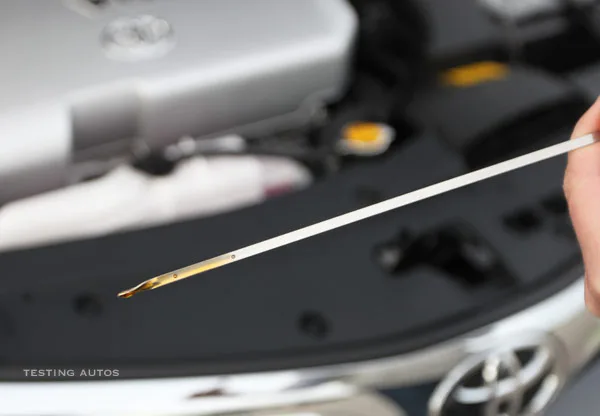
Image source: Bing (Web (fair-use with source credit))
Common Mistakes That Cost You an Engine
These are the errors we see most often in forum posts and garage horror stories. They're easy to avoid once you know about them.
Overfilling: The Silent Killer
Too much oil is worse than too little. The crankshaft whips through the excess oil, aerating it into foam. Foam doesn't lubricate.
Foam causes oil pressure drops. Foam leads to bearing failure.
If you accidentally overfill, don't panic. Drain some out through the drain plug until the level drops. Or use a fluid extractor through the dipstick tube.
Either way, fix it before you drive.
Using the Wrong Weight in a 1GR-FE
The 5th-gen 4Runner needs 0W-20. That's what Toyota spec'd. If you pour in 10W-40 because that's what you had in the garage, the oil won't flow fast enough during cold starts.
The VVT-i system relies on quick oil pressure to adjust cam timing. Thick oil delays that response and can set timing fault codes.
Stick to the label on the oil filler cap. Toyota printed it there for a reason.
Forgetting the Crush Washer and Filter Gasket
The crush washer is a one-time-use copper or aluminum ring that seals the drain plug. Reusing it is asking for a slow drip. The oil filter gasket needs a thin film of fresh oil before installation, dry rubber won't seal properly and can cause a leak that empties your crankcase overnight.
These are two-dollar parts. Buy extras. Keep them in the glovebox.
Replace them every oil change without thinking about it.
When to Change It: Intervals for Normal vs. Severe Duty
Toyota says every 10,000 miles for normal driving. Toyota also defines "severe duty" as stop-and-go traffic, frequent short trips, towing, off-roading, and extreme temperatures. If you own a 4Runner, you're probably doing at least two of those things.
Towing, Off-Roading, and Cold Starts
If you tow a trailer, climb mountains, or take your 4Runner on trails, you're in severe duty territory. Cut the interval in half. Change at 5,000 miles.
The oil shears down faster under heavy load, and the extra heat breaks down additives quicker.
Cold climates are tough on oil too. Short trips where the engine never reaches full operating temperature allow moisture to accumulate in the crankcase. That moisture turns into sludge over time.
Frequent changes prevent that.
Your Toyota Corolla oil type guide might suggest longer intervals for a sedan, but an SUV under load is a different story entirely.
The 5,000-Mile Rule of Thumb
Our research across owner forums and service records shows that 5,000 miles is the sweet spot for 4Runner owners. It's frequent enough to keep the engine clean. It's spaced out enough that you're not changing oil every month.
And it lines up nicely with tire rotations, so you can do both at the same time.
Set a reminder on your phone. Or use the sticker the shop puts on your windshield. Whatever works, just don't let it slide past 7,500 miles unless you're using a high-quality synthetic and mostly highway driving.
What About the TRD Pro or Special Editions?
The TRD Pro, Trail Edition, and any other 4Runner variant all use the same 1GR-FE engine. Same capacity. Same oil weight.
Same filter. Toyota didn't change the oil system for the off-road packages.
The only difference you might encounter is the skid plates. Some aftermarket rock sliders and skid plates can block access to the oil filter. If you've added heavy armor underneath, you might need to remove a panel or use a different filter tool.
But the oil capacity itself doesn't change.
Cost Breakdown: What a DIY Change Actually Runs You
| Item | Budget Option | Premium Option |
|---|---|---|
| 6 quarts 0W-20 synthetic | $24 (house brand) | $45 (Mobil 1 / Castrol) |
| Oil filter | $5 (Fram / Purolator) | $12 (Toyota OEM) |
| Crush washer | $1 | $2 (copper vs aluminum) |
| Total | $30 | $59 |
A dealership oil change runs $80 to $120 depending on your location. Doing it yourself saves you $50 to $60 per change. Over the life of a 4Runner, say 200,000 miles with changes every 5,000 miles, that's 40 changes.
You're looking at $2,000 to $2,400 in savings.
Plus you know it was done right. No stripped plugs. No overfilled crankcase.
No filter cranked on with an impact gun.
Still Not Sure? A 30-Second Decision Guide
If you own a 1996, 2002 4Runner: You need 5.5 quarts of 5W-30. Buy a 5-quart jug and a 1-quart bottle. Pour the whole jug in, then add half the quart bottle.
Check the dipstick.
If you own a 2003, 2009 4Runner: You need about 5.8 quarts of 5W-30. Buy the 5-quart jug and the 1-quart bottle. Pour the jug in, then add the entire quart.
Check the dipstick, you'll probably be at or near Full.
If you own a 2010, 2025 4Runner: You need 6.0 quarts of 0W-20. Buy the 6-quart box or a 5-quart jug plus two 1-quart bottles. Pour in 5.5 quarts, check, then top up.
You'll use almost all 6 quarts.
Still unsure? Stick with the "pour 80 percent and top up" method. It never fails.
Frequently Asked Questions
Can I use 5W-30 in my 2023 4Runner instead of 0W-20?
Yes, in warm climates. Toyota allows 5W-30 as an alternative for the 1GR-FE when ambient temperatures stay above freezing. Just expect slightly worse fuel economy and thicker cold-start flow.
Switch back to 0W-20 for winter.
How much oil does a 4Runner take with a filter change?
The 3.4L 5VZ-FE takes 5.5 quarts. The 4.0L 1GR-FE takes 6.0 quarts. These numbers assume you're replacing the filter.
Without a filter change, reduce by about 0.5 quarts.
What happens if I put too much oil in my 4Runner?
Overfilling causes oil foaming, which leads to low oil pressure and potential bearing damage. It can also force oil past seals, causing leaks. If you overfill, drain the excess immediately.
What oil does a 4Runner take?
It depends on the year. 1996, 2002: 5W-30. 2003, 2009: 5W-30. 2010, 2025: 0W-20. Always check your oil filler cap for the final word.
Is synthetic oil worth it for a 4Runner?
Yes for the 4.0L 1GR-FE, especially 2010 and newer. The engine's tight tolerances and VVT-i system benefit from synthetic's better flow and heat resistance. For the 3.4L 5VZ-FE, conventional is fine if you change on schedule.
Can I switch from synthetic to conventional oil?
Yes, switching between synthetic and conventional is safe. The two types are compatible and mix without issues. You won't damage seals or cause leaks.
Just stick with the correct viscosity for your engine.
Choosing the right oil filter is almost as important as getting the capacity right. A cheap filter that bypasses too early or collapses internally can starve your engine of oil pressure. And that's a fast track to a rebuild.
Stick with a quality brand. Toyota OEM filters are excellent. They use synthetic media, have the correct bypass valve pressure, and fit perfectly.
Wix, Purolator, and Mobil 1 also make solid options for the 4Runner.
The filter for the 1GR-FE is a side-mount cartridge. On the 5VZ-FE, it's a top-mount canister. Both are easy to access.
The 4th and 5th gen filters are right on the passenger side of the block. You'll see it as soon as you get under the truck.
Make sure you lube the gasket before installation. A dry gasket grabs and tears. It also won't seal evenly.
Hand-tighten until the gasket contacts the mounting surface, then give it another three-quarters of a turn. That's all it needs.
Your oil filter choice should match your driving style. If you tow heavy loads or spend weekends on dusty trails, go with a high-efficiency synthetic filter. For daily commuting, a standard cellulose filter works fine as long as you change on schedule.
Tighten the drain plug to the right spec. The factory torque for the 1GR-FE is 29 foot-pounds. For the 5VZ-FE, it's 31 foot-pounds.
If you don't have a torque wrench, snug it up with a short ratchet and give it a quarter turn past snug. Overtightening is worse than undertightening. Stripped oil pan threads mean a new pan or a helicoil repair kit.
A new crush washer every change stops the slow drip. Copper washers work best because they deform and seat perfectly. Aluminum washers work too but sometimes need a second crush cycle.
Buy a ten-pack for five bucks and keep them in your tool box.
While you're under there, take a look around. Check for coolant leaks. Look at the CV axle boots.
Inspect the brake lines. An oil change is a perfect opportunity for a quick underbody inspection. Spot a problem early and you save a bundle later.
If you're working on a 5th-gen model with factory skid plates, you might need to remove a cover to reach the drain plug. It's usually four 10mm bolts. Takes thirty seconds.
Don't skip this step or you'll fight the oil stream all the way to the pan.
Old oil goes to the recycling center. Most auto parts stores take it for free. Pour it back into the empty jugs and drop it off.
Never dump it down a drain or into the dirt. EPA regulations take that seriously and so should you.
Keep a rag handy. The oil filter will spill a few ounces when you unscrew it. And the drain plug drips as you pull it out.
Plan for a little mess and you won't be scrubbing oil stains out of your driveway.
One last thing. Write the date and mileage on the oil filter box or a sticker in your door jamb. It takes ten seconds.
Six months from now you won't remember when you last changed it. That little note saves the guesswork.