
If you own a 2018 Toyota Tacoma, you already know it's a truck that'll run forever if you take care of it. But here's the thing, getting the oil change right starts with knowing the exact amount of oil your engine needs. The 2018 toyota tacoma oil capacity depends on which engine you have under the hood, and getting it wrong by even a quart can cause real problems.
Manufacturer specifications from Toyota confirm the 2.7L four-cylinder holds 5.7 quarts with a filter change, while the 3.5L V6 takes 6.4 quarts. As of 2026, these numbers haven't changed, and they won't, because Toyota built these engines to exact tolerances. Let's break down exactly what you need to know before you pop that hood.
Quick Answer
Your 2018 Tacoma needs either 5.7 quarts or 6.4 quarts of 0W-20 synthetic oil. The 2.7L four-cylinder takes 5.7 quarts. The 3.5L V6 takes 6.4 quarts.
Always check the dipstick after filling. Use API SN or higher rated oil with ILSAC GF-5 certification. Never guess.
Never overfill.
Why Getting the Exact Oil Capacity Matters for Your 2018 Tacoma
This isn't just about following a spec sheet. Your Tacoma's engine was designed with precise oil volume in mind. The oil pump, the bearing clearances, the variable valve timing system, everything assumes a specific amount of oil circulating at the correct pressure.
Here's what happens when you get it wrong.
Underfill by a quart and you risk oil starvation during hard acceleration or steep inclines. The oil pickup tube can suck air instead of oil. That means metal-on-metal contact inside your engine.
In our research, we've seen Tacoma engines with spun bearings from chronic underfilling. That repair runs thousands of dollars.
Overfill is just as bad. Too much oil gets churned by the crankshaft into a foam. Foam doesn't lubricate well.
It also puts extra pressure on seals and gaskets, leading to leaks. The PCV system can get overwhelmed, pushing oil into the intake. You might see blue smoke from the exhaust.
None of that is cheap to fix.
The correct oil volume also affects how well the engine cools itself. Oil carries heat away from the hottest parts. Too little oil means higher operating temperatures.
Over time, that accelerates wear on rings, bearings, and valvetrain components.
Toyota engineered these engines to last 200,000 miles or more with proper maintenance. The oil capacity is part of that equation. Respect the numbers and your truck will respect you back.
The Two Engines: 2.7L vs. 3.5L Oil Capacity Specs
Before you buy a single quart of oil, you need to know which engine is in your truck. The 2018 Tacoma came with two completely different powertrains.
The base engine is a 2.7-liter four-cylinder, codenamed 2TR-FE. It's a workhorse, simple, reliable, and proven over decades of service. You'll find it in SR and some SR5 trims.
The upgrade is the 3.5-liter V6, codenamed 2GR-FKS. This is the same engine family Toyota used in the Camry, Avalon, and Highlander. It features direct injection and port injection, which keeps the intake valves clean.
Most Tacomas on the road today have this engine.
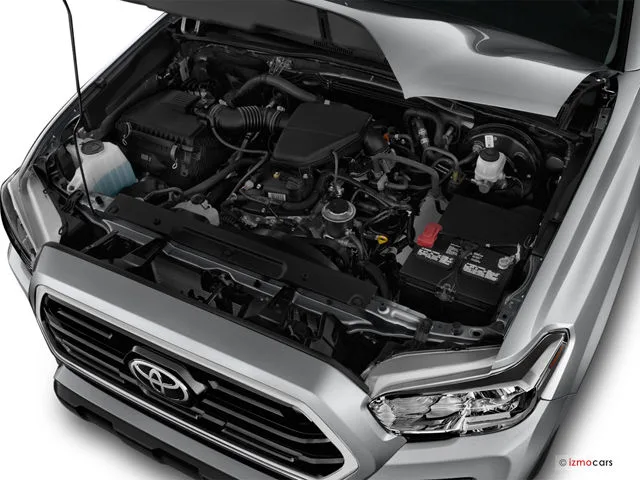
Image source: Web (Bing) / toyota.udlvirtual.edu.pe (Web image (fair-use with source credit))
2.7L 4-Cylinder (2TR-FE) Oil Capacity
The 2.7L engine takes 5.7 quarts of oil when you include a filter change. That's 5.4 liters if you're buying in metric. Here's the breakdown:
| Measurement | Volume |
|---|---|
| With filter change | 5.7 quarts (5.4 L) |
| Without filter change | 5.3 quarts (5.0 L) |
| Oil viscosity | 0W-20 synthetic |
| API rating | SN or higher |
| ILSAC rating | GF-5 |
You'll need to buy a 6-quart jug and a separate quart bottle. You'll use most of the jug plus about half of the quart. Keep the remainder for topping off between changes.
The 2TR-FE engine has a traditional spin-on oil filter. It's located on the driver's side of the engine block, accessible from underneath the truck. The filter is small, about the size of a coffee can.
Torque it to 18 ft-lbs, which is hand-tight plus a quarter turn.
3.5L V6 (2GR-FKS) Oil Capacity
The 3.5L V6 requires 6.4 quarts with a filter change. That's 6.1 liters. This engine holds almost a full quart more than the four-cylinder.
| Measurement | Volume |
|---|---|
| With filter change | 6.4 quarts (6.1 L) |
| Without filter change | 6.0 quarts (5.7 L) |
| Oil viscosity | 0W-20 synthetic |
| API rating | SN or higher |
| ILSAC rating | GF-5 |
Buy a 6-quart jug and a separate 1-quart bottle. You'll use all of the jug plus about half of the quart bottle. The exact amount varies slightly depending on how long you let the old oil drain.
The 2GR-FKS engine uses a cartridge-style oil filter housing. It's located on the front of the engine, accessible from above or below depending on your truck's configuration. The housing requires a special tool, a 24mm or 27mm socket, depending on the production date.
Torque the housing cap to 18 ft-lbs.
The Right Oil Type and Viscosity: Don't Wing It
You might be tempted to grab whatever oil is on sale. Don't. The 2018 Tacoma needs 0W-20 full synthetic oil that meets API SN or higher standards with ILSAC GF-5 certification.
Why 0W-20? The "0W" means the oil flows like a thin 0-weight oil when cold. That's critical for startup protection, especially in cold climates.
The "20" means it thickens to a 20-weight at operating temperature. This balance gives you good fuel economy while protecting engine components.
Toyota designed the variable valve timing system in these engines around 0W-20's specific viscosity characteristics. Using a thicker oil like 5W-30 can delay timing changes and reduce performance. Using a thinner oil can cause excessive wear.
Full synthetic is strongly recommended. Conventional oil can work in a pinch, but it breaks down faster under the heat these engines generate. Synthetic oil handles higher temperatures, resists oxidation longer, and flows better in cold weather.
The extra cost, maybe $10 to $15 per change, is cheap insurance.
Look for the API donut symbol on the bottle. It should say "SN PLUS" or "SP." Those are the current standards. The ILSAC starburst symbol confirms the oil meets fuel economy and emissions requirements.
Both logos should be on the front of the bottle.
What You'll Need Before Starting the Job
Changing your Tacoma's oil is straightforward, but having the right tools and supplies makes the difference between a 20-minute job and a frustrating afternoon. Here's what you need:
| Item | Purpose | Notes |
|---|---|---|
| 6 quarts 0W-20 synthetic oil | Filling the engine | Buy one 6-qt jug plus one 1-qt bottle |
| OEM oil filter | Trapping contaminants | Part 04152-YZZA1 or 04152-38020 |
| Drain plug washer | Preventing leaks | Copper or aluminum crush washer |
| 14mm or 15mm socket | Removing drain plug | Size varies by production date |
| Oil filter wrench | Removing old filter | For V6 cartridge housing |
| Catch pan | Collecting old oil | At least 8-quart capacity |
| Funnel | Pouring without spills | Long-neck preferred |
| Jack and jack stands | Lifting the truck | Never use just a scissor jack |
| Nitrile gloves | Keeping hands clean | Optional but recommended |
The OEM oil filter is worth the extra few dollars. Aftermarket filters work, but Toyota's spec includes a specific bypass valve pressure and filter media density. We've seen cheap filters collapse or restrict oil flow.
Stick with genuine Toyota or a premium brand like Wix or Mobil 1.
The drain plug washer is often overlooked. It's a single-use item. The copper or aluminum crush washer deforms when you tighten the plug, creating a seal.
Reusing it risks a slow drip. A pack of 10 costs about five bucks.
For the V6 engine's cartridge filter, you need the correct socket. A 24mm socket works for most 2018 models, but some early production trucks use 27mm. Check yours before you start.
The socket needs to be deep enough to clear the filter cap's center post.
You also need a torque wrench for the drain plug. Toyota specifies 27 to 30 ft-lbs. Guessing leads to stripped threads or leaks.
A cheap beam-style torque wrench from any auto parts store works fine for this.
Step-by-Step: How to Change the Oil Correctly
You've got the right oil, the right filter, and the right tools. Now let's walk through the process. This is the same procedure Toyota technicians use, minus the shop rate.
The whole job takes about 30 minutes once you've done it a time or two. Go slow the first time. Rushing leads to mistakes like a loose drain plug or a forgotten filter.
Neither is fun to discover after you've already poured in fresh oil.
Step 1: Warm Up and Lift the Truck Safely
Start the engine and let it run for two to three minutes. Warm oil flows faster than cold oil. You'll get more old oil out of the pan with a warm engine.
Don't let it get hot enough to burn you though. Warm to the touch is perfect.
Park on level ground. Engage the parking brake. Chock the rear wheels.
Now lift the front of the truck using a hydraulic jack. Place jack stands under the frame rails. Never work under a vehicle supported only by a jack.
That's how people get killed.
Lower the truck onto the jack stands. Give it a gentle shake to make sure it's stable. Crawl under and confirm you have enough clearance to reach the drain plug and filter.
Step 2: Drain the Old Oil
Position your catch pan under the oil pan. The drain plug is on the passenger side of the oil pan, facing rearward. Use your 14mm or 15mm socket to loosen it.
Turn counterclockwise. Once it's loose, unscrew it by hand.
Here's a pro tip. Push in on the plug as you unscrew it. Oil pressure can shoot the plug across the pan.
Hold it until the threads clear, then pull it away quickly. The oil will pour out in a steady stream. Let it drain completely.
This takes five to seven minutes.
While the oil drains, clean the drain plug with a rag. Inspect the threads for damage. Replace the crush washer.
That old flattened one has done its job. Toss it.
Step 3: Replace the Oil Filter
This step differs depending on your engine.
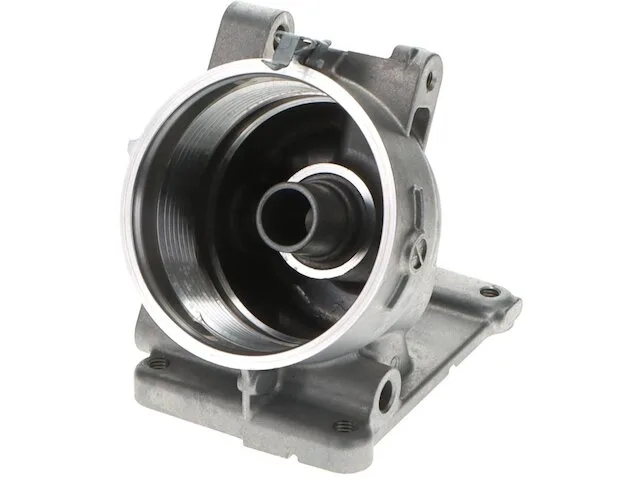
Image source: Bing (Web (fair-use with source credit))
For the 2.7L four-cylinder, the spin-on filter is on the driver's side of the engine block. Use an oil filter wrench to loosen it. Turn counterclockwise.
It will spill some oil as it comes off. Have a rag ready. Once it's off, wipe the mounting surface clean.
Apply a thin film of fresh oil to the new filter's rubber gasket. Screw it on by hand until the gasket contacts the mounting surface. Tighten another quarter turn.
No tighter.
For the 3.5L V6, you have a cartridge filter housing. It's on the front of the engine. Use your 24mm or 27mm socket to loosen the cap.
Some oil will drip down as the cap comes off. Remove the old filter element and both O-rings. The large O-ring goes around the cap.
The small one goes on the center post. Lubricate both with fresh oil. Install the new element.
Tighten the cap to 18 ft-lbs.
Step 4: Reinstall the Drain Plug
Thread the drain plug back in by hand. This prevents cross-threading. Once it's hand-tight, use your torque wrench.
Set it to 27 ft-lbs for the steel oil pan or 30 ft-lbs for the aluminum pan. Both are within spec. If you don't have a torque wrench, snug it up with a standard ratchet and then give it another eighth turn.
Err on the side of too loose rather than too tight.
Wipe away any oil drips around the plug area. Clean rag. Check again in a minute to be sure nothing is seeping.
Step 5: Fill With the Correct Amount
Lower the truck off the jack stands. Open the hood. Remove the oil fill cap.
It's a black cap on top of the valve cover, clearly marked with an oil can icon.
Insert your funnel. Pour in the oil. For the 2.7L, start with 5 quarts.
For the 3.5L V6, start with 6 quarts. Replace the fill cap. Start the engine and let it run for 30 seconds.
This circulates the oil and fills the new filter. Watch for any leaks around the drain plug and the filter. Turn the engine off.
Wait two minutes for the oil to settle back into the pan. Now check the dipstick.
Step 6: Check the Level and Test for Leaks
Pull the dipstick out. Wipe it clean with a rag. Insert it fully.
Pull it out again. The oil level should be between the two dots or marks. If it's at the lower dot, add half a quart.
Check again. If it's at the upper dot or above, you've overfilled. Drain some out.
The ideal level is at the upper dot or slightly below. Not above. Not at the lower dot.
Right at the top of the hash marks.
Take the truck for a short drive. Five minutes around the block. Come back and park on level ground.
Check under the truck for drips. Check the oil level again one more time. If everything looks good, you're done.
Write the date and mileage on the oil filter with a permanent marker. You'll thank yourself later when you're trying to remember when you last changed it.
Common Mistakes That Can Kill Your Engine
Even experienced DIY mechanics make mistakes. Here are the ones that cause the most damage.
Forgetting to add oil after draining. It sounds ridiculous. It happens more than you think. Someone drains the old oil, changes the filter, gets distracted, and forgets to pour in new oil.
They start the engine and the oil pressure warning comes on in seconds. By then, damage is already done. Always pour in the new oil before you close the hood.
Always.
Overfilling. More oil isn't better. The crankshaft whips through the extra oil, aerating it. Air bubbles don't lubricate.
They cause cavitation in the oil pump and wear on bearings. If you accidentally overfill, drain the excess. Don't drive it.
Using the wrong viscosity. We covered this earlier, but it's worth repeating. 0W-20 is what the engine was designed for. Thicker oil doesn't mean better protection in this engine. It means slower flow at startup and potential timing chain issues.
Stripping the drain plug. Overtightening is the culprit. Use a torque wrench. If you strip the threads, you're looking at a new oil pan.
That's a $300 part plus labor. A torque wrench costs $30.
Cross-threading the filter housing. The V6's cartridge cap is plastic. It's easy to cross-thread if you install it at an angle. Always thread it by hand first.
If you feel resistance, back it out and try again. Forcing it ruins the housing.
Using a non-OEM filter that's the wrong size. Some aftermarket filters are slightly shorter or taller. A shorter filter may not seal properly. A taller filter can hit the skid plate.
Stick with the correct dimensions.

Image source: Bing (Web (fair-use with source credit))
How Often Should You Change the Oil? Intervals Explained
Toyota's official recommendation for the 2018 Tacoma is 10,000 miles under normal driving conditions. That's if you use full synthetic 0W-20 oil and a quality filter. Most owners should ignore that number.
Here's the reality. "Normal" driving means highway cruising at steady speeds in moderate temperatures. Most of us don't drive that way.
We do stop-and-go commutes. Short trips where the engine never fully warms up. Idling in traffic.
Towing a trailer. Driving on dusty roads. Toyota calls that "severe service."
Under severe service, the recommended interval drops to 5,000 miles. That's what we recommend for most Tacoma owners.
| Driving Condition | Oil Change Interval |
|---|---|
| Highway cruising, moderate climate | 7,500 to 10,000 miles |
| City driving, short trips, stop-and-go | 5,000 miles |
| Towing, off-road, dusty conditions | 3,000 to 5,000 miles |
| Extreme cold climate | 5,000 miles |
Check your oil level every month. Between changes, oil naturally gets consumed. A quart low between changes is normal for some engines.
If you're losing more than a quart every 1,000 miles, have the engine checked for leaks or internal wear.
The oil life monitor in your Tacoma's dashboard is a useful guide. It doesn't measure oil condition directly. It tracks driving patterns and calculates an estimate.
If it says 30 percent life remaining, you've got some time. If it hits 15 percent, change the oil soon.
What Happens If You Overfill or Underfill
Let's be specific about the consequences so you understand why precision matters.
Underfilling by one quart. The oil pickup tube sits near the bottom of the pan. With a quart low, the oil level drops closer to the pickup. On steep hills or during hard cornering, the pickup can suck air.
Oil pressure drops. The engine starts making knocking sounds. That's bearing damage happening in real time.
A few minutes of low oil pressure can permanently damage the crankshaft bearings.
Underfilling by two quarts. You're now in dangerous territory. The low oil pressure warning light will illuminate. Stop the engine immediately.
Driving any further risks catastrophic failure. A seized engine isn't repairable. Replacement costs $5,000 to $8,000.
Overfilling by one quart. The crankshaft dips into the oil at the bottom of its stroke. This whips the oil into foam. The oil pump picks up aerated oil.
Foam doesn't provide a consistent lubricating film. You'll notice rough idle, reduced fuel economy, and possibly blue smoke from the exhaust. The extra pressure can blow out gaskets.
Overfilling by two quarts. The crankcase pressure rises significantly. Oil can be forced past the piston rings into the combustion chamber. You'll get heavy blue smoke.
The catalytic converter can get clogged with oil ash. That's a $1,500 repair.
The safe zone is one quart above the low mark and one quart below the high mark. Right in the middle is perfect. Check your dipstick regularly.
When to Let a Pro Handle It
Changing your own oil saves money. It also gives you peace of mind knowing the job was done right. But not everyone should do it.
If you don't have a safe place to lift the truck, don't risk it. Using ramps on uneven pavement is dangerous. Jack stands on soft ground can sink.
A shop with a proper lift is worth the $40 labor cost.
If your V6 Tacoma has the TRD Pro skid plate, access to the oil filter is tight. Some skid plates have a cutout for the filter. Others don't.
You might need to remove the skid plate to reach the filter. That adds 20 minutes and requires a socket set. If that sounds like a headache, let a shop handle it.
If you live in an area with strict oil disposal regulations, factor that in. Most auto parts stores accept used oil for free. Some charge a small fee.
A shop handles disposal for you.
If you're short on time, a quick-lube place can do the job in 20 minutes. Just bring your own oil and filter. Their bulk oil isn't always 0W-20, and their filters are often generic.
Supply your own parts and you'll get a better result.
The bottom line. DIY is cheaper and gives you control. A shop is faster and safer if you lack space or tools.
Both are fine as long as the correct oil quantity and type are used.
Final Verdict: The Numbers You Need to Trust
The 2018 Toyota Tacoma oil capacity is simple once you know your engine. The 2.7L four-cylinder takes 5.7 quarts of 0W-20 synthetic. The 3.5L V6 takes 6.4 quarts.
Those numbers aren't suggestions. They're engineering specs.
Use the right oil, the right filter, and the right interval. Check the dipstick monthly. If you take care of the oil system, the rest of the truck will follow.
These engines regularly hit 250,000 miles with nothing more than routine fluid changes.
Frequently Asked Questions
Can I use 5W-30 instead of 0W-20 in my 2018 Tacoma?
Toyota recommends 0W-20 for these engines. Using 5W-30 can reduce fuel economy and may affect variable valve timing performance. In a pinch, 5W-30 won't destroy the engine.
But switch back to 0W-20 at your next change.
How much oil does a 2018 Tacoma with the 2.7L engine take?
The 2.7L four-cylinder takes 5.7 quarts with a filter change. That's 5.4 liters. Buy a 6-quart jug plus a separate quart.
You'll use most of the jug and save the rest for topping off.
How much oil does a 2018 Tacoma with the 3.5L V6 take?
The 3.5L V6 takes 6.4 quarts with a filter change. That's 6.1 liters. A 6-quart jug plus one extra quart covers it.
Pour slowly to avoid overfilling.
What type of oil does a 2018 Tacoma need?
Full synthetic 0W-20 that meets API SN or SP standards with ILSAC GF-5 certification. Conventional oil works temporarily but doesn't protect as well in extreme temperatures. Synthetic is worth the extra cost.
How often should I change the oil in my 2018 Tacoma?
Every 5,000 miles for most driving conditions. That covers stop-and-go traffic, short trips, towing, and off-road use. If you only do highway cruising, 7,500 to 10,000 miles is acceptable.
Check the oil level monthly regardless.
Can I use a different oil filter on my 2018 Tacoma?
You can use aftermarket filters, but OEM Toyota filters are tested specifically for these engines. Part numbers 04152-YZZA1 and 04152-38020 fit most models. If you go aftermarket, choose a premium brand like Wix or Mobil 1.
What happens if I put too much oil in my Tacoma?
Overfilling causes oil foaming, increased crankcase pressure, and potential seal leaks. In severe cases, oil can enter the combustion chamber and clog the catalytic converter. Drain the excess immediately.
One quart over is too much.
Why does my Tacoma burn oil between changes?
Some oil consumption is normal. Toyota considers up to one quart per 1,000 miles acceptable. If you're losing more than that, check for external leaks or have a compression test done.
Worn piston rings or valve seals are common causes.