
If you own a 2014 Toyota Highlander, one of the most basic and important things you need to know is exactly how much oil your engine takes. Getting the 2014 Toyota Highlander oil capacity wrong might seem like a small mistake, but it can lead to serious engine trouble. Too little oil causes metal-on-metal wear inside the engine.
Too much oil can foam up and lose its ability to lubricate. Either way, you are looking at expensive repairs.
Manufacturer specifications indicate that your Highlander's oil capacity depends entirely on which engine you have under the hood. The 2.7L four-cylinder takes 5.5 quarts of 0W-20 synthetic oil with a filter change. The 3.5L V6 needs 6.4 quarts of the same oil.
As of 2026, 0W-20 remains the recommended viscosity for both engines, and deviating from that spec can hurt fuel economy and engine life. Let's walk through exactly what you need to know before you pop the hood.
Quick Answer
The 2014 Toyota Highlander oil capacity is 5.5 quarts for the 2.7L four-cylinder engine. It is 6.4 quarts for the 3.5L V6 engine. Both engines require 0W-20 full synthetic oil.
Always check the dipstick after filling. Add small amounts if needed.
Two Engines, Two Capacities
The 4-Cylinder (1AR-FE) Specs
The base engine in the 2014 Highlander is a 2.7L four-cylinder known as the 1AR-FE. It is a solid, reliable power plant that Toyota used across several models. When you change the oil and filter on this engine, the total capacity is 5.5 quarts or 5.2 liters.
If you are just topping off between changes, you won't need that much. The difference between the low and full marks on the dipstick is about one quart. So if the level is at the low mark, adding one full quart brings it right up to the full line.
Here is a quick reference for the 2.7L:
| Measurement | Value |
|---|---|
| Capacity with filter | 5.5 quarts (5.2 liters) |
| Recommended oil | SAE 0W-20 synthetic |
| API/ILSAC rating | API SN or higher / ILSAC GF-5 |
| Dipstick range | ~1 quart between min and max |
The V6 (2GR-FE) Specs
The 3.5L V6 in the 2014 Highlander is the 2GR-FE engine. It is more powerful and holds more oil. With a filter change, the total capacity comes to 6.4 quarts or 6.0 liters.
This engine is also shared across several Toyota models, and its oil requirements are well documented. The same rule applies for topping off. The dipstick range is still about one quart between low and full.
For the V6, the numbers look like this:
| Measurement | Value |
|---|---|
| Capacity with filter | 6.4 quarts (6.0 liters) |
| Recommended oil | SAE 0W-20 synthetic |
| API/ILSAC rating | API SN or higher / ILSAC GF-5 |
| Dipstick range | ~1 quart between min and max |
Knowing which engine you have is the first step. Check your owner's manual or look under the hood for the engine code if you are unsure.
Why 0W-20 Matters More Than You Think
You might wonder why Toyota specifically requires 0W-20 oil for the 2014 Highlander. It is not just a suggestion. There are real engineering reasons behind it.
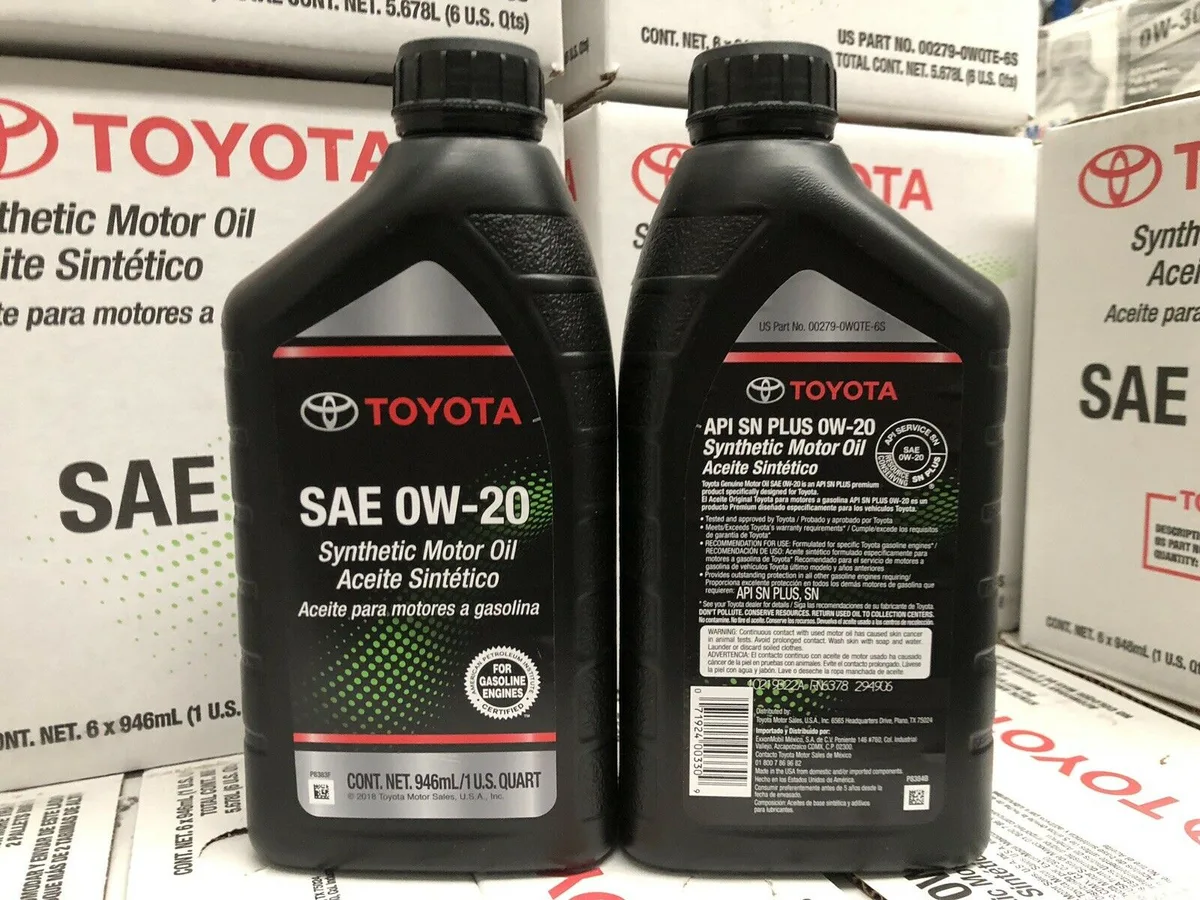
Image source: Web (Bing) / alibaba.com (Web image (fair-use with source credit))
The "0W" part means the oil flows like a thin 0-weight oil when cold. That is critical for cold starts. In freezing temperatures, thicker oil struggles to reach the top of the engine quickly.
The 0W-20 formulation gets to every moving part in seconds, reducing wear on start-up.
The "20" part means the oil thickens to a 20-weight at operating temperature. That is thin enough to reduce internal friction and improve fuel economy. But it is also thick enough to maintain a proper oil film between moving parts.
Toyota designed the 2GR-FE and 1AR-FE engines with tight clearances. They need that thin 0W-20 oil to flow through passages efficiently. Using 5W-30 or 10W-30 might seem harmless, but it can cause problems over time.
Thicker oil takes longer to circulate during cold starts. It can also reduce fuel economy by increasing engine drag.
Per API testing standards, 0W-20 synthetic oil also resists breakdown better than conventional oils. It handles heat better and lasts longer between changes. That is why Toyota specifies synthetic for the Highlander, not conventional.
If you are tempted to save money with a heavier conventional oil, do not do it. The savings at the pump are not worth the long-term wear. Stick with the 0W-20 synthetic that Toyota recommends.
Your engine will thank you at 150,000 miles.
What Happens When You Use the Wrong Amount
Getting the oil level wrong is a bigger deal than most people realize. The difference between a properly filled crankcase and one that is off by a quart can be the difference between a smooth-running engine and a costly repair.
The Risks of Overfilling
Adding extra oil seems like it would be safer than not enough. That is wrong. Overfilling causes real problems.
When you put too much oil in the crankcase, the rotating crankshaft whips the oil into a froth. That aerates the oil, introducing air bubbles. Air does not lubricate.
Foamy oil loses its ability to create a proper film between moving parts. The result is increased wear, higher operating temperatures, and potential damage to the oil pump.
In extreme cases, overfilling can push oil past the piston rings and into the combustion chambers. That leads to blue smoke from the exhaust, fouled spark plugs, and possible catalytic converter damage. Replacing a catalytic converter is not cheap.
The fix is simple. Fill to the specified capacity, then check the dipstick. If you put too much in, drain some out.
It is much easier to add a little than to remove too much.
The Dangers of Underfilling
Running low on oil is even more dangerous. The engine depends on a constant supply of oil to reduce friction, carry away heat, and clean internal parts. When the level drops too low, the oil pump can start sucking air instead of oil.
That causes oil starvation. Metal parts that normally ride on a thin film of oil start touching each other. Temperatures spike.
Wear accelerates rapidly. If you run the engine low on oil long enough, you can seize the bearings or spin a rod bearing. That means a rebuild or a replacement engine.
The first sign of low oil is usually the oil pressure warning light. If that light comes on while driving, pull over and shut the engine off immediately. Check the level and add oil before restarting.
A good habit is to check your oil level every time you fill up with gas. It takes thirty seconds and can save you thousands of dollars. For more details on keeping the correct fluid level, check out the full guide on Toyota Highlander oil type.
Step-by-Step: Doing the Oil Change Right
Changing the oil on a 2014 Highlander is straightforward. You can do it yourself in about thirty to forty-five minutes. The key is getting the steps right and using the correct amount of oil.

Image source: Web (Bing) / storage.googleapis.com (Web image (fair-use with source credit))
Tools You'll Need
Before you start, gather everything you need. Nothing is worse than being under the car and realizing you forgot something.
| Tool or Material | Purpose |
|---|---|
| 14mm socket and ratchet | Removing the drain plug |
| Oil filter wrench | Removing the old filter |
| Torque wrench | Tightening the drain plug to spec |
| Drain pan | Catching old oil |
| Funnel | Pouring new oil cleanly |
| 0W-20 synthetic oil | 5.5 or 6.4 quarts depending on engine |
| New oil filter | Toyota genuine or quality aftermarket |
| Crush washer | Replacing the old drain plug washer |
| Latex gloves | Keeping your hands clean |
The Correct Sequence
Follow these steps in order. Do not skip any of them.
Warm the engine. Run it for a few minutes to warm the oil. Warm oil drains faster and carries more contaminants with it. But do not run it hot enough to burn yourself.
Park on level ground. You need an accurate drain and an accurate fill. A slope throws off both.
Remove the drain plug. Place the drain pan underneath. Use the 14mm socket to loosen the plug. Remove it by hand and let the oil drain completely. This takes a few minutes.
Replace the crush washer. Always use a new one. The old one can leak.
Tighten the drain plug to 29 ft-lbs. Do not guess. Use a torque wrench. Overtightening strips the threads in the oil pan. That is an expensive mistake.
Remove the old oil filter. It will be full of oil, so have the drain pan ready. Use the filter wrench if it is tight.
Lubricate the new filter gasket. Put a thin layer of fresh oil on the rubber gasket. This prevents the filter from sticking and ensures a proper seal.
Install the new filter. Tighten it by hand until the gasket contacts the mounting surface. Then give it another three-quarter turn. Do not overdo it.
Add the new oil. Use a funnel to pour in the correct amount. For the V6, that is 6.4 quarts. For the four-cylinder, it is 5.5 quarts. Add it slowly to avoid splashing.
Check the dipstick. Wait a minute for the oil to settle. Pull the dipstick, wipe it clean, insert it fully, and pull it again. The level should be at the full mark.
Run the engine. Let it idle for a minute. This circulates the new oil and fills the new filter. Check for leaks around the drain plug and filter.
Recheck the dipstick. Shut the engine off and wait a minute. Check the level again. Add oil if needed to bring it to the full mark.
How to Properly Check the Dipstick
This sounds basic, but lots of people do it wrong. The correct method matters if you want an accurate reading.
Park on level ground. Shut the engine off and wait at least a minute for the oil to drain back into the pan. Pull the dipstick out.
Wipe it clean with a rag. Insert it all the way back in. Pull it out again and read the level.
The oil should be between the two marks. If it is at the lower mark, you are about one quart low. Add oil and check again.
Never fill above the upper mark.
Checking regularly is especially important for the 2014 Highlander. Some owners report higher oil consumption as the engine ages. Keeping the level topped off is cheap insurance.
If you are also maintaining a truck, the same principles apply to the correct fluid level for a Tundra V6.
Common Mistakes That Even Experienced DIYers Make
Even if you have changed oil dozens of times, the 2014 Highlander has a few quirks worth knowing about. Avoid these common pitfalls.
Using the Wrong Filter
Not all oil filters are the same. The 2.7L four-cylinder uses a different filter than the 3.5L V6. Using the wrong one can cause leaks or poor oil flow.
Always confirm you have the correct filter for your specific engine. Toyota genuine filters are a safe bet, but quality aftermarket brands work fine too. Just double-check the part number.
Forgetting the Crush Washer
That little copper or aluminum washer on the drain plug is not optional. It compresses when you tighten the plug, creating a seal. Reusing an old crush washer is asking for a slow drip.
Most auto parts stores sell packs of these washers for a couple of dollars. Buy a handful and keep them in your toolbox. Replace it every single time.
Over-tightening Everything
The drain plug should be at 29 ft-lbs. That is not very tight. The oil filter should be hand-tight plus three-quarters of a turn.
That is also not very tight.
If you reef on either one, you risk stripping threads in the oil pan or damaging the filter housing. Both are preventable with a torque wrench and a light touch.
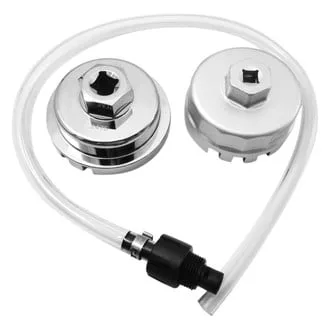
Image source: Web (Bing) / carid.com (Web image (fair-use with source credit))
Not Priming the New Filter
A dry oil filter means the engine runs without oil pressure for the first few seconds after start-up. That is enough time to cause wear.
Before installing the new filter, fill it with fresh oil. Let it soak in for a few seconds. Then install it.
This primes the filter and gets oil circulating immediately.
Ignoring the Dipstick Reading
Pouring in the exact capacity from the manual is a good starting point, but it is not a guarantee. The actual amount needed can vary slightly depending on how much old oil drained out and whether you changed the filter.
Always check the dipstick after filling. Trust what it tells you, not the bottle. Add small amounts if needed.
This simple habit prevents both overfilling and underfilling.
When to Stick With Toyota Genuine Parts vs Aftermarket
You have options when buying oil and filters for your 2014 Highlander. Here is when it matters and when it does not.
Oil
For oil, stick with a name-brand 0W-20 full synthetic. Mobil 1, Pennzoil, Castrol, and Valvoline all make quality products that meet the API SN or higher specification. You do not need to buy Toyota branded oil.
The key is the certification, not the label. Look for the API starburst on the bottle. That confirms the oil meets industry standards.
As long as it is 0W-20 full synthetic with the right certification, it will work.
Filters
Oil filters are a different story. The Toyota genuine filter is well made and reliably does its job. But quality aftermarket filters from Wix, Mobil 1, or Purolator also perform well.
Avoid the cheapest no-name filters. They often use inferior filter media and bypass valves that do not open at the correct pressure. Paying a few extra dollars for a quality filter is worth it.
Crush Washers
These are generic. Any crush washer that fits your drain plug will work. Toyota does not make a special magical washer.
Save your money.
When to Go Genuine
If your Highlander is still under an extended warranty or you plan to sell it soon, using Toyota genuine parts gives you documentation. It also eliminates any questions if a warranty claim arises.
For most owners, quality aftermarket parts work just fine. The important thing is using the correct spec oil and changing it on schedule.
How Often Should You Change It? (The Honest Answer)
Toyota's official recommendation for the 2014 Highlander is every 10,000 miles or 12 months under normal driving conditions. But here is the honest truth. Most driving is not normal.
Normal vs Severe Driving
Toyota defines severe driving as frequent short trips, stop-and-go traffic, driving in dusty conditions, extreme temperatures, or towing. If your commute looks like any of those, you are in the severe category.
For severe driving, Toyota recommends changing the oil every 5,000 miles or 6 months. That is halving the interval. It sounds frequent, but it is cheap protection for your engine.
What Most Owners Should Do
If you do a mix of highway and city driving, split the difference. Change the oil every 7,500 miles or once a year, whichever comes first. That is a safe middle ground for most people.
If you tow a trailer or drive in extreme heat, stick with the 5,000 mile interval. Your engine works harder and the oil degrades faster. The same goes for the right viscosity in your other vehicles like a Tacoma or Corolla.
Signs You Are Changing Too Late
Pay attention to these warning signs. They mean your oil is past its prime.
- The oil on the dipstick looks dark and opaque instead of amber
- The engine sounds louder or rougher than usual
- Your fuel economy drops noticeably
- The oil level is consistently low between changes
If you notice any of these, change the oil sooner rather than later. Waiting costs more in the long run.
What About High-Mileage Oil?
If your 2014 Highlander has over 75,000 miles, you might be wondering about high-mileage oil formulations. The short answer is they can help, but they are not required.
High-mileage oils contain additives that condition seals and reduce oil consumption. They also have detergents that clean sludge deposits. For an older engine, these additives can make a real difference.
That said, if your engine is healthy and does not burn oil, there is no rush to switch. A quality 0W-20 synthetic already has good detergent and anti-wear properties. You can use high-mileage oil if you want, but it is not mandatory.
If your engine is starting to burn a little oil between changes, high-mileage oil might help slow that down. It is worth trying before moving to a heavier viscosity.
Cost Breakdown: DIY vs Shop
Changing your own oil saves money, but the savings might be smaller than you expect. Here is a realistic cost comparison.
DIY Costs
| Item | Cost |
|---|---|
| 6 quarts 0W-20 synthetic oil | $30 to $45 |
| Quality oil filter | $8 to $15 |
| Crush washer | $1 to $2 |
| Total | $39 to $62 |
The first time you buy tools like a socket set, torque wrench, and drain pan, your upfront cost is higher. But those tools last for years of oil changes.
Shop Costs
A quick-lube shop typically charges $70 to $100 for a synthetic oil change on a Highlander. A Toyota dealership will be on the higher end, often $80 to $120.
The shop does the dirty work and disposes of the old oil. You pay for that convenience. If you value your time at $50 per hour, a shop makes sense.
The Verdict
DIY saves about $30 to $50 per oil change. Over ten changes, that is $300 to $500. Not huge money, but meaningful if you enjoy working on your car.
If you do not have the space, tools, or inclination, a shop is fine. Just make sure they use 0W-20 synthetic and the correct filter. Some shops try to upsell heavier oil.
Do not let them.
Frequently Asked Questions
How much oil does a 2014 Toyota Highlander take?
The 2014 Highlander takes 5.5 quarts with filter for the 2.7L four-cylinder engine. It takes 6.4 quarts with filter for the 3.5L V6 engine. Both require 0W-20 full synthetic oil.
Can I use 5W-30 instead of 0W-20?
Toyota recommends 0W-20 for the 2014 Highlander. Using 5W-30 can reduce fuel economy and cause slower oil flow during cold starts. It is not recommended for normal driving conditions.
How do I reset the oil maintenance light?
Turn the ignition to the ON position without starting the engine. Press the trip meter button until the odometer displays. Turn the ignition OFF.
Hold the trip button while turning the ignition back to ON. The light will blink and turn off.
What happens if I overfill the oil?
Overfilling causes the crankshaft to whip the oil into foam. Foamy oil does not lubricate well. It can lead to increased wear, higher temperatures, and potential seal damage.
Drain the excess if you overfill.
Is synthetic oil required for the 2014 Highlander?
Yes. Toyota specifies 0W-20 full synthetic oil for both engines. Conventional oil is not recommended.
Synthetic handles heat better, flows better in cold weather, and lasts longer between changes.
How often should I check the oil level?
Check the oil level at least once a month. If you drive frequently or notice any signs of oil consumption, check it every time you fill up with gas. Keeping the level between the marks is cheap insurance.
Your Quick Reference Card
Before you drain a single drop of oil, here is the cheat sheet you need.
2014 Toyota Highlander Oil Capacity:
| Engine | Capacity (with filter) | Oil type |
|---|---|---|
| 2.7L 4-cylinder | 5.5 quarts (5.2 liters) | 0W-20 synthetic |
| 3.5L V6 | 6.4 quarts (6.0 liters) | 0W-20 synthetic |
Other specs:
- Drain plug torque: 29 ft-lbs
- Oil filter tightness: Hand-tight plus three-quarter turn
- Dipstick range: About 1 quart between marks
- Interval: 5,000 miles (severe) to 10,000 miles (normal)
Why Accuracy Matters More Than You Think
The 2014 Highlander's 3.5L V6 holds 6.4 quarts. The 2.7L four-cylinder holds 5.5 quarts. Confusing the two leads to a nearly one-quart difference.
That is enough to cause serious problems.
A quart too much oil causes foamingeur and aeration. A quart too little causes oil starvation. Both lead to premature engine wear.
Toyota's engineers specified these capacities for a reason. The oil pan is sized for proper heat dissipation and oil flow. Deviating from spec, even slightly, compromises that design.
If you are not sure which engine you have, check your owner's manual. Every 2014 Highlander was built with one of these two engines. Getting it right is not a suggestion.
It is a requirement.
What About Extreme Conditions and Towing?
If you tow a trailer or drive in extreme heat, your oil works harder. The engine runs hotter and the oil degrades faster. That does not change the capacity.
It changes the interval.
Toyota recommends changing oil every 5,000 miles for severe driving. That includes towing, dusty roads, and frequent short trips. Stick with that interval if any of these describe your driving.
The oil capacity stays the same. You still need 5.5 or 6.4 quarts depending on your engine. But you will change it twice as often.
Check your oil level more frequently if you tow. The added load can increase oil consumption. A quick dipstick check before a long trip with a trailer is smart practice.
Final Thoughts: Set It and Forget It, the Right Way
The 2014 Toyota Highlander is a reliable vehicle. Proper oil maintenance is the single best thing you can do to keep it that way.
Getting the oil capacity right is not complicated. Know your engine. Use 0W-20 full synthetic.
Fill to the correct capacity. Check the dipstick.
Do that, and your Highlander will easily surpass 200,000 miles. Skip it, and you are rolling the dice on expensive repairs.
Take fifteen minutes to verify your engine type and buy the right oil. The peace of mind is worth more than the cost of a mistake.