
If you own a 2014 Toyota Camry, the 2014 toyota camry oil capacity isn't something you want to guess at. Put in too little and you risk engine starvation. Pour in too much and you can blow out seals or cause foaming that wrecks lubrication.
Either mistake gets expensive fast.
Manufacturer specifications confirm there are two very different answers depending on which engine is under your hood. The 2.5L four-cylinder takes 4.6 quarts with a filter change. The 3.5L V6 needs 6.1 quarts.
That nearly 33 percent difference is why checking your specific engine matters before you buy a single quart. Let us walk through exactly what you need.
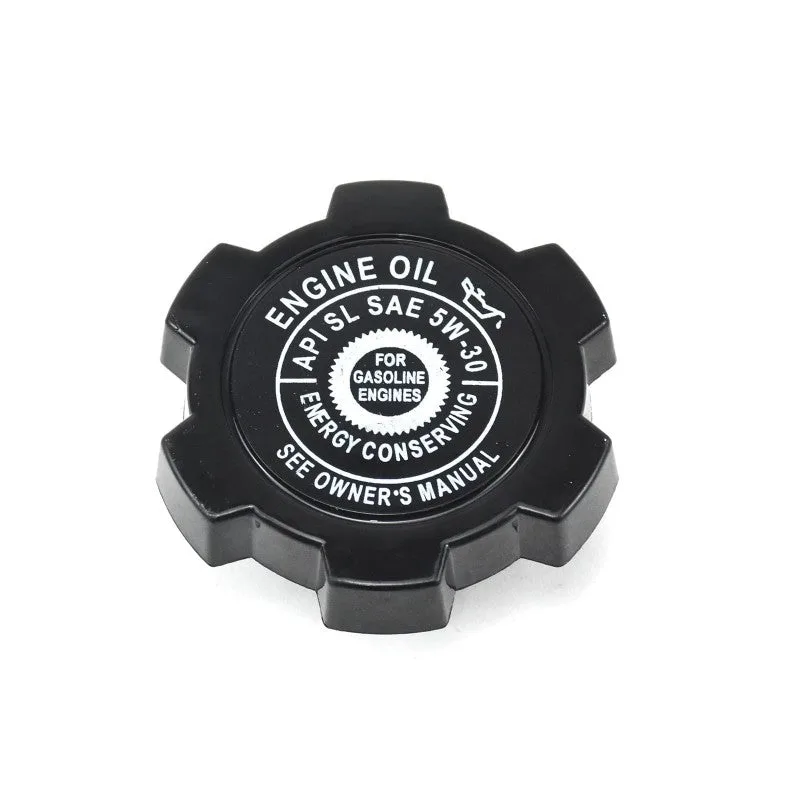
Image source: Bing (Web (fair-use with source credit))
Quick Answer
Your 2014 Camry oil capacity is either 4.6 quarts or 6.1 quarts. The 2.5L four-cylinder engine takes 4.6 quarts with filter. The 3.5L V6 takes 6.1 quarts with filter.
Use 0W-20 oil meeting API SN or higher. Always check the dipstick after filling. Never overfill.
These numbers come straight from the Toyota owner's manual.
Why This Number Actually Matters (Don't Guess)
Oil does more than just lubricate. It carries heat away from combustion chambers, suspends contaminants so your filter can catch them, and maintains hydraulic pressure for variable valve timing systems. Get the volume wrong and every one of those jobs suffers.
Engines in this generation Camry use a fairly narrow oil pan design. The difference between "full" and "overfilled" on the dipstick is usually less than a quart. That means pouring in the full jug without measuring the second half can push you past the safe zone.
Underfilling is just as dangerous. Running a quart low drops oil pressure, especially during cornering or braking when the pickup tube can suck air. Toyota's oil pressure warning light comes on late, after damage has already started.
By the time you see it, bearing surfaces may have already worn.
Overfilling causes the crankshaft to whip the oil into a foam. Air bubbles dont compress well inside bearings. That leads to metal on metal contact and rapid wear.
Foam also pushes past piston rings, causing oil consumption and blue smoke.
The correct capacity isnt a suggestion. It is a safety specification designed by engineers who tested this exact engine for thousands of hours. As of 2026, these numbers have not changed because they still apply to every 2014 Camry on the road right now.
The Quick Answer: 2014 Camry Oil Capacity by Engine
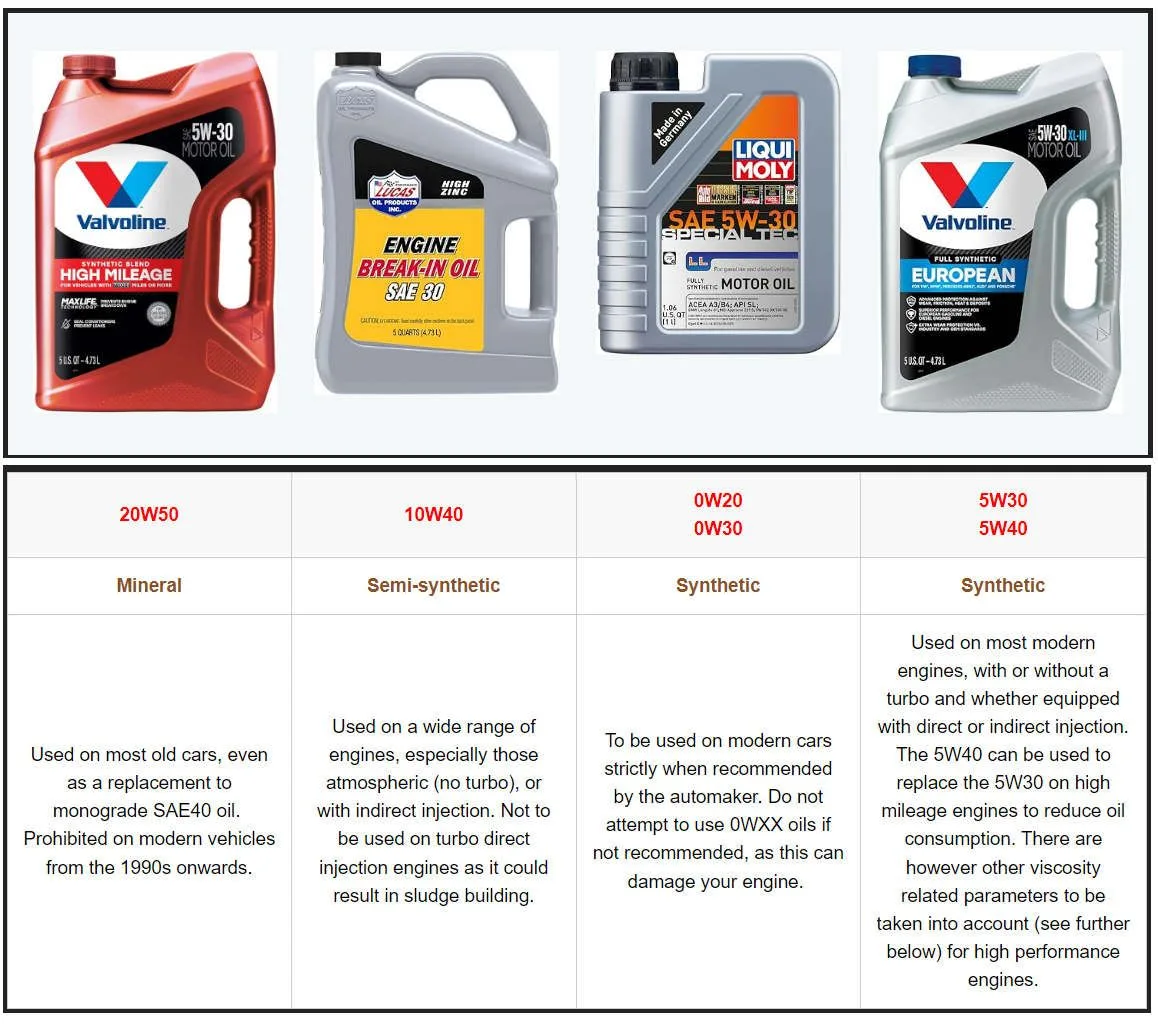
Here is the short version in plain numbers.
| Engine | Displacement | Oil Capacity (with filter) | Oil Type Recommended |
|---|---|---|---|
| 2.5L I4 (2AR-FE) | 2.5 liters | 4.6 quarts (4.4 liters) | 0W-20 API SN or higher |
| 3.5L V6 (2GR-FE) | 3.5 liters | 6.1 quarts (5.8 liters) | 0W-20 API SN or higher |
The 2.5L four-cylinder is far more common. It came in LE, SE, and XLE trims. The 3.5L V6 was optional on higher trims and the XLE V6 model.
If you skip the filter change, subtract roughly 0.2 quarts. But honestly, you should always replace the filter with every oil change. Skipping it leaves old contaminated oil in the system and defeats most of the purpose.
Toyota officially recommends 0W-20 viscosity for both engines. That has been the case since 2011 for most models. Per API testing, 0W-20 provides better cold start protection and slightly improved fuel economy compared to 5W-20.
In a pinch, 5W-20 is acceptable for warmer climates, but 0W-20 is the preferred spec.
Always look for the API donut symbol on the bottle. It should say SN, SN Plus, or SP. Those ratings ensure the oil meets current detergent, anti-wear, and sludge protection standards.
Older SM rated oil is not recommended for this engine.
2.5L Four-Cylinder vs. 3.5L V6 – Spotting Your Engine
You cannot tell the engine just by looking at the Camry badge on the trunk. The badging on 2014 models is subtle. The LE, SE, and XLE trims all came with the 2.5L by default.
The V6 was available on SE and XLE but it was a paid upgrade.
Here is how to confirm which engine you have in about ten seconds.
Open the hood and look at the engine cover. The 2.5L has a plastic cover that says "2.5L DOHC VVT-i" molded into it. The 3.5L cover reads "3.5L DOHC VVT-i" and sits wider across the engine bay.
If the cover is missing, check the emissions label on the underside of the hood. It lists engine displacement in liters. You can also look at the eighth character of the Vehicle Identification Number.
For 2014 Camry, VIN character 8 is "4" for the 2.5L and "5" for the 3.5L.
The 2.5L takes 4.6 quarts. The 3.5L takes 6.1 quarts. That is the most important distinction you will make before buying oil.
The Exact Oil You Need (Viscosity, Standards, and Brands)
Toyota specifies 0W-20 synthetic for both engines in the 2014 Camry. The owner's manual lists it as the primary recommendation. 5W-20 is listed as an acceptable alternative if 0W-20 is unavailable, but only for moderate to warm climates.
Why 0W-20 specifically? The "0W" means the oil flows like a thin 0-weight when cold. That matters for startup wear.
Most engine wear happens in the first few seconds after ignition when oil has not fully circulated. Thinner cold flow gets oil to bearings faster.
The "20" means it thickens to a 20-weight at operating temperature. That provides enough film strength for normal driving. Toyota designed the 2AR-FE and 2GR-FE engines around this viscosity.
Running thicker oil like 5W-30 increases drag, reduces fuel economy, and may cause sluggish variable valve timing operation.
Oil standards are not optional. API SN or newer (SN Plus, SP) includes improved high-temperature deposit protection and timing chain wear prevention. ILSAC GF-5 or GF-6 is the equivalent international standard.
Both bottles will display these logos.
Brand choice matters less than certification. Toyota Genuine Motor Oil is a safe bet. Mobil 1, Pennzoil Platinum, Valvoline Advanced, and Castrol Edge all produce 0W-20 that meets the spec.
What matters is that the bottle carries the API donut and the SAE grade.
Do not use any oil labeled "energy conserving" that does not show the API certification mark. Some cheap oils skip certification to save money. They may not provide adequate protection for your Camrys engine.
For the oil filter, use Toyota Genuine part number 04152-38010 (for the 2.5L cartridge style) or 04152-31090 (for the 3.5L spin-on), or equivalent aftermarket from WIX, Purolator, or Mobil 1. Avoid no-name filters that do not list a bypass valve specification. For more context on what oil your Camry's modern counterparts need, the same basic principles apply to keeping it running smoothly across model years.
and newer Camrys, so checking the latest spec sheets is always smart if you are working on a different year.
Step-by-Step: How to Check and Top Off Properly
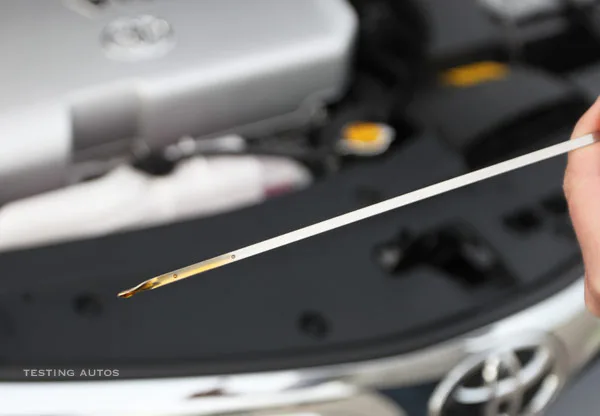
Checking your oil level is the single best habit you can develop for engine longevity. It takes sixty seconds and costs nothing. Here is the right way to do it on a 2014 Camry.
Park on level ground. A sloped driveway gives a false reading. Turn the engine off and wait at least five minutes.
The oil needs time to drain back into the pan. Cold engine is fine. Hot oil reads slightly higher because it expands.
Pull the dipstick out. It has a bright yellow handle located toward the front of the engine on the 2.5L and toward the middle on the 3.5L. Wipe it clean with a rag.
Push it all the way back in. Wait one second. Pull it out again and read the level.
The dipstick has two marks. A lower mark indicates low. An upper mark indicates full.
The oil should sit between these two marks. Ideally it sits closer to the top mark. If it is at the low mark you are about one quart low.
To top off, remove the oil fill cap. It is a black plastic cap on top of the valve cover labeled "Oil Fill." Add oil in small amounts. A quarter quart at a time.
Check the dipstick after each addition. Overfilling is easier to do than you think.
Do not confuse the oil fill cap with the transmission dipstick. Transmissions in some 2014 Camry models have a dipstick too. The transmission dipstick usually sits farther back and has a different colored handle.
Stick to the yellow handled dipstick for engine oil.
If you see milky brown oil on the dipstick, stop driving. That indicates coolant mixing with oil. It is a head gasket or intake manifold leak.
Have it diagnosed immediately.
If the oil is black and gritty, you are overdue for a change. Fresh oil is amber colored. Dark brown or black means it is loaded with combustion byproducts.
It is still lubricating but not as effectively.
Full Oil Change Workflow (With Filter)
Changing your own oil on a 2014 Camry is straightforward. You will save about 40 to 60 dollars per change compared to a shop. Here is the process step by step.
Gather your supplies first. You need the correct amount of 0W-20 oil, a new oil filter, a new crush washer for the drain plug, a 14mm socket, a filter wrench, a drain pan, and jack stands if the car sits low.
Warm up the engine for a couple minutes. Warm oil flows faster and drains more completely. Do not run it hot enough to burn yourself.
Lukewarm is perfect.
Jack up the front of the car if needed. Always use jack stands. Never work under a car supported only by a hydraulic jack.
Position the drain pan under the oil pan.
Locate the drain plug. It is a 14mm bolt on the bottom of the oil pan facing the rear of the car. Loosen it with the socket.
Remove it by hand once it is loose. Expect oil to pour out immediately. Keep your hand clear.
Let the oil drain for at least five minutes. Ten is better. While it drains, remove the old oil filter.
On the 2.5L the filter is a cartridge inside a plastic housing on the front of the engine. On the 3.5L it is a spin-on metal can on the side of the engine block.
For the cartridge style, use a 64mm socket or a specialized filter cap wrench. Turn counterclockwise. Remove the housing cap and pull out the old filter element.
Replace the O-rings on the housing cap. Install the new element and torque the cap to 18 ft-lbs.
For the spin-on style, turn it counterclockwise by hand or with a strap wrench. Before installing the new filter, rub a thin layer of fresh oil on the rubber gasket. Hand tighten until the gasket contacts the mounting surface, then tighten another three quarters of a turn.
Install the drain plug with a new crush washer. Torque it to 29 ft-lbs for the 2.5L and 36 ft-lbs for the 3.5L. Overtightening strips the oil pan threads.
That repair costs several hundred dollars.
Pour in the new oil. Add the total capacity minus half a quart. For the 2.5L that means about 4.1 quarts.
For the 3.5L about 5.6 quarts. Check the dipstick. Add the remaining oil slowly until the level reaches the full mark.
Start the engine and let it run for thirty seconds. Check for leaks around the drain plug and filter. Turn the engine off.
Wait two minutes. Recheck the dipstick and top off if needed.
Common Mistakes That Cost You an Engine
Mistake number one is trusting the oil change sticker rather than checking the dipstick. Stickers are set by the shop that last changed your oil. They do not account for oil consumption.
Many 2014 Camrys with over 100,000 miles burn a noticeable amount of oil between changes.
Second mistake is using the wrong viscosity. Thicker oil is not better for an older engine. The 2AR-FE engine was designed for low viscosity.
Thicker oil reduces flow to the variable valve timing phaser and can cause rough idle and reduced performance.
Third mistake is overfilling. It happens when someone pours the entire five quart jug into a 2.5L engine that only needs 4.6 quarts. That extra 0.4 quarts pushes the level above the full mark.
The engine will run rough and may push oil past seals.
Fourth mistake is reusing the old crush washer. Crush washers are one time use. Reusing them causes slow drips that eventually become steady leaks.
A pack of twenty costs about eight dollars.
Fifth mistake is forgetting to lubricate the filter gasket. A dry gasket can stick and then tear when you try to remove it next time. Worse, it may not seal properly and cause a massive oil leak in the first few minutes of running.
The sixth and most expensive mistake is stripping the oil pan threads. Overtightening the drain plug is the usual cause. If you strip them, you need a new oil pan or a thread repair insert.
Neither is cheap.
What Happens When You Get the Amount Wrong
A quart low reduces oil pressure by about 10 to 15 percent depending on driving conditions. That might not seem like much, but at highway speeds the oil pump is already working near its design limits. Lower pressure means less oil reaches the cam journals and the timing chain tensioner.
Over time, low oil pressure causes accelerated bearing wear. Rod bearings are the first to suffer. They start making a knocking sound that gets louder as the engine warms up.
By the time you hear it, replacement bearings are no longer enough. The crank journals may be scored.
Half a quart overfilled causes foaming. The crankshaft whips air into the oil. Air bubbles collapse inside bearings causing cavitation damage.
Foam also gets sucked into the PCV system and burns through the intake. You will notice increased oil consumption after overfilling.
Two quarts overfilled can blow out the rear main seal. That seal is expensive to replace because it requires removing the transmission. Some owners have also reported oil leaking past the valve cover gaskets after repeated overfills.
The correct amount prevents all of this. Four point six quarts for the 2.5L. Six point one quarts for the 3.5L.
Stick to those numbers and your engine stays happy.
When to Use 5W-20 Instead of 0W-20
Toyota lists 5W-20 as acceptable in the owner's manual. It has one real use case and one only. You should use 5W-20 if you live in a warm climate where temperatures rarely drop below freezing.
States like Florida, Texas, Arizona, and Southern California qualify.
In those conditions, 5W-20 performs nearly identically to 0W-20 at operating temperature. The main difference is cold start behavior. At 32 degrees Fahrenheit, 5W-20 is thicker and takes slightly longer to reach critical engine parts.
That adds a tiny bit of startup wear over the life of the engine.
If you live somewhere with real winters, stick with 0W-20. In subfreezing temperatures, 5W-20 turns sluggish. It struggles to flow through the oil pump pickup tube.
That delay in oil pressure delivery is hard on bearings during cold starts.
Mixing the two viscosities is fine in a pinch. If you are half a quart low and only have 5W-20, top off with it. The blended viscosity will still protect the engine.
Just do not make a habit of it.
For the modern Camry lineup, oil specifications have evolved. If you are curious about what the latest hybrid models require, there is a dedicated guide on the newer powertrains that covers those specifics.
High-Mileage Camrys – Do the Rules Change?
Once your 2014 Camry passes 100,000 miles, you might wonder if you should switch to high-mileage oil. The answer is yes, with a caveat.
High-mileage oils contain seal conditioners that help soften hardened rubber gaskets. They also have extra detergents to clean sludge from internal passages. For a Camry with 120,000 miles or more, switching to a high-mileage 0W-20 is a reasonable choice.
The capacity does not change. High-mileage oil is just a formulation difference, not a volume difference. You still need 4.6 or 6.1 quarts.
Do not switch to a thicker viscosity just because the engine has miles on it. Thicker oil does not fix worn rings or valve seals. If your Camry is burning oil, thicker oil may reduce consumption slightly but it also reduces fuel economy and may cause timing chain issues.
Instead, address the root cause. If you are losing a quart every 1,000 miles, the piston rings may be stuck. A piston soak with Berryman B12 or similar solvent can sometimes free them.
If that does not work, the engine may need professional attention.
For the exact oil type a 2021 Camry needs, the recommendations align closely with newer engine designs. Those details are covered in a separate guide if you need to cross reference.
Tools and Parts You'll Need (With Torque Specs)
Here is everything you need for a clean confident oil change on your 2014 Camry.
| Tool or Part | Specification | Notes |
|---|---|---|
| Oil drain plug socket | 14mm hex, 6 point | Use a six point to avoid rounding |
| Torque wrench | 20 to 100 ft-lb range | Essential for drain plug |
| Oil filter wrench | 64mm cap for 2.5L, strap for 3.5L | Cartridge vs spin-on differences |
| Drain pan | 8 quart minimum | Holds both engines total |
| Oil | 0W-20 API SN or SP | 5 quarts for 2.5L, 7 quarts for 3.5L |
| Oil filter | Toyota or equivalent | See filter numbers above |
| Crush washer | 14mm ID for drain plug | One time use |
| Jack stands | Two, rated 2 tons or more | Never skip these |
| Rags or shop towels | Several | For cleanup and dipstick |
Torque specs are critical for the drain plug. For the 2.5L engine, torque to 29 ft-lbs. For the 3.5L V6, torque to 36 ft-lbs.
These numbers come from Toyota service manuals and prevent both leaks and stripped threads.
The oil filter housing on the 2.5L cartridge style should be torqued to 18 ft-lbs. Hand tight plus a quarter turn is the rule of thumb if you do not have a torque wrench. The spin-on filter on the 3.5L should be hand tight plus three quarters of a turn after the gasket contacts.
Do not use thread sealant on the drain plug. The crush washer provides the seal. Thread sealant can contaminate the oil and cause clogs in small oil passages.
DIY vs. Shop Cost Breakdown
Doing your own oil change saves money and gives you control over exactly what goes into your engine. Here is the cost comparison as of 2026.
| Method | Oil and Filter | Labor | Total Estimate |
|---|---|---|---|
| DIY 2.5L | $28 to $40 | Your time | $28 to $40 |
| DIY 3.5L | $35 to $50 | Your time | $35 to $50 |
| Quick lube shop | $60 to $90 | Included | $60 to $90 |
| Dealership | $80 to $120 | Included | $80 to $120 |
The DIY savings are significant. Over three years of 5,000 mile intervals, you save about 200 to 300 dollars. That pays for a decent torque wrench and a set of jack stands.
The main downside is disposal. Used motor oil is hazardous waste. You cannot throw it in the trash.
Most auto parts stores accept used oil for free. Some municipalities have collection centers. Factor that into your time budget.
Quick lube shops are convenient but inconsistent. Some use bulk oil that may not meet the spec. Others skip the crush washer replacement.
A few have been known to overfill. If you go the shop route, ask what oil they are using and confirm it is 0W-20 API SN or higher.
Frequently Asked Questions
How much oil does a 2014 Toyota Camry 2.5L take?
The 2.5L four-cylinder engine takes 4.6 quarts of oil with a filter change. Without a filter change it takes about 4.4 quarts. Always use 0W-20 viscosity meeting API SN or higher.
How much oil does a 2014 Toyota Camry V6 take?
The 3.5L V6 engine takes 6.1 quarts of oil with a filter change. Without a filter change it takes about 5.9 quarts. Use 0W-20 synthetic for best performance and protection.
What kind of oil does a 2014 Toyota Camry need?
Toyota recommends 0W-20 full synthetic oil for both engines. 5W-20 is acceptable in warm climates but 0W-20 is the preferred spec. Look for API SN, SN Plus, or SP certification on the bottle.
Can I use 5W-30 in my 2014 Camry?
No. The engine was designed for 0W-20 or 5W-20. 5W-30 is too thick and can cause reduced fuel economy, sluggish variable valve timing operation, and increased engine wear over time.
How often should I change the oil in a 2014 Camry?
Toyota recommends every 5,000 miles for severe driving conditions and every 7,500 miles for normal driving. Severe conditions include short trips, stop and go traffic, extreme temperatures, and dusty roads.
What happens if I overfill my Camry's oil?
Overfilling causes oil foaming, which reduces lubrication and can damage bearings. It can also push oil past seals causing leaks. If you overfill, drain the excess immediately.
How do I reset the oil maintenance light on a 2014 Camry?
Turn the ignition to ON without starting the engine. Use the trip reset button to select trip A. Turn the ignition off.
Hold the trip reset button and turn the ignition back to ON. Hold for five seconds until the light flashes and resets.
Does a 2014 Camry burn oil?
Some 2014 Camrys with the 2.5L engine experience oil consumption above 100,000 miles. This is usually caused by stuck piston rings rather than worn valve seals. Regular oil changes with high quality synthetic help reduce the risk.
Can I switch from conventional to synthetic oil?
Yes. The 2014 Camry came from the factory with synthetic blend or full synthetic depending on the service history. Switching to full synthetic 0W-20 is safe and provides better protection.
Do not switch to synthetic in an engine that has used conventional oil for 150,000 miles without cleaning the sludge first.
Is it worth doing my own oil change?
Yes, if you have basic tools and thirty minutes. You save 30 to 50 dollars per change and control exactly what oil and filter go in. You also spot problems like leaks or worn belts before they become expensive repairs.
The Bottom Line – What to Remember Every Time
Your 2014 Toyota Camry oil capacity depends entirely on which engine you have. Four point six quarts for the 2.5L. Six point one quarts for the 3.5L.
Use 0W-20 API SN synthetic. Check the dipstick after filling. Never overfill.
These numbers are not complicated. They are just specific. The difference between getting it right and getting it wrong is a few hundred dollars in repairs and thousands of miles of engine life.
Check your oil level every time you fill up with gas. Change your oil every 5,000 miles if you drive in the city. Stick with quality filters and certified oil.
That is all it takes to keep your 2014 Camry running smoothly past 200,000 miles.
Tools and Parts You'll Need (With Torque Specs)
Here is everything you need for a clean confident oil change on your 2014 Camry.
| Tool or Part | Specification | Notes |
|---|---|---|
| Oil drain plug socket | 14mm hex, 6 point | Use a six point to avoid rounding |
| Torque wrench | 20 to 100 ft-lb range | Essential for drain plug |
| Oil filter wrench | 64mm cap for 2.5L, strap for 3.5L | Cartridge vs spin-on differences |
| Drain pan | 8 quart minimum | Holds both engines total |
| Oil | 0W-20 API SN or SP | 5 quarts for 2.5L, 7 quarts for 3.5L |
| Oil filter | Toyota or equivalent | See filter numbers above |
| Crush washer | 14mm ID for drain plug | One time use |
| Jack stands | Two, rated 2 tons or more | Never skip these |
| Rags or shop towels | Several | For cleanup and dipstick |
Torque specs are critical for the drain plug. For the 2.5L engine, torque to 29 ft-lbs. For the 3.5L V6, torque to 36 ft-lbs.
These numbers come from Toyota service manuals and prevent both leaks and stripped threads.
The oil filter housing on the 2.5L cartridge style should be torqued to 18 ft-lbs. Hand tight plus a quarter turn is the rule of thumb if you do not have a torque wrench. The spin-on filter on the 3.5L should be hand tight plus three quarters of a turn after the gasket contacts.
Do not use thread sealant on the drain plug. The crush washer provides the seal. Thread sealant can contaminate the oil and cause clogs in small oil passages.
DIY vs. Shop Cost Breakdown
Doing your own oil change saves money and gives you control over exactly what goes into your engine. Here is the cost comparison as of 2026.
| Method | Oil and Filter | Labor | Total Estimate |
|---|---|---|---|
| DIY 2.5L | $28 to $40 | Your time | $28 to $40 |
| DIY 3.5L | $35 to $50 | Your time | $35 to $50 |
| Quick lube shop | $60 to $90 | Included | $60 to $90 |
| Dealership | $80 to $120 | Included | $80 to $120 |
The DIY savings are significant. Over three years of 5,000 mile intervals, you save about 200 to 300 dollars. That pays for a decent torque wrench and a set of jack stands.
The main downside is disposal. Used motor oil is hazardous waste. You cannot throw it in the trash.
Most auto parts stores accept used oil for free. Some municipalities have collection centers. Factor that into your time budget.
Quick lube shops are convenient but inconsistent. Some use bulk oil that may not meet the spec. Others skip the crush washer replacement.
A few have been known to overfill. If you go the shop route, ask what oil they are using and confirm it is 0W-20 API SN or higher.
Common Mistakes That Cost You an Engine
Mistake number one is trusting the oil change sticker rather than checking the dipstick. Stickers are set by the shop that last changed your oil. They do not account for oil consumption.
Many 2014 Camrys with over 100,000 miles burn a noticeable amount of oil between changes.
Second mistake is using the wrong viscosity. Thicker oil is not better for an older engine. The 2AR-FE engine was designed for low viscosity.
Thicker oil reduces flow to the variable valve timing phaser and can cause rough idle and reduced performance.
Third mistake is overfilling. It happens when someone pours the entire five quart jug into a 2.5L engine that only needs 4.6 quarts. That extra 0.4 quarts pushes the level above the full mark.
The engine will run rough and may push oil past seals.
Fourth mistake is reusing the old crush washer. Crush washers are one time use. Reusing them causes slow drips that eventually become steady leaks.
A pack of twenty costs about eight dollars.
Fifth mistake is forgetting to lubricate the filter gasket. A dry gasket can stick and then tear when you try to remove it next time. Worse, it may not seal properly and cause a massive oil leak in the first few minutes of running.
The sixth and most expensive mistake is stripping the oil pan threads. Overtightening the drain plug is the usual cause. If you strip them, you need a new oil pan or a thread repair insert.
Neither is cheap.
What Happens When You Get the Amount Wrong
A quart low reduces oil pressure by about 10 to 15 percent depending on driving conditions. That might not seem like much, but at highway speeds the oil pump is already working near its design limits. Lower pressure means less oil reaches the cam journals and the timing chain tensioner.
Over time, low oil pressure causes accelerated bearing wear. Rod bearings are the first to suffer. They start making a knocking sound that gets louder as the engine warms up.
By the time you hear it, replacement bearings are no longer enough. The crank journals may be scored.
Half a quart overfilled causes foaming. The crankshaft whips air into the oil. Air bubbles collapse inside bearings causing cavitation damage.
Foam also gets sucked into the PCV system and burns through the intake. You will notice increased oil consumption after overfilling.
Two quarts overfilled can blow out the rear main seal. That seal is expensive to replace because it requires removing the transmission. Some owners have also reported oil leaking past the valve cover gaskets after repeated overfills.
The correct amount prevents all of this. Four point six quarts for the 2.5L. Six point one quarts for the 3.5L.
Stick to those numbers and your engine stays happy.
When to Use 5W-20 Instead of 0W-20
Toyota lists 5W-20 as acceptable in the owner's manual. It has one real use case and one only. You should use 5W-20 if you live in a warm climate where temperatures rarely drop below freezing.
States like Florida, Texas, Arizona, and Southern California qualify.
In those conditions, 5W-20 performs nearly identically to 0W-20 at operating temperature. The main difference is cold start behavior. At 32 degrees Fahrenheit, 5W-20 is thicker and takes slightly longer to reach critical engine parts.
That adds a tiny bit of startup wear over the life of the engine.
If you live somewhere with real winters, stick with 0W-20. In subfreezing temperatures, 5W-20 turns sluggish. It struggles to flow through the oil pump pickup tube.
That delay in oil pressure delivery is hard on bearings during cold starts.
Mixing the two viscosities is fine in a pinch. If you are half a quart low and only have 5W-20, top off with it. The blended viscosity will still protect the engine.
Just do not make a habit of it.
High-Mileage Camrys – Do the Rules Change?
Once your 2014 Camry passes 100,000 miles, you might wonder if you should switch to high-mileage oil. The answer is yes, with a caveat.
High-mileage oils contain seal conditioners that help soften hardened rubber gaskets. They also have extra detergents to clean sludge from internal passages. For a Camry with 120,000 miles or more, switching to a high-mileage 0W-20 is a reasonable choice.
The capacity does not change. High-mileage oil is just a formulation difference, not a volume difference. You still need 4.6 or 6.1 quarts.
Do not switch to a thicker viscosity just because the engine has miles on it. Thicker oil does not fix worn rings or valve seals. If your Camry is burning oil, thicker oil may reduce consumption slightly but it also reduces fuel economy and may cause timing chain issues.
Instead, address the root cause. If you are losing a quart every 1,000 miles, the piston rings may be stuck. A piston soak with Berryman B12 or similar solvent can sometimes free them.
If that does not work, the engine may need professional attention.
Frequently Asked Questions
How much oil does a 2014 Toyota Camry 2.5L take?
The 2.5L four-cylinder engine takes 4.6 quarts of oil with a filter change. Without a filter change it takes about 4.4 quarts. Always use 0W-20 viscosity meeting API SN or higher.
How much oil does a 2014 Toyota Camry V6 take?
The 3.5L V6 engine takes 6.1 quarts of oil with a filter change. Without a filter change it takes about 5.9 quarts. Use 0W-20 synthetic for best performance and protection.
What kind of oil does a 2014 Toyota Camry need?
Toyota recommends 0W-20 full synthetic oil for both engines. 5W-20 is acceptable in warm climates but 0W-20 is the preferred spec. Look for API SN, SN Plus, or SP certification on the bottle.
Can I use 5W-30 in my 2014 Camry?
No. The engine was designed for 0W-20 or 5W-20. 5W-30 is too thick and can cause reduced fuel economy, sluggish variable valve timing operation, and increased engine wear over time.
How often should I change the oil in a 2014 Camry?
Toyota recommends every 5,000 miles for severe driving conditions and every 7,500 miles for normal driving. Severe conditions include short trips, stop and go traffic, extreme temperatures, and dusty roads.
What happens if I overfill my Camry's oil?
Overfilling causes oil foaming, which reduces lubrication and can damage bearings. It can also push oil past seals causing leaks. If you overfill, drain the excess immediately.
Does a 2014 Camry burn oil?
Some 2014 Camrys with the 2.5L engine experience oil consumption above 100,000 miles. This is usually caused by stuck piston rings rather than worn valve seals. Regular oil changes with high quality synthetic help reduce the risk.
Is it worth doing my own oil change?
Yes, if you have basic tools and thirty minutes. You save 30 to 50 dollars per change and control exactly what oil and filter go in. You also spot problems like leaks or worn belts before they become expensive repairs.
The Bottom Line – What to Remember Every Time
Your 2014 Toyota Camry oil capacity depends entirely on which engine you have. Four point six quarts for the 2.5L. Six point one quarts for the 3.5L.
Use 0W-20 API SN synthetic. Check the dipstick after filling. Never overfill.
These numbers are not complicated. They are just specific. The difference between getting it right and getting it wrong is a few hundred dollars in repairs and thousands of miles of engine life.
Check your oil level every time you fill up with gas. Change your oil every 5,000 miles if you drive in the city. Stick with quality filters and certified oil.
That is all it takes to keep your 2014 Camry running smoothly past 200,000 miles.