
If you own a 2001 Toyota Tacoma, getting the oil right isn't just routine maintenance. It's the single most important thing you can do to keep that engine alive for another 100,000 miles. The 2001 toyota tacoma oil capacity depends entirely on which engine is under your hood, and mixing those numbers up can cost you a rebuild.
Manufacturer specifications confirm two distinct capacities for this model year. The 2.4-liter four-cylinder takes 4.5 quarts with a filter change, while the 3.4-liter V6 requires a full 5.0 quarts. As of 2026, these trucks are pushing 25 years old, and many have crossed the 200,000-mile mark.
That means precise oil management matters more now than it did when they were new. Let's walk through exactly what you need to know.
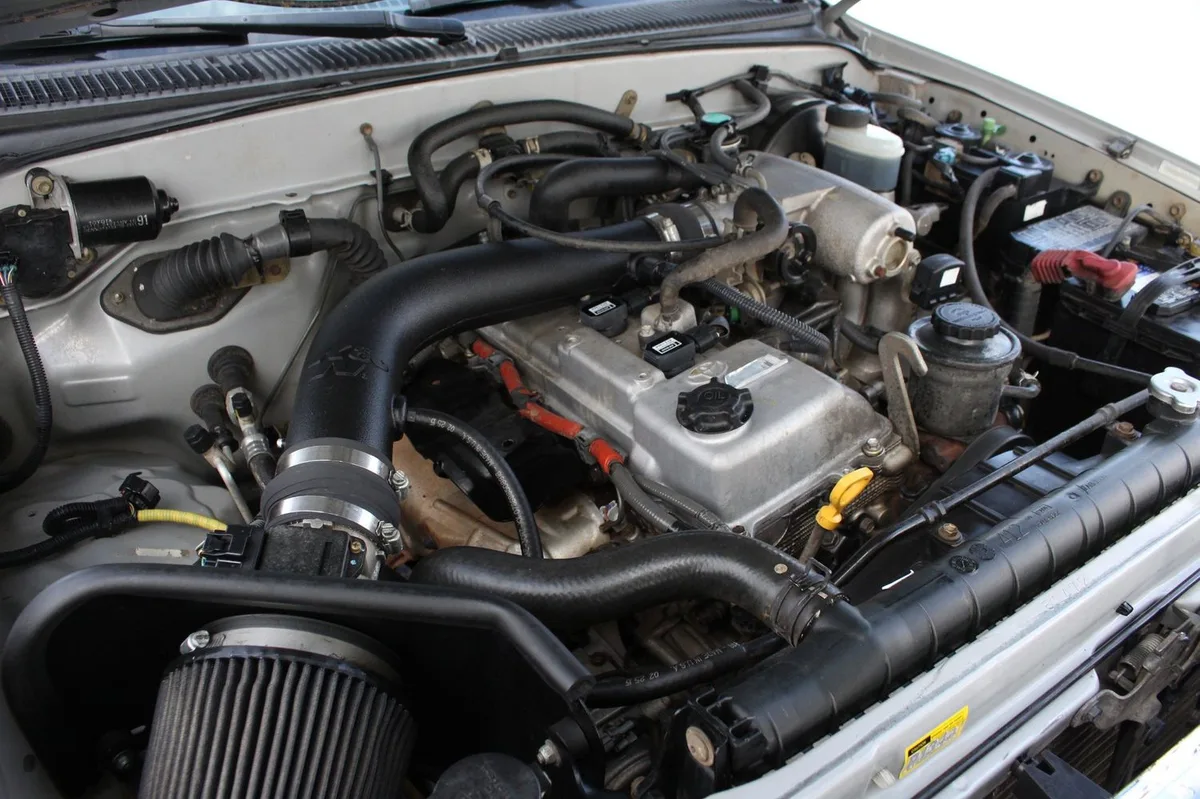
Image source: Web (Bing) / inf-inet.com (Web image (fair-use with source credit))
Quick Answer
The 2001 Toyota Tacoma needs either 4.5 quarts or 5.0 quarts of engine oil. It depends on the engine. The 2.4L four-cylinder takes 4.5 quarts.
The 3.4L V6 takes 5.0 quarts. Both require 5W-30 viscosity. Always use a new oil filter.
Check the dipstick after filling. Never overfill or underfill. These numbers are non-negotiable for engine health.
Why Getting the Oil Capacity Right Matters for a 2001 Tacoma
These trucks earned their reputation for reliability, but they aren't invincible. The 2RZ-FE and 5VZ-FE engines were built in an era before variable valve timing and direct injection. They're simpler, tougher, and more forgiving than modern engines.
But they have limits.
Putting in too little oil starves the bearings and camshafts. The oil pump pulls air, pressure drops, and metal starts riding on metal. That sound you hear isn't a tick.
It's a main bearing sending death threats. Too much oil causes the crankshaft to whip the fluid into foam. Aerated oil doesn't lubricate well, and pressure spikes can blow out seals.
On a high-mileage truck, a rear main seal leak from overfilling means pulling the transmission. You don't want that.
The correct oil capacity also affects how well your engine handles heat. The 3.4L V6 in particular runs hot when towing or climbing grades. A full 5.0-quart sump provides enough thermal mass to keep oil temperatures stable.
Shorting it by half a quart reduces that margin. On a 100-degree day with a loaded bed, that half quart matters.
Getting this right also saves your catalytic converter. Burning oil from an overfilled crankcase coats the catalyst with ash and carbon. Eventually it clogs, triggers a check engine light, and costs hundreds to replace.
Tacoma owners who keep the correct level rarely see that failure. It's that simple.
The Two Engines and Their Different Capacities
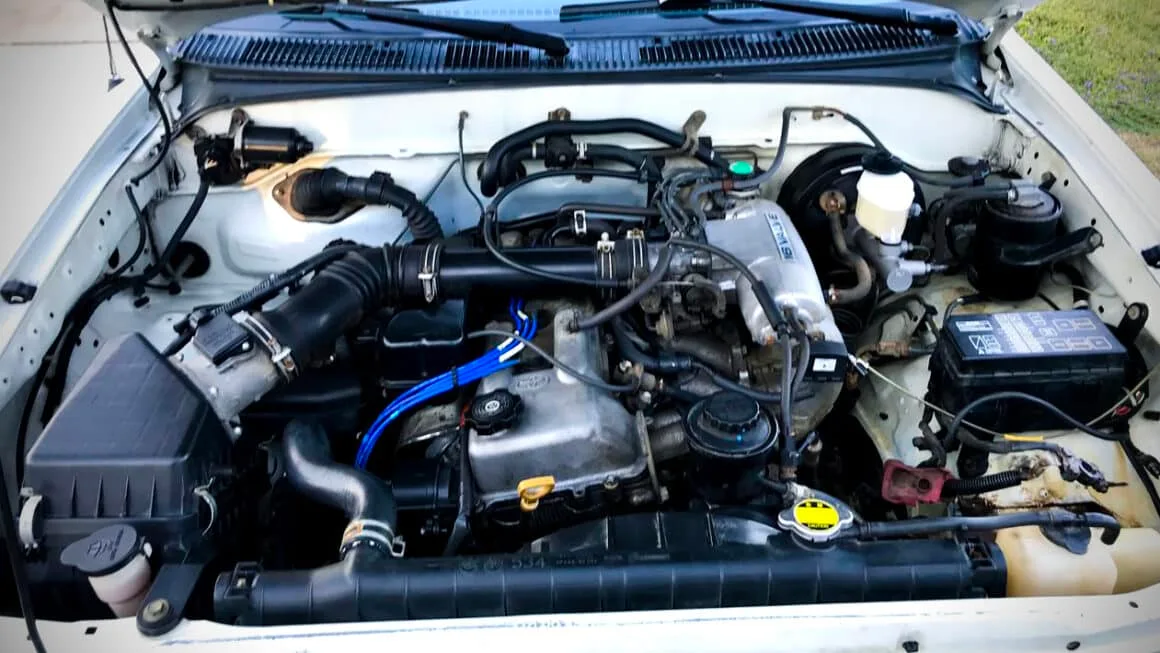
If you don't know which engine your Tacoma has, check the emissions sticker under the hood or look at the valve cover. The 2.4L is the smaller four-cylinder with a single timing chain cover on the passenger side. The 3.4L V6 fills more of the engine bay and has two exhaust manifolds visible from above.
2.4L 2RZ-FE (I-4): 4.5 Quarts
This engine was the base option in 2001. It's a 2.4-liter inline-four with iron block construction. Toyota designed it for durability over power.
It makes about 142 horsepower, which is modest, but it will run forever with proper care.
The total oil capacity is 4.5 US quarts when you replace the filter. Without a filter change, it takes about 4.0 quarts. The difference matters because the filter holds roughly half a quart of oil.
If you drain the pan and skip the filter, you're leaving old, contaminated oil in the system.
Many owners of the 2.4L report running this engine past 300,000 miles on the stock bottom end. The key is consistent oil changes at 5,000-mile intervals with the correct capacity. The same attention to the correct fluid level applies to other Toyota models, which is why you'll find similar guidance for a 1997 Camry when owners tackle engine servicing.
3.4L 5VZ-FE (V6): 5.0 Quarts
The 3.4-liter V6 is the preferred engine for Tacoma enthusiasts. It produces 190 horsepower and significantly more torque than the four-cylinder. It also has a larger oil pan to handle the additional heat from towing and off-road use.
Total capacity with filter is exactly 5.0 US quarts. Without a filter change, it's roughly 4.5 quarts. The V6 is more sensitive to oil level than the four-cylinder due to its higher oil pressure and tighter bearing clearances.
Running it a quart low can trigger low-pressure warnings on steep inclines.
The good news is that the 5VZ-FE is one of Toyota's most reliable V6 engines. With 5.0 quarts of fresh 5W-30 every 5,000 miles, it routinely reaches 250,000 miles without major repairs. The bad news is that it punishes neglect quickly.
Sludge buildup is the number one killer of these engines, and it starts with incorrect oil level or extended change intervals.
If you're comparing older and newer trucks, the capacity differences between generations matter. The 2024 Tacoma uses a completely different powertrain, so the oil specs don't carry over.
What Happens If You Use the Wrong Amount
The margin for error on these engines is about half a quart in either direction. Beyond that, you're gambling.
The Risks of Overfilling
Adding too much oil seems harmless. More oil means more lubrication, right? Wrong.
The crankshaft rotates through the oil in the pan. When the level is too high, the crank whips the oil into a froth. Air bubbles get trapped in the oil, and the pump sends that aerated fluid through the engine.
Air doesn't lubricate bearings.
You'll notice the dipstick reads high. The engine might feel sluggish. You could see smoke from the exhaust as excess oil gets past the piston rings.
In severe cases, the added pressure blows out the front or rear main seal. Replacing a rear main seal on a Tacoma requires dropping the transmission. That's a $1,200 job because you poured an extra half quart in.
The Dangers of Underfilling
Low oil is more immediately dangerous. The oil pickup tube sits near the bottom of the pan. When the level drops, hard cornering or steep grades can cause the pickup to suck air.
The oil pressure light flickers, then stays on. By the time you see that light, damage is already happening.
Rod knock from low oil is a death sentence for these engines. The 2.4L is particularly vulnerable because its smaller sump loses pressure faster than the V6. If you hear a knocking sound from the bottom end, the bearings are gone.
A used 2RZ-FE engine costs $1,500 to $2,500 installed. A proper fill with 4.5 quarts would have prevented it.
Choosing the Right Oil: Viscosity and Quality
Oil capacity isn't the only number you need. Viscosity matters just as much, especially on a truck built before modern oil formulations existed.
Why 5W-30 Is the Standard
Toyota specified 5W-30 for the 2001 Tacoma in all operating temperatures. That recommendation covers everything from subzero Alaskan winters to Arizona summer heat. The "5W" means the oil flows like a 5-weight when cold, protecting the engine during startup.
The "30" means it thickens to a 30-weight at operating temperature, providing proper film strength.
Some owners switch to 10W-30 in hot climates, thinking thicker oil protects better. It doesn't. The 5W-30 formulation has improved dramatically since 2001.
Modern synthetic blends outperform the conventional 10W-30 that was common twenty years ago. Stick with 5W-30 year-round.
The same viscosity advice applies to newer Toyota models. If you're curious about what the 2025 Tacoma takes, the specs changed with the turbocharged engine, but the logic remains the same.
Synthetic vs. Conventional for This Age Truck
Here's where opinions vary. Conventional oil meets the minimum requirement. It's cheaper and works fine if you change it every 3,000 to 5,000 miles.
But on a 25-year-old engine with unknown history, synthetic offers real advantages.
Synthetic oil resists thermal breakdown better than conventional. That matters in a 2001 Tacoma because these engines run hot, especially the V6 under load. Synthetic also flows better at cold temperatures, reducing startup wear.
And it resists sludge formation, which is the primary failure mode for the 5VZ-FE.
The trade-off is cost. A synthetic oil change costs about $45 for materials versus $25 for conventional. On an older truck with 200,000 miles, many owners prefer conventional because they change oil frequently anyway.
Either choice works as long as the viscosity and capacity are correct.
Step-by-Step: How to Change the Oil Correctly
Changing oil on a 2001 Tacoma is straightforward. These trucks have good ground clearance for a 2WD model and excellent clearance on the 4WD versions. You need a few basic tools and about 30 minutes.
| Tool or Supply | Purpose |
|---|---|
| 5 quarts of 5W-30 oil | Fill both engines (4.5 or 5.0 quarts) |
| Oil filter (Toyota 90915-YZZD3 or equivalent) | Replace with every change |
| 14mm socket or wrench | Drain plug removal |
| Oil filter wrench | Filter removal (hand-tighten new one) |
| Drain pan | Catch old oil |
| Funnel | Fill without spills |
| Jack and jack stands | Lifting if needed |
| Crush washer | Replace drain plug seal |
Start by warming the engine for a few minutes. Hot oil drains faster and carries more contaminants. Park on level ground.
If your truck is lowered or you want more room, jack up the front and use jack stands. Never crawl under a truck supported only by a jack.
Slide under the front of the truck. Locate the drain plug on the oil pan. It's a 14mm bolt facing downward.
Place your drain pan underneath. Remove the plug with the wrench and let the oil flow. Let it drain for at least five minutes.
A full drain removes more old oil, which matters for accurate refill.
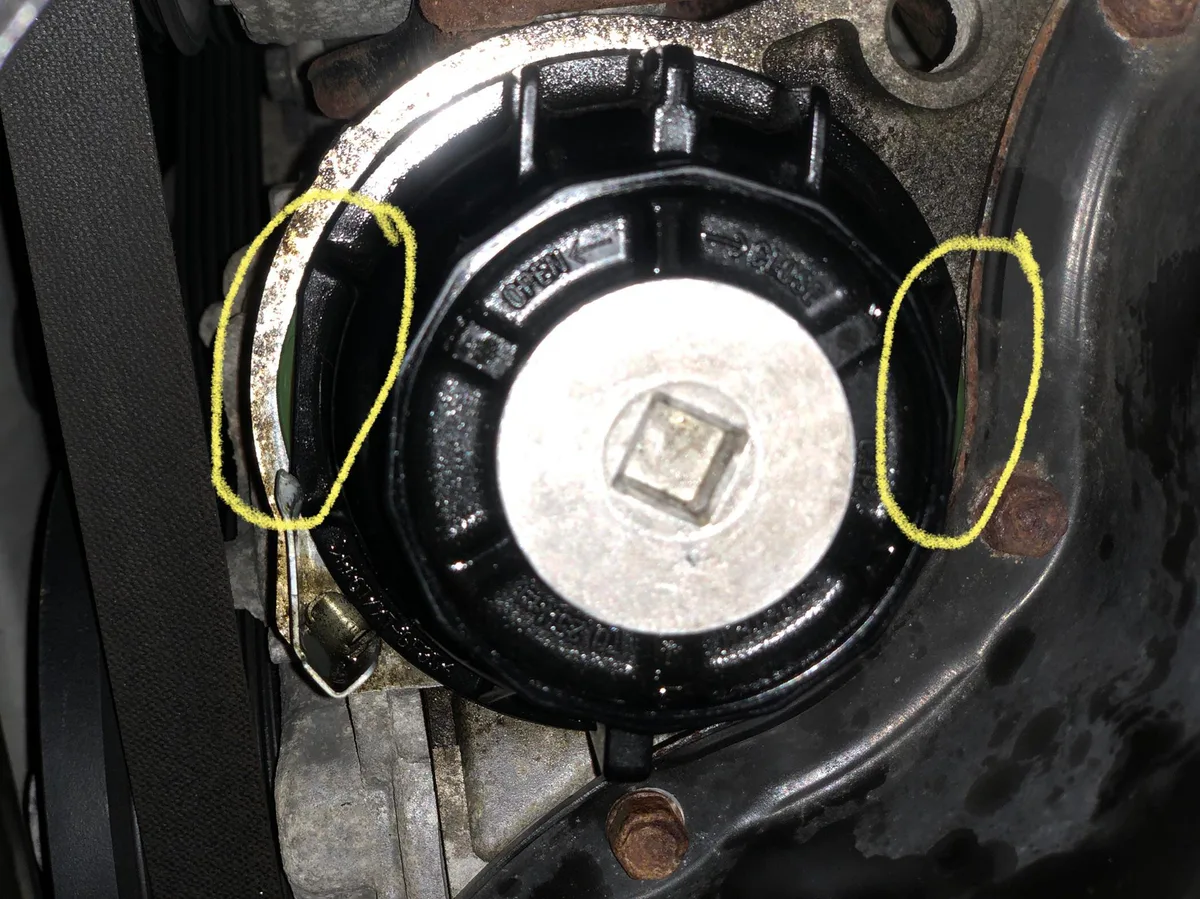
While the oil drains, move to the oil filter. It's mounted on the side of the engine block. On the 2.4L, it's on the passenger side near the front.
On the 3.4L, it's on the driver side. Use the filter wrench to loosen it. Some oil will spill, so keep the drain pan positioned underneath.
Remove the old filter and wipe the mounting surface clean.
Here's the step most people skip. Take the new filter and pour fresh oil into it until it's about half full. Swirl it around to coat the inside.
Then rub a thin layer of oil on the rubber gasket. This primes the filter so the engine builds oil pressure immediately on startup. Without priming, the engine runs dry for several seconds.
That's dozens of metal-to-metal contact cycles every oil change. Over 100,000 miles, that adds up.
Install the new filter by hand. Tighten it until the gasket contacts the mounting surface, then turn another three-quarters of a turn. Do not use the wrench for tightening.
Hand tight is correct and prevents overtightening damage.
Replace the drain plug with a new crush washer. Tighten it to 29 ft-lbs. If you don't have a torque wrench, snug it firmly plus a quarter turn.
Over-tightening strips the aluminum oil pan threads, which is a common and expensive mistake.
Now fill the engine. For the 2.4L, pour in 4.5 quarts. For the 3.4L, pour in 5.0 quarts.
Use a funnel to avoid spills. Replace the oil fill cap.
Start the engine and let it run for 30 seconds. The oil pressure light should turn off within a few seconds. If it stays on, shut the engine down immediately and check for leaks or a missed filter gasket.
Look under the truck for drips at the drain plug and filter.
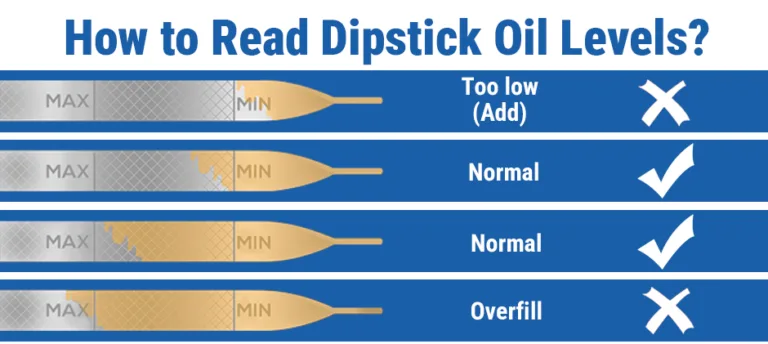
Shut the engine off and wait two minutes for the oil to settle. Pull the dipstick, wipe it clean, insert it fully, then pull it again. The oil level should be at the full mark.
Running the engine circulates oil through the filter, so the level drops slightly from the initial fill. Top off as needed.
Common Mistakes That Kill These Engines
The 2001 Tacoma is a reliable truck, but it has specific weaknesses that show up when owners cut corners on oil changes.
Stripping the Drain Plug
The oil pan on these trucks is made of stamped steel on some models and cast aluminum on others. Either way, the drain plug threads are soft and easy to strip. Using an impact wrench or overtightening by hand crushes the threads.
Once stripped, you have three options: a helicoil thread insert, a new oil pan, or a self-tapping oversized drain plug. The helicoil fix works but costs about $50 in tools and labor. Prevention is simple.
Tighten the drain plug to 29 ft-lbs. That's about the same force you'd use to tighten a lug nut to the first click of a torque wrench. If you don't have a torque wrench, tighten it snug plus a quarter turn.
That's it. More force doesn't mean a better seal. It means a future headache.
The same kind of fastener care matters in other vehicles. Keeping the correct fluid level starts with a drain plug that seals properly.
Forgetting the Filter Gasket
This one kills engines quietly. When you remove the old oil filter, the rubber gasket sometimes sticks to the engine block. If you install the new filter on top of the old gasket, you get a double gasket.
The new filter tightens down, the old gasket fails to seal, and oil pressure drops immediately.
The symptom is a puddle of oil under the truck right after the change. The solution is to always wipe the filter mounting surface with a rag before installing the new filter. If you feel a second rubber ring, you caught it.
If you don't, the engine runs dry and you're looking at a bearing replacement.
Relying on the Dipstick Before a Full Drain
Some owners add oil without draining the old stuff first. They check the dipstick, see it's low, and top off. That's fine for a small top-up between changes.
But if you're doing a full oil change, you must drain completely first. The dipstick only measures the oil in the pan, not what's still in the filter and passages. Adding 4.5 quarts to a partially drained engine guarantees overfilling.
The correct process is always drain, filter, fill, check. In that order.
When Your Oil Capacity Differs From the Book
Most 2001 Tacomas follow the factory specs exactly. But some don't. If you bought the truck used, there's a chance the previous owner made changes that affect oil capacity.
Adding a Larger Aftermarket Oil Pan
Some off-road builds use deep oil pans for better heat dissipation and reduced oil starvation on steep angles. An aftermarket pan adds roughly one to two quarts of capacity. If your truck has one, the factory 4.5 or 5.0 quarts won't be enough.
The fix is simple. Fill with the factory amount, run the engine, check the dipstick, and add until it reads full. Write down the new total on a piece of tape inside the glove box.
Next time you change oil, you'll know exactly how much to pour.
Towing and Severe Service Adjustments
Toyota's severe service schedule recommends changing oil every 3,000 miles for trucks that tow, see dusty conditions, or do short trips. That's more frequent changes, not different capacity. Adding extra oil beyond the full mark doesn't help.
It hurts, as we covered earlier.
The exception is if your Tacoma burns oil. Many high-mileage 2.4L engines consume a quart between changes. That's normal wear, not a defect.
Keep a spare quart in the truck and check the dipstick every thousand miles. Top off as needed. The correct maintenance interval matters across Toyota's lineup, and you'll find the same philosophy in our guide for the 4Runner when owners push their trucks hard.
Maintenance Schedule for a 22-Year-Old Truck
Age changes the rules. A 2001 Tacoma with original seals and gaskets needs more frequent attention than a newer vehicle.
Normal Driving: 5,000 Miles
For mixed driving with highway miles, 5,000 miles between oil changes is the sweet spot. That's 5,000 miles on conventional oil or up to 7,500 miles on synthetic. Stick with the shorter interval if you don't know the truck's maintenance history.
Severe Service: 3,000 Miles
Severe service isn't just for race cars. It includes:
- Repeated short trips under five miles
- Extended idling in traffic
- Driving on unpaved or dusty roads
- Towing a trailer or carrying heavy loads
- Operating in extreme heat or cold
If any of these describe your commute, change the oil every 3,000 miles regardless of oil type. The 3.4L V6 in particular accumulates moisture and fuel dilution faster under severe conditions. Frequent changes keep the oil effective.
Why High-Mileage Oil Makes Sense Now
High-mileage formulations contain seal conditioners that reduce leaks. On a 2001 Tacoma with original valve cover gaskets and rear main seals, those additives help. The trade-off is slightly higher cost, about $5 more per change.
For a truck that's already paid for itself many times over, that's cheap insurance.
FAQs About 2001 Tacoma Oil Capacity
How much oil does a 2001 Toyota Tacoma 2.4L take?
It takes 4.5 quarts with a filter change. That's the total system capacity including the filter. If you only drain the pan and don't replace the filter, use about 4.0 quarts and check the dipstick.
How much oil does a 2001 Toyota Tacoma V6 take?
The 3.4L V6 takes exactly 5.0 quarts with a filter replacement. Without a new filter, use about 4.5 quarts. Always verify with the dipstick after filling and running the engine.
What type of oil does a 2001 Tacoma need?
Toyota recommends 5W-30 for all climates. Conventional or synthetic both work, but synthetic resists breakdown better in high-mileage engines. Avoid 10W-30 even in hot climates.
Modern 5W-30 formulations cover the full temperature range.
Can I use synthetic oil in my 2001 Tacoma?
Yes. Synthetic oil is fully compatible with these engines. It flows better at startup and resists sludge formation.
Many owners with high-mileage trucks report reduced oil consumption after switching to synthetic.
How do I check the oil level on a 2001 Tacoma?
Park on level ground and warm the engine to operating temperature. Shut it off and wait two minutes. Pull the dipstick, wipe it, insert it fully, and pull it again.
The oil should reach the full mark. Add oil in quarter-quart increments if low.
What happens if I overfill my 2001 Tacoma's oil?
Overfilling causes oil foaming, which reduces lubrication. It can blow out seals and cause oil to enter the combustion chamber. If you overfill, drain the excess through the drain plug until the level is correct.
Common Mistakes That Kill These Engines
Stripping the Drain Plug
The oil pan threads on these trucks are soft. Aluminum pans strip easily if you overtighten. Steel pans hold up better, but the plug itself can still cross-thread.
Use a torque wrench set to 29 ft-lbs. If you don't have one, snug the plug firmly then add a quarter turn. That's all it takes.
Forgetting the Filter Gasket
Old filter gaskets often stick to the engine block. Install a new filter on top of the old gasket and you get a double seal. The new filter tightens down, the old gasket fails, and you lose oil pressure fast.
Always wipe the mounting surface clean. If you see two rubber rings, you caught the problem.
Relying on the Dipstick Before a Full Drain
The dipstick only shows what's in the pan. After a partial drain, adding the full capacity guarantees overfilling. Drain completely first.
Then fill. Then check. That order never fails.
Using the Wrong Viscosity
Some owners grab 10W-30 thinking it's better for older engines. It isn't. The 5W-30 spec covers all conditions.
Thicker oil doesn't protect better. It just flows slower on cold starts.
Mixing Oil Types
Topping off synthetic with conventional won't blow your engine. But consistent oil type matters for additive packages. Stick with one type per change cycle.
When to Seek Professional Help
You See Metal in the Old Oil
Shiny silver particles in drained oil mean bearing wear. Gold or copper flakes point to bushing failure. Either way, don't just refill and hope.
Have a mechanic inspect the oil and listen for knock.
The Oil Pressure Light Flickers
Intermittent oil pressure on a 2001 Tacoma usually means low level, a worn pump, or clogged pickup tube screen. Check the dipstick first. If it's full and the light still flickers, get professional diagnosis.
These engines don't survive long without proper pressure.
You Can't Remove the Drain Plug
Rounded or seized drain plugs happen on rusty trucks. Drilling or extracting it yourself risks damaging the pan. A shop can remove it safely and install a new plug with fresh threads.
Final Verdict: The Numbers You Need to Trust
Here's what matters for your 2001 Tacoma. The 2.4L takes 4.5 quarts. The 3.4L takes 5.0 quarts.
Both need 5W-30. Change the oil every 5,000 miles for normal driving, 3,000 for severe service. Prime the filter before installation.
Check the dipstick after every fill. Never overfill or underfill.
These specs aren't suggestions. They're the difference between a Tacoma that runs 300,000 miles and one that needs a new engine at 180,000. Choose your oil carefully, measure accurately, and your truck will reward you with years of reliable service.