
If you’re trying to find the 2000 toyota camry oil capacity, you’ve probably noticed that the answer isn’t the same for every car. Pour in the wrong amount and you risk engine damage, messy leaks, or low oil pressure. The good news is that getting it right only takes one quick check.
Toyota’s factory specs show two distinct capacities: 4.2 quarts with a filter change for the 2.2L four-cylinder engine, and 4.5 quarts for the 3.0L V6. That half-quart difference matters, and it’s all about which engine you have. Let’s sort that out first.

Image source: Web (Bing) / walmart.com (Web image (fair-use with source credit))
Quick Answer: Oil Capacity at a Glance (I4 vs V6)
| Engine | Capacity with filter | Capacity without filter | Recommended oil |
|---|---|---|---|
| 2.2L I4 (5S‑FE) | 4.2 quarts | 3.9 quarts | 5W‑30 |
| 3.0L V6 (1MZ‑FE) | 4.5 quarts | 4.2 quarts | 5W‑30 |
Always check your dipstick after filling. The numbers above are starting points, the final level should sit between the low and full marks.
First: Which Engine Does Your Camry Have? (The Critical Fork)
Here’s where most people trip up. The 2000 Camry came with two very different engines, and the oil capacity changes based on which one you’re staring at. If you just guess, you might overfill or underfill, both are bad news.
Overfilling can cause foaming, oil leaks, and even blown seals. Underfilling starves the engine of lubrication, especially during hard cornering or long highway drives. Toyota’s service manual is clear: the 2.2L I4 (5S‑FE) takes 4.2 quarts, while the 3.0L V6 (1MZ‑FE) takes 4.5 quarts.
So how do you know which engine sits under your hood? You have three reliable ways to check.
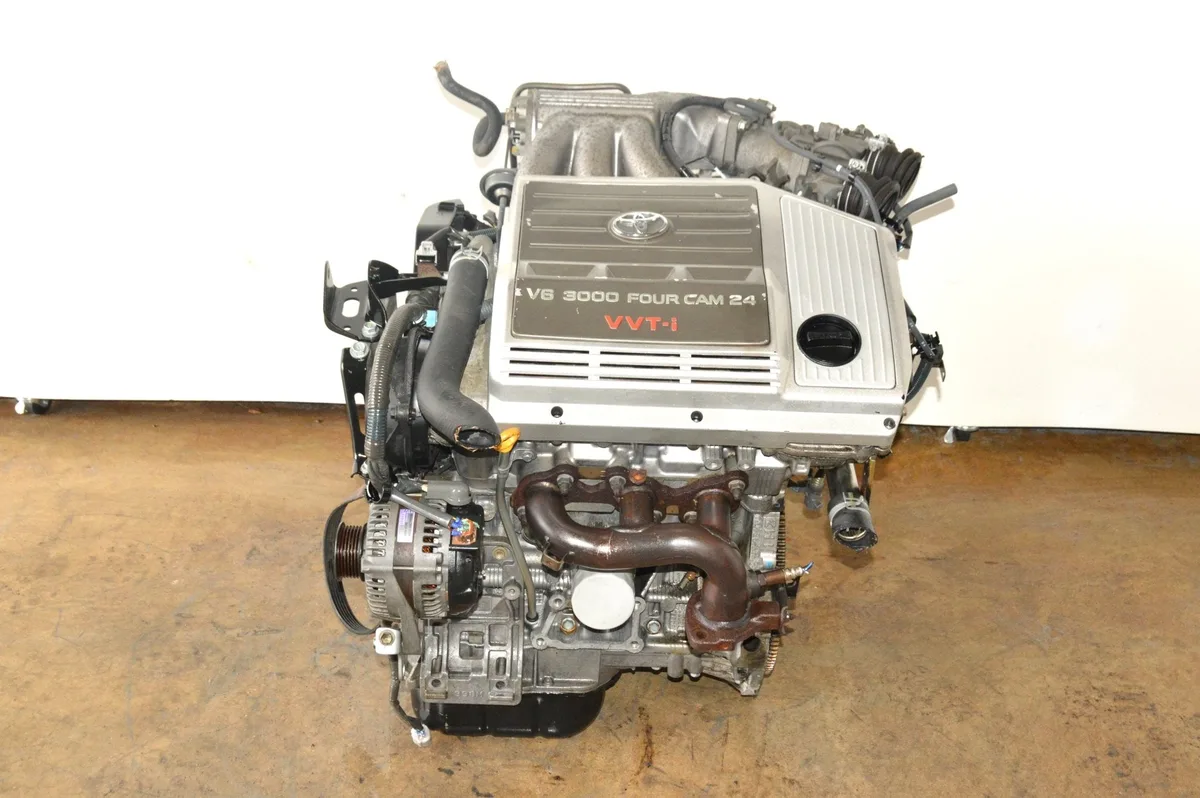
Image source: Web (Bing) / storage.googleapis.com (Web image (fair-use with source credit))
VIN Decoding – The Fastest Method
Your Vehicle Identification Number (VIN) tells you the engine size right away. Look at the eighth character of your VIN. If it’s S, your Camry has the 2.2L I4.
If it’s M, you have the 3.0L V6.
That one letter saves you from crawling under the car or guessing. Write it down or snap a photo.
Underhood Sticker and Valve Cover Clues
Pop the hood. You’ll find a factory emissions sticker on the underside of the hood or on the front radiator support. That sticker lists the engine displacement in liters.
If you see “2.2L” or “2.2”, you have the four-cylinder. “3.0L” or “3.0” means V6.
No sticker? Look at the engine itself. The valve cover (the top metal part with the “Toyota” logo) is different between the two.
The I4 cover is long and narrow. The V6 cover is wider and shorter. If you still aren’t sure, compare with the image above.
What If the Engine Has Been Swapped?
On a 25‑year‑old car, previous owners may have replaced the engine. Trust nothing except what you see. The VIN won’t help if the engine isn’t original.
Check the valve cover or the engine block stampings. The I4 block has “5S‑FE” cast into it near the transmission bellhousing. The V6 block reads “1MZ‑FE”.
Once you know your engine, you know your capacity. Write it down so you never guess again.
How to Identify Your 2000 Camry’s Engine
We covered the basics above, but let’s make the process foolproof with a step‑by‑step workflow.
Step 1: Read the VIN
As mentioned, VIN character 8 is the key. Write down your full VIN (visible through the windshield or on the driver’s door jamb sticker) and check the eighth digit.
- Digit 8 = S → 2.2L I4 (4.2 quarts)
- Digit 8 = M → 3.0L V6 (4.5 quarts)
Step 2: Verify Under the Hood
Even with the VIN, pop the hood and confirm. Look for the engine displacement label. If it’s missing, note the shape of the air intake tube, the V6 has two separate intake runners, while the I4 has a single larger tube.
Step 3: Check the Oil Cap or Dipstick
Sometimes the oil cap itself is marked with the recommended viscosity. That won’t tell you the capacity, but it confirms whether someone has been using the right oil. If the cap says “5W‑30”, you’re on the right track.
Still uncertain? Post a photo in a Toyota forum or use a trusted mechanic. Getting the engine wrong is the #1 mistake in this whole job.
Step-by-Step: The Complete Oil Change Workflow
Now that you know your engine, it’s time to change the oil. Follow these steps in order.
Gather Supplies (Oil, Filter, Tools)
You’ll need:
- Oil, 5 quarts of 5W‑30 (you’ll use about 4.2 or 4.5, but having extra allows for spills and topping off)
- Oil filter, Toyota OEM or a high‑quality aftermarket filter (check the owner’s manual or a parts store lookup for the correct part number)
- Crush washer for the drain plug (size: 14mm, usually copper or aluminum)
- Tools, 14mm socket or wrench for the drain plug; oil filter wrench (optional but helpful); socket set; jack and jack stands or ramps; drain pan; funnel; gloves; rags
- Safety gear, gloves, safety glasses, and a fire extinguisher nearby (oil is flammable)
If you’ve never changed oil on a Toyota before, take a moment to review the basic steps on a related model, for example, the 2007 Toyota Camry uses a very similar procedure. (That’s a great reference if you’re looking for more detail.)
Drain the Old Oil Safely
- Warm up the engine for a minute or two to thin the oil. Hot oil drains faster and more completely.
- Park on level ground. Use ramps or a jack and jack stands, never rely on the jack alone.
- Slide the drain pan under the engine. Locate the drain plug on the oil pan (facing the rear of the car on most Camrys).
- Loosen the plug with a 14mm socket. Turn it counterclockwise. After the first turn, unscrew it by hand while pushing inward to control the flow.
- Let the oil drain for several minutes until it slows to a drip.
Remove and Replace the Oil Filter
The oil filter location differs between the I4 and V6. On the I4, it’s on the front of the engine near the exhaust manifold. On the V6, it’s on the rear of the engine, accessible from underneath.
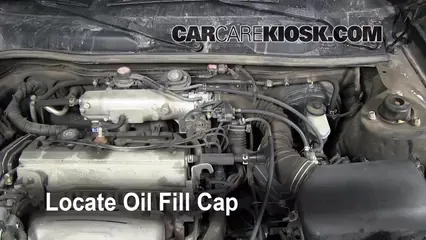
Image source: Bing (Web (fair-use with source credit))
- Use an oil filter wrench if the filter is tight. Turn it counterclockwise to remove. Have the drain pan positioned below it, oil will spill.
- Before installing the new filter, rub a thin layer of fresh oil on the rubber gasket. This prevents the gasket from sticking and helps seal properly.
- Screw the new filter on by hand. Turn it until the gasket contacts the engine, then tighten it another ¾ turn. Do not overtighten.
Refill with the Correct Amount – And How to Check the Dipstick Properly
- Reinstall the drain plug with a new crush washer. Torque it to 29 ft‑lb (39 Nm) for the I4 or 31 ft‑lb (42 Nm) for the V6. If you don’t have a torque wrench, snug it plus a quarter turn, but be careful not to overdo it.
- Pour in about 80% of the expected capacity (around 3.5 quarts for the I4, 3.8 quarts for the V6). Use a funnel to avoid spills.
- Start the engine and let it run for about 30 seconds. This circulates the oil and fills the new filter.
- Turn the engine off and wait 2‑3 minutes for the oil to settle. Pull the dipstick, wipe it clean, reinsert fully, then pull again. The oil level should be between the low and full marks.
- Add more oil a quarter‑quart at a time until you reach the full mark. Don’t overfill.
For a deeper dive into oil types and capacities across different Toyota models, you might find the 2005 Toyota Corolla oil guide helpful, the process is nearly identical.
Oil Type and Viscosity: What to Use and What to Avoid
Choosing the right oil viscosity matters almost as much as the capacity. The 2000 Camry was designed around 5W‑30 multigrade oil. Here’s why and when you might consider a different option.
Why 5W‑30 Is the Standard
Toyota specified 5W‑30 for a reason. The “5W” means the oil flows like a thin 5‑weight oil when cold, great for startups in winter. The “30” means it thickens to a 30‑weight oil at operating temperature, providing enough protection for the close tolerances of these engines.
As of 2026, this remains the recommended viscosity for nearly all 2000 Camrys. It balances fuel economy, startup wear protection, and high‑temperature stability. Use a high‑quality conventional or synthetic blend unless you’re driving in extreme conditions.
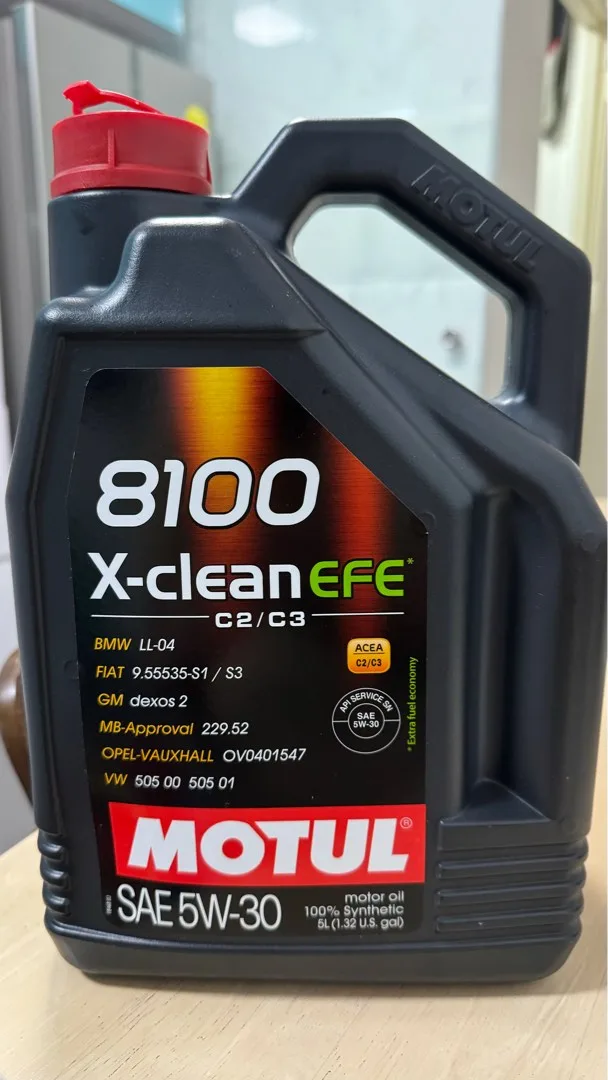
Image source: Web (Bing) / carousell.sg (Web image (fair-use with source credit))
When 10W‑30 Makes Sense (And When It Doesn’t)
If you live in a very hot climate (Arizona, Texas, the Deep South) or do a lot of towing, 10W‑30 is acceptable. It’s slightly thicker when cold, which can help reduce oil consumption in high‑mileage engines. But it may cause harder starts in winter below about 20°F (, 6°C).
Avoid thick oils like 20W‑50 or straight 30‑weight. They can increase engine wear at startup and reduce fuel economy. The Camry’s engine uses narrow oil passages that demand the right viscosity.
Always check your owner’s manual, if you’ve lost it, look up the factory specs using Toyota’s official website or a reliable parts database. (The EPA’s used oil page is a great resource for ensuring you dispose of that old oil responsibly.)
Common Mistakes That Cost You Money or Damage the Engine
Even experienced DIYers make these errors. The cost of a mistake ranges from a messy cleanup to a blown engine. Let’s run through the big ones so you can avoid every single one.
Overfilling – How It Happens and Why It’s Bad
Overfilling happens when you blindly dump in the whole jug without checking the dipstick. The extra oil sloshes up into the crankshaft. The crankshaft whips the oil into foam, which doesn’t lubricate well.
Foam deprives bearings and camshafts of oil pressure.
Worse, foaming can push oil past the piston rings into the combustion chamber. That burns oil, creates blue smoke, and can foul spark plugs. The fix is simple: fill slowly, check the dipstick after each quart near the end.
Underfilling – The Silent Wear Accelerator
Underfilling usually comes from misreading the dipstick or not accounting for the oil that fills the new filter. The oil pump then sucks air intermittently. Low oil pressure is the result.
The engine’s bearings and valve train run hotter and wear faster. A low oil level also reduces cooling. The 2000 Camry’s oil pan holds just enough for normal driving.
On steep inclines or hard corners, the pickup tube may starve completely. Always check the level on level ground with a cold or warm (not hot) engine.
Stripping the Drain Plug or Filter Housing
The drain plug threads are easy to strip if you use a ratchet with too much force. Torque specs exist for a reason. Use a torque wrench set to 29 ft‑lb (I4) or 31 ft‑lb (V6).
If the plug won’t loosen, use penetrating oil, not brute force.
Stripped threads mean a new oil pan or a helicoil repair. That’s a $200‑plus job. Same goes for the oil filter housing, hand‑tighten only.
Using the Wrong Filter or Skipping the Gasket Oiling
An oil filter that doesn’t fit properly can leak. Always match the filter to your engine. The I4 filter is shorter than the V6 version in some brands.
Never use a filter from a different model just because it threads on.
Skipping the gasket oiling is a classic mistake. A dry gasket can bind, tear, or fail to seal. That causes a slow leak that you might not notice until oil pressure drops.
Take the ten seconds to rub fresh oil on the rubber gasket.
For a broader look at common oil‑related mistakes on newer Toyotas, the 2017 Toyota Tacoma oil guide covers similar pitfalls with modern engines.
Capacity Specs Reference Table (I4 and V6)
Here’s the full spec sheet in one place. Bookmark this page or snap a photo.
| Specification | 2.2L I4 (5S‑FE) | 3.0L V6 (1MZ‑FE) |
|---|---|---|
| Oil capacity with filter | 4.2 US quarts (3.97 liters) | 4.5 US quarts (4.26 liters) |
| Oil capacity without filter | 3.9 quarts | 4.2 quarts |
| Recommended viscosity | 5W‑30 | 5W‑30 |
| Acceptable viscosity (hot climate) | 10W‑30 | 10W‑30 |
| Oil filter torque (hand‑tight) | ¾ turn after gasket contact | ¾ turn after gasket contact |
| Drain plug torque | 29 ft‑lb (39 Nm) | 31 ft‑lb (42 Nm) |
| Oil type | Conventional or synthetic blend | Conventional or synthetic blend |
These numbers come straight from the 2000 Camry factory service manual. They haven’t changed for this generation.
Expert Tips for a Long-Lasting 2000 Camry Engine
Your 2000 Camry can easily reach 250,000 miles with proper oil care. Here are the tricks that experienced owners use.
When to Switch to Synthetic Oil
Synthetic oil provides better cold‑flow protection and resists breakdown longer. If your Camry has over 100,000 miles and you’ve always used conventional oil, a switch to a high‑mileage synthetic blend is safe. Drain the old oil completely before switching.
Don’t worry about “seal swell” myths. Modern synthetics are compatible with older seals. Just do the change and stick with it.
The 2019 Toyota RAV4 oil type guide explains the switch in more detail for a Toyota engine of similar design.
How Mileage Affects Your Oil Choice
Higher‑mileage engines often burn a little oil. If you’re topping off between changes, consider stepping up to a 10W‑30 in summer. It reduces consumption and still protects.
Also check the dipstick more often. A quart low at 200,000 miles is more damaging than a quart low at 50,000 miles. Engines with worn rings need every drop.
Checking for Leaks After Every Change
After your first oil change, run the engine for a minute and park it on clean cardboard overnight. In the morning, look for drips. The most common leak points are the drain plug crush washer and the oil filter gasket.
If you see a drip, tighten the filter another eighth turn or replace the crush washer. Don’t ignore small leaks, they can grow into big ones.
Safety and Disposal: What You Must Know
Changing oil involves hot fluids and heavy tools. Safety isn’t optional.
Jack Stands vs Ramps – Which Is Safer?
Ramps are the safer choice for oil changes. You drive up, put the car in park, and chock the rear wheels. No jack needed.
No risk of the car falling.
If you must use a jack, always place jack stands under the frame rails. Never crawl under a car supported only by a hydraulic jack. They can fail.
Even the most expensive jack can lose pressure.
Proper Used Oil Disposal (Don’t Just Dump It)
Used engine oil is toxic and illegal to dump down drains, sewers, or onto the ground. One quart of oil can contaminate 250,000 gallons of drinking water.
Take your used oil to any auto parts store. Most accept it for free. Some municipalities also have household hazardous waste collection days.
Never mix oil with antifreeze, solvent, or water, that makes recycling impossible.
The EPA’s used oil management guidelines provide a full explanation of safe disposal rules.
Decision Guide: One-Minute Flowchart for Your Exact Situation
Still unsure about the capacity or the process? Follow this simple decision tree.
Step 1: Identify your engine.
- If VIN digit 8 is S → 2.2L I4. Go to Step 2a.
- If VIN digit 8 is M → 3.0L V6. Go to Step 2b.
- If unknown → check underhood sticker. No sticker? Look at valve cover shape.
Step 2a: I4 (2.2L)
- Use 4.2 quarts of 5W‑30 with filter.
- Drain plug torque: 29 ft‑lb.
- Oil filter: hand‑tight plus ¾ turn.
Step 2b: V6 (3.0L)
- Use 4.5 quarts of 5W‑30 with filter.
- Drain plug torque: 31 ft‑lb.
- Oil filter: hand‑tight plus ¾ turn.
Step 3: Fill, check, and confirm.
- Pour in 80% of capacity first.
- Run engine 30 seconds, wait 2 minutes, check dipstick.
- Add quarter‑quarts until level reads full.
If you see any leaks after the first drive:
- Tighten the drain plug slightly (no more than 2 ft‑lb extra).
- Tighten the oil filter another eighth turn.
- If leaking persists, replace the crush washer or filter.
This process works every time. For a similar procedure on a different Toyota model, the 2019 Camry SE oil type guide follows the same logic with updated specs.
Frequently Asked Questions
Can I Use 0W‑30 or 10W‑40?
0W‑30 is safe in very cold climates but offers no benefit over 5W‑30. 10W‑40 is too thick for this engine at startup and can increase wear. Stick with 5W‑30 for year‑round protection.
Do I Need to Replace the Crush Washer Every Time?
Yes. The crush washer deforms to create a seal. Reusing it risks a slow drip.
They cost pennies at any auto parts store. Buy a pack of ten and replace one with every change.
What If I Lost My Owner’s Manual?
You can find the factory specifications online through Toyota’s official website or by searching the VIN. Many forums also host PDF copies. The numbers in this article match the official service manual.