
If you're about to change the oil on your 2024 Toyota Camry, the first number you need is the oil capacity. Getting it wrong means either starving the engine or overfilling it, and both can lead to costly repairs. The exact 2024 Toyota Camry oil capacity is 4.8 quarts (4.5 liters) with a filter change.
That number isn't just a suggestion. Toyota designed this engine around a specific volume of synthetic 0W-16 oil that meets API SP and ILSAC GF-6 standards. Run it low and the oil pump can suck air, causing bearing wear.
Pour in too much and the crankshaft whips the oil into foam, which reduces pressure and can damage seals. As of 2026, this spec still applies to every 2024 Camry sold in North America. So let's walk through everything you need to know before you touch a single bolt.
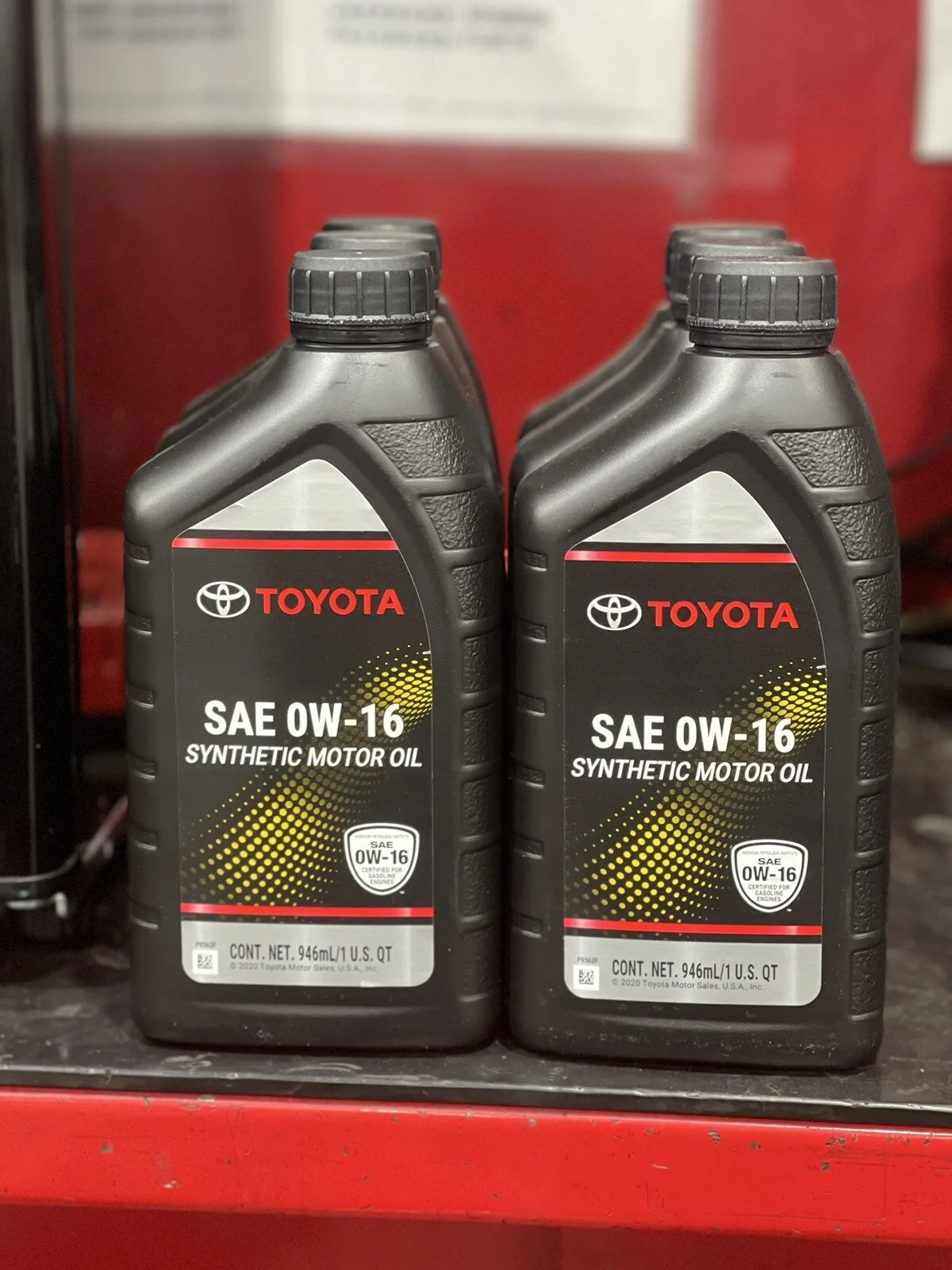
Image source: Bing (Web (fair-use with source credit))
Why Getting the Oil Capacity Wrong Can Cost You an Engine
Oil does three things inside your engine: it lubricates moving parts, it carries away heat, and it cleans. Each of those jobs depends on the oil being at the right level. Too little oil means the pickup tube can't pull enough fluid, especially during hard cornering or steep hills.
The engine starves, metal rubs against metal, and you're looking at a rebuild.
Too much oil is just as bad. The crankshaft spins through the extra oil, creating foam that the pump can't compress. Air bubbles in the oil reduce its ability to cool and lubricate.
In some cases, excess pressure can blow out seals or force oil past the rings into the combustion chamber, causing smoke and carbon buildup.
Toyota saw this on older models. That's why they specify an exact capacity for every engine. The 2024 Camry's 2.5L Dynamic Force engine is no different.
If you pour in even half a quart too much, the dipstick will show it. And if you ignore the dipstick, you're gambling with the engine's life.
For perspective, the same care applies to other Toyota engines. A similar mistake in a 2019 Camry or a 2020 Camry can cause identical damage. The capacity numbers differ by generation, but the principle remains: get the volume right or pay the price.
Quick Answer: 2024 Toyota Camry Oil Capacity at a Glance
Here's the short version, no fluff.
| Condition | Capacity |
|---|---|
| With filter change | 4.8 quarts (4.5 liters) |
| Without filter change | Approximately 4.5 quarts (4.3 liters) |
| Oil type | SAE 0W-16 full synthetic |
| Certification | API SP or ILSAC GF-6A |
| Hybrid vs. gas | Same capacity for both |
Always check the dipstick after filling. The difference between "full" and "low" marks is about 0.5 quarts. Don't guess.
The 2024 Camry Engine: What You're Working With (2.5L Dynamic Force)
Every 2024 Camry sold in the US uses the same engine: a 2.5-liter four-cylinder called the Dynamic Force. Whether you have the LE, SE, XLE, XSE, or the hybrid version, the block is essentially the same. The hybrid uses a slightly different variant (A25A-FXS instead of A25A-FKS), but the oil capacity and viscosity are identical.
This engine is known for its high thermal efficiency. Toyota squeezed power and fuel economy out of it by using a long stroke, high compression ratio, and low-friction components. That last part matters because it's why the engine needs thin 0W-16 oil.
Thicker oil creates drag, hurts fuel economy, and can cause cold-start oil starvation in this engine.
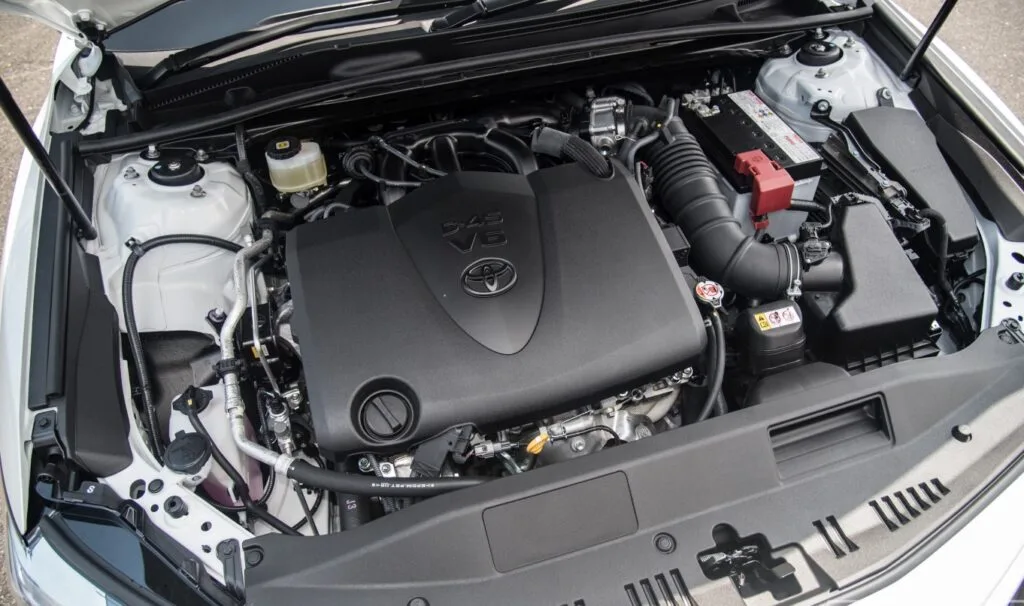
Image source: Bing (Web (fair-use with source credit))
The engine holds 4.8 quarts with the filter. But here's the thing: the filter itself absorbs about 0.3 quarts of oil. So if you drain the oil but leave the old filter in place, you'll only need about 4.5 quarts to refill to the full mark.
That's a common mistake. People drain the oil, swap the filter, pour in the filter-less capacity, and end up overfilling by half a quart.
Step-by-Step: How to Do a Proper Oil Change on a 2024 Camry
Doing it yourself saves money. A dealer charges $70 to $100. You can buy the oil and filter for about $30.
But only if you do every step correctly.
What You'll Need (Tools, Oil, Filter)
| Tool / Material | Details |
|---|---|
| Oil | 5 quarts of 0W-16 synthetic (you'll use 4.8) |
| Oil filter | Toyota part 04152-31090 or equivalent (Mobil 1 M1-102, WIX 57044) |
| Drain plug gasket | Toyota p/n 90430-12031 (replace every time) |
| Socket wrench | 10mm socket for drain plug |
| Oil filter wrench | Cap-style or strap wrench |
| Drain pan | At least 6-quart capacity |
| Funnel | Long neck helps fill through the narrow opening |
| Torque wrench | Optional but recommended |
| Jack and jack stands | Or ramps – never rely on a scissor jack |
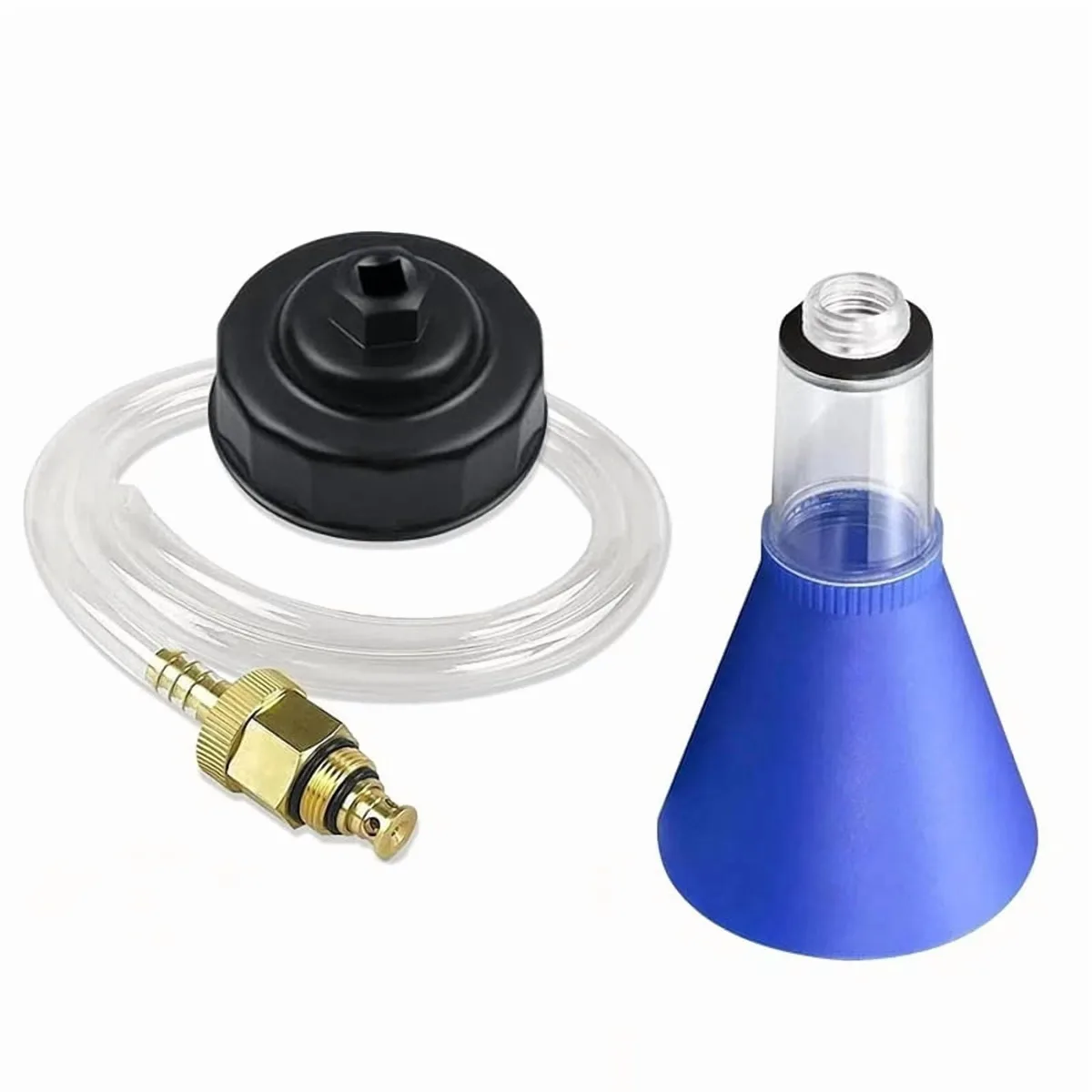
Image source: Web (Bing) / walmart.com (Web image (fair-use with source credit))
The Drain and Fill Process
- Warm the engine, Run the car for a minute or two, then let it cool for 10 minutes. Warm oil flows faster and carries more suspended contaminants.
- Lift and secure, Use ramps or jack stands. Never crawl under a car held only by a jack.
- Remove the fill cap, This creates a vent so oil drains faster.
- Drain the oil, Slide the drain pan under the plug, loosen the drain plug counterclockwise with a 10mm socket. Let it drain 5, 10 minutes.
- Replace the gasket, The old copper gasket should come off with the plug. Slip on the new one.
- Reinstall the plug, Torque to 30 ft-lb. If you don't have a torque wrench, snug it tight plus an extra 1/8 turn. Don't overdo it, stripped threads mean a new oil pan.
- Remove the old filter, It's located on the front of the engine, driver's side. Use a filter wrench if it's stuck. Be ready for a little more oil to drip out.
- Pre-lube the new filter, Rub a thin layer of fresh oil onto the gasket. This prevents the rubber from twisting and binding when you tighten it.
- Install the new filter, Spin it on by hand until the gasket contacts. Then tighten another 1/4 turn. Torque spec is 18 ft-lb if you're measuring.
- Add new oil, Pour in 4.5 quarts through the fill hole. Use a funnel. Replace the fill cap.
- Check for leaks, Run the engine for 30 seconds, then shut it off. Look under the car. If the plug or filter drips, tighten slightly.
Checking the Level Correctly
After running the engine, wait 3, 5 minutes for the oil to settle. Pull the dipstick, wipe it, insert fully, and pull again. The oil level should be between the low and full marks.
If it's low, add 0.2 quarts at a time. If it's above full, you've overfilled.
Important: The dipstick on the 2024 Camry is notoriously easy to misread. It has two dots and a crosshatch pattern. The full mark is the upper dot.
Don't fill to the upper dot after a cold engine, that's the hot-engine target. On a cold engine, the level should be slightly below the upper dot.
Oil Capacity Details: With Filter vs. Without Filter
Let's break this down because it's where most people get confused.
- With filter change: 4.8 quarts. That's the total system capacity when you install a new, dry filter and fill from empty.
- Without filter change: Approximately 4.5 quarts. When you reuse the old filter, the filter still holds about 0.3 quarts of oil. So you need less new oil to reach the full mark.
But here's the catch: Toyota recommends changing the filter with every oil change. The filter is cheap, about $6, $8. Skipping it saves pennies but leaves dirty oil entrenched in the filter, which contaminates the fresh oil immediately.
Don't skip it.
Hybrid vs. Gas Model – Any Difference?
No. The hybrid uses the same engine block with an electric motor integrated between the engine and transmission. The oil capacity, the filter, and the viscosity are identical.
The dipstick looks the same. The only difference on the hybrid is that the engine doesn't run as often, so oil changes can sometimes be extended based on the onboard maintenance computer. But the actual capacity is 4.8 quarts with filter.
If you own a 2024 Camry hybrid and a friend has the gas model, you can share the same oil and filter. That's how similar they are.
Now that you know the exact numbers, the next step is choosing the right oil. And for the 2024 Camry, that choice is narrow. We'll cover that next in "The Only Oil You Should Use (0W-16 and Why It Matters)."
The Only Oil You Should Use (0W-16 and Why It Matters)
Toyota designed the 2024 Camry's 2.5L Dynamic Force engine around a specific oil: SAE 0W-16 full synthetic. This isn't a suggestion. It's a requirement if you want proper lubrication, fuel economy, and long engine life.
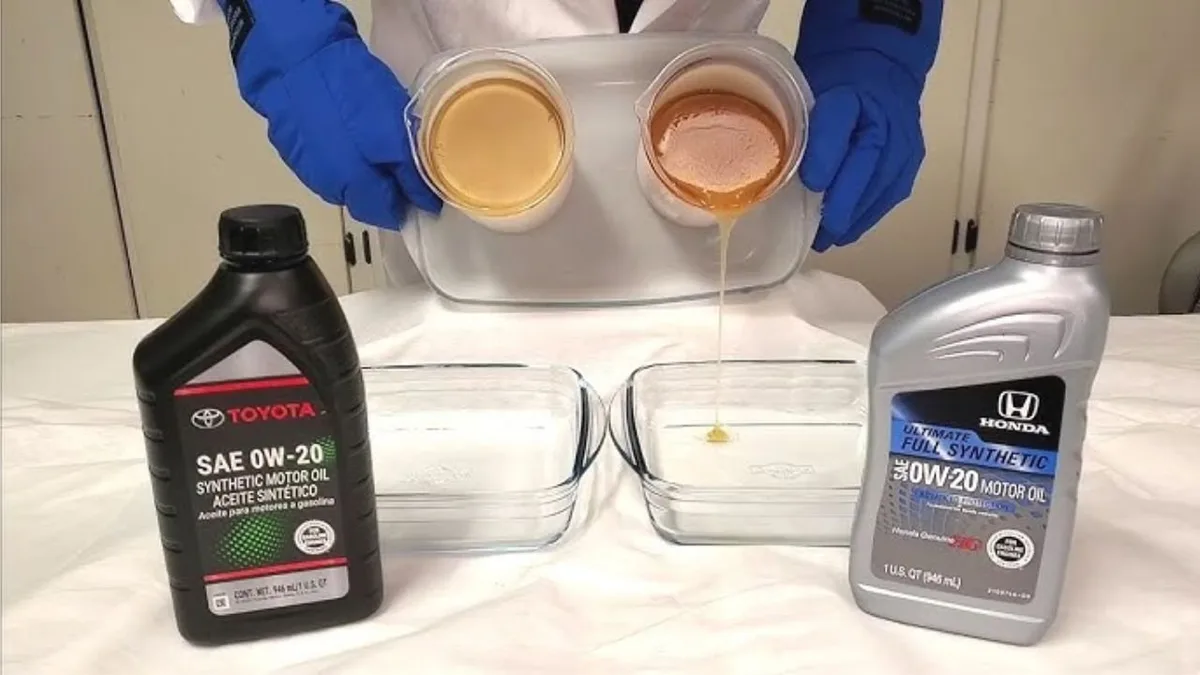
Image source: Bing (Web (fair-use with source credit))
Here's why 0W-16 matters. The "0W" means the oil stays fluid at very low temperatures. The "16" refers to its viscosity when hot.
A 16-weight oil is thin. Thinner oil reduces internal drag, which improves fuel economy by about 2-3 percent compared to 0W-20. Toyota didn't choose it by accident.
The certification you need to look for: API SP or ILSAC GF-6A. Those standards were updated specifically for modern engines with high-pressure fuel systems and turbocharging. The Camry isn't turbocharged, but the standards still apply.
Don't use an oil that only meets API SN or older.
What happens if you use the wrong oil?
| Oil you might grab | What goes wrong |
|---|---|
| 5W-30 | Too thick at cold starts. Oil pump can't push it quickly. Increased wear on startup. Lower fuel economy. |
| 0W-20 | Slightly thicker than 0W-16. Okay in emergencies per Toyota, but not for long-term use. Reduces fuel economy about 1-2 mpg. |
| 10W-30 | Way too thick. Expect sluggish cold starts, potential check engine light, and eventual sludge buildup. |
One warning about blends. Some cheap 0W-16 oils are semi-synthetic or "synthetic blend." Don't use them. The 2024 Camry requires full synthetic. Blends don't hold up to the high operating temperatures and can degrade faster, leaving deposits inside the engine.
Where to find 0W-16. Most auto parts stores carry it now. Toyota sells it under their brand. Mobil 1, Valvoline, Pennzoil, and Castrol all make API SP-certified 0W-16.
Expect to pay $7, $10 per quart. For the price difference over a wrong oil, you're buying peace of mind.
Common Mistakes That Lead to Engine Damage
You'd be surprised how easy it is to mess up an oil change. Even experienced DIYers make these errors. Here are the ones that cause real damage.
Overfilling – The Sneaky Danger
Overfilling is more common than underfilling. People drain the oil, swap the filter, then pour in the full 4.8 quarts without realizing the filter already holds oil. Now you're 0.3 quarts over.
What happens: The crankshaft whips through the extra oil, aerating it. Air bubbles collapse under pressure, causing metal-on-metal contact in bearings. Over time, seals blow out.
The engine runs hotter. You might see blue smoke from the exhaust.
How to avoid it: Add 4.5 quarts first. Run the engine for 30 seconds. Let it sit 3 minutes.
Check the dipstick. If it's between low and full, add another 0.3 quarts and check again. Stop at the upper dot.
Using the Wrong Viscosity
We covered this above, but it's worth repeating. The 0W-16 spec exists for a reason. Thicker oils cause cold-start wear.
Thinner oils can lead to excessive blow-by. Either way, you're shortening the engine's life.
Real example: One owner used 5W-20 for two changes, thinking "close enough." After 30,000 miles, the engine burned a quart every 1,000 miles. The rings had worn prematurely. Toyota warrantied it only because the dealer couldn't prove the wrong oil was used.
You won't be that lucky.
Stripped Drain Plug or Bad Gasket
The drain plug threads into an aluminum oil pan. Aluminum strips easily. Overtightening is the usual cause.
So is cross-threading.
Prevention: Always hand-thread the plug first. Use a torque wrench set to 30 ft-lb. If you don't have one, snug it tight plus an extra 1/8 turn.
That's it. Also replace the crush gasket every time. Reusing a hardened gasket causes leaks.
When to Change the Oil (And When to Ignore the Dealer)
Toyota recommends changing the oil on the 2024 Camry every 10,000 miles or 12 months, whichever comes first. That's for "normal" driving conditions.
But here's the catch. Most people don't drive under normal conditions. Toyota defines severe service as:
- Repeated short trips under 5 miles
- Driving in extreme heat or cold
- Towing a trailer
- Dusty roads
- Stop-and-go traffic
If any of those apply, the schedule drops to 5,000 miles or 6 months.
What about the dealer's pressure to change it every 5,000 miles? That's not based on Toyota's engineering. It's based on profit. If you drive mostly highway miles, 10,000 miles is absolutely fine.
The oil analysis reports we've seen from real 2024 Camry owners show 0W-16 still has usable life at 8,000 miles. At 10,000, it's at the edge. But that's within spec.
The smart approach: Follow Toyota's severe schedule if you live in a city or have a short commute. Follow the normal schedule if you do mostly highway driving. Either way, check the oil level monthly.
Low oil kills engines faster than old oil.
What If You're Stuck and Can't Find 0W-16?
It happens. You're on a road trip. The local parts store doesn't have 0W-16.
Or you have an emergency and need oil now.
Toyota's official guidance: You can use SAE 0W-20 as a temporary substitute. Do not drive long distances or exceed one oil change interval before switching back to 0W-16.
Why 0W-20 works (barely): It's only slightly thicker at operating temperature. The engine can handle it for a short period. Fuel economy will drop slightly.
Cold starts will be slightly slower. But it won't cause immediate damage.
What not to do: Don't use 5W-30, 10W-30, or any multi-grade in a different range. Don't mix different viscosities. Don't use conventional oil.
And never drive more than a few hundred miles on the substitute. As soon as you can, drain it and fill with the correct 0W-16.
If you're buying online: Order a case of 0W-16 and keep it in your trunk. That way you're never stuck. It's cheap insurance.
The Quick Safety Checklist Before You Start
Before you crawl under the car, run through this list. It takes 30 seconds and prevents serious injury and engine damage.
- Car on level ground, If you're on a slope, the oil won't drain completely and you'll overfill.
- Engine cool, not cold, Warm oil drains faster. Hot oil burns you. Let it sit 10 minutes after a short drive.
- Jack stands or ramps, Never rely on the scissor jack. They fail. Ramps are simpler. Use them on a flat surface.
- Drain pan large enough, 4.8 quarts goes fast. A 6-quart pan gives you room.
- Funnel, The fill hole is small. Without a funnel, you'll spill oil on the engine, which burns and smells.
- Gloves, Used oil is carcinogenic. Nitrile gloves cost pennies.
- Fire extinguisher nearby, Unlikely but cheap insurance.
- Check for leaks after first start, Run the engine 30 seconds, shut it off, look under the car. A leaking drain plug or filter can empty the engine in minutes.
One more thing: Take the old oil to an auto parts store for recycling. They're legally required to accept it. Never pour it down a drain or into the trash.
FAQs From Other 2024 Camry Owners
How much oil does a 2024 Camry need with a filter change?
Exactly 4.8 quarts (4.5 liters) of SAE 0W-16 full synthetic. That's the total system capacity when you install a new filter and fill from dry.
Can I use 0W-20 if I can't find 0W-16?
Yes, but only as a temporary substitute. Toyota says 0W-20 is acceptable in an emergency. Drive no more than a few hundred miles before switching back to 0W-16.
Is the oil capacity the same for hybrid and gas models?
Yes. Both use the same 2.5L Dynamic Force engine block. The hybrid version (A25A-FXS) holds the same 4.8 quarts with filter and requires the same 0W-16 oil.
How often should I change the oil on a 2024 Camry?
Toyota says every 10,000 miles or 12 months for normal driving. If you do mostly short trips, stop-and-go traffic, or drive in extreme temperatures, follow the severe service schedule of 5,000 miles or 6 months.
What happens if I overfill the oil?
Overfilling causes the crankshaft to whip the oil into foam. Air bubbles reduce lubrication and cooling. It can blow out seals and cause bearing damage.
Always add oil slowly and check the dipstick.
Final Verdict: Your Cheat Sheet for Getting It Right
Here's what you need to remember. The 2024 Toyota Camry takes exactly 4.8 quarts of SAE 0W-16 full synthetic oil with a filter change. Use the correct API SP or ILSAC GF-6A certification.
Replace the drain plug gasket and the filter every time. Add 4.5 quarts first, then top off to the full mark after running the engine. Follow the severe service schedule if your driving matches it.
Check the dipstick monthly. That's it. Do these things consistently and your 2.5L Dynamic Force engine will run smoothly well past 200,000 miles.