
If you own a 2024 Toyota Corolla, the oil capacity is one of those specs that seems simple. Until you're standing in the garage with a quart bottle wondering if you've poured too much. The difference between 4.4 quarts and 4.7 quarts might not sound like much, but it's the difference between a healthy engine and a costly repair bill.
That's why getting the 2024 toyota corolla oil capacity exactly right matters more than most owners realize.
Manufacturer specifications confirm the 2024 Corolla's 2.0-liter Dynamic Force engine requires 4.7 quarts of full synthetic oil with a filter change. This isn't a suggestion. It's the engineered spec for optimal lubrication, fuel economy, and emissions performance.
As of 2026, this specification remains unchanged across all gas-powered Corolla trims. Getting it right means your engine can easily surpass 200,000 miles without oil-related issues.
Why Getting This Wrong Can Cost You Thousands (and Why It's So Common)
Here's the thing about modern engines. They're engineered with incredibly tight tolerances. The M20A-FKS in your 2024 Corolla is no exception.
It's designed to work with a very specific amount of oil at a very specific viscosity.
Overfilling is actually more dangerous than most people think. When you add too much oil, the crankshaft whips it into a froth. That foam contains air bubbles. Oil pumps don't handle air well.
They lose pressure. Metal parts that should be separated by a thin film of oil start making contact. The result is accelerated wear, bearing damage, and in severe cases, a blown seal or a hydro locked engine.
Underfilling is equally bad. Too little oil means the oil pickup tube can suck air during hard cornering or steep inclines. Oil starvation kills engines fast. You'll hear a knock, see the oil pressure light, and by then the damage is done.
A replacement engine for a 2024 Corolla runs several thousand dollars.
So why is this such a common mistake? A few reasons.
- Different engines, different capacities. The Corolla hybrid uses a different engine entirely. Its capacity is around 4.0 quarts, not 4.7. If you assume all Corollas are the same, you'll get it wrong.
- Filter or no filter. The capacity changes by about 0.3 quarts depending on whether you're replacing the filter. Many DIYers forget to account for this.
- US quarts vs. liters. The 4.7 quarts spec is 4.4 liters. If you're using a metric container and don't convert, you'll be off.
- Old habits. Older Corollas from the 2000s used different capacities. If you're used to the 2005 model's 3.8 quarts, you'll underfill the 2024.
The point is clear. This isn't a "close enough" spec. It's a precision requirement.
Quick Answer: 2024 Toyota Corolla Oil Capacity at a Glance
The 2024 Corolla takes 4.7 quarts of oil. That's with a filter change. Use 0W-16 full synthetic.
The oil must meet API SP or ILSAC GF-6. Without a filter change, you need 4.4 quarts. Do not use thicker oil.
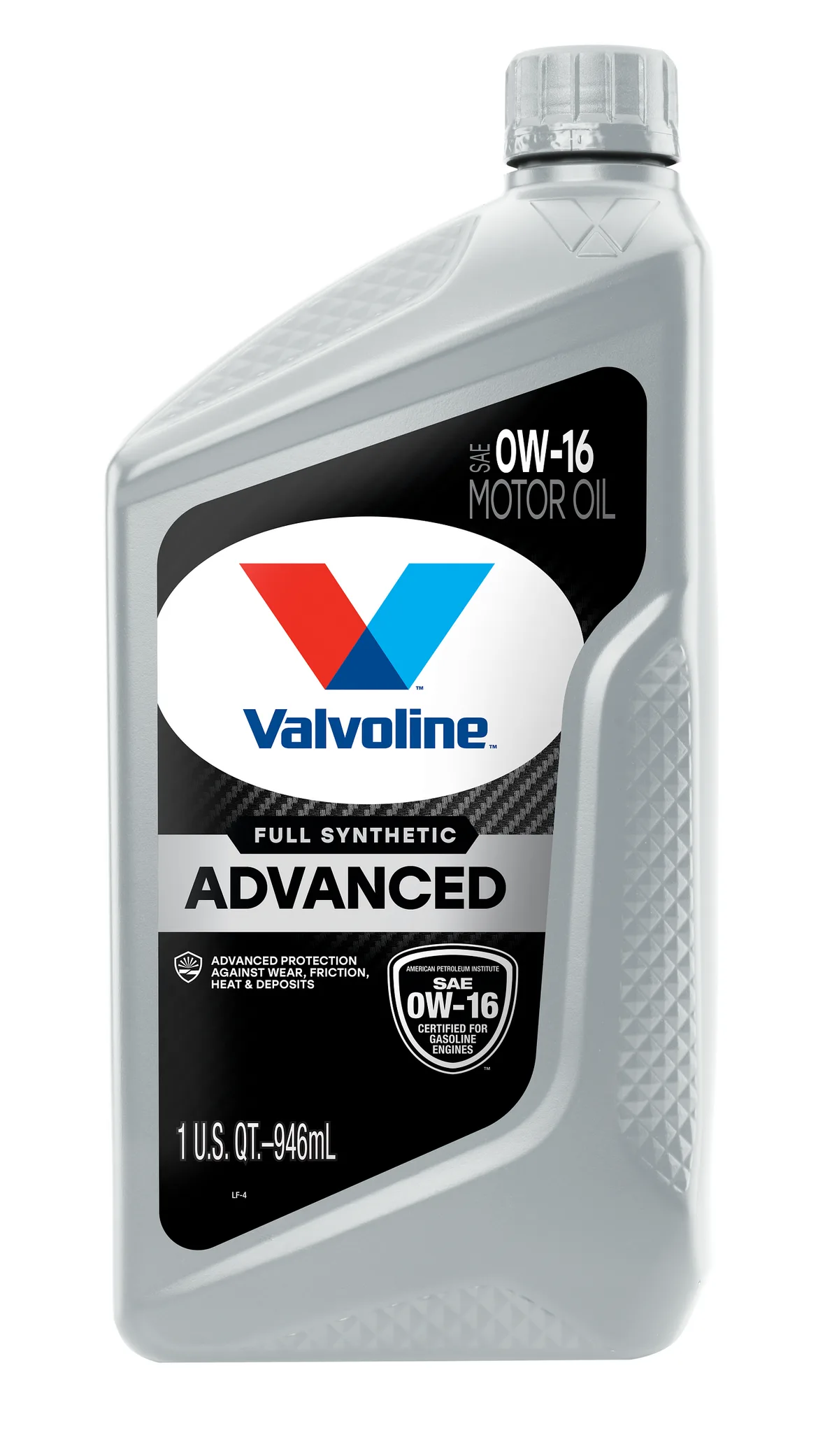
Image source: Web (Bing) / shop.valvolineglobal.com (Web image (fair-use with source credit))
If you're in a pinch and can't find 0W-16, 0W-20 is acceptable as a temporary substitute. But switch back at the next change. The engine was designed for 0W-16.
Thicker oil reduces fuel economy and can cause cold-start wear.
Here's the quick reference table:
| Condition | Oil Capacity | Oil Type | Standard |
|---|---|---|---|
| With filter change | 4.7 quarts (4.4 liters) | 0W-16 full synthetic | API SP or ILSAC GF-6 |
| Without filter change | 4.4 quarts (4.2 liters) | 0W-16 full synthetic | API SP or ILSAC GF-6 |
The 2024 Corolla's Engine: Meet the M20A-FKS 2.0L
The heart of the 2024 Corolla is the M20A-FKS. This is Toyota's Dynamic Force engine. It's not your grandfather's Corolla motor.
This engine was designed from the ground up for thermal efficiency and low friction.
Why does it need 0W-16? Simple. The engine has extremely tight internal clearances. The piston rings, the bearings, the valvetrain.
Everything is machined to operate with a very thin oil film. Thicker oil can't flow into these tight spaces quickly enough during cold starts. That means metal on metal contact until the oil warms up.
Over time, that causes wear.
The M20A-FKS also uses a variable displacement oil pump. It only pumps as much oil as the engine needs at any given moment. This reduces parasitic losses and improves fuel economy.
But it relies on the correct oil viscosity to work properly. Use the wrong oil and the pump can't maintain proper pressure across the rev range.
This engine first appeared in the 2018 Toyota Camry and has since been refined. It's a proven design. But it demands respect for its specifications.
You can't treat it like an older engine that tolerates thicker oil.
The Exact Spec: How Much Oil, What Kind, and Why It Matters
Let's break down the spec piece by piece.
The capacity. 4.7 quarts with a filter change. 4.4 quarts without a filter change. The difference is the oil that remains trapped in the old filter. Always do a filter change with every oil change.
It's cheap insurance.
The viscosity. 0W-16. The "0W" means it flows like a 0-weight oil in winter. That's critical for cold starts.
The "16" is the hot viscosity. It's thinner than the 20-weight many older Toyotas use. This is by design.
The engine's tolerances are so tight that 0W-16 provides better protection than 0W-20.
The quality. API SP is the current standard. ILSAC GF-6 is the international equivalent. Both ensure the oil has the right additives for fuel economy, sludge prevention, and wear protection.
Don't use oil that only meets older standards like SN or SM. The additive packages are different.
The type. Full synthetic. Not conventional, not a blend. The engine's tight tolerances require synthetic oil's superior flow characteristics at low temperatures and its stability at high temperatures.
Conventional oil can break down faster and leave deposits.
Here's a comparison of how the 2024 Corolla stacks up against recent Corolla models:
| Model Year | Engine | Capacity | Oil Type |
|---|---|---|---|
| 2024 Corolla | 2.0L M20A-FKS | 4.7 quarts | 0W-16 full synthetic |
| 2020 Corolla | 2.0L M20A-FKS | 4.7 quarts | 0W-16 full synthetic |
| 2019 Corolla | 1.8L 2ZR-FAE | 4.4 quarts | 0W-20 full synthetic |
| 2018 Corolla | 1.8L 2ZR-FAE | 4.4 quarts | 0W-20 full synthetic |
| 2005 Corolla | 1.8L 1ZZ-FE | 3.8 quarts | 5W-30 conventional |
You can see the pattern. The 2024 Corolla is different from even the 2019 model. If you're used to an older Corolla spec, double check.
The wrong oil can cause real damage.
For reference, the 2019 Corolla uses 0W-20 and 4.4 quarts. That's a different engine. Don't assume the specs carry over.
And if you're coming from a 2005 Corolla with its 3.8 quarts of 5W-30, you're in completely different territory.
Step-by-Step: How to Check and Fill Your Oil Correctly
Checking your oil level is the first step to getting it right. Here's the proper procedure.
Step 1: Park on level ground. If the car is tilted, the oil in the pan shifts. You'll get a false reading. Pull into a flat spot and let the engine idle for a minute to warm up the oil.
Step 2: Turn off the engine and wait. Let it sit for about 5 minutes. This gives the oil time to drain back into the pan. If you check it immediately after shutdown, the oil is still circulating and the level reads low.
Step 3: Pull the dipstick and wipe it clean. Use a lint-free rag or paper towel. Reinsert it fully. Then pull it out again and read the level.
Step 4: Read the level correctly. The oil should be between the low and full marks. Ideally, it should be near the full mark. If it's at or below the low mark, you need to add oil.
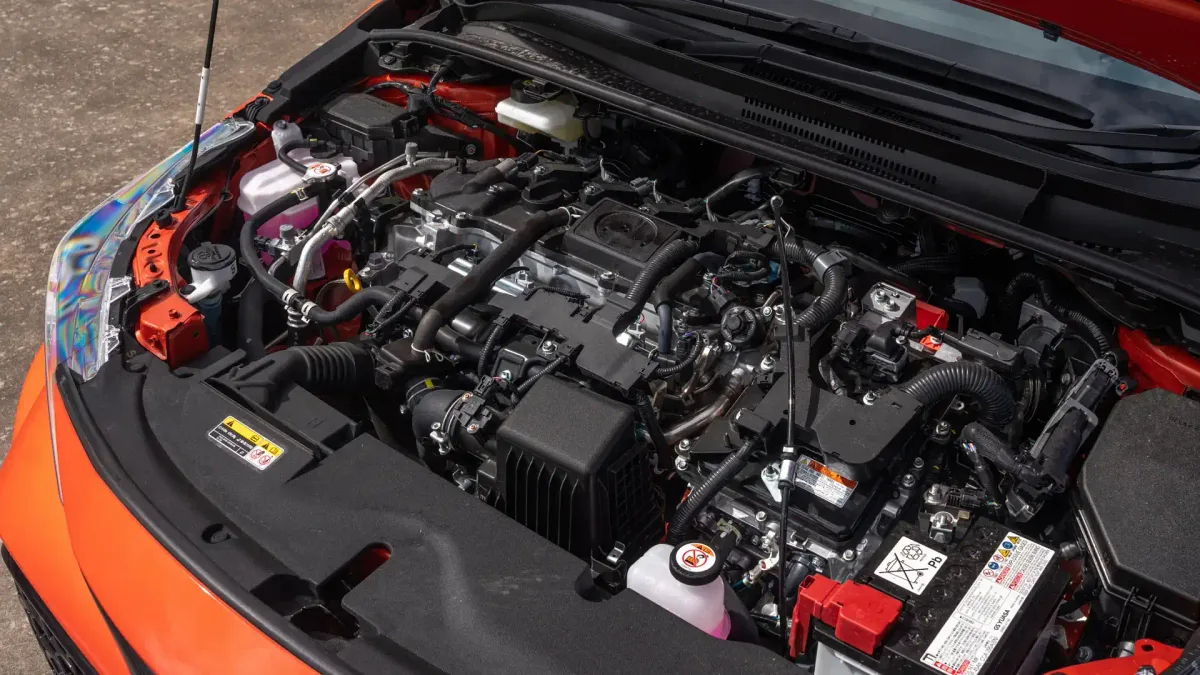
Image source: Bing (Web (fair-use with source credit))
Adding oil the right way:
- Use a funnel. Pouring directly from a quart bottle can easily miss the filler neck.
- Add oil slowly. Pour about half a quart, then wait a minute. Check the dipstick. Repeat until the level is correct.
- Never overfill. If you accidentally add too much, you'll need to drain some out. The easiest way is to loosen the drain plug slightly and let a small amount out. Or use a fluid extractor through the dipstick tube.
When to check: Do it every time you fill up with gas. It takes 30 seconds. It's the single cheapest way to catch an oil leak or consumption issue before it becomes a problem.
What to look for: The oil on the dipstick should be amber or light brown. If it's dark, thick, or smells like fuel, it's time for a change. If it's milky or frothy, you might have a coolant leak.
That's a visit to the mechanic.
One more tip. The 2024 Corolla's engine is known for being relatively clean. It doesn't burn much oil between changes. But if you're noticing the level dropping consistently, say a quart every 1,000 miles, that's a sign of internal wear or a leak.
Don't ignore it.
If you're looking for oil change procedures on other Toyota models, the same principles apply. For example, the 2017 Toyota Corolla uses a different capacity and viscosity, and the 2018 Toyota 4Runner has its own specs entirely. The 2019 Tacoma also requires careful attention to the correct oil type.
Common Mistakes That Lead to Engine Damage
Most DIY oil changes go wrong in predictable ways. The good news is they're all avoidable.
Mistake 1: Overfilling. Pouring in the full 5-quart jug without checking the dipstick is the fastest route to foaming oil. Air bubbles in the oil mean metal-on-metal contact. If you've ever seen a milkshake-like substance on the dipstick, that's aerated oil.
Stop immediately and drain the excess.
Mistake 2: Using the wrong viscosity. 0W-16 isn't a suggestion. It's a requirement. Thicker oil like 5W-30 won't flow into tight bearing clearances on cold starts.
Over time, that causes accelerated wear you won't notice until the engine starts knocking.
Mistake 3: Skipping the filter change. A clogged or old filter bypasses dirty oil back into the engine. Always replace the filter. It holds about 0.3 quarts of oil, so account for that in your fill.
Mistake 4: Overtightening the drain plug. The spec is 30 lb-ft. Going tighter strips the threads in the oil pan. That means a new oil pan or a helicoil repair.
Both are expensive.
Mistake 5: Not resetting the oil life monitor. The car won't remind you again until you reset it. If you ignore the warning, you might forget the next interval.
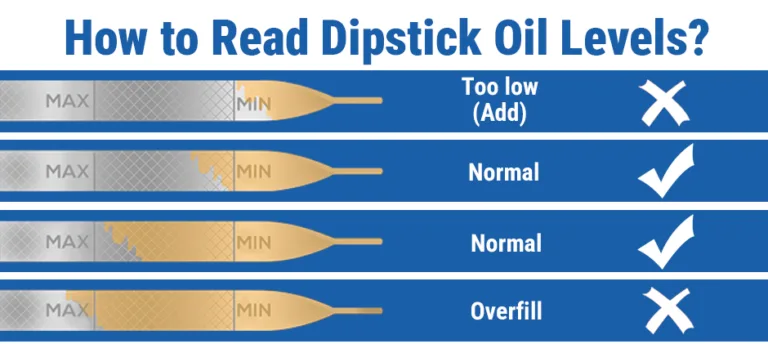
Image source: Bing (Web (fair-use with source credit))
The dipstick diagram above shows exactly where the level should sit. The cross-hatched zone is your safe window. Below it means add oil.
Above it means drain some out.
For reference, the 2007 Camry uses a completely different oil system, so don't carry old habits forward.
0W-16 vs. 0W-20: What Happens If You Use the Wrong Oil?
This is the most common question we hear from Corolla owners. The short answer: use 0W-16. Period.
0W-20 is thicker at operating temperature. The "20" means a higher viscosity at 100°C. In the M20A-FKS engine, that extra thickness creates more drag on moving parts.
The result is reduced fuel economy by about 1-2 miles per gallon. It also means the oil pump has to work harder, putting extra stress on the engine.
But is it safe to use 0W-20 in an emergency? Yes, as a temporary fix. If you're on a road trip and 0W-16 isn't available, 0W-20 will keep the engine lubricated. But switch back at the next oil change.
Extended use of 0W-20 can cause long-term wear due to reduced flow at cold starts.
What about 5W-30 or 10W-30? Don't do it. Those are for older engines with wider tolerances. The 2024 Corolla's tight clearances need thin oil to reach every surface quickly.
Thicker oil leads to sluggish start-up lubrication and eventual wear.
The Toyota owner's manual explicitly states 0W-16. It also allows 0W-20 as an alternative only in extreme cold conditions where 0W-16 may not be available. That's it.
If you own a 2017 Corolla, that engine uses 0W-20, so don't mix up the specs.
When the Capacity Changes: Hybrid vs. Gas Models
Here's a trap many owners fall into. The 2024 Corolla comes in two powertrains: gas and hybrid. They use different engines with different oil capacities.
Gas model: 2.0L M20A-FKS, 4.7 quarts, 0W-16 full synthetic.
Hybrid model: 1.8L 2ZR-FXE, 4.0 quarts, 0W-16 full synthetic.
The hybrid's engine is smaller and operates differently. It uses the Atkinson cycle, which has different lubrication demands. The capacity is significantly less.
If you pour 4.7 quarts into a hybrid, you'll overfill it and risk the same foaming issues.
How to tell which you have: Check the engine cover. The gas model has "2.0L Dynamic Force" stamped on it. The hybrid has "Hybrid" badging and a smaller engine bay.
You can also check your VIN or owner's manual.
One more distinction. The Corolla Cross (non-hybrid) shares the same 2.0L engine as the gas Corolla. Same capacity. Same oil.
But the Corolla Cross hybrid uses a different setup. Always verify.
If you're used to the 2018 Corolla's 1.8L engine and its 4.4 quarts of 0W-20, you're in new territory. Double check.
The Complete Oil Change Process (DIY-Friendly)
Doing your own oil change saves money and gives you control over quality. Here's the full process for the 2024 Corolla.
What you'll need:
- 5 quarts of 0W-16 full synthetic oil
- Oil filter (Toyota part 04152-YZZA1 or equivalent)
- Drain plug gasket (new crush washer)
- 14mm socket for the drain plug
- Oil filter wrench
- Funnel
- Catch pan
- Jack and jack stands or ramps
Step 1: Warm up the engine. Run it for 2-3 minutes to warm the oil. Warm oil drains faster and carries more contaminants. Don't let it get hot enough to burn you.
Step 2: Lift the car. Use ramps or jack stands. Never work under a car supported only by a jack.
Step 3: Remove the drain plug. Place the catch pan underneath. Loosen the plug with a 14mm socket. Let the oil drain completely, about 5 minutes.
Step 4: Replace the drain plug. Install a new crush washer. Torque to 30 lb-ft. Don't overtighten.
Step 5: Remove the old oil filter. It's on the bottom front of the engine, accessible from underneath. Turn it counterclockwise with a filter wrench. Some oil will spill, so position the pan accordingly.
Step 6: Install the new filter. Lubricate the rubber gasket with fresh oil. Hand-tighten, then give it another quarter turn. Do not use a wrench.
Step 7: Add new oil. Pour in 4.5 quarts first. Check the dipstick. Add more slowly until the level reaches the full mark.
Total will be about 4.7 quarts.
Step 8: Check for leaks. Start the engine and let it run for a minute. Look under the car for drips. Shut it off, wait 5 minutes, and recheck the dipstick.
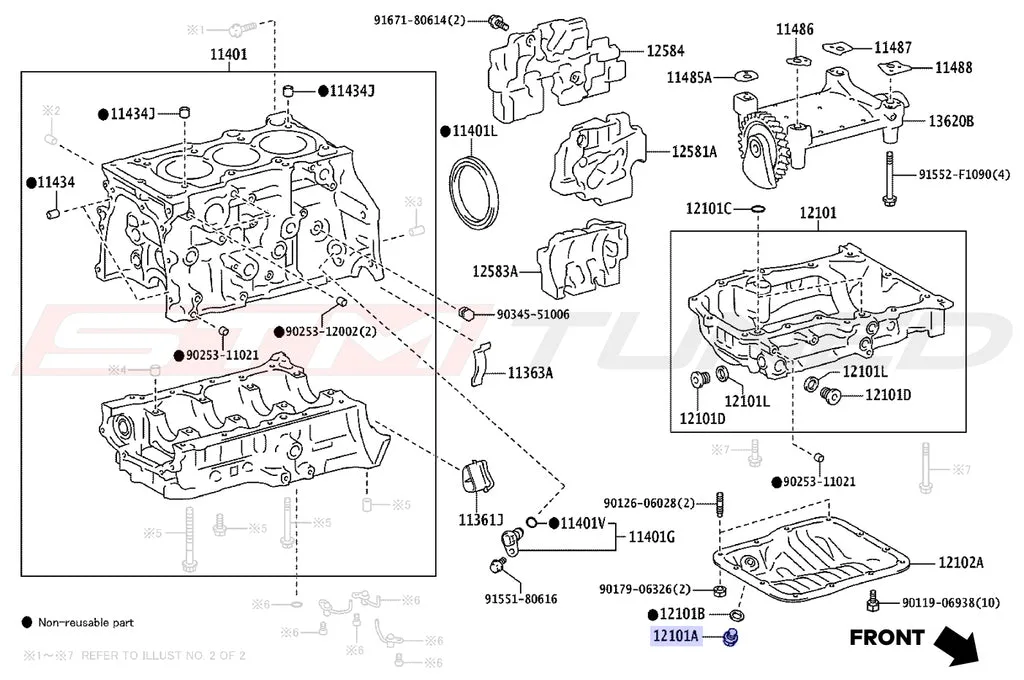
Image source: Web (Bing) / stmtuned.com (Web image (fair-use with source credit))
The image above shows exactly where the drain plug and filter are located on a Corolla. Notice the access is straightforward with no skid plates to remove.
If you're tackling an older Toyota like the 2018 Tacoma, the process is similar but the filter location may differ.
Tools and Parts You'll Need for the Job
Having the right tools makes the job quick and frustration-free.
Oil filter wrench. A cap-style wrench that fits the specific filter is best. The 2024 Corolla's filter is about 2.5 inches in diameter. A metal cup wrench works well.
Torque wrench. For the drain plug, 30 lb-ft is critical. A click-type torque wrench is cheap insurance against stripped threads.
Crush washers. Buy a pack of 10. They're a few dollars and you'll use one every change. Reusing an old washer risks leaks.
Funnel with a flexible neck. The oil fill port is tucked under the engine cover. A rigid funnel makes it awkward. Flexible necks reach easily.
Catch pan. Get one that holds at least 6 quarts. The 5-quart pans are too small.
Ramps. They're safer than jacks for oil changes. Drive up, do the work, drive down. No crawling underneath.
| Tool | Why You Need It | Approximate Cost |
|---|---|---|
| 14mm socket and ratchet | Remove drain plug | $10 |
| Oil filter wrench | Remove old filter | $8-15 |
| Torque wrench (1/2 inch) | Proper drain plug torque | $30-60 |
| Crush washers (10-pack) | Leak-free seal | $5 |
| Funnel with flexible neck | Easy oil fill | $8 |
| Catch pan (6+ quarts) | Catch old oil | $10-15 |
| Ramps | Safe lift | $30-50 |
Total investment: About $100 for everything if you start from scratch. After that, each oil change costs only the oil and filter, about $35-45.
The 2019 Camry uses similar tools, so the investment pays off across multiple vehicles.
How Often to Change It: Intervals, Warnings, and Driving Conditions
Toyota recommends an oil change every 10,000 miles or 12 months, whichever comes first. That's for normal driving.
If you do lots of short trips, drive in heavy traffic, or live in extreme temperatures, switch to severe service. That means every 5,000 miles or 6 months. The engine's oil life monitor adapts to your driving.
Pay attention to it. Ignoring it leads to sludge and wear. For reference, the 2019 RAV4 uses a similar monitor.
Warning Signs You've Got Too Much or Too Little Oil
Too much oil: The dipstick reads above the full mark. You might see blue smoke from the exhaust (oil burning). The engine may run rough.
Foam on the dipstick means aeration.
Too little oil: The dipstick reads below the low mark. The oil pressure light may flicker. You'll hear ticking or knocking.
The engine might overheat. Stop driving immediately and add oil.
If you see either set of signs, drain or add oil right away. Continuous operation with improper level will damage the M20A-FKS engine.
Frequently Asked Questions
How many quarts does a 2024 Toyota Corolla take?
4.7 quarts with a filter change. Without a filter change, it's 4.4 quarts. Always change the filter.
Can I use 5W-30 in my 2024 Corolla?
No. The engine requires 0W-16 full synthetic. Thicker oil won't flow properly at cold starts and reduces fuel economy.
What happens if I overfill the oil?
Foaming, oil starvation, and potential engine damage. Drain the excess immediately.
How often should I check the oil level?
Every time you fill up with gas. It takes 30 seconds and catches problems early.
Does the hybrid Corolla take the same oil?
No. The hybrid uses 4.0 quarts of 0W-16. Don't confuse the two.
Final Takeaway: The One Number You Need to Remember
4.7 quarts of 0W-16 full synthetic with a filter change. That's it. Write it on the inside of your owner's manual.
Stick a note under the hood. Get it right every time and your 2024 Corolla's engine will deliver years of trouble-free miles.