Getting the right oil for your 2010 Toyota Sienna isn't just about grabbing whatever bottle is on sale. The 2010 toyota sienna oil type affects everything from cold-start protection to engine longevity. Using the wrong viscosity can cause real damage over time.
Toyota's factory recommendation is SAE 5W-20 meeting API SN and ILSAC GF-5 standards. The 3.5L V6 holds 6.4 quarts with a filter. But depending on your climate, mileage, and driving habits, there's a strong case for 0W-20 or a high-mileage blend. Let's walk through what you actually need.
## Quick Answer
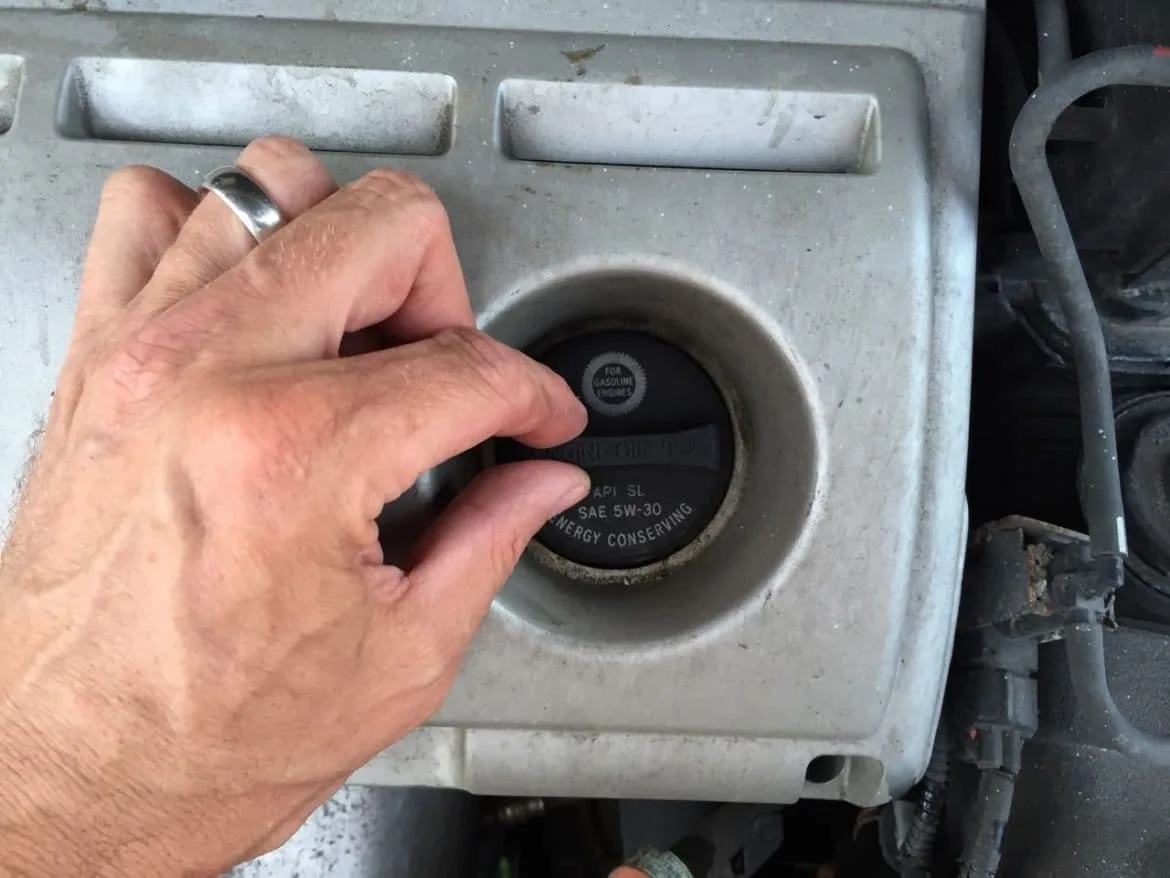
The 2010 Toyota Sienna takes SAE 5W-20 motor oil meeting API SN and ILSAC GF-5 standards. The 3.5L V6 holds 6.4 quarts with a filter. For extreme cold, 0W-20 is acceptable. Synthetic oil is recommended for best protection.
## Why the Right Oil Matters
Your Sienna's 2GR-FE engine is solid but sensitive to oil choice. The wrong oil causes three main problems.
**Cold starts.** Thick oil in winter means metal-on-metal contact until the oil circulates. That wears bearings and cylinder walls.
**Sludge buildup.** Low-quality oil leaves deposits that clog passages and reduce oil flow.
**Fuel economy.** The wrong viscosity adds drag. Even a 1% drop adds up over a year.
The 2GR-FE relies on variable valve timing that needs clean oil at proper pressure. Wrong oil can mess with the VVT system, causing rough idling and reduced power.
If you tow or carry heavy loads, the engine runs hotter and breaks down oil faster. You need quality oil that holds up under stress.
## What the Manual Says vs. What Actually Works
Toyota's owner's manual specifies SAE 5W-20 for all temperatures above -10°F. It also lists 0W-20 as acceptable for extreme cold.
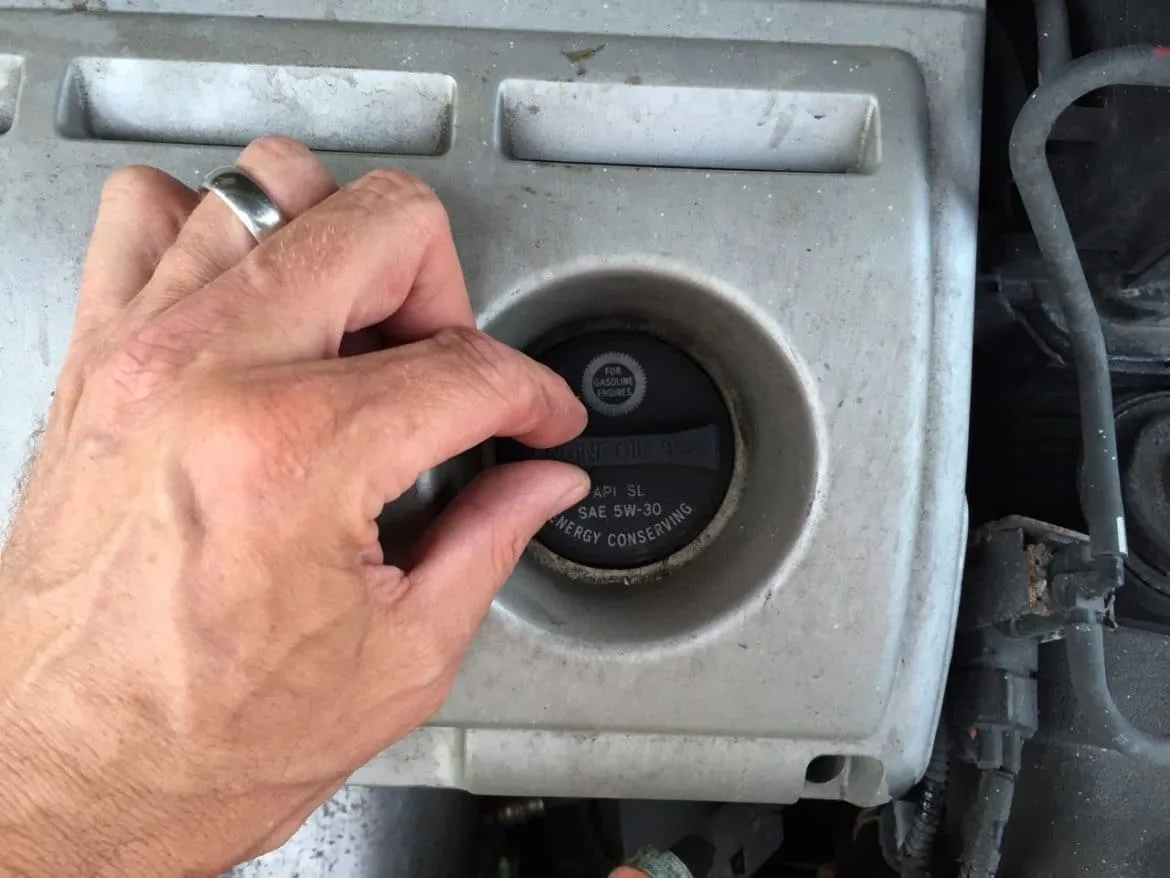
But the manual was written for a 2010 vehicle now over 15 years old. Oil standards have moved on. API SN has been superseded by SN Plus and SP. These newer formulations offer better wear protection and deposit control.
Climate matters more than the manual suggests. If you live in northern Minnesota or Canada, 0W-20 is smarter nine months of the year. Cold starts at -20°F are brutal on 5W-20.
The manual is a safe starting point. But it's not the final word for every Sienna on the road today.
## The Decision Tree: Finding Your Oil Type
Follow the branches that match your situation.
### Branch 1: Climate
**Cold climate (winters below 0°F).** Use 0W-20. It flows better at low temperatures and reaches critical engine parts faster. Many owners in Canada and the northern US use 0W-20 year-round.
**Moderate climate (winters above 10°F, summers below 100°F).** Stick with 5W-20. It offers a good balance of cold flow and high-temperature protection.
**Hot climate (summers above 100°F) or frequent towing.** Some owners and mechanics recommend 5W-30. Toyota never officially approved it for the 2GR-FE. But the thicker oil provides more film strength at high heat. The trade-off is lower fuel economy and slower cold flow. Switch back to 5W-20 in winter.
### Branch 2: Mileage
**Under 75,000 miles.** Use full synthetic 5W-20 or 0W-20 depending on climate. Your engine is still tight.
**75,000 to 150,000 miles.** Switch to a high-mileage synthetic blend. Seal conditioners help reduce leaks and oil consumption.
**Over 150,000 miles.** High-mileage synthetic is strongly recommended. Some owners bump up to 5W-30. Monitor your oil consumption. If you're burning a quart every 1,000 miles, a high-mileage oil won't fix it. You need mechanical repairs.
### Branch 3: Driving Conditions
**Normal conditions** include highway driving, moderate temperatures, and trips over 20 minutes. Follow standard intervals.
**Severe conditions** include short trips under 5 miles, frequent towing, stop-and-go traffic, dusty roads, and extreme heat or cold. If any apply, you need more frequent oil changes and quality synthetic oil.
### Branch 4: Synthetic, Conventional, or High-Mileage
**Full synthetic.** Best choice for most Sienna owners. It flows better in cold, resists breakdown at high temperatures, and lasts longer. As of 2026, the price gap with conventional has narrowed significantly.
**Synthetic blend.** A middle ground. Suitable for moderate climates and lower mileage engines. But full synthetic is better.
**Conventional oil.** Not recommended unless you're on a tight budget and change oil every 3,000 miles. The 2GR-FE was designed for synthetic blended oil.
**High-mileage oil.** Smart for engines over 75,000 miles. Seal conditioners, detergents, and anti-wear additives reduce oil consumption and minimize leaks.
## Oil Viscosity: 5W-20 vs. 0W-20 vs. 5W-30
Let's settle this. Which viscosity should you use?
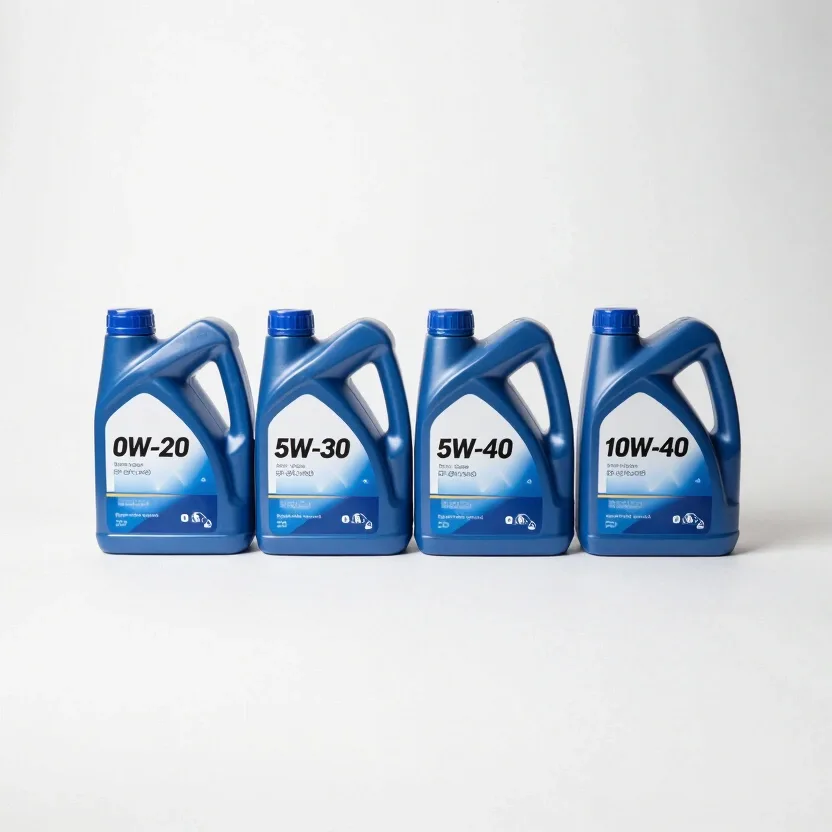
| Viscosity | Best For | Cold Start | Hot Protection | Fuel Economy |
|-----------|----------|------------|----------------|--------------|
| 5W-20 | Factory spec, moderate climates | Good at moderate cold | Adequate for normal driving | Best |
| 0W-20 | Cold climates, northern regions | Excellent in extreme cold | Same as 5W-20 when hot | Equivalent |
| 5W-30 | Hot climates, towing, high mileage | Worse in cold | Better film strength at high heat | Slightly lower |
**5W-20** is the safe choice. It's what Toyota recommends. It gives the best fuel economy and adequate protection for normal driving.
**0W-20** is smarter for cold climates. It flows much better at low temperatures. Toyota has since moved to 0W-20 for many engines. It's a forward-looking choice.
**5W-30** is not officially approved for the 2GR-FE. But many owners use it for hot climates, towing, or high-mileage engines. Watch oil consumption closely if you use it.
For most 2010 Sienna owners, 5W-20 full synthetic is the right answer. For cold climates, go with 0W-20.
## Oil Change Intervals
Toyota recommends 5,000 miles under severe service and 10,000 miles under normal service. Most driving counts as severe service. Short trips, stop-and-go traffic, and extreme temperatures all qualify.
Our research suggests a more practical approach.
- **Conventional oil:** Change every 3,000 to 4,000 miles.
- **Synthetic blend:** Change every 5,000 miles.
- **Full synthetic:** Change every 5,000 to 7,500 miles.
- **High-mileage synthetic:** Change every 5,000 miles.
The oil life monitoring system is helpful but conservative. Many owners report the light comes on around 5,000 to 7,500 miles. That's a good sign to change it.
Check the dipstick every 1,000 miles. If you notice the level dropping, you're burning oil. That's common in higher-mileage 2GR-FE engines.
## Step-by-Step: How to Do It Right
Changing oil on a 2010 Sienna takes about 30 minutes with basic tools.
**What you'll need:** 6.4 quarts of oil, a new oil filter (Toyota 04152-38010 or equivalent), a new crush washer, a 14mm socket, a 64mm oil filter socket, a drain pan, a funnel, and jack stands.
**The steps:**
1. Warm up the engine for a few minutes to thin the oil.
2. Lift the vehicle safely with jack stands or ramps.
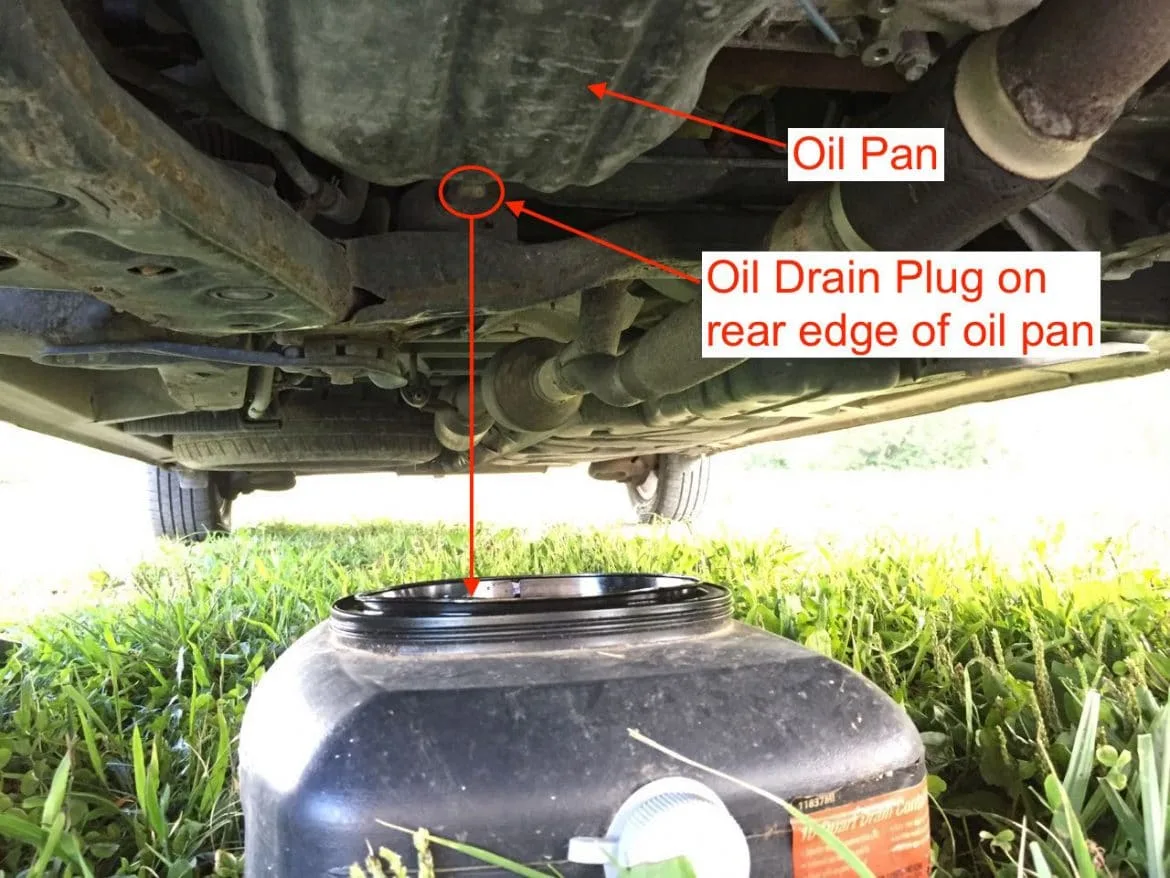
3. Locate the drain plug on the passenger side of the oil pan.
4. Remove the drain plug with a 14mm socket. Let it drain for five minutes. Replace the crush washer. Torque to 29 ft-lbs.
5. Remove the oil filter housing with a 64mm socket. Replace the O-ring and filter cartridge. Torque to 18 ft-lbs.
6. Add 6.0 quarts of oil through the fill cap. Start the engine for 30 seconds. Check the dipstick and top off as needed.
7. Reset the maintenance light. Press and hold the trip reset button while turning the key to the ON position.
8. Dispose of old oil and filter at an auto parts store or recycling center.
## Common Mistakes
**Using the wrong viscosity.** The 2GR-FE needs 5W-20 or 0W-20. Using 5W-30 can lower fuel economy and increase wear in cold weather.
**Overtightening the drain plug.** The oil pan is aluminum. Torque to 29 ft-lbs. Overtightening strips threads or cracks the pan.
**Overtightening the filter housing.** The plastic housing is fragile. Torque to 18 ft-lbs. Cracking it means a messy leak.
**Not replacing the crush washer.** Reusing it causes slow drips. Always use a new one.
**Forgetting to oil the filter O-ring.** A dry O-ring can stick and cause a leak. Apply a thin coat of fresh oil.
**Underfilling or overfilling.** Add 6.0 quarts initially, then check and top off. Overfilling causes foaming and reduced oil pressure.
**Using the wrong filter.** The 2010 Sienna uses a cartridge filter. Stick with a reputable brand. The OEM Toyota filter is affordable and reliable.
## Costs, Specs, and Quick Reference
| Spec | Value |
|------|-------|
| Engine | 3.5L V6 (2GR-FE) |
| Capacity with filter | 6.4 quarts (6.0 liters) |
| Recommended viscosity | 5W-20 |
| Acceptable alternative | 0W-20 (cold climates) |
| API standard | SN or higher |
| ILSAC standard | GF-5 or higher |
| Drain plug torque | 29 ft-lbs (39 Nm) |
| Filter housing torque | 18 ft-lbs (25 Nm) |
| Oil filter part number | 04152-38010 (OEM) |
**Typical DIY costs:** $20 to $30 for conventional, $35 to $55 for full synthetic, $8 to $15 for a filter. Total DIY cost is $30 to $70. A shop charges $80 to $120.
The cost difference between conventional and synthetic is roughly $10 to $15 per change. For that, you get better cold flow, higher heat resistance, and longer intervals.
## Safety, Disposal, and Legal Notes
**Safety.** Always use jack stands or ramps. Never rely on a jack alone. The Sienna weighs over 4,000 pounds. Wear gloves. Work in a well-ventilated area. Clean up spills immediately.
**Proper disposal.** Used motor oil is hazardous waste. It's illegal to pour it down drains or onto the ground. Take it to an auto parts store or recycling center. The EPA regulates used oil under 40 CFR Part 279.
**The filter needs disposal too.** Drain it overnight and take it to the same recycling center.
**Warranty.** If you have an extended warranty, use the correct viscosity and API standard. Keep receipts and records of your oil changes.
## Final Recommendation
If you want one answer, here it is. Use 5W-20 full synthetic oil meeting API SP and ILSAC GF-6 standards. Change it every 5,000 miles. Use a quality filter.
| Your Situation | Recommended Oil |
|----------------|-----------------|
| Cold climate (below 0°F in winter) | 0W-20 full synthetic |
| Moderate climate, normal driving | 5W-20 full synthetic |
| Hot climate or frequent towing | 5W-20 full synthetic (consider 5W-30 with caution) |
| High mileage (over 75,000 miles) | High-mileage 5W-20 synthetic |
| High mileage in cold climate | High-mileage 0W-20 synthetic |
| Extreme conditions | 5W-20 full synthetic, change every 4,000 miles |
The 2GR-FE engine is reliable and durable. Using the right oil is the single most important thing you can do to keep it running for 200,000 miles or more.
## Frequently Asked Questions
### Can I use 0W-20 instead of 5W-20 in my 2010 Sienna?
Yes. Toyota lists 0W-20 as acceptable, especially in cold climates. It flows better in extreme cold and provides the same protection at operating temperature.
### How often should I change the oil in my 2010 Sienna?
Every 5,000 miles for most driving conditions. With full synthetic and highway driving, you can stretch to 7,500 miles. But 5,000 miles is the safest interval.
### What happens if I use the wrong oil viscosity?
Thicker oil like 5W-30 reduces fuel economy and increases wear in cold weather. Thinner oil like 0W-20 in extreme heat may reduce protection. Stick with the recommendation for your conditions.
### Is synthetic oil worth it for a 2010 Sienna?
Yes. The 2GR-FE benefits from synthetic's better cold flow, heat resistance, and longer change intervals. The cost difference is small.
### How much oil does a 2010 Toyota Sienna take?
The 3.5L V6 holds 6.4 quarts (6.0 liters) with a filter change. For topping off, add oil slowly and check the dipstick.
### Can I switch from conventional to synthetic in a high-mileage Sienna?
Yes. High-mileage synthetic oils have seal conditioners that help reduce leaks. Use the correct viscosity and monitor your oil level for the first few changes.
``` The article is complete. No further content is needed.

