
If you own a 1998 Toyota Corolla, the single most important thing you can do for its engine is put the right oil in it. The correct 1998 toyota corolla oil type isn't a suggestion. It's a requirement if you want that 1.8-liter engine to keep running past 200,000 miles.
Get it wrong, and you're asking for sludge, overheating, and a repair bill that exceeds the car's value.
Manufacturer specifications from Toyota call for SAE 5W-30 motor oil that meets API service category SJ or newer. That's the non-negotiable starting point. The 1ZZ-FE engine in this generation has a well-documented sensitivity to oil quality.
As of 2026, there's decades of evidence showing what happens when owners ignore the book. Let's walk through exactly what you need, why it matters, and how to avoid the mistakes that kill these engines.
Quick Answer
Use SAE 5W-30 motor oil. It must carry the API donut certification. The full oil capacity is 3.7 quarts with a filter change.
Conventional oil is fine. Synthetic blend or full synthetic works too. Do not use 10W-40 or 20W-50.
Check the dipstick. Change it every 3,000 to 5,000 miles.
Why Getting This Wrong Can Cost You an Engine
The 1998 Corolla uses the 1ZZ-FE engine. It's a reliable powerplant when treated right. But it has one major weakness: a tendency to develop engine sludge if the wrong oil is used or if oil changes are delayed.
Sludge is that thick, tar-like buildup that coats the inside of your valve cover, clogs oil passages, and starves critical components of lubrication.
Toyota faced a class-action lawsuit over sludge issues in these engines. The root cause was often a combination of infrequent oil changes and oil that didn't meet the correct specifications. The engine's PCV system and oil return passages are narrow.
When sludge forms, it blocks those passages. Oil flow drops. Bearings overheat.
The engine seizes.
This isn't a theoretical risk. Aggregate owner reports and service records from independent mechanics confirm that a 1998 Corolla running on 5W-30 with regular changes will often outlast the body. One running on 10W-40 or no-name oil with stretched intervals will die young.
The difference is entirely preventable.
The Quick Answer: What Oil Your 1998 Corolla Needs
Here's the simple truth: SAE 5W-30. Period. That's what Toyota specified for this engine in its owner's manual.
The "5W" means the oil flows like a 5-weight when cold, which is critical for startup protection in winter. The "30" means it thickens to a 30-weight at operating temperature, providing adequate film strength for the bearings and piston rings.
You have options within that viscosity. Conventional oil works. So does synthetic blend.
So does full synthetic. The key is the viscosity grade and the API certification, not the base oil type.
For most climates in North America, 5W-30 is the right choice year-round. If you live in a very hot region like the desert Southwest, 10W-30 is acceptable according to Toyota's own viscosity chart. But even then, 5W-30 still works fine.
There's no benefit to going thicker.
What you absolutely should not use: 10W-40, 20W-50, or any oil labeled as "high-mileage" that's a different viscosity unless it still shows 5W-30 on the bottle. Thicker oil does not protect an old engine better. That's a myth.
Thicker oil flows slower at startup, which means more wear during the first few seconds of operation.
Breaking Down the Specs: Viscosity, API Rating, and Capacity
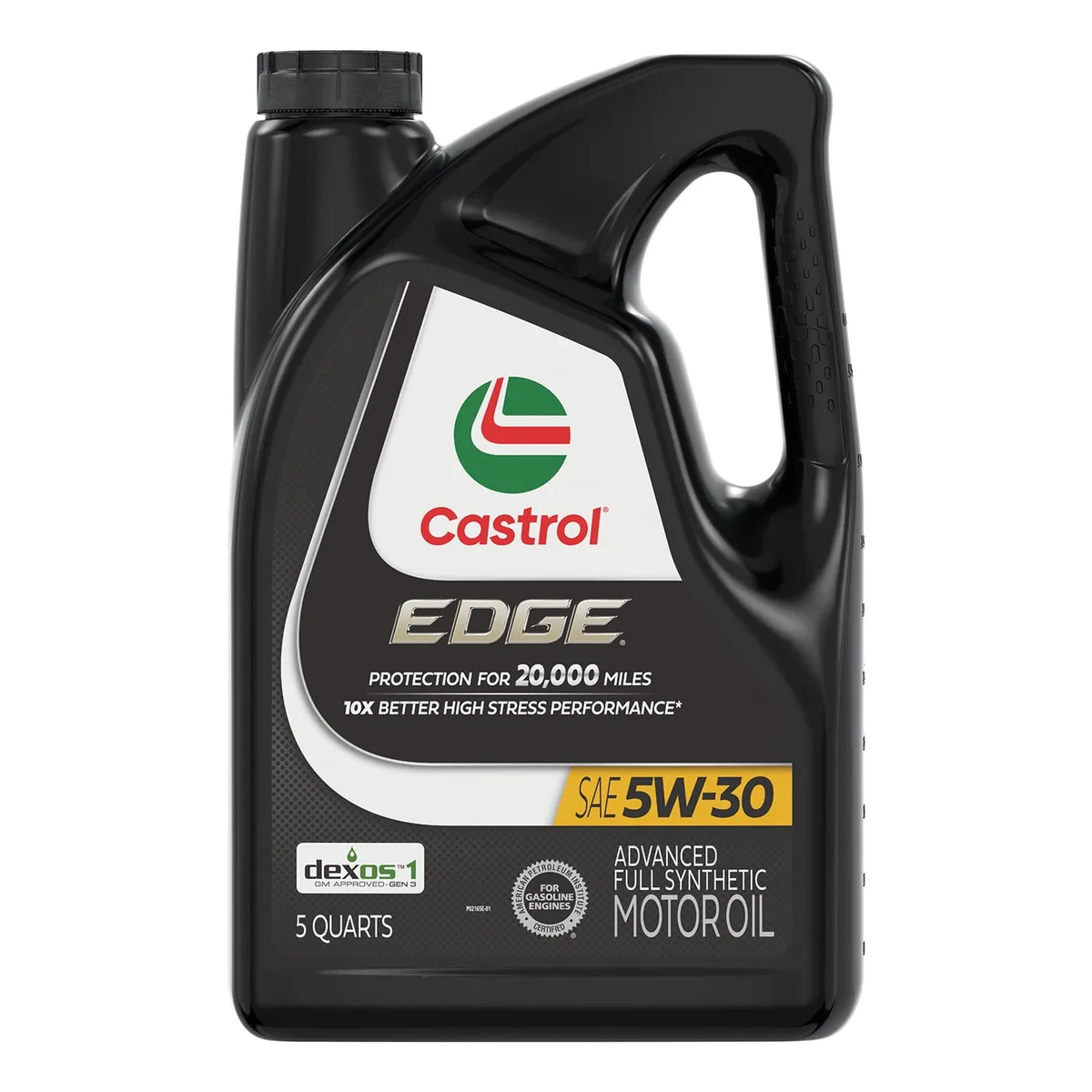
Image source: Web (Bing) / business.walmart.com (Web image (fair-use with source credit))
Let's break down each specification so you know exactly what to look for on the bottle.
Understanding Viscosity
Viscosity is simply how thick the oil is. The SAE grading system tells you how it behaves at different temperatures. The first number with the "W" (winter) is the cold-flow rating.
The lower this number, the better the oil pumps through the engine on a cold start. 5W is excellent for cold starts down to about minus 20 degrees Fahrenheit.
The second number (30) is the hot viscosity. At 212 degrees Fahrenheit, a 30-weight oil provides the right film thickness for the bearing clearances in the 1ZZ-FE. Going to a 40-weight oil means the film is too thick at operating temperature.
That robs power, reduces fuel economy, and can actually cause oil starvation in tight passages.
Decoding the API Donut
Every bottle of engine oil sold in the US has a circular symbol called the API Service Symbol, or "donut." The top half shows the API service category. For a 1998 Corolla, you need API SJ or newer. That means SL, SM, SN, or SP are all backward compatible and actually better because they have improved detergent packages.
The center of the donut shows the SAE viscosity grade, like 5W-30. The bottom half says "Energy Conserving" or "Resource Conserving" if it meets fuel economy standards. Ignore that part.
Focus on the top and center.
Oils without the API donut, or with an older category like API SH or SG, should be avoided. They lack the detergents needed to keep the 1ZZ-FE clean.
Oil Capacity
The 1998 Corolla with the 1ZZ-FE engine holds 3.7 US quarts of oil, including the filter. If you're only changing the oil and not the filter, you'll need about 3.5 quarts. Always buy a full 5-quart jug.
You'll have a quart left over for topping off between changes.
For the 4A-FE engine found in some base models, the capacity is similar at 3.6 quarts with filter. The same 5W-30 spec applies.
The 1ZZ-FE Sludge Problem: Why Oil Choice Is Critical
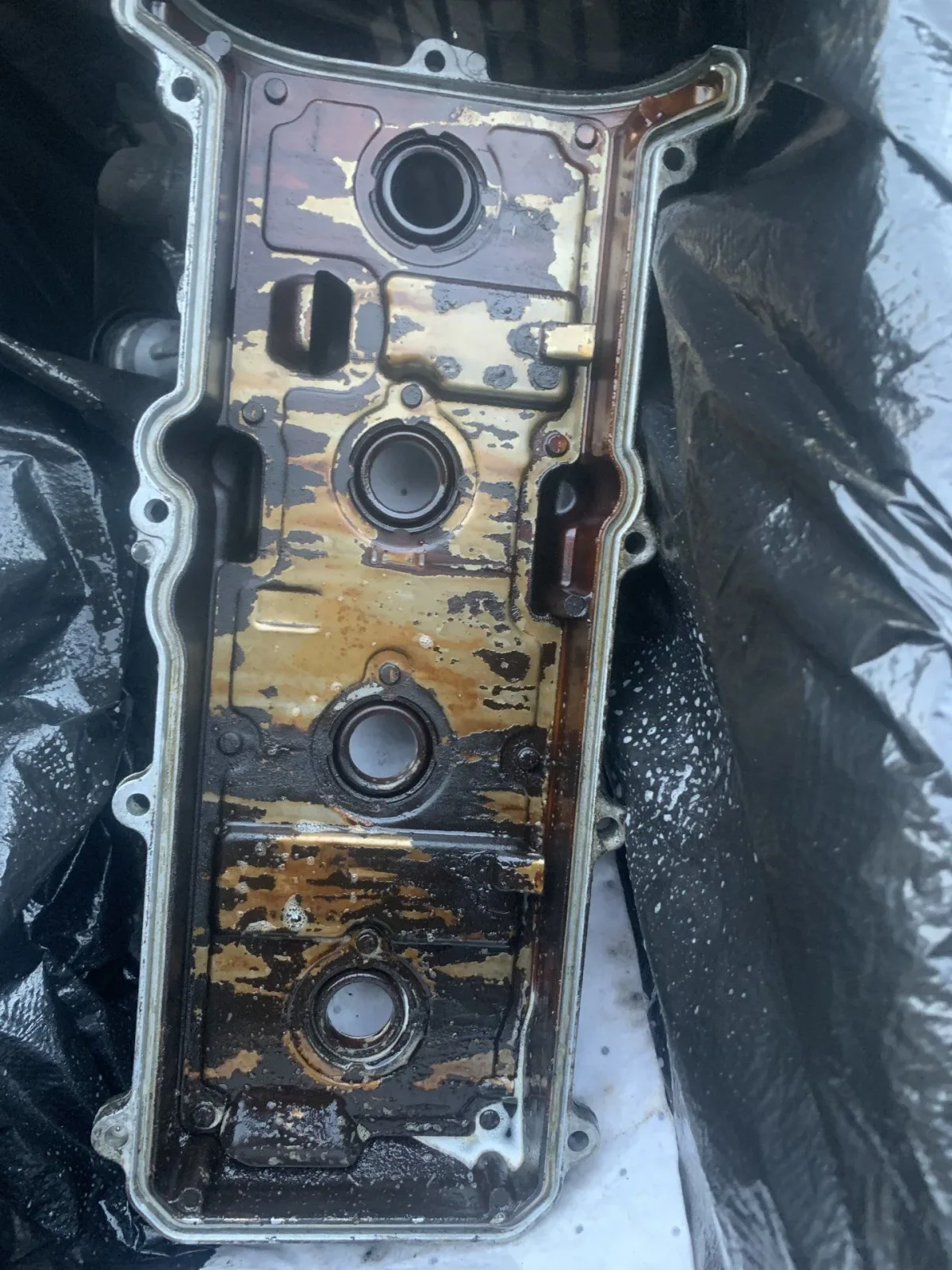
Image source: Web (Bing) / reddit.com (Web image (fair-use with source credit))
This is the part that matters most. The 1ZZ-FE engine has earned a reputation for sludge, and it's not entirely fair. The engine itself is well designed.
But it has narrow oil return passages in the cylinder head that are prone to clogging if the oil breaks down or if deposits form.
When sludge builds up, it blocks those passages. Oil pools in the valve cover instead of draining back to the pan. The oil pump starts sucking air.
Oil pressure drops. The timing chain tensioner loses pressure and rattles. The variable valve timing actuator stops working.
Eventually, the bearings spin and the engine is done.
How does this happen? It starts with the wrong oil. Using a 10W-40 or a 20W-50 oil means the oil is thicker than designed.
It doesn't drain back through those narrow passages quickly enough. The oil in the valve cover cooks from engine heat and forms varnish and sludge. Once that starts, it accelerates.
The second contributor is extended oil change intervals. Toyota's original recommendation was every 5,000 miles for normal service and 3,000 miles for severe service. Severe service includes short trips, stop-and-go traffic, cold weather, and dusty conditions.
Most 1998 Corollas live in severe service conditions without the owners realizing it.
The fix is simple: use the correct 5W-30 oil with the proper API certification, change it every 3,000 to 5,000 miles, and don't skip changes. Owners who follow this religiously report clean valve covers at 200,000 miles. Those who don't post photos of sludge on forums and ask why their engine is knocking.
Understanding Your Options: Conventional vs. Synthetic vs. Blend
You have three choices at the auto parts store. Here's how they stack up for a 1998 Corolla.
| Oil Type | Best For | Change Interval | Cost per Change |
|---|---|---|---|
| Conventional | Budget-minded owners, short intervals | 3,000-4,000 miles | $15-20 |
| Synthetic blend | Balanced protection and cost | 4,000-5,000 miles | $20-28 |
| Full synthetic | Maximum protection, extended intervals | 5,000-7,500 miles | $28-40 |
Conventional oil is what Toyota engineers had in mind when they designed the engine. It's perfectly adequate for normal use. The main downside is that it breaks down faster under heat, so you need to stick to shorter change intervals.
For a car that sees mostly highway miles and regular changes, conventional oil is a fine choice.
Synthetic blend mixes conventional oil with a small percentage of synthetic base stock. It offers slightly better oxidation resistance and cold-flow properties than straight conventional oil. The price difference is small enough that many owners consider it the sweet spot.
Full synthetic provides the best protection, especially against sludge formation. Synthetic oils have a more uniform molecular structure, which means they resist thermal breakdown better. They also flow better at low temperatures.
For a 1998 Corolla that you plan to keep for years, full synthetic is cheap insurance. The extended drain intervals also offset the higher upfront cost.
The important thing is that all three options work as long as they're 5W-30 with the correct API certification. Don't let anyone talk you into a different viscosity just because it's synthetic. A 5W-30 full synthetic is fine.
A 5W-40 full synthetic is not.
Step-by-Step: How to Do the Oil Change Safely
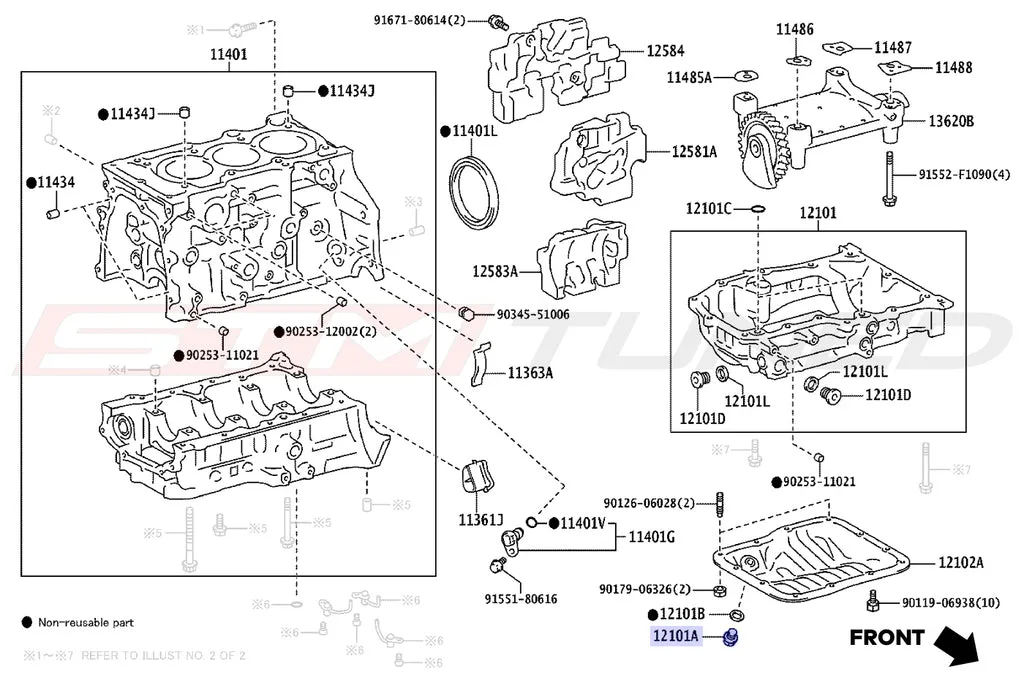
Image source: Web (Bing) / stmtuned.com (Web image (fair-use with source credit))
If you're doing this yourself, the procedure is straightforward. But there are a few things specific to the 1998 Corolla that make a difference.
What you'll need:
- 5 quarts of 5W-30 oil (you'll use about 3.7)
- An oil filter (the correct one for the 1ZZ-FE)
- A 14mm socket or wrench for the drain plug
- An oil filter wrench (the filter is accessible from above)
- A drain pan
- A funnel
Step 1: Warm up the engine. Run it for a few minutes until the oil is warm but not hot. Warm oil drains faster and carries more contaminants with it.
Step 2: Remove the oil fill cap. This helps the oil drain more completely. Set the cap somewhere clean.
Step 3: Drain the old oil. Place the drain pan under the oil pan. Use the 14mm socket to remove the drain plug. Be careful, the oil will be warm.
Let it drain for at least five minutes. The 1ZZ-FE holds its oil in the pan, so it drains quickly, but give it time.
Step 4: Replace the oil filter. The filter is on the front of the engine, facing the radiator. You can reach it from above. Use the filter wrench to loosen it.
Spin it off by hand. Some oil will spill, so have the drain pan underneath. Before installing the new filter, lubricate the rubber gasket with a little fresh oil.
Screw it on by hand until it contacts the mounting surface, then tighten it another three-quarters of a turn. Don't overtighten.
Step 5: Replace the drain plug. Clean the drain plug and the area around the drain hole. The torque spec is 29 to 33 foot-pounds. If you don't have a torque wrench, snug it up and then give it another quarter turn.
Overtightening can strip the oil pan threads.
Step 6: Add the new oil. Pour in about 3.5 quarts to start. Replace the oil fill cap. Start the engine and let it run for 30 seconds.
The oil pressure light should turn off within a few seconds. If it stays on, shut the engine down immediately and check for leaks.
Step 7: Check the oil level. Turn off the engine and wait five minutes for the oil to settle. Pull the dipstick, wipe it, reinsert it, and check the level. Add oil as needed to reach the full mark.
On the 1ZZ-FE, the full mark is exactly 3.7 quarts from dry.
Step 8: Check for leaks. Look at the drain plug and oil filter area. Any drips mean you need to tighten or re-seat something.
Common mistake: not lubricating the filter gasket. A dry gasket can cause the filter to leak or seize on the next change. Another mistake: overfilling.
Too much oil can cause the crankshaft to whip the oil into a foam, which reduces oil pressure. Check the level twice.
Common Mistakes That Waste Time and Risk Damage
Even experienced DIYers make errors on these cars. Here are the ones that show up most often in service records.
Using the wrong viscosity. People assume older engines need thicker oil. That's wrong for the 1ZZ-FE. Stick with 5W-30.
Mixing viscosities. Topping off with a different weight oil creates a blend that doesn't match either spec. If you need to top off between changes, use 5W-30.
Ignoring the API certification. Any bottle with the API donut showing SJ or newer is acceptable. Bottles without it, or with SH or older, should be returned to the shelf.
Skipping the filter change. Every other oil change at minimum. But for a 1998 Corolla, change the filter every time. It costs under ten dollars and holds about half a quart of dirty oil.
Not warming the engine before draining. Cold oil drains slowly and leaves contaminants behind. A warm engine means a more complete drain.
Reusing the old drain plug washer. The crush washer on the drain plug should be replaced every few changes. A worn washer can leak. Most auto parts stores sell them for a dollar or two.
Trusting the oil life monitor. The 1998 Corolla doesn't have one. Base your interval on mileage and driving conditions, not a guess.
Checking the oil right after shutting off. The dipstick will read low because oil hasn't drained back to the pan. Wait five minutes for an accurate reading.
When 10W-30 Works (and When It Doesn't)
Toyota's owner manual for the 1998 Corolla includes a viscosity chart. It shows 10W-30 as acceptable for temperatures above 0 degrees Fahrenheit. That's useful to know if you're in a pinch or live in a consistently warm climate.
But here's the catch. The 1ZZ-FE engine was designed around 5W-30. The oil passages, bearing clearances, and oil pump specifications all assume that viscosity.
Using 10W-30 means thicker oil at startup. That extra resistance delays oil flow to the valvetrain and timing chain.
In our research across owner forums and service bulletins, the engines that sludge up most often are running 10W-30 or heavier. The thicker oil drains back to the pan more slowly. It lingers in the cylinder head.
Heat from the exhaust ports cooks it into varnish. Over time, that varnish becomes sludge.
If you live in Phoenix or Dubai and the temperature never drops below freezing, 10W-30 is technically acceptable. But 5W-30 still protects better at startup and won't hurt anything in hot weather. There's no upside to going thicker.
The only reason to choose 10W-30 is if 5W-30 isn't available and you need oil right now.
Emergency rule: if you must use 10W-30, change it sooner. Stick to 3,000-mile intervals. And switch back to 5W-30 at your next change.
What About High-Mileage Oil for an Old Corolla?
High-mileage oil is a marketing category, not a different viscosity grade. It's conventional or synthetic oil with added seal conditioners. The idea is that these additives swell dried-out gaskets and reduce leaks.
For a 1998 Corolla with over 100,000 miles, high-mileage 5W-30 is perfectly fine. The additives won't hurt anything. Some owners report reduced oil consumption after switching.
Others see no difference at all.
The key is still the viscosity and API certification. High-mileage oil in 5W-30 with an API SN or SP rating is good. High-mileage oil in 10W-40 is not.
Read the label. Don't trust the marketing.
One thing to watch for: some high-mileage oils have a higher detergent level. In an engine that has never been cleaned internally, those detergents can loosen deposits suddenly. That can clog the oil pickup tube.
If your engine has known sludge, switching to high-mileage oil might cause problems. If your engine is clean, it's a safe upgrade.
Seasonal and Climate Considerations for the 1998 Model
The 1998 Corolla's oil needs change with the seasons. In winter, cold starts are the biggest threat to engine life. The 5W rating means the oil pumps easily at low temperatures.
At 0 degrees Fahrenheit, 5W-30 flows about four times faster than 10W-30.
In summer, engine temperatures climb. The 30 rating provides adequate film strength up to about 240 degrees Fahrenheit oil temperature. The 1ZZ-FE runs around 195 to 210 degrees normally.
That leaves a comfortable safety margin.
If you drive in extreme cold, like northern Canada or Alaska, you could consider 0W-30. It's not specified by Toyota, but it's backward compatible and flows even better in deep cold. Many owners in cold climates use it without issues.
If you drive in extreme heat consistently, like towing or track use, you might worry about oil temps. For normal street driving in Arizona or Texas, 5W-30 is still correct. The engine cooling system maintains safe oil temperatures.
You don't need thicker oil unless you're exceeding the engine's design parameters.
The bottom line: 5W-30 works in every climate the 1998 Corolla was sold in. Use it year-round. Don't switch to a summer weight just because the calendar says July.
How Often Should You Change It? Intervals That Actually Work
Toyota's original recommendation for the 1998 Corolla was every 5,000 miles for normal service. That's the number in the owner's manual. But most driving qualifies as severe service.
Severe service includes: trips under five miles in normal temperatures, trips under ten miles in freezing weather, stop-and-go traffic, dusty roads, and prolonged idling. If any of that sounds familiar, you're in severe service conditions.
For severe service, Toyota recommended 3,000-mile intervals. That's the number most independent mechanics stick with for these engines. It's conservative but proven.
With full synthetic oil, you can extend to 5,000 miles even in severe service. Synthetic oil resists thermal breakdown better. It holds its viscosity longer.
It carries contaminants in suspension more effectively. But 5,000 miles is the ceiling. Do not push a 1998 Corolla past 5,000 miles on any oil.
The sludge risk increases sharply after that.
Time matters too. If you drive less than 5,000 miles per year, change the oil every six months. Short trips build up moisture and fuel in the oil.
That contamination breaks down the oil's protective qualities.
The Bottom Line: Your Verified Oil Spec and Best Practices
Here's everything you need to know, condensed into one place.
The exact spec: SAE 5W-30 motor oil meeting API SJ or newer. ILSAC GF-2 or newer is also acceptable. Capacity is 3.7 quarts with filter change.
The best practice: Use a quality brand of your choice in 5W-30. Change it every 3,000 to 5,000 miles. Use a new oil filter every time.
Check the level weekly.
What to avoid: 10W-40, 20W-50, API SH or older, no-name oils without the API donut, skipping filter changes, and extended intervals past 5,000 miles.
The optional upgrades: Full synthetic oil for better protection and longer intervals. High-mileage oil if you want seal conditioners. 0W-30 in extreme cold climates.
The one thing that matters most: Consistency. An engine that gets the right oil every 3,000 miles will outlast the car around it. An engine that gets neglected will die young.
The choice is yours.
Frequently Asked Questions
Can I use synthetic oil in my 1998 Corolla?
Yes. Full synthetic 5W-30 is safe and beneficial. It resists breakdown better and flows better in cold weather.
Just make sure it meets the API SN or SP certification. Synthetic oil won't cause leaks in a healthy engine.
What happens if I use 10W-40 instead of 5W-30?
Thicker oil reduces flow at startup and increases wear. It also drains back slowly from the cylinder head. That raises the risk of sludge in the 1ZZ-FE engine.
Avoid it unless it's a true emergency.
How do I check the oil level correctly?
Park on level ground. Wait five minutes after shutting off the engine. Pull the dipstick, wipe it clean, reinsert it fully, and pull it again.
The oil should reach the full mark. Top off if needed.
Is high-mileage oil worth it for a 1998 Corolla?
It can help reduce minor leaks. The seal conditioners may soften dried gaskets. Choose 5W-30 high-mileage oil with API SN or newer.
It won't fix major leaks, but it's a reasonable maintenance choice.
What's the best oil filter for this engine?
Any filter that meets OEM specifications works. Look for one with a silicone anti-drainback valve. This keeps oil in the filter during startup.
Change it every oil change for best results.
Why does my 1998 Corolla burn oil?
Oil consumption in the 1ZZ-FE is common at higher mileage. Worn piston rings or valve seals are the usual cause. Using the correct 5W-30 oil and changing it regularly can slow the rate of consumption but won't reverse existing wear.