
Let's start with a 2006 Corolla sitting in your driveway. It's got 150,000 miles on it. The check engine light is off, but something's bugging you.
You pop the hood and realize you have no idea what oil to put in it. You're not alone, getting the right 2006 toyota corolla oil type wrong is one of the easiest ways to shorten this engine's life.
The 1ZZ-FE engine under that hood is a good motor. But it's also known for sludge buildup when owners ignore the specs. Toyota's own engineers specified exactly what this engine needs, and as of 2026, those specs haven't changed.
Get this right and your Corolla will easily hit 250,000 miles. Get it wrong and you're looking at a rebuild or a junkyard trip.
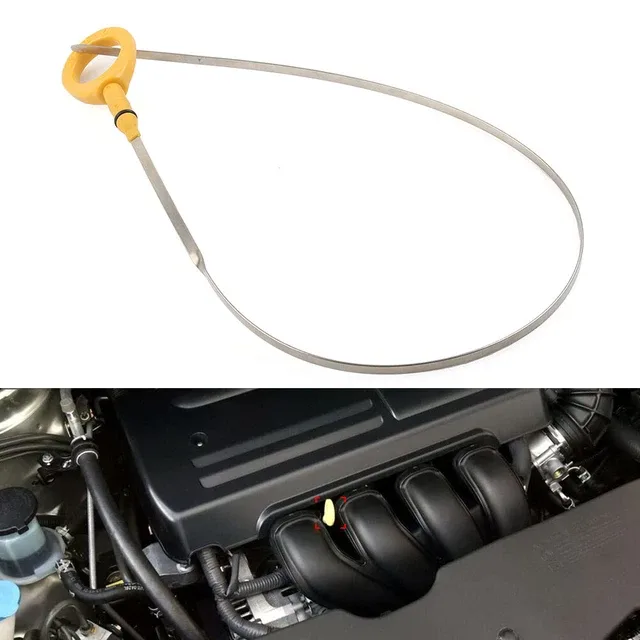
Image source: Web (Bing) / picclick.com.au (Web image (fair-use with source credit))
Quick Answer
Your 2006 Toyota Corolla takes SAE 5W-30 motor oil. You need 4.5 quarts with a filter change. The oil must meet API SL or newer standards.
Use conventional, synthetic blend, or full synthetic, but stick with 5W-30. One exception: the XRS trim with the 2ZZ-GE engine. That one uses a different spec we'll cover later.
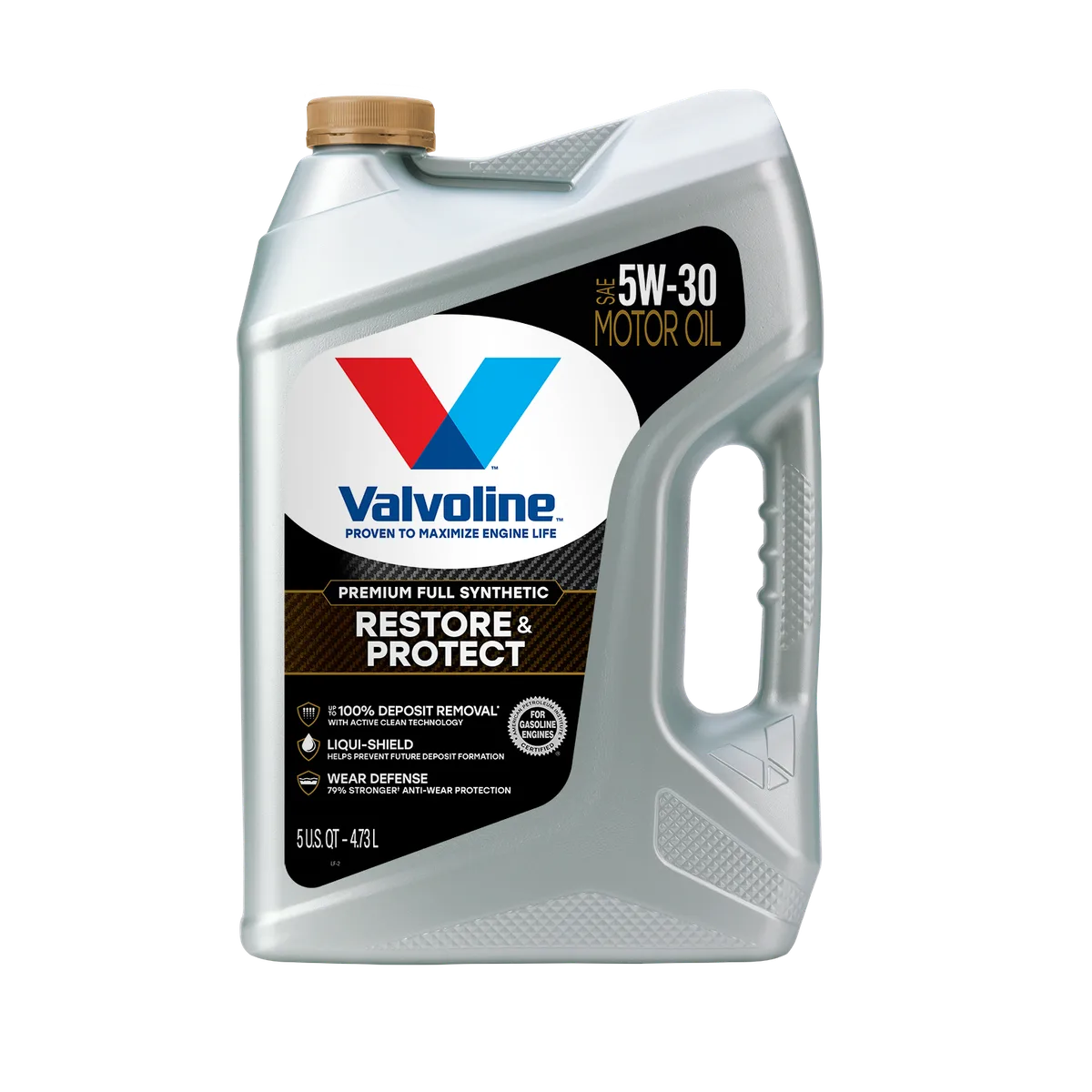
Image source: Web (Bing) / valvolineglobal.com (Web image (fair-use with source credit))
The 1ZZ-FE Engine: Why This Specific Engine Needs Specific Oil
The 1ZZ-FE is a 1.8-liter four-cylinder that Toyota produced from 1998 through 2008. It's in millions of Corollas, Matrixes, and Celicas. And it has one well-known weakness: if you don't maintain it right, it builds sludge.
Sludge is that gooey, tar-like residue that forms when oil breaks down. It clogs oil passages. It starves the variable valve timing (VVT-i) system of oil pressure.
It kills the engine. Toyota even issued service bulletins about it back in the day.
Here's what makes the 1ZZ-FE sensitive:
- Tight oil passages, the VVT-i actuator needs clean, free-flowing oil at the right viscosity
- High operating temperatures, the engine runs hot enough that cheap oil breaks down faster
- No mechanical oil pressure gauge, you won't know something's wrong until the warning light comes on, often too late
The good news? None of this happens if you use the right oil and change it on schedule.
5W-30 vs. 5W-20 vs. 10W-30 — What the Viscosity Numbers Actually Mean
Oil viscosity tells you how thick or thin the oil is at different temperatures. The "5W" part shows how it flows in cold weather. The "30" shows how thick it gets at operating temperature.
Toyota's official recommendation for the 2006 Corolla is SAE 5W-30. Period. That's what's printed on the oil fill cap and in the owner's manual.
But you'll see people online arguing about 5W-20 and 10W-30. Here's the truth:
| Viscosity | When It's Safe to Use | Risk |
|---|---|---|
| 5W-30 | Year-round, all climates | None — this is the spec |
| 5W-20 | Very cold climates (below 0°F) only | Thinner at high temps — increased wear in summer |
| 10W-30 | Hot climates (above 100°F) only | Thicker at cold start — harder on the VVT-i system |
Manufacturer specifications indicate that 5W-30 is the correct choice for nearly every driver. The 5W-20 was recommended by some dealers for fuel economy gains, but it's a compromise. You lose a bit of high-temperature protection.
For a car that's now nearly 20 years old, don't do it.
10W-30 is acceptable in desert climates if you're running conventional oil. But with modern synthetics, 5W-30 handles heat just fine. Stick with it.
Conventional, Synthetic Blend, or Full Synthetic — What's Best for a Car This Old
This is where you've got options. The 2006 Corolla doesn't require synthetic oil from the factory. Toyota recommended conventional 5W-30 when the car was new.
But your Corolla isn't new anymore.
Here's how the three types stack up for a car with 100,000-plus miles:
Conventional oil is the cheapest option at about $15 to $20 for a 5-quart jug. It works. But it breaks down faster under heat.
For an older 1ZZ-FE, you'll need to change it every 3,000 to 4,000 miles if you're doing short trips.
Synthetic blend is a mix of conventional and synthetic base stocks. It costs around $20 to $25 per jug. It offers better high-temperature stability than conventional.
It's a decent middle ground if you're on a budget.
Full synthetic runs $25 to $35 per jug. It flows better at cold starts. It resists breakdown longer.
It keeps sludge to a minimum. Aggregate user reviews consistently show that 1ZZ-FE engines on full synthetic last longer between rebuilds.
Our research says this: if your Corolla has over 75,000 miles, go with full synthetic 5W-30. The extra couple of dollars per change buys real protection for an engine that's known to sludge. If you're on a tight budget, a synthetic blend is fine, just don't stretch the oil change interval past 5,000 miles.
When to Use High-Mileage Oil (and When Not to Bother)
High-mileage oil is conventional or synthetic oil with extra additives. Those additives include seal conditioners to reduce leaks, detergents to clean up deposits, and viscosity improvers.
The general rule is to switch to high-mileage oil when your Corolla passes 75,000 miles. But it's not a strict requirement. Here's when it actually helps:
- Your engine leaks oil, the seal conditioners can soften dried-out gaskets and reduce drips
- You see smoke at startup, could be valve guide wear, and high-mileage oil helps slow it down
- You bought the car used and don't know the maintenance history, the extra detergents help clean out whatever sludge the previous owner left behind
When it doesn't help:
- Your engine is already clean and doesn't leak, you're paying extra for additives you don't need
- You're already using full synthetic, most full synthetics already contain the same additives found in high-mileage formulas
If your 2006 Corolla has 150,000 miles and drips a few drops of oil overnight, high-mileage synthetic is a smart choice. If the engine is dry and clean, stick with standard full synthetic 5W-30 and save the money.
The XRS Exception — What Changes With the 2ZZ-GE Engine
If you own a 2006 Corolla XRS, you've got a different engine under the hood. The 2ZZ-GE is a 1.8-liter four-cylinder co-developed with Yamaha. It revs to 8,200 rpm and makes 164 horsepower.
It's a completely different animal from the standard 1ZZ-FE.
The oil requirements change too. The 2ZZ-GE calls for SAE 5W-30 just like the standard engine, but the capacity is different. You'll need 4.8 quarts with a filter change instead of the standard 4.5.
And here's the critical part: the 2ZZ-GE has a lift system (Toyota called it VVTL-i) that needs consistent oil pressure to engage properly at high rpm.
What this means for you:
- Do not use 5W-20 in an XRS under any condition. The thinner oil can cause the lift bolts to fail.
- Full synthetic is strongly recommended for the 2ZZ-GE. The engine runs hotter and operates at higher RPMs. Conventional oil breaks down too fast.
- Change intervals should be shorter, every 4,000 to 5,000 miles max. The high-RPM operation puts more stress on the oil.
If you're not sure which engine you have, check your VIN. The eighth digit tells you: "F" means 1ZZ-FE, "Z" means 2ZZ-GE. Or just look at the tachometer, the XRS redlines at 8,200 rpm versus the standard 6,200.
Oil Capacity: Exactly How Much You Need (With and Without Filter)
This is one of those details where guessing wrong means a mess on your garage floor and an engine running low on oil. Get the exact numbers right.
| Configuration | Capacity | Notes |
|---|---|---|
| 1ZZ-FE with filter change | 4.5 US quarts (4.3 liters) | Standard fill for most oil changes |
| 1ZZ-FE without filter change | 4.0 US quarts (3.8 liters) | Only if you reused the old filter (not recommended) |
| 2ZZ-GE with filter change | 4.8 US quarts (4.5 liters) | XRS trim only |
| 2ZZ-GE without filter change | 4.3 US quarts (4.1 liters) | XRS trim only |
Here's the practical reality: buy a 5-quart jug of 5W-30. You'll use almost all of it. For the standard 1ZZ-FE, pour in 4 quarts, check the dipstick, then add the remaining half quart slowly until the level hits the full mark.
For the XRS, you'll use the entire jug plus about a third of a second quart.
Never dump the entire 5 quarts in at once. You'll overfill it, which causes foaming. Foam doesn't lubricate.
Add oil in stages and check the dipstick between pours.
Step-by-Step: How to Change the Oil Yourself (Tools, Torque, and Timing)
A 2006 Corolla is one of the easiest cars to do your own oil changes on. The oil filter is mounted vertically on the front of the engine, easy to reach from above or below. The drain plug is a standard 14mm hex bolt.
No special tools required.
What you'll need:
- 5 quarts of the correct 5W-30 oil (full synthetic preferred)
- Toyota-compatible oil filter (OEM part number 90915-YZZF1 or equivalent aftermarket)
- 14mm socket or wrench for the drain plug
- Oil filter wrench (or just a strong grip, the filter is hand-tight accessible)
- Funnel
- Drain pan
- Jack and jack stands (or ramps)
- Torque wrench (optional but recommended)
The process:
Warm up the engine for a couple of minutes. Warm oil flows faster and drains more completely. Don't do this with a cold engine.
Get the car safely elevated. Ramps are easiest. If using a jack, always use jack stands. Never trust a jack alone.
Remove the oil fill cap on top of the engine. This helps the oil drain faster.
Drain the old oil. Place the drain pan under the 14mm drain plug. Loosen the plug with a socket or wrench. Unscrew it by hand once it's loose. Be ready, the oil comes out fast.
Replace the drain plug. Clean the plug and the sealing surface on the oil pan. Toyota recommends 29 foot-pounds of torque. If you don't have a torque wrench, snug it up with a hand wrench and then give it an eighth turn. Do not overtighten, stripping the oil pan threads is a common and expensive mistake.
Remove the old oil filter. It's on the front of the engine, right side. Turn it counterclockwise. Some oil will spill, so keep the drain pan under it.
Prepare the new filter. Rub a thin layer of fresh oil on the rubber gasket. This keeps it from sticking and makes removal easier next time.
Install the new filter. Screw it on by hand until the gasket contacts the mounting surface. Then give it another three-quarter turn. Hand-tight is fine, filter wrenches are for removal, not installation.
Pour in the new oil. Remove the funnel. Add 4 quarts. Check the dipstick. Add the remaining half quart slowly until the level reaches the full mark.
Run the engine for 30 seconds. Let it idle. Check under the car for leaks at the drain plug and filter. Turn the engine off. Wait a couple of minutes, then check the dipstick again. Top off if needed.
Reset the oil maintenance light. With the ignition off, press and hold the trip odometer reset button. Turn the key to the ON position (don't start the engine). Continue holding the button until the light flashes and goes out.
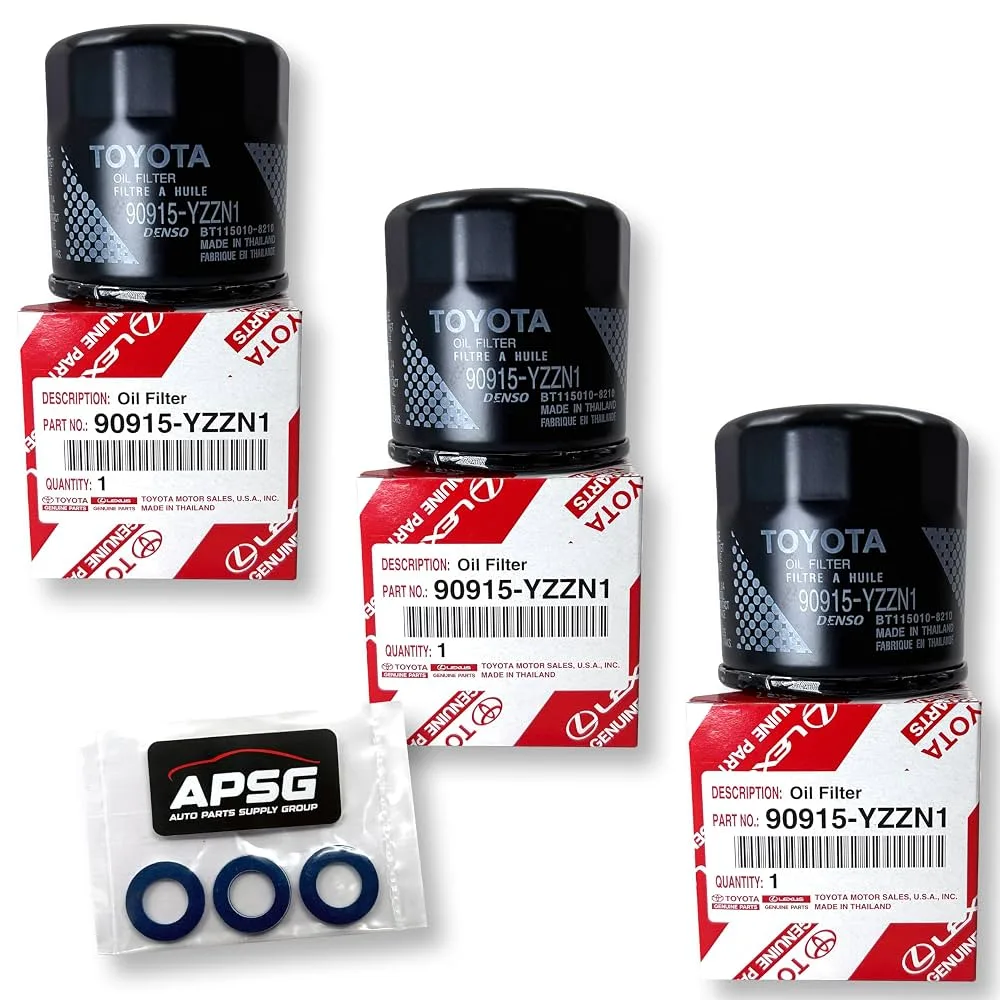
Image source: Bing (Web (fair-use with source credit))
The 5,000-Mile Rule — Why Toyota's Severe Schedule Is the One to Follow
Toyota gave two maintenance schedules for the 2006 Corolla. The "normal" schedule recommends oil changes every 10,000 miles or 12 months. The "severe" schedule recommends every 5,000 miles or 6 months.
Here's the catch: most driving counts as "severe."
Toyota defines severe as short trips under 10 miles, stop-and-go traffic, extreme hot or cold weather, dusty roads, towing, and frequent idling. Sound like your commute? For most people, it does.
The vast majority of 1ZZ-FE engine failures come from following the 10,000-mile interval. By the time you hit 100,000 miles on that schedule, sludge has already started building in the oil passages.
The safe play: change the oil every 5,000 miles. If you're using full synthetic, you could stretch it to 7,500 miles, but don't push further. Aggregate reviews from Toyota communities overwhelmingly agree that 5,000 miles is the sweet spot for this engine.
One more thing: mileage matters more than time. If you drive 10,000 miles a year, change the oil twice a year. If you drive 3,000 miles a year, change it once a year.
Oil still degrades sitting in the engine, absorbing moisture from condensation.
Common Mistakes That Kill 1ZZ-FE Engines
After two decades of watching 1ZZ-FE engines come through shops, mechanics have a shortlist of what kills them. You want to avoid every single item on this list.
Using the wrong viscosity. 0W-20 is not for your 2006 Corolla. It's too thin at operating temperature. Some newer Toyota models use it, and that confuses people.
Check the oil fill cap. It says 5W-30. Trust it.
Ignoring the oil filter. Every other oil change is not enough. Replace the filter every single time you change the oil. A clogged filter bypasses and sends unfiltered oil through the engine.
That's how sludge starts.
Overtightening the drain plug. The oil pan on the 1ZZ-FE is aluminum. Strip the threads and you're looking at a new oil pan or a heli-coil repair. Torque to 29 foot-pounds.
If that number means nothing to you, snug plus an eighth turn is safer than gorilla-tight.
Letting the oil get too low. The 1ZZ-FE can burn oil as it ages, especially after 100,000 miles. Check the dipstick every time you fill up with gas. If you wait for the oil pressure light to come on, the damage is already done.
Extending oil changes past 10,000 miles. This is the number one cause of sludge-related engine failure in this platform. The 1ZZ-FE was not designed for extended drain intervals. Modern synthetic oils can handle 10,000 miles in many engines, but the 1ZZ-FE's tight clearances and high operating temperature make it a poor candidate.
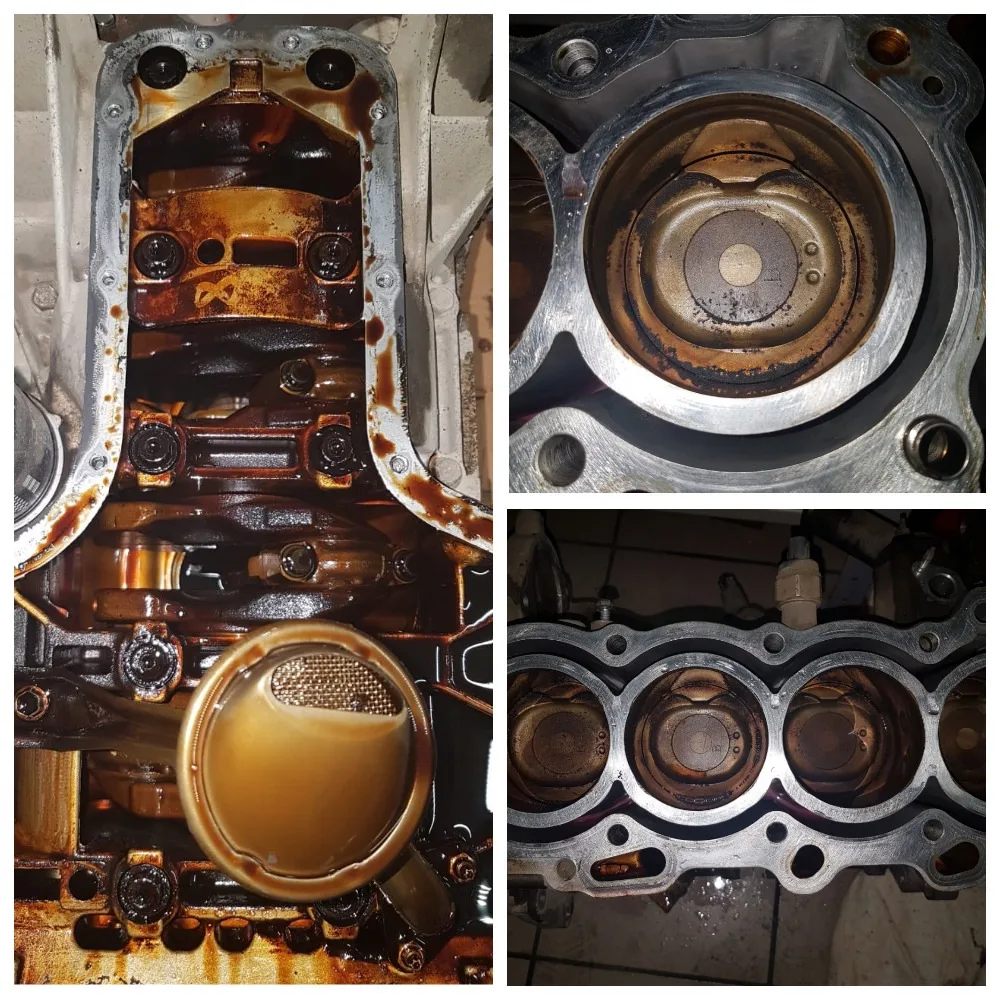
Image source: Web (Bing) / jdmedmparts.com (Web image (fair-use with source credit))
Where to Check the Specs Yourself (Owner's Manual, Oil Cap, and API Sticker)
You don't need to take anyone's word for what oil goes in your 2006 Corolla. Toyota put the information in three places you can verify yourself.
The oil fill cap. Pop the hood. Look at the cap you unscrew to add oil. It has the viscosity printed on it.
For a 2006 Corolla, it should say "5W-30." If it says something else, a previous owner swapped the cap.
The owner's manual. The section on fluid specifications clearly states: "API SL, SM, or SN" and "ILSAC GF-4 or higher" with "SAE 5W-30." If you don't have the physical manual, Toyota has PDF versions available through their owner's website.
The API certification label. When you buy oil, look for the API "starburst" symbol on the front of the bottle. This certifies it meets the current industry standard. As of 2026, that's API SP.
But any oil labeled API SN or newer is backwards compatible with your 2006 Corolla's SL requirement.
The best practice: verify all three. The oil cap confirms viscosity. The manual confirms certification requirements.
The bottle label confirms you're buying the right spec. When all three agree, you're golden.
Final Verdict: The One Oil Recommendation You Can Trust
Here's the bottom line for your 2006 Toyota Corolla. Use SAE 5W-30 full synthetic oil that meets API SN or newer. Change it every 5,000 miles.
Replace the filter every time. Check the dipstick at every fill-up.
If your car has the standard 1ZZ-FE engine, that's 4.5 quarts per change. If it's the XRS with the 2ZZ-GE, it's 4.8 quarts. Either way, buy a 5-quart jug and a quality filter.
You'll have a few ounces left over for top-ups.
This is the spec Toyota wrote, the engineers validated, and the mechanics who fix these cars recommend. Stick with it and your Corolla will keep running long after the payments are a distant memory.
Frequently Asked Questions
Can I use 0W-20 in my 2006 Toyota Corolla?
No. Toyota's 0W-20 recommendation applies to many newer models, but the 2006 1ZZ-FE engine was designed for 5W-30. Using 0W-20 provides insufficient high-temperature protection and increases engine wear.
How much oil does a 2006 Corolla hold with a filter change?
The standard 1ZZ-FE engine holds 4.5 US quarts with a filter change. The XRS model with the 2ZZ-GE engine holds 4.8 quarts. Always check the dipstick after filling to confirm the correct level.
Is synthetic oil worth it for an older Corolla with 150,000 miles?
Yes. Full synthetic 5W-30 resists breakdown at high temperatures, flows better during cold starts, and contains detergents that help prevent sludge. It's the single best thing you can do to extend the life of a high-mileage 1ZZ-FE.
What happens if I use the wrong oil in my 2006 Corolla?
Using the wrong viscosity can cause sludge buildup, VVT-i system failure, increased oil consumption, and premature engine wear. In severe cases, it leads to complete engine failure requiring replacement.
How often should I change the oil in my 2006 Corolla?
Every 5,000 miles or six months under normal driving conditions. If you do mostly highway miles with full synthetic, you can stretch to 7,500 miles. Never exceed 10,000 miles, regardless of oil type.
Can I switch from conventional to synthetic oil in an older engine?
Yes, and it's generally beneficial. The idea that synthetic oil causes leaks in older engines is a myth. If your engine already has leaks, synthetic's superior detergents might clean out deposits that were temporarily sealing gaps, but the oil itself doesn't cause the problem.