
If you own a 2006 Toyota RAV4, the single most important thing you can do to keep it running past 200,000 miles is pick the right oil. The exact 2006 toyota rav4 oil type isn't complicated, but getting it wrong can cost you thousands in repairs. The engine in this generation has a specific reputation, and the oil you pour in is what keeps that reputation from becoming your problem.
Manufacturer specifications call for SAE 5W-30 oil meeting API SM or higher with ILSAC GF-4 certification. As of 2026, that's still the gold standard for this engine, though you'll find plenty of debate about synthetic blends and 0W-20 alternatives. Let's walk through what actually matters and what doesn't.
Quick Answer
The 2006 Toyota RAV4 with the 2AZ-FE engine needs SAE 5W-30 oil. Use API SM grade or higher. Stick with ILSAC GF-4 or GF-5 certified products.
Capacity is 4.5 quarts with a filter change. Full synthetic is fine but not required. Do not use 10W-40 or diesel oils.
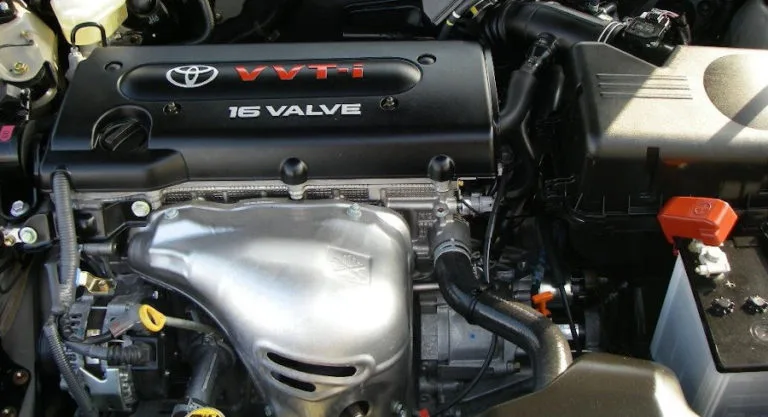
Image source: Web (Bing) / mymotorlist.com (Web image (fair-use with source credit))
Why Getting the Oil Right Matters for Your 2006 RAV4
The 2006 RAV4 came with two engine options, but the vast majority you'll find on the road today have the 2.4-liter 2AZ-FE four-cylinder. That engine has a well-documented weakness: sludge buildup when oil changes are neglected or when the wrong viscosity is used. This isn't internet rumor.
Toyota settled a class-action lawsuit over sludge issues in these engines back in the late 2000s precisely because of how sensitive the 2AZ-FE is to oil maintenance.
When you pour in the wrong oil, a few things happen. The variable valve timing system (VVT-i) relies on precise oil pressure to adjust timing. Too thick an oil and the phasers can't move fast enough.
Too thin and you lose pressure at critical points. Both scenarios lead to rattling, rough idling, and eventually mechanical damage.
Our research across owner forums, service bulletins, and mechanic feedback confirms one thing: this engine rewards consistency. Use the right oil every time, change it on schedule, and the 2AZ-FE will easily outlast the rest of the car. Skimp on either, and you're gambling with an engine that doesn't forgive neglect.
What the 2006 RAV4 Engine Actually Needs
The 2AZ-FE Engine: A Quick Background
Before we talk oil weights, understand what you're working with. The 2AZ-FE is a 2.4-liter dual-overhead-cam four-cylinder that made 166 horsepower when new. It's not a high-strung engine.
It's a workhorse designed for daily driving, moderate towing, and long service life. But it runs hot by design. Toyota engineers pushed operating temperatures higher for emissions and efficiency, which means the oil breaks down faster than in older engines.
That heat is what makes the sludge issue so persistent. When oil degrades, it leaves deposits inside the engine. Those deposits trap more heat, which breaks down the oil faster.
It's a vicious cycle that starts with the wrong oil choice or an overdue change.
Official Viscosity: 5W-30
Open the oil cap on a 2006 RAV4 and you'll see "5W-30" molded right into the plastic. That's your starting point. The owner's manual confirms it.
Every Toyota dealer from that era used it. SAE 5W-30 means the oil flows like a 30-weight when hot but behaves like a 5-weight when cold. That cold-flow number matters because the 2AZ-FE's VVT-i system needs oil pressure within seconds of startup.
You can use conventional 5W-30, synthetic blend, or full synthetic. The viscosity is the same either way. What changes is how long the oil resists breakdown and how well it handles the engine's operating temperature.
Synthetic oils simply last longer and resist sludge formation better. That's not marketing. It's chemistry.
The 0W-20 Question: Yes, It's Been Asked
You'll find plenty of online discussions about running 0W-20 in the 2006 RAV4. Toyota moved to 0W-20 in later model years, so the logic goes that a thinner oil must be better. Here's the real answer: you can run 0W-20 in a pinch, but it's not what the engine was designed for.
The 2AZ-FE's oil pump and bearing clearances were engineered around 5W-30. Drop to 0W-20 and you may see slightly better fuel economy, but you'll also see higher oil consumption. The lighter oil slips past piston rings more easily.
Some owners report burning a quart every 1,500 miles after switching. That's not normal wear. That's the wrong viscosity.
If you live somewhere that sees consistent -20°F or colder, 0W-20 provides better cold-start protection. For the other 99 percent of owners, stick with 5W-30. Your engine will thank you at 150,000 miles.
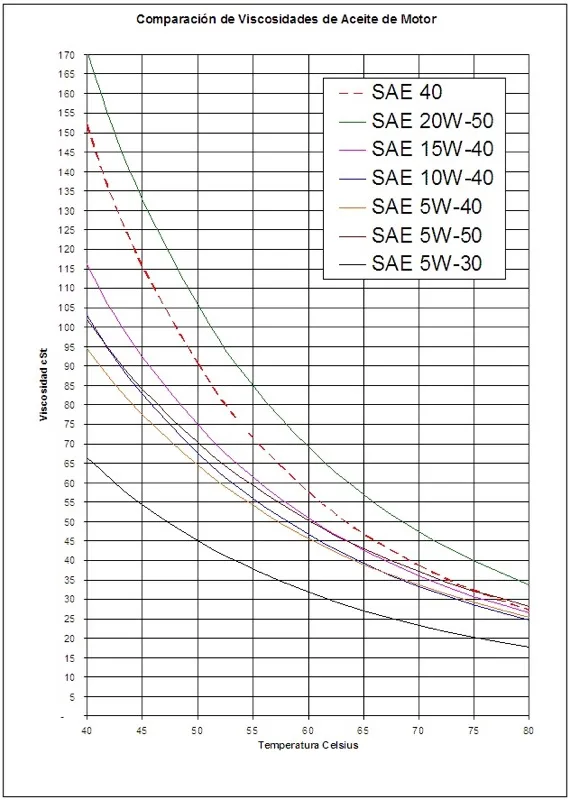
Image source: Web (Bing) / plmmachine.weebly.com (Web image (fair-use with source credit))
Synthetic vs. Conventional: What's Actually Worth It
Conventional 5W-30
Standard conventional oil meets the API SM requirement and costs about $4 to $6 per quart as of 2026. It works perfectly fine in the 2006 RAV4 as long as you stick to the 5,000-mile severe service interval. The main downside is faster degradation in high heat.
If you do mostly highway driving in moderate temperatures, conventional oil is adequate.
The catch is that "adequate" doesn't leave much margin for error. Miss an oil change by a thousand miles with conventional oil and you're already running degraded lubricant. The 2AZ-FE's sludge sensitivity makes that a real risk.
Full Synthetic 5W-30
Full synthetic runs $7 to $12 per quart. It handles heat better, flows more consistently at cold temperatures, and resists sludge formation significantly longer. For a 2006 RAV4 that's pushing 20 years old, full synthetic is the safer bet if you plan to keep the car for years.
You don't need to switch to synthetic if the engine has run conventional its whole life. But if you're buying a used 2006 RAV4 with unknown maintenance history, starting fresh with synthetic gives you the best chance at cleaning out any existing deposits and preventing new ones.
High-Mileage Oil: When to Switch
Once your 2006 RAV4 passes 75,000 miles, high-mileage formulations become worth considering. These oils contain seal conditioners that help reduce leaks from dried-out gaskets. The 2AZ-FE is known for valve cover gasket leaks around 100,000 miles.
High-mileage oil won't fix a broken gasket, but it can slow the degradation of seals that haven't failed yet.
High-mileage oils also include detergents formulated to clean out existing sludge gradually. That's useful for an engine with unknown service history. Just don't expect miracles.
If the engine already has heavy sludge buildup, no oil will fix it. That requires mechanical cleaning.
The Real Risks of Using the Wrong Oil
VVT-i Rattle and Phaser Problems
When you use oil that's too thick, like 10W-40 or a heavy diesel oil, the VVT-i phasers can't move the timing chain fast enough at startup. You'll hear a brief rattle from the front of the engine, usually for one or two seconds after starting. That rattle is the timing chain slapping against guides.
Over time, it stretches the chain and wears the phasers.
Replacing VVT-i components on a 2AZ-FE runs $800 to $1,200 at a shop. That's a painful bill that starts with saving $5 on the wrong oil at your last change. The rattle is the warning.
Don't ignore it.
Sludge and the 2AZ-FE Reputation
The 2AZ-FE's sludge problem is real and well documented. It happens when oil breaks down from heat and leaves carbon deposits inside the engine. Those deposits clog oil passages, especially in the cylinder head where the VVT-i system lives.
Once the passages clog, oil starvation kills the engine.
Toyota addressed this with updated pistons and ring packs in later 2AZ-FE versions, but the 2006 model still uses the earlier design. That means sludge prevention relies entirely on oil quality and change frequency. Running conventional oil past 5,000 miles in this engine is a genuine risk.
Per Toyota's own technical service bulletins from the era, the recommended severe service interval is 5,000 miles for exactly this reason.
Cold-Start Wear in Winter
Cold weather thickens oil. If you use 10W-30 or higher in winter, the oil pump struggles to push thick lubricant through the engine on startup. Every cold start with the wrong viscosity adds measurable wear to bearings and timing components.
That wear accumulates silently until something fails.
In subfreezing climates, 5W-30 is the minimum safe cold-flow rating. If you see consistent temperatures below 0°F, consider dropping to 0W-30 or even 0W-20 for winter months only. Just plan to switch back to 5W-30 in spring to avoid the consumption issues mentioned earlier.
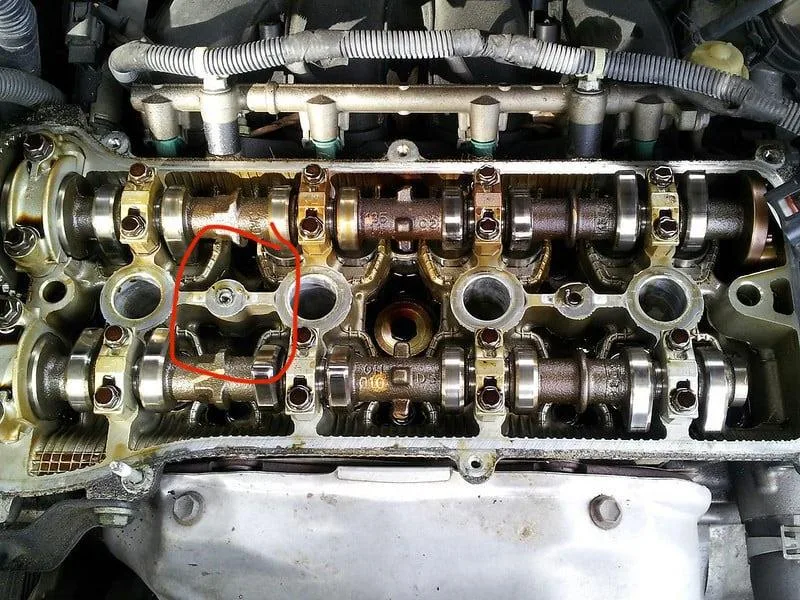
Image source: Web (Bing) / reddit.com (Web image (fair-use with source credit))
Step-by-Step: How to Change the Oil Yourself
What You'll Need
Changing oil on a 2006 RAV4 is straightforward. The oil filter sits on the front of the engine block, accessible from above or below. The drain plug is standard 14mm.
No special tools required.
| Item | Specification | Notes |
|---|---|---|
| Oil | 5W-30, API SM or higher | 4.5 quarts with filter |
| Oil filter | Toyota 04152-YZZA1 or equivalent | Hand-tighten plus 3/4 turn |
| Drain plug washer | 14mm crush washer | Replace every change |
| Socket | 14mm | For drain plug |
| Oil filter wrench | Cap-style or strap | Optional but helpful |
| Drain pan | 6-quart minimum | Catch all old oil |
| Funnel | Standard | Prevent spills |
The Process (Eight Simple Steps)
- Warm the engine. Run it for 3 to 5 minutes. Warm oil flows faster and drains more completely. Hot oil also suspends contaminants better. Just don't burn yourself.
- Drain the old oil. Place the drain pan under the oil pan. Remove the 14mm drain plug with a socket. Let it drain completely, about 5 to 10 minutes. Watch for the crush washer. It usually sticks to the plug.
- Replace the crush washer. This is not optional. The old washer compresses and won't seal properly the second time. A new one costs pennies. A stripped oil pan costs hundreds.
- Reinstall the drain plug. Torque to 29 foot-pounds. If you don't have a torque wrench, snug it plus a quarter turn. Do not crank it. The oil pan is aluminum and strips easily.
- Remove the old oil filter. The filter sits on the front of the engine, angled downward. Turn it counterclockwise. Some oil will spill. Have rags ready. If the filter is stuck, use a cap-style wrench to avoid crushing it.
- Install the new filter. Coat the rubber gasket on the new filter with fresh oil. This prevents the gasket from sticking and tearing on the next change. Screw it on hand-tight, then give it three-quarters of a turn. No wrench needed.
- Fill with oil. Pour in 4.5 quarts of 5W-30. Replace the oil fill cap. Run the engine for 30 seconds to circulate oil. Shut it off and wait 2 minutes for oil to settle.
- Check the dipstick. Pull it, wipe it, reinsert, and pull again. The level should sit between the low and full marks. Add a quarter quart if needed. Never overfill.
Torque Specs That Actually Matter
| Fastener | Torque | Notes |
|---|---|---|
| Drain plug | 29 ft-lbs | Overtightening strips the pan |
| Oil filter | Hand-tight plus 3/4 turn | No wrench needed |
| Oil fill cap | Hand-tight | Snug only |
The drain plug torque is the one that gets people. Aluminum oil pans strip at about 40 foot-pounds. That's barely more than hand-tight with a short ratchet.
If you feel resistance stop, stop. A stripped oil pan means a $300 repair at minimum.
How Often Should You Change It? (It Depends)
Normal Service: 7,500 Miles
Toyota's original maintenance schedule for the 2006 RAV4 lists 7,500 miles between oil changes under normal driving conditions. That assumes mostly highway miles, moderate temperatures, and no towing. If your commute is 30 miles of freeway each way, you're in this category.
Severe Service: 5,000 Miles (Most of Us)
Here's the reality check. Toyota defines "severe service" as short trips under 5 miles, stop-and-go traffic, extreme heat or cold, dusty roads, or towing. Read that list again.
That describes most daily driving in any moderately sized city.
For the 2006 RAV4 with the 2AZ-FE engine, 5,000 miles is the safer interval regardless of what the manual says. Our research across owner communities and mechanic forums shows that engines on 5,000-mile intervals with conventional oil rarely develop sludge issues. Engines stretched to 7,500 miles or beyond show noticeably more deposits at the same mileage.
What the Oil Life Monitor Misses
The 2006 RAV4 doesn't have a true oil quality sensor. It uses an algorithm based on driving conditions. That system is conservative enough for most situations, but it doesn't account for the 2AZ-FE's specific heat sensitivity.
If your oil life monitor says 30 percent remaining at 4,500 miles, change it anyway. The algorithm assumes ideal conditions. Your engine doesn't operate in ideal conditions.
A 5,000-mile habit is cheap insurance against a $4,000 engine replacement.
Common Mistakes That Cost Owners Real Money
Over-Tightening the Drain Plug
This is the most expensive mistake you can make on a simple oil change. The 2006 RAV4's oil pan is cast aluminum. Aluminum strips at lower torque than steel.
A 14mm drain plug overtightened to 45 foot-pounds can pull the threads right out of the pan.
The repair involves either a threaded insert (about $50 if you DIY with a kit) or a new oil pan (around $300 for the part plus labor). The fix takes more time than the original oil change. Use a torque wrench at 29 foot-pounds.
If you don't own one, snug the plug with a short ratchet and stop at the first sign of resistance.
Skipping the Crush Washer
The crush washer under the drain plug is not optional. It's a soft metal ring that deforms under torque to create a seal. Reuse it once and it's already compressed.
Reuse it twice and it leaks. Reuse it three times and you're losing oil slowly enough that you might not notice until the dipstick reads low.
A pack of 10 crush washers costs about $5 online. Keep them in your glovebox. Change one every oil change.
It's the cheapest part of the job and the most commonly forgotten.
Using Diesel Oil or Uncertified Brands
Some owners think diesel oil like Rotella T6 15W-40 is tougher and therefore better. It's not. Diesel oils have different additive packages designed for soot suspension and high-sulfur fuel.
Those additives don't work the same way in a gasoline engine. The detergents can actually cause deposits in the 2AZ-FE.
Stick with oils that display the API Starburst certification symbol on the bottle. That symbol guarantees the oil meets current gasoline engine standards. If the bottle doesn't have it, don't put it in your RAV4 regardless of what the store clerk says.
Oil Filter Options: OEM vs. Aftermarket
Why Filter Quality Matters on This Engine
The oil filter on the 2006 RAV4 is a simple spin-on cartridge. But its job matters more than you'd think. The 2AZ-FE's VVT-i system uses pressurized oil to operate.
Contaminated oil clogs the tiny passages in the phasers. A good filter catches particles before they reach those passages.
Toyota's OEM filter (part number 04152-YZZA1) is made by Denso. It includes a silicone anti-drainback valve that keeps oil in the filter when the engine is off. That matters for cold-start protection.
Cheap filters often use rubber valves that harden and fail over time.
Quick Compatibility Guide
| Brand | Part Number | Quality Tier | Notes |
|---|---|---|---|
| Toyota OEM | 04152-YZZA1 | Best | Silicone valve, correct bypass pressure |
| Wix | 51356 | Excellent | Good alternative, fiber media |
| Mobil 1 | M1-102 | Excellent | Synthetic media, high capacity |
| Bosch | 3323 | Good | Works fine for standard intervals |
| Fram (Orange) | PH4967 | Acceptable | Budget option, change at 5,000 miles |
Stick with the OEM filter if you can find it for under $10. It's designed specifically for this engine's bypass pressure and flow characteristics. Aftermarket filters from Wix or Mobil 1 are solid alternatives.
The cheap house brands from discount stores work but don't expect them to hold up past 5,000 miles.
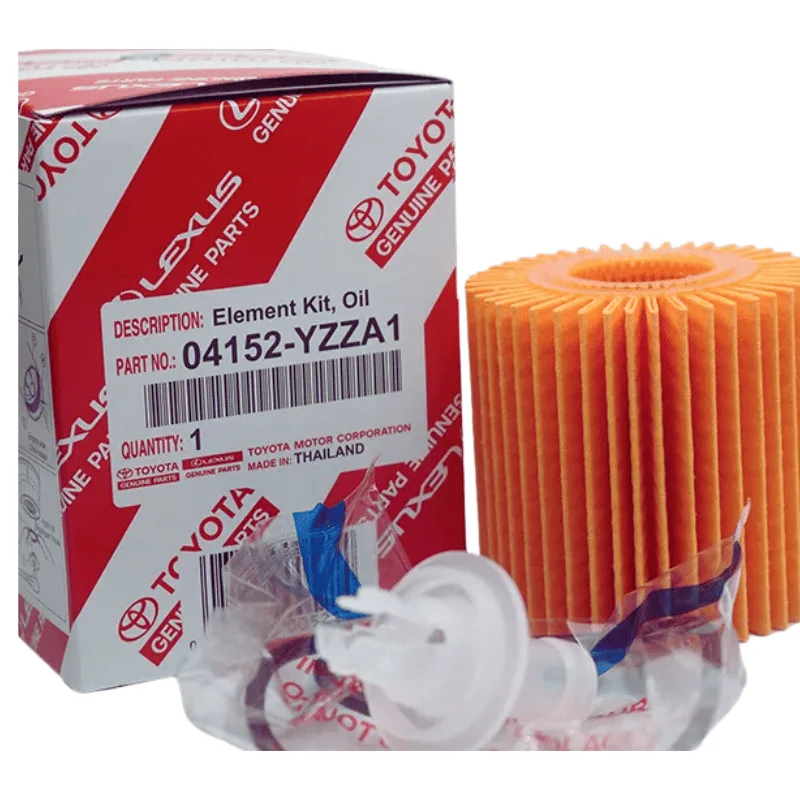
Image source: Web (Bing) / mrparts.ng (Web image (fair-use with source credit))
When to Call a Mechanic (and When Not To)
Engine Sludge Inspection
If your 2006 RAV4 has unknown maintenance history, pop the oil fill cap and look inside with a flashlight. What you're checking for is dark brown or black crusty deposits on the valve cover and camshaft. A little discoloration is normal.
Heavy crust that flakes off when touched is sludge.
Light sludge can sometimes be cleaned with a high-detergent oil like a synthetic high-mileage formula. Run it for 1,000 miles, then change it. Repeat once more.
Heavy sludge requires mechanical cleaning. A mechanic can remove the valve cover and manually clean the passages. That runs $300 to $600 depending on labor rates.
Oil Consumption Above One Quart per 1,000 Miles
The 2AZ-FE does consume some oil as it ages. Half a quart between 5,000-mile changes is normal. One quart per 1,000 miles is a problem.
That level of consumption usually means worn piston rings or valve guide seals. Neither is a DIY fix for most owners.
Before you pay for major engine work, try switching to a high-mileage 5W-30 with seal conditioners. Run it for two full change cycles. If consumption drops, you saved yourself thousands.
If it stays the same, budget for ring replacement or start shopping for a used engine.
Quick Spec Reference Card
Keep this table handy. It covers everything you need for a correct oil change on your 2006 RAV4.
| Specification | Value |
|---|---|
| Recommended viscosity | SAE 5W-30 |
| Alternative viscosity (cold climate) | 0W-20 or 0W-30 (winter only) |
| API classification | SM or higher (SN, SP all work) |
| ILSAC standard | GF-4, GF-5, or GF-6 |
| Oil capacity (with filter) | 4.5 US quarts |
| Oil filter part number (OEM) | 04152-YZZA1 |
| Drain plug torque | 29 ft-lbs |
| Drain plug size | 14mm |
| Crush washer size | 14mm (inner) |
| Normal change interval | 5,000 miles |
| Synthetic change interval | 5,000 to 7,500 miles |
| Oil type to avoid | Diesel oil, 10W-40, non-API certified |
Frequently Asked Questions
Can I use 0W-20 in my 2006 RAV4?
You can, but it's not recommended for year-round use. The 2AZ-FE engine was designed around 5W-30. Using 0W-20 leads to higher oil consumption and may not provide adequate protection at high operating temperatures.
Only use it in extreme cold climates below -20°F, and switch back to 5W-30 in warmer months.
How much oil does a 2006 RAV4 take?
The engine takes exactly 4.5 US quarts when you also change the oil filter. If you're just topping off, check the dipstick and add slowly. The difference between the low and full marks on the dipstick is about one quart.
What happens if I use 10W-30 instead of 5W-30?
Using 10W-30 in a 2006 RAV4 causes harder cold starts and slower oil flow to the VVT-i system. You may hear timing chain rattle on startup. Over time, the thicker oil accelerates wear on the timing chain guides and phasers.
Stick with 5W-30 unless you live in a climate that never drops below 50°F.
How often should I change the oil on a 2006 RAV4?
Every 5,000 miles if you drive in stop-and-go traffic, short trips, extreme temperatures, or dusty conditions. That covers most owners. If you drive mostly highway miles in moderate weather, you can stretch to 7,500 miles.
Never exceed 5,000 miles with conventional oil in this engine.
Is synthetic oil worth it for an older RAV4?
Yes, especially for a 2006 model with over 100,000 miles. Synthetic oil handles the 2AZ-FE's high operating temperatures better and resists sludge formation longer. It also provides better cold-start protection.
The extra cost per change is offset by the reduced risk of engine damage.
What does the API Starburst symbol mean?
The API Starburst certification symbol on an oil bottle means the product has passed testing for current gasoline engine standards. For your 2006 RAV4, look for API SM or higher with the Starburst mark. Oils without this symbol may not provide adequate protection for your engine.